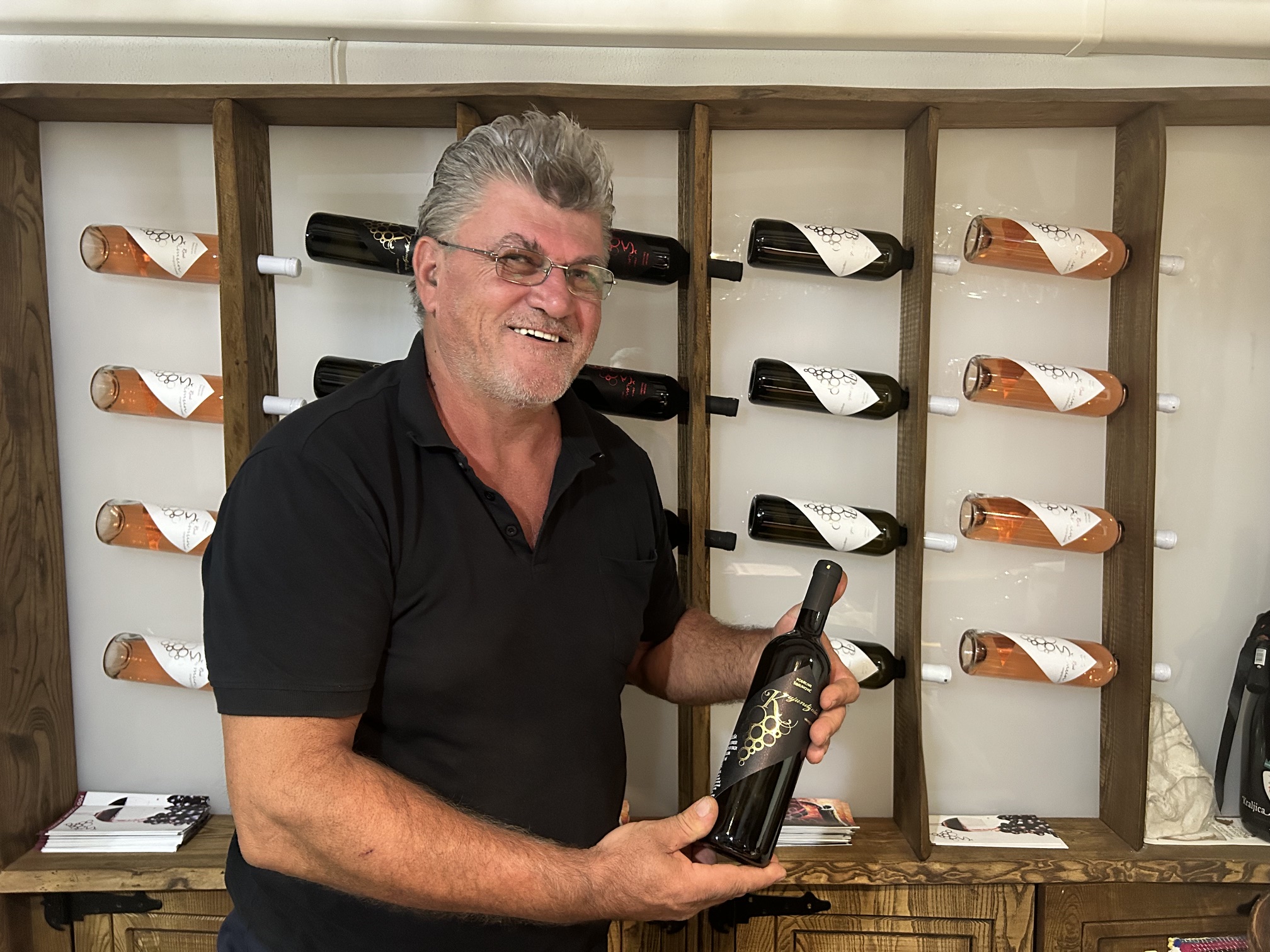
On the cellar wall in Glavina Donja hangs a framed article by Imotski journalist Braco Ćosić. The headline is large enough to read even after a few glasses:
“Confirmation Has Arrived: Kujundžuša Is a Premium Wine!”
Beneath it are a photograph of several bottles and the official decision that delighted the entire Imotski region in 2018. Šimunović Cellars’ Kujundžuša from the 2017 vintage had been awarded Croatia’s official premium-wine classification.
It was not the first time. The 2015 vintage had already earned the same status, followed by 2016. A few years earlier, Grabovac had received the classification for a Kujundžuša made sur lie, aged on its lees and matured in wood, but Šimunović’s 2015 was the first fresh, one-year-old Kujundžuša officially classified as premium. The kind people in Imotski had been drinking for decades, only made in a way that finally secured official recognition for what they had long believed.
Tihomir Šimunović, however, did not believe it at the first attempt.
When the 2015 vintage passed the Institute’s assessment as a premium wine, he thought perhaps it was simply a favourable year. The same happened with 2016. Presumably, a coincidence could last two years. Only when a third consecutive vintage received the same classification did Tihomir conclude:
– That’s it. Kujundžuša really can be a premium wine.
The man who spent twenty-nine years in the cellar of the former Imota winery thus needed three official confirmations to believe in his own wine. Others needed only one. Braco Ćosić wrote the article, the Šimunović family framed it, and the cellar celebrated.
That year, Crni Šimun, Bili Vuk and Rosé Šimun also received the premium-wine classification. The official decision named Tihomir’s wife Nada as the head of the family farm. Perhaps rightly so: she had started the whole venture with him and later named a wine after the man from whom Tihomir seems to have inherited his temperament.
They called him Bili Vuk – White Wolf.
He was Tihomir’s grandfather, a hardworking man with a difficult character.
– Difficult? I ask.
– They didn’t call him Wolf for nothing.

The grandfather got a wine bearing his nickname. Many years later, the grandson got seven hectares of vineyards, his own cellar and the stubbornness that prevents him from allowing even a single grape grown by someone else through its doors.
Imota entered the Šimunović family before Tihomir did. His father was a cellar foreman, his mother worked on the bottling line, and he arrived in 1989, straight from secondary school.
– Did you drink wine then?
– No. I hardly drank it at all until I got married in 1995.
And so the man who would one day make the first officially recognised premium fresh Kujundžuša began working at one of the largest wineries in the former Yugoslavia without being particularly interested in wine as a drink. He was interested in it as a job. In the cellar, he took part in everything from receiving grapes to dispatching bottles: processing, caring for the wine, bottling and preparing it for the market. Vineyard work was not part of his job description. Everything else was.
At the time, Imota was much more than his workplace. By Tihomir’s estimate, the Imotski region had around two thousand hectares under vine, and the large winery bought grapes both from substantial contract growers and from people with a surplus after meeting their own needs. Payments were regular, vineyards supported families and paid for children’s education, and almost every household had at least a few thousand vines.
– I don’t know whether people were prouder of a good vineyard or of their children graduating from university.
During Tihomir’s first years at Imota, cellar workers had little say in the wine that would emerge. The old-school engineers had their own trusted colleagues, while everyone else carried out instructions. Volume was the priority. Grapes went through large crushers and into concrete tanks, and after fermentation the wine was drawn off. It was more astringent, deeper in colour and more tannic than what we now understand as fresh Kujundžuša.
– Were you convinced you were doing the best that could be done?
– We were. That was the trend and the style. Everyone worked that way until younger generations of oenologists arrived and everything turned around by 360 degrees.
– By 180. If you turn 360 degrees, you’re back where you started.
– Yes, yes.
The direction did change, though. Younger oenologists arrived, bringing new ideas and more modern equipment. Cellar workers took part in tastings, expressed their opinions about the wines and were given more room to contribute. Among the specialists who passed through Imota, Tihomir remembers Ivica Škoro, Ante Grubišić, Dominik Kolovrat, the late Vlado Maršić, Viktor Zdilar and Mirko Todorić.
He tasted with them, learnt and gradually discovered that wine was more than work to be completed in the cellar.
– You taste and taste, and then you realise what wine can really be.
With the new generation, he says, they began making wine “for the soul, for beauty and elegance” for the first time. The shift was clearest in the variety Imota had processed by the million litres for decades. Kujundžuša remained the same, but the idea of what it could become changed.
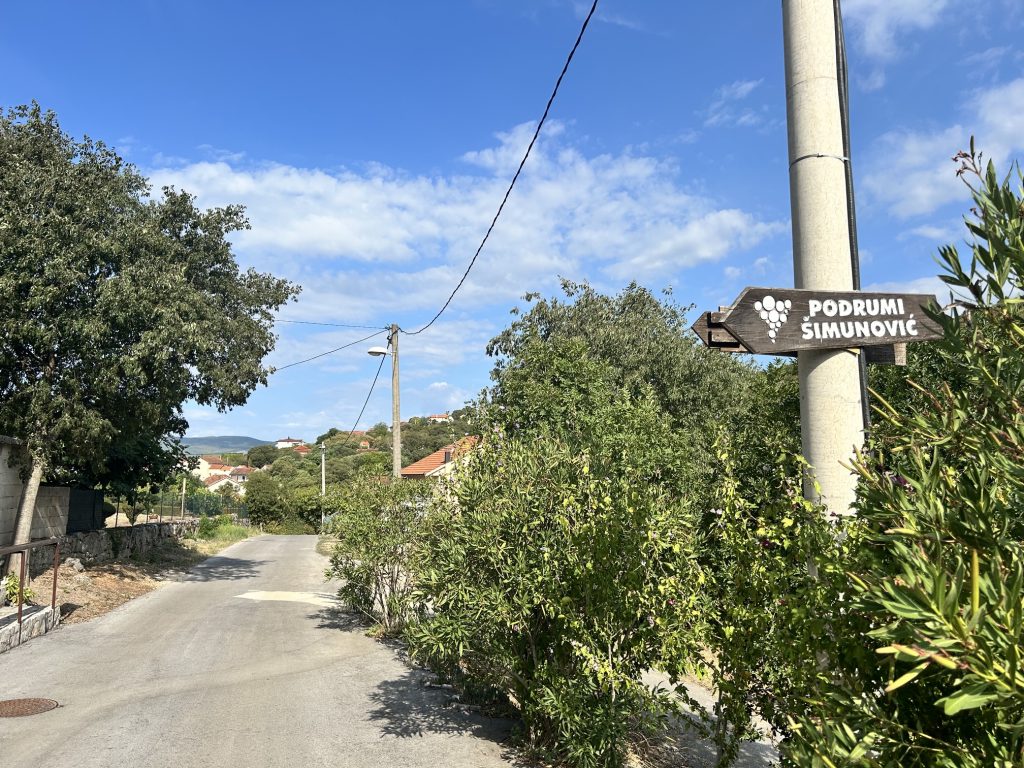
Tihomir watched that transformation from the front row, beside the barrels and tanks. He could not have known that one day he would put what he had learnt in the large cellar to the test in a much smaller one of his own. Nor that, before then, Imota would even try to save itself with vodka.
The vodka was called Akvinta. As far as Tihomir remembers, the base spirit arrived in tankers from Italy, and at Imota they added flavourings and bottled it. Part of the warehouse became a modern bottling facility, but the vodka did not last long either. It remained an unusual episode from a time when the former wine giant was trying to stay on its feet by producing almost everything except security.
The end did not come overnight. People left, wages became irregular, and the state intervened financially several times, but the trajectory was only downwards. Tihomir stayed until bankruptcy, twenty-nine years in all.
– Do you miss Imota?
– I do. But it’s not just me. I think the whole Imotski region misses it, perhaps beyond it too.
He misses more than the cellar and his job. He also misses the way people lived and worked together there. Nobody checked whether a task fell within someone’s responsibilities. If a colleague needed help, they helped. People talked, spent time together and worked like an extended family.
– Those days will never come again.
When Imota disappeared, growers lost more than a reliable buyer. They also lost a reason to keep their vineyards. In a plentiful year, there are many grapes, and growers without their own cellar often do not know what to do with them. The surplus that once ended up in Imota’s tanks can now become a reason to give up a vineyard.
Tihomir did not wait for bankruptcy to understand where things were heading. While the large cellar was sinking, he and his wife Nada were slowly beginning to build a small one.
Vineyard work was nothing new to him. As a boy, he had worked with his grandfather and father, before today’s machinery, when growing up among vines meant digging, rotavating, tying and carrying by hand what machines handle now. He knew vines demanded a constant presence, sweat and blisters, but also that the work made him happy.
– Then my wife and I said: let’s try something.
In 2005, they began removing old vineyards and establishing new plantings. The state offered some subsidies for planting material at the time, but there was no winery yet. They processed the first harvests at Nada’s father’s place in Proložac Donji, partly in one cellar, partly in another. Equipment and machinery arrived piece by piece, and they bottled their first wines in 2008.
He remembers people noticing that the wine was different.
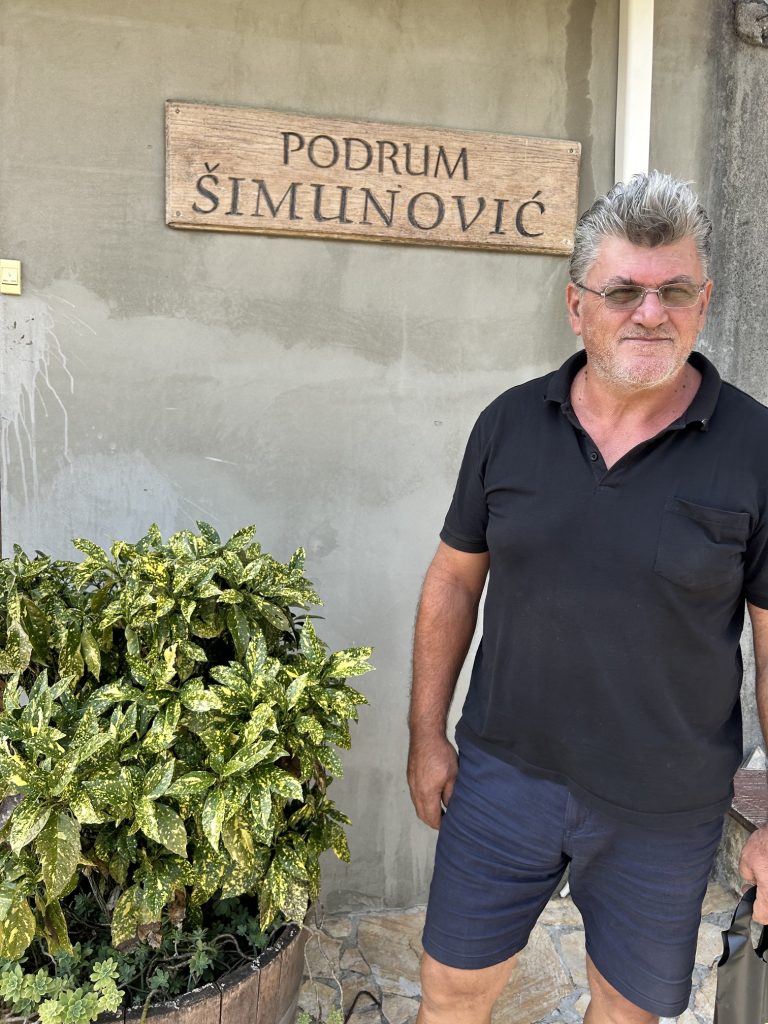
Grapes were picked early in the morning so they would reach the cellar as cool as possible. They monitored sugars, acidity and pH, clarified the must immediately and gave selected yeasts a clean environment in which to develop fresh fruit aromas. Tihomir was now applying what he had learnt during Imota’s technological transformation to grapes from vineyards he had planted himself.
There was no longer a large tank into which everyone’s grapes would go. Not a single grape grown by someone else was allowed into Šimunović’s cellar.
– Why are you so stubborn?
Tihomir has no complicated answer, just a conviction he has held from the beginning.
– The easiest thing is to bring in grapes, flotation-clarified must or finished wine and build a story around it. I believe the story lies in your own vineyards, in plantings you established yourself. It takes time, but it has foundations.
That is why the number of bottles in his cellar depends on the year. If there are fewer grapes, there will be less wine. He does not buy grapes or try to maintain production at a predetermined volume. Today, he works around seven hectares of vineyards, and two years ago, at fifty-six, he planted another hectare and a half of Kujundžuša.
He finances everything with his own money or loans. The land is fragmented, and ownership is not always straightforward and undisputed, so he cannot count on funding schemes or state support.
– Nobody has ever repaid a loan for me.
Nor did the hailstorm of 2015 repay one. It damaged seven to eight thousand young vines that should have begun yielding more substantially in their third or fourth year. He had to cut the damaged shoots back to two buds and retrain the vines, which only reached full production in their seventh or eighth year.
– You work at something for eight years, invest in it and get no yield. And still you don’t give up. You have to be at least a little stubborn.
Here, Bili Vuk reappears.
The wine bearing his grandfather’s nickname is a blend of Chardonnay, Žilavka and Pošip. On paper, something of a white-variety dream team: one international, one Herzegovinian and one Dalmatian. In Šimunović’s cellar, they are united by the fact that every grape is his own.
He planted Žilavka for its acidity, believing it would work well with Chardonnay. He also wanted his own Pošip and hopes to plant another few hectares of it. His wife Nada named the three-variety blend after Tihomir’s grandfather.
Tihomir does not see the winery as a quick route to profit, nor did he expect to become rich and “clear off out of here”. It has paid for his children’s education, cellar expansion, buildings and feeding the family. Little remained for luxuries, but he says he has no interest in them anyway.
After Imota’s bankruptcy, he could have looked for another job. He was young enough to start again somewhere that would provide a salary at the end of the month. Instead, he chose work where only after selling a bottle does he discover whether there is money to pay himself.
– At Imota, I knew I’d get paid. Here, until I sell the wine, there’s no money.
Freedom is different too. At Imota, he had to arrive at a set time and complete his shift. In his own vineyard, when he gets tired, he can put his hoe over his shoulder and go home without explaining himself to anyone.
Except that the next day, he has to pick up the hoe himself again.
Although Bili Vuk carries the family story more clearly, Kujundžuša is what puts food on the Šimunović table. It accounts for more than half of production, sells best and, he says, is the foundation on which all Imotski winemakers build their businesses.
Tihomir does not try to make it something it is not. He does not believe it will acquire the position Malvazija holds in Istria or Graševina in Slavonia. Their stories began earlier and developed under different circumstances. But he believes Kujundžuša can become Dalmatia’s most sought-after white wine.
– Our summers are hot, temperatures are high, and this is a light, mineral wine with twelve per cent alcohol. You can put the bucket in the sea beside you and drink it on the beach.
– Without adding sparkling water?
– It slips down just as easily on its own.
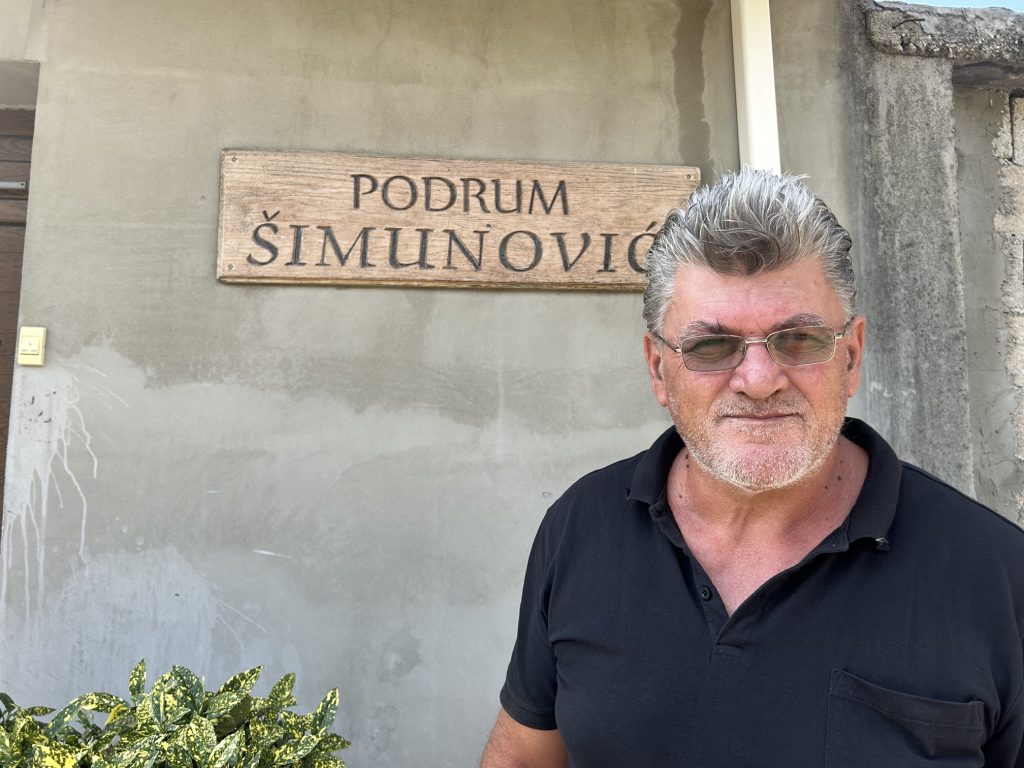
Before finding his own style, he tried other approaches. In 2009, at a fair in Makarska, he came across four or five reasonably priced barrique barrels and filled them with Kujundžuša. The wine was declared the surprise of the fair, but three to five months later it no longer had the aromas that had initially won people over.
– Somewhere in the winemaking process, we were still missing something.
He has no difficulty admitting that he did not know everything then. Wood brought maturity, colour and more honeyed flavours to the wine, but could easily overwhelm it. It took experimentation, tasting and a search for the right balance.
With fresh Kujundžuša, he finally found it. Three consecutive premium-classified vintages proved that it was consistency rather than a lucky strike. More importantly, they showed that Kujundžuša could achieve premium status in its most recognisable form: young, fresh, lively and aromatic.
Perhaps that is why the Šimunović family’s success was seen as a success for the entire region. For decades, millions of litres of Kujundžuša had passed through Imota’s cellars. It was an everyday wine, but not a variety officially recognised as having great value. In his small family cellar, Tihomir secured a recognition that the large operation, despite all its volume, had never brought to fresh Kujundžuša.
– Was there any envy among the other winemakers?
– I don’t think so.
– Looking at your hands, I wouldn’t admit to being envious either.
The hands may be his, but he does not claim the success for himself alone. He speaks about an association in which winemakers lend one another machinery, equipment and supplies. If someone needs something, it can be found. They attend fairs as a team and see Kujundžuša as the wine that supports them all, rather than the property of a single cellar.
For a moment, something of the old Imota reappears: the feeling that nobody has to do everything alone, and that you help a neighbour even when it is not in your job description.
Today, the cellars are smaller, and responsibility bears a family surname. Behind Šimunović’s wines, however, one of his four sons is increasingly making his presence felt.
The eldest, Vlade, graduated in economics and took a job at a bank. Milan is also heading towards economics, while the youngest, Josip, is finishing primary school. All three will step in when help is needed in the vineyard, cellar or tasting room, but Tihomir does not try to turn them into winemakers if the work does not appeal to them.
– They don’t have to. Everyone follows their own path through life.
Ante chose his father’s path. He graduated in agriculture in Zagreb and afterwards went to Pelješac to work a season at Korta Katarina winery. He wanted to experience a more modern, better-equipped winery, a different way of organising a cellar, and to test how much his university knowledge was worth when harvest arrived.
One season became a second, then a third. Korta Katarina keeps inviting him back, and his father half-jokingly says they may be motivating him a little too well.
– I’m afraid he might leave the family winery because of them.
Ante nevertheless returns to Glavina Donja when the Šimunović harvest begins. In the first year, father and son shared decisions equally; today, Tihomir gives him increasingly more room.
– Do you let him take charge?
– More and more. He has the knowledge, professional training and education.
For a man who learnt in the cellar of the old Imota winery, that is an important distinction. Tihomir’s knowledge developed among concrete tanks, large crushers, older engineers, younger oenologists and millions of litres of wine. Ante comes from university and from cellars equipped in ways that did not exist when his father started. One knows what happened to Kujundžuša when volume was the priority; the other knows what he might achieve by approaching each vintage as a wine in its own right.
Tihomir is not afraid of that. He does not expect his son to repeat what he did, but to go further.
– When he makes better wines than I did, that will be the finishing touch.
Perhaps that sentence is the truest measure of everything the Šimunović family has accomplished. Tihomir did not leave Imota convinced that he had learnt the final lesson about wine. While still working there, he planted his own vineyards to discover what he could do differently. Nor does he hide the fact that his first experiment with wood did not last as he had expected. He does not ask his son to repeat his work, but to carry it forward and improve it.
There is no shortage of work anyway. He is waiting for the clonal selection programmes for Kujundžuša and Trnjak to be completed so he can plant healthier, better-quality material. He wants more Pošip, and has no thoughts of stopping.
He was born in 1968.
– Don’t you think it’s time to stop?
– No. I still feel good, physically and mentally. Nothing has got to me yet.
His successor motivates him, but not only him. There is still land he wants to plant, wine he wants to make and markets he needs to win over. He says he works in the vineyard for the pleasure of it, even when he comes home so tired he does not want to talk to anyone.
On the wall, the framed article about premium fresh Kujundžuša will be waiting; in the cellar, the son who should make an even better one.
Somewhere between them, Bili Vuk is still walking: the grandfather who gave the wine its name, and the grandson who inherited enough of his stubbornness to start all over again with his own vines while he was still receiving a reliable salary.
If Ante makes a better wine one day, Tihomir Šimunović will not consider it a defeat.
It will be the finishing touch.