In Livingstone, not far from Victoria Falls, I tasted two wines that told a story extending beyond grape variety, vintage and climate. Their labels bore the names Tinashe and Flavian, with Mosi above them – short for Mosi-oa-Tunya, the Smoke That Thunders, the name by which the falls were known long before they became Victoria Falls.
Tinashe was a Chenin Blanc, Flavian a Syrah. Both wines had reached Zambia from South Africa, but the name of the wine brand pointed towards Zimbabwe, the country on the opposite side of the falls. Behind them was a man who had grown up in a Zimbabwean village, in a family of seventeen children, and had barely tasted wine before the age of twenty-seven. He entered South Africa as an undocumented migrant, having narrowly escaped death inside a locked freight wagon. There, he worked as a gardener, manual labourer, dishwasher, bartender and waiter before becoming one of Africa’s best-known sommeliers, a wine judge, a winemaker and captain of Zimbabwe’s national blind wine-tasting team.
His name is Tongai Joseph Dhafana. In Cape Town, people struggled to pronounce and remember his first name, so they began calling him Joseph T. Dhafana. In time, he adopted that name professionally, too.
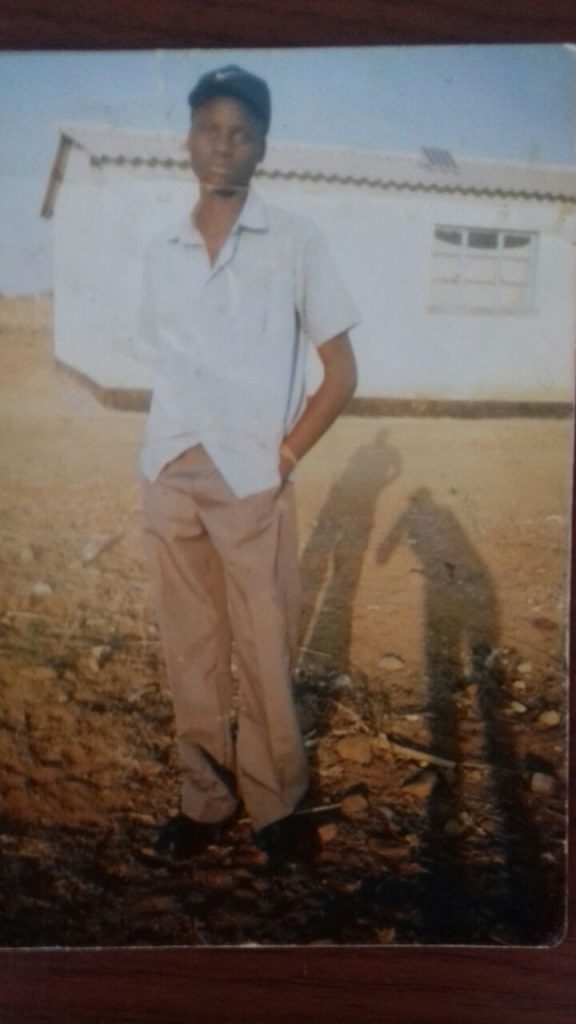
For years, the media reduced his life to a few sentences: a refugee from Zimbabwe became a sommelier, founded his country’s national wine-tasting team and featured in the film Blind Ambition. All of that is true, but such a summary leaves out the mornings when he rose at three to plough with oxen before school, his dog Spot, whom he had to sell, and Amelia, who brought him food by the roadside after they had separated. Only through his own account does it become clear that behind Mosi wines lie two life stories that, for the most part, unfolded as one: his and Amelia’s.
He grew up in a large family in rural Zimbabwe. His father, Flavian, was a village headman, or traditional sub-chief, and had several wives. There were seventeen children in the family; Joseph was his mother’s second child and his father’s tenth overall.
His parents lived off the land. Whatever they grew first had to feed the family, and any surplus was sold to pay for the children’s schooling.
– During the planting season, we would get up at three in the morning. We would go out into the fields and plough with oxen. At around six, I would run down to the river, have a quick wash, hurry home for something to eat, put on my school clothes and set off. Classes started at 7.15.
He walked roughly fifteen kilometres to school, sometimes barefoot, and every child also had to bring two litres of water for the school garden.
– Looking back, it feels like child abuse in disguise, he says with a laugh. – But at the time, we questioned nothing. We simply did what was expected of us.
Sometimes, one meal a day was all they had. From his father, he inherited an almost uncompromising attitude towards work: Flavian taught him that a gentleman’s day should include sixteen hours spent doing something useful.
– That is how I still live today.
– Much of the resilience I carry today was born on those dusty roads and in those fields: walking barefoot to school, getting up before sunrise and watching my parents work themselves to exhaustion to give their children a chance. We did not grow up with much, but we grew up with purpose, hard work and the belief that tomorrow could be better than today.
After finishing school, he joined the Sino Zimbabwe Cement Company in 2000. He was the company’s youngest employee, and he gave almost his entire first wage to his mother and aunt to receive their blessing. The only thing he bought for himself was a jacket for the cold winters in Gweru.
Hyperinflation soon followed. Wages were counted in millions, then billions, while shop shelves remained empty.
– I can honestly say that I was once a billionaire, although those billions could buy almost nothing. That is why a million rand does not particularly impress me today.
In 2008, Joseph and Amelia separated for several months. Today, he describes the cause without trying to soften it: his own immaturity and the wrong company. He was managing his cousin’s shop, earning good money and, from the outside, looked like a man who wanted for nothing. Inside, he was falling apart.
They had a young son, Tinashe, and Joseph was living alone. His only company was his dog, Spot. When he could no longer keep him, he had to sell him.
– I cried my eyes out. Spot was not just a pet; he was my only companion during one of the loneliest periods of my life.
His sense of hopelessness was so strong that he wondered whether there was any point in going on living. Then he would meet Amelia and their son by the roadside. Although they were separated, she brought him food in a stainless-steel container because she knew there was no one to cook for him.
– Even now, remembering it brings tears to my eyes. It was a simple act, but it meant everything to me. She knew I was suffering and found a way to care for me despite what had happened between us.
One day, he went to see her at her family’s home. He was not allowed inside, so they spoke outside the door and decided to give their relationship another chance. When they realised they could no longer see a future in Zimbabwe, they decided to leave for South Africa.
Amelia had a passport; Joseph did not. He had been deported from Botswana back in 2000 and knew what it meant to end up in the hands of the authorities. Even so, staying no longer seemed any safer than making an illegal and dangerous journey.
At the Beitbridge border crossing, they joined others trying to get across. They each paid railway officials on the Zimbabwean side twenty US dollars. They were taken to a freight wagon and locked inside. Accomplices on the other side were supposed to unlock it and take them to a refugee camp.
The train did not leave that day. The metal wagon was turning into an oven. People were losing consciousness, crying and calling for help, banging on the walls and doors until an official finally heard them.
– When they opened the doors, I took off my shirt and looked at my chest. My skin had turned white. We had narrowly escaped death.
They were taken to a detention centre and then released. That same evening, they tried again and managed to cross the border. They spent almost two months in a refugee camp in Musina, sleeping beneath plastic tarpaulins.
One day, Joseph and three other men were chosen to dig a grave at a cemetery. Each received fifty rand, which seemed like a fortune. It was his first money earned on South African soil. He used it to buy food for Amelia and himself, and a SIM card with the number he still uses today.
– So my first manual job in South Africa was not gardening. It was digging a grave.
Once they had been granted asylum, the humanitarian organisation Gift of the Givers paid for their train tickets to Johannesburg. They found shelter in a Methodist church in Hillbrow, run by the Reverend Paul Verryn. Two weeks later, their cousin Yvonne invited them to Cape Town.
– Their kindness and generosity changed our lives. Through them, God opened a new chapter for us.
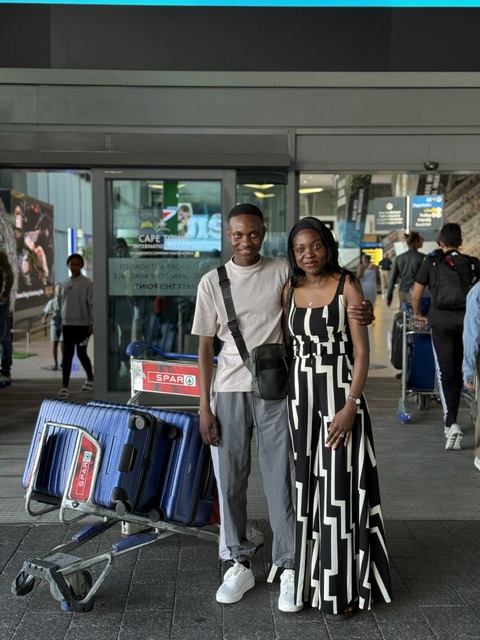
Their son, Tinashe, had stayed behind in Zimbabwe. Amelia first returned in 2011, two years after leaving, travelling almost 2,400 kilometres by bus from Cape Town to Gweru to see her seven-year-old son. A plane ticket was beyond their means at the time. Many years later, they could afford to fly; the distance between those two modes of transport encompassed almost their entire journey towards a better life together.
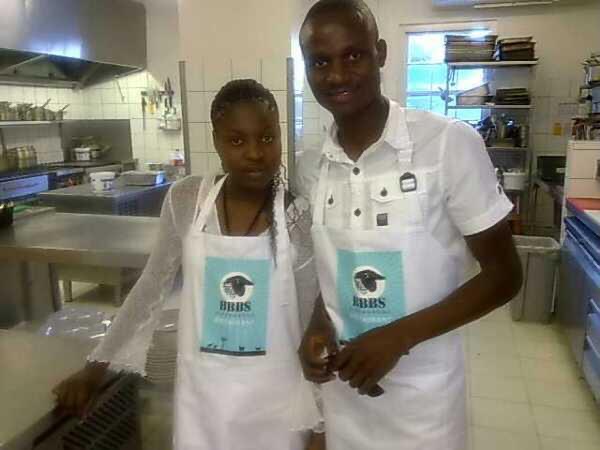
In Cape Town, Joseph worked as a builder’s labourer, carpenter, gardener and domestic worker. Then he went with Yvonne to ask for a job with chef Mynhardt Joubert, owner of the Bar Bar Black Sheep restaurant in Riebeek-Kasteel. There were no vacancies at the restaurant, but Mynhardt had a neglected piece of land that needed a gardener. Joseph turned it into a garden that supplied the restaurant with vegetables.
When the dishwashers failed to turn up one weekend, he was called in from the garden to work in the kitchen. At the end of the shift, Mynhardt asked whether he wanted to stay.
– I said no. The shouting in the kitchen was worse than the heat in the garden!
A few weeks later, he accepted a job as a bartender on condition that Mynhardt teach him, because he did not even know how to make a Rock Shandy. After a month, he became a waiter. He earned 380 rand a week, plus tips.
Once, Mynhardt tested him with an unusual task: he asked him to light a fire.
– I thought: you are asking a village boy to light a fire? I have been lighting fires all my life!
On his twenty-seventh birthday, he was given his first glass of wine, Riebeek Pieter Cruythoff Brut. He had grown up in a Pentecostal church where alcohol and smoking were strictly forbidden, so his first sip of sparkling wine felt less like a pleasure than a transgression.
– It felt like walking barefoot on a glacier. I did not like it. But somehow, wine keeps following you. Once it finds you, it never stops calling.
The first wine that truly stopped him in his tracks came in 2011, when he was working as a bartender at Aubergine. He thinks it was a 2009 Thelema Cabernet Sauvignon.
– That was when I realised what I had been missing.
He began studying at the Cape Wine Academy and through programmes offered by WSET, the South African Sommeliers Association, the Michael Fridjhon Wine Judging Academy and the Court of Master Sommeliers Europe. He passed WSET Level 3 and SASA Level 2 Certified Sommelier at his first attempt. When he began spending money on wine education, Amelia told him, for the first and only time, that he was wasting it. Joseph kept going.
– You cannot be in this just for the money. You have to live it.
He studied while working long restaurant shifts and looking after his family. He had no family wine collection, no cellar of old vintages and no network of contacts inherited from his parents. Everything had to begin with that first glass he had not liked at all.
In 2013, he signed up as an unpaid harvest intern at Mullineux Family Wines. Chris Mullineux and Eben Sadie became two of the most important people in his wine life.
– I could not understand why two stars of winemaking would give their time to someone like me. I wondered what they could possibly want with a little village boy who knew nothing about wine.
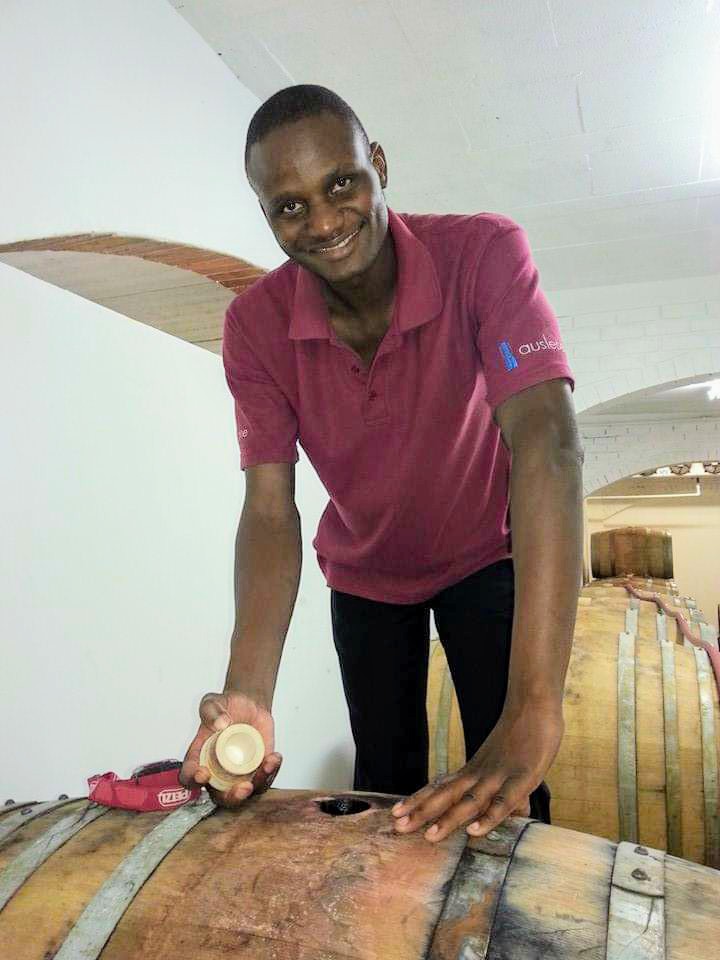
One of the decisive moments came when Chris brought him a glass of his white blend and asked whether he thought the acidity was balanced.
– I thought: how can Chris Mullineux ask this little village boy whether the acidity is well balanced? They never underestimated anyone or looked down on them.
He realised how close they had become when a journalist from Portugal was struggling to reach Eben Sadie. Joseph called him, and Eben came.
– That was when I understood that they believed in me for who I was, rather than for anything I could offer them.
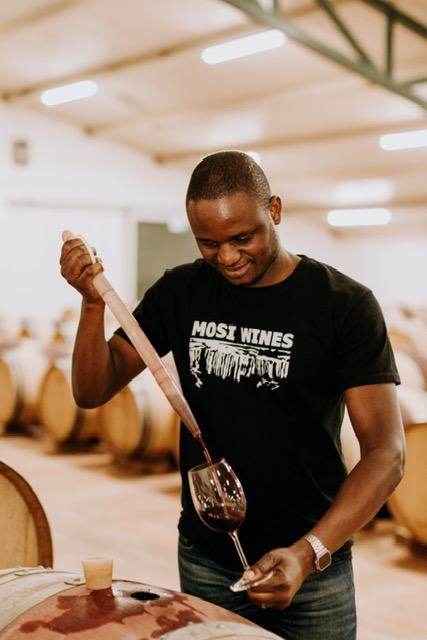
In 2014, his friend Roger Clayton, who made Jolly Roger wines, gave him the opportunity to make one barrel each of Chenin Blanc and Syrah. Joseph bought the grapes himself, while Chris and Eben checked on his barrels from time to time. Later, Chris arranged for him to make his wines at Riebeek Cellars, which, Joseph says, enabled Mosi to survive.
He had no winery, no equipment and no capital that would allow him many mistakes. He had the experience of a single harvest and friends willing to stand beside him. What began as a test of whether he could make wine with his own hands gradually became a label through which he would express his identity.
He worked with whole bunches, indigenous yeasts and minimal intervention, treading the grapes by foot. His Syrah took its inspiration from Crozes-Hermitage, seeking freshness and elegance rather than power alone.
– We cannot all be actors or artists to tell our stories. I chose to pour mine into a bottle.
At a Vinimark trade tasting at the One&Only Cape Town hotel, he counted fewer than twenty Black people. He was a Black Zimbabwean, a refugee and an outsider in an industry built on white tradition and privilege.
– I told myself that one day I would be counted among the Black pioneers of South African wine. I wanted my presence to mean something.
Public recognition brought attention for which neither he nor Amelia was prepared. She gradually realised that she was no longer married simply to a waiter, but to a man the wine world was beginning to turn into a star. Joseph’s later remark that she had not been ready to become “the wife of a wine star” was no criticism of her; it acknowledged how quickly their private life had to catch up with his new public role.
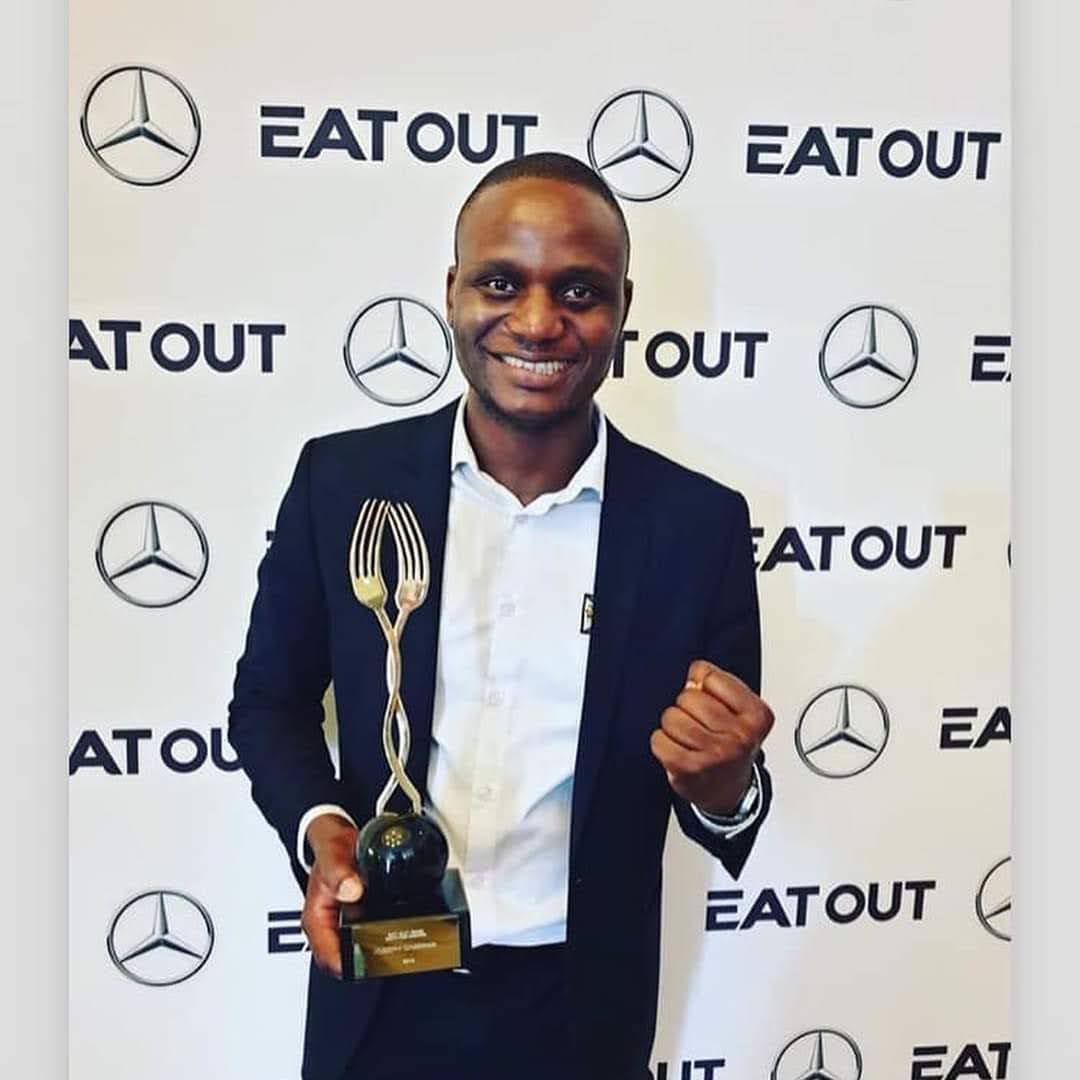
In 2015, he was recruited by La Colombe, one of Africa’s finest restaurants. He spent six years there, became head sommelier and won the Eat Out Wine Service Award in 2019. Invitations, judging appointments and new opportunities began arriving more frequently. He became a board member of the South African Sommeliers Association, a founding member of the Black Cellar Club and a judge at major wine and restaurant competitions. He saw his progress as an opportunity to leave the door open for others from the community he had come from.
La Colombe did not find him through a CV. The restaurant approached him, recognising the reputation he had already built. There, knowing wine labels was no longer enough: he had to run the wine programme of a distinguished restaurant, talk to experienced guests as well as those intimidated by wine, and gradually build a collection of older vintages.
– I do not ignore anyone who gets in touch. I reply to every message. There are no unread messages in my inbox.
In 2015, he came third in the South African wine-tasting championship and earned a place on the South African team at the World Championship in France.
– Imagine that: a refugee representing South Africa on the world stage.
It was his first intercontinental flight and his first visit to Europe. A man who, only a few years earlier, had not even known how to hold a wine list was now trying to identify grape varieties, countries, regions, vintages and producers from unlabelled glasses, alongside tasters who had been studying wine for decades.
The World Championship is not a conventional sommelier competition. Four tasters have to turn their differing impressions into a single answer, and a few mistaken assumptions can send them to the wrong continent. Knowledge matters, but so do composure, memory and trust in the team.
The trip raised a question for him: if he could represent South Africa, why should Zimbabwe not have its own national team? The rules allowed only one foreign national per team, and several excellent Zimbabwean tasters were working in South Africa. They organised a national competition, Joseph won, and he became captain of a team comprising Marlvin Gwese, Tinashe Nyamudoka and Pardon Taguzu.
The four men knew one another through hospitality, but representing their country made them a team, and then a family. None had grown up with wine, and they lacked both the money and access to bottles that their opponents took for granted. They relied on donations and on people who believed in them, including Jancis Robinson.
Each developed his own sensory territory: Marlvin Gwese was particularly good at identifying Cabernet Sauvignon from Napa Valley and Australia; Tinashe Nyamudoka specialised in wines from southern France and Spain; Pardon Taguzu in Italian wines; and Joseph in Chenin Blanc from South Africa and the Loire, as well as Syrah. The captain’s task was to listen to the others and make the final decision.
At their first appearance in 2017, they finished ahead of only Italy, but the very fact that Zimbabwe had a national team was historic. A year later, they finished fourteenth, ahead of the United Kingdom, the United States, the Netherlands, Italy and Spain.
– My mind went blank. I was overwhelmed by everything. But we had prepared as a team and could rely on one another. We did not win, but we used the experience of that first appearance to improve.
An Australian film crew followed their preparations and the competition. The result was the documentary Blind Ambition, the story of four Zimbabweans who had reached South Africa by different routes, found their place in wine and tested their knowledge against the great wine nations.
The film turned wine into a language through which to speak about migration, displacement, belonging, friendship and ambition. It won the Audience Award for Best Documentary at the Tribeca Festival and carried Joseph’s story far beyond restaurants and wine magazines. For him, however, it was not the end of the journey. Even after all the recognition, he continued to say that he was still travelling towards his promised land.
People who knew nothing about blind tasting understood what it meant to come from a place where no one had reserved a seat at the table for you, and to take one anyway.
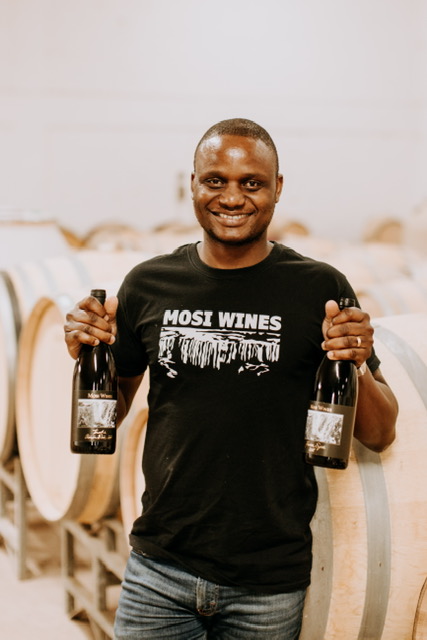
He named his wine brand Mosi, after Mosi-oa-Tunya – the Smoke That Thunders – the original name of Victoria Falls, between Zimbabwe and Zambia. The illustration of the falls was created by artist Janine Muller.
– It is the umbilical cord that connects me to Zimbabwe. I know that I am Zimbabwean and that I will die a Zimbabwean.
He named his wines after people in his life. Tinashe Chenin Blanc bears the name of his and Amelia’s only son, the boy who stayed behind in Zimbabwe while his parents tried to build a new life. Today, he too is a sommelier and works in Ghana.
– Tinashe is my son, my only child, officially and unofficially. He now works in Ghana and is also a sommelier. Yes, you read that correctly – Ghana.
That brief statement brings the family story full circle: a father who had barely tasted wine before the age of twenty-seven and a son whom circumstances kept apart from his parents for years now belong to the same professional world.

Flavian Syrah bears the name of Joseph’s father. The man who taught him to measure a day by useful work died in 2004, just three months after Tinashe was born. He did not live to see Joseph leave for South Africa, achieve success as a sommelier or make a wine bearing his name.
– He never had the chance to see the fruits of my work. It would have meant so much to me to sit down with him and share a glass of Flavian Syrah.
He also channelled his family heritage into WaMambo Gin. WaMambo means “kings” and draws on his family’s chiefly lineage in Zimbabwe.
When he sees people in a restaurant swirl a glass of his wine, smell it and take a sip, he says his heart melts. In those bottles, he sees more than commercial success: he sees the journey from a man who did not know what a Rock Shandy was to a producer whose wine is served to guests.
Mosi’s progress has been far from straightforward. A wine brand without its own cellar depended on agreements, friendships and his ability to be winemaker, salesman and public face all at once. Twelve years after its foundation, Mosi has yet to become the business Joseph imagined. He sees Africa as a promising market, but expanding production requires dependable capital. He estimates that an investment of around a million rand would be needed to take Mosi to the next level.
– At the moment, Mosi is literally just keeping its head above water. After twelve years of work, it is sad to see a business with so much potential still lacking the resources it needs to grow.
He has bought a small piece of land in Zimbabwe where he hopes to retire one day. Yet his promised land is also a position from which he can teach and mentor others. That is why he answers young people’s questions about entering the wine world, studying and pairing wine with food, helps agencies find talented people, and works with organisations opening the wine industry to those who lack the traditional routes into it.
– I am proud of the man I am today, but I am grateful to the people who helped me. My journey has only just begun, because I am already helping young sommeliers become better than I was.
As Joseph’s career grew, Amelia remained the centre of the family and his most important source of support. Only at her funeral did he discover how many people she had quietly helped. Without his knowledge, she had used their money to help some of them start businesses.
– That sneaky Amelia! I had no idea. Her generosity was far greater than I had realised.
Helping others was a decision they shared. Together with Aubergine restaurant, the Hartenberg, Naudé and De Toren wineries, and the Mosi brand, they raised money to provide homes and food for victims of Cyclone Idai. They supported the Eziko hospitality school, a school for blind children and other educational institutions, as well as families left with nothing by floods in Zimbabwe and Mozambique.
In Zimbabwe, they supplied equipment to the M Hugo School for the Blind and Taringana Secondary School, and provided basic necessities for thirty-seven rural families. Their help extended beyond major dinners and public fundraising campaigns.
– We both believed that there can be no future without an understanding of the past.
Amelia died on 8 July 2026, her birthday.
– Not a day goes by without me thinking of her.
The woman who had once brought him food by the roadside stayed beside him through poverty, the refugee camp, manual jobs, his first restaurants, air travel, awards and wines of his own. Joseph described her as his greatest source of strength and his closest companion in life.
– She knew me so well that she could tell when I was happy and when I was struggling. She always knew how to lift me up when I was feeling low. Today, I carry on doing what she loved: helping people and reminding myself never to forget who I am. It is the only way I know to honour her legacy and find the strength to keep going.
He is also considering making Amelia Cap Classique again. He produced the first release, Mosi Amelia Méthode Cap Classique 2019, with the help of his friend John Louber of Silverthorn. He made just 380 bottles, all of which sold through Facebook within two weeks.
– It was a very special wine and a wonderful experience.
A new release would mean far more than repeating a successful label. It would be a story in a bottle, an enduring dedication to the woman without whom neither his journey nor his promised land would have existed.
In Livingstone, I first encountered his wines and only later the man behind them. After hearing his account, the names on the labels could no longer remain merely names. Tinashe is the son who followed in his father’s footsteps. Flavian is the father with whom he can no longer share a glass of the wine that bears his name. Mosi is the umbilical cord connecting him to Zimbabwe. Amelia is present in everything Joseph has built.

Wine found him almost by chance. In it, he then found a way to preserve his homeland, his family, his gratitude and all the journeys towards his promised land. That is why Mosi is more than a South African wine brand with a Zimbabwean name. It is a life story that travelled from Zimbabwe, through South Africa, to a bottle opened in Zambia, within reach of the Smoke That Thunders.