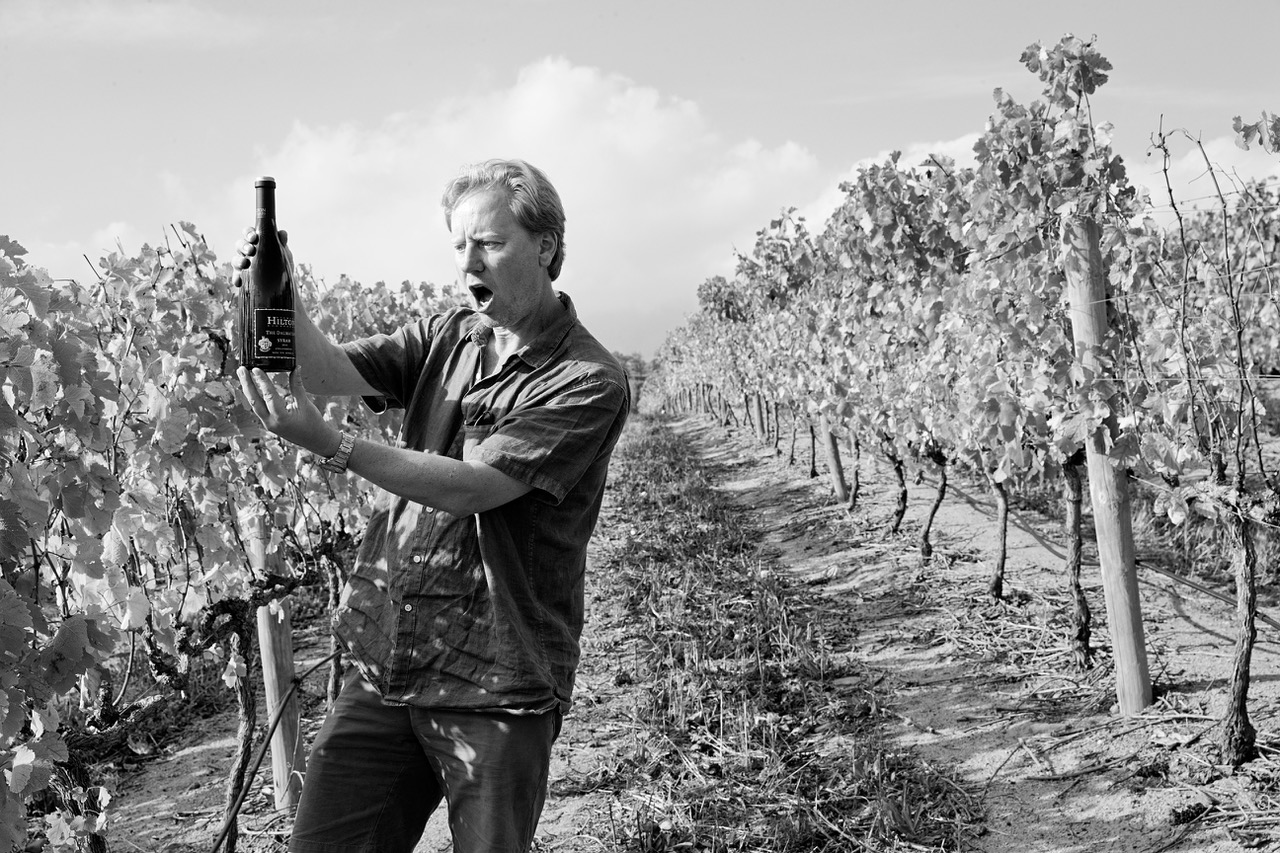
I did not meet Richard Hilton when I was in Cape Town in 2014. I had almost made it to his cellar: he had been recommended to me as the ideal guide to the local wineries, a man who knew the Cape Winelands and also made wine himself. Then vineyard workers began protesting, roads were blockaded and there was bloodshed, and I had no desire to play war correspondent. Instead of meeting Richard Hilton, I explored Cape Town. Instead of bringing home an interview, I brought home one of his bottles.
Its label read The Dalmatian.
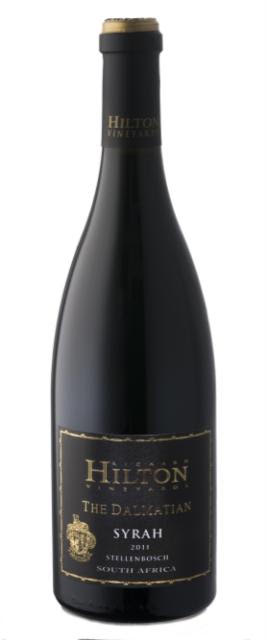
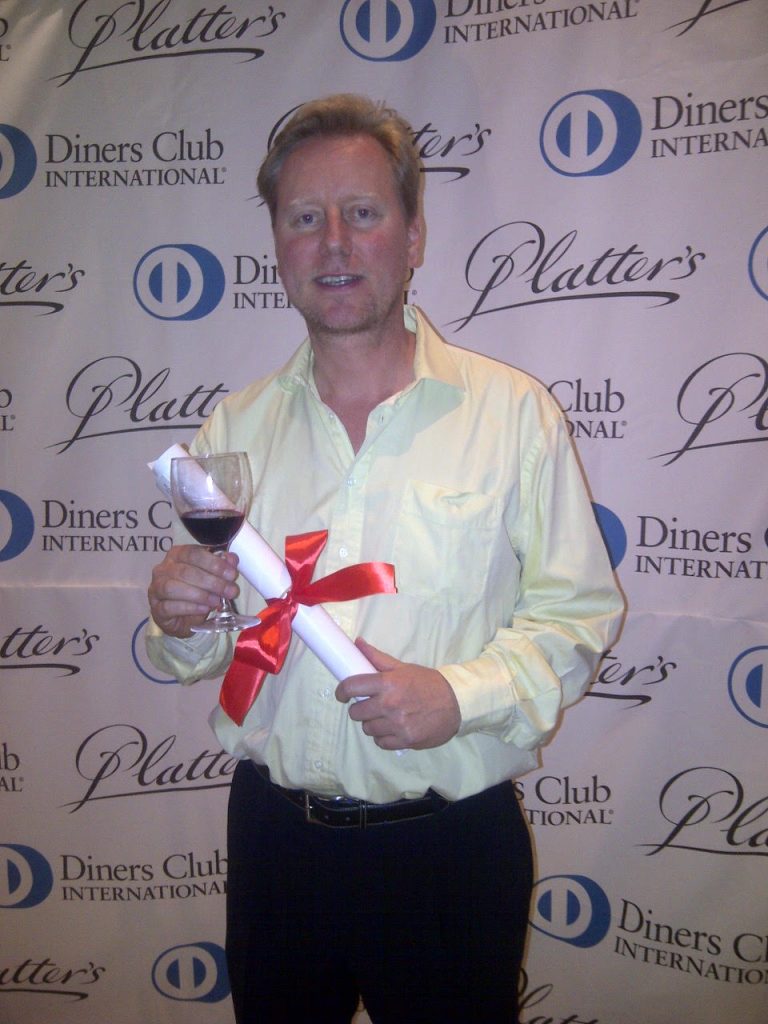
It was his 2010 Syrah, blended with five per cent Viognier and inspired by the wines of Côte-Rôtie. It received the maximum five stars in the South African Platter’s guide, placing it among only around eighty wines to earn that rating out of some 7,500 tasted. For a Croatian wine writer, however, something else was even more intriguing: an Englishman who had never been to Croatia and knew none of our winemakers had named one of his finest wines The Dalmatian.
We corresponded, Richard explained the legend behind the name, and I devoted two pages to him in my book Not Everything Is Black in Africa. More than a decade later, we returned to the conversation that Cape Town had interrupted. It turned out that the story of The Dalmatian began neither in Dalmatia nor in South Africa, but over a Sunday roast in a traditional middle-class English family.
Richard was nineteen in 1988 when his father opened a bottle of Château Talbot 1982 for Sunday lunch, most probably with roast lamb. His son did not yet possess the vocabulary of fine wine, but he did not need it for what mattered most.
– My father poured it for me. I experienced the soft balance of a Saint-Julien, although I did not know that was what it was, tremendous concentration and generosity of fruit, and great length on the palate. I did not really know what length meant either, but I could still taste the wine almost a minute later.
It was the first great wine moment of his life and the beginning of a bond between father, son and wine that would be completed many years later by a label and a poem. Before then, Richard had to leave England.
– I wanted to escape the monotony of life in England. I had always loved the French language, so I enrolled at university in Grenoble. My apprenticeship at Louis Latour was a stroke of luck: I wrote them a letter, they invited me for an interview and took me on.
His first job was not tasting great Burgundies but washing harvest crates at Latour’s winery in the Ardèche. He later moved to Burgundy, worked in vineyards and cellars, and gained experience at Olivier Leflaive and Domaine Jacques Prieur. Each house left him with one clear lesson.
– At Louis Latour I learnt how to reinvent tradition; at Olivier Leflaive, self-promotion and marketing; and at Domaine Jacques Prieur, quality at all costs.
Burgundy gave him his craft, but not the varieties to which he would eventually devote himself. When he began thinking about making his own wine in South Africa, Pinot Noir was not a realistic choice: high-quality fruit was difficult to source. Syrah, by contrast, seemed made for the Cape.
– Syrah is perfectly matched to the Cape’s Atlantic weather conditions and granitic soils. Viognier was the natural next step in that specialisation.
After six years in France, he went in search of a new job and a new opportunity. In 1996 he moved to South Africa, although he knew almost nothing about the country he was entering.
– I knew nothing of its history or wine industry, its mix of races and cultures, the new democracy, or even Mandela and the new constitution that was taking shape. I had entered a completely unfamiliar world.
His first serious lesson did not come in a vineyard. A colleague drove him around Constantia and explained that, during apartheid, bus stops had separate benches for white, Coloured and Black people.
– It took me some time to understand the historical significance of those divisions: that Black people were the indigenous population, while ‘Coloured’ referred to people of mixed ancestry, including descendants of enslaved people brought from the East, European settlers and Black African peoples.
France had taught him to read wine; South Africa compelled him to learn how to read a country. At the same time, the beauty of the Cape captivated him. He particularly remembers Vergelegen, the historic estate founded in 1700, which left him awestruck. He worked at several wineries, became familiar with the vineyards and, in 2002, had the light-bulb moment when he realised he might finally make a wine of his own.
He needed 50,000 rand to begin: enough for two tonnes of Syrah, new barrels and rented space in which to crush the grapes and mature the wine. His father gave him the money without Richard even asking.
– It was entirely in keeping with his nature and foresight. That money represented a new beginning for me: I was finally at the helm of my own boat instead of crewing somebody else’s ship. I was thirty-five. I have continued to risk my savings periodically, and there is always the danger of losing a secure job. But nothing ventured, nothing gained, especially when youth is on your side.
Richard owned neither a large estate nor endless vineyards of his own. He worked with selected growers, seeking his signature in the choice of site and picking date and in gentle handling that would preserve the character of both variety and place. His very first vintage taught him how difficult it could be to put his name to a wine made from grapes grown by someone else.
– I process the grapes gently and naturally. I try to preserve their character and their identity of origin and variety.
– In 2003, some of the berries were shrivelled. In South Africa we call it oud mans gesig, an old man’s wrinkled face. The grapes were picked too late because the timing suited the grower better. The sugar rose and the flavours became pruney. The next time, I made sure the grapes were picked earlier.
Nor did 2006 give him the wine he wanted.
– The weather was variable and ripening uneven. The wine was pretty enough, but it lacked guts and dimension.
The turning point came with the 2010 vintage. As he prepared the Syrah for bottling, he blended in five per cent Viognier.
– Viognier allowed me to rebalance the fruit, tannin, aromatics and oak. The wine finally became a holistic whole.
That wine became The Dalmatian. The small proportion of Viognier in the Syrah came from the tradition of Côte-Rôtie, while the name came from the story that Viognier originated on the Dalmatian coast and was taken from there to the Rhône Valley by the Roman emperor Probus in AD 281.
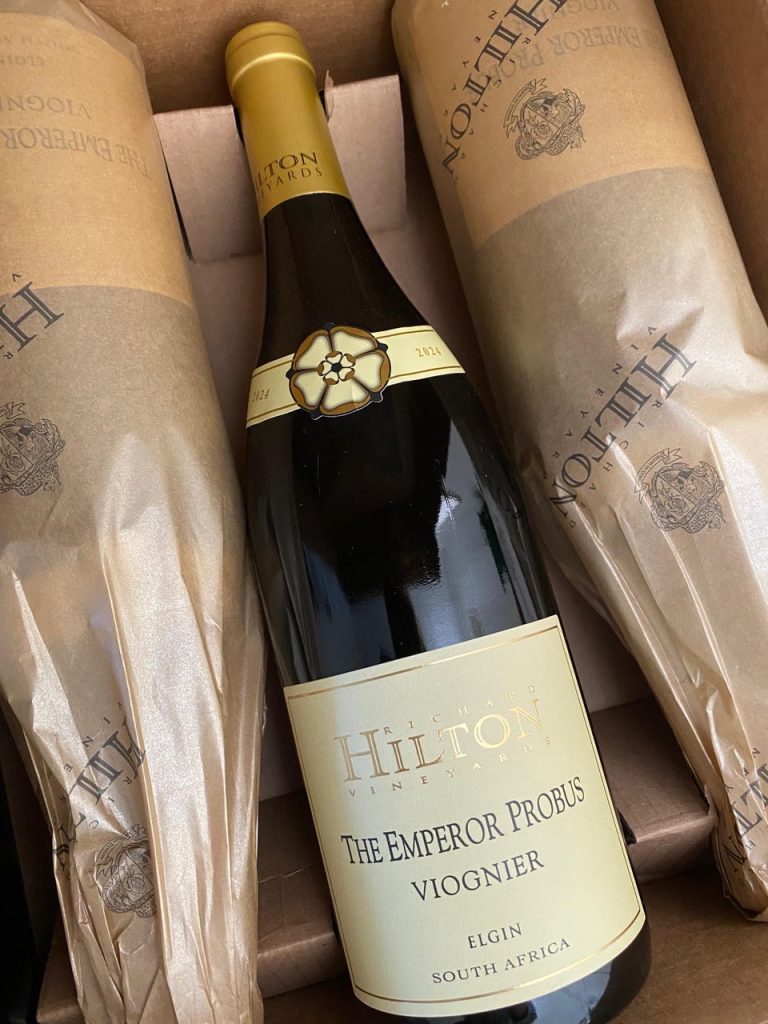
– It was long believed that Viognier came from Dalmatia thanks to Emperor Probus. Since I had added Viognier to my Syrah, as they do in Côte-Rôtie, I decided to call it The Dalmatian. The name The Emperor Probus for my Viognier was a natural progression of the story.
It was even believed that Viognier had survived in Dalmatia under the name Vugava Bijela. It was a beautiful story, almost tailor-made for a wine label, but DNA analysis showed that Viognier and Vugava are not the same variety. Wine Grapes, by Jancis Robinson, Julia Harding and José Vouillamoz, also states that there is no historical evidence for the story that Probus brought Viognier from Dalmatia to France.
Richard does not shy away from that today.
– It is historical supposition, not fact. We have yet to get all the facts straight.
Today, The Dalmatian is usually pure Syrah because Viognier and Syrah do not always ripen at the same time and are therefore difficult to pick together. The name, however, has remained. In the meantime, Richard also came to know the country he had already placed on his label. In 2017, he and his wife spent several days in April just outside Dubrovnik.
– We loved the trip, particularly because we came in the shoulder season, when there were very few tourists. We took a wine tour, visited several producers and attended a wine festival. It was a revelation and hugely enjoyable.
They did not reach Vis, the home of Vugava. Yet after that journey, Croatia was no longer merely an appealing footnote in Richard’s story of Viognier. It had become a country of real people, cellars and wines. The name The Dalmatian had acquired a second life: it no longer depended solely on a claim that science had disproved.
While one misconception gave Richard the name of his most important wine, a legal dispute took away the name of his winery. His business was originally called Pax Verbatim. In 2013, lawyers acting for a two-hundred-year-old Spanish wine company that owned the Pax in Bello brand contacted him.
– I knew from the start that it was serious. They used lawyers to contact me by fax and threaten me. I simply gave up the brand and put my own name on the label instead.
What might have looked like defeat became, he says, the best marketing decision he ever made.
– If a wine is not good enough to put your own name on the label, then you should not be making it in the first place.
His father, it seems, understood that before he did. In early 2013, during the first days of his illness, he saw the labelled The Dalmatian, finally bearing the Hilton name.
– His words were, ‘I could never understand why he didn’t put his name on the label from the start.’ He was a very proud father. He was a gentleman of enormous kindness and great integrity. He quietly admired the path I had chosen.
The man who had poured Richard his first great Bordeaux and, without being asked, provided the initial 50,000 rand died of cancer at the age of eighty-three. Richard described him as his personal human benchmark and dedicated the 2013 vintage of The Dalmatian to him. On the inside lid of the wooden case, he printed a poem he had written himself.
It was more than a ceremonial dedication. In the poem he addresses his father as a kind and gentle man, a loyal friend, thoughtful brother, loving husband and adored father. He calls him their light, their measure and a lighthouse, a man with a twinkle in his eye and firmness in his step, without malice or a desire to judge others. The poem closes with gratitude for his love, humour, gentle wit, demeanour and generosity beyond words.
– We hear your voice and see your image. A unique and beautiful imprint, embedded in our minds. This we treasure, forever in our hearts.
Richard no longer packs his wines in wooden cases because he does not consider them sustainable. But the case from 2013 was not merely packaging. It was a final letter to his father.
Alongside winemaking, he almost accidentally built a second business. A Swedish friend asked him to help organise a private wine tour. More journeys followed, then itineraries that included safaris, and eventually Greatest Africa, a business that expanded across South Africa, Namibia, Botswana, Zimbabwe, Kenya and Tanzania.
– A Swedish friend asked me to help a group of his compatriots. Private wine tours led to tailor-made journeys that included safaris. Over time, the offering expanded one country at a time.
– Making wine is sensual. Meeting travellers broadens the mind and brings human substance.
If he had only one day to show someone his South Africa, he would begin in Constantia, continue to Stellenbosch and finish in Franschhoek. He would weave history into the modern country, adding culture, architecture and gardens, and he would pour Viognier and Syrah: the two varieties that, thanks to one beautiful misconception, connected him with Dalmatia.
Until now, Richard’s story has been scattered across short biographies, wine ratings, technical sheets and the pages of his travel company. This story will therefore be, in effect, his first substantial introduction – not in England, where he grew up, nor in France, where he learnt his craft, nor in South Africa, where he makes wine, but in Croatia, in the Croatian language, in the country from which he once believed the Viognier that helped him name his most important wine had originated.
Science disproved the identification of Viognier with Vugava, and there is no historical evidence for Probus’s journey. The legend may not have taken Viognier from Dalmatia to France. It has, however, brought Richard Hilton into a Croatian story.
(Richarda Hilton’s websites: hiltonvineyards.co.za · greatestafrica.com)