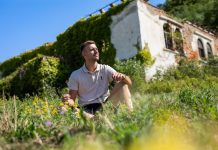
Slavko Kalazić succeeded where most people would have admitted defeat before even starting. With no formal training in oenology, no family winemaking tradition and no winery, he produced some of the most remarkable wines to emerge from Baranja in recent years. From neglected vineyards, arable fields and fallow land, he created sixteen hectares of vineyards with around a hundred thousand vines, built a modern winery and proved that Baranja could produce outstanding Graševina, Traminer, Chardonnay, Cabernet Sauvignon and Pinot Noir. And now, with almost every battle won, he wants to leave the wine business.
Not because he failed, but because he achieved what had interested him most about the entire adventure.
He created something from nothing, proved to himself that he could do it, and then realised that the work no longer called for what he did best: creating, solving problems and pushing boundaries. What remained was maintaining what he had built and fighting every day for markets, restaurant listings, shelf space and customers. He no longer sees himself in that kind of work.
– I am leaving the wine business and selling the winery. I want to sell it as a complete package, with the vineyards, equipment and everything I have created, and step away from the business. I have proved I can do it. Producing quality grapes and turning them into outstanding wine was never a problem. Selling it was. I proved to be a good winemaker, but I have absolutely no talent for selling wine.
Kalazić’s decision is not a reaction to one poor harvest or a disappointing business result. It has been taking shape almost since the beginning of his winemaking career, ever since he started producing wines admired by professionals and the public but struggled to sell them.
That is the paradox of his story: the more successful he became as a winemaker, the clearer it became that quality alone was not enough.
Slavko set up his first company in 1987. He turned a television repair business into Electronic Center, a substantial electronics business, but his approach to business always remained the same: what excites him most is something that does not yet exist. Once a business gets going and becomes stable, he begins to lose motivation.
– I have always been drawn to building a business from scratch. It was like that with television repairs, then with retail. Eventually, the electronics business was doing so well that I knew in advance how much I would earn and how the year would end. That is fantastic, but I began to find it boring.
The easiest way for him to explain it is through beans.
– I love bean stew with smoked meat. It is my favourite dish in the world. But if you ate it every day, you would get sick of it. That is what happened with electronics. I needed another pebble in my shoe, something that would make me think, learn and solve problems again.
He found that pebble in Baranja.
He bought his first holiday home in Batina for the countryside, the peace and the view of the Danube, then acquired the neighbouring properties. He was thinking of a recreation centre rather than wine. Wine happened almost by chance, because the holiday homes came with neglected vineyards, planted mainly with Portugizac and Pinot Noir.
His father asked whether he intended to work the vineyard or pull out the vines and turn it into a lawn. Slavko replied that he would do nothing in particular: whatever it yielded would be fine, and at least the grapes would be organic. His father warned him that it would yield nothing at all.
– And he was right. We neither pruned nor sprayed the vineyard. From five or six hundred vines, we picked two buckets of grapes, perhaps not even twenty kilograms. My father could hardly wait for autumn to see the result. He came with a friend from Zagreb, I bought secateurs and got a piglet or a lamb for the spit, and I had to buy wine from Gerštmajer because I had almost none of my own. While the piglet was roasting, my father said triumphantly: Do you see what I was telling you? If you will not do the work, what have we gained?

His competitive instinct immediately stirred. The following year, he wanted wine of his own, so he installed a manual press, a wooden barrel and a stainless-steel tank in the garage. In his judgement, the resulting wine was better than many of the bottled wines available at the time, and the following year it was better still. A pastime was beginning to grow into a serious business.
– I did not need the money. My main electronics business brought in enough. Wine simply happened. If that first holiday home had not come with a vineyard, I would almost certainly never have started making wine.
He regards the period between his first wine in 1998 and his professional entry into the business as his own degree in agriculture. In 2002, he decided to take it seriously, buying land and consolidating the plots, then ordering vines from Ivan Enjingi. He planted the vineyards in 2004 and 2005.
A rational person wanting to try ten grape varieties might have planted a thousand vines of each. Slavko planted 1.7 hectares with Chardonnay alone and 2.5 hectares with Pinot Noir. The more demanding the variety, the more interesting he found it.
Eventually, he had around 120,000 vines, but no winery.
He expected his first substantial crop in 2006. He told his employees that they would sell the grapes because he had neither a winery nor equipment, then left for Hvar. After three days on holiday, he changed all his plans.
He decided to keep the grapes and build a winery by 1 September. He had two months, but no drawings, permit, tanks, press or experience of handling that volume.
– I called a builder whose business card I had happened to get over a roast-lamb meal and asked whether he could build a winery by 1 September. He asked whether I had a plan. I told him I did, but it was in my head.
He drew it on Hvar and faxed it from the post office. Half an hour later, the builder sent him a cost estimate, and the very next day arrived with machinery. Slavko’s secretary, who had to mark out the building site and send photographs every day, concluded that his boss had lost his mind.
He ordered tanks made to specific dimensions and acquired a press dating from 1962. A red-wine fermentation tank worth 150,000 kuna fell onto the side housing its electronics while being unloaded. Fortunately, Slavko’s background in electronics enabled him to repair it.
During the hot summer, the new cellar had no time to cool down. When the Sauvignon Blanc arrived, Slavko added yeast to the warm must and went to Osijek to rest. The next morning, he was walking through knee-deep foam. Wine was erupting from the tank like a volcano, and the temperature had climbed above 32°C.
Fermentation had run wild: wine was erupting from the tank, the temperature had risen to 32 or 33°C, and a substantial proportion of the future wine had gone down the drain. The first neighbour he called said only:
– Why are you doing this when you have no idea what you are doing?
He was advised to put frozen bottles into the tank, but there was no time. He thought of using a water tanker and, with cold water running through a long hose, managed to stop the temperature rising.
Three days later, fermentation was over. The Sauvignon was the colour of Zlatni Pan lager, so Slavko thought it would end up being distilled into brandy. Even so, he put some of it into three wooden barrels. When he opened them six months later, the wine was yellow-green and so aromatic that the memory still gives him goosebumps. He sold the entire quantity to Zagreb’s Bon Appetit restaurant.
It was the first real proof that he could salvage something exceptional from a seemingly lost cause.
In his first professional harvest, he produced approximately nine thousand litres of excellent wine. His 2007 Graševina was so good that, as he puts it, drinking it almost seemed a shame. Without formal oenological training, relying on heart, intuition and his own mistakes, he secured Croatia’s top quality classification for seven of his ten wines.

In a conventional story, quality would then have translated into commercial success. For Slavko, that was precisely when the process leading to his decision to sell began. The wines were not selling.
– I was convinced that outstanding wine would sell itself. That has nothing to do with reality. People whose wines were not as good as mine sold them far more successfully. And good for them. They understood the part of the business that I did not.
The 2008 harvest arrived with his tanks still almost full, and he had to buy new ones simply because sales had not emptied the old ones. The grapes were perfectly healthy, so he left them on the vines to dehydrate; birds ate some of those intended for an ice-wine harvest.
What remained became wines that would define his career: a semi-sweet Cabernet Sauvignon with 16.7 per cent alcohol and a monumental Graševina, with Chardonnay and Traminer following a similar path.
The assessment panel classified the Cabernet Sauvignon as a quality wine rather than awarding it the top designation. Slavko asked why.
They told him it was unusual for a Cabernet Sauvignon.
– So if you make something unusual, it automatically cannot qualify for the top category. Yet this is a wine you cannot make every year. If it had been made on Pelješac, it would have sold out within a year at a hundred euros a bottle. It can last for decades yet.
The wines kept getting better, while he felt increasingly held back.
– I felt like an engine at full throttle, going uphill with the handbrake on. You want to reach the top, but smoke is pouring out behind you.
A distributor took over sales under an exclusive contract, set the prices too high and sold almost nothing, while Slavko was prohibited from selling through anyone else. Eventually, he went to Vrutak and accepted low prices: in the two months before Christmas in 2009, he sold sixteen thousand bottles, more than in the previous three years combined.
He had to enter the supermarket trade, contrary to everything he had imagined when planting the vineyards. Outstanding wines ended up on shelves at prices that generated cash flow but gave him no sense that his work was being valued as it deserved.
In his view, 2009 was the best vintage of his career. The Pinot Noir was initially coarse and rough, and three years later it was retailing for thirty-five kuna. Slavko stopped the sales because he did not want to cast pearls before swine: the wine was getting better, while the price remained absurd.
In 2010, floodwater undermined one of the legs of a large tank. Five thousand litres of Riesling flowed towards the Danube, while just two bottles remained standing and were filled by the tank itself as it fell. Samir, Slavko’s right-hand man, sealed them and wrote on them that they had been filled by the tank in 2010. That rainy year also produced Batina, a blend of Sauvignon Blanc, Pinot Gris and Chardonnay.
I once described his 2008 Cabernet Sauvignon and Graševina, his 2009 Pinot Noir and his 2010 Batina as his four masterpieces. He immediately drew my attention to the most important fact:
– But I made all those wines right at the beginning of my wine story!
Slavko has never doubted that Baranja can produce great wine, and he still regards it as having the greatest potential anywhere in the world for Graševina. Over the years, his style has shifted from powerful wines rich in alcohol and extract towards freshness, acidity and floral aromas, but he has always made them to suit his own taste.
Their quality was confirmed by two consecutive champion titles at Dubrovnik’s FestiWine, for Pinot Noir and Chardonnay. But quality alone did not open up the market.
– Quality is perhaps twenty per cent of the whole success story. Many times, I have measured myself against winemakers who sell incomparably more than I do. My wines finish above theirs in competitions, but that has nothing to do with restaurant sales.
In electronics, he had learned that a product had specifications, a purchase price and a customer. In wine, he discovered a different system.
– You can spend two years trying to get into a restaurant. You visit, bring free samples, pay for lunches, talk, and finally get one wine listed. Later, perhaps two. Then you cannot find the time to visit in person for a year, and they drop you. When you ask why they no longer buy your wine, they reply: When were you last here? They do not want my employee. They want me, the owner, to come, sit with the restaurant owner and buy him lunch in his own restaurant. That is not how I learned to do business in electronics.
He considers wine an exceptionally creative business. Growing healthy grapes and turning them into great wine is, for him, an act of creation. He acknowledges that selling wine also takes creativity, but that is precisely the part that has worn him out.
– I did not go into winemaking for the money. I had that in electronics. I wanted to enjoy creating wine. If my livelihood had depended entirely on the winery, perhaps necessity would have forced me to find extra motivation. But I did not have to elbow my way into the market at any cost.
During the first years, he worked in sixty-six square metres and kept most of his tanks beneath a canopy or out in the open. When Osijek entrepreneur Branko Ostović calculated what the winery and the tourism venture Slavko had in mind would cost, he offered some friendly advice: give it all away, because he would never find anyone foolish enough to take it on. Slavko still remembers those words.
Nevertheless, on the outskirts of Zmajevac, he built a new winery in the middle of nowhere, with no water, electricity, telephone or gas. He paid for a kilometre of water mains and an electricity transformer station, rediscovering what had always driven him: an impossible task.
– I started building without the money, and then the supermarkets opened their doors to such an extent that I built the winery without a loan. As soon as it was up and running, everything else closed.
Then came a succession of blows. The economic crisis reduced restaurant spending, retail chains left him little room to manoeuvre, and Covid, he says, finished him off. He put his expansion plans in a drawer and decided to stop investing.
His last major disappointment was organic production. In 2023, he harvested nothing and concluded that today’s adverse weather could not be tackled effectively with organic treatments alone. After leaving the organic scheme, he also lost the subsidies.
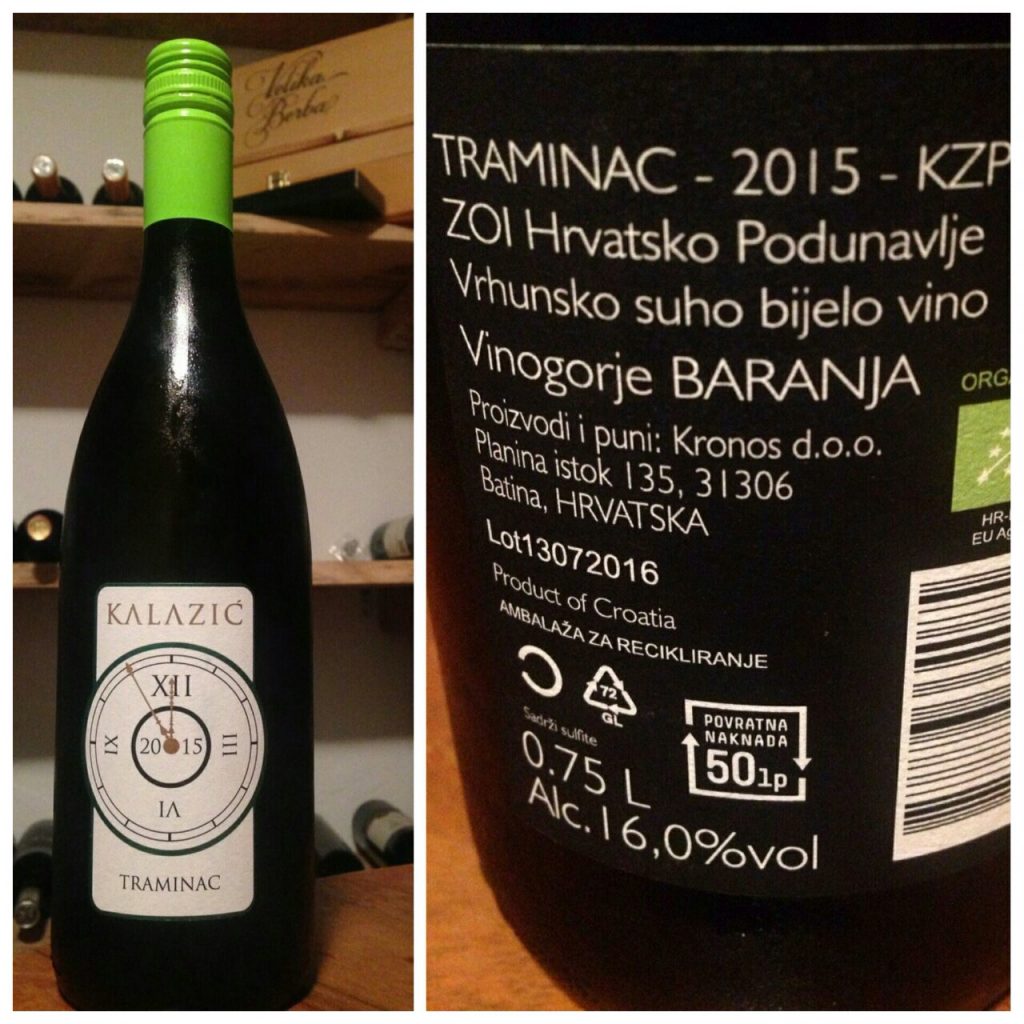
He will never stop making wine altogether; he will make it for himself, because his own wines are the ones he enjoys most. His 2022 Pinot Noir is still maturing in the cellar, and he believes it will be his last great signature wine.
– I am not claiming to be the best winemaker. My wines simply suit my palate best. I know what I have put into them, and I know what they are.
He has already come close to selling the winery once. Around ten years ago, he agreed a deal with a well-known Croatian winemaker, signed an agreement and welcomed the buyer, who arrived with the money, only to change his mind within days. They did not speak for two years.
– He was quite rightly angry. He told me he had thought I was a man of my word, and I had changed my mind at the last moment. At the time, I had made the rational decision to sell, but emotionally I was not ready. I felt as though I was selling my own child.
A vineyard can easily become your child: you plant the vines, tend them for three years before a substantial crop, and are beside them every day. For Slavko, wine too is a living being, a reflection of a person’s energy and state of mind when making it. That is why it took ten years for a decision made in his head to take root more deeply and become final.
– Today, if a buyer appeared, I would not hesitate for a second. That is settled. The most important thing was to detach myself emotionally from it all. I can now hand the winery over to someone else without a flicker of doubt.
He is willing to help the new owner for at least a year, until they have worked through a complete cycle together, from the vineyard and harvest to the wine in the cellar. If necessary, he will stay longer, especially for wines that need time.
But the winery will no longer be his.
There is also a simple family reason for the decision. His daughters and sons-in-law have their own professions, and his son is thirteen. Slavko does not want to oblige him to take over a business he may not love.
– Perhaps at thirty he will decide he wants to work a vineyard, but I cannot keep the whole operation going until then. If he wants to start, he can begin from scratch, just as I did. If I am alive and able, I will share my knowledge and help him.
His son recently asked why they had not been fishing once that year. Slavko loves fishing in autumn; he does not even need to catch anything. Sitting beside the water and hearing a fish splash or a leaf fall nearby is enough. But he has no time. He is pulled between the electronics business in Zagreb and the winery in Baranja.
Perhaps the easiest way to understand Slavko’s nature is through amateur radio. His favourite band was 7 MHz, full of interference and atmospheric noise. A signal would disappear through fading, then return; he would miss half the message and have to ask for it to be repeated. He did not enjoy operating on the clear 21 MHz band because it offered too little challenge.
On the most difficult band, he once finished second in the world and once third.
– Why did I choose the hardest band? When you manage to hear some exotic country or a Pacific island through all that interference, the satisfaction is extraordinary. I never bothered with the bands where everything was easy.
He built his winery on his own 7 MHz band, too.
He began with no knowledge, cellar or market. He planted demanding varieties in unreasonable quantities, designed a winery through the Hvar post office, cooled a fermentation with water from a tanker and repaired a fermentation tank that had fallen off a lorry. From sixty-six square metres and tanks beneath the open sky, he produced four wine masterpieces, then built a substantial winery in the middle of nowhere.
He had mastered the most difficult band.
What remained was simpler and more predictable: maintaining the vineyards, consistently reproducing the quality, visiting restaurants, handing out samples and negotiating with retail chains. That was no longer the challenge he wanted.
His departure also says something about Baranja’s stagnation. When he came to Batina in 1998, mornings were filled with the sounds of cockerels, pigs, poultry and dogs. Today, the cameras around his garden mostly show deer, foxes, pheasants and hares. Wild animals have taken over the space from which people and domestic animals have disappeared.
– Young people have been leaving for so long that there is almost no one left to leave. Once, you could make a living and put your children through school with two hectares of vineyard. Today, I cannot imagine it, even if the whole family worked there.
He is convinced that Baranja has enormous potential for wine and tourism, but it has yet to establish itself as a destination in the way Istria has. Indeed, Istria indirectly prevented one attempted sale: a Canadian buyer was looking for almost everything Slavko had to offer, but wanted it in the established destination of Istria. Later, renewed tensions in the Middle East led him to abandon investment in Europe altogether.
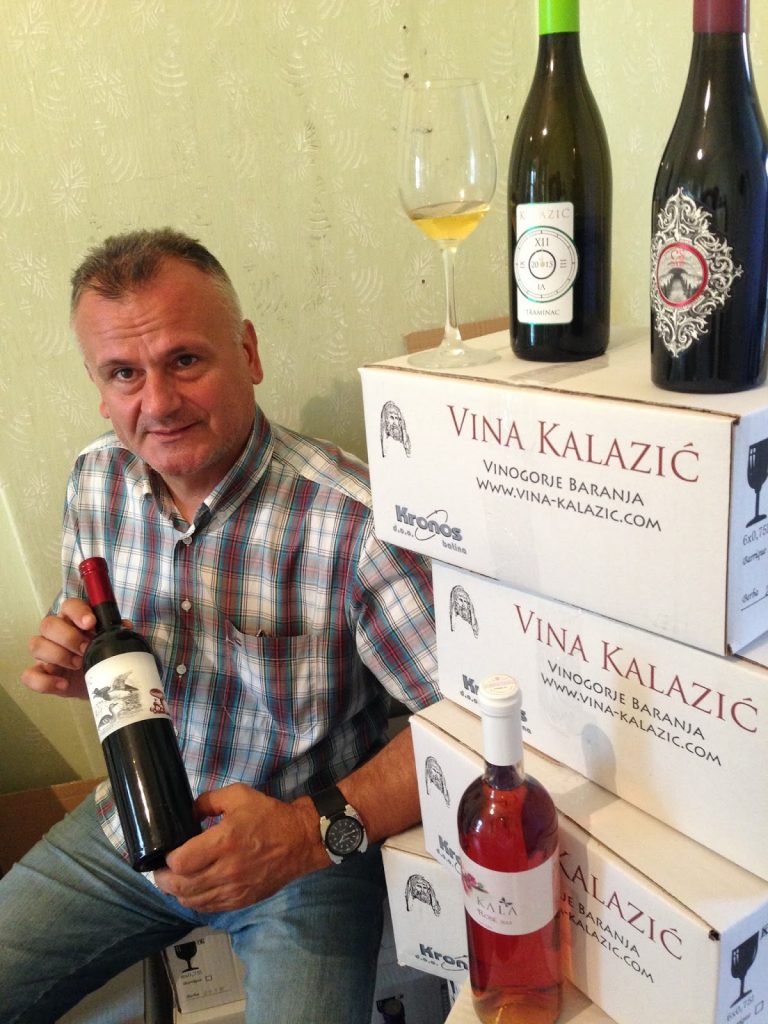
Slavko nevertheless believes there is a buyer out there: someone who loves nature, peace and a view of the Danube, and who will recognise the value of a complete operation without having to endure his decades of struggle.
His voice carries none of the bitterness of a man escaping a wreck. The winery has vineyards, equipment, production facilities, a tasting room and a wine archive that demonstrates what this terroir can produce. Its owner has answered the question that first drew him into the adventure: can a man without formal oenological training make great wines in Baranja? He can.
– Today, I can hand over the winery with complete peace of mind. I will help the new owner for as long as necessary, but there will be no pang of regret. I started from scratch, without formal training. I never employed an oenologist; I was my own oenologist. I am satisfied with what I have done.
In wine, there is no final destination. Slavko could spend years yet searching for a better Graševina or Pinot Noir, but the challenge is no longer great enough to outweigh everything that follows the harvest.
Selling, then, may be the most consistent decision of his business career rather than an admission of defeat. Slavko has never thrived on repeating what he has already mastered. He needed a problem no one knew how to solve, a radio band full of interference, a vineyard where yesterday there had been an arable field, and a winery where there was neither water nor electricity. He solved all of it and made wines that will outlive him. Now he needs something new.
– I have several challenges in mind, because I cannot live without them. But it is best not to announce your plans and projects publicly before you get them going. Once I have started, I will be able to say what I am doing.
Until then, he will look for someone ready to carry on where he has left off. That person will not have to endure the mud, the knee-deep foam, the tanks beneath the acacia trees, the overturned barrels, the kilometre of water mains or the years spent proving that Baranja can produce great wine. Slavko Kalazić has already done all of that for them.
All that remains is to take over the winery – and to have what its creator no longer has enough of.
The motivation to keep going.