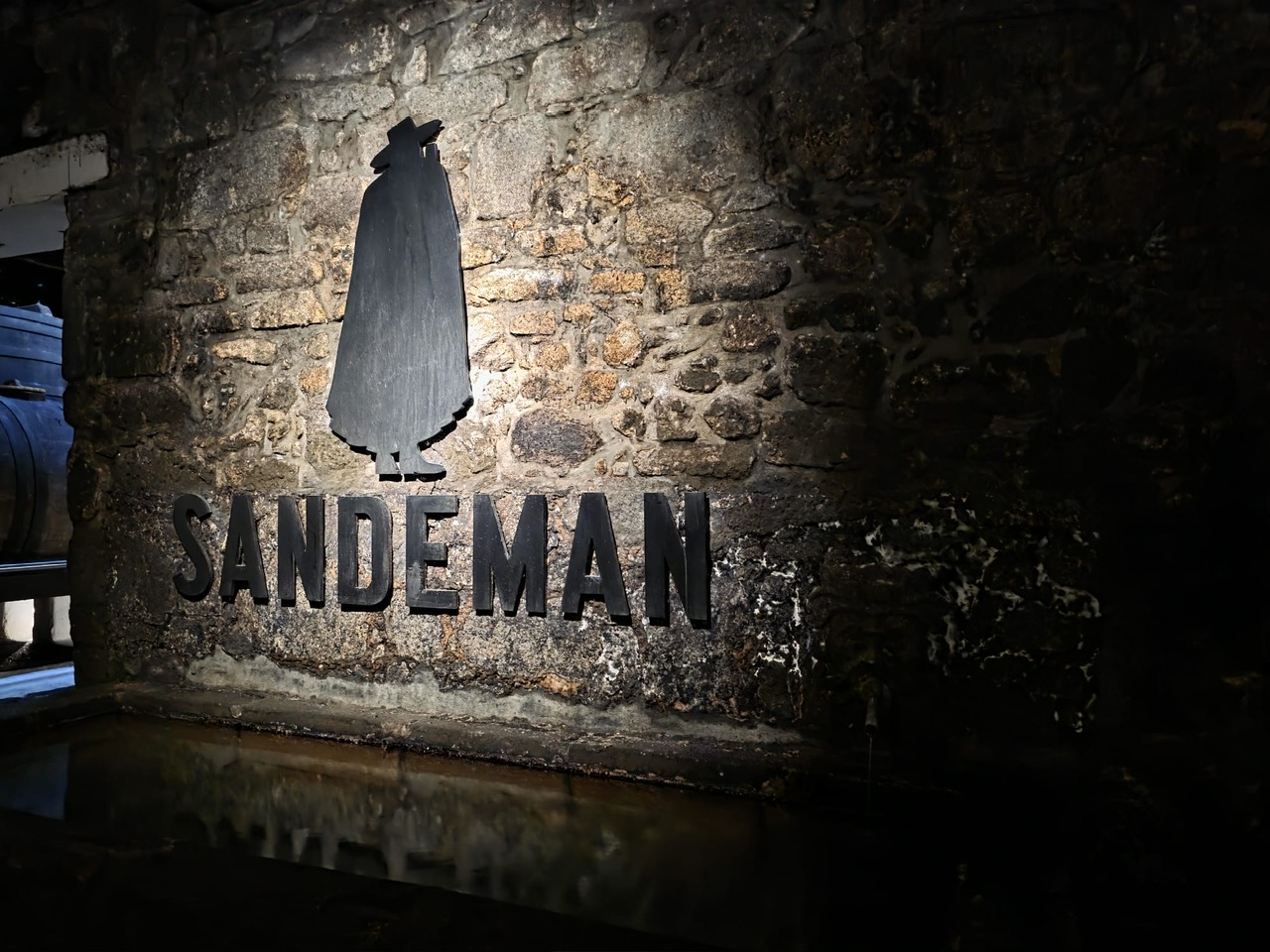
We came to Sandeman’s cellars in Vila Nova de Gaia to taste port, but within minutes it became clear that the wine would have to wait until they had told us everything else. First came the young man who left Scotland for London in 1790, then the family firm that turned his surname into a guarantee, followed by enormous wooden vats, old bottles, the earliest advertisements and a man whose face no one has seen for almost a hundred years.
That man was everywhere.
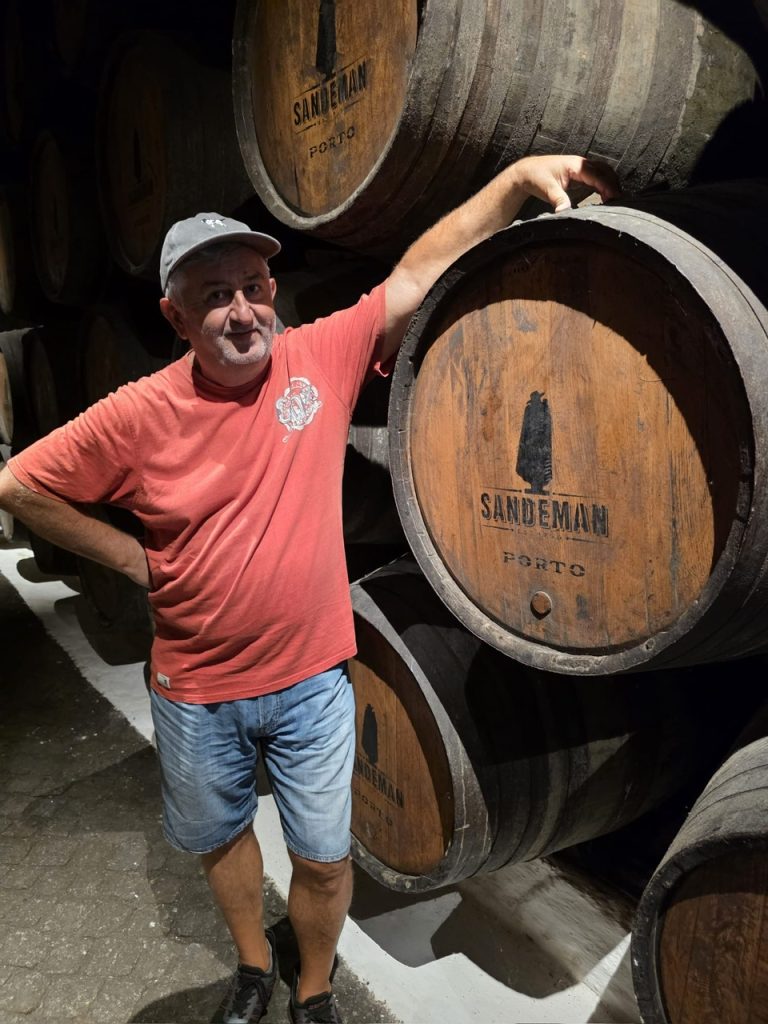
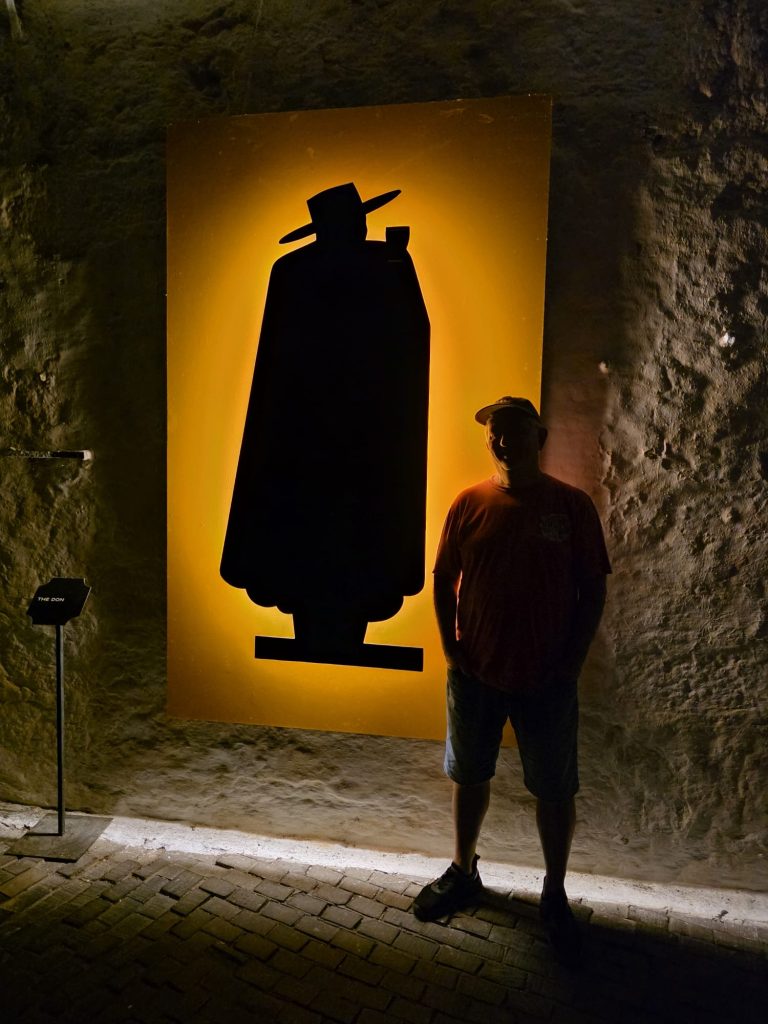
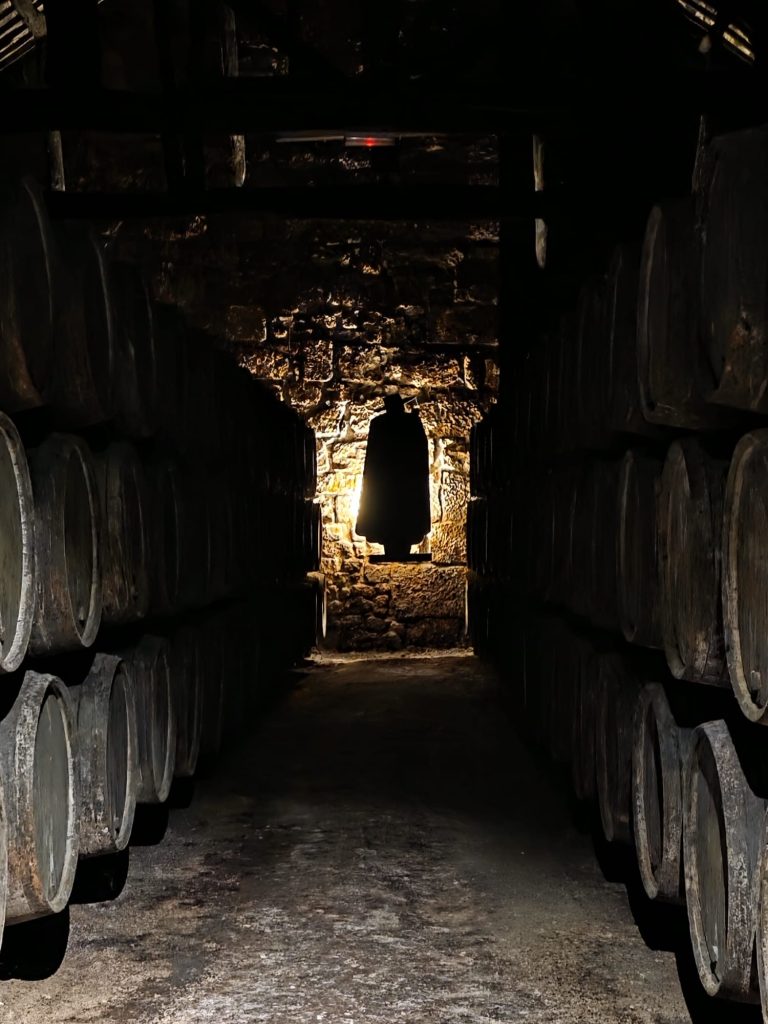
He watched us from the walls despite having no eyes, lurked in the dimly lit corridors, stood on labels and guarded a glass of port beneath the broad brim of a Spanish hat. His black cape merged with the darkness of the cellar, as though the Don had never been added to Sandeman’s story but had waited there for centuries for someone to draw him.
At wineries, people often say that wine should be allowed to speak for itself. Sandeman had no objection to that, but did not want to risk nobody hearing it. So they gave it a name, a signature, a black cape and a hat, then built an entire world around it.
Caves Sandeman is much more than a cellar through which tourists are led before being poured a few glasses. The entire visit is meticulously staged, from the free exhibition room devoted to the family’s history to the half-light among the barrels. Paintings, letters, photographs, ceramics, old advertisements and interactive displays prepare visitors for the space where marketing must finally fall silent.
That is where the wine begins.
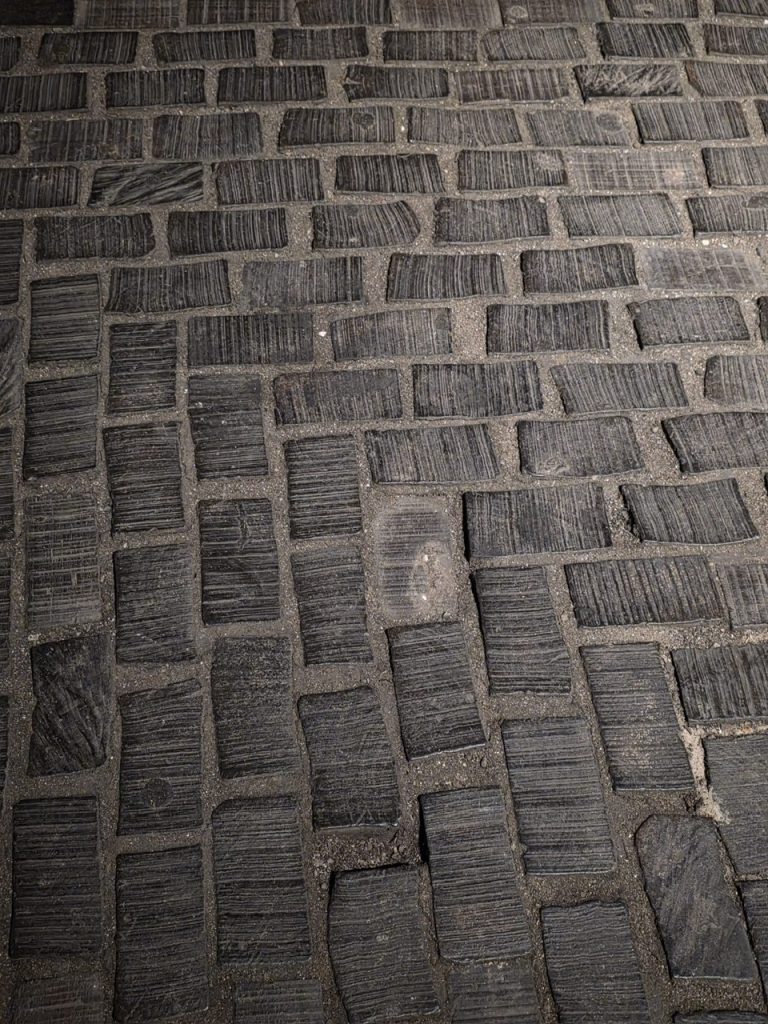
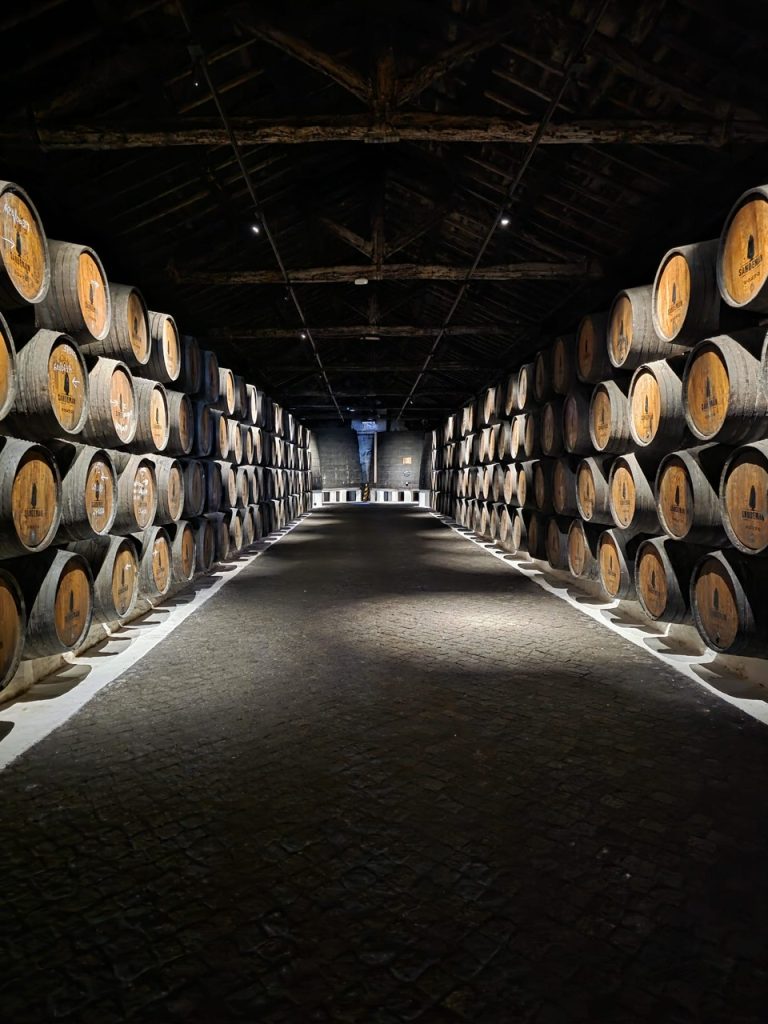
Beneath the vaulted ceilings stand rows of 640-litre casks, with enormous wooden vats holding several thousand litres towering beside them. Even the floor between them has a purpose. It is made from the staves of retired casks, to prevent other barrels from being damaged as they are rolled across it. Wood that could no longer protect the wine had been given a new task – protecting the barrels.
Today, we would call it a zero-waste philosophy. At Sandeman, they put it quite literally beneath our feet.
In the casks, port matures for years, changes colour, softens its power and teaches patience. The smell of wine and old wood cannot be drawn on a poster or invented by an advertising agency. Sandeman could dress its Don however it wished, but among those barrels, drawing would no longer do. There had to be wine.
That is precisely why its marketing works so well. Behind the black cape stand the cellars, barrels and time; in front of them comes a story told so convincingly that visitors never feel they are being sold something. Although, of course, they are being sold everything: the tour, the history, the tasting, the bottle, the souvenir and even the opportunity to spend the night inside the brand.
Before the Don, there was George Sandeman.
He was twenty-five when he began trading in wine in London in 1790. The son of a respected Scottish cabinetmaker, he did not enter the business as heir to a wine empire. He asked his father for a loan of three hundred pounds and began trading in port and sherry from Tom’s Coffee House on London’s Birchin Lane. At a time when deals were sealed on a gentleman’s word, the young Scot could offer exactly what would later become the foundation of an entire brand: his own name and a promise that it stood for something.
A letter to his father from late November that year contains none of the confidence that now radiates from the walls of his cellars. George weighs every commitment, considers the money he is investing and fears losing people’s trust. He knows he cannot run a business without capital, but also that a man’s credibility depends on meeting his obligations properly and on time. He hopes that the new venture will bring him “a moderate fortune” within nine years, adding that he will try to shorten that period to five or six.
His estimate was cautious. Seven years later, his native Perth honoured him as a distinguished and wealthy man.
Much later, his successors would turn that letter into a museum exhibit, the three hundred pounds into the beginning of a legend, and the founder’s anxiety into proof that trust had been built into the firm from day one. It is difficult to separate history from its masterful retelling, but perhaps there is no need to. Sandeman does not leave an authentic document shut away in an archive. It places it before visitors and uses a few lines written by an anxious young man to begin the story of two centuries of success.
George understood very early that wine did not have to bear only the name of the place it came from. It could also bear the name of the man who vouched for it.
In 1805, when wine was mostly transported in casks and brands in the modern sense did not exist, Sandeman began burning the initials GSC – George Sandeman & Co. – into the wood with a hot iron. It was a literal brand, guaranteeing the origin and quality of the contents. Before labels, advertisements, the Don and television, there was a cask declaring whose wine it held.
That same year, he moved the business to St. Swithin’s Lane in London, into a building with cool, dry cellars that would remain Sandeman’s headquarters until 1969. Six years later, he bought cellars in Vila Nova de Gaia, on the bank of the Douro opposite Porto. Today, they hold more than two thousand casks of wine.
George Sandeman no longer had to give every customer his word in person. The mark on the cask spoke for him.
As glass-bottle production became more standardised and wine was increasingly shipped in bottles, the Sandeman name moved from casks to labels. In 1877, just a year after Britain’s first trademark-registration legislation came into effect, the GSC George Sandeman & Co. mark was officially registered, becoming one of the oldest trademarks still in use today.
Sandeman was telling customers more than that the bottle contained port. It was telling them whose port it was and who stood behind it.
When cheaper wines from other regions began to be sold as port, Sandeman went to court to defend both its name and the wine’s origin. In 1905, it added a signature to labels and capsules, stating that a product without it was not genuine. In defending the brand, it also protected customers from counterfeits.
But protecting the name was only half the task. People also had to remember it.
At the beginning of the twentieth century, quality wine supposedly did not need advertising. Established firms relied on reputation, merchants and recommendations, while an advertisement might arouse suspicion that the product needed help finding a buyer. Sandeman evidently concluded that even good wine would suffer no harm from people knowing it existed.
At the Paris Exposition of 1900, it displayed more than its wines. It presented the Douro, horse-drawn carts, people and production, creating a scene of the region from which port came. Even then, there were signs of what it would later perfect in Vila Nova de Gaia: wine is easier to remember when accompanied by a place, people and a story.
From 1910, Sandeman bought works by contemporary artists and turned them into posters, labels, advertisements and menus. Rather than placing wine beside a picture, it turned the picture into a wine salesman.
In 1921, Sandeman appeared above Piccadilly Circus. Its first animated illuminated advertisement lit up the roof of Café Monico. First, a full bottle and an empty glass appeared; then wine flowed from the bottle, the glass filled to the brim, the bottle disappeared and, finally, the wine merchant’s name shone in gold lettering.
London’s Evening News wrote that the sight made men’s mouths water.
Before the eyes of passers-by, the bottle emptied, the glass filled and thirst arose in the middle of the city. Sandeman had not yet found the Don, but already knew that good advertising had to do more than announce a name. It had to create desire.
A few years later, it pushed the boundaries further.
In 1926, French illustrator Jean d’Ylen created a series of Sandeman posters, with the Centaur attracting the most attention. A bare-bodied centaur gallops with a bottle of port in each hand, while a woman clings to his back. The image was unusual enough to make anyone stop and sufficiently outrageous to make at least one person reach for a pen.
Mrs Smith of Leicester complained to Sandeman that the poster looked “devilish and lustful”. She wondered whether a lady really had to climb onto the devil’s back to obtain two bottles of port.
Sandeman neither apologised nor quietly removed the poster. It kept her letter, which also inspired a mocking verse about a young lady from Leicester who found the woman riding a wild horse so distasteful that it put her off port.
Almost a hundred years later, the controversial poster, Mrs Smith’s complaint and the verse it inspired all became part of Sandeman’s story. Even a customer’s objection had become part of the brand.
The Centaur remained one of Sandeman’s most provocative posters, but a very different figure would become the firm’s enduring face. Equally striking, far more mysterious and simple enough that fashion could never change his clothes nor time age his face.
He appeared in 1928.
George Massiot Brown was a little-known Scottish artist working for the London printing firm Lochend. Since French illustrators were particularly highly regarded at the time, he probably concealed his Scottish origins behind the signature G. Massiot. He offered Sandeman a dramatic black figure beneath a broad-brimmed hat, wrapped in a long cape and holding a glass of red wine. Sandeman bought the original for fifty guineas.
The figure looked as though he had always existed, although every part of him had a clear purpose. The broad Spanish hat represented sherry, the black cape worn by Portuguese students represented port, and the ruby-coloured glass held the wine that completed the story. In a single silhouette, Brown brought together two countries and the firm’s two principal lines of business.
Yet the most important thing was what he did not draw.
The Don had no face.
You could not tell whether he was cheerful or stern, young or old. He belonged to no particular era and depended on no actor’s popularity. He was simply a black shape, a hat, a cape and a glass – simple enough to recognise instantly and ambiguous enough for everyone to see something of their own in him.
He appeared in national advertisements in 1930, before finding his way onto business letterheads and labels. He has featured on labels since 1934, and after appearing on the Dry Don bottle in 1935, he began to be called by the name the whole world knows today.
For fifty guineas, Brown sold a drawing. Sandeman turned it into a man who has been selling wine for almost a hundred years.
The Don soon moved from posters to labels, ceramic decanters and illuminated advertisements without losing his recognisable character in any form. Sandeman had acquired what every brand dreams of: a symbol that no longer needed a name beside it for people to know whom it belonged to.
In 1965, the Don finally moved. He became the main character in Sandeman’s first television campaign, with a slogan that distilled the firm’s entire strategy into a single sentence:
Find the Don and you have found Sandeman.
After almost four decades in advertisements and on bottles, the black silhouette had already become a substitute for the name. Television gave it movement and offered Sandeman a new stage for what it had long been doing: combining mystery, humour, seduction and wine.
A year earlier, the firm had challenged traditionalists with white port. It recommended drinking it chilled, with ice, soda water or tonic, and even in a cocktail with gin and lemon peel. London’s Evening Standard suggested that such a proposal might cause apoplexy among diehard port lovers.
Sandeman was selling more than a new wine: it was selling a new occasion on which to drink it. Port no longer had to wait for the end of dinner, an armchair and a solemn mood. It could become an aperitif and a refreshing drink. Decades would pass before white port and tonic became commonplace, but Sandeman had already shown that it did not regard tradition as something to be kept motionless beneath a glass dome.
White port also opened our tasting.
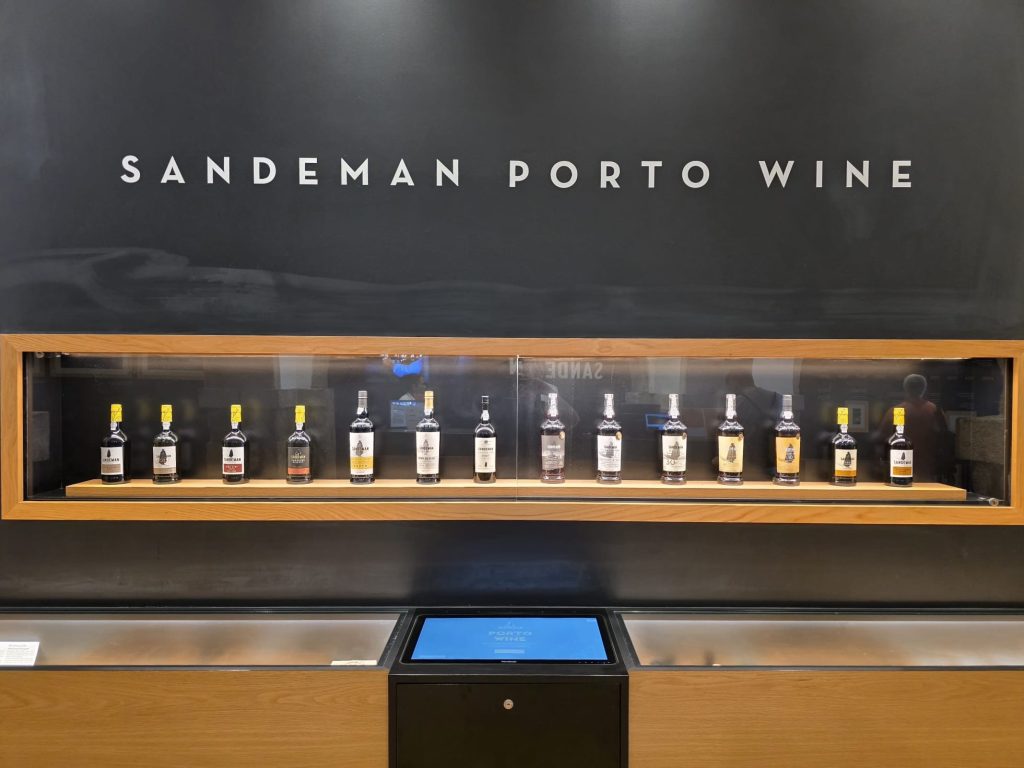
Five bottles stood before us, arranged to echo on a smaller scale what we had just experienced throughout the cellars. We began with Apitiv Reserve White Port, continued with Founder’s Reserve Ruby Port and the unfiltered Late Bottled Vintage 2020, then moved on to Imperial Reserve Tawny Port and finished with the twenty-year-old Old Tawny Port.
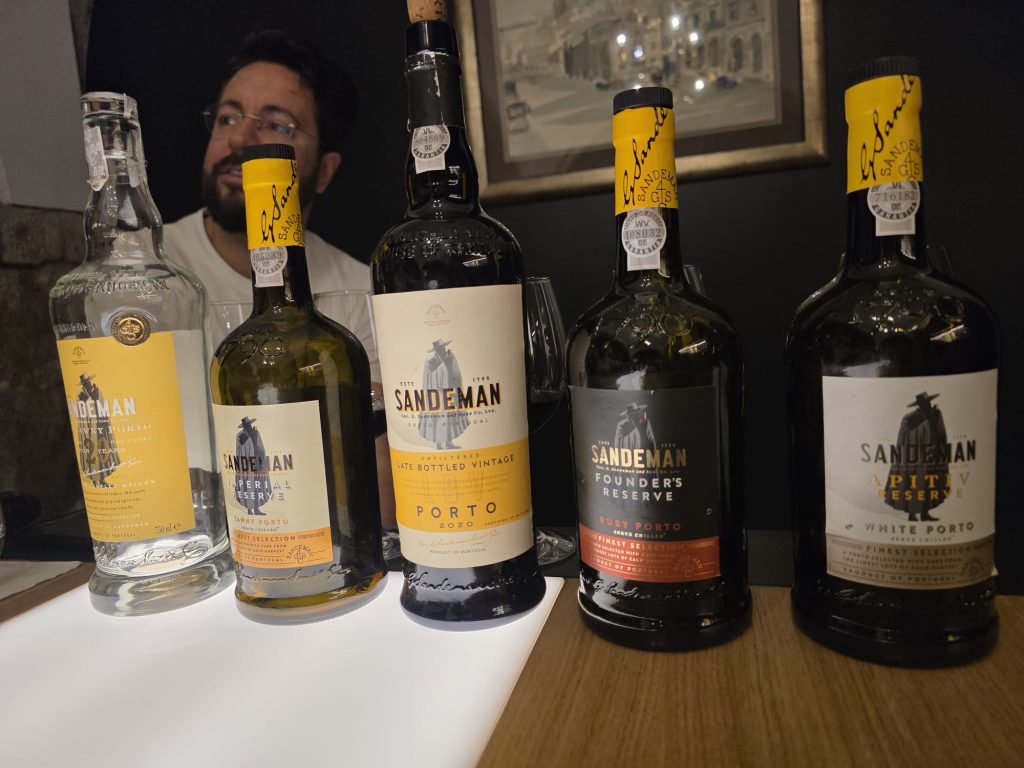
Nothing about the sequence was accidental. It led from white and ruby port, through an unfiltered LBV from a single vintage, to two tawnies shaped by prolonged ageing in wood. The last carried a twenty-year age indication, with the label promising dried apricots, honey, nuts, spice and vanilla.
In five glasses, they condensed what they had shown us throughout the cellars: different styles of port, a single vintage, wood and time.
Even the founder returned to the table.
In his 1790 letter to his father, George Sandeman cautiously considers the three hundred pounds needed to start the business and hopes for a moderate fortune. More than two centuries later, his name appears on Founder’s Reserve, poured for visitors in the middle of the cellars in Vila Nova de Gaia. Apparently, “moderate” was the only word he misjudged.
The Don looked slightly different on each of the five bottles. On some, he dominated the label; on others, he receded behind the wine’s name. Colours and typography changed, but their shared identity was visible from the other side of the room. Five different ports looked like five chapters of the same story.
The tasting impressed us precisely because it was no incidental addition to the tour. It was its finale. Only after they had shown us the founder, old advertisements, the Don, the casks and the firm’s history did port arrive in our glasses. By then, we already knew we were tasting more than wine. For over two centuries, Sandeman had made sure it would never be just wine.
Since 2002, Sandeman has belonged to Portugal’s Sogrape, which has turned its history into an even more extensive visitor experience.
Quinta do Seixo in the Douro gained a new winery in 2007 and became one of Sandeman’s principal wine-tourism destinations. In 2018, The House of Sandeman Hostel & Suites opened in the former offices above the cellars in Vila Nova de Gaia, presented as the world’s first branded hostel.
Visitors no longer have to stop at buying Sandeman, tasting Sandeman or touring Sandeman. They can sleep in it, too.
The range of visits has been developed like a wine portfolio, from introductory tastings to lunches, vineyard picnics and tastings of old tawnies. Four wines aged ten, twenty, thirty and forty years have become “a century of tawny”: four glasses adding up to a hundred years of marketing perfection.
One cellar and one black cape have been developed into an entire range of experiences. This is a continuation of the idea George Sandeman began when he burned his initials into a cask in 1805: making sure the customer always knows whose wine is in front of them.
Entry to the Sandeman Hall is free. Leaving it without wanting to pay for the next part, however, is difficult.
There, without false modesty, they also display the history of their own marketing: the journey from initials burned into wood to Piccadilly, the Centaur, the Don and television. Before our eyes, Sandeman takes its marketing machine apart, shows us every cog and puts it back together, while we photograph posters, read slogans and search the walls for the Don. We know we are watching a carefully staged performance, yet still want to see the next act.
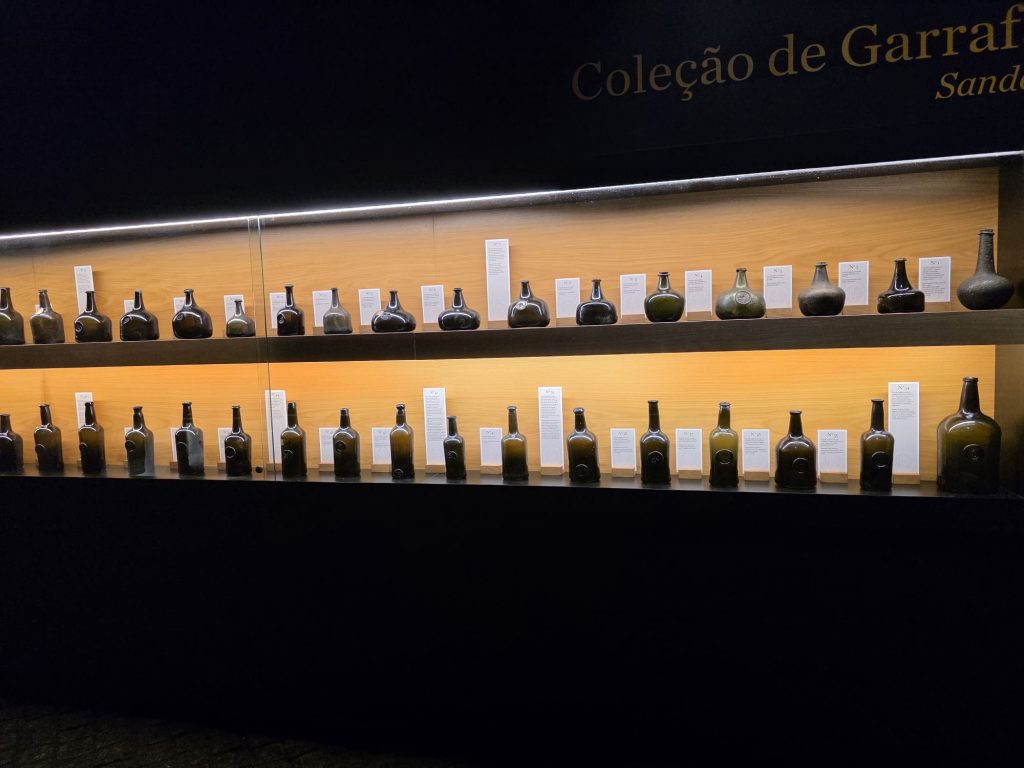
Sandeman’s collection of old wine bottles is presented as one of the most important and comprehensive in Europe. The oldest examples date from around 1650, almost a century and a half before the firm was founded.
Handmade bottles varied in shape and capacity, and wealthy families commissioned their own examples bearing initials, coats of arms and the year they were made. A bottle was more than a vessel for wine: it was a sign of ownership, taste and social standing.
Sandeman was founded in 1790, but its museum story begins around 1650. A good brand evidently knows how to incorporate even the time before its existence into its own history.
The bottles are illuminated in long display cases, set apart from their surroundings by the dark cellar walls. Sandeman has made them into a small stage for time.
Yet it was not the oldest examples that held Maja and me the longest.
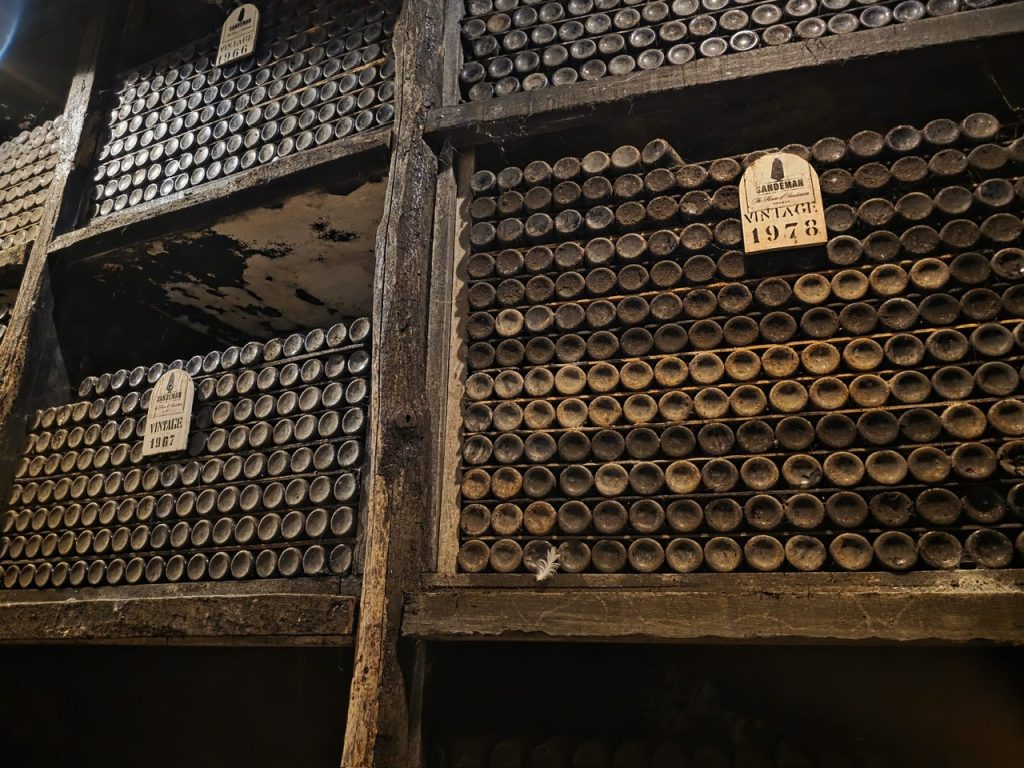
In the archive section, among bottles of different vintages lying on their sides, 1967 and 1978 rested next to each other. My year and Maja’s.
After 1790, 1805, 1928, 1935 and all the other dates that had guided us through the firm’s history, we suddenly saw the only two that did not belong solely to Sandeman. For us, they were no part of a timeline, a business chronology or the evolution of port. They marked the beginning of our own stories.
For almost two and a half centuries, Sandeman had been turning years into value. The older the wine, the more celebrated the vintage and the rarer the bottle, the greater the cause for pride. But it did not have to explain or advertise 1967 and 1978 to us. Those years already meant something.
We stood before our own vintages, neatly laid down in the wine archive, and for the first time during the visit we were not thinking about how old Sandeman was.
We were looking at how old we were.
By the time we left, we knew about the young Scot and his three hundred pounds, the initials burned into wood, the illuminated advertisement that made Londoners’ mouths water, the woman from Leicester whose dislike of the Centaur put her off port, and the artist who drew one of the world’s most famous faceless men for fifty guineas.
We had tasted five ports, walked among 640-litre casks and enormous wooden vats, passed bottles older than the firm itself and found our own years in its archive.
We had come to taste wine, and Sandeman had sold us a story.
The best thing about it was how gladly we bought it.