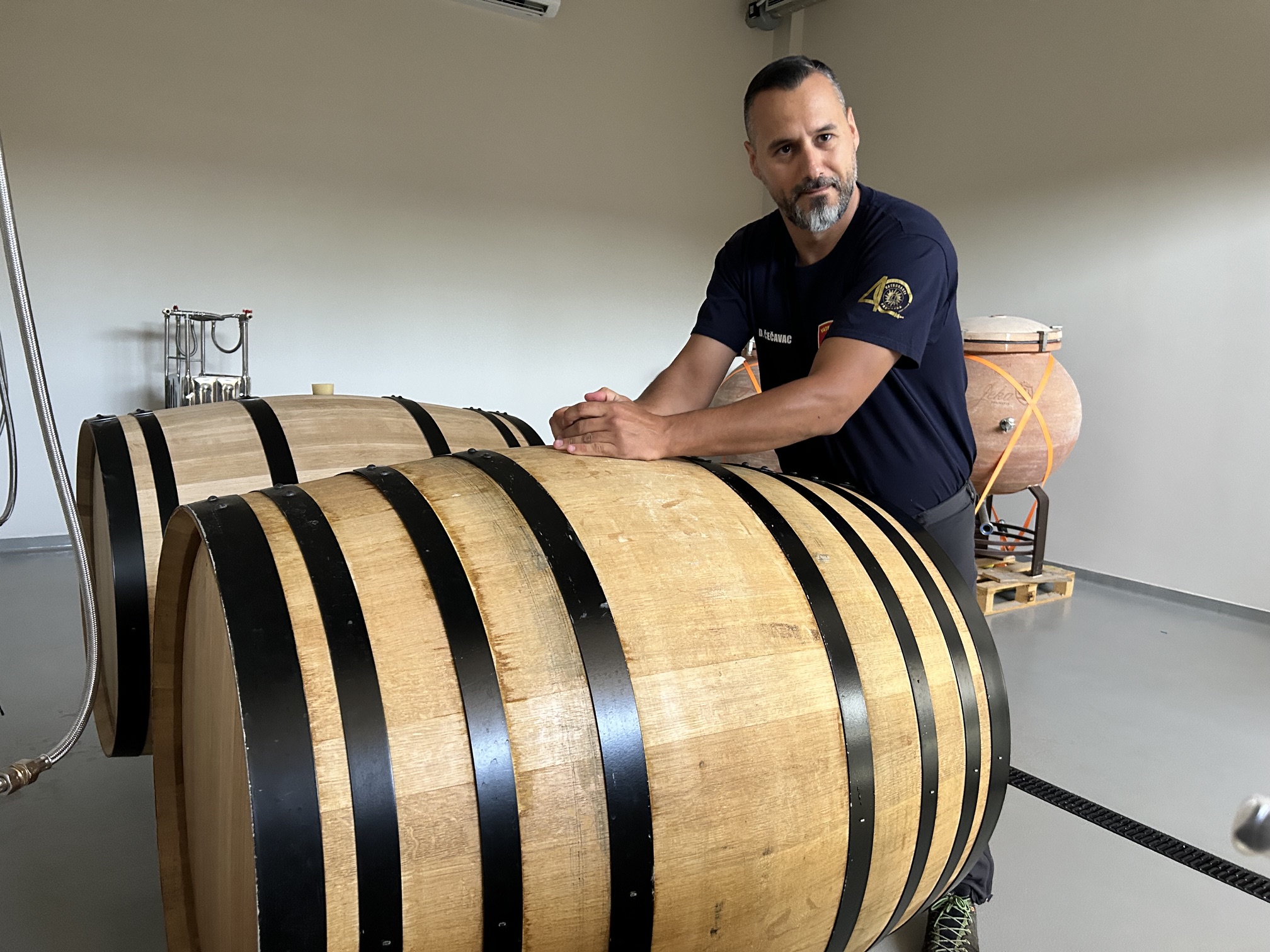
Da je Daniel Čečavac vinariju gradio ondje gdje vino prirodno pripada, mogao je završiti na Pelješcu, svojoj prvoj vinskoj ljubavi, ili u Imotskom, kojemu se posljednjih godina sve više vraća. Umjesto toga završio je u gospodarskoj zoni Zadvarja, na zemljištu kupljenom za preseljenje obiteljske tvornice plastičnih proizvoda.
Zašto baš ondje?
Daniel odgovor posuđuje od vinara kojima se godinama motao oko bačava.
— Kada pitaš vinara zašto je u kupažu stavio dvadeset posto neke sorte, katkad će ti odgovoriti: zato što sam je imao. Tako sam i ja imao ovo zemljište.
Vinarija, dakle, nije trebala biti vinarija. U njoj su se trebale proizvoditi plutajuće sigurnosne ograde kojima obitelj Čečavac svake godine od plovila štiti kupače na pedesetak kilometara hrvatskih plaža. Otac Miroslav počeo ih je postavljati još 1995. godine, a Daniel predlaže jednostavan način da se shvati razmjer obiteljskog posla:
— Uzmi konop dug pedeset kilometara pa pokušaj s njime hodati.
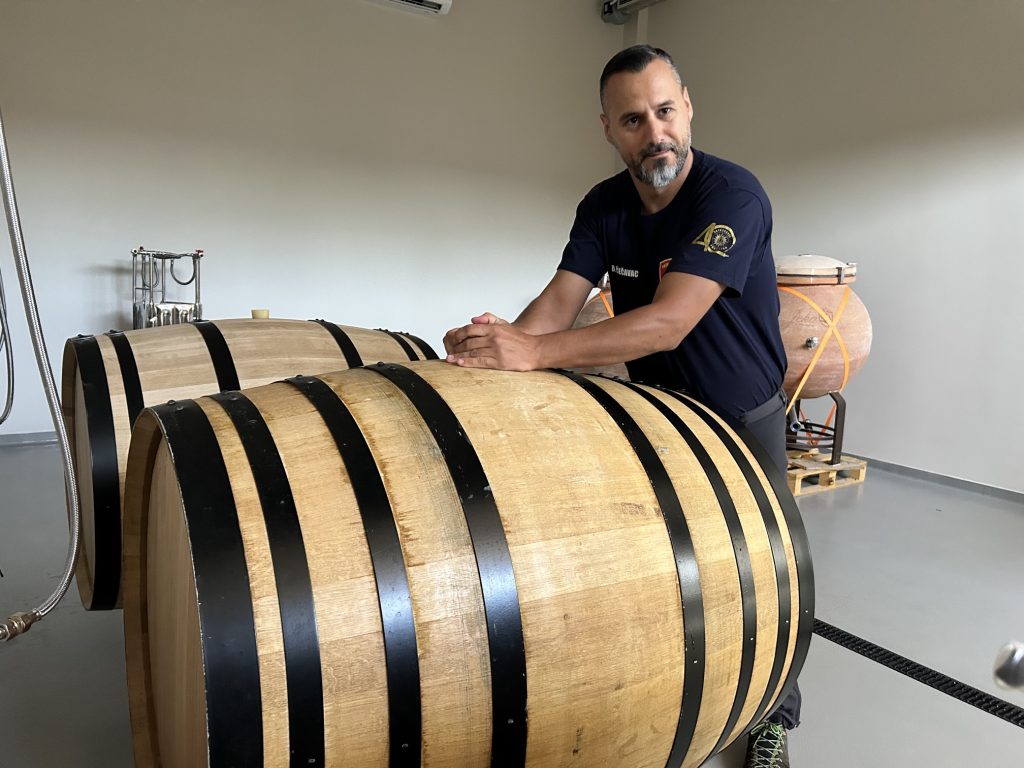
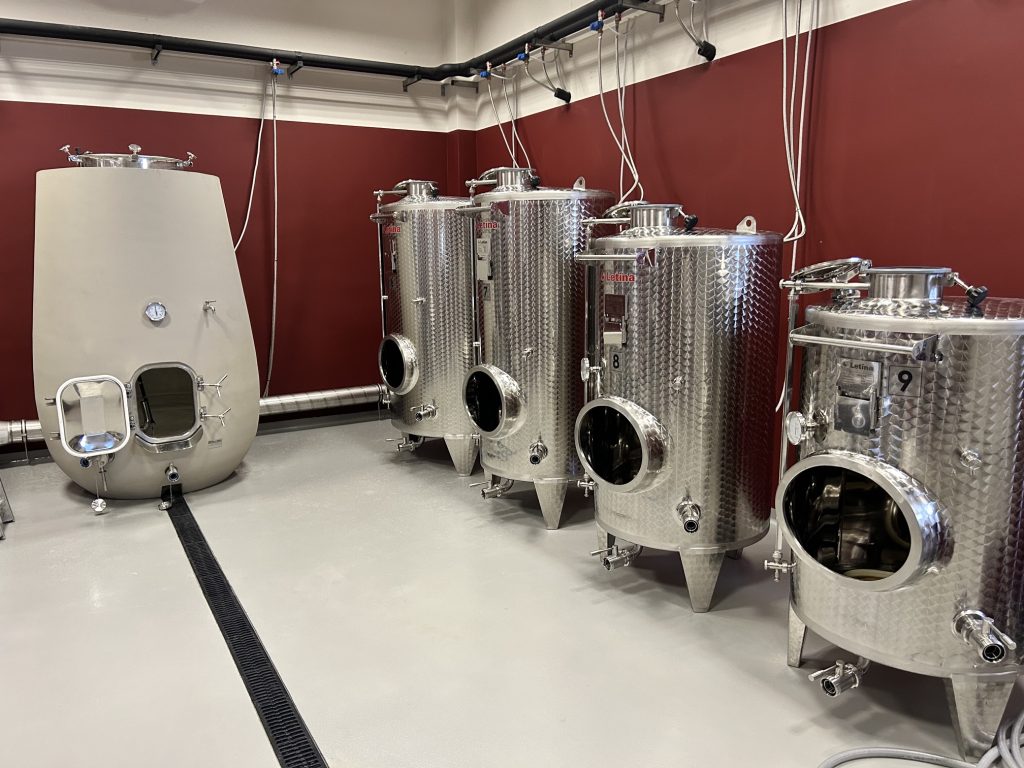
Proizvodnja naposljetku nije preseljena iz Promajne. Prostor je dobio bačve, vinifikatore i amfore, a čovjek čija je obitelj desetljećima povlačila granicu između kupača i glisera odlučio je prijeći onu između kušača i vinara.
Ta je granica za njega bila mnogo neizvjesnija.Had Daniel Čečavac built his winery where wine naturally belongs, he might have ended up on Pelješac, his first wine love, or in Imotski, to which he has been returning increasingly often in recent years. Instead, he ended up in Zadvarje’s business zone, on land bought to relocate the family’s plastics factory.
Why there?
Daniel borrows his answer from the winemakers whose barrels he spent years hanging around.
– When you ask a winemaker why they put twenty per cent of a particular variety into a blend, sometimes they will say: because I had it. Well, I had this land.
The winery, then, was never meant to be a winery. It was supposed to manufacture the floating safety barriers with which the Čečavac family protects swimmers from boats along some fifty kilometres of Croatian beaches every year. His father, Miroslav, began installing them in 1995, and Daniel suggests a simple way to grasp the scale of the family business:
– Take a rope fifty kilometres long and try walking with it.
In the end, production never moved from Promajna. The building acquired barrels, fermentation tanks and amphorae, while a man whose family had spent decades drawing a boundary between swimmers and speedboats decided to cross the one between wine taster and winemaker.
For him, that boundary was far less certain.
For twenty years, Daniel Čečavac had been learning how to recognise great wine. By his own estimate, he tasted approximately twenty-five thousand wines, bought old Bordeaux, trembled while carrying two bottles of 1990 Romanée-Conti, undertook the WSET Diploma programme and opened bottles at Vinocom that ninety-nine per cent of people would never have the chance to see, let alone taste. From that side of the label, everything seemed clear: the wine was in the glass, and his task was to explain why it was worth something – or why it was not.
Now he had to produce what he had previously admired.
– Which is easier?
– Nothing is easy, of course. But I enjoy new discoveries and exploring new horizons. I do not like every day being the same, nor do I like taking the same road home. Even as a child, I always chose a different route. Repetitive things tire me quickly.
In Zadvarje, a road he had never travelled awaited him. He was not entering winemaking as someone who had inherited his grandfather’s vineyard, his father’s cellar and a family recipe. He is neither an agronomist nor an oenologist, and did not grow up washing barrels and waiting for his elders finally to let him take part in the harvest. His factory settings, as he calls them, are entirely different.
First, he learned what great wine should be. Only then did he learn how to make it.
– I am not saying that my approach is better or more correct, or that I am better than other winemakers. But our factory settings simply are not the same.
His uniforms differ, too. Croatian wine audiences are accustomed to seeing him in jackets he designs himself. He chooses the fabric in Naples, and Ivica Gere, in Zagreb’s Vrbani neighbourhood, translates his ideas into the cut, buttons and other details.
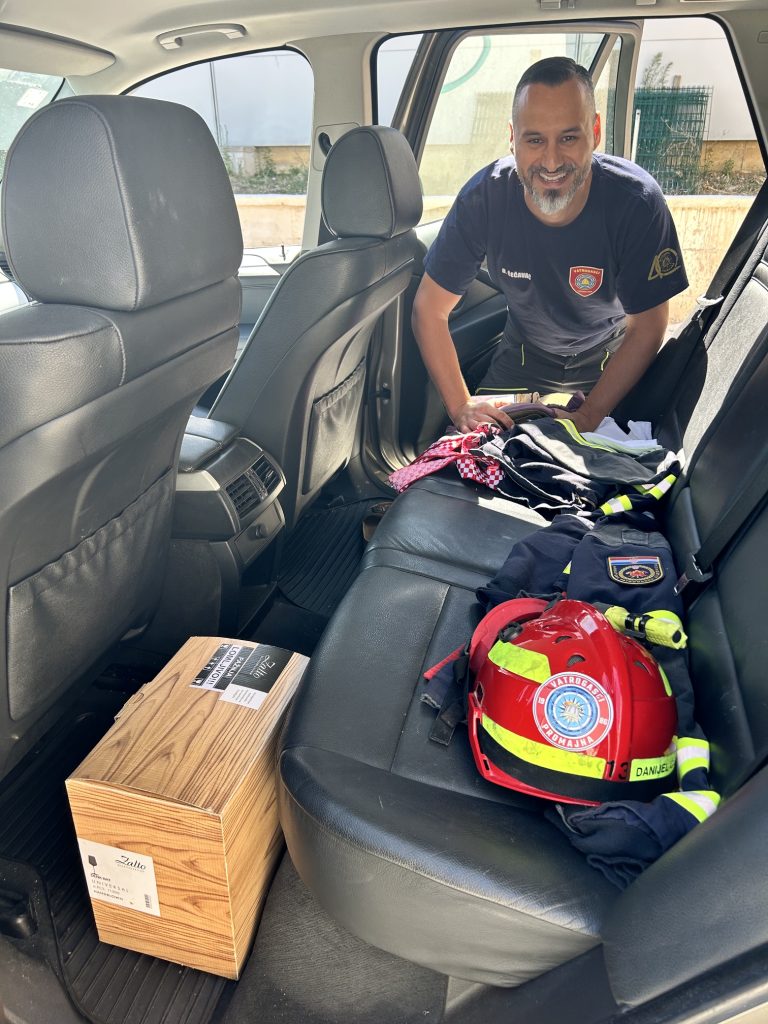
He always keeps another uniform in his car.
A firefighter’s.
– Those extremes make me quite an enigma to some people. One day, I am wearing a jacket I designed myself, and the next I am in a firefighter’s uniform.
He has been a member of the Promajna Volunteer Fire Brigade for fifteen years. His father has been a firefighter for forty years and served as the brigade’s president for fifteen, while his sister has been its secretary for the past decade or so. The Čečavacs, Daniel laughs, have a small fire crew in their own home.
When a call comes, he does not know whether the fire is five hundred metres away or twenty kilometres. And firefighting is about more than fires: there are floods, fallen trees and cats someone has to rescue from a tree.
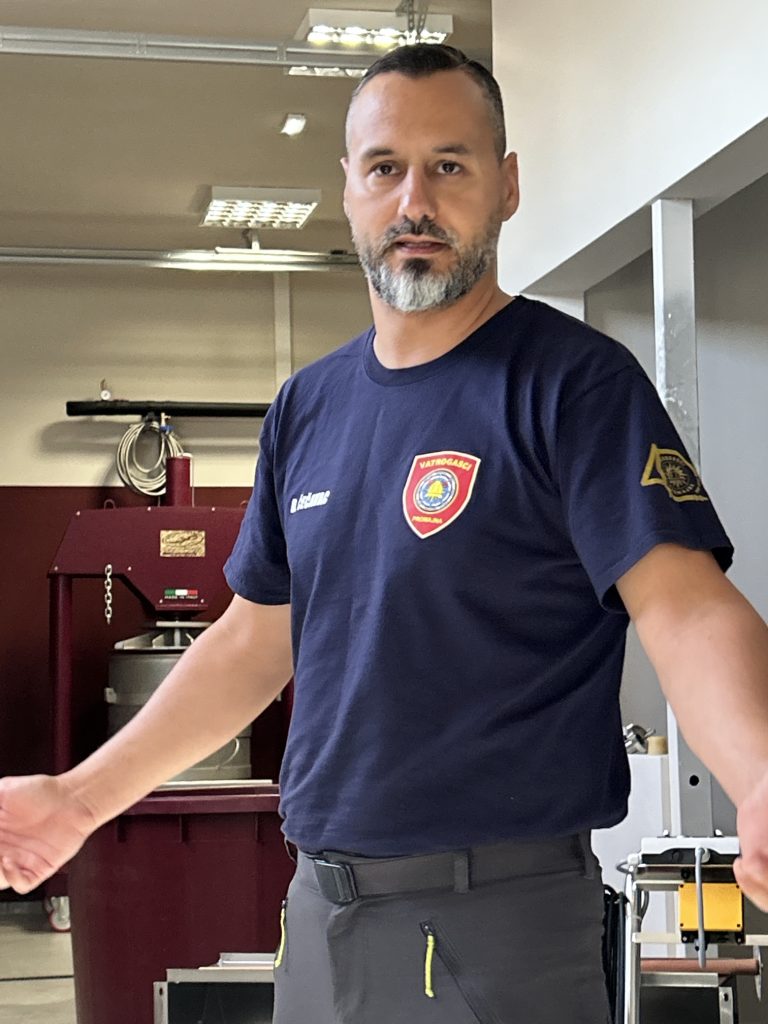
The jacket and the firefighter’s uniform neatly explain a man who meticulously chooses Neapolitan fabric but does not hesitate to enter a fire.
The winery in Zadvarje should show what happens when that same man begins choosing grapes.
Twenty years before installing his first fermentation tanks in Zadvarje, Daniel Čečavac had no idea wine would become his vocation. In fact, he barely drank it.
Everything changed in Dubrovnik, where he studied hospitality management at what was then the American College of Management and Technology, now RIT Croatia. Yet even there, his route to wine was indirect. He already enjoyed Cuban cigars, which naturally led him to rum.
Alongside his studies, he worked at Dubrovnik’s Hilton and, briefly, in London’s Chelsea. He was a bartender and cocktail maker, and at weekends his apartment became a small student cocktail academy with a rather relaxed curriculum.
– There was a party almost every weekend, with a select crowd, of course, and I made the cocktails.
He collected rums as well as serving them. At one point, he had more than two hundred and fifty different bottles.
Two men nudged him towards wine, neither of whom had wine qualifications or any ambition to lecture him.
The first was a neighbour who had lived in Italy for a while and cooked pasta almost every day. When he had no money for anything else, he prepared it with just Parmesan. He drank wine with it, and Daniel began joining him for bevanda – wine mixed with water.
The second was the landlord of the apartment Daniel later moved into. Every day, he would come out onto the terrace with a three-litre demijohn of homemade red wine.
– That was his daily allowance.
When Daniel returned from lectures, he would join him for a chat and a glass. Wine entered his life without any grand plan, through pasta, bevanda and his landlord’s demijohn.
Cocktails began to interest him less, and wine more. In 2007, he subscribed to Wine Spectator, which arrived from America. The subscription, postage and customs charges were a serious expense for a student.
– I think it cost me around ninety pounds altogether. I barely managed to afford all twelve issues.
He bought wine books, Parker’s guides and anything he could find about Bordeaux. He generally could not afford the wines that interested him, but that did not stop him learning about them. And because he was studying in Dubrovnik, Pelješac lay between his books about Bordeaux and wine he could actually encounter.
There, he discovered his first wine love.
– You always remember your first girlfriend and your first kiss. That is how I remember Pelješac. Without it, I certainly would not have gone in this direction.
A professor took him to the Open Cellar Days, and the first cellar he entered was Bartulović’s in Prizdrina. Everything he did not yet understand fascinated him: why Dingač was so special, how vineyard sites differed, what barrique brought to wine and why the same label spoke differently from one vintage to another.
He drank and compared the 2001, 2002, 2003 and 2004 vintages. He did not know the winemakers, so he called them. He would phone Zlatan Plenković at home and ask why a particular site was considered a grand cru, what barrels he used and anything else he wanted to know.
Then, on Stradun, he spotted Miličić’s Dingač 2000 Reserva, a Sabatina champion. The bottle cost five hundred kuna.
For a student in 2006, that was a serious financial decision.
He walked into the wine shop and said:
– Hello, I would like to buy this bottle.
And he bought it.
Later, he also bought a 1994 Dingač for approximately six hundred kuna. When Pavo Miličić heard that a twenty-year-old was spending that much on his old vintages, he began giving him wines, too.
– He found it interesting that a twenty-year-old had turned up buying bottles like those.
Daniel was seeking an answer to why one bottle was worth five hundred kuna while another was not worth fifty. The price was his tuition fee, and every new bottle a lesson.
Bordeaux taught him what great wine was. Pelješac showed him that great wine could also be made close enough for him to call the winemaker at home. He therefore devoted his dissertation to the sustainability of viticulture and winemaking on Pelješac at the time. He was studying hospitality management rather than agriculture or winemaking, but his professors allowed him to follow the direction in which his curiosity was already pulling him. While preparing the dissertation in 2007, he interviewed Boris Mrgudić, Mato Matuško and other Pelješac winemakers.
At the same time, he worked at Gil’s, today Dubrovnik’s 360 restaurant. He joined while the restaurant was preparing to open, and one delivery set his benchmark for wine excitement forever.
A lorry arrived carrying expensive French wines intended for the Russian owner, Viktor Vekselberg. Among the cases was a small wooden box containing two bottles. Daniel grabbed it and headed up the stairs, then looked down mid-step to see what he was carrying.
Two bottles of 1990 Romanée-Conti.
– My hands began to shake.
They held more than wine: they held the entire world he had been reading about. The problem was that he knew no one who could explain how to enter it.
He joined the Croatian Sommelier Club and still has his membership card somewhere, but never attended its courses. Twenty years ago, wine education was not as accessible as it is today. A more substantial course meant travelling to Zagreb or Istria, and the young student in Dubrovnik did not even know whom to approach.
– I did not have a Daniel back then, as my students at the college in Makarska have me today, to show me where to begin and direct me towards the right sources.
He learned from books and bottles, unaware that WSET even existed.
– Sometimes I wonder what would have happened if I had enrolled then. Perhaps I would have a higher qualification today, although I have never been obsessed with titles. Learning something has always mattered more to me.
When WSET came to Croatia, Daniel started at Level 1 in 2013 or 2014, despite already having substantial knowledge and thousands of tasted wines behind him.
From then on, his wine career unfolded in ten-year cycles. In 2006, aged twenty, he entered the wine world. In 2016, at thirty, he enrolled in WSET Level 4, the Diploma programme. In 2026, at forty, he welcomed the first harvest at his own winery.
He began the programme in London and continued in Rust, Austria. He was the only Croatian student and, as he puts it, the black sheep of his cohort. He also belonged to one of the last cohorts whose Diploma covered both wines and spirits.
Some twenty years after his first serious encounters with rum, he found himself facing theory, blind tastings and examinations across every spirits category.
Vinocom introduced him to a wider wine audience. Thanks to Ivan Dropuljić and his family, he held his first masterclass at Zagreb’s Esplanade in 2015. Among the wines tasted was Château Grand-Puy-Lacoste 1996 from Pauillac.
Daniel insists on the word masterclass.
– Today, we use that name for all sorts of things, but a masterclass means exploring a subject in greater depth, with discussion and interaction.
His concept was simple, although financially rather unreasonable: offer people wines they would almost certainly never taste on their own. He bought and paid for them in advance, taking on all the risks of an old bottle, because even when the fill level, cork and colour appear impeccable, nobody knows what is inside until the cork is pulled.
One highlight was the 2019 “Icons of France” masterclass. Its eight glasses included Dom Pérignon 1975, Château Gruaud Larose 1961 and a Rivesaltes from 1930.
– What is the value of knowledge if you will not share it with others?
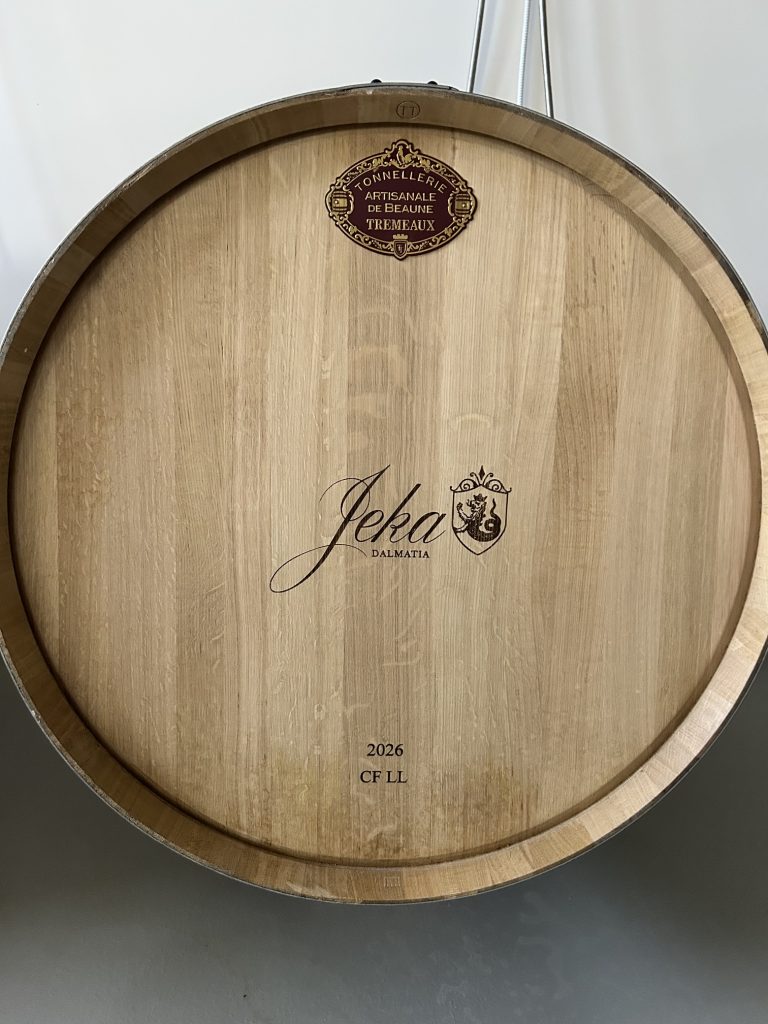
For more than ten years, Daniel opened great bottles and explained why they were great, accepting the risk that a wine several decades old might become an expensive lesson.
But that was still the risk of a single bottle.
With Jeka, he put his own name on the line for the first time.
In 2016, the same year he enrolled in the WSET Diploma programme, Daniel was sitting with Milan Grabovac in the wine bar the Grabovacs then ran in Makarska. They were discussing Bela Voda, Tikveš’s blend of Vranac and Plavac, whose 2010 vintage Robert Parker had awarded ninety-four points. It was the first Macedonian wine to receive such a high score from a critic of that standing.
Blending Plavac and Vranac was not unknown on Pelješac, either. Daniel, however, wanted to go a step further.
– Some people misunderstand me and think I want to prove something to them. I do not. I want to prove things to myself. Once I have shown myself that something is possible, my interest cools and I move towards something else.
That was how the idea for Jeka emerged. The Grabovacs had practical knowledge, vineyards and a cellar, while Daniel had tasting experience and a vision of the wine he wanted to create. Later, he also worked with Darijo Gašpar for four vintages.
– The Grabovacs and Darijo knew far more about production than I did. I brought a different kind of knowledge and a vision they perhaps lacked a little, so we complemented one another.
Jeka was never conceived as the wine of a single vineyard, wine district or even one Dalmatian region. Its idea was to bring together inland Dalmatia and its islands, the finest sites and varieties, each with a different role in the finished wine.
– The islands give me body, power, exotic character, structure and backbone, while inland Dalmatia gives me finesse, elegance and finer acidity.
Daniel calls it multi-terroir Dalmatia. He seeks grapes in different pockets of the region: one variety brings aroma, another acidity, a third body, a fourth structure and a fifth tannins. None is therefore better or more important than the others.
He connects this approach with Bordeaux, where the proportions of Cabernet Sauvignon, Merlot, Cabernet Franc and Petit Verdot change according to the vintage. Blending allows a winemaker to maintain a recognisable house style, soften variations between years and produce a more complex wine.
– If you see that the grapes lack acidity, you can acidify the wine later. But is it not better to add a variety that naturally has more acidity?
Daniel has no vineyards of his own, but says he knows who has the grapes he seeks. He chooses varieties from the finest sites across Dalmatia, which he calls its grands crus, and tries to assemble a wine that speaks with the same voice every year.
And echoes far enough to justify its name.
– Jeka has to resonate.
Over ten years, red Jeka became recognisable on the Croatian market, highly rated and powerful enough that even its creator does not present it as an everyday wine. Yet this was precisely where the problem with Daniel’s reversed journey became apparent.
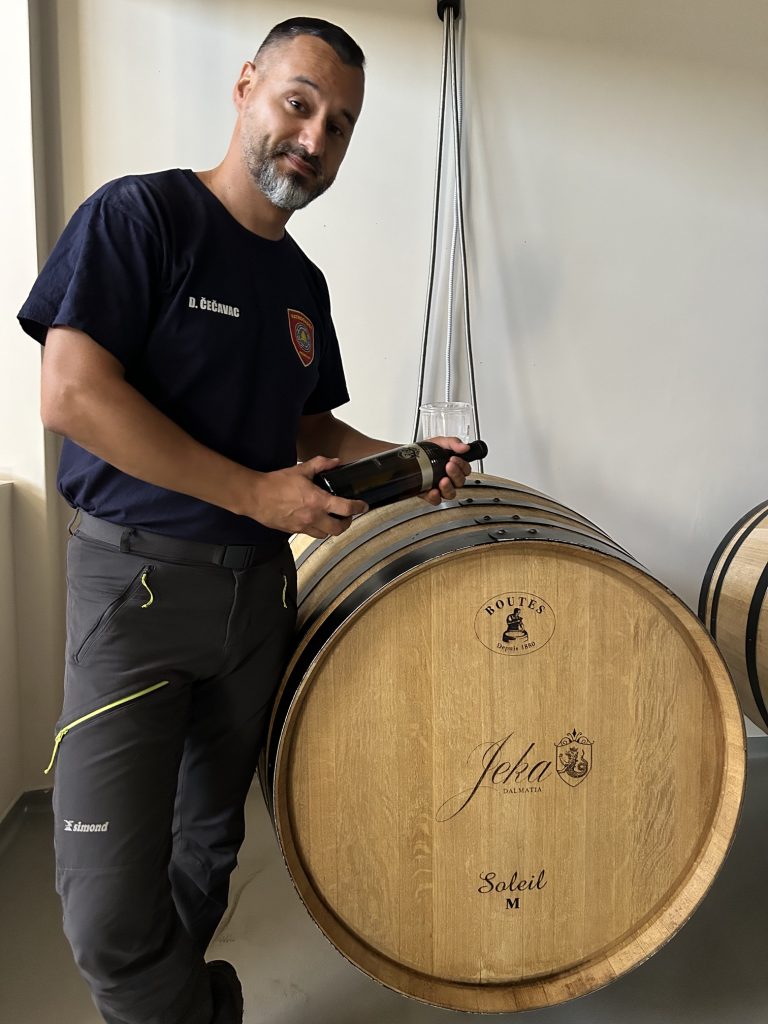
Most winemakers begin with a simpler wine. They learn from their early harvests, select better lots over the years and only then produce a reserve or their most ambitious wine. Daniel began at the top, with a wine that was demanding to produce, expensive and accessible to relatively few people.
– You can make some money from Jeka, but it will not pay for electricity, the winery, wages and loans.
Ten years after its creation, it was time to introduce economics into his wine vision. That meant seeking wines that would be more accessible in price and style while remaining in the premium category.
– So you are not selling out?
– No, absolutely not.
The new wines should be a kind of little Jeka, perhaps even petit Jekas, although that will not be their name. The same idea, quality grapes and several varieties, but a wine requiring neither a special occasion nor particularly deep pockets.
Before reaching them, Daniel had to prove something else to himself.
That he could repeat with white wine everything he had achieved with red.
Ako je Pelješac njegova prva vinska ljubav, Imotski naziva odraslom.
— Zrelom ljubavi — ispravljam ga.
— Zrelom ljubavi.
Ondje je upoznao ljude koji su mu davali savjete, prostor, vrijeme i ključeve svojih podruma. S Mislavom Maršićem izgradio je veliko prijateljstvo, s braćom Grabovac krenuo u Jeku, a Ante Sočo mu je posljednje dvije godine bez mnogo pitanja prepustio cijeli podrum.
— Dao mi je ključ da mogu ući kad god poželim. Na tome ću mu biti zahvalan do kraja života.
Prošle je godine Daniel kod Soče radio pet vina. Iz Promajne je u Imotski odlazio i dvaput dnevno, provodeći ukupno dva sata u automobilu samo da bi potopio klobuk, pretočio vino ili obavio ono što nije moglo čekati.
— S obzirom na to koliko sam puta išao u Imotski, više bi mi se isplatilo da sam ondje unajmio stan.
Bijela Jeka nastajala je kao podstanar, u uvjetima koje Daniel bez uljepšavanja naziva partizanskima. Fermentirala je u bačvi, bez primjerene kontrole temperature i uz opremu koja je bila poluamaterska, a katkad i potpuno amaterska.
To ne znači da je nastajala slučajno. Daniel vino najprije dizajnira u glavi.
— Ne uzmem najprije grožđe pa se tek onda pitam što ću s njim. Unaprijed razmišljam kakvo vino želim dobiti. Možda to zvuči štreberski, ali ja na to gledam kao na igru.
Spojio je pošip, žilavku i kujundžušu, kao tri glasa dalmatinskih otoka, Hercegovine i Imotske krajine. Nije povezivao samo sorte i podneblja nego i posude: drvo, talijansku terakotu i inoks.
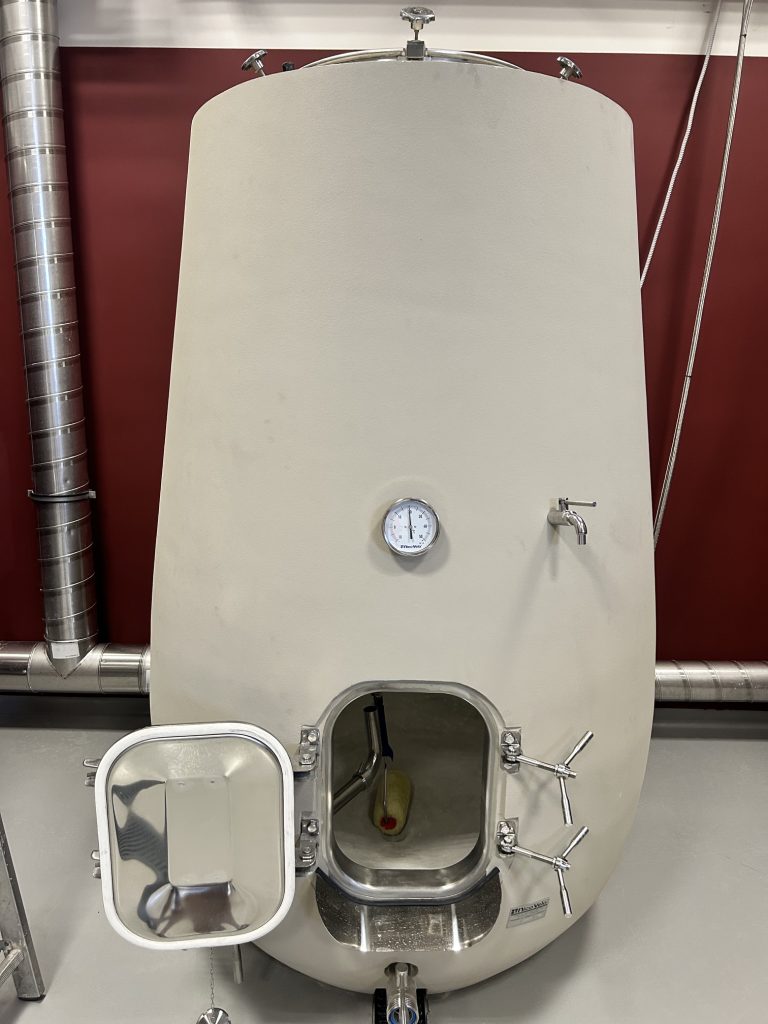
— Žilavka će u inoksu dati drukčiji spektar tekstura i aroma nego u terakoti. Volim povezivati različite materijale jer svaki od njih vinu daje nešto svoje.
Bijela Jeka predstavljena je u proljeće 2026., a veliko je priznanje stiglo prije nego što je Daniel novu vinariju uopće do kraja opremio.
Na slijepom kušanju koje je Falstaff organizirao na Vinartu Peter Moser kušao je 161 vino. Bijeloj Jeki dao je 95 bodova, čime je podijelila najvišu ocjenu kušanja s još trima vinima. U konkurenciji je, kaže Daniel, bila krema hrvatskoga vinarstva.
Rezultat kakav neki vinari čekaju cijeloga života ostvario je s vinom proizvedenim u tuđem podrumu, bez vlastitoga vinograda i bez uvjeta kakve će imati u novoj vinariji.
— Sretan sam, vrlo sam sretan. Ali tu priči nije kraj. Idemo dalje.
Tvrdi da nije opsjednut bodovima. Kada bi se njega pitalo, možda bi ih čak i ukinuo.
— Dobro, ne možeš reći da ti nije drago kada dobiješ 95 bodova.
— Naravno da je lakše kada potrošač pred sobom ima takvu potvrdu kvalitete. Ali ne treba postati pohlepan za bodovima.
Ocjena mu je bila odgovor na pitanje koje si je postavio kada je prešao s druge strane etikete. Nakon crne i bijele Jeke mogao je sebi priznati da zna napraviti, ili barem presudno sudjelovati u kreiranju velikoga vina.
A kada sebi nešto dokaže, rekao je već, od toga se ohladi i krene prema nečemu drugom.
Ovaj put prema vinima od kojih će njegova vinarija morati živjeti.
Ta vina neće biti monosortna. Daniel u tome ne vidi odmak od dalmatinske tradicije nego povratak onome što je Dalmacija radila prije nego što su etikete počele zahtijevati jedno ime sorte.
U starim vinogradima o monosortnosti se nije mnogo razmišljalo. Pet, šest ili sedam sorti raslo je jedna pokraj druge, zajedno se bralo i prerađivalo. Ako bi jedna podbacila, druga bi spasila godinu. Jedna je davala kiselinu, druga boju, treća miris, četvrta strukturu.
Danas se takav pristup naziva field blendom i ponovno postaje popularan, osobito u starim španjolskim vinogradima. Daniel, međutim, ne spaja sorte iz jednoga vinograda. Njegov je vinograd razasut po Dalmaciji.
— Sorte koje berem dolaze iz različitih džepova i terroira. Tako dobivam mnogo veću kompleksnost.
Samo dvjestotinjak metara od vinarije u Zadvarju nalazi se vinograd sa sedam sorti, ali Daniel zasad ne planira posaditi vlastiti. Izgraditi vinariju smatra hrabrim potezom, a zasaditi lozu još hrabrijim.
Vinograd ne traži samo radnike nego i novu generaciju.
— Neću saditi lozu dok ne budem imao dijete.
— Zato te svaki put pitam kada ćemo te oženiti.
— Ne znam samo protiv koga igramo.
Mogućnost vlastitoga vinograda ne isključuje, samo je odgađa. Možda ga neće ni saditi nego kupiti neki postojeći, dovoljno star da u njemu već bude zapisana priča kakvu traži. Sve je više vinara bez nove generacije spremne nastaviti obiteljski posao.
Dotad ostaje kupac grožđa, proizvođač vina, punitelj boca i trgovac.
— Sve je to legitimno.
Legitimno jest, ali nije jeftino.
Daniel podsjeća na staru vinarsku dosjetku da za prvi zarađeni milijun najprije treba potrošiti pet. U Zadvarju još nije riječ o takvim iznosima, ali investicija u vinariju približila se pola milijuna eura.
Na prvi pogled čini se da je najviše potrošio na vinifikatore, bačve, amfore i ostalu opremu. Daniel kaže da je upravo suprotno.
— Vinska oprema nije ni petina ukupnog troška. To je gotovo najmanji dio cijele investicije.
Gradnja se poklopila s razdobljem u kojemu su cijene pojedinih materijala rasle sto ili čak dvjesto posto. Da je isti pogon podizao samo dvije godine ranije, procjenjuje, platio bi ga najmanje 150.000 eura manje.
Dio vina, bačava i boca još mu je kod Ante Soče. Preseljenje će trajati nekoliko mjeseci, a nova berba trebala bi napokon okupiti sve na jednome mjestu. Nakon godina rada u tuđim podrumima i vožnje između Promajne i Imotskoga, Daniel više neće biti vinski podstanar.
— Imaš li straha od toga što sada počinje?
— Ne. Već sam ušao.
Ugostitelji su ga godinama nagovarali da napravi dostupnija vina. Znali su da je Jeka sjajna priča, ali i da se potentno vino iz superpremium razreda ne prodaje svakoga dana. Nova vina moraju zadržati ideju multiterroirske Dalmacije i kvalitetu, ali u posao uključiti čimbenik bez kojega ni najljepša vinska filozofija dugo ne traje.
Ekonomiju.
— Sve je sjajno dok možeš dokazivati da je nešto moguće. Ali bez ekonomije nema vinarije.
Jeka se danas prodaje u restoranu Kornat u Beču i u dva restorana u Njemačkoj. Kupažu je tržišno mnogo teže objasniti nego vino na čijoj etiketi piše ime poznate sorte, ali Daniel tvrdi da je na teži put naviknuo.
— Strašno sam naoružan strpljenjem.
U glavi već ima sedam ili osam vina. Još nemaju konačan oblik, možda ni imena, ali on već zamišlja kako bi trebala izgledati. Najprije dizajnira rezultat, a zatim traži sorte, položaje, posude i ljude koji ga mogu dovesti do njega.
— Jeka je tek početak.
Kada danas sjedne s Vedranom Kiridžijom i drugim velikim dalmatinskim vinarima, ne osjeća da je među njih stigao tek izgradnjom podruma. S njima već dugo sjedi ravnopravno, premda s jednakom dozom poštovanja kao kada je Zlatana Plenkovića nazivao na kućni telefon.
Razlika je samo u strani štanda.
— Uvijek sam jednom nogom bio s druge strane. Sada sam ondje objema.
I dalje će držati masterclassove, otvarati velike svjetske boce i objašnjavati što u njima traži. Samo će ubuduće među vinima o kojima govori stajati i ona iza kojih će svaka konačna odluka biti njegova.
U Zadvarju je sve njegovo: ideja, vinarija, gotovo pola milijuna eura ulaganja i sedam ili osam vina koja mu još ne izlaze iz glave.
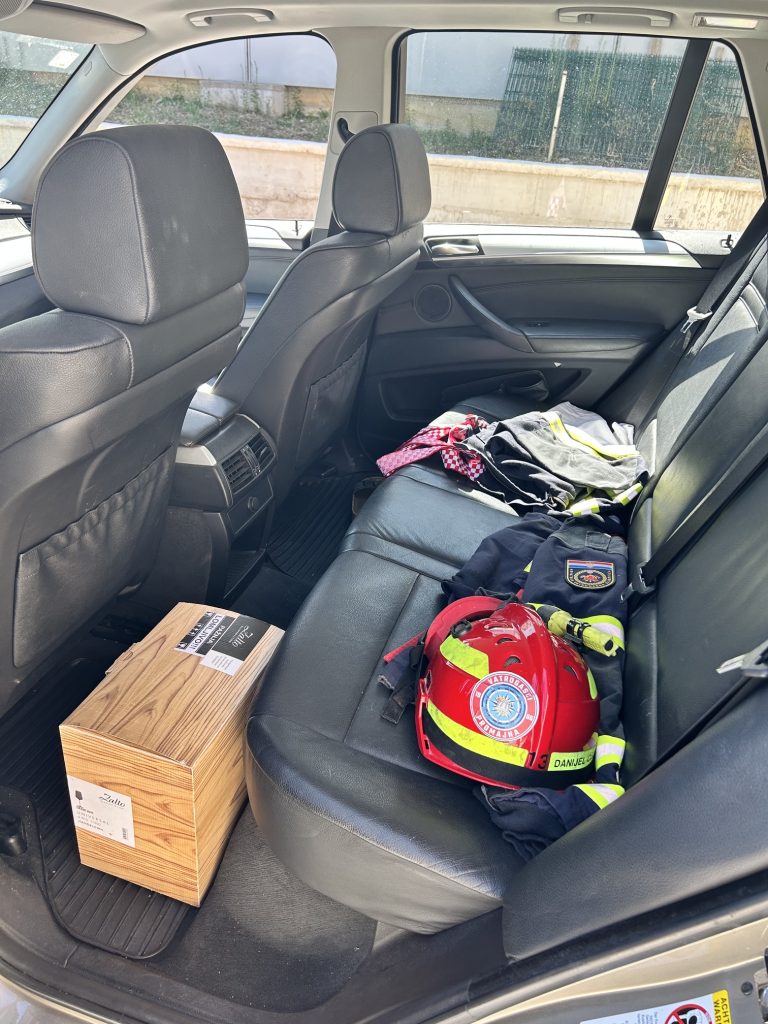
U automobilu mu je vatrogasna uniforma. U ormaru sakoi vlastita dizajna. Ispred vinarije cesta kojom se iz Promajne može doći u Imotski.
Daniel Čečavac ionako nikada nije volio kući ići istim putem.