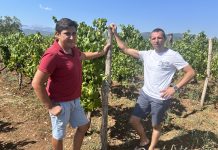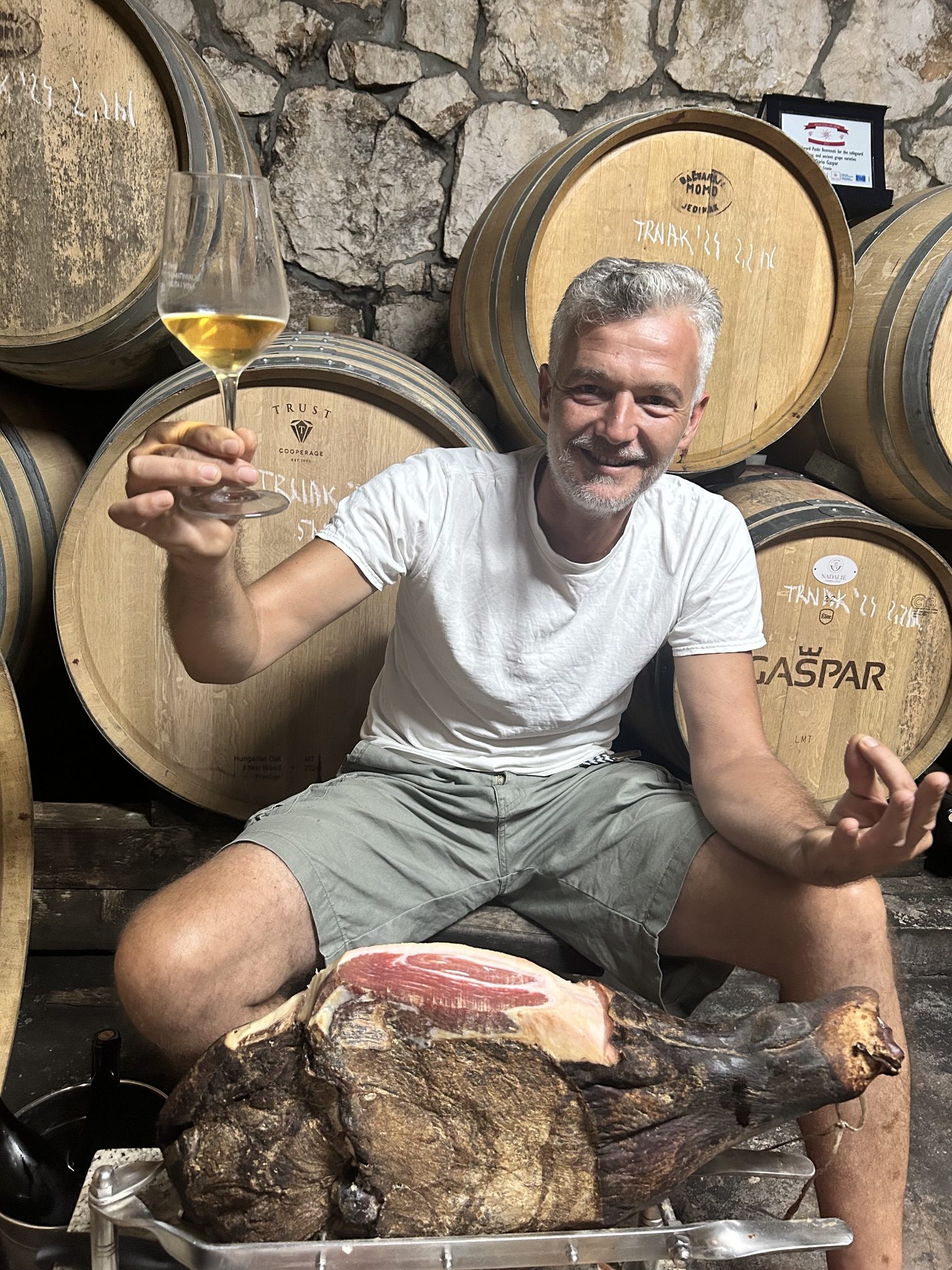
In winter, the vineyards that supply Dario Gašpar with grapes for his premium wines are reached by boat, rather than by tractor or on foot.
– That is no exaggeration. It is simply what winter is like in my vineyards. At that time of year, they sleep beneath the water.
While the vines on Dalmatia’s most famous sites spend the winter on steep, rocky slopes, Gašpar’s vines in the Jezero winegrowing area, between Vrgorac and Ploče, disappear beneath a flooded plain for around a hundred days.
– I think we are the only people in the world with vineyards that produce grapes for premium wines where we can also catch fish in winter. For a long time, I felt slightly awkward talking about it because, let’s be honest, when someone thinks of a great Dalmatian wine, they imagine a seventy-degree slope, rock and poor soil. Nobody thinks of a vineyard on flat ground. And I don’t even live on flat ground. I live underwater.
He lives eighteen metres above sea level, in the lowest part of the plain, into which water flows during the winter from the inland side of Mount Biokovo.
– I live in a place where water is both a blessing and a curse. All the water that runs down the slopes of Biokovo in winter reaches my vineyards. That is why the plain is called Jezero – the lake.
The water flows through the vineyards, carrying away excess carbonates and bringing minerals from the surrounding hills. Gašpar’s oldest vines have received no fertiliser for decades.
– They get their nutrients naturally, from Biokovo, through that water. It arrives, flows through the vineyards, carries away what the soil does not need and enriches it with other minerals. My vines have not been fertilised for thirty or forty years. Those are the primal flavours of the grapes, and they make for distinctive wines.
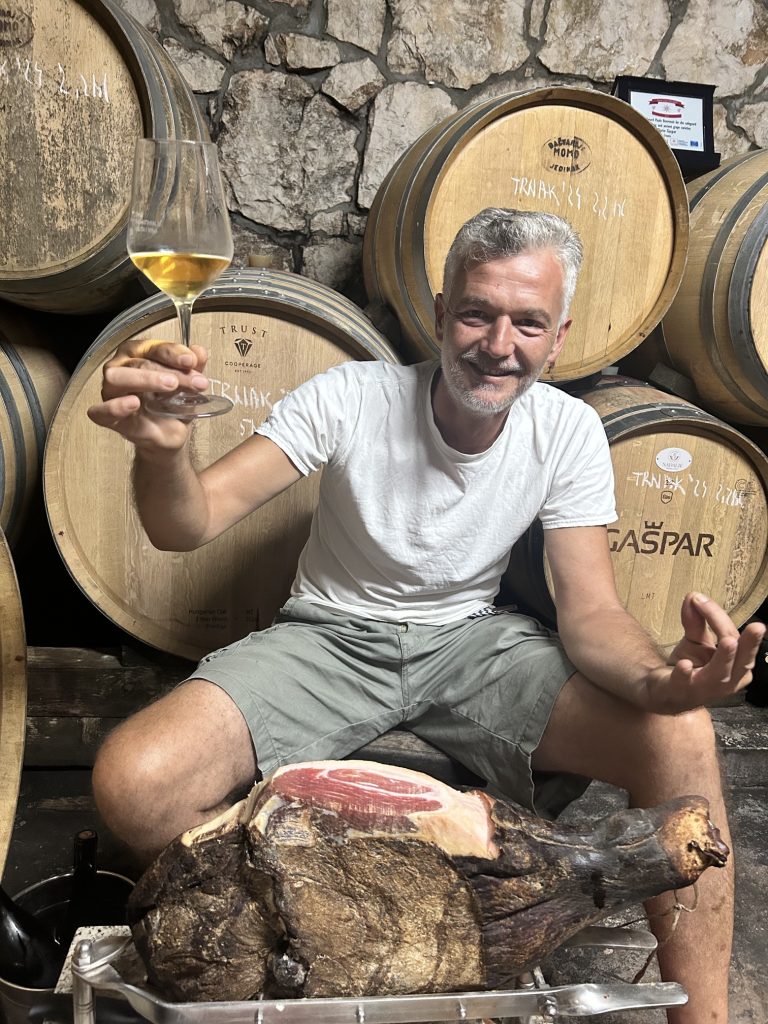
In winter, the vines are surrounded by water. A few months later, the Dalmatian summer arrives, and they thirst for every drop.
– The sun hits us just as hard as it hits everyone else in Dalmatia, but through the way I work the soil, maintain grass cover and manage the root system, I have encouraged the roots to grow deep into the ground. That is why I do not need to irrigate. The roots are far below the surface, and the grapes develop evenly.
When night-time temperatures in the hottest parts of Dalmatia remain at twenty-six or twenty-seven degrees Celsius, in Jezero they fall to around twenty.
– When it is too hot to sleep elsewhere, in Jezero it is twenty or twenty-one degrees. The vine can breathe again and keep ripening. That is why Plavka can reach fifteen per cent alcohol while retaining six grams per litre of acidity. I used to feel uncomfortable mentioning water and concentration together, because nobody imagines the two can go hand in hand. Yet it is precisely the concentration of our wines that has made us known.
A vine, Dario explains, does not produce its best grapes when everything suits it perfectly.
– Looking after vines is a tricky business. You want a healthy plant, but when it is completely content, it couldn’t care less about your grapes. Its priority is to grow shoots and leaves. Only when it feels hungry or experiences some stress does it start giving the grapes more serious thought.
In Jezero, there is no shortage of stress. In winter, the vine sleeps underwater; in summer, it searches for moisture deep in the soil. And the water does not always recede when it should. Last year, eighty per cent of the Gašpars’ crop was still underwater on 31 August.
– When the plain fills with water in winter, we do not call it a flood at all. We say it has “pojaralo”. Someone driving around Vrgorac will see everything underwater and cry out, “God, everything is flooded!” We won’t even turn our heads. We’ll simply say, “Pojaralo je.” The water has risen. To us, that is not a flood.
In Umčani, a boat is almost as much a given as a tractor.
– We have boats, nets, fish traps, fishing spears and lanterns. When the water enters the plain, you travel through the vineyard by boat instead of driving a tractor. And that happens several times a year. My finest grapes come from precisely those vineyards most exposed to the winter rise in water.
The problem arises when the water that nourishes the vines in winter arrives at the end of summer.
– Roughly one harvest in five or six, we do not pick anything at all. People need to understand that when we talk about our wines, our volumes and our prices. I cannot work to the same figures as someone who harvests their vineyard reliably every year.
He could if he confined himself to selling grapes. The Vrgorac plain still supplies wineries from Dubrovnik to Zadar, and in a good year a grape grower can earn money faster than a small winemaker who has to make, age, bottle, promote and sell the wine, then collect payment. For decades, that was how the Gašpars lived too.
– My grandfather worked the soil, my grandfather’s grandfather worked the soil, and my father worked the soil. Everyone in my family has spent their whole life digging, with nothing to show for it. When the family got together at the end of the year and pooled the money, it turned out that we had worked just to keep the land from lying fallow. Boris and I decided that we would keep digging, and that the calluses on our hands would remain our distinguishing mark. But now, at least, we know why we are digging.
Their decision was strengthened by a harvest in which Plavka from Jezero accumulated more sugar than Plavac Mali from some of the best-known sites on Pelješac and Hvar. The grapes they had been selling as raw material ended up in wines from much more famous wineries, while the name of the person who had grown them disappeared before the wine reached the bottle.
– For years, we sold our grapes to leading wineries on Hvar and Pelješac. Then came a harvest when our Plavka reached higher sugar levels than their Plavac Mali. That year, as far as I know, almost no Plavac was made without some discreet blending with our Plavka. We asked ourselves why we should spend our whole lives selling grapes to someone else when we could make wine from them ourselves.
They knew a great deal about vineyards, having grown up in them, but they still had to learn how to make serious wine. Their father, Jure, belonged to a generation that measured a vineyard’s worth by the amount of grapes it produced, although he was more meticulous in the cellar than most of his neighbours.
– He always boasted that he had the best wine in the village, whatever that meant. But he was very clean and tidy in both the vineyard and the cellar. He taught me to spend as much as an hour washing a single barrel. He kept telling us, “If you haven’t used enough water, the barrel will still be dirty.”
He found it much harder to accept the sight of healthy bunches discarded on the ground. Dario and Boris had begun reducing yields through green harvesting, convinced that this was the only way Plavka could reveal the potential they sensed in it. – When our father came into the vineyard after us and saw a heap of discarded bunches, he refused to have lunch with us for seven days. He would sit down at the table, mutter something, stand up and leave. He could not accept that we had worked all year only to throw healthy grapes on the ground.
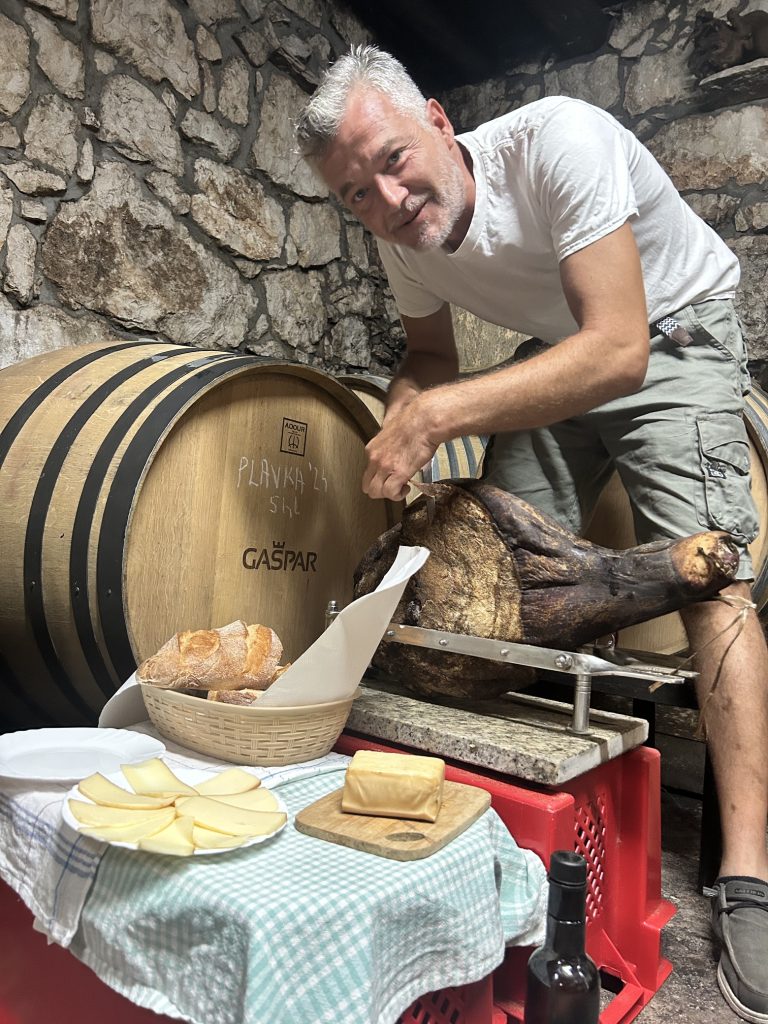
They did leave part of the vineyard without green harvesting, because they were still selling grapes at the time and needed the volume. Dario vinified the grapes from the heavily laden vines separately from those whose yields had been drastically reduced.
– Our father tasted both wines. After that, he had no doubts about which one he would drink.
Beyond Umčani, they still had to prove that a vineyard on the plain could produce anything more than decent raw material for someone else’s wine. Jezero had no rocky terraces or sea views, and the Gašpars’ cellar was hardly the kind of building that would make a visitor pull out a phone to photograph it.
– When you come from a place where the grapes grow on a plain rather than on slopes of bare karst, people assume from the outset that you are inferior. But nothing gives me more pleasure than someone entering our cellar sceptically because of Jezero, the landscape or the winery itself, which really isn’t particularly impressive, and then, after three wines, being unable to believe what they have tasted. The way our wines change their minds gives us the greatest possible encouragement.
They bottled their first vintages even though they knew the wines had yet to reach the standard they were aiming for. The decisive encounter came in 2013, when a friend from Vrgorac introduced them to oenologist Davor Mitrović.
– We showed him the wines and vineyards, explained the kind of grapes we could produce and told him we wanted to raise the quality substantially. We also showed him our neighbour’s vineyard so he could see straight away that we did not want five or six kilograms per vine. He simply said, “Let’s give it a go and see.”
The first year of their collaboration was supposed to be 2014, one of Dalmatia’s most difficult vintages in recent years. The Gašpars decided not to make any wine at all. They sold their grapes to island wineries whose vineyards had been devastated by disease and bad weather, cleared out their own stocks and entered 2015 with much stricter standards.
– Financially, we did better in 2014 than we ever had before or have since, because we sold almost all our grapes. But if we had continued down that road, we would have remained mere suppliers of raw material. The grape market is very unpredictable: one year you do brilliantly, and the next you and the wineries both have a good crop, so they no longer need you. Then you end up at the market in Split, selling grapes for next to nothing. The wine market is more stable, just slower. People have to taste your wine five times before they believe it is good.
In the years that followed, they increased the number of vines while reducing the amount of wine. After around a decade, they had roughly forty per cent more vines than at the beginning, but were making between thirty-five and forty per cent less wine.
– At the same time, financially, we moved ahead five- or sixfold. Let’s be honest: neither Merlot nor Cabernet Sauvignon would produce outstanding wines if we let them yield five kilograms per vine. That is exactly what people were doing with Plavka. The problem was not the variety. It was that nobody had tried to make a serious wine from it.
When professors from the Faculty of Agriculture, led by Edi Maletić, tasted their Plavka, they could not believe that the wine had really been made from that variety. They assumed it was Trnjak or Plavac Mali.
– Plavka has fed people on this plain for decades, and all we have done is show that it can also produce outstanding wine. Now people think we have some special clone that produces concentration all by itself. We don’t. There is no such thing as a bad variety or a bad site. There is only a bad grape grower or a bad winemaker.
Dario maintains that you need to think about the wine as early as preparing the ground and planting the vineyard.
– If you do not know at that point what kind of wine you want to make, you will struggle to establish a good vineyard. Plavka naturally produces a lot of grapes, and you cannot be stingy. You have to get to know it and learn to play around with it. We grow it in around twenty places, and we manage almost every plot a little differently. On some, we even use different pruning methods, although they are only a hundred or two hundred metres apart.
Today, the Gašpars have approximately twelve thousand Plavka vines, averaging around sixty years of age. They acquired most of them after their owner became seriously ill and could no longer tend the vineyards.
– Of those twelve thousand vines, nine thousand are underwater in winter. That is an immense treasure. The grapes from those vines could go into any of the world’s finest cuvées, but they can also make a great single-variety wine. Those grapes are phenomenal.
Even at high levels of ripeness, Plavka manages to retain what Dalmatian red varieties often lack: acidity, fruit and drinkability.
– I have worked with Vranac, Trnjak and Plavac Mali. Once they go beyond fifteen or fifteen and a half per cent alcohol, their acidity generally plummets. We have a Plavka with fifteen per cent alcohol and six grams per litre of acidity. At that alcohol level, it still smells of flowers, while other Dalmatian reds are already moving towards overripe and dried fruit.
Full ripeness on the plain, he explains, does not necessarily mean overripeness.
– You have to wait for Plavac Mali, because you cannot make a great wine if there are green berries in the bunch. But you do not have to harvest the whole vineyard at once. You go plot by plot, judging the right moment. When grapes on a hillside become overripe, that’s it. On the plain, they can ripen fully and still retain a good pH and acidity.
Plavka now forms the basis of Matica, a forthcoming premium wine to which he has added small amounts of Trnjak and Vranac. Plavka brings drinkability and elegance, while the other two varieties add concentration and body.
– It will be a red wine of a kind rarely found in Dalmatia: medium-bodied, but with an intensity that lasts from the first sip to the last. It is dedicated to my mother, your mother, all mothers, and Matica, the mother of this plain. That is why it is called Matica.
Plavka overturned the prejudice that Jezero could not produce great wine. But the variety that became the winery’s hallmark is one no grape grower would choose if they wanted an easy life.
Zlatarica arrived in their vineyards through no business plan, but after one of the seasonal rises in water and their father Jure’s decision to follow what he saw as God’s will. In the 1990s, he had a vineyard that was frequently submerged. He grafted three rows of rootstock vines with Plavka and another three with Kuč, varieties whose grapes sold easily at the time. The water, however, arrived at the worst possible moment, stayed for six or seven days and destroyed almost all the grafts.
– Our father then vowed, “Since nature has made its choice this way, I will plant what I want.” He found 650 Zlatarica vines, and it was in that very vineyard that Boris and I realised how much potential the variety had.
They began selecting buds from the best vines and using them to graft onto rootstock vines. Their father worked as generations before him had worked in Jezero: grafting deep below ground level onto vigorous rootstocks that already had established roots.
– At harvest, Boris and I would mark the best vines. In February, we would take buds from them, bury them in the ground and keep them until April. Then the old man would dig down to the rootstock vines and graft them with our material. In that very same year, a vine like that grows five or six metres. You can barely keep up with how fast and vigorously it grows. Some are still alive after seventy years, even though they are underwater every winter.
Zlatarica’s vigorous growth is no indication of how well it withstands disease, wind or its own prolific yields.
– Zlatarica is a beast. It won’t be tamed. Turn your back on it just once, and it will punish you many times over. Of all the varieties I have known, it is the most sensitive and the only one you have to devote yourself to completely.
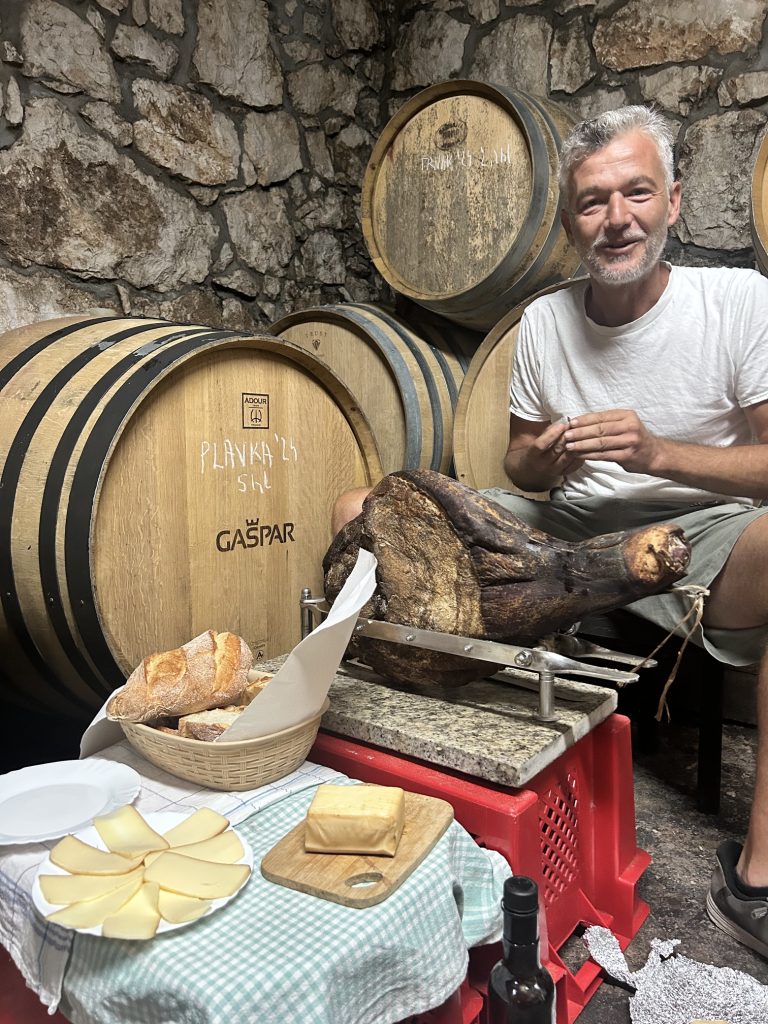
The first signs of disease in Jezero appear on Zlatarica. The wind easily breaks its shoots, and without strict control it will yield four or five kilograms per vine.
– Thirty per cent of our vineyards are planted with Zlatarica, and seventy per cent with other varieties. Yet seventy per cent of the time we spend in the vineyard goes on Zlatarica, and only thirty per cent on all the other varieties combined. That is why nobody wants to plant it. Žilavka grows upwards on its own, distributes its grapes evenly by itself and has no major problems with disease, excessive yields or accumulating sugar. With Zlatarica, you have to beg it to do everything.
The Gašpars have reduced its yield to one bottle per vine.
– Without control, it yields four or five kilograms, and few people have the heart to throw so much healthy fruit on the ground. But how much gold is there in nature? Very little. You have to do a lot of digging to find a nugget of gold. Zlatarica is like that too. Its name comes from the word for gold for a reason, and there is a reason it almost disappeared.
He estimates that there are now around fifteen hectares of it in Jezero, almost as little as five years ago.
– If anyone tries to expand their plantings, they soon give up. Apart from me, still planting it, almost nobody is increasing their area. The opportunity to build a name for Zlatarica is slipping through our fingers again.
Its recorded history reaches further back than that of many Dalmatian white varieties that are better known today. The Gašpars found a record showing that, at Dalmatia’s first wine exhibition in 1875, Zlatarica was the only white variety represented.
– At first, I couldn’t believe that was possible, given all the other Dalmatian varieties. Professors from the faculty and the institute in Split assured me the information was correct. Back then, it was not called Zlatarica Vrgorska, just Zlatarica, because it was widespread throughout Dalmatia.
That was before phylloxera and cultivation on American rootstocks, when the diseases familiar today had yet to determine the variety’s fate.
– Zlatarica is naturally vigorous and drought-resistant, yet at the same time very delicate. That is why it will be difficult to expand its plantings. We are prepared to put seventy per cent of our time into a variety that occupies thirty per cent of our vineyards, but you cannot expect everyone to be equally mad.
Dario loves it more than any other variety, but he knows how difficult it will be to raise its market value enough to justify all the work involved. That led him to look for another white variety with a close connection to his region and much greater reliability in the vineyard. He found it just across the border in Herzegovina, although old records confirm that it once grew in the Vrgorac region too.
– Of all white wines, Žilavka is the one I have bought most often. I have tasted bottles from at least thirty or forty producers, from the cheapest to the very expensive. To me, it is far and away the best white variety. If you want to make a rich wine, it can turn out a little firm, but if we are going to call that a flaw, then you know how good it is. I cannot find another fault with it.
From Žilavka, he can make a fresh wine under reductive conditions for an earlier market release, or a serious wine that will mature for years. In the vineyard, it grows upright, neatly and reliably.
– Zlatarica is my love, but you have to think about the whole winery. Žilavka gives us security and the freedom to experiment with varieties that may never bring us much commercial benefit.
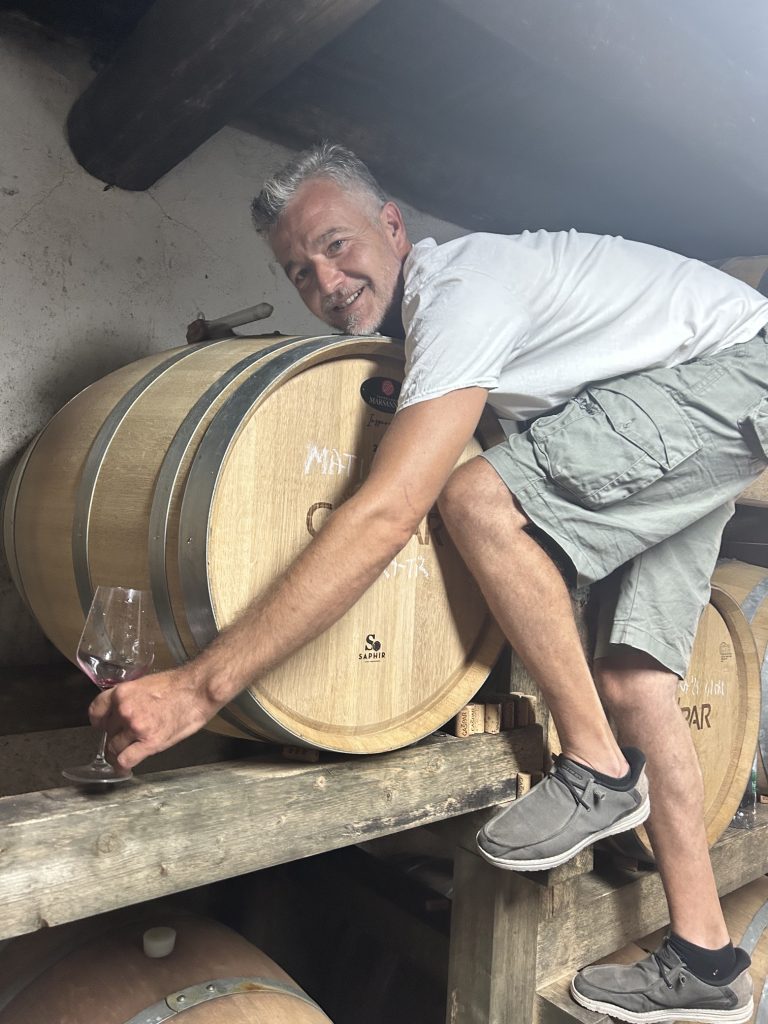
Among them are Prošip Vrgorski and Razaklija Bijela, varieties that recur in old records alongside Zlatarica, Medna and Žilavka. Dario spent years trying to bring both back.
He found Prošip with the help of experts from the Faculty of Agriculture. Professor Pejić had marked one of the old vines with a copper ring back in 1996, but no further research followed. Dario then found an entry in Bulić’s ampelography stating that the variety had the potential to produce outstanding wine.
– It looks like a smaller version of Pošip, but it is not Pošip. The bunches are smaller and the sugar levels a little lower, but it can make a white wine with twelve or thirteen per cent alcohol, lovely freshness and depth. Working with the faculty, we made just three bottles. We reached forty-eight vines and thought we had done the hardest part.
With around fifty healthy vines, they could have reached five hundred very quickly, since they would have had enough buds for further propagation. It turned out, however, that the planting material was not healthy.
– I spent five years bringing Prošip back to life, and then we discovered it was badly infected with viruses. If we had continued propagating that material, we would not have ended up with healthy, long-lived vines. I had to give up. Today, I have just one vine left, and soon I won’t even have that.
While he was giving all his attention to Prošip, he almost overlooked Razaklija Bijela, which he had found while exploring old, neglected vineyards.
– I found one vine in Kuci and another at a friend’s place in Lukavac. We took scion wood from those two vines. At first, I attached nowhere near as much importance to Razaklija as to Prošip. Then it turned out to be full of potential.
Razaklija has slightly larger berries and can retain acidity while accumulating enough sugar for a serious wine.
– It grows upright like Žilavka, distributes its bunches well by itself and is almost disease-resistant. When we find downy or powdery mildew in other parts of the vineyard, I have yet to see either on it.
This year, he will make the first experimental wine from around twenty or thirty kilograms of grapes. He has also grafted Razaklija onto healthy rootstocks from which he removed the virus-infected Prošip.
– I expect between eighty and eighty-five per cent of the grafts to take. All I need is enough buds for further propagation. In three or four years, I could have my first serious Razaklija wine.
He has already earmarked a place for it in a white cuvée he has been putting together in his mind for several years. Zlatarica will be the foundation, with small amounts of other indigenous Dalmatian varieties adding body and breadth.
– Zlatarica has a drinkability and freshness that few other white wines can match. In that cuvée, Razaklija will be the ingredient that makes it impossible for anyone else to copy me.
Wines like these cannot be made quickly, and Dario makes no attempt to hurry them. He has gone furthest with a Vranac that has already been waiting ten years for release. Until now, it had no name, but thanks to a sentence incorrectly rendered in the transcript of our conversation, it unexpectedly acquired one: Arka – the Ark. Dario and Boris liked the name immediately. After all, they could hardly have found a more fitting name for a wine from vineyards reached by boat in winter.
– When you have no other substantial source of income, you have to be pretty mad to invest in wine for years without selling it. We need every kuna here, but I see Arka as a sacrifice that will pay me back through added value. We have tasted a few bottles, and the wine is phenomenal.
Only one barrique of Arka was made. Taking over additional old Vranac vineyards could increase that to two.
– Doubling one barrique hardly makes for impressive statistics. But what matters is the value of what is inside it. I am not saying a bottle will cost a lot; I am saying it will be worth a lot. If I had sold the wine after two or three years, it would not have brought me any significant financial progress. After ten years, it can show what Vranac in inland Dalmatia can really produce.
He has planned a similar future for his last vintage of Cabernet Sauvignon, the variety he had to fight to obtain in 2012 rather than accept the Trnjak he was offered.
For one plot, they had ordered and paid in advance for 750 Cabernet vines. When Dario arrived to collect the planting material, the seller told him it was no longer available, but that he could offer him Trnjak instead.
– I asked him, “What is that?” The name rang a bell, but back then there was hardly any Trnjak wine you could taste. I told him, “Listen, I paid for Cabernet, and I want what I paid for.” In the end, he found my vines, and I planted them.
Ten years later, he harvested those vines for the last time and decided to regraft the entire plot with the variety he had once turned down.
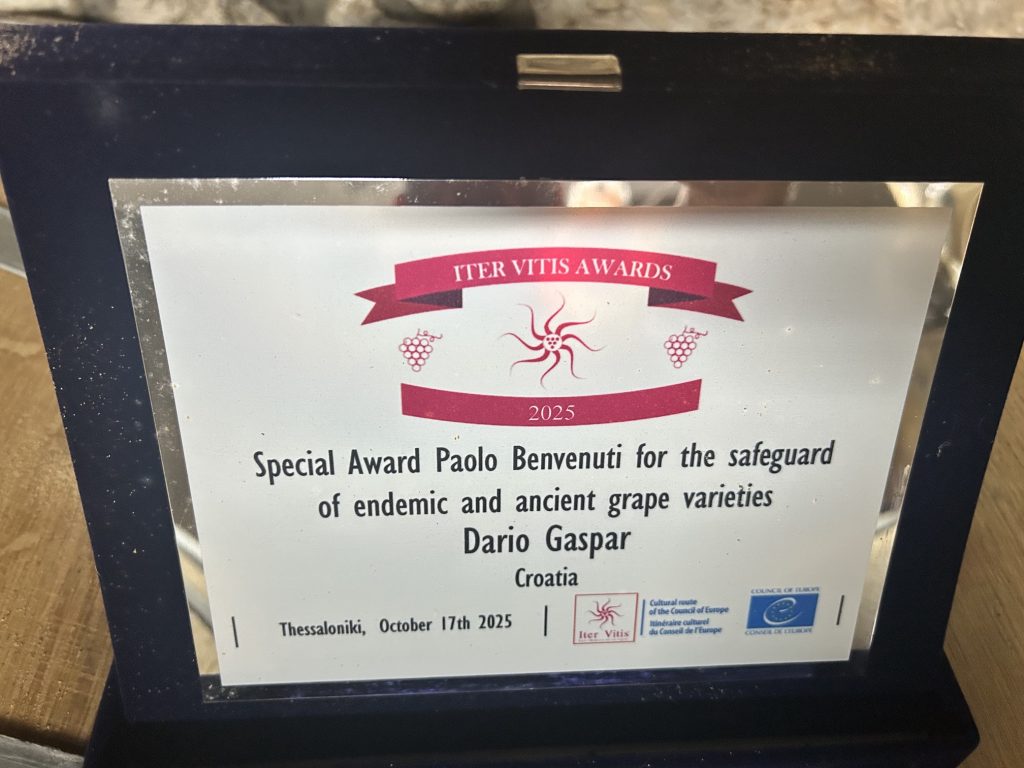
– In 2023, I regrafted the Cabernet with Trnjak, but the May flood destroyed eighty per cent of my grafts. The following year, I did it all again, and now around ninety per cent have taken. That is how I have moved almost entirely away from international varieties.
He will, however, make his only single-variety wine from Cabernet harvested in 2022. The yield was just 450 grams per vine, and the wine, he says, is more like syrup than something that should be rushed onto the market. It will spend five years in wood, and perhaps as many again in bottle.
– That is my thank-you to Cabernet for everything it has given me. A wine like that is not for every day, nor is it a bottle someone should drink alone. Two people should open it together and take their time enjoying it. After that, I say, “Welcome, Trnjak!”
Trnjak had already helped him make his first significant commercial breakthrough. Blended with Merlot and Plavka, it produced Vergolas, the Gašpars’ first wine to receive Croatia’s “premium wine” classification, and the first for which they crossed what was then the psychological price barrier of one hundred kuna.
The new wines will be far more expensive, but the building in which they are made has barely changed. The Gašpars still work in a small family cellar, without an impressive winery or a tasting room designed to wow visitors before they have tasted anything.
– Many wineries would rather invest in a barrel or a tasting room that makes your eyes pop out than in a vineyard. Sooner or later, that will come back to bite them. When the grapes run out, neither the barrel nor the tasting room is any use to you.
A new generation has meanwhile joined the business. Boris’s son Dorijan, Dario’s nephew, has taken on much of the vineyard work.
– Dorijan and I practically do not leave the vineyards for three months at a stretch. The work is seasonal, but when the vines demand attention, we are there all the time.
This year, Dario and Boris cleared another 0.8 hectares of land, and they need at least one more hectare of vineyard to continue developing. Only recently did they obtain their first title deeds, allowing them to plan more seriously, but even now Dario has no desire to buy grapes to increase production.
– We work only with our own grapes, because that is the only way I can make the wine I want. What use is a new building to me if I do not have enough vineyards of my own?
In Jezero, choosing another path would be much easier. Grapes regularly find buyers among the large wineries, and in a good year a grower can earn money more quickly than someone who has to keep wine in barrel and bottle for years. Dario left that road long ago, even though he still lacks the cellar he wants, enough land, and any certainty that the ripening crop will actually be harvested.
In front of his small cellar stretches a plain planted with millions of vines. When the winter rains arrive, the roads and rows of vines will disappear again, and the Gašpars will set off for their vineyards by boat. Someone seeing Jezero for the first time will say that everything is flooded.
Dario will correct them:
– It hasn’t flooded. It has just “pojaralo”.