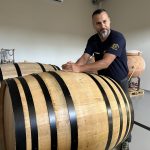
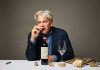
For years, wine circles echoed with the claim that international critics and sommeliers did not really understand Plavac Mali. Its power, people said, put them off: they found too much alcohol and tannin, too little freshness and elegance. It was almost taken for granted that Dalmatia’s most important variety would forever remain what it had always been – a favourite with the home crowd and an occasional exotic curiosity for the rest of the world. Had that claim contained more truth than prejudice, Tonči Marijan from Pitve would not be receiving congratulations from across the wine world these days after his Plavac Plaža 2021 scored 97 points and won a Best in Show title at the Decanter World Wine Awards, an accolade regarded in the wine industry as an almost unattainable pinnacle.
What makes it even more interesting is that this success did not come to a winemaker who had built his career by carefully following market trends and adapting to the tastes of international critics. It came to a man who, for the past fifteen years or so, had done almost everything the other way round. While many explained that the future belonged to lighter wines, earlier harvests and styles that would appeal to the broadest possible audience, Tonči Marijan kept demonstrating that Plavac Mali reveals its greatness precisely when it is allowed to be what it is: a Mediterranean variety full of sunshine, character and energy, capable of producing wines that ask for respect rather than approval.
There is something almost paradoxical about it. The man who won the greatest international accolade for Plavac Mali was precisely the one least willing to adapt it to international expectations. Anyone who has sat at a table with Tonči, listened to him talk about wine or spent a few hours in his tasting room in Pitve knows that it would be easier to change the weather forecast than his mind. In his world, there are good wines and those that make you sigh:
– Oh my, if only I could make something like this.
Everything in between generally leaves him uninterested.
Perhaps that is why his wine story has never been merely a business venture. After years in senior positions at Dalmacijavino and Badel 1862, where he gained experience few Croatian winemakers can match, he decided to leave the security of a large organisation and return to the island. For someone who had built his career at the country’s largest wine companies, it was a decision difficult to explain through economic logic. It is easier to understand as the consequence of an obsession. Hvar had always fascinated him, both as his native island and as a vast, underused winegrowing resource: a place that had lived from wine for centuries and that, despite everything nature had given it, had somehow accepted a lesser role than it could have played.
That obsession gave rise to a winery in a former lavender distillery in Pitve, a building that, like so much else on the island, carried memories of another age. As lavender slowly disappeared from Hvar’s landscape, Tonči chose that very place to build a new wine story, convinced that Hvar’s future lay in wines good enough to make the world talk about them, as well as in tourism, holiday apartments and seasonal earnings.
Fifteen years or so ago, such a conviction did not sound particularly realistic. Croatian winemaking was still searching for its identity, while the international market was dominated by varieties whose names were recognised on every continent. In that environment, insisting that Plavac Mali could produce wines capable of standing alongside the world’s great reds seemed a little like a Hajduk supporter booking a hotel in February for the football club’s championship celebrations. It was not impossible, but it was hardly a popular view among realists.
The problem was that Tonči Marijan had never shown much inclination towards realism.
Anyone who knows Tonči knows that his faith in Plavac Mali is not the only thing he has refused to adjust to reality over the years. His faith in Hajduk is equally steadfast. As boards, coaches, presidents, investors, sporting directors and entire generations of supporters’ disappointments came and went, Tonči remained among those who found a new reason for optimism every year. There is a certain logic to it, really. A man who spent fifteen years telling the wine world that Plavac Mali could stand alongside its greatest wines can hardly abandon the idea that Hajduk will one day be what it once was again. People like that cannot be persuaded that defeats are final, because they see the world in terms of possibilities rather than league tables.
His now legendary declaration that he “shudders at a Plavac Mali with thirteen per cent alcohol because it is a second-division wine” has provoked laughter, astonishment and approval in equal measure over the years. Behind it, however, lay a deep conviction rather than a desire to provoke: that the greatest sin against a variety is to try to strip away what makes it distinctive. When Tonči talks about great Plavac wines, he is talking about identity as much as alcohol, tannins or concentration. About a wine’s right to speak in its own voice, even when that voice is out of step with the prevailing fashion.
That is precisely why, over the years, he has seemed like a man fighting a private battle of his own. While others discussed trends, he talked about vineyard sites. While others studied market analyses, he planted new vines. Last year, he planted two thousand new vines on Hvar, more than all the island’s other winemakers combined. Perhaps that figure best explains the difference between Tonči Marijan and most of his colleagues. He does not think in terms of the next harvest or the next tourist season. He thinks like a man trying to leave his mark.
That is why his wines have always been more than products. It is no coincidence that he often says he makes souvenirs rather than wines. He does not mean the kind sold alongside magnets and postcards, but bottles in which he tries to preserve something of a place, a year, a vineyard site and his own character. Anyone who tastes his wines soon understands that they cannot be separated from the man who makes them. They contain the same stubbornness, the same Mediterranean temperament and the same refusal to compromise that you will find in every conversation with their creator.
Perhaps that is why the symbolism of this year’s victory is so lovely.
The wine that won Best in Show is called Plaža – Beach.
It is hard to imagine a less pretentious word. Many winemakers choosing a label with which to conquer the world might reach for Latin names, mythical creatures, old aristocratic titles or philosophical constructions that sound like the title of a lost medieval manuscript. Tonči Marijan chose a word that every Dalmatian associates with a towel over the shoulder, flip-flops, pine shade, a game of briškula and the pleasant business of wasting time. In a country where the beach is far more often synonymous with fjaka – that delicious Dalmatian state of languor – than with world-class achievement, there is something almost literary about Plaža reaching the top of the wine world.
There is something deeply of Hvar, and deeply of Tonči, in that. As though he wanted to show once again that you do not have to pretend to be something else to be taken seriously. It is enough to be yourself, provided you do it well enough.
When he won his first Decanter gold for Plavac Mali in 2019 with Vron Bod, many saw it as an exceptional moment. Great wine stories do sometimes produce a miraculous vintage that is never repeated. Six years later, that explanation no longer sounds convincing. The Best in Show title for Plavac Plaža 2021 is no coincidence, just as it is no coincidence that the same man stands behind both successes.
After the first great triumph, it was still possible to talk about an exception. After the second, there is little room left for that kind of consolation. What we are witnessing today is the vindication of a long-held vision, perhaps even a final answer to everyone who believed Plavac Mali could be an interesting local variety, but never a wine capable of the highest international achievements.
Tonči Marijan will probably remain exactly as he is. He will keep saying what he thinks, planting vines when others give up, arguing about Plavac Mali as though defending the family honour, and believing in things that sometimes seem excessive to other people. Some will call it stubbornness, others vision, and others typical Dalmatian dišpet – a defiant determination to prove the doubters wrong. It is probably a little of each.
After all, this is a man who once turned down the opportunity to stay in Germany and play football, who left the top of the Croatian wine industry to return to Pitve, who insisted for years that Plavac Mali could play in the world’s highest league, and who still believes Hajduk will be champions. After two great Decanter triumphs, it might be wise to acknowledge that, with people like him, the line between stubbornness and vision often becomes visible only after many years.
And that is the greatest value of this story. Tonči Marijan won Best in Show because he spent long enough doing the opposite of what everyone else was doing. While many tried to explain what Plavac Mali could not be, he kept showing what it could become. Now that a Plavac from Hvar has taken its place among the world’s finest wines, this is no longer a matter of opinion, conviction or local pride. It is a fact.
For years, Tonči Marijan insisted that Plavac Mali could play in the world’s wine league.
Now, for the second time, he has brought home a trophy to prove it.