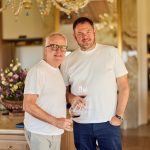
The first time you listen to him, you think he is taking the piss. The second time, you realise he still is, but that everything he says contains an uncomfortable, almost brutal logic. By the third time, you begin to question your own conclusions, because what he says starts falling into place.
Zlatko Bošnjak is not a winemaker you can “read” through his wines. You can analyse his bottlings, assess them, place them in context, but without him, without his way of thinking and speaking, half the story is missing. He is not the kind of man who will explain wine through fruit notes and tertiary aromas. He will explain it through a joke, an absurdity or a sentence that sounds like banter at first and a definition on second hearing.
– You know that joke where little Ivica is asked at school to name something negative? One pupil says war, another says an atomic bomb. Little Ivica raises his hand and says: menstruation. The teacher looks puzzled and asks what’s negative about that, and he answers without hesitation: my sister missed hers once, Mum fainted, Dad had a heart attack, and the neighbour killed himself.
When he tells it today, he laughs, but there is nothing accidental about his choosing that particular story. His entire world is already there in that one anecdote: an off-centre view of reality, a complete lack of fear about the reaction, and a kind of internal logic that is not obvious, but once you grasp it, you can no longer ignore it.
The same thing happens when he starts talking about wine. While other winemakers try to persuade their listeners of the quality of their wines, Zlatko has no trouble saying that his wine does not sell. Chardonnay does not sell. Traminac does not sell. Cabernet Franc, which he is one of the few to make as a varietal wine, does not sell either.
He pauses, lets that sink in, then adds, as though explaining something entirely unimportant:
– I make two or three thousand litres a year of each of those.
Somewhere around that point, you begin to understand. For him, “doesn’t sell” does not mean the wine is not good. It means it is not the foundation. Not what pays the bills. Then comes the sentence that is probably the most accurate description not only of his winery, but of Ilok as a whole:
– We sip wine, but we make our living from Graševina.
Graševina is the business. Everything else is a luxury.
And it is precisely in that space beyond necessity that his freedom begins.
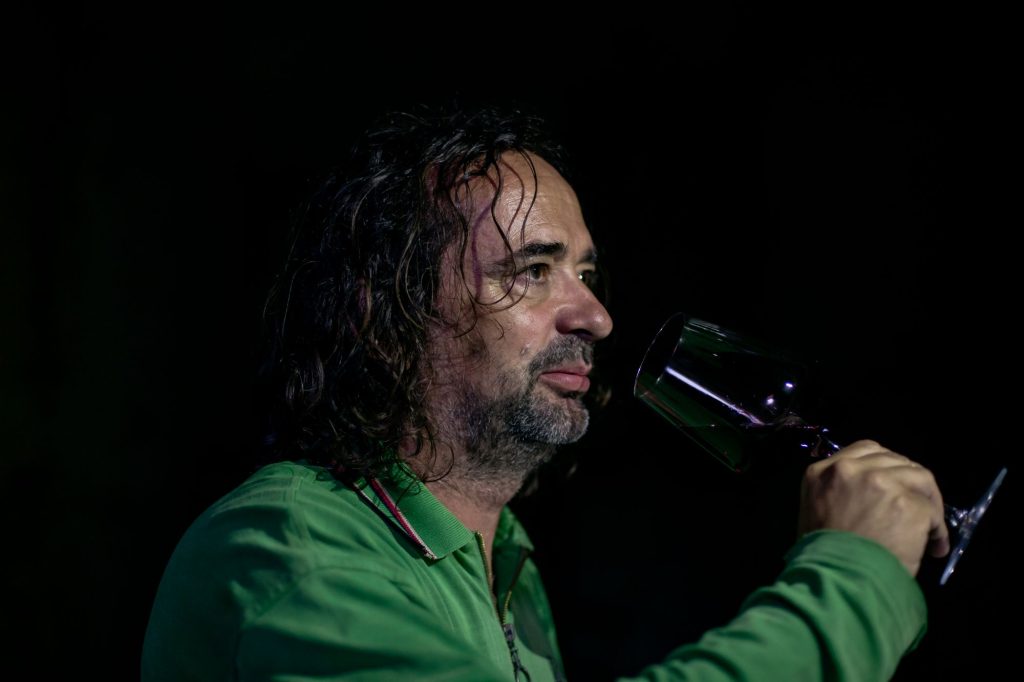
But that freedom did not arrive by itself. It came out of problems rather than comfort. Out of a moment when it was no longer possible to work as before. When the money owed to them for grapes became too much, waiting to be paid no longer made sense, and it became clear that unless they changed something, the whole venture would grind to a halt.
– We said: enough. We’re going out on our own.
It was no romantic decision. There was no plan and no certainty. It was a decision born of necessity, stubborn defiance and the feeling that there was nothing left to lose. They began making wine in his cellar, each making his own, with no guarantee that it would work.
– We had no idea where it would take us.
The beginning was anything but glamorous. Two men, some vineyards, one cellar and more questions than answers. In those early years, as he tells it now, they spent more time learning than producing, and got things wrong more often than right. But what they lacked in experience, they made up for in stubbornness.
– We each made our own wine. Each in his own little world.
Very quickly, they realised that individually they could reach a certain level, but no further. Not for lack of knowledge or willingness, but because the system holds you in place when you are alone. That led to a decision that would later look logical, but was far from simple at the time: to join forces in practice, rather than merely on paper.
– Let’s do it together.
On your own, you do not get far. You just get tired.
With Mario Faletar, a friend, co-owner and the man with whom he would share risks and decisions for years, he embarked on something that had neither a name nor any certainty yet, but did have one thing most ventures lack: trust. Trs grew out of that sentence. As a practical solution rather than a grand idea. A way to survive and perhaps achieve something beyond simply staying afloat.
At first, it looked less like a story destined for substantial figures than an attempt to take control of their own work.
– We never saw it as a project. We just worked.
That is why, even today, he mentions the figures without emphasis. Eighty hectares of vineyards, fourteen members, hundreds of thousands of litres of wine a year. Most winemakers would highlight these as proof of success. For him, they are simply context.
– Well, those are numbers. What matters is that it works.
And it worked on an ever larger scale. So much so that, at one point, they hit a wall. Literally, rather than figuratively. The old infrastructure could no longer keep up with production. They worked in two separate spaces a few hundred metres apart, and every day became a logistical operation.
– Hauling wine up, hauling it down, moving tanks… I spent more time on that than on wine.
That was when they realised they could go no further without serious investment. A new winery was a necessity rather than a luxury.
– Now I can finally concentrate on wine.
But even then there was no euphoria. No talk of expansion or grand plans. On the contrary, he immediately set a limit.
– Half a million litres. That’s the ceiling. Nothing beyond that.
A limit is a decision too.
With him, “nothing beyond that” sounds like a decision rather than a restriction. A consciously drawn line beyond which he sees no point. As he says, you can produce more, but the question is why.
His need to keep things under control, to avoid going beyond a sensible scale, is evident in his wines too. Graševina, which sustains the whole venture, remains the foundation. Dekan, a wine from the oldest vines, becomes something of a signature for the winery.
His need to turn things slightly on their head, to avoid taking them for granted, runs through everything he does: his wines, their names and the way he talks about work.
– If they can have Mitrovac in Kutjevo, why can’t I have Dekan?
The name came from the hill, but the interpretation is his. Dekan also means “dean”, and his first idea was that students would take the wine to their deans before exams.
– I thought: that’ll sell.
He pauses, then laughs.
– But it looks like everyone’s studying. Nobody needs wine any more.
When an idea fails to work as he imagined, Bošnjak does not give up. He simply shifts it a little.
– All right, if Dekan isn’t selling to students, we’ll make Rektor.
And he does. Rektor, the rector. Without much explanation or a grand strategy, as though it were an entirely logical next step.
Perhaps that is precisely why his wines occupy such an unusual position: serious and unburdened at the same time. As though they are made in a space with little fear of mistakes.
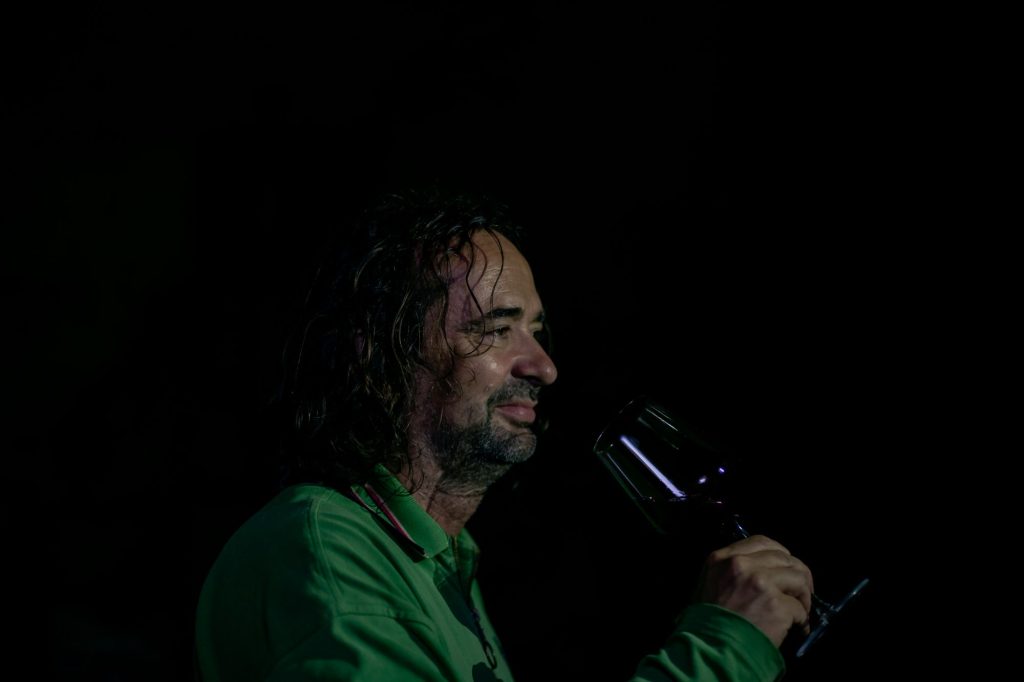
There have, of course, been mistakes.
– We’ve had a bit of everything. But if you don’t screw up, you won’t learn anything.
There is no idealising with him: everything is a process, a succession of attempts.
And within that process, the composition of the vineyards begins to change too.
Traditionally, Ilok is white wine territory. Graševina, Traminac, Rhine Riesling. Red varieties were a secondary concern, almost incidental.
– Realistically, they weren’t a priority.
Then something beyond his control begins to happen: the climate changes.
– We didn’t particularly push them. Those wines came into their own by themselves.
That sentence may best describe his relationship with the vineyard. There is no forcing things, no attempt to fit them into a predetermined picture. If conditions change, so does the approach.
Cabernet Franc begins to show what it could not show before.
– Twenty years ago, it wouldn’t have worked. No chance.
Today, the situation is different.
– Now it comes through every year. It has the acidity, the pH, everything.
He pauses, then adds what always comes at the end with him, a kind of conclusion that sweeps aside all the preceding talk about technology and knowledge:
– You just have to leave it alone.
For him, “leave it alone” means knowing when to stop.
Meanwhile, as Cabernet Franc becomes a serious wine, things appear in the vineyard that seem accidental.
Carménère, for example.
A variety that, in this context, seems almost like a mistake.
– That came by accident, he says.
With most winemakers, the story would now take a serious turn: an explanation, a justification, a plan.
Not with him.
– And now it’ll go too.
Simple.
– I’ve got another two or three years’ supply. I had to grub up the plot.
No drama, no sentimentality. With him, nothing is sacred unless there is a reason for it to stay.
If it has no purpose, it has no place.
– Maybe I’ll keep some as a souvenir. Or maybe not.
That indifference towards things that inspire attachment in others says a great deal about him.
And that is precisely why he keeps moving on.
If there is one thing that never stands still with Bošnjak, it is an idea.
The vineyard is only the beginning. Wine is the middle. The end, if there is one at all, is always somewhere further on.
– Nothing is waste here, he says at one point, casually, as though stating the obvious.
– We just haven’t figured out what it is yet.
It sounds like a joke, but his jokes often have an expiry date: the moment they become a project.
The story of the grape seeds began exactly that way. They looked at a by-product found in every winery and asked a question most people never even ask.
– Well, can this really be something we should throw away?
The answer was neither quick nor simple. Years followed in which there was more research than production. Collaboration with the faculty, experiments, measurements, mistakes.
– We tried all sorts of things… heating, cooling, spinning, measuring…
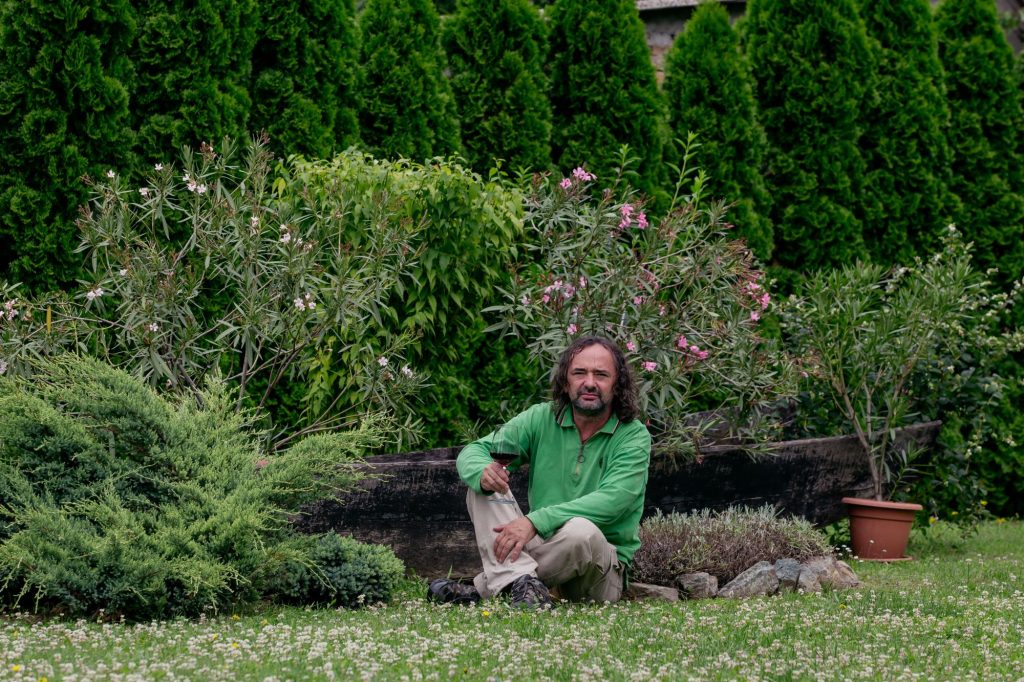
Again, when he says it, he sounds as though he is taking the piss. But behind it lie several years of work, trying to understand how to extract value from something everyone considers waste.
– We had the raw material, but we had no idea what we were doing.
That sentence may best describe his relationship with new things. He gets involved because he is interested, rather than because he knows. Because not knowing annoys him.
Today, it produces grape seed oil, flour and extracts. On paper, serious products, a commercial proposition, added value.
– Well, a product’s a product. What interests me is that we figured it out.
For him, “figured it out” carries particular weight. It means more than finding a solution. It means making the entire journey, from the question, through doubt, to the answer.
And here the difference between him and most people becomes clear.
Most look for certainty before they begin.
He begins because there is no certainty.
But even here, he never loses his sense of proportion.
– You can’t turn it into a miracle overnight. It takes time.
“Slowly” is a word he seldom says but often puts into practice.
Behind every bit of his “banter” lies serious work. He simply never describes it that way.
For him, work is never the subject.
The result is.
If there is a scene that perfectly explains Zlatko Bošnjak, it is neither the vineyard, the cellar nor even the new winery. It is the moment his phone rings and someone on the other end asks whether they can come for a tasting.
He already has a plan. And that plan has nothing to do with wine.
– I’d arranged to go fishing.
For him, this is no incidental matter. As he says, it is his only real release. The moment he steps outside everything.
– When I lock the winery and get to the boat, I’m already winning.
But the phone knows nothing about plans. People call, want to come, want to taste wine. And here comes a moment that reveals his logic.
– I wanted to put them off, he says.
Cleverly, rather than rudely. He quotes a price several times higher than usual.
– A hundred kuna per person.
He reckons there is no chance they will agree.
– They call five minutes later: we’re coming.
By then, a little irritation is creeping in, but so is curiosity. When they arrive, he gathers them together and asks:
– How many of you are there?
– Twelve.
Zlatko looks at them and says:
– Take a good look at each other, because I doubt I’ll ever again see twelve fools willing to pay a hundred kuna to taste wine.
In almost any other situation, this would be an awkward moment. Here, it is not. People laugh. The atmosphere relaxes. The tasting begins.
This is what keeps surprising you about him: his ability to go right to the edge, but never over it. There is no malice or aloofness behind it.
Of course, that was not quite what he had planned.
– I thought they’d go somewhere else.
But when they did not, he accepted the situation. As with everything else in life: if it is happening anyway, let’s do it properly.
Here, another of his qualities becomes evident: once something begins, he does not give up.
He may complain, comment or joke, but once the work starts, he will finish it.
Fishing, however, is the one thing on which he will not compromise.
– When people ask what I do when I’m not at the winery, I list chess, dominoes, Ludo… but the only truth is that I fish.
Stories about great catches do not interest him.
– I find talking about that funny. My biggest trophy is being neither at the winery nor at home.
It is a way of maintaining balance rather than escaping work.
Without that way out, without the Danube, everything would remain confined to the vineyard and cellar.
And he is not the kind of man who can stay confined.
If there is something that both amuses and annoys Zlatko Bošnjak, it is the market.
Because he understands it too well, rather than not understanding it. And because he knows how often it has nothing to do with quality.
– The best wine I have doesn’t sell, he says without hesitation when talking about Rhine Riesling.
The market does not always know what has value.
Then he immediately explains why.
His parents lived for years in the Mosel area. Two of his sisters are still there today. As a young man, he visited Germany and drank wines that stayed with him: off-dry, medium-sweet, with pronounced acidity, taut and alive.
– I knocked those back like crazy.
Then he draws a line.
– I’m going to make dry wines without high acidity.
The decision sounds contradictory, but with him it makes sense. He wanted to make something of his own, rather than copy what he had seen, drawing on the experience that had shaped him.
The problem is that the market does not always work that way.
– You have to tell a fair few lies to sell it, he says with a laugh.
And here we reach perhaps the most interesting part of his story: his relationship with his own wines.
There is no excessive praise. No need to persuade someone that something is great if the market does not recognise it. Yet there is one wine he speaks about differently.
The sweet Traminac from 2008.
– That’s a great wine, he says without hesitation.
Then he does something only he could do.
– I priced it at a thousand kuna a bottle.
Not because he thought it would sell.
– I reckoned nobody would buy it. I’d have the wine for myself and my friends.
The plan was simple: cover the cost and drink the rest in peace.
But once again, the market does its own thing.
– A man comes in and buys twenty-five bottles.
Zlatko laughs when he tells the story, but behind it lies the same logic again.
– He practically paid for the entire production.
Everything else stayed with him.
– I could drink it whenever I wanted, with whoever I wanted.
That story perfectly describes his relationship with wine. There is simply a relationship between what you make and what happens to it.
If the market responds, good.
If it does not, that is good too.
Because wine, as he sees it, does not end with a sale. It ends when someone drinks it.
And if someone understands it at that moment, everything else matters less.
It is no strategy. It is simply his way.
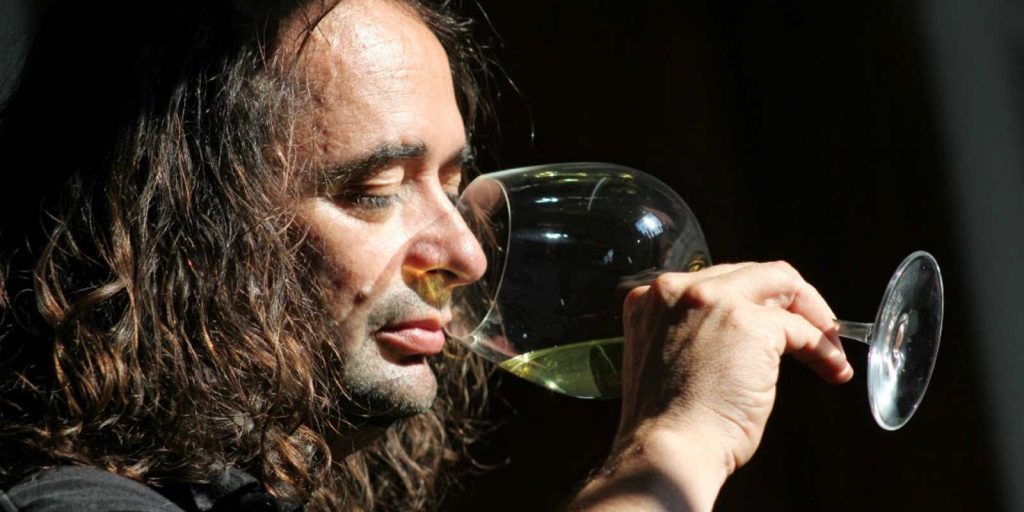
Zlatko Bošnjak does not fit a mould.
A typical winemaker does not blend Graševina and Pošip. A typical winemaker does not send his best wine to a friend at the other end of the country with instructions not to sell it before they blend it. A typical winemaker does not explain a new label with a sentence that sounds more like a joke than a description.
He does all of that.
The story of “Popoli” begins, like most of his stories, with friendship. Mato Violić Matuško, Pelješac, Pošip. Zlatko, Ilok, Graševina. Two worlds that, as a rule, do not meet.
– Mato comes along and says: let’s do something together.
The idea is not his.
– The man wanders around Italy and sees all sorts of things, he says with a laugh.
Such things exist there. Blends bringing together different regions, different styles. No great philosophising is required.
– Why reinvent the wheel when we can copy something?
And so a wine is born that makes little sense on paper. Graševina from Ilok and Pošip from Pelješac, half and half, with no adjustments or fine-tuning.
– It’ll turn out however it turns out.
That may be the most accurate description of his approach. Set the framework, lay the foundation and let things happen.
Of course, his suspicion of anything involving logistics and other people surfaces again here.
– If I send Dekan down there, Mato will sell it and put in something else from the shop, he says with a laugh.
So the wine is bottled at Zlatko’s.
Control still matters.
But what matters more than the blend itself is the relationship behind it.
– We spend more time socialising than doing business.
That is no empty phrase. It is the reality. For them, business grows out of the relationship, rather than the other way round.
– When we get bored, we talk about business.
That sentence may best explain why such projects happen at all. They come from surplus energy rather than a market need. Surplus curiosity. The urge to try something.
And that is why the quantities are small.
– Out of a thousand bottles, we’ll give away seven hundred.
It is another thing that upends the usual logic with him.
– If we sell three hundred, that’s good.
Because the aim is the experience rather than profit.
– If you’ve ever wondered what happens when you bring together the coast and the continental interior, here you are.
That is his definition of the wine.
Through an image, rather than chemistry or analysis.
And that is why such things work with him.
Because they were not created with the goal of working.
When he talks about the beginnings, Zlatko always returns at some point to a sentence that sounds like a joke, but contains more truth than anyone would like to admit.
– The most important thing for success in this business is having Mum and Dad in Germany.
He says it with a laugh, but does not back away from it. There is no dressing things up.
His parents were migrant workers. The money they earned abroad made it possible to begin the wine venture at all. Without that initial capital, that support, it would have been difficult to take the first step.
– Without that, there would have been nothing.
That kind of openness is rare in a world where success is often presented as the result of work and talent alone. He feels no need to romanticise things. If something was crucial, he says so.
But that initial capital was only the admission ticket.
Everything else came through work, attempts and decisions often made on the edge of risk. And through one constant: the need to keep things moving.
Today, Trs operates as a substantial producer organisation. Fourteen members, dozens of hectares of vineyards, a broad range of wines.
– We have ten varieties, almost thirty labels.
Yet when he says it, there is none of the pride you might expect in his voice. As though he were listing something self-evident.
– It all happened along the way.
The number of labels itself does not interest him; what interests him is what else he can do with them.
That is why he keeps venturing into new things. Why he researches, combines and tries.
And why he is turning increasingly towards red wines.
– We made our living from Graševina for a long time. We still do. But it’s time to show we can do other things too.
Frankovka, already one of the better examples in that part of Croatia for years, is receiving different treatment. Cabernet Franc is taking an increasingly serious place. Red wines are now an equal part of the story, rather than an addition.
– Before, the conditions weren’t there. Now they are.
Spoken without drama, that sentence describes a major change. In the entire area, as well as his winery.
But he does not present it as a revolution.
– It happened by itself.
With him, things are seldom presented as great turning points. More as a natural continuation.
And here again, his difference from others becomes evident.
While most plan changes, he recognises them once they have happened.
Then adapts to them.
Without fanfare.
Without grand words.
In everything Zlatko does, there is a line he seldom crosses: the line between seriousness and exaggeration.
You will never hear him talk about “grand visions” or “strategic development”, although that is objectively what he is doing. With him, such things always arrive in a more down-to-earth form.
– Well, it all comes along in its own order, he says when you ask what comes next.
And that “all” includes things other winemakers would treat as separate projects. A distillery. Fruit processing. Further expansion of production. Even the idea of a boutique hotel.
But none of it arrives as a grand plan.
Everything comes as a continuation.
– Once you’ve done one thing, you see what you can do next.
The logic is simple, but consistent. He does not skip steps. He does not move ahead without a reason. Everything must have its place.
Perhaps that is why everything he does feels connected, even when, at first glance, the things seem unrelated.
Wine, grape seeds, oil, flour, extracts.
– It’s all the same thing, he says.
And in his mind, it probably is. Everything begins with grapes. Everything revolves within the same circle.
That is why he is not interested in whether something will become a “trend”.
– We don’t follow trends. We do what makes sense to us.
There is no attempt to fit expectations. No need to please everyone.
If it works, good.
If it does not, that is good too.
And here we come to perhaps the most important thing about him: his relationship with failure.
For most, failure is something to hide.
For him, it is an integral part of the story.
– If you don’t screw up, you won’t learn anything.
That sentence, running through everything he does, is really the foundation of his entire winery. There is no fear of mistakes, because without mistakes there is no progress.
And that is why he keeps moving on.
Not because he must.
Because he knows no other way.
In the end, when you try to bring all this together into a coherent whole, you realise that Zlatko Bošnjak belongs to no clearly defined category.
He is a winemaker. A good winemaker. But that is only part of the story.
He is also a producer, an experimenter and a man perfectly willing to question his own decisions if something seems to make no sense. At the same time, he can combine a serious thought and complete piss-taking in a single sentence, without any need to separate them.
Perhaps that is precisely why everything about him works in a way that is hard to explain but easy to recognise.
His wines feel no need to impress at first taste. They do not demand attention or impose themselves. They are there, stable and reliable, the result of a system built without major ruptures, but with many small shifts.
And those shifts come from him.
From his habit of constantly questioning things, never taking them for granted, always looking for one further step, even when everything appears to be in place.
– Once you’ve put everything together, that’s when you see what you can do next, he says at one point.
And there the circle closes.
Everything he does is simply a new point from which to move on.
The vineyard leads to wine. Wine leads to a question. The question leads to a new idea. The idea to a new attempt.
Again and again.
Perhaps, then, the most accurate way to describe him is with a sentence that has nothing to do with wine, although it explains him perfectly:
Zlatko Bošnjak is not a man who makes wine.
He is a man who cannot stop once he gets going.