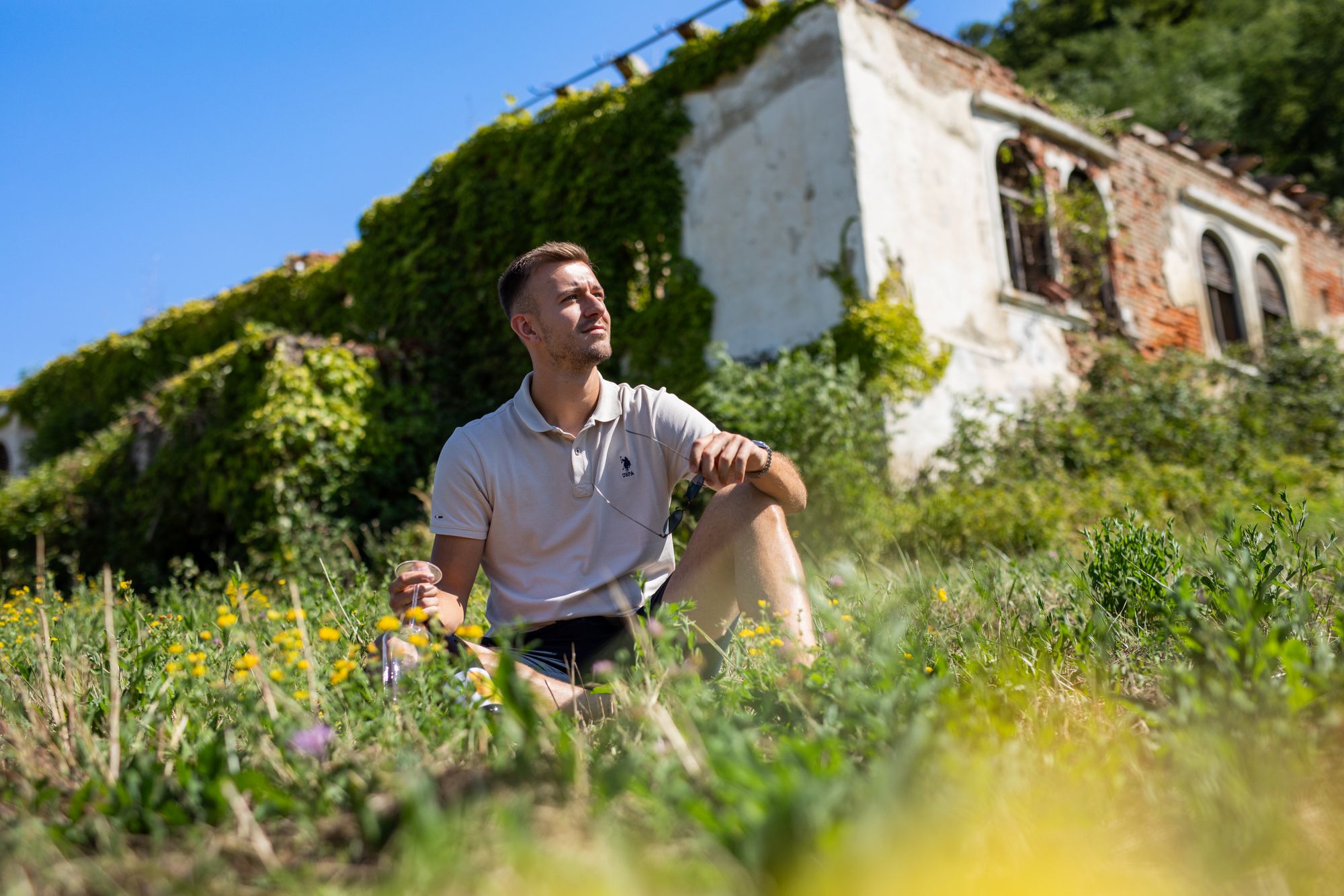
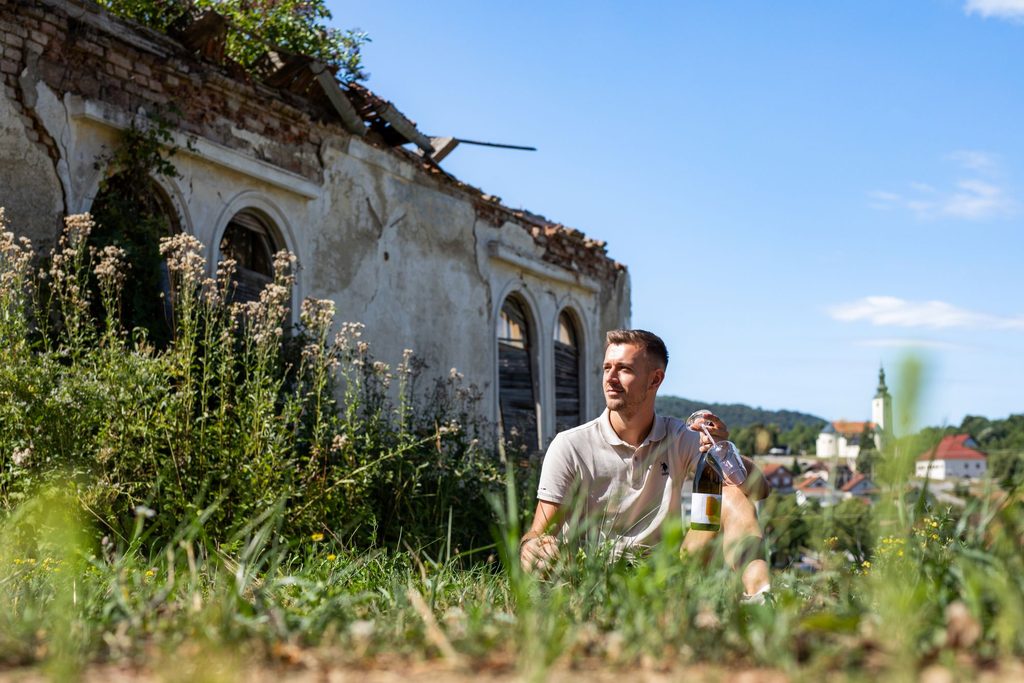
„- You can expect a lot from me, as long as I stay healthy! – said the young Filip Hren, with that broad, self-assured Zagorje smile. He is the owner, manager, oenologist and jack of all trades at Vina Filip Hren, a winery based in Marija Bistrica. His vineyards are in Budinščina, while the whole operation is actually run from Punkt Beer House in Mokrice.
One day, Filip says, everything will come together in one place: Fabijanec Manor in Gornja Stubica.
But there is more to this than a geographical tangle. Take the first Zagorje exit off the motorway and reach the roundabout that might aptly be called the Gateway to Zagorje, and few would imagine that a serious wine story lies behind the building bearing the Punkt Beer House sign. With its enormous car park, Punkt Beer House brings just about everything to mind except wine. At least, that is what the name suggests about the establishment Filip Hren runs when he is away from the winery and vineyards.
– You’re right, but since 1 August 2024, when we renovated the whole place, this has no longer been a beer pub. Still, it was Punkt and will remain Punkt. The name makes sense: all the Zagorje roads coming from Krapina, Zlatar Bistrica, Stubičke Toplice and Zagreb meet here.
The Hren family took over the premises from Pivnica Medvedgrad in 2014. Filip was only twelve at the time.
– Back then, I was on Coca-Cola! – he recalls with a laugh.
They did not take over Medvedgrad’s beer or start brewing their own, but they did create a place that would become a hub for new ideas. From the age of fifteen, Filip worked there as a waiter and cook while attending secondary school and, later, college.
– Nobody made me do it – he says.
– I wanted all of it myself. My parents even tried to talk me out of it. They would say: Study, leave the work alone. But I knew I wanted to start from scratch and learn every corner of the hospitality business.
– They told me I was a pupil and should concentrate on school. I was in my first year at the agricultural secondary school in Bedekovčina. Choosing that school was my decision too, and I made it after Dad decided to buy a 1.2-hectare vineyard. I told him:
– Go ahead, buy that vineyard. I’ll look after it!
And so, while still a teenager, he set the course of his own future.
He gained his first experience with vines in the family’s 350-vine vineyard.
– It sounds incredible, but even then I knew this was my path. And I never minded going to the vineyard every day.
When they planted their first substantial vineyard, with 6,500 vines of Graševina, Riesling, Sauvignon Blanc and Cabernet Sauvignon, they did everything by hand, without any employees. Today they have one permanent worker-and Filip.
– My parents would pick me up after school, and we’d head straight for the vineyard – he says.
– That’s why I enrolled in agricultural school and later went to study winemaking in Poreč.
– My year included young people from the Tomaz, Poletti, Prelac and Rossi wineries, who are now already taking over the entire business at their wineries in Istria.
– Why did you choose Poreč rather than Zagreb, which is right on your doorstep?
– It had been recommended to me, and what Poreč offered was exactly what I wanted. The course there doesn’t cover as broad a field as it does in Zagreb.
– Is it possible you already had your future mapped out so clearly as a kid?
– I don’t know. We’ll see in a few years.
According to Filip, the Hren family’s wine story did not begin when they took over Punkt Beer House-they had not yet entered the wine business then-but four years later, in 2018, when Filip was sixteen. That was when they brought their first label to market, made from grapes grown on the 6,500 vines in their vineyard in Gornji Kraljevec, in Budinščina.
– A year later, in 2019, we applied successfully for funding under Measure 4.1.1: Restructuring, Modernisation and Increasing the Competitiveness of Agricultural Holdings-Planting New Vineyards and/or Restructuring Vineyards of Table Grape Varieties. We expanded our vineyard plantings, adding another 8,000 vines. Together with the earlier planting, that brought us to about 15,000 vines on a single three-hectare plot. The highest point is 370 metres above sea level. That was where our wine story began to get more serious.
– As a family, we don’t have a long history in wine. We’ve always had about 350 vines for our own use, which is normal in Zagorje. Everything I’ve been doing in winemaking over the past few years, and everything I intend to introduce in wine tourism, I learned in Istria.
– Here, it all began with hospitality in 2015. Then everyone was waiting for me to take over, in a sense, and get involved. This place was practically a present from my old man-a toy for me to play with.
– I have no words to describe my dad. He’s a marvel!
Who is Filip’s father, whom his son describes as a marvel?
Perhaps the simplest way to introduce Mladen Hren is as a man whose rise in business could be called the Croatian Dream. Or simply the Zagorje Dream!
– Dad has been in construction since 8 March 1993 – Filip says.
– You had no trouble remembering that date?
– I love numbers. I may forget someone’s name, but I always remember the numbers.
– Before that, he worked as an ordinary labourer at the former Dona natural juice factory. Then, together with his brother, my uncle Ivan, he set up his own business, Niskogradnja Hren, on 8 March 1993…
The Hren brothers, Mladen and Ivan, entered their new line of work with a category C driving licence-Mladen drove a lorry-while Ivica operated a small excavator.
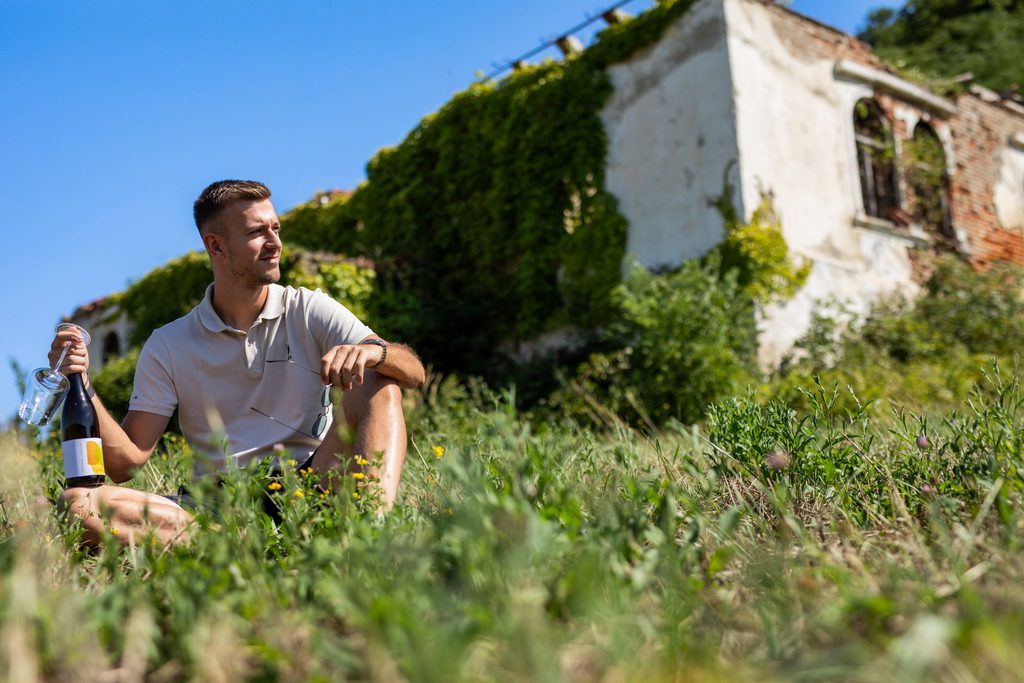
– And that’s how it started: some excavation work, some haulage, little by little. Ten employees, then fifteen, until today, when the whole company has around 200.
– Which projects carried out by Niskogradnja Hren, or NGH Group, would you name as its most impressive references?
– I’d venture to say the project we’re working on right now.
– And what is that?
– Knauf Insulation in Novi Marof. They make rock wool and want to expand production of mineral wool insulation materials. Warehouse buildings are being constructed too.
This time, Filip, who loves numbers, did not mention that the project his father’s company is currently working on represents an investment of €120 million and is certainly one of the largest construction undertakings in Zagorje. With the expansion of the existing factory, Knauf’s Novi Marof plant will become one of the largest sites in the Knauf Group, which has more than 300 production sites worldwide.
NGH Group has also worked on the Zlatar–Zabok Agglomeration project, the wastewater treatment plant in Zaprešić, and structural repairs and seismic strengthening of the fifteenth-century Church of the Holy Trinity in Donja Stubica…
– It sounds almost unbelievable today, but every NGH Group employee is from Zagorje – Filip says proudly.
– How have you managed that?
– It’s a struggle. It isn’t easy. We’re often short of workers, but…
– Did it ever occur to you to join your father in that substantial business?
– No, for several reasons. One is that I have two older brothers, Karlo and Lovro, who are already in construction, as well as two older cousins who are in construction too. Besides, I’ve never felt drawn to it. I told my family I’d do it if I really had to. But if they could manage without me, I’d rather not. Dad accepted that, and that was that.
Filip is certainly no layabout living off wealthy parents. Quite the opposite: he is a workaholic doing two jobs at once. In the morning, he goes to the vineyard and focuses on winegrowing and winemaking. Afterwards, he heads to the restaurant instead of going home, and carries on working in hospitality.
– How do you find time for all of it?
– I like challenges in life. And every day at the restaurant brings a new challenge. You never know who will come in, what kind of guest you’ll get. I want to make that guest happy with my wine, wine I’ve made with my own hands. When I see them enjoying it and willing to buy it and pay for it, I couldn’t be happier.
– Have you ever collapsed into bed, dead tired from work, and wondered why you’d taken all this on?
– Yes. Often, especially lately.
– What’s troubling you?
– Three years ago, we had 8,500 litres of wine in the cellar. Then I finished college, came back and took over running the cellar, followed by the vineyards, and raised production to 12,000 litres. Then there was another increase, to 20,000 litres.
– When I started increasing production, we had customers for 8,500 litres. But greater volumes mean you need new customers. That’s when a new, third job begins, involving endless conversations and visits to potential clients. And that’s when I most often think: Why did I take all this on?
Vina Filip Hren is currently based in Marija Bistrica, but Filip says he would not want it to stay there.
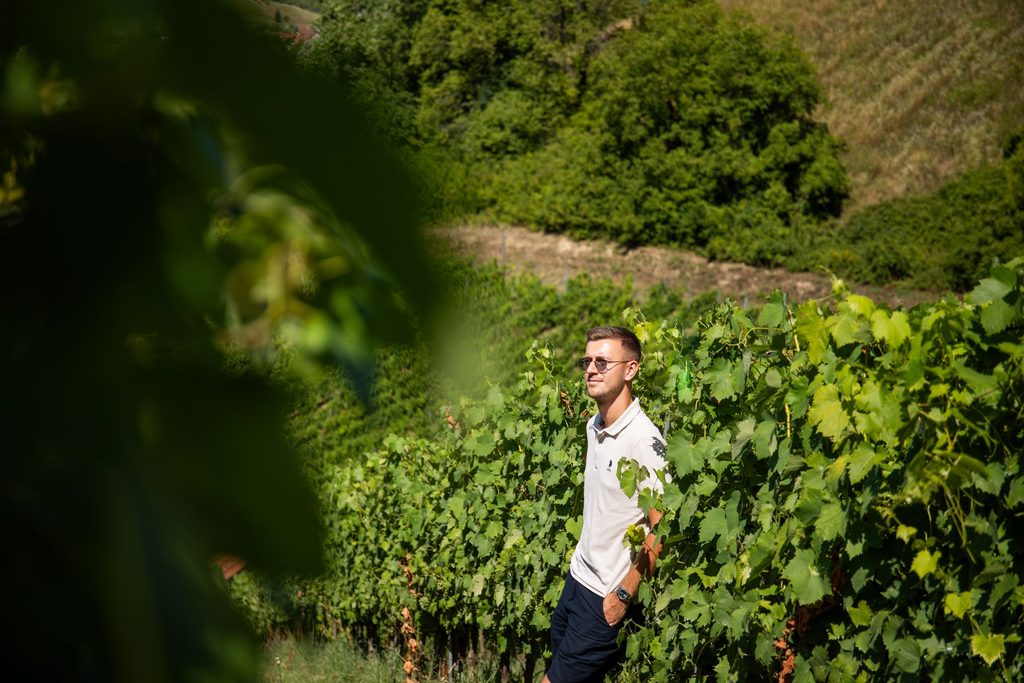
– We bought that winery in 2023, together with its vineyard of 3,500 vines, so we now have 18,500 vines in total. We bought it for a reason: we needed a bigger cellar. The cellar we had in Gornja Stubica was too cramped for any expansion in production.
Back in 2010, before they had even considered going into winemaking, the Hren family bought Fabijanec Manor in Gornja Stubica, a protected cultural property in a dilapidated state.
– A few years ago, we drew up a wine cellar project and applied for funding under the Wine Envelope programme. Our application was unsuccessful, so for now we’ve put the restoration of Fabijanec Manor and the move of the cellar there on hold.
– My goal is to restore the manor and make it the centre of the winery, with a restaurant, and develop a substantial rural tourism venture there. The half-hectare plot beside the manor, where we’ll plant another vineyard, will certainly help. We won’t wait long: in a few years, we’ll have done it all. And we’ll turn the current winery in Marija Bistrica into a distillery, where we’ll produce brandies and liqueurs.
– Did you surprise your parents with your initiative and ideas?
– Dad wasn’t doubtful when I decided to embark on this. I’d say he believed in me. I believe he did, because I don’t think he would have given me such a free hand and genuinely stayed out of the winery’s affairs if he’d felt otherwise.
– And my brothers have always been ready to help, whatever was needed and however they could.
As we said goodbye, he smiled and repeated what he had said at the start of our conversation: – You can expect a lot from me. As long as I stay healthy!