For a long time, Branko Zečević believed his life would remain bound to steel. The vine, however, was patiently waiting its turn. When he finally let it into his life, he approached it as he did everything else: thoroughly, ambitiously, and with little interest in what others thought possible.
The owner of Imperator winery, dubbed the “Balkan king of steel” by the media, has never hidden the fact that he entered the wine business with little technical knowledge. He had an idea, knew what kind of wine he wanted to make and how he intended to get there, but his wine story actually began long before business plans, certificates and the first plantings.
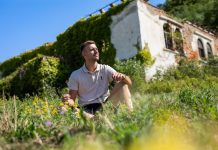
He was born in Sarajevo, and the vineyards he saw as a boy in Herzegovina and Dalmatia drew him in for reasons he could not yet explain. He could spend hours walking between the orderly rows of vines, captivated by their harmony, imagining that one day he would have a vineyard of his own. He was still too young to drink wine on its own, but bevanda-wine mixed with water-was already familiar to him. In the early eighties, when childhood images began turning into more serious ambitions, he heard something almost personal in Miladin Šobić’s song Džemper za vinograd–A Sweater for a Vineyard.

– I knew from childhood that I would have a vineyard one day. I didn’t know where it would be, what I would do for a living or how I would get it, but that dream never left me.
Today, some twenty years after he began studying the land on Fruška Gora and buying his first plots, he can say he has fulfilled that dream. And more: Imperator became the first winery in Serbia to obtain organic certification, and since the 2021 vintage, its vineyards and wines have also carried Demeter certification for biodynamic production. For Zečević, that seal is more than a marketing embellishment. It confirms the relationship with the land he envisaged from the outset: no pesticides or herbicides, minimal intervention in the cellar, and the conviction that wine should express its variety, climate and vintage as faithfully as possible.
The journey from a Sarajevo boy captivated by orderly rows of vines to Serbia’s first certified biodynamic winery took him through London and the steel business. He studied at the London School of Economics and Political Science and, after graduating in 1991, joined a steel trading company. Two years later, he established his own business, buying steel in Russia, Kazakhstan and Ukraine and selling it in Southeast Asia. He came to Serbia in 2001, set up a company in Sremska Mitrovica and launched a major greenfield investment in the Sirmium Steel mill. Production began in 2008, and the plant eventually grew to employ more than eight hundred people.
London gave him more than a business education. It was there that he began exploring wine more seriously and discovering biodynamics, long before he would need it in his own vineyard. His daughter attended a school associated with an institute drawing on the teachings of Rudolf Steiner, the founder of anthroposophy, Waldorf education and biodynamic agriculture. Branko later saw that encounter as one of the signposts along the way.
– London was the ideal place for my wine story to begin. It wasn’t like today, when you can find everything on your phone, but there you had access to books you couldn’t get elsewhere. Through my daughter’s school, I discovered Steiner’s ideas and began learning about biodynamics. When I later realised how many of the world’s great vineyards were cultivated that way, there was no longer any doubt in my mind. I knew what kind of winery I wanted to create.
While building the steel mill, he spent his free time looking for land for his future vineyard. History had always been a passion, so he had no intention of buying the first plot that caught his eye. He began studying Fruška Gora’s winegrowing past, Roman Sirmium and the tradition surrounding Emperor Probus, who encouraged the planting of vines beyond the boundaries of Italy in the third century.
Erdevik particularly appealed to him. In old records, he found references to Roman baths and wells in the area, then began investigating those historical clues using modern methods. He sent soil samples for analysis and studied weather records, sunlight exposure, air circulation and altitude. He also wanted to know what had previously been grown on individual plots, whether they had been fertilised and how heavily they had been treated with pesticides.
– While the steel mill was being built, I travelled around Fruška Gora looking for vineyard sites. I didn’t want to leave anything to chance. If I had decided to fulfil a dream I had carried all my life, I had to take it seriously. I studied the history, analysed the soil and checked the weather records. I’ve always been thorough in everything I do, so I saw no reason to approach a vineyard any differently.

He planted the first half of the vineyard at the Netin site near Erdevik in 2009, and the second half nine years later. Today, that continuous nine-hectare stretch, at elevations between 140 and 160 metres, is planted with Traminer, Sauvignon Blanc, Rhine Riesling, Merlot, Malbec, Cabernet Sauvignon, Cabernet Franc, Pinot Noir, Prokupac, Sila, Grašac, Shiraz and Vranac. With its other plantings, Imperator’s total vineyard area has grown to fifteen hectares.
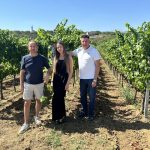
From the outset, he knew he wanted organic and biodynamic production, although he openly admits that he knew almost nothing about practical viticulture at the time. Meeting Zoran Zolotić proved decisive. An experienced agricultural technician who had previously worked at the Erdevik winery, Zoran knew the area exceptionally well. He embraced Branko’s idea, even though biodynamics was new territory for him too.
– My prior knowledge of wine was nonexistent. Absolutely zero! All I had was the desire to put something I had long admired into practice. Then, in Erdevik, I found Zoran Zolotić, the man who shouldered the work of establishing the vineyard from the very beginning. He embraced biodynamics very quickly, although both of us were only just learning about it. We learned together and followed the rules of organic and biodynamic production from day one.
The other key figure in Imperator’s development was Đurđa Katić, a graduate in food technology, twice Serbia’s national sommelier champion and an international wine judge. A Dalmatian from Dobropoljci near Benkovac, she had worked at Čoka Winery before joining Imperator, served as sommelier at Belgrade’s Madera restaurant and collaborated with Milijan Jelić and the Aleksić sisters. In a joint project with Miša Cilić, she also made Alter Ego, an acclaimed red blend produced in a run of just 1,926 bottles.
When Branko invited her to take charge of the technical side of his vision, practical experience of biodynamic viticulture was almost nonexistent in Serbia. On Fruška Gora, there was just one enthusiast growing grapes that way on half a hectare, but without any substantial wine production. Imperator therefore became a school for everyone who worked there. Today, Đurđa and her colleagues oversee grape growing and winemaking, and the winery shares its premises in Rakovac with Salaxia.
– Branko and I have been learning together from the beginning – says Đurđa. – Organic production was very rare in Serbia at the time, and biodynamics was almost unknown. When Milijan Jelić decided to grow Morava organically, many people called him mad. Biodynamics was another two steps beyond that. This has been a tremendous learning experience for all of us, and we are still learning.
Branko and Đurđa soon acquired a reputation as dreamers who had strayed beyond the boundaries of conventional winemaking. Because of his biodynamic preparations, attention to natural cycles and refusal to take chemical shortcuts, neighbours dubbed Branko the “voodoo winemaker of Fruška Gora”. The nickname seems to have amused him more than it offended him. Having chosen a path no one in Serbia had seriously pursued before him, he could hardly expect everyone to understand him immediately.

Until the first harvest, no one could know for certain whether their persistence would turn into wine or a very expensive demonstration that good intentions were not enough. The vineyard was young, their experience limited, and there were no predecessors on their chosen path whose example they could follow. Branko jokes today that he would have hanged himself if the first wine had been bad, then immediately explains that he would actually just have been terribly disappointed-and carried on.
When they tasted their first wine in 2011, their optimism found solid ground. Biodynamics was no longer a theory learned from books, but something they could recognise in the grapes and in the glass. The certifications that followed formally confirmed the path they had chosen at the very beginning.
– At first, we couldn’t know how everything would turn out. All we could do was work as well as we knew how and pray to God for a good result. When we made our first wine, it became clear that biodynamics brought something special. Time has shown that environmentally clean soil is more than a matter of philosophy: it is a prerequisite for great wines.
No pesticides or herbicides are used in the vineyard, the grapes are harvested by hand, and intervention in the cellar is limited to what is needed to preserve the individual expression of the variety, site and vintage. Whenever possible, the white wines ferment spontaneously under temperature control and mature in stainless steel. The reds begin fermentation in stainless steel, then finish fermenting and mature in Serbian oak barrels. Through biodynamic preparations and work timed to natural cycles, the team seeks to maintain the balance of the soil, the vigour of the vines and the health of the grapes.
Yet Zečević never wanted Imperator to become merely a demonstration of the merits of one farming method. Biodynamics was his foundation, but from the beginning he wanted to build a curious, playful winery on it. So he did not stop at varieties whose presence on Fruška Gora was taken for granted. He introduced Malbec to the vineyard, precisely after everyone had assured him it would not succeed there.
– I decided to plant it because they told me I couldn’t. Well, it wasn’t entirely out of stubbornness-I had always liked Malbec. It brings something special to blends, as though it draws more out of the other varieties than they can show on their own. I think of it as a wine amplifier.
Initially, he encountered ridicule and scepticism, but the variety settled well into the site near Erdevik. At first, the Malbec went into blends: with Merlot in equal proportions, or in combination with Cabernet Sauvignon and Cabernet Franc. Alongside Cabernet Sauvignon, Cabernet Franc and Merlot, it was also part of Maximianus, one of the first red wines with which Imperator introduced itself to the public.
The 2024 harvest, however, yielded grapes convincing enough for them to keep one barrel separate. Only after maturation would they decide whether that Malbec would also end up in a blend or receive a label of its own for the first time.

– Normally, we assemble the blend we have in mind first, then put it into barrique. This time, we aged the Malbec separately and left the decision until later. In the end, we concluded that it deserved a release of its own. There won’t be much of it, but enough to blow people’s minds!
Imperator thus gained its first single-varietal Malbec under its own label, and Branko gained another argument in his long-running debate with the doubting Thomases. He is particularly amused that, as far as he knows, no one else in Serbia has planted it on any significant scale, either before or since.
– Did I prove them wrong? I did. And I’m even happier that we’re still on our own. We went on to plant more Malbec, while everyone else continued to steer clear of it. That tells me we clearly haven’t run out of opportunities to be called mad.
Branko’s love of history did not remain buried in the soil where he established his vineyards. It found its way onto the bottles too. Imperator’s first wines were named after Roman emperors connected with Sirmium and the territory of present-day Serbia, and each label featured a coin bearing the likeness of the ruler whose name the wine carried.
Rhine Riesling became Valerius, the Merlot and Malbec blend Quintilus, Pinot Noir Decius and Traminer Gratianus, while Cabernet Sauvignon and Cabernet Franc came together in Constantius. Maximianus contained equal proportions of Cabernet Sauvignon, Cabernet Franc, Merlot and Malbec. There were enough emperors, Branko used to say, for all the varieties and blends still to come.
– The idea was for each wine to bear the name of an emperor born in this region. Every label featured his coin, so they were connected but still distinct. We had a few more emperors in reserve for future wines.
Over time, it became clear that Roman history was appealing, but the Latin names were not particularly easy for the average customer to remember or pronounce. When the number of labels outgrew the original system, the winery decided to modernise its visual identity and give the emperors more approachable nicknames. Valerius became Val, Claudius was shortened to Klod, and Gratianus to Gratio. For a while, both the old and new names appeared on transitional labels so customers would not lose track of wines they already knew.
The new visual identity, introduced in 2023, was created by Saša Vidaković of the London agency SVIDesign. Literal illustrations of ancient Rome gave way to a more contemporary look with only subtle echoes of antiquity. Cuts in individual letters of the new logo recall the marks of a vineyard knife, as though the typography itself had been pruned.
A new classification was introduced at the same time. Wines for everyday enjoyment were placed in the Primus range, more serious wines in Optimus, and those made only in the finest vintages in Maximus. There is also Gerila, a designation for small, one-off releases that may never be repeated. One wine in this category, for example, was a Chardonnay from a vineyard in extreme conditions that yielded enough grapes for only around five hundred bottles.
– We didn’t want to give it the price its quality deserved, which would have been fifty euros. We would rather offer it at a more accessible price. We have as much as we have: buy it and drink it while it’s available. We may never make it again, and that is precisely why it’s Gerila.
The redesign did not mean abandoning the Roman story. Branko simply concluded that it needed to be brought closer to people who knew very little about Sirmium and the emperors born in this region. When he first began talking about it, he recalls, many looked at him as though he were inventing history to make his wine easier to sell.
– We learned almost nothing about it at school. Roman emperors? Forget it! It was as though our history began with the first session of AVNOJ, the wartime Anti-Fascist Council for the National Liberation of Yugoslavia. Yet more than ten Roman emperors came from the area around Sremska Mitrovica, the former Sirmium, alone. That is why we need to keep talking about it. The Roman theme remains; we have simply made it easier to understand and remember.
In the same spirit, Grašac was given the name Cargraš, a simple play on the Serbian word for emperor and the grape’s name, requiring no knowledge of Latin or Roman dynasties. The portfolio also gained Esta 2022, Imperator’s first rosé, made from Pinot Noir. Đurđa Katić described its creation as an accident with a happy ending.
Meanwhile, the number of labels has exceeded twenty. For a winery seeking a stronger market presence, that is hardly the simplest business model, but Branko refuses to give up any wine that has found an audience. The broad portfolio did not emerge all at once or according to a predetermined plan. It was the result of a long experiment in which they planted new varieties, tried different blends and learned what individual sites could produce.
– It would be ten times easier for us to have six commercial labels. But each of our wines has its fans, people for whom that particular wine is their first choice. We started with two hectares; today we have fifteen, and we finally know much more about varieties, blends and the market. Everything we have done so far has been one great experiment, and whenever we liked the result, we didn’t want to let it go. Let everyone find their own wine.
For a long time, Imperator was an extremely expensive hobby for Branko. Over the years, however, it also became a place where he could recover from the pressures of his main business. He devotes one day a week exclusively to the winery, and on that day, he says, nothing else exists for him. In the vineyard and cellar, he seeks more than a business result. He seeks a counterweight to the world of steel, eight hundred employees, market risks and decisions whose consequences affect hundreds of families.
– I enjoy every step of this process. Wine clears away my everyday problems. Any stress the winery might bring is laughable compared with the stress at the steel mill, and the biggest loss I could make here is nothing like what I could lose in my main business in a single day.
That does not mean he has never considered stepping back. Twice, he seriously weighed the possibility of scaling the winery down to meet only his own needs. Both times, everything he had invested from the outset tipped the balance: money, certainly, but also time, love, friendships and shared learning. Besides, giving up goes against his nature.
– I convinced myself that I couldn’t simply let go of something into which I had poured so much love, money and friendship. I’m stubborn, and I don’t like giving up. This venture makes sense; it just needs more time to find its feet.
The steel business taught him a different approach to risk. As a trader, he adopted the rule “first loss is best loss”: as soon as a position moves into the red, close it rather than trying to recover what has been lost by taking on new risk. When he moved into manufacturing, he realised that option was often unavailable. Once a plant is running, there are workers, their families, contracts, raw materials and a market behind it. Manufacturing does not allow a person simply to change his mind and walk away.
– I have more than eight hundred employees at the steel mill. I am responsible to them, their families, myself and my own family. When you know that, your appetite for risk drops sharply. If you manufacture steel, you have to sell everything you produce that same month. Production already carries enough risk; you don’t need trading risk on top of it.
At the winery, paradoxically, he is willing to accept things he would never tolerate in industry. He can afford a year without wine if the grapes fail to meet his standards, a small release that may never be repeated, or a variety everyone tells him has no future. His financial backing gives him the freedom to avoid extracting revenue from every harvest at any cost, but also the obligation to gradually make the winery self-sustaining.
– The winery’s spreadsheet is manageable when I put it in the context of the overall steel business. But I don’t want to cover losses forever just because I can afford them. The goal is for Imperator to become self-sustaining, and we are getting closer.
That was why he postponed a more serious push into the market for so long. First, he wanted to establish the vineyards, get to know the varieties and define the style of the wines; only then would he generate the kind of market attention that production could support.
– The time has come for us finally to make a serious appearance on the market. We now have quantities that allow for more substantial sales and marketing, and the wines deserve a new look. Before that, there was no point in generating a buzz that production couldn’t keep up with.
Branko understands perfectly well why many wineries cannot take risks as Imperator does. It is difficult to advise someone who must finance the next harvest from every bottle sold to reject grapes, wait years for the market or embrace biodynamics simply because they believe in it. What he does not understand is the expectation of making money quickly in wine.
– The problem arises when people enter winemaking convinced that the money will come straight away. That doesn’t happen. To enter this business, you first need to have money. That tired saying that you can become a millionaire in wine only if you were previously a billionaire is entirely true. A vineyard takes years, and you have to be persistent. On the other hand, anyone who has land and a vineyard is unlikely to go hungry-unless they’re a fool, a gambler or have a vice that costs more than they can earn.
The difference between a steel mill and a vineyard is about more than the size of a potential loss. Steel demands speed, precise calculations and decisions that must be made immediately; a vineyard demands patience and acceptance of the fact that nature does not recognise business deadlines. In one business, Branko tries to reduce risk to the absolute minimum, while in the other he has deliberately chosen a path where much of the outcome lies beyond his control.
That very difference is what has kept him in wine. Imperator became important to him because it offers things he cannot find in the world of steel: the chance to follow the same patch of land for years, to return again and again to varieties he has yet to fully understand, and to measure results in something other than spreadsheets.
– At the steel mill, you have to know what you’re going to do today, how much you’ll produce and whom you’ll sell it to. In a vineyard, you can do everything right, and then nature explains that you’re not in charge. Perhaps that is exactly what drew me in. You spend your whole life thinking you control things, then you enter a vineyard and learn a little humility.
He was not alone in the vineyard and cellar: Zoran Zolotić shouldered the establishment of the vineyards, while Đurđa Katić tested his ideas from a technical perspective and turned them into wine. Their willingness to learn together allowed Imperator to experiment while retaining a firm biodynamic framework.
– Branko often comes up with something that initially sounds impossible – says Đurđa. – My job is to see whether it can actually be done and whether it makes sense. Sometimes we don’t agree straight away, but those conversations often produce the best things.
More than twenty labels, Malbec on Fruška Gora, one-off releases under the Gerila name, a rosé born of a happy accident and the constant reassessment of blends are therefore the result of a refusal to declare the winery’s development complete too soon.
For Branko, biodynamics is more than a collection of unusual rituals that prompted his neighbours to call him a “voodoo winemaker”. It is a way of preserving the soil for those who come after him. Organic and biodynamic production, he maintains, are both an investment in the quality of today’s wine and a responsibility to future generations. Certification is therefore no final reward, but proof that the winery’s claims can be verified at every stage, from vineyard to bottle.
– We didn’t inherit the land to exhaust it. It is up to us to leave it at least as healthy as we found it, and preferably healthier. If the wine is better too, then we have achieved everything we wanted.
The boy who dreamed of his own rows of vines among the vineyards of Herzegovina and Dalmatia reached them by a roundabout route: through London and steel trading, all the way to Sremska Mitrovica and Fruška Gora. The vineyard did not replace his first business, nor did it become a romantic escape from industry. Steel and vines continued to exist side by side, each with its own rules and risks: one demands that Branko master the process, while the other regularly reminds him that he never will. The arrangement suits Branko Zečević. At the steel mill, he learned that manufacturing does not permit giving up, and he follows the same rule in the vineyard even when the figures are against him. Twice, he considered reducing Imperator to a few rows, but today he sees no reason to abandon something that has come so close to finding its feet. It is hard to explain to a boy who once wished for a vineyard that he ought to give it up.