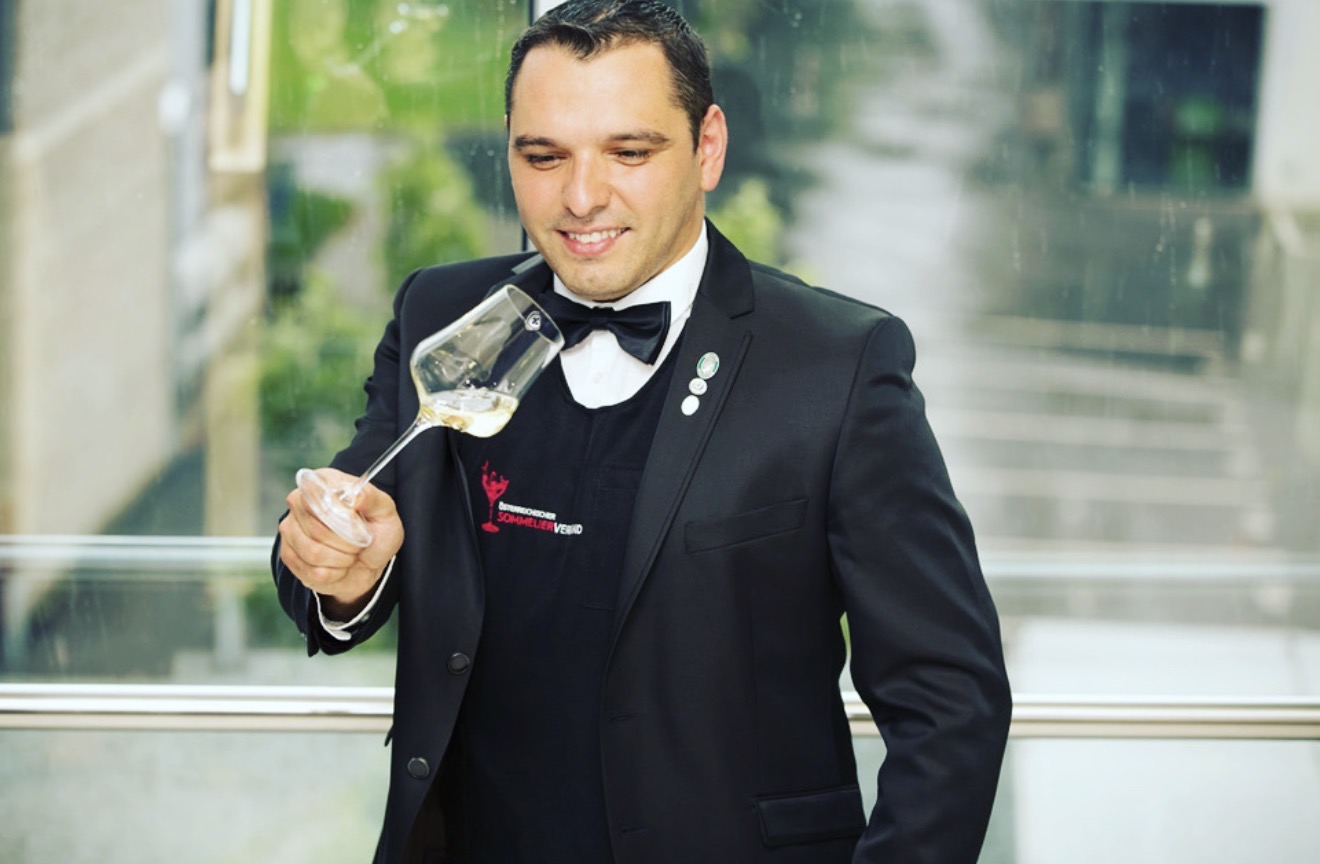
– As far as you know, is there a Master Sommelier from any of the countries of the former Yugoslavia?
Suvad Suwi Zlatić replied that, as far as he knew, there was not. The question did not seem accidental, but in that room in Vienna he dared not jump to any conclusions. The previous twelve years had taught him that the journey to becoming a Master Sommelier was not over until someone explicitly told him it was.
Ronan Sayburn MS looked at him briefly.
– As of today, there is.
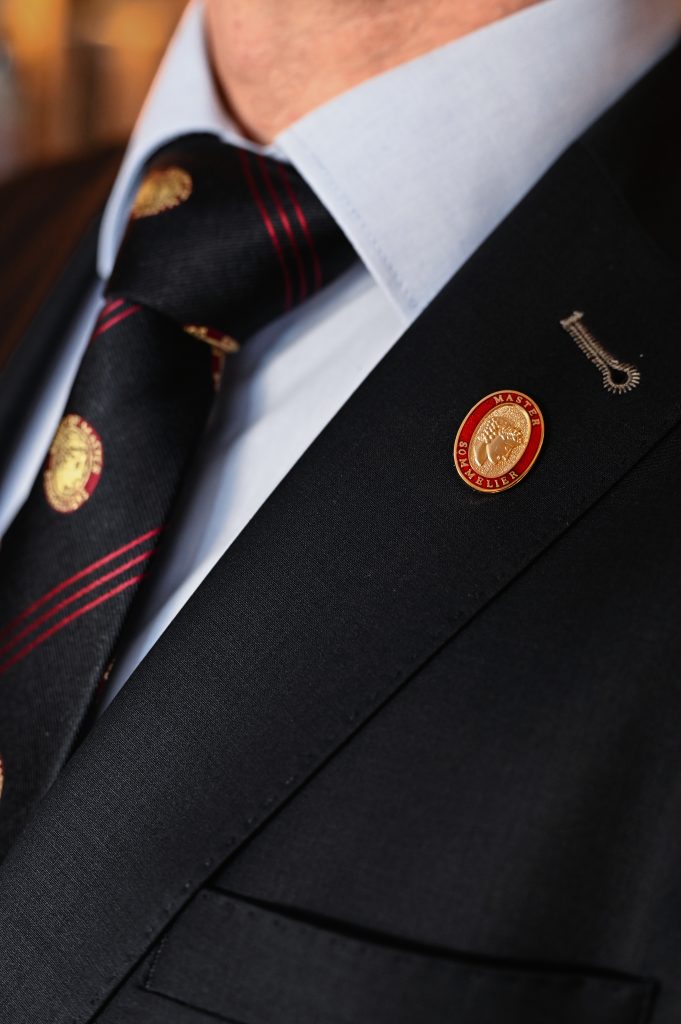
That sentence had taken thousands of hours of study, hundreds of wines tasted blind, journeys, examinations, competitions, victories and defeats. It had taken a hotel room in Argentina where he knelt on the floor and cried, surrounded by thousands of flashcards, and a final 110 days during which he almost completely withdrew from public life and studied from morning until night. Along the way were his fiancée Jasmina, who poured his wines, played demanding guests, tested him and brought him back to competition when he was ready to give up; his sons; the parents he lost within a few weeks of one another; and the people in Brčko, Rijeka and Tyrol who helped open doors that might otherwise have remained closed.
Long before all of that, on a cold, rainy 6 April 1992, nine-year-old Suvad arrived at his school in Brčko to find tanks and soldiers gesturing with their weapons for the children to enter the building. Inside the classroom, their teacher was waiting in tears, a fox-fur stole around her neck. She told them that the school year was ending early and that they were going on holiday.
Suvad was happy. He did not understand why his teacher was crying or what the tanks were doing outside the school. All he heard was that the holidays were starting early.
– In a way, we have never returned from that holiday, even to this day.
Far from the school, his father was already trying to get the family out of Brčko. He was working the winter season at a hotel in St. Anton am Arlberg, after which he intended to return to Bosnia and resume working in construction. An elderly member of the family that owned the hotel, who had served in Yugoslavia as a German soldier during the Second World War, invited him to his apartment and asked which town he came from. When he heard that the family was in Brčko, he warned him that he had no more than forty-eight hours to get them out, because the bridges would soon be destroyed.
The man who warned him knew the region well. After the war, he himself had walked from Yugoslavia to Tyrol, with his legs so badly injured that he later needed surgery. Suwi’s father took him seriously.
When Suvad returned from school, his mother was waiting with packed suitcases. He was allowed to take only one toy.
He chose a ball.
His uncle drove them to the bridge over the Sava. They had to cross it on foot, and buses waiting on the other side took them towards Rijeka. Suvad still did not understand that he was leaving his hometown. In his mind, there was a simple childhood thought:
– If we are going somewhere by the sea, it should be nice.
The bridge they had crossed was destroyed soon afterwards. Only later did he realise how close they had come to the moment when leaving would no longer have been possible.
Born in Brčko on 19 November 1982, he grew up in a family where his father worked in construction and his mother was a homemaker who looked after the children. He had a brother, Senad, and a sister, Begzada, friends on his street and football, which interested him far more than school. He remembered his childhood as peaceful and ordinary, without any thought that he was from Bosnia, that he would soon live in Croatia and then Austria, speak several languages and represent Austria at the world’s leading sommelier competitions.
Wine played no part in that world. Almost no alcohol was drunk at home, and in the part of Posavina where he grew up, wine was not an important feature of everyday life. He heard no conversations about vineyards, grape varieties, cellars or vintages, and had no family tradition from which to draw knowledge. He would encounter wine more seriously only much later, and would have to discover everything from the beginning.
The family came to Rijeka because his mother’s sister had already lived and worked there for many years. Thanks to her, after fleeing they found themselves among people they knew who could take them in, rather than in communal refugee accommodation.
Suvad soon discovered that this did not mean he could live like other children. As a refugee from Bosnia and Herzegovina of the Islamic faith, according to the family’s understanding of the situation at the time, he was not permitted to attend school regularly. For almost two months, he went to the school in Zamet and watched his friends from the street go inside. Sometimes he stayed until the first break, kicked a ball around the playground and then went home.
Headteacher Vojmir Turak was watching him. When an opportunity arose to resolve the problem, he took it, prepared to risk his own job. He helped more than just Suvad: later, as far as Zlatić remembers, he enabled more than seventy children in similar circumstances to attend school.
Many years later, Turak came to a lecture given by the boy he had once helped into a classroom. By then, Suvad was a multiple Austrian sommelier champion and an internationally recognised wine educator. After the lecture, Turak approached him and said:
– You really know your wines, young man.
That sentence remained particularly dear to Suwi because it came from someone who had known him long before the diplomas, titles and public appearances.
After a few months, Suvad’s father rented an apartment from a woman they called Auntie Vera. She was a teacher and helped Suvad with his homework almost every day. One of her remarks stayed with him for life:
– Listen, young man, here you have to give 150 per cent to be considered worth 100 per cent. That is how it is when you move somewhere else.
Before arriving in Rijeka, he had not particularly liked school, but with Auntie Vera he began to understand that knowledge could change his life. He would understand her words even better after moving to Austria, where he would once again have to prove that he deserved a place among others.
The family stayed in Rijeka for approximately a year and a half. Suvad had grown accustomed to the city, school, friends and sea, so leaving for Austria was difficult. One day, his father returned from Tyrol and told him to go to school the following morning, say goodbye and get ready to leave.
He arrived in St. Anton am Arlberg on 3 November 1993, sixteen days before his eleventh birthday, without knowing a word of German. After the plains of Posavina and the Kvarner coast, he found himself at roughly 1,300 metres above sea level, in one of the world’s most famous ski resorts.
– Wherever I looked, there were mountains on all four sides. I felt as though someone had put me in a box.
It was November, and snow lay everywhere. Just as he had become accustomed to Croatia, he had to get to know another new place, new people and a new language, and find his place all over again.
He remembered his first day at an Austrian school as arriving on another planet. He understood almost nothing beyond the occasional bitte or danke, and even things he had never imagined could differ were different. The children took off their shoes at the entrance and put on slippers, the classrooms were carpeted, everyone stood for morning prayers, and every Thursday the whole class went skiing, although Suvad did not know how.
St. Anton am Arlberg lived from snow. Arlberg is regarded as one of the cradles of modern Alpine skiing, while Suwi had come from the plains of Posavina and the Kvarner coast. Nevertheless, he brought one skill to his new surroundings that allowed him to communicate without German. The Austrian boys were not particularly good footballers, so the ball he had brought from Brčko helped him get closer to his classmates in PE. Before he could talk to his peers, he could pass them a ball.
At the time, there were few foreigners in that part of Austria. He remembers a boy from Turkey and another Bosnian who would not speak Bosnian with him because, as Suvad put it then, he was pretending to be Austrian. At first, Suvad also tried to imitate the Austrians, convinced that he would be accepted more easily if he revealed as little as possible about where he came from. After a few months, he realised that he did not want to become someone else in order to belong.
– You can live in another country, learn its language, respect its culture and belong to it completely without losing yourself. Quite the opposite.
He learned German with teacher Bruno Mattle, who stuck notes around the classroom naming the door, windows and other objects so that Suvad could connect the words to what he saw. Then he asked whether he knew Puss in Boots, Alice in Wonderland and other fairy tales. Suvad knew the stories, so he began reading them in German, using the familiar content to understand unfamiliar words and sentences.
His classmates took care of the skiing. At weekends, they took him to a small hill and practised with him, and after a few weeks he could join them for the school’s Thursday ski sessions.
At the time, refugee children who did not speak German often had to repeat a year, and Suvad expected the same to happen to him. With help from his teachers and through his own hard work, he nevertheless kept up with his schooling. From then on, he finished every school year with top marks.
– I literally took off. Perhaps that was when I first truly understood how much ground a person can make up if someone gives them a chance and they are willing to work harder than others.
The boy who had not particularly liked school in Brčko adopted Auntie Vera’s words as his own standard. One hundred per cent no longer meant the job was finished; it was merely the foundation on which the extra work began.
In St. Anton am Arlberg, he also observed life in a town where almost everything revolved around guests. His parents worked in hospitality, as did his brother Senad, who built a long hotel career and has worked as a director at Raffl’s Star Hotels in St. Anton am Arlberg for more than twenty years.
Suvad entered hospitality in 1998, at fifteen, at Hotel Basur. Under Austria’s vocational training system, he spent approximately eighty per cent of his time at work and only twenty per cent at hospitality school. From the beginning, then, he worked with guests and learned under the pressure of real orders, expectations and responsibilities.
He stayed at Hotel Basur until 2001, working as a bartender. He spent the following year behind the bar at another hotel in St. Anton am Arlberg, and in 2002 moved to Hotel Post in Serfaus, where he would remain for sixteen years. He worked as a bartender until 2006, then became maître d’hôtel, and from 2011 until his departure in 2018 served as director of the Posthotel and Lifehotel.
Hospitality gave him the opportunity to show quickly what he could do. He made connections easily, read people well, knew how to joke and was comfortable improvising. He believed that people from Bosnia and Herzegovina and the wider region often had a natural aptitude for hospitality because of their warmth, quick thinking, feel for guests and willingness to go the extra mile.
To that, he added the persistence he had already developed at school. If he was not doing something well enough, he stayed after work and practised. He did not wait for someone to show him every detail, but looked for what needed improving himself. After only a few weeks, he sensed that he could become very good at hospitality.
Wine was not yet his main interest. He was far more interested in cocktails, largely thanks to Tom Cruise and the film Cocktail, which had utterly captivated him as a young man. He ordered special flair-bartending bottles and instructional videotapes from America. He waited months for them to arrive, then tried to reproduce the moves between shifts and in his free time.
He tossed bottles, caught them behind his back and turned making cocktails into a performance. Among the moves he practised was throwing a lit Zippo lighter, which, he now admits, might have set half the hotel on fire had he been a little less fortunate.
Guests loved his performances and returned for the atmosphere he created at the bar. It gave him confidence, set him apart from his colleagues and earned him, as he says, money hand over fist. Later, he would realise that this period had taught him something essential to his future sommelier career: guests remember not only what is in the glass, but also the energy, connection and experience that come with it.
He was already selling wine well, although he did not yet know much about it. He relied on communication and his feel for the guest, mostly recommending labels and styles he liked himself.
The first wine to attract his serious attention was Bertani’s amarone. He knew nothing about vineyard sites, grape varieties, production methods or the reasons the wine was special, so he relied on much simpler criteria.
– It tasted good, did not seem sour or bitter, had a nice label and was not cheap. At the time, those were quite enough signs for me to conclude that it was a serious wine.
Meanwhile, he watched colleagues complete wine courses without subsequently selling any more wine than before. He could not understand the purpose of knowledge that failed to reach the guest. He knew how to sell, but increasingly felt that he did not sufficiently understand what he was selling.
He confronted that gap directly during his final vocational examination after secondary school. Everything relating to cocktails, spirits and service came easily, but questions about wine shook his confidence. The examiner told him:
– If you knew as much about wine as you do about cocktails and spirits, the whole world would be open to you.
It challenged him more than it embarrassed him. For the first time, he clearly saw the difference between his talent for selling and the knowledge he lacked, although he did not immediately decide to enter the wine world seriously.
In the early 2000s, while serving in the Austrian military, he had time to consider what he wanted from life. Working all night, entertaining guests and earning good money was appealing while he was young, but he did not consider that pace sustainable in the long term, whether for his health, finances or family life.
Wine gradually emerged as a new professional field, but he had no family tradition, vineyard or knowledge absorbed while growing up. Everything some of his future competitors had learned from childhood, he would have to make up through books, travel, tasting and work.
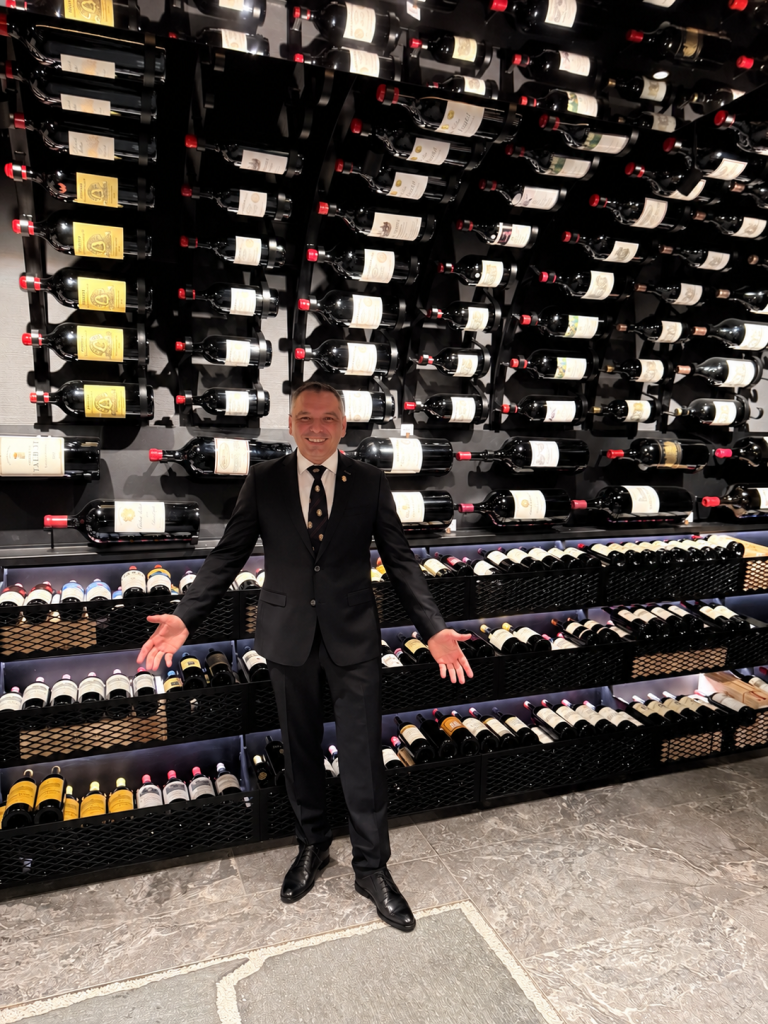
He began studying seriously in 2009. He took up the major wine atlases, including Jancis Robinson’s, and started with regions, varieties, climates, soils, appellations, producers and styles. He travelled through wine regions in Europe, South America and Japan, attended workshops, read specialist literature, tasted wines and recorded his observations.
He made thousands of flashcards. At first, he wrote them by hand, sorted and reviewed them, then digitised them so that he could study wherever he was. He drew and coloured maps of wine regions, as well as areas important for cognac, armagnac, tequila, whisky and other categories. Remembering a name was not enough; he wanted to see where everything was and how it connected.
His first major validation came in 2011, when he finished third in the Austrian sommelier championship. Standing among the country’s finest sommeliers, he thought back over his journey from the bridge over the Sava and Rijeka to arriving in Austria without speaking German. At the same time, he saw very clearly why he had not won.
He lacked knowledge of Asia, particularly sake, so he regarded third place as a precise list of what he still needed to learn rather than merely confirmation of what he already knew. He was convinced that he would win the next Austrian championship and earn a place at the World Championship.
A year later, at a lecture by Frank Kämmer, he first saw how far he might go. The German Master Sommelier connected regions, wines and facts with an assurance Suwi had never encountered, making him seem like a man from another planet. Suwi wanted to reach that level one day, although he had not yet decided that he would actually try.
In 2013, he watched the documentary Somm, which follows candidates preparing for the final examination. The film frightened him more than it encouraged him, because only then did he see how much knowledge, time, discipline and sacrifice the journey demanded.
– My first thought was: is this even normal, and is it for me?
Nevertheless, the following year he decided that he wanted to become a Master Sommelier and began turning the ambition into a concrete goal. In that same year, 2014, he fulfilled the promise he had made to himself after finishing third and became Austria’s best sommelier, in the country he had arrived in some twenty years earlier without speaking its language. He would win the title again in 2021.
At first, he studied in bursts: he intensified his efforts before an examination or competition, took part and then had a break. In time, he realised that this could make him a good, perhaps even excellent sommelier, but would not take him to the very top. He therefore turned studying into daily training, which continued even during travel and holidays. While driving, he listened to his own digital flashcards, and he took study materials to the beach and on skiing trips.
He invested thousands of hours simply in preparing the materials, then many more in memorising them and connecting the information. The cost extended beyond money spent on bottles, travel, workshops, courses and examinations to sleep, weekends, family time and days of genuine rest.
Studying gradually became what he calls a positive obsession. He was no longer preparing only for a particular examination or competition; he needed his daily dose of new information and the feeling that he had learned something today that he had not known yesterday. Auntie Vera had told him he must give 150 per cent to be considered worth 100, and Suwi would take his studies far beyond that.
Norbert Waldnig was among those who recognised his energy and ambition early on, while Ronan Sayburn MS later became a major influence. Sayburn’s advice stayed with him for years, although he admits that he understood some of it only much later. Others tried to convince him that the goal was too high, unrealistic and unnecessary for a man who had already achieved enough, but such assessments usually motivated him further.
– When someone tells me something is impossible, my Bosnian stubbornness immediately kicks in. Even the word impossible contains possible.
He had no substantial financial backing, inheritance, major sponsors or doors held open for him. That was precisely why he wanted to show that someone who did not start from a position of privilege could also reach the top. He called it his little Robin Hood story: if he succeeded, perhaps he would encourage others to pursue a goal that seemed beyond their reach.
After his first Austrian championship victory, he continued gaining international qualifications and recognition. He became an Advanced Sommelier, earned the ASI Certified Diploma, established himself as a sake specialist and became a licensed sake educator. He won international competitions in Portugal, Sweden and Hungary, where he took part as a guest candidate, and earned the title of Ambassadeur du Champagne.
Sake became much more than another category he needed to know for an examination. He travelled to Japan, studied systematically and devoted himself to introducing it to European audiences. He also held specialist workshops at luxury hotels on Mali Lošinj, explaining to sommeliers and hospitality professionals how sake could accompany dishes for which wine sometimes struggled to offer a suitable pairing.
It was a pattern he would repeat: whatever he identified as a weakness, he studied until it became a strength.
At the same time, he progressed at Hotel Post in Serfaus. From 2006, he worked as maître d’hôtel, responsible for the restaurant, service, staff and the entire guest experience, and in 2011 became director of the Posthotel and Lifehotel. The boy who had arrived without speaking German was now managing Austrian hotels.
From 2009, he also taught at WIFI, and later lectured at the Wine University in Krems. Passing on knowledge required a different ability from acquiring it, and explaining complex concepts in words that even someone encountering wine for the first time could understand became important to him.
His own experience of learning German from notes stuck around a classroom and familiar fairy tales helped him. He knew how it felt when everyone around you understood a language that meant nothing to you, and he had little patience for wine lectures or technical terminology that did more to show off the professional than help the guest.
– It is our job to explain wine in normal, human language. If you simply say tannin, someone may understand nothing. But you can explain that it is what makes the gums around your teeth feel a little dry and leaves a sensation like fine wool on your tongue.
His bartending years had taught him that knowing appellations, vintages and producers was not enough for good service. Guests do not come to a restaurant to sit a wine examination; they want pleasure and the sense that someone has understood their wishes. Knowledge remains unused if the sommelier cannot communicate it to the person on the other side of the table.
In 2016, he suffered one of his most painful competitive defeats. At the World Championship in Argentina, he achieved the third-highest theory score of all the candidates, but lost points in the service section and missed the semi-final. He withdrew to his hotel room, knelt on the floor among thousands of flashcards and cried.
The very next day, he went to watch the semi-final. He wrote down what the best candidates did well, what he could learn from them and which aspects of his own performance he needed to change. At the closing dinner, he discovered that he had finished sixteenth, while fifteen candidates had qualified for the semi-final.
It took him months to accept that just one place had separated him from progressing in the competition. Eventually, he turned that defeat, too, into a lesson he would often share with others:
– There is no shame in falling. The shame is in staying down. You have to get up, try again and carry on.
That same year, he decided to start his own business, although for a while he continued working at the hotel alongside it. After leaving in 2018, he relied entirely on himself. Through Suwine and GENIUSworld, he brought together wine, champagne, sake, fine foods, education, retail and hospitality consultancy. He compiled wine lists, trained kitchen and service staff, organised workshops and developed products connected to the Alpine-Adriatic region.
Independence allowed him to develop his own ideas, but also meant paying for bottles, travel, education, examinations and time away from work himself. When he had been an employee, his employers supported his competition appearances because his successes enhanced their hotels’ reputations. Now, he had to ensure that his companies continued operating while he prepared for a goal no one could guarantee he would achieve.
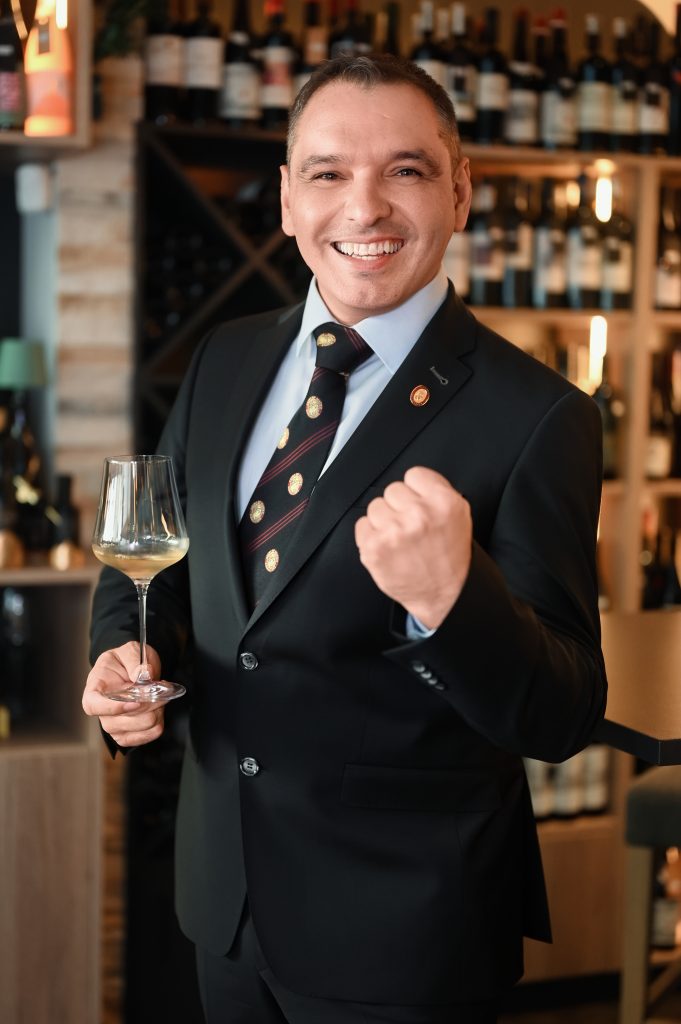
He completed the first three levels of the Court of Master Sommeliers programme in approximately nine months. Because he was not immediately eligible to take the final examination, he had to wait two years. His competition results gave him confidence, and he believed he was ready, but at his first attempt he failed all three sections.
Only a few weeks earlier, he had won a major sommelier competition and considered himself to be performing at a very high level. Only during the examination did he understand that competitions and the Master Sommelier Diploma required different kinds of preparation.
– It is as though you train for tennis and then suddenly go out to play football. Both require knowledge, concentration and skill, but the way you apply them is completely different.
The final examination consists of theory, practical service and blind tasting. After his first failure, Suwi began developing each discipline separately, analysing precisely where he was going wrong. He had to stop believing that success in competitions automatically meant he was ready, and accept that being good most of the time was not enough. He had to reach the required standard on that particular day, whatever questions, wines and service scenarios he was given.
He met Jasmina in 2019. By then, becoming a Master Sommelier had long been part of his life, and soon, as they joked, it moved into their shared life as another member of the family.
Almost overnight, the pandemic threatened a business dealing in wine, fine foods, seminars and hospitality, and disrupted the continuity of his preparation. Instead of thinking about competitions and titles, Suwi had to consider how to save his business and survive the shutdown of an entire sector. By 2021, he was so exhausted that he no longer wanted to continue either competing or pursuing the Master Sommelier title.
Later, in one interview, he would say that he had never considered giving up, and in another that Jasmina had stopped him from doing precisely that. Both statements, he explains, are true.
– Deep down, I never completely gave up, but I came very close to no longer trying. There is a big difference.
Jasmina convinced him that the story was not over. That same year, in Cyprus, Suwi finished third in the Best Sommelier of Europe and Africa competition, a result no Austrian representative had achieved before him. Two years later, in Paris, he finished ninth at the World Championship.
When he returned to the Master Sommelier examination, he knew that each section he passed remained valid only for a limited time. If he did not complete all three within the prescribed time and number of attempts, he would have to retake even those he had already passed.
In 2024, he passed the service section, but had arrived in London ill. His senses of smell and taste were impaired, preventing him from performing at the necessary level in the blind tasting, while he fell a few points short in theory. Although he had not completed the examination, passing service allowed him to focus on the remaining two sections.
He also changed the circle of people with whom he prepared. He realised that an examination covering the entire wine world could not be trained for only within Austria and neighbouring countries. He began working regularly with candidates from other continents, who had grown up in different wine cultures and were accustomed to other approaches to tasting, service and studying.
He saw this as one of the greatest obstacles facing candidates from the former Yugoslav countries. There were talented people, but the pool of competitors within the region was neither large nor diverse enough to expose them daily to different wine styles, questions and approaches. Countries achieving the best results had developed joint training and systematic exchanges of knowledge, which was why Suwi believed that colleagues in his own region needed to connect more closely.
He also shared his knowledge with people he would later meet in competitions. Among Croatia’s leading sommeliers, there were few who had not attended one of his workshops or training sessions since 2016. Filip Savić, Ivan Jug and Kristijan Harjač also travelled to Austria for training he organised. The fact that they later competed against one another did not, in his eyes, make them adversaries.
– The point of a healthy professional community is to push one another upwards, even when we formally stand on opposite sides of the competition table.
He developed a particularly close connection with Kristijan Harjač, whom he considers world-class, both in professional knowledge and in his treatment of people. Harjač would later be the first person in Croatia whom Suwi told that he had become a Master Sommelier.
Before completing the examination, he faced a period when his professional goal was no longer his greatest concern. After a break, he set off for the examination again in 2022, but on the way learned that his father had died suddenly of a heart attack. He abandoned the journey and did not sit the examination, and only a few weeks later he lost his mother, too.
In a short space of time, he had lost the parents who had taken him from Brčko into the unknown, tried to rebuild their lives in Rijeka and then moved the family to Austria. His father had gone from construction work in Bosnia to a winter season at a Tyrolean hotel, while his mother had waited for him that April morning in 1992 with packed suitcases, knowing that the early start of the school holidays meant something very different from what delighted her son.
Losing his parents did not take away his reason to continue. He knew how much his goal had meant to them, and thought particularly about how happy his mother would have been to see him reach the end of the journey. Once again, it seemed that he could not reach what he wanted by a direct route.
– It was as though I had to make another complete circuit of the house instead of walking straight through the front door. The journey had become longer and harder than I had planned, but the goal had not changed.
Jasmina had long since accepted that goal as a shared one. Her support went beyond patience and encouragement: she actively participated in his preparation. She poured wines for blind tasting, devised service tasks, played the guest, asked questions and tested his theory using his digital flashcards. Their home frequently became a setting for mock examinations.
The family had to sacrifice some spontaneity, holidays and time together. His sons accepted that, even when their father was physically sitting with them, he was sometimes thinking about wine, the examination or his next training session. At the same time, they saw what years of preparation looked like, how failures were endured and how often a person had to begin again.
Suwi’s son Ajdin brought the same approach to his work as a chef and won the title of Austria’s best young chef. For Suwi, his success showed that the years of preparation had brought the family more than sacrifice: they had passed discipline, work habits and the belief that great results do not come overnight to the next generation.
In 2025, Suwi took the examination again in Vienna. When he finished, they told him they had bad news and good news, and he wanted to hear the bad news first. Once again, he was a few percentage points short in theory.
The good news was that he had achieved the best blind-tasting result of the day and identified all six wines correctly. Having passed service, he had now passed tasting, leaving only theory. That “only”, however, encompassed wine regions, grape varieties, vineyard sites, laws, producers and vintages from around the world, as well as spirits, beer, sake and other categories encountered in fine-dining service.
As soon as he returned to the hotel, he decided to focus exclusively on the final section. During the summer and autumn of 2025, he studied for three to four hours a day, then seven to eight, and at the beginning of 2026 increased that to nine or ten. He balanced all of this with his family, running his companies, workshops and other commitments.
From the beginning of March, he almost completely withdrew from public life and day-to-day business operations. He spent the final approximately 110 days studying, reviewing and holding video calls with colleagues from different parts of the world. Alongside theory, he prepared physically and mentally: he exercised regularly, lost weight, meditated, practised controlled breathing and visualised the examination. He wanted to ensure that pressure would not prevent him from accessing the knowledge he had accumulated over the years.
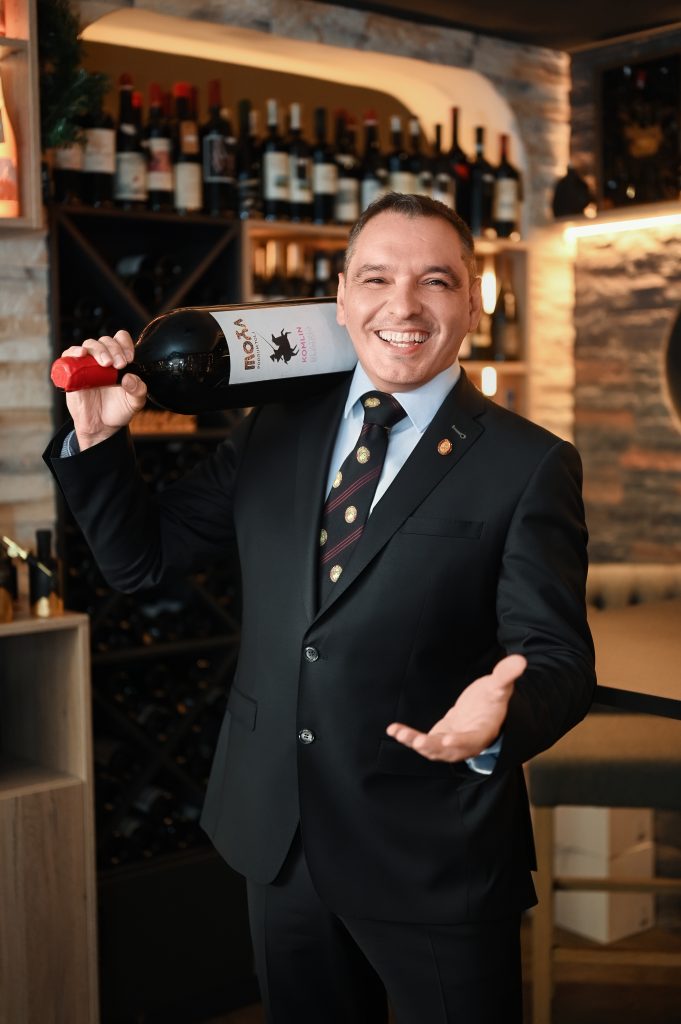
Every day, he wrote that he was a Master Sommelier, rather than that he would become one. He was trying to accustom his mind to the idea that he belonged among those who had passed the examination.
– At that level, you have to believe one hundred per cent. Ninety-nine per cent is not enough. But that has nothing to do with arrogance. You have to reach the point where you know you have done everything within your power.
He arrived in Vienna late in the afternoon of 19 June 2026. The examination began at eight the following morning, so for weeks he had been preparing his body and mind to be fully alert at precisely that time. He wrote down when he would go to bed the night before, when he would get up, how long he would meditate, when he would go for a walk and what time he would leave for the examination.
He deliberately did not stay at the hotel where the examination was being held, because he did not want to spend the whole night feeling that he was already at the place where the outcome would be decided. He stayed at a nearby hotel, got up at five, followed his planned morning routine and arrived by taxi at around 7.45.
The other candidates were waiting on the first floor. When one of the Master Sommeliers called his name and led him along the corridor towards the room, he thought that the next fifty minutes or so would decide twelve years of his life.
Yet he did not feel paralysed. He prayed and welcomed the opportunity finally to show what he knew. During the examination, he remained calm, focused and present, and the time passed much faster than he expected. After one answer, he asked what the next question was, and the examiners told him there were no more questions and that he should enjoy his weekend in Vienna.
Immediately after leaving, he called Jasmina.
– I think that is it. I think I have done it. But I do not know.
The official results would not be announced until the following day. Everything he could do had already been done; now he had to wait.
On Sunday, 21 June, from five in the afternoon, the candidates went in one by one to be told their results individually. Suwi watched some emerge as new Master Sommeliers, while others learned that their journey would continue or return to the beginning.
He was delighted when two colleagues from the international group he had founded a year earlier for joint preparation passed. Their success gave him hope, because during training they had told him he was the strongest among them, but at that level he wanted to take nothing for granted.
He was called last. He knew that if he failed theory, he would have to retake the sections he had already passed. The years of preparation, the successful service examination and all six correctly identified wines would not disappear, but they would no longer count towards his diploma.
In the room, he was greeted by Ronan Sayburn MS, whose advice had accompanied him through much of the journey. Instead of telling him the result immediately, Sayburn asked a question.
– As far as you know, is there a Master Sommelier from any of the countries of the former Yugoslavia?
– As far as I know, there is not.
– As of today, there is.
At first, Suwi could not believe it had really happened. After twelve years of examinations, failures, renewed attempts and thousands of hours of study, his first thought was:
– Finally, one of us.
He asked Sayburn whether he could hug him and thanked him for the motivation, advice and support he had received during his preparation. His first message went to Jasmina, then he contacted his sister Begzada, coaches, friends and the people who had been part of his journey for years. The first person in Croatia he wrote to was Kristijan Harjač.
Messages and calls soon began to overlap, and he could no longer reconstruct their exact order. What remained was his disbelief that the goal which had shaped his life for so long had finally been achieved.
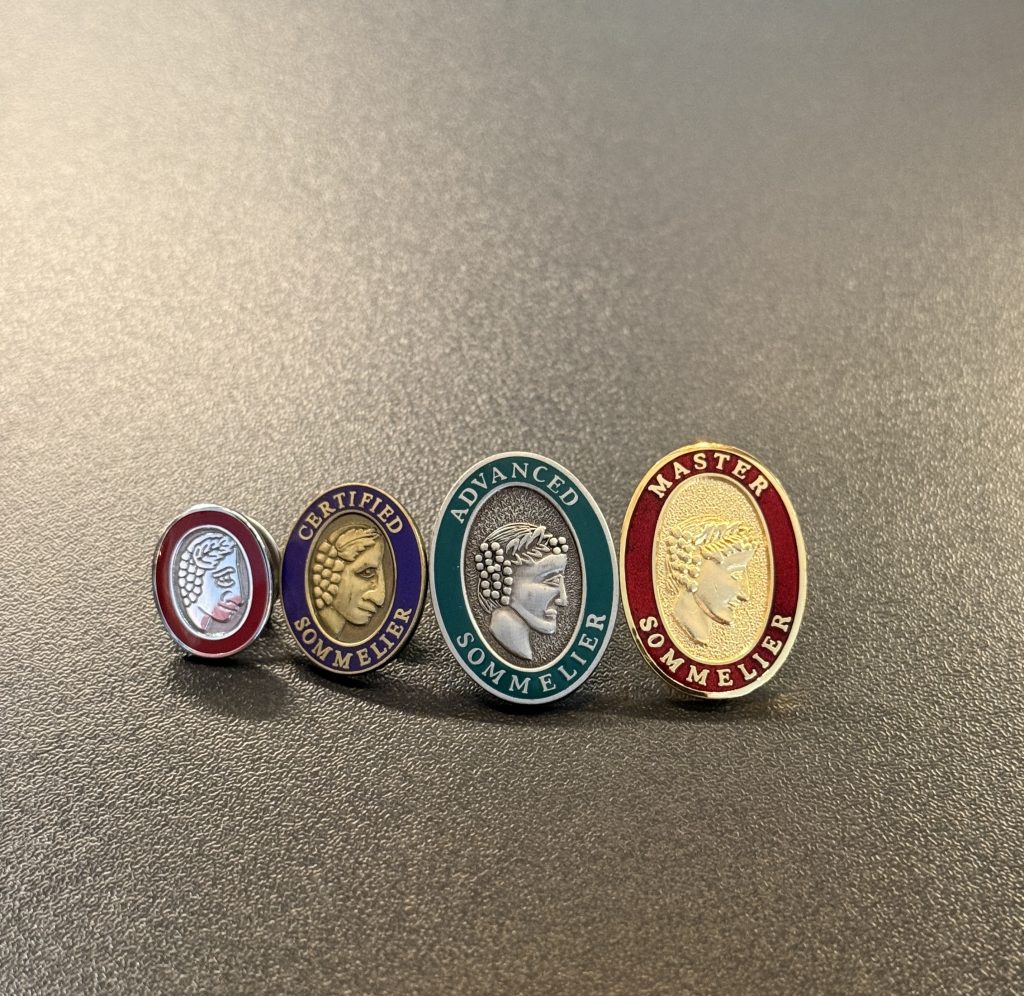
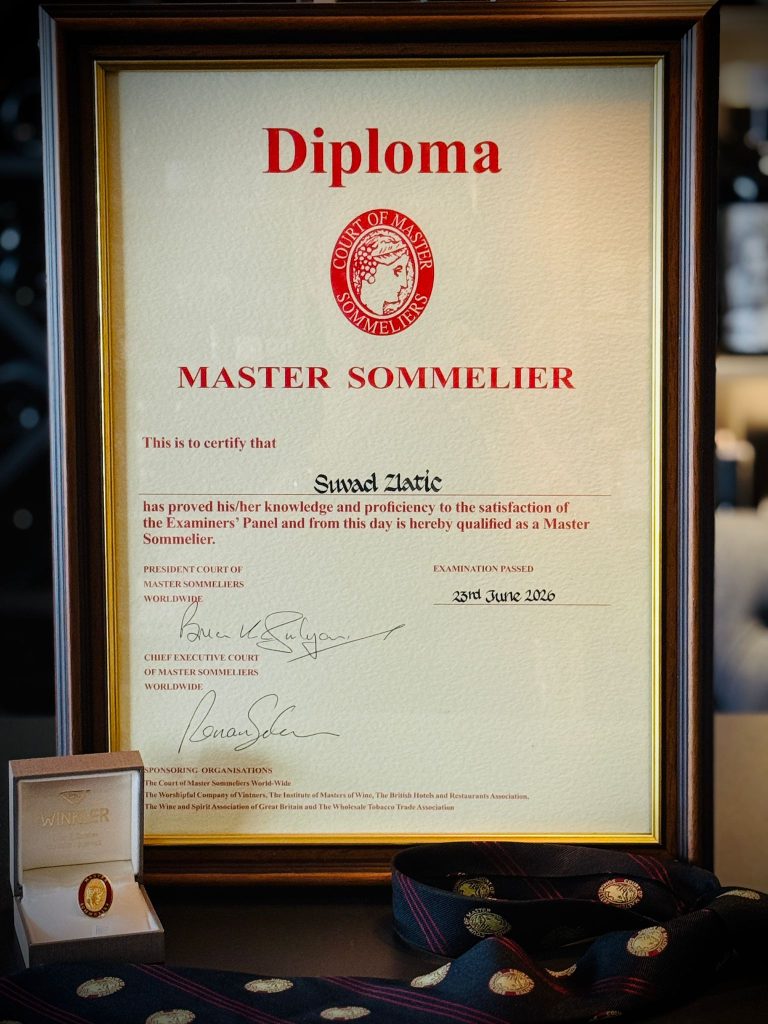
Suvad Zlatić thus became the 297th person to earn the Master Sommelier Diploma and the first from the former Yugoslav countries. With further candidates passing, including two recently in Hong Kong and another four on Monday, 14 September 2026, the worldwide total of Master Sommeliers rose to 301. In more than half a century of the programme’s existence, fewer people have earned the title than have travelled into space.
Yet for him, the value of the achievement could not be reduced to the rarity of the title. His journey had depended too much on people who offered opportunities and help at decisive moments for him to regard it as an exclusively personal success.
The elderly hotelier in St. Anton am Arlberg warned his father to get the family out of Brčko. Vojmir Turak enabled him to attend school in Rijeka, Auntie Vera helped with his homework and taught him that he would have to give 150 per cent, and Bruno Mattle helped him learn German. Employers supported his education and competition appearances, coaches and colleagues shared their knowledge, Jasmina turned their home into a place for mock examinations, and his sons accepted that wine and studying would be present in family time for years.
– You are alone in the examination, but you never get there alone.
His motto in life is therefore also about how he treats people:
– Anyone who keeps the people beside them small will never become great.
After passing, he answered messages from colleagues and people he sometimes barely knew, even when it meant rescheduling business commitments. He knew how much a few words of support or a good piece of advice could mean at the right moment, and tried to put himself in the position of everyone who contacted him.
He did not want to remain the only Master Sommelier from his region. The day someone else from these countries earned the same title or achieved an even greater result would, for him, fulfil his wish to inspire others through his own example. In Bosnia and Herzegovina, he wants to help establish a serious sommelier association that would connect restaurateurs, hoteliers, winemakers and distributors, and provide systematic education and preparation for international competitions.
He himself had been unable to represent the country of his birth at those competitions. He represented Austria, where he grew up, was educated and built his professional life. He became its best sommelier in 2014 and 2021, achieved an unprecedented third place at the European and African championship and finished ninth among the world’s best sommeliers in Paris in 2023. He also saw those results as a way of repaying Austria for the opportunity it had given his family.
Nevertheless, the question of which country he belongs to has no simple answer.
– In Bosnia and Herzegovina, you become the migrant worker from Austria, while in Austria you are someone with a migrant background. Then you gradually realise that borders are often simply something people create in their own minds.
Between Bosnia and Herzegovina and Austria, Croatia kept returning throughout his life. Rijeka gave his family safety after they left Brčko, and allowed him to continue his schooling and understand for the first time how profoundly knowledge could change his life. Even after moving to Tyrol, he spent almost every summer of his primary-school years in Croatia, so it was never merely a neighbouring country to him.
As an adult, wine brought him closer to it again. Since 2014, he has been actively involved in Croatia’s wine and sommelier scene, holding workshops, organising training, helping candidates prepare for international competitions and promoting Croatian wines among colleagues abroad. Filip Savić, Ivan Jug and Kristijan Harjač attended his training sessions in Austria, while over the years he developed professional collaborations and friendships with Dantes Begić, Emil and Karin Perdec, Franko Lukež, Tomislav Mikinac and many others. He held sake workshops on Mali Lošinj and also worked with the Sparkling Wine Fest in Plešivica.
His connection with Croatia eventually became personal, too. His fiancée Jasmina is from Pula, so he spends more and more time in Istria and feels at home there. Jadranka Nikšić calls him Istria’s son-in-law, and, according to Suwi, that description will soon become quite literal. He also sees Croatia, particularly Istria, as a possible future home.
So when asked whether, alongside his Bosnian-Herzegovinian origins and professional recognition in Austria, he may also be considered a Croatian Master Sommelier, he answers without hesitation:
– Absolutely. Since 2014, I have been actively involved in Croatia’s wine and sommelier scene. Much of what I do for it is never seen publicly, and I do not want everything to be seen. Wherever I can help Croatian wine, gastronomy and the sommelier profession move forward, I will.
This does not diminish his gratitude to Austria or change the country he represented in competitions. His sense of belonging simply extends beyond a single address: Bosnia and Herzegovina gave him his roots; Austria his education, professional path and precision; and Croatia safety after fleeing, friendships, love and a place to which he returns increasingly often.
As a boy, he could not decide the direction of his journeys. He left Brčko because of war, arrived in Rijeka because he had family there, and moved to St. Anton in Tyrol after his father told him to say goodbye at school the next day. Today, he moves between the three countries by choice. He has fulfilled most of his professional ambitions in Austria, while in Croatia and Bosnia and Herzegovina he sees opportunities for new projects, education and people he can help. He also returns increasingly often to his native Brčko, the town from which he left in 1992 for an early school holiday.
If he could now sit opposite the boy who arrived among the Tyrolean mountains without a word of German, he would open an Egon Müller Riesling from the Mosel for him. Then, borrowing a line from Dino Merlin, he would say:
– Keep going, kid, straight down the middle.
He would advise him never to lose his boyish smile or love of people, never to divide them by religion, skin colour, appearance or country of origin, but only into good and bad. He would tell him not to forget his roots or the people who would offer him a hand when he needed it most.
The boy who arrived in Tyrol could neither speak German nor ski, and the title Master Sommelier could have meant nothing to him, because almost no wine was drunk in his home. He had only the ball he had brought from Brčko and already enough experience to know that sometimes life has to begin again. He learned German, found friends and became a bartender, maître d’hôtel, hotel director, Austrian champion, international competitor and wine educator. He learned to identify wines blind, memorise the world’s wine map, endure failures and open a book again afterwards, turning Auntie Vera’s 150 per cent into nine or ten hours of study a day and twelve years pursuing the highest professional title.
When, at the end of that journey, Ronan Sayburn MS asked whether there was a Master Sommelier from the region he came from, the answer was still that there was not. As of that day, there was.