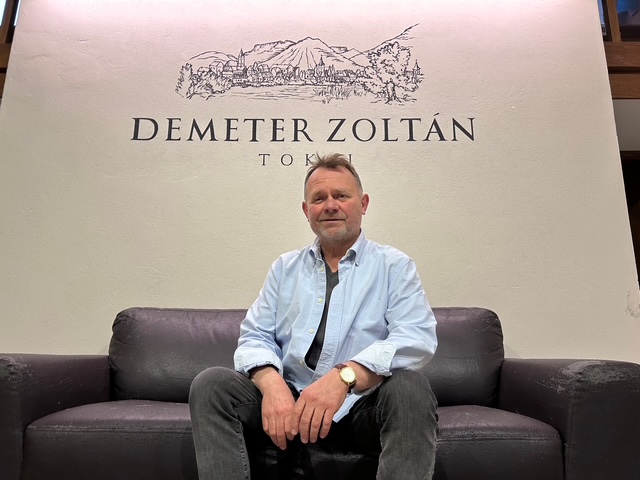
The moment I walked in, he asked whether this was my first time in Tokaj.
There was no handshake, none of that brief pause at the door people use to buy time. He stood on the threshold, leaning slightly forward, as though he wanted to skip the formalities and get straight to the point.
– First time?
I told him it wasn’t. I had visited a few months earlier, the region had captivated me, and I had returned to study it more systematically.
He nodded, though without any particular sign of approval.
– Where did you go?
I listed the wineries: Holdvölgy, Disznókő, Sauska, Demetervin.
He paused just long enough to let the names settle.
– Those are investors.
He said it without mockery. More like a diagnosis.
– To get to know Tokaj, you need to come to me first. Then to István Szepsy. Or the other way around.
He looked straight at me, with no inclination to soften his tone.
Rekao sam mu da sam tada „snimao“ scenu, da sam pokušavao steći širu sliku, ali i da sam već tada zaključio kome se moram vratiti. Kao I explained that on my first visit I had been surveying the scene, trying to get a broader picture, but that even then I had worked out whom I needed to return to. As he could see, I said, I had already taken his advice.
For the first time, he gave a faint smile.
That was enough.
He turned and walked inside without another word, as though our conversation at the door was over and we could move on to what really interested him.
The interior was dim, though not because it was closed off. The light was controlled. It entered through small openings, broke across the walls and lingered where it was needed. There was nothing superfluous, but none of the sterile minimalism so often performed in modern wineries either. Everything had weight, and everything had its place.
He moved more slowly than I had expected, but with a certainty that left no room for improvisation. He stopped beside a wall, glanced briefly at the shelves and seemed to decide where to begin.
– In my winery, not a single square millimetre has been arranged by accident.
He said it calmly, without emphasis, as if stating the obvious. He was looking at the room rather than at me, almost as though checking his own words against it.
– Not a single one? I asked.
Now he turned.
– Not one. If I don’t understand something, I don’t put it here.
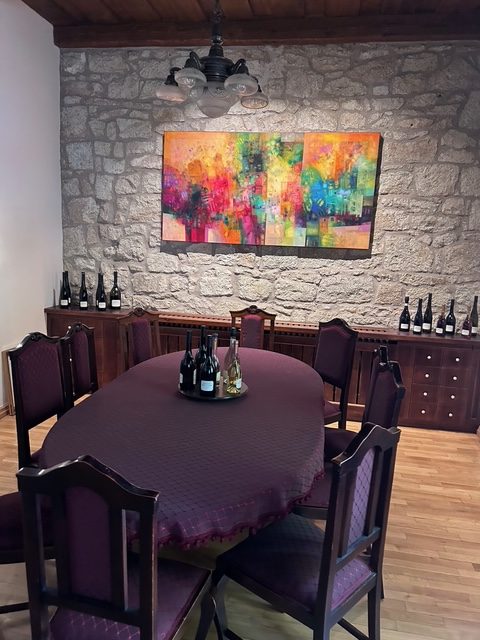
We went further into a space that did not ask to be looked at so much as read. Walls, shelves, barrels, old objects: none of them was there to impress. Everything was there to serve a purpose. Or to endure.
At one point he stopped beside an old press.
– This was my father’s, he said. It still works.
I asked who helped him with all of it: in the vineyard, in the cellar, with everything I had seen so far.
He looked at me as if the question did not quite make sense.
– With what?
– Well… everything.
He gave a brief shake of the head.
– No.
He paused, searching for a simpler way to explain it.
– I do the work.
Another pause.
– In the vineyard. In the cellar. All of it.
It sounded more like a description of the way things were than a declaration.
– Why? I asked.
– Because that’s the only way I can know what I’m doing.
He ran his hand across the wooden surface of the press, almost imperceptibly.
– If you hand part of it over, you no longer know what’s happening.
I began to see that the thing I had tried to reduce to a single word was not so simple.
I told him he seemed like a complete control freak.
He stopped. – What does that mean?
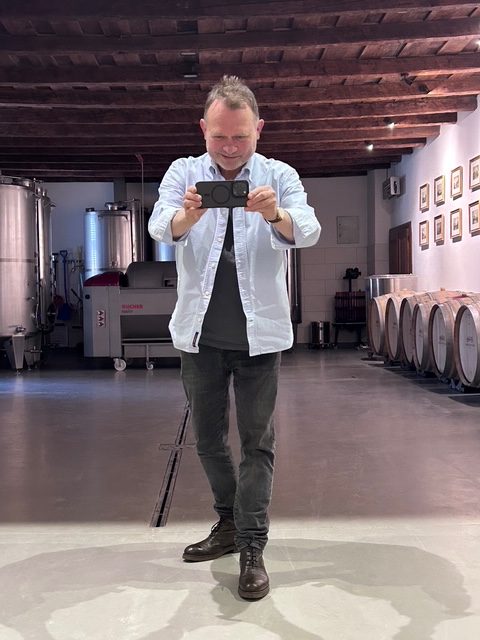
Googlali smo zajedno. Tražili riječ koja bi bila najbliža. Kad smo naišli na „manijak”, pogledao me s nekom vrstom interesa, ne kao da ga to We looked it up together, searching for the closest Hungarian equivalent. When we came across the word “maniac”, he looked at me with interest. He did not seem offended; he wanted to know whether the definition was accurate.
– You think I’m a maniac?
– Yes, I said. But not in a bad way.
He laughed, a little longer this time.
– Good.
And left it there, as though that explained everything.
Yet there is another side to him, one you do not see immediately.
Before we met, I had sent him about twenty questions. He answered every one of them, in writing and in detail. At one point in our conversation, almost in passing, he said the questions had been excellent and had gone to the heart of his philosophy of wine.
It did not sound like a polite compliment. It sounded like an acknowledgement.
Then, almost without my noticing, he changed.
The man who had so precisely controlled the space and our conversation became playful, almost boyish. Whenever I photographed him, he immediately took out his phone and photographed me. He did not stop there: he emailed me the pictures straight away, as though he wanted to complete the exchange in real time.
After a while, it was no longer entirely clear which of us was the subject of the interview and which was asking the questions.
After two hours together, the distinction seemed to have disappeared.
The conversation found its way back to wine almost of its own accord. Wine was no longer a separate topic, but a continuation of everything he had said.
I asked whether there was one wine that best represented what he was trying to do here.
He paused, as though the question was not quite precise enough.
– All of them.
This time he looked directly at me.
– Every wine that leaves this place is me.
He did not say it as a grand statement. It sounded like a line he would not cross.
– I cannot release something I don’t believe in.
I mentioned his Aszú.
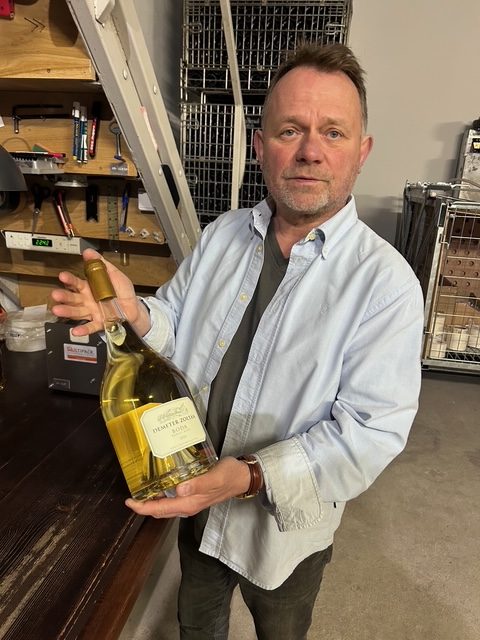
He nodded slightly, acknowledging that he knew which wine I meant.
– I made it the way I wanted to.
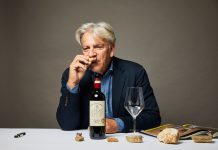
Holding the bottle, he admitted that at no point had he cared how many bottles there would be.
The number turned out to be just fifty-six magnums. Not a single standard bottle. Only a format that calls for time, patience and, in his way of thinking, purpose.
The price, around two thousand euros, was beside the point here. It had not been set by the market so much as shaped by a decision.
– This is a wine that has to last. You cannot confine it to a small bottle.
At one point we turned to Furmint. Here he became even more precise.
– It is our language.
He paused, looking for the word.
– Not just a grape variety.
He explained that he saw in Furmint one of the few native varieties capable of speaking beyond its place of origin without having to adapt itself. It can become anything, from a light wine to a great, concentrated one, even an Aszú.
– If we don’t understand that, then we don’t understand where we are.
Every decision, from vineyard to bottle, is an attempt to speak that “language” as clearly as possible.
When we returned to Tokaj, the conversation broadened, though it never became abstract.
He spoke of the region as something tested every day in the vineyard and in the glass.
– For a long time, we thought we were sweet wines. But that isn’t enough.
He paused, then added:
– You cannot confine a region to one category.
When he spoke about dry wines, he did not make them sound like a revolution. They sounded like something that simply had to happen.
– It wasn’t a decision. It was obvious.
In his view, Tokaj cannot exist as a narrow specialisation. It is a whole, a place that must be able to express itself across categories if it is to retain its significance.
He was more cautious about sparkling wine.
– A great opportunity, but a great responsibility too.
It sounded less like a warning to others than a reminder to himself.
– I don’t know whether everyone feels that responsibility.
For the first time, I sensed a slight distance in him, not from the wine itself, but from the way it is made and presented today.
When we came to the value of Tokaj, his tone did not change, but he began to arrange his sentences more slowly.
– The value is there.
He looked at me, as if to make sure I understood.
– But the price does not reflect it.
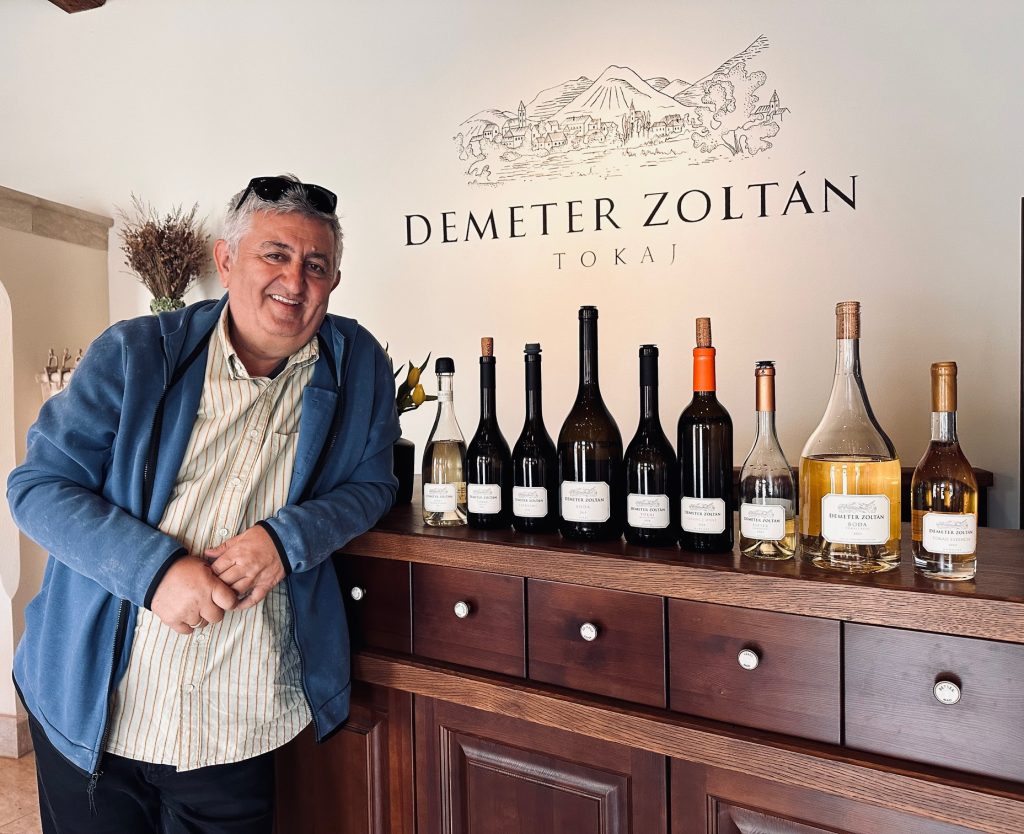
He gave an almost imperceptible shrug.
– That’s good for collectors.
A brief smile.
– But not for the region.
There was no bitterness in his voice. It sounded more like a calm acceptance that two things which ought to align did not.
– People don’t understand where they live.
He said this more quietly.
– They don’t understand what they have.
It sounded like a diagnosis.
In that light, his views on the way wine is presented today took on a different meaning.
– I don’t believe in festivals.
He said it without qualification.
– Or fairs.
He looked at me.
– Or masterclasses.
He watched me, as though expecting a reaction.
– I do them, he added. But I don’t believe in them. People come, sit, listen… and leave.
He shrugged.
– That isn’t wine.
He paused and gestured around him.
– This is wine.
That is where he draws the line.
The people he values most are those who come to him with intent, willing to spend time in this place, to hear the story where it happens and see what cannot be conveyed outside its setting.
I discovered that I, too, was an exception.
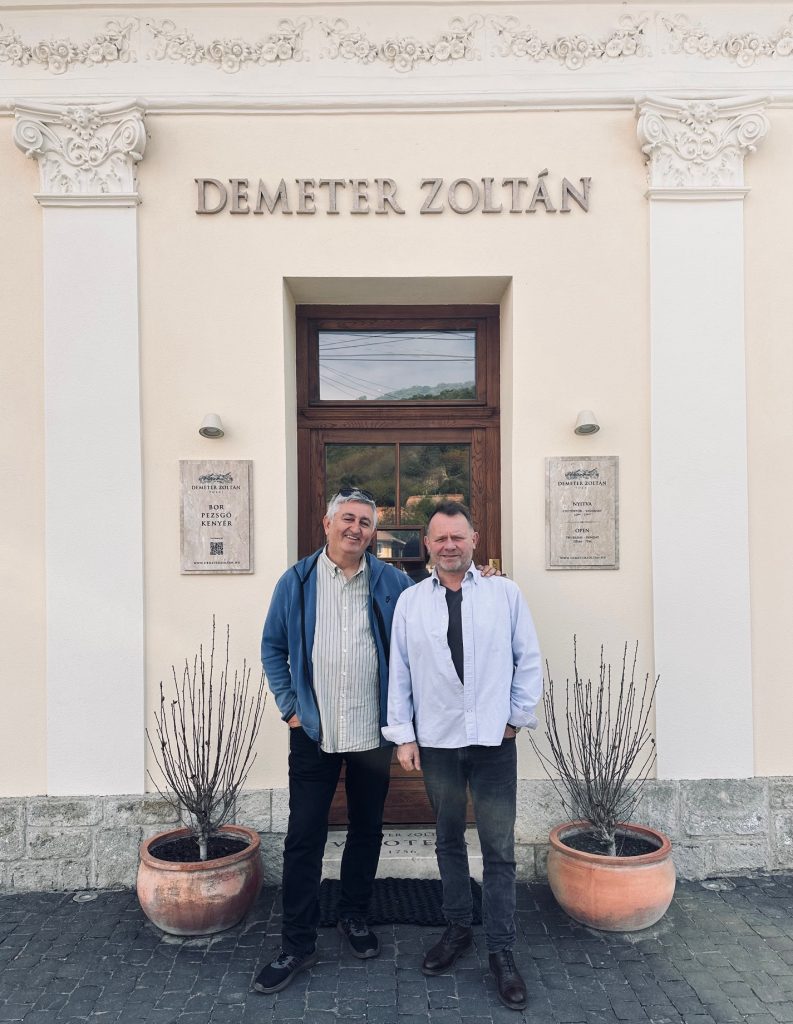
He received me at ten in the morning, something he later said he normally does not do. He reserves just one time slot for visitors, in the late afternoon. A small group, no more than about ten people. No additional groups, no repeat sessions.
– That’s enough. Before or after that, I don’t do it.
The conversation shifted almost imperceptibly. There was no clear transition. Questions about wine simply ceased to be enough on their own.
At one point he said that wine was an instrument for him.
He did not stop to explain, as though he assumed the meaning was clear.
I looked at him and waited.
– Everyone must have an instrument, something through which they search for answers.
He paused.
– To questions that are not small.
He did not list them straight away, as though he had voiced them too many times already.
– Why are we here? What are we doing? What does it all mean?
He said it calmly, without trying to lend the words extra weight.
– Many people never ask themselves those questions.
He shrugged.
– I don’t want to live like that.
In that context, wine ceases to be a product. It becomes a way of searching.
– It is close to me because it sits between things.
He paused, looking for the word.
– Between nature and art.
He glanced towards the cellar, as though the answer were already there.
– And that is where you come closest to real life.
His perfectionism took on another meaning. It was a way of staying focused on what he was trying to understand.
– It isn’t easy. Especially when you are surrounded by people who don’t think that way.
He did not sound as though he was complaining. He was stating a fact.
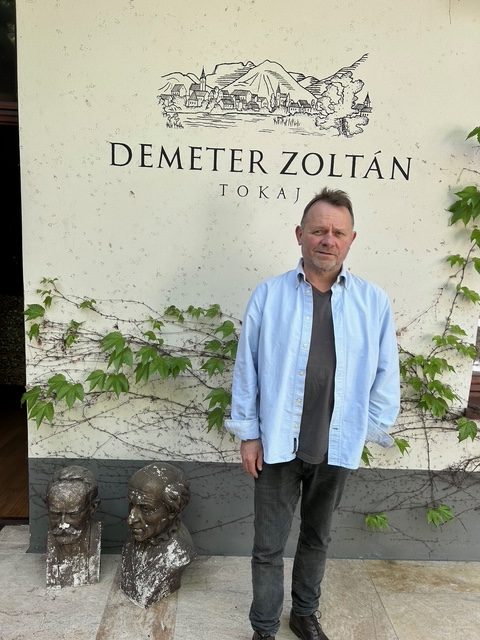
At one point our conversation touched on things that were not directly connected to wine, yet clearly belonged to the same world.
– I cannot live among new things.
He looked around.
– I don’t understand them.
He stopped beside an old lamp, almost casually.
– Why did someone make something two hundred years ago to last, knowing they themselves would not?
He paused.
– That no longer exists today.
In his rooms, old objects are not decoration. They are a way, he says, of remaining connected to something beyond the present moment.
– So that what you make will last too, he added. Not as something to be consumed and forgotten, but something that endures.
– Music matters to me.
He paused.
– For a long time, I’ve had it alongside wine.
He looked at me as though checking that I would not simplify the thought.
– Not as a metaphor.
He held my gaze.
– Everything I hear, everything I see, enters into my taste.
He shrugged.
– And taste is all I have in the end.
One Hungarian critic had awarded his wine 98 points and called it the best Hungarian Furmint he had ever tasted.
– It’s good when someone understands.
On my way to Tokaj, something happened that I had not given much thought to at the time.
On a stretch of road near the entrance to the region, the road began to play music. Zoltán had mentioned that Hungary already had a similar road near Kaposvár, Route 67, but this one was enough for me to grasp the idea.
As we drove, a rhythm emerged beneath the wheels, then a melody. The road was designed to play only if you got the pace right. Drive too fast or too slowly and the melody falls apart. Find exactly the right speed and everything settles into place; the music appears by itself.
The image returned to me only later, during my conversation with Zoltán Demeter.
At one point he had said that wine was an instrument for him.
It was not a metaphor.
He mentioned that a close friend of his had founded the cult Hungarian rock band Omega. I told him I had seen them perform in Budapest in the late 1980s. He nodded, as though acknowledging a connection that needed no explanation.
Almost as an aside, he said he was going to Budapest for an Eric Clapton concert.
On the way back, I drove over the same stretch of road.
And this time I understood more clearly why the image had returned to me.
The point is not that the road plays music.
The point is that you have to find the right measure: the speed, the rhythm, the relationship between them.
Outside it, everything falls apart.
Within it, the music appears on its own.
Wine works that way too.