The village of Dugnjevec, reached from Tuhelj along a narrow, winding road, reminds me strongly of the rainforest region of Rwanda and its Nyungwe National Park, home to one of the few remaining ancient rainforests. In one part of Nyungwe, a sign tells you that you are standing on the world’s longest watershed divide – the Congo–Nile – and that all the water flowing to the right of the road ends up in the Congo River basin, while everything to the left drains into streams that feed Lake Victoria and the Nile via the Akagera River. The Congo–Nile Divide stretches for an astonishing two thousand kilometres.
The geographical features of Zagorje’s watershed are less impressive than Africa’s, but the Sutla and Velika Horvatska rivers have their own claims to distinction. The Sutla passes through Kumrovec, birthplace of Josip Broz Tito, the first president of Yugoslavia, while the Velika Horvatska ends its thirty-one-kilometre journey by joining the Krapina near Veliko Trgovišće – birthplace of Franjo Tuđman, the first president of the Republic of Croatia.
The political currents followed a similar course: Kumrovec was, as everyone knew, dominated by the Social Democratic Party, SDP, while Veliko Trgovišće was governed by the Croatian Democratic Union, HDZ. Or at least that was the case until Milivoj Prekratić emerged onto the political scene from Dugnjevec – Zagorje’s best-known metalworker after Josip Broz Tito – and, heading the HDZ electoral list with support from an independent list, took control of Kumrovec Municipality. That was in 2005.
Media commentators revelled in something that had previously seemed unthinkable. Milivoj Prekratić bent over backwards to demonstrate that HDZ’s arrival in power in Kumrovec was no miracle, but the result of a long, painstaking effort to “straighten the crooked Drina”, as the regional saying goes.
For Milivoj, that “crooked Drina” was the stereotype that treated Kumrovec, SDP and Josip Broz Tito as interchangeable.
– I always used to tell the story of my daughter, who enrolled in secondary school in Zagreb and chose religious education as an optional subject. When the teacher asked her to introduce herself, she never even got the chance to say she’d been the best pupil in religious education in Kumrovec. All she managed to say was that she came from Kumrovec, and he snapped at her to sit down: “We’ll talk about Tito later,” Milivoj recalls.
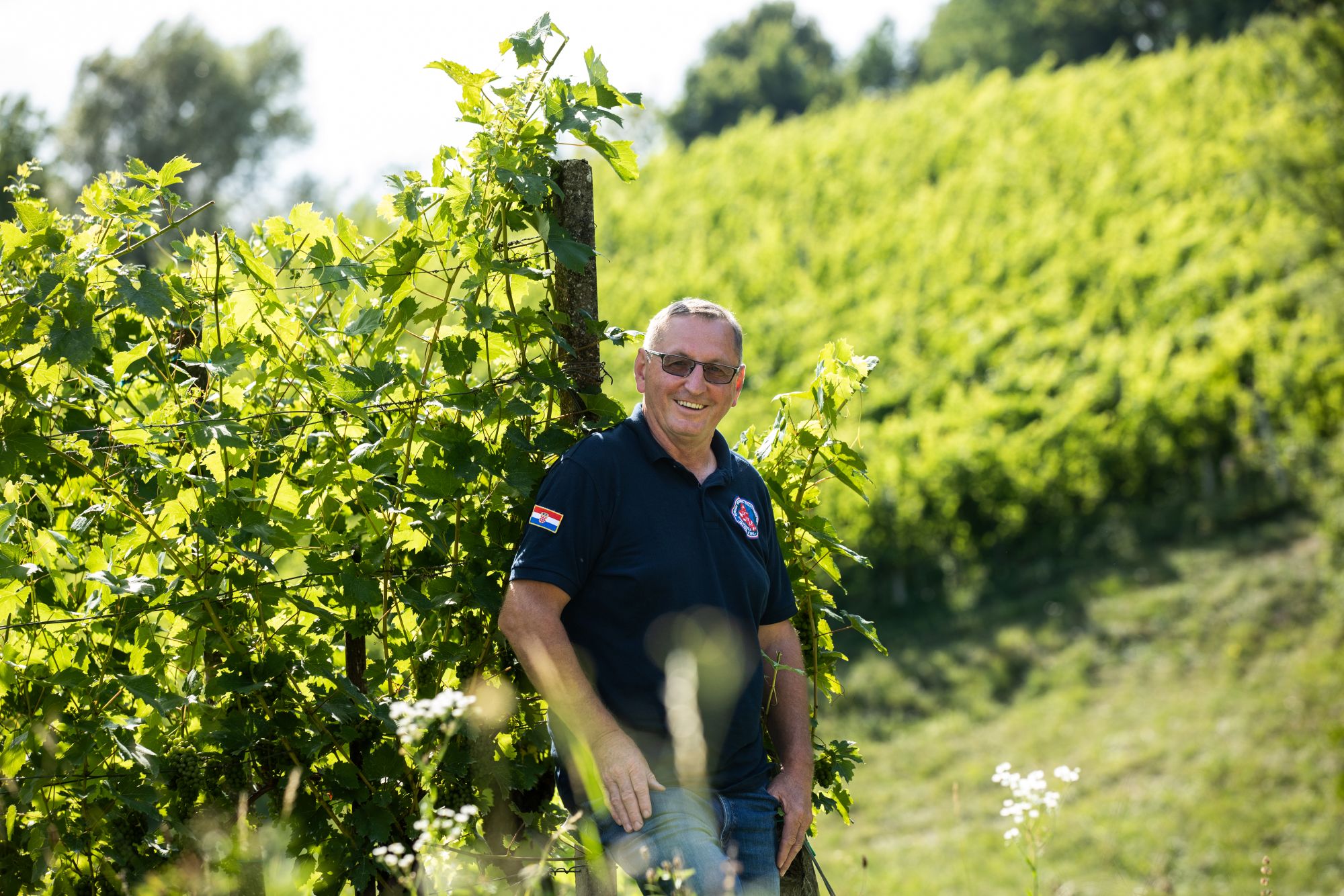
On the other hand, he admits that “whatever you may think, when someone comes to Kumrovec for the first time, Tito inevitably comes up, whether in the first minute of conversation or the hundredth”. And so, consciously or otherwise, Milivoj himself introduces his background as a metalworker at the former steel rolling mill in Razvor, near Kumrovec – with the emphasis on “metalworker”.
– Unfortunately, Kumrovec seems to make everyone think of Josip Broz Tito, and we remind the wider public of that ourselves on Youth Day. It’s an anachronistic remnant of the past that merely shows how Josip Broz was a communist ruler whom everyone sought to flatter. That date is still celebrated in Kumrovec today, and it gives the place a bad image. We have guests at our winery who refuse to visit the Staro Selo open-air museum in Kumrovec when we suggest it, precisely because of the idol worship attributed to everyone who lives there – all because of Youth Day celebrations. They simply don’t want to go anywhere his statue stands.
– You should have your own position on everything, but in Kumrovec they’re very focused on the idea that Tito is a brand. Meanwhile, everything associated with him there is falling apart, and nobody has come forward to invest in Kumrovec because of that “brand”.
From Milivoj’s years in politics, the internet still remembers the public outrage provoked by his statement that “the primary school in Kumrovec cannot bear the name of a historical figure who remains controversial”.
– Yes, I said that then, and I still think it now. The primary school should be called Kumrovec, not Josip Broz Tito! Just when I was full of ideas and had a vision for resolving a great many things in Kumrovec, the administration changed. One of the main accusations against me was that I wasn’t a follower of Tito. That was considered one of my greater sins.
Milivoj spent his four years as municipal mayor sorting out land records and spatial plans, having inherited, he says, complete chaos.
– Beside our Riesling vineyard, there’s a patch of woodland where the land registry says one thing, the cadastre another, and the man who comes there claims it belongs to him. Kumrovec was in the same situation. We went from some of the best land records in the world, established under Austria-Hungary, to poor records after living through two Yugoslavias. During my four-year term, we had to amend the spatial plan several times. Surveyors were constantly out measuring, and there were endless records and papers. It took a Sisyphean effort to reach the point where the state could issue a tender.
– Then, when we put the former Political School, or Hotel Zagorje, up for sale, for example, people chased me through meadows and vineyards, trying to persuade me to hand everything over for one kuna! I couldn’t shake them off. So I told everyone hoping to acquire that valuable property that, if it was being given away for one kuna, I had first refusal. That got rid of them.
What did those investors want?
– They wanted to turn it into a care home!
And what was your idea?
– To my mind, the most attractive and promising scenario was for older Croatians living in America to return to Croatia and spend their retirement here. I know many of them longed to return to their native region. The idea fell through after I left office. The new administration was no longer interested.
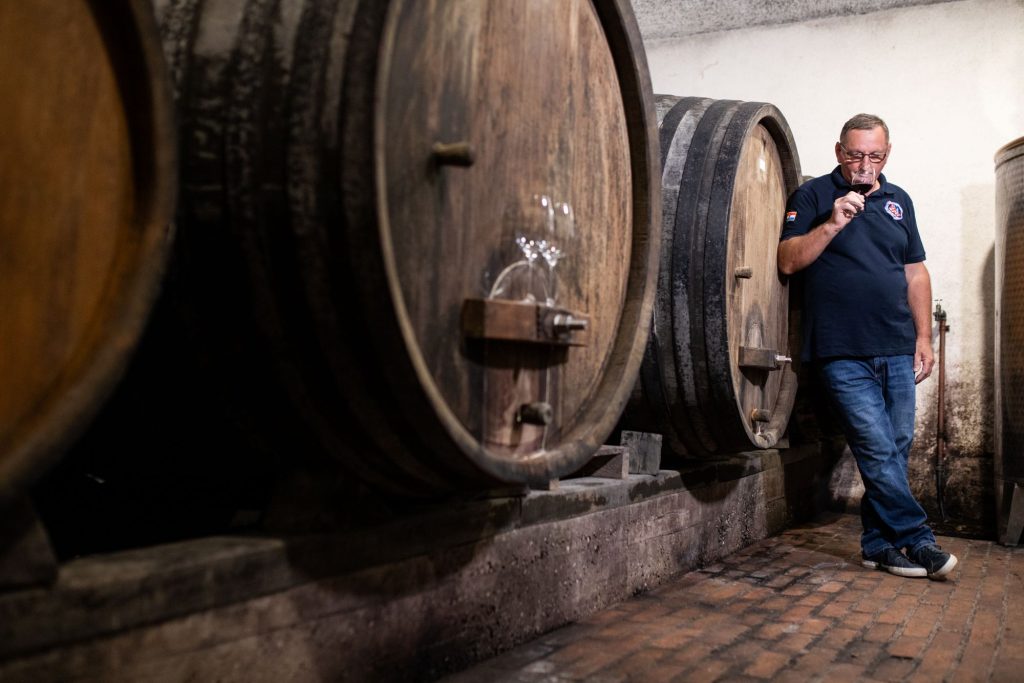
Milivoj Prekratić served as mayor of Kumrovec Municipality for four years, until his fellow residents delivered their verdict at the next election:
– Go home, tend your vineyard, make us some lovely wine – and leave politics alone!
– That was the message Kumrovec’s voters sent me at the first direct mayoral election.
Could you really be considering a return to politics sixteen years after a message like that?
– Absolutely not! People have been stopping me in Kumrovec for a while now, asking whether it’s true, and I give everyone the same answer: no, no and no. Time has overtaken me. These are different times, and everything works differently. You can’t do anything without being constantly present on social media, and I shy away from that. So I’d be signing up for failure before I even started. I could almost say I’m grateful to everyone who saw me out of politics, because the work I do now fulfils me and makes me happy and content.
After his brief political career, Milivoj settled into vineyard life. His optimism had not deserted him.
– Kumrovec was still alive then. There were seven or eight places to go out in the village.
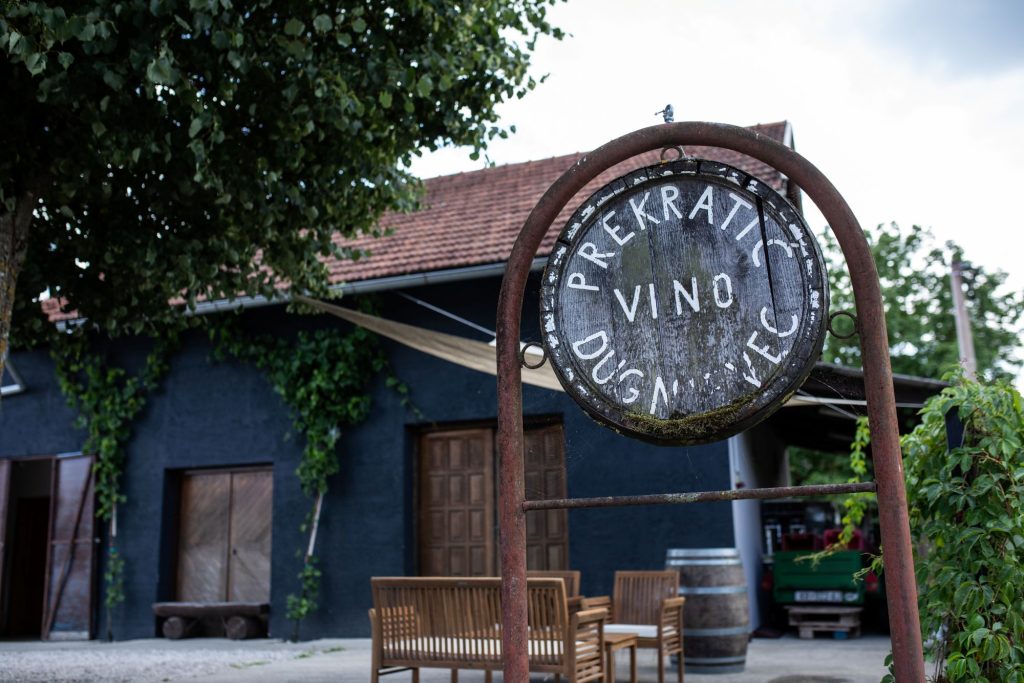
– People often ask me what life in Dugnjevec was like under socialism, and I always tell them there was one good thing about it: the villages were full of people. Today, these hills are deserted, and that process has been going on for a long time. Even the elderly households scattered across the hills have almost disappeared. Here’s what Dugnjevec looks like: an occupied house, an empty house, an empty house, an empty house, an empty house, an occupied one, another occupied one, an empty one, another empty one… There are more empty houses than occupied ones!
The family’s wine story actually began with Milivoj’s grandfather Josip and continued with “Dad Milek”. Its future is secured by Milivoj’s son Josip, who, after completing his studies at the Faculty of Agriculture in Zagreb, earned a place at Grgich Hills Winery through the Croatian Scholarship Fund, supported by Miljenko Grgić. He spent a year there as a scholarship recipient, then arranged to stay in California for another year on his own initiative – experience their winery in Dugnjevec would put to very good use.
– My first vineyards were those of my childhood, whose earliest days Grandpa Josip remembered. Those vineyards, with their vines supported on individual stakes, no longer exist. We planted new ones in the 1980s; Milek established those. And when I lost my job at the factory, which went under in an ignominious collapse, I planted a new Graševina vineyard that now covers a hectare.
Milivoj likes to describe himself as “a bit of a swot, an excellent pupil of Gerhard Schubert”, the great scientist and guiding spirit of winemakers throughout Croatia’s upland wine region, not just Hrvatsko Zagorje.
– He used to come to our local wine competitions. The first time I took part as a judge, he chaired the panel. And he praised me! Admittedly, I was a little lost at first, watching how the others scored the wines. It took me a while to realise I had to think entirely for myself. There was just one wine whose producer I knew to be a very sensitive man, and I gave it an award while everyone else rejected it.
– “Colleague, do you really think this wine is good?” I remember him asking.
– “Then write that it’s been rejected, because it’s vinegary.”
– When I did, he showed me that everyone else had written the same thing. He taught me that I had to be consistent and must never say a wine was good if it wasn’t, because people would quote my judgement.
– And that isn’t easy in life, Gerhard concluded.
– It was a Zweigelt, the only wine made from that variety in our area. I knew who produced it, and he never brought another wine to a competition. He couldn’t bear the truth.
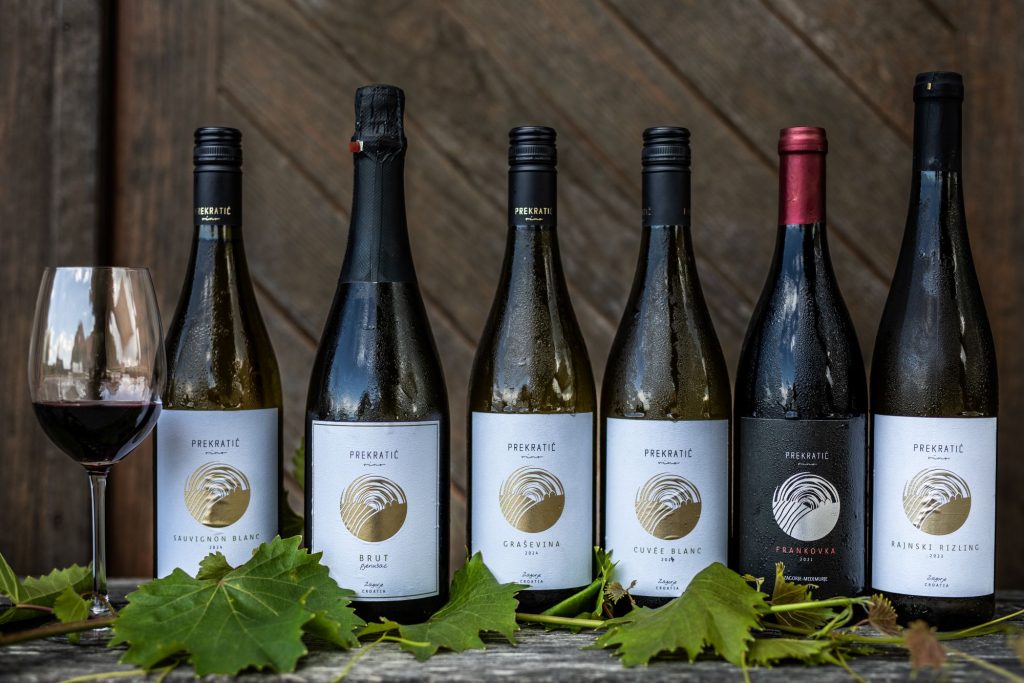
In his completely new vineyard in Dugnjevec, planted after the voters sent him off to make lovely wine, Milivoj chose Riesling, although he says Silvaner “draws him most”. To his son Josip, who had discovered an entirely new world of winemaking in California, far beyond anything he could have imagined in Zagorje, he explained his love of Silvaner as “the need for the kind of wine I personally wanted to drink up on the hill”. Yet the Silvaner developed so beautifully that they went as far as bottling it.
– My Josip showed absolutely no interest in the vineyard while he was at secondary school. He attended grammar school in Zabok, and I didn’t want to force him into our wine venture in any way. Then, quite by chance, our neighbour – a weekend resident and a very good man – caught him with a question: “So, Josip, what are you going to do? Agriculture, I suppose?” Josip replied: “Well, yes…” “Good, good, that’s the only sensible thing.” It all happened in the vineyard cottage, over a glass of wine.
Milivoj also came up with the idea of an ice harvest of Traminer, which they carried out at minus ten degrees Celsius on 26 January 2019. The resulting ice wine earned an impressive ninety-five points at the festival in Bedekovčina and became Zagorje’s champion.
Josip, meanwhile, brought a new dimension to what Milivoj likes to call their “boutique Prekratić winery” by making sparkling wine.
– My son made a sparkling wine. People asked me how that had come about, and I told everyone it was his idea. I wouldn’t know where to begin with something like that. I’m more at home with base wines.
And so, little by little, one new venture after another, Milivoj and his son lifted the winery beyond supplying local neighbourhood bars and, in a relatively short time, reached an annual production of around thirty thousand litres.
Yet Milivoj has not become a slave to the vineyard and winery. Alongside his wife Senja, who “runs Kumrovec’s church choir”, he is actively involved in the local Kumrovec cultural society, which he joined while still serving as mayor.
– There are so few of us that last Sunday, when I arrived for rehearsal and many couldn’t come because they were ill, they asked whether I’d started practising solo singing! I’m sorry I didn’t join the choir earlier. The experiences are wonderful, and that’s where I trained my voice. These days, when I have a cold, I miss it, because you train your voice just as you would for any sport. I’m a tenor, or a second tenor in klapa singing.
Milivoj says he also sang in “a klapa with the lovely name Brv”.
And what is a brv?
– It’s a log laid across a stream or ditch, something placed over the water so you can get to the other side. We have Gmajina brv across the Sutla and Golubova brv across the Velika Horvatska. They’re only wide enough for someone to cross on foot…
Klapa Brv was formed at a time when Most – whose name means “bridge” – entered the political space between HDZ and SDP as a third option. At first, the name was a neat play on words, and it stayed because Brv connects Zagorje’s traditional songs with Dalmatian music.
And while people are singing, nobody asks where anyone comes from or whom they support.