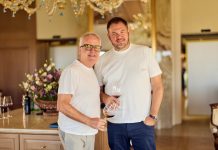
After thirty years of working without respite, Ivo Brzica made a rare change of direction: he made work serve life – rather than the other way round.
In eastern Croatia, there are places that do not immediately command attention, yet stay with you for a long time. They win you over through restraint rather than noise. They ask to be experienced rather than merely looked at. The Erdut ridge is one such place. Where the vineyards descend towards a great meander of the Danube, where the light seems to refract more slowly than elsewhere and the landscape appears made for long silences and even longer conversations, Ivo Brzica has created something rarely seen in recent years: a small, complete world shaped to his own measure.
In that world, wine is not decoration, but the axis. Accommodation is not an extra service, but an extension of the experience. Tourism is not a phrase in a strategy document, but an everyday practice. Work no longer grinds a person down; it leaves him enough breathing space to begin living as he has long known he should.
Today, Brzica runs a winery, a tasting room, holiday houses and a digital hotel. At first glance, it sounds like an ambitious entrepreneurial project, almost a textbook example of a modern, integrated wine destination. A second look reveals something more intimate and more serious: the second chapter in the life of a man who, after decades of intense business activity, decided to change the balance between work and meaning.
– I wanted a little more time for myself and my family. I had not had that opportunity for thirty years, Brzica says without grand gestures, almost in passing, as though stating something self-evident.
– I worked as much as necessary – twelve hours, fifteen hours, Saturdays, Sundays, everything. Then, at some point, you realise you have to stop. My only regret is that I did not do it five years earlier.
That sentence is more than an appealing confession in a portrait of a successful man. It is the key to the whole story. Because Ivo Brzica’s story is not merely about a winemaker. Nor is it about a man who recognised the tourism potential of Croatia’s Danube region. It is a story of maturity. Of the moment when, after many years of work, a man no longer wants to build another large business, but a life with a sense of proportion.
Brzica did not enter wine out of romantic leisure or a fashionable fascination with rural life. Behind him lie substantial business operations, many employees, responsibility and a pace that consumes most of a person’s private life. He speaks of that period without bitterness. There is no wisdom after the event, no pose of a man renouncing his own past. Quite the opposite. He clearly knows how much that part of his life gave him – but knows even more clearly how much it cost.
– I think everyone needs to pay a little attention to themselves, he says.

– You have to recognise when you are approaching certain limits – physical, mental and all sorts of others. I felt that. And I did not want to wait for life to force me to stop.
Many people come to that realisation too late. For Brzica, it arrived at the right time. He did not retreat into passivity, disappear from the world or surrender to the idea that he had “done his bit”. He did something far more demanding: he devised a new form of work that would not consume him.
He had been coming to Erdut for years. Like good places often do, the region first won him over quietly – through the view, the river, the space, the feeling that here one could still breathe freely. First came a weekend house, then his first substantial vineyard, and then the decision to turn it all into a complete undertaking.
– I have travelled a great deal around the world and seen a lot, he says.
– Then I started thinking about what to do next. Neither my wife nor I were up for intensive work any more, but we wanted to keep doing something. We wanted something meaningful, something beautiful, without it being excessively demanding.
That sentence explains both his character and the concept he later developed. Nothing about Brzica is overstated. Neither the winery, the hotel, the tasting room nor the overall undertaking looks like a project designed to dazzle through luxury. Everything is much more measured. That, in fact, is where the quality lies.
To understand Brzica, one must also understand the place where he works. The Erdut wine district is one of those places people often speak of with respect, yet rarely with full awareness of what they have before them. Almost everything is here: an unforgettable Danube landscape, serious terroir, a rich history of viticulture, distinctive soils, a way of life, proximity to great rivers, a sense of openness and breadth found in few other parts of Croatia.
Yet the area has still not fulfilled its potential as a destination or established the identity it could have.
Brzica speaks about this without sentimentality, but with great precision. It is not enough for him that his own winery should do well. He sees the entire region as an organism that must be alive for any individual undertaking to succeed fully.
– Our biggest problem is that we have nowhere to send guests for lunch, he says directly.
– That is why tourism here is not developing as it could. People come, love the place and ask where they can go for something to eat, and we have practically nowhere to send them. The nearest places are Osijek and Vukovar. For a region like this, that is a serious shortcoming.
The diagnosis sounds simple, but contains much more than a passing remark about the lack of restaurants. Brzica understands that a destination is not made by a single address. Tourism is a network: open cellars, food, things to do, events, people who are there, a consistently available offering. When too few of these elements are in place, even the finest individual venture cannot carry the whole region alone.
– If we want to develop the destination, we have to give people something to come for, he says.
– Tourism does not develop overnight. It takes time. It needs things to do. It needs open doors.
Part of the region’s problem lies not only in the present, but in the long shadow of the 1990s. Erdut was once a far livelier place, socially and economically. The war did not merely destroy buildings and infrastructure; it broke the continuity of life. People left, many never returned, the population dwindled, and everyday life became emptier.
Brzica perhaps feels this all the more strongly because he does not simply visit occasionally. He lives here.
– Erdut used to be a flagship of viticulture and tourism, he says.
– Everyone who mattered came here. The war took its toll. The population more than halved. Young people did not return. There are no jobs for them. Today, this is practically a weekend wine district.voje. Stanovništvo se više nego prepolovilo. Mladi ljudi se nisu vratili. Nemaju gdje raditi. Ovo je danas praktički vikend-vinogorje.

When he says “weekend wine district”, he describes not only the pattern of local winemakers’ activity, but the state of mind of a place. Many people come here, work, organise events and open their cellars, but few truly sustain its everyday life. Brzica is among them.
That is precisely why his story carries weight beyond private entrepreneurial success. It is also the story of one man’s persistence in bringing life back not only to his own property, but to the whole region.
At first glance, the combination of “digital hotel” and Slavonia’s Danube region sounds like a contrast designed to attract attention. Hearing Brzica talk about it makes clear that there is no affected futurism here. It is simply a rational response to reality.
– There is no workforce available any more, he says.
– People simply cannot find anyone to work. A system like this has proved exactly the right solution.
His hotel operates with self check-in and self check-out. Guests arrive, enter and leave independently. There is no conventional reception, no long wait, no dependence on someone’s shift or availability. They can arrive at eleven at night, at midnight or whenever suits them. If they want breakfast, they can have it. If not, everything works just as well without it.
– Check-in can be at any time, around the clock, says Brzica.
– Nobody has to wait for anybody. Some people are passing through and arrive late at night, at midnight, at an awkward hour. Here, that is not a problem.
A great deal of thought lies behind that simplicity. Brzica did not want to build a business model that would again require a large operation and constant dependence on staff who were difficult to find. He wanted something sustainable, both for his guests and for himself.
– I have perhaps two or three hours of work a day when breakfast is needed, he says.
– If there is no breakfast, practically nothing. We have one cleaner, and that is it. Everything else is largely automated – heating, cooling, hot water, the entire system.
It is easy to hear much more than business organisation in that sentence. It is a life decision. Work must no longer consume the person who created it.
More interesting still is that Brzica’s hotel did not start from a blank slate. The building itself carries the history of a time interrupted. It was supposed to become a hotel back in the early 1990s, but never had the chance.
– We bought the property in 2017, Brzica explains.
– There had been a hotel here before. It was supposed to open on 15 August 1991. Everything was ready and furnished, but then the war came. It was devastated, destroyed and stood empty for a long time. We bought it through bankruptcy proceedings.
Speaking about it today, he does not seem like a man seeking credit for a grand act of restoration. But the fact remains: he brought back to life something that had long symbolised a future lost.
– We were thinking about what to do, he says.
– We were no longer up for that kind of intensive work, but wanted something manageable, something to keep us occupied without being too demanding. Then came the idea of a digital hotel, without needing to employ lots of people.
Manageable may be the most accurate description of his approach. In an age when every project is presented as a major breakthrough, a vision or an expansion, Brzica builds carefully, without fanfare, with an almost old-fashioned caution. That is precisely why it feels serious.
The hotel, however, is not an end in itself. It is the gateway to a much broader story. Few people who stay with Brzica stop at an overnight stay.
– We have quite a few guests passing through – Turks, Italians heading towards Turkey, Bulgarians and others, he says.
– There are some Americans, Canadians and Chinese. They usually find us through Booking.com. That accounts for about eighty per cent.
Domestic guests arrive somewhat differently.

– Croatians usually call directly. They call, get a small discount, and it works well.
Perhaps the most interesting part of his guest profile, however, is the cyclists. Erdut lies on the important European route EuroVelo 6, which runs from Rotterdam to the Black Sea. Brzica recognised early on that this was one of the region’s opportunities.
– We have quite a few guests cycling along EuroVelo route number six. They are serious cyclists, covering seventy or eighty kilometres a day. Most are between sixty and seventy-five years old. Mainly Germans, Austrians and French, and more recently Hungarians too.
The hotel is therefore organised as a bike-friendly stop: parking, bicycle storage, a small servicing station and flexible arrival times. This is not a fashionable extra, but an understanding of the people who travel.
– We installed a container for bicycles and a small servicing station, all within the hotel grounds. It works well.
However interesting the accommodation may be, wine remains the centre of everything for Brzica. The hotel grew around the wine, not the other way round. This is apparent in the way he talks about guests and their habits.
– Around eighty per cent of guests come here to the winery for a wine tasting, he says.
– We treat them to a tasting, of course, and offer an integrated experience – accommodation, wine and a few local specialities, such as kulen, cheese and the like.
For him, “integrated” is no marketing phrase. It describes his working model very precisely. There is no artificial division between product, place and experience. Everything is connected, naturally and logically.
Tastings are an important part of this system. There are around two hundred a year, sometimes more, usually for small groups – without coaches, mass tourism or a mechanical flow of people.
– They are mostly groups of four, five or eight people, he says.
– They are not large groups. When I do a tasting, I turn it into a little wine academy. I teach them a bit about how to taste wine, about glasses, bottles and production. It depends on how interested they are and what level they are at.
That sentence sums up his entire philosophy as a host. He does not play the expert to impress. He places knowledge at the service of conversation. With beginners, he proceeds gently. With experienced visitors, he does not lecture.
– If seasoned veterans turn up, there is not much you need to tell them, he says with a laugh.
Brzica does not want to be a big winemaker in terms of bottle numbers. This is one of those decisions of his that sound simple, yet rest on both market logic and a philosophy of life.
– I am a small winemaker, he says quite calmly.
– I produce around twenty thousand bottles a year, and no more. And I will not produce more than that.
This is not false modesty. It is a very deliberate choice.
– Why would I make seventy or eighty thousand bottles at a lower price instead of twenty thousand at a fair price? This is the concept I have chosen.
He sells most of his wine directly.
– Perhaps sixty per cent of my wine is sold here at the winery. I do not sell through large retail chains or large wine shops. Here, I generally know my customer.
This reveals the experience of a businessman who learned long ago that growth is not a virtue in itself. Sometimes limiting quantity is precisely what protects quality, price and identity. Brzica knows that well.
One of Brzica Winery’s distinctive features is its focus on red wines. In a continental setting, that alone sets it apart.
– Perhaps sixty to sixty-five per cent of production is red wine, he says.
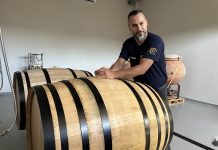
– We use open fermentation, and we stick to it.
Open fermentation is neither the easiest nor the most common approach today, but Brzica chooses it because he believes it is where character emerges.

– Although open fermentation has some drawbacks, it has many good points. We can make wines in the old-fashioned way, as they were made two hundred years ago.
He speaks just as clearly about unfiltered wines.
– We have done that from the beginning. It has now become fashionable to put “unfiltered” on the bottle, but we have done it from the start. A filter always takes away a wine’s soul.
From someone else, such statements might sound like a pose. From Brzica, they feel like a distillation of experience. He is not a man who speaks to sound good. He says what he genuinely thinks, and in a text like this, that comes through.
Asked about what distinguishes his winery, Brzica readily singles out a few things: the view, red wines, the absence of filtration, open fermentation – and Vranac.
– We have this Vranac that nobody else in continental Croatia has, he says.
– For now, we use it exclusively for blending red wines, for example in our cuvée with Cabernet Sauvignon and Merlot.
In his story, this variety is more than a curiosity. It is a distinguishing feature that has grown organically out of the place. Vranac found ground here where it could offer something special, and Brzica recognised it.
– In the overall concept of the winery, I tried to create something that would make me different from the others and give people something to remember me by, he says.
– It is those few things – tastings, Vranac, red wines, unfiltered wines.
There is no mechanical marketing in that sentence. It is more about the need for a small winery to have a clearly defined identity. Recognisable, rather than broad.
Brzica pays great attention not only to what is in the bottle, but to what the bottle tells the customer. He dislikes vagueness where clear information is possible.
– Every bottle has a lot number that tells you everything about the wine, he says.
– When it was bottled, which vintage it comes from, how many bottles were filled. Anyone buying that bottle knows exactly what they have bought.
For him, this is not a detail. It is a matter of how one treats the customer.
– Here, nobody states how long red wines have spent in the bottle. Abroad, when you buy red wine, it says eighteen months, twenty-four months. That is one of the most important pieces of information.
That kind of transparency says a great deal about both the man and his business. Brzica does not want wine sold on an unsubstantiated story. The story matters, but the bottle must be clear.
Another interesting feature of his working model is that many tastings happen spontaneously, without advance notice.
– Of those two hundred tastings, eighty per cent are unannounced, he says.
– People drive around, call and ask: Are you open? We say: We are, we will be there in five minutes.
In a well-organised urban operation, that might sound chaotic. In the Danube region, it is simply reality. Brzica accepts it as part of life.
– Now imagine operating in a system like that if you have three or four employees and another hundred commitments, he says.
– It is not simple.
Yet it is precisely in that openness, in his ability to respond to the unplanned, that one sees why people return. His story is not sterile. It is alive.
Brzica’s family roots add another interesting layer to his identity. Although born in Osijek, his family lines lead towards Zagvozd and Vinjani Donji, towards Biokovo and the Dinaric south. It is as though two Croatias meet within him: Slavonian expansiveness and Dalmatian toughness.
That layer is not insignificant. It can be felt both in how he speaks and in how he runs his business. There is softness and firmness in him, hospitality and discipline.
– Ever since my father came to Slavonia, he always had at least a few vines in the yard, he has said on other occasions. That image fits easily into everything he does today: wine for him is not merely a business, but an extension of a deeper family memory.
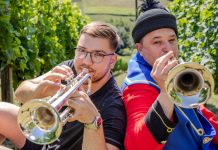
It is no coincidence, then, that over time a broader circle of people, friends, actors and cultural events has gathered around his winery, that particular social dimension which gives a place a soul, rather than merely bringing it business.
The best portraits tell us not only what someone has done, but what is decisive about that person. For Ivo Brzica, it is not merely a feeling for wine, though he clearly has it. Nor is it simply business discipline, though none of this could have been built without it. What seems decisive is his ability to change his criteria for success in time.
Many people spend their whole lives building a business that eventually traps them. Brzica has done something rarer. He has built a system that sets him free.
– My goal was to devote a little time to myself and my family, he says.
– That is the whole truth.
That simple sentence explains everything: why the hotel is digital, why the winery is no bigger, why he does not chase volume, why he prefers to know his customer rather than let his product circulate through anonymous chains, why he insists on direct contact, why it matters more to him that things make sense than that they look impressive.
Brzica has not given up work. He has simply given up the wrong balance between work and life. Perhaps that is his most important lesson.
On the Erdut ridge, above the great meander of the Danube, Ivo Brzica today offers more than wine, accommodation and a view. He offers convincing proof that it is possible to reach a point where a person no longer builds life around work, but work around life. Perhaps that is the most valuable wine this region has today.