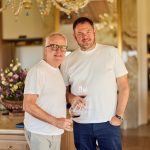
Prije nekoliko dana Marijan Knežević objavio je na Facebooku tekst koji je u vinskom svijetu Slavonije i Hrvatskog Podunavlja prošao gotovo kaoA few days ago, Marijan Knežević published a Facebook post that, in the wine world of Slavonia and Croatia’s Danube region, felt almost like a quiet official announcement that a great era had come to an end. Without drama, bitterness or any need to draw a final line under his career, the man who for the past twenty-six years had been one of the most important figures in continental Croatian winemaking wrote that he was leaving his position as chief oenologist at Vina Belje and embarking on a new professional life.
– As the last of the three visionaries who built and developed Vina Belje from its very beginnings, I leave filled with immense pride and gratitude, Knežević wrote, recalling three moments that had marked his professional journey: the championship title for Graševina at the first Graševina Festival in Kutjevo in 2007, the Decanter trophy for the 2008 Merlot, and the gold medal and Regional Trophy for Goldberg from the 2006 vintage.
He ended with a sentence that many read as a hint of something still to come:
– Quietly, and with great care, I am developing a new project of my own.
For Marijan Knežević, this also marked the symbolic end of a period in which Belje had grown from a war-ravaged cellar and yet another story of post-socialist transition into one of the most technologically advanced and successful large wineries in Croatia’s Danube region.
Marijan was never the kind of man to cultivate a public persona around himself. While many oenologists of his generation left large companies to create their own labels, he built Belje. He once said that he regarded Belje as his own cellar, and that sentence perhaps explains his entire career better than anything else. This was also why his Facebook post felt different from the usual professional farewells. For the first time, there was a sense that Marijan was no longer speaking solely as a man within a large organisation, but as a winemaker who, after almost three decades of work, was trying to define his identity outside the institution with which the Croatian wine scene had long associated him. There was not a trace of resentment towards the organisation to which he had devoted almost his entire professional life. On the contrary, the whole post was suffused with gratitude and a sense that he was leaving only once he felt certain he had completed what he had set out to do.
And that was no small achievement. When Knežević now lists the moments that defined his career, he is not merely recounting personal successes: he is effectively reconstructing the most important moments in modern continental Croatian winemaking. The Graševina from the 2006 vintage, which triumphed in Kutjevo in 2007, marked the moment when Baranja first seriously challenged the Golden Valley’s decades-long dominance in perceptions of Graševina. The 2008 Merlot brought Belje its first major Decanter trophy for a continental Croatian red wine and completely changed perceptions of Baranja as a place capable of producing great reds. Goldberg, from that same 2006 vintage, later became one of the most important continental Croatian wines of the past twenty years, changing the way people thought about serious, aged Graševina.
Yet perhaps what lies between the lines of that post is even more interesting. Knežević is now fifty-six and, for the first time, is seriously talking about something that could be his own wine. He speaks neither of large-scale production nor of ambitions to build a new wine empire. He talks about consulting, individual vineyard sites, a few thousand bottles and two labels: one white and one red. After twenty-six years in large organisations, he sounds like a man who no longer needs to prove anything, yet still needs to express something personal through wine.
Marijan Knežević was born in Borčani, a village above Tomislavgrad that he likes to describe as being “above the place where King Tomislav was crowned”. Yet the area has almost nothing to do with the romantic image of vineyards that people now like to associate with his professional achievements. In his childhood, vineyards were not part of the landscape. The climate did not allow for any substantial winegrowing, and wine was brought home from Herzegovina, from around Mostar and Čitluk, or from the Imotski area. Wine was respected in the family, but neither as a profession nor as some great ambition in life. His father and grandfather fermented wine for their own use from purchased grapes, and these are his earliest childhood memories of wine: cellar smells, barrels, grapes brought in from elsewhere, and the domestic, family practice of making wine as part of everyday life.
Nothing in those years suggested that, a few decades later, he would become the man who changed perceptions of continental Croatian winemaking. In fact, for a long time his life was not heading towards wine at all. His family later moved to Osijek, where Marijan enrolled in food engineering at the Faculty of Food Technology. He belonged to the last generation to use the old Faculty of Agriculture building on Tenjska Road, and even then he had no idea that wine would come to define his life.
When he talks about his beginnings today, he often repeats that he entered winemaking almost by chance, through a combination of circumstances. He began his professional career at the Osijek sugar factory and joined Belje as a trainee in its meat processing division. The food industry’s structure at the time meant that young food technologists worked across different branches of production, and it was this practice that would lead him, quite unexpectedly, into a wine cellar. When serious discussions about privatising Belje began, and the people who had sustained the organisation for decades started retiring, Marijan Knežević was transferred to the winery.

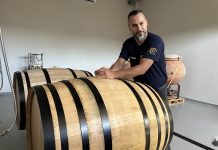
The world he found there is one he now describes in almost cinematic terms. The cellar had been devastated by war and years without investment, the technology was outdated, wooden barrels had stood empty for seven or eight years, and millions of litres of wine were ageing in concrete tanks more than sixty years old. In the early 2000s, Belje did not look like a place where a great wine story would unfold. It looked more like a symbol of a shattered, exhausted Baranja still trying to find a new identity after war and economic transition.
It was at this point that Drago Tomašić left the cellar, a man who had run the Belje winery for thirty-eight years and whose name Knežević still speaks with a particular reverence. He talks about Tomašić almost as the last guardian of an old wine world.
– His thirty-eight harvests were history held in one man’s head, he would later say.
It was Tomašić who began revealing to the young Knežević not only the technical secrets of winemaking, but also the philosophy of Baranja. He told him that a true Belje Graševina must have fullness, ripeness and staying power, rather than simply being fresh and light. Marijan would later acknowledge that those conversations with Tomašić completely changed his view of wine. The problem was that all this happened just as he was left practically alone in the cellar, with the equivalent of five hundred and five wagonloads of wine and a level of responsibility a young technologist could scarcely imagine.
– Harvest came, we were waiting for privatisation, and I was expected to make decisions about wines whose production I had had no influence over, he later recalled.
Today, he says that 2002 was the most frightening year of his entire career. Not because of the technology or the wine, but because he felt he had been thrown overnight into something for which no one can ever be fully prepared. Work in the cellar was almost a guerrilla operation. They tried to compensate for the lack of technology with better grapes, lower yields and enormous amounts of physical labour. He would later say that the experience of the old growers and a different approach in the vineyard saved what the technology of the time could not.
Yet it was under these almost impossible conditions that he first showed what he could do. His very first harvest working independently produced three top-quality white wines, giving him an enormous boost. Meanwhile, Belje was going through the upheavals of privatisation: Einhelig arrived, followed by bankruptcy, then Agrokor. Many saw the cellar as yet another unhappy story of economic transition, but in that very chaos Marijan saw room to create something new.
He would later acknowledge that Agrokor’s involvement and the arrival of Ivica Todorić were a turning point for him, because for the first time he felt that someone seriously believed Belje could become a major name in wine. Until then, the priority had mostly been survival. Suddenly, serious investment began. New technology gradually entered the cellar, and ideas that had previously been applied only to small quantities of top-quality wines began to become standard throughout production.
But more important than the technology was the fact that Marijan now began developing his own philosophy of wine. He was not interested solely in making sound wine for a large market. He wanted to know whether Baranja could produce great wines with a strong identity, wines capable of standing alongside those from far more celebrated regions.
This was also when his fascination with individual vineyard sites began. Today, he often says that many winegrowing areas in Slavonia and the Danube region have never received the attention they deserve, and that the Croatian wine scene revolved for too long around a few dominant stories while many fantastic places remained entirely out of the spotlight.
– As we move from west to east, these are literally variations on a theme within the same variety, he says today of Graševina.
For him, Baranja was never merely a large area of production, but a complex mosaic of sites, aspects and wine styles. That obsession with detail would later lead to Goldberg, a wine that would change perceptions not only of Belje, but of continental Croatian Graševina as a whole.
The moment when the Croatian wine scene truly realised that something serious was happening at Belje came in 2007, at the first Graševina Festival in Kutjevo. Today it is easy to forget how unthinkable it seemed then that a Graševina from outside the Golden Valley could dominate such a competition. For decades, Kutjevo had been almost the natural centre of the universe for the variety, while Graševinas from Baranja were generally regarded as sound wines from a large company, rather than wines capable of redefining a style or becoming a benchmark for Croatian winemaking.
Belje was still burdened by its image as a large industrial producer. Although there were already signs of serious changes in the cellar, few expected a Belje Graševina to open an entirely new chapter for the variety.
Then came the 2006 vintage.
Goldberg.
Today, Marijan talks with something close to a smile about how the whole project came together in a somewhat guerrilla fashion. He, Baldo Matić and their colleague Žarko Kovačić set aside some wine almost in secret and began working on something that, even within the large company, seemed quite risky at the time.
– We only came forward with a finished bottle once the wine was ready, he recalls.
But behind that wine lay more than technical ambition: there was an entire philosophy that Marijan Knežević had spent years absorbing from Drago Tomašić and the old Belje cellar.
Marijan embraced that philosophy and tried to give it a modern expression.
The result was a wine entirely unlike the dominant style of Croatian Graševina at the time.
At the Graševina Festival in Kutjevo, it felt almost like a small earthquake: Belje won, emphatically.
– We dominated. Everyone acknowledged that, Marijan said later.
But more important than the victory itself was what followed. Goldberg set a new perception of Graševina in motion.
Goldberg would later become one of the key wines of the modern Croatian wine scene. Robert Parker would rank Belje’s Graševina among the highest-rated Croatian wines, while Decanter and the IWC confirmed the international standing of a label that had changed perceptions of continental Croatian Graševina. Until then, a lighter, fresher style had prevailed; Marijan Knežević and Belje offered a more serious, mature and complex interpretation of the variety.
– Our colleagues acknowledged that we had started a new trend, he said later.
Interestingly, even then he was not entirely satisfied. After three years of dominance at the Graševina Festival, they concluded that they had to change the style again and find a new direction. That constant need to push boundaries may be one of the defining features of his career. He never seemed like a man who merely wanted to repeat successful formulas.
At the same time, while Goldberg was changing perceptions of Graševina, Marijan began developing another major story: that of Baranja’s red wines.
Until then, continental Croatia still largely believed that serious red wines were the preserve of Dalmatia and certain parts of Istria. Baranja was associated above all with Graševina, and its red varieties were almost an afterthought.
For years, however, Marijan Knežević had been looking towards the Hungarian side of Baranja and wondering why vineyards just twenty kilometres away could produce red wines of international standing, while the Croatian side supposedly could not do the same.
Around sixty hectares of red varieties had been planted during the failed privatisation, and he saw an opportunity in precisely that.
– I thought: if they can do it over there, why can’t we?
They saw their first serious results with the 2007 vintage, and then came the 2008 Merlot. That wine would win the first major Decanter trophy for a continental Croatian red and completely change perceptions of Baranja.
– Merlot made my name, Marijan admits today.
But he immediately adds that, to him, Cabernet Sauvignon may be an even greater variety for Baranja.
– It’s a variety that consistently delivers good results.
His entire philosophy of wine is contained in that remark. Marijan was never fascinated solely by spectacular highs. What fascinated him was lasting substance, continuity and the ability of a wine to demonstrate its quality year after year.
That is why he now says that perhaps his generation’s greatest achievement was transforming Belje from a war-ravaged cellar into a winery that could engage with the world on equal terms. Yet he also acknowledges that success and international recognition came at a price.
The large organisation demanded constant growth, the market imposed trends, and Baranja gradually began to lose part of its identity. This was when his great professional sadness began, bound up with Frankovka, Kadarka and the disappearance of the old winegrowing Baranja.
– Trends, trends, trends, he says today of the period when market pressure drove varieties out of Baranja that had been part of its identity for decades.
Kadarka, Frankovka, Cabernet Franc and Pinot Blanc gradually gave way to international varieties that appeared safer commercially.
– Kadarka was grubbed up and Merlot and Cabernet Sauvignon planted. Pinot Blanc was grubbed up and Chardonnay took its place.
Knežević now believes that this was when Baranja began to lose some of its authenticity. The disappearance of Kadarka particularly pains him: he sees it not merely as a variety, but as part of the cultural identity of the area spanning Baranja, Hungary and Vojvodina.
He speaks with equal bitterness about the failed project to develop a network of contracted growers. The idea was for Belje to buy large quantities of grapes from the surrounding villages and thereby keep vineyards alive across numerous sites, but the project never took off.
– The biggest problem arose the moment the first kilo of grapes ended up across the Drava instead of being processed at the Belje winery.
For him, that was the moment when the natural relationship broke down between the large company and the villages that had lived from their vineyards for decades.
Meanwhile, as he was creating one of continental Croatia’s most successful wine stories, his private life went through periods that revealed just how completely this work can exhaust a person.
In September 2012, something happened that he still speaks about very briefly, almost as though he wants to put it behind him as quickly as possible. In the cellar, he slipped and fell from a barrel around ten metres high, landing flat on his back. He injured his spine and was unable to walk for a long time. He was away from work for more than a year.
– I’d climbed up there a hundred and fifty times before. It happened in an instant.

Those close to him at the time said that his recovery was long and difficult, but Marijan Knežević never made a great personal drama out of it. Perhaps that was because, throughout his career, he had grown accustomed to the idea that work simply had to continue, whatever the circumstances.
Yet today that fall seems almost symbolic: a physical manifestation of what large organisations and enormous responsibility can do to a person. When he talks about working in a large winery, he is very open about how much that life wears people down.
– A large organisation needs you twenty-four hours a day.
He says there comes a point when you are no longer simply an oenologist. You have to be an organiser, a logistics specialist, a maintenance man, a manager and the person who solves every problem as soon as it arises.
– It isn’t that your concentration slips. Fatigue simply sets in.
Perhaps that sentence explains why his decision to start anew now feels so natural. After twenty-six years in organisations that demanded almost total commitment, he sounds, for the first time, like a man who wants to work more slowly, more personally and more peacefully.
Perhaps that is also why it is so interesting to listen to Marijan Knežević talk today about Tomislavgrad and the area he comes from. As a child in Borčani, he grew up in a place where vineyards were not a natural part of the landscape, and where almost no one seriously believed that the area might one day have a substantial wine scene.
That is why he speaks with particular emotion about the new vineyards around Tomislavgrad.
– When you travel from Šuica towards Tomislavgrad and see the vineyards near Eminovo Selo, it really is a joy.
In the people planting vineyards there today, he recognises the same mixture of enthusiasm, stubbornness and willingness to defy the logic of place and market that accompanied his own beginnings in Baranja.
– You obviously have money to spare if you’ve decided to take up winegrowing, he recalls joking to Tomislavgrad’s new winemakers.
Marijan laughs about it, but he knows very well how difficult and irrational a business winegrowing can be. Perhaps that is why the whole story moves him so much: a man who left a place without vineyards for Slavonia, where he became one of Croatia’s most important oenologists, now watches his home region gradually discover wine as a new identity.
As his need for a more personal approach to wine matured, so did his decision to leave large organisations after twenty-six years, without bitterness or any need to tear down what he had spent years building.
Particularly interesting is how he now describes the difference between the young man who entered the organisation almost three decades ago and the man leaving it today.
– When you join an organisation young and stay there for twenty-eight or twenty-nine years, everything feels much more relaxed now, he says.
But he immediately adds that the new challenge is entirely different.
For the first time, he is seriously talking about his own labels. Not large volumes, not industry, and not production intended to compete with the organisations he has led throughout his working life. He talks about a few thousand bottles, two labels, one white and one red, carefully selected vineyard sites, and people with whom he shares not only a philosophy of wine, but a philosophy of life.
Large-scale production does not interest him. Neither does the conventional race for market share.
– My aim is to keep it to a few thousand bottles, he says, almost serenely.
There is fatigue in that sentence, but also experience and a kind of liberation. After a career in which he was responsible for a vast organisation, millions of litres and hundreds of hectares of vineyards, he now wants to make wines in small quantities that he can stand behind entirely personally.
At the same time, he is not abandoning the idea of education and consulting. The notion of “Croatian expertise” frequently runs through his words today. He talks about the need to embrace new knowledge and modern biotechnologies, but also about the importance of not overlooking local experience and the knowledge of people who have worked in Croatian winegrowing areas for decades.
He speaks with particular warmth about Dr Ivana Alpeza and the people at the University of Zagreb’s Faculty of Agriculture who have spent years helping Croatian winemakers through selection work, sensory evaluation and professional support.
– We should put our faith in Croatian expertise, he says.
That may be one of the most important sentences in his entire story. Behind all the Decanter awards, Goldberg, Merlot and great cellars, the same idea has run through Marijan’s work all along: wine is not merely a product for the market, but part of a place, its knowledge, its continuity and the people who make it.
That is why, as he seriously embarks on his own project for the first time, he seems like a man who, after twenty-six years of work, is finally trying to make a wine that will be entirely personal, free of a large organisation and its rules.
And perhaps that is why his Facebook post sounded less like a farewell than a very quiet announcement of another life.
Marijan Knežević belongs to the generation of oenologists who, after the war and the upheavals of economic transition, effectively created the modern continental Croatian wine scene. When he took over the devastated cellar at Belje, Croatian winemaking was still searching for a new identity between the old model of industrial production and a new culture of top-quality wine. Goldberg, Merlot and Belje’s great red wines showed that large organisations, too, could create wines with character and international credibility.
Perhaps that is why he now speaks so calmly about leaving Belje. He does not seem like a man leaving something unfinished behind, but like someone who, after almost three decades of work, wants for the first time to make a wine that will be entirely personal.
In the end, everything returns to his Facebook post and the sentence with which he announced a new beginning. Few people in Croatian winemaking could describe both wine and their own lives so precisely in just a handful of words.
– Time must do its share of the work.
With Marijan Knežević, that has never sounded like an empty phrase. After everything he has been through, from the devastated cellar, the chaos of privatisation and international success to his fall from a ten-metre-high barrel, it sounds more like the professional and personal philosophy of a man who learnt long ago that great wines, like substantial careers, take time to develop.