It could all have begun with wine.
But at Heimann, the story begins with a signature on a beer mat.
On the winery wall, among bottles and memories, hangs a seemingly modest object from Prague’s U Zlatého tygra pub: a beer mat signed by Bohumil Hrabal.
For Zoltán Heimann senior, it is more than a souvenir. It is a personal connection to the art that shaped him. Since his youth, he has been drawn to Czech literature and cinema-the worlds of Jiří Menzel and Miloš Forman, and writers such as Vladimír Páral and Hrabal.
– That art was crucial for me – he says. – It had a particular atmosphere, a kind of controlled chaos, of capriciousness.
That very feeling-the tension between order and freedom-is easy to recognise in the philosophy behind the wines made in Szekszárd.

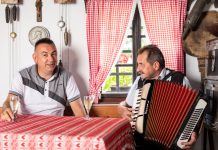
When Heimann speaks about everyday life, art is a natural extension of it. In the evening, once work quietens down, there is room for reading and music-in recent years, often the works of Franz Liszt.
The connection is no coincidence. One of the estate’s defining wines, Barbár, owes its name to Béla Bartók’s Allegro barbaro. The parallel is clear: just as Bartók’s music is raw, direct and deeply rooted in tradition, yet modern and unmistakable, Barbár seeks to articulate something elemental-the energy of terroir translated into wine.
It is not made every year. It appears only in vintages when the grapes reach ideal ripeness and impeccable health. That selectiveness reinforces its almost artistic status: it captures a moment rather than fulfilling a production schedule.
At Heimann, art is also something practised. Jazz concerts initially intended for a local audience gradually attracted visitors from across the country, even from Debrecen. Yet despite growing interest, the family deliberately avoids turning them into mass events. Intimacy remains a central value.
As Ágnes Heimann explains, the nature of the region-its varied landscape and secluded places to stay-allows a different rhythm: an escape from the bustle of the city and a deeper immersion in the experience. Old vineyard houses gain new life, and the guests staying in them naturally become an audience for cultural events.
– We want to connect wine with other forms of culture: film, theatre, music, gastronomy. All of these can coexist – she says.

The approach has attracted recognition. The Heimann family estate received the 2025 Art is Business Award in the corporate category, an honour recognising sustained connections between the worlds of business and art. For more than a decade, Heimann has participated in cultural initiatives as organiser, host or sponsor, demonstrating that wine can also be a meeting ground.
In this context, even the choice of grape variety carries meaning. Szekszárd builds its identity around an idea: Bikavér, the historic blend that brings different voices together into a single whole.
In the region, this wine is also discussed through anecdotes. Zoli witnessed one such exchange as a fourteen-year-old boy at a wine fair. Someone, trying to explain Bikavér’s character, said the wine was so good that after just one glass, you felt desire for your own wife.
Beneath the humour lies something more serious: Bikavér has always been a wine of relationships-warmth, closeness and inner balance.
Interestingly, perhaps the clearest understanding comes from looking at what surrounds Kadarka.
As a blend, Bikavér shows how flexibility can be an advantage. Blaufränkisch brings stability, structure and reliability. Kadarka remains what it is: the most sensitive, but also the most intriguing, piece of the puzzle.
Perhaps that is why Heimann does not try to turn it into something it is not.
At one point, he describes Kadarka as something other than a conventional red wine: pírosbor, something in between, something that eludes straightforward categories. Its appeal and its difficulty both lie in that ambiguity.
Within this structure, Kadarka and Blaufränkisch carry distinct personalities. Kadarka brings finesse and aromatic complexity; Blaufränkisch provides structure and backbone.

Almost forgotten and then rediscovered, Kadarka is deeply embedded in Szekszárd’s cultural identity. Béla Hamvas wrote about it, and it is often called “the nectar of Szekszárd”. Names such as Liszt and Franz Schubert are also symbolically associated with it, reflecting the way wine here is understood as part of the same cultural world.
As Heimann says, wine is more than alcohol or technology. It is an experience: conversation, music, time and place.
If the cultural dimension of Heimann reveals its soul, the family story reveals the structure that supports everything else.
At its centre stand two brothers: Zoltán Heimann and Ferenc Heimann. One gave the wine a recognisable identity; the other gave it a home, quite literally.
Ferenc Heimann initially followed the path of construction. While Zoltán developed the family winery, Ferenc trained as a builder, refined his craft and worked in Germany as a construction foreman. Everything suggested that his career would remain outside the wine world.
But life, as so often in this region, took another turn. Returning home in the early nineties, just as Hungarian winemaking was awakening after decades of stagnation, Ferenc accepted a seemingly simple task: to build a cellar for the family winery.
That cellar would become a beginning.

He found his inspiration in family memory. His model was his ancestors’ domed cellar, which had been filled with concrete during the socialist period.
With no ready-made solutions, relying on old books and his own instincts, Ferenc spent months researching and experimenting. Eventually, he reconstructed an almost forgotten building technique and developed it into a distinctive style of his own.
The cellar at the Heimann estate was soon recognised as an architectural statement: a meeting of tradition and personal expression.
Further commissions followed, first locally, then across Hungary and beyond. At one stage, Ferenc Heimann led a team of around forty people and was involved in building numerous wine cellars in the region. His work became inseparable from the revival of Hungarian winemaking, restoring authenticity to spaces that had been sidelined for decades.
Yet this is also a story of difficulty.
– Life brought various challenges, of course – says Zoltán. – There were periods when he drank more than he should have. It was a major crisis for him.
Ferenc, however, found his way back.
– He always came back. He has now been steadily involved in the work again for almost twenty-five years. He returned to creating, and that was always what mattered most to us.
That sentence holds the key to the relationship between the brothers: trust that survives crises, and a hand extended when it is needed most.
Zoltán has never concealed how much Ferenc’s involvement in creating the winery means to him. His brother’s knowledge matters, but so does the very idea of working together-in the vineyard, in the cellar, in a place sustained by generations.

The cellar Ferenc built is therefore a family story made tangible: the heritage of the Danube Swabians, a craft that was almost lost, and a personal struggle transformed into a new beginning.
Perhaps that is why, at Heimann, wine always has walls that remember it.
To understand why that space had to be created at all, however, we must return to the world from which everything began.
The story of Heimann winery begins long before its labels, its market or even its cellar-in the Swabian world of Szekszárd, which was Zoltán Heimann senior’s first school of life.
His earliest memories conjure a yard with chickens and pigs, harvests that were both work and celebration, the annual pig slaughter, barrels, a wine press and a daily life in which living and working were inseparable.
While his father worked at the cooperative, the young Zoltán grew up alongside his grandfather, among tasks learned through practice: cleaning pigsties, drawing wine from barrels and handling tools. He still remembers the smell of freshly drawn Kadarka filling the press house.
That world would later become his inner measure of everything that mattered. He felt a need to preserve the essentials of something that had almost disappeared: work, continuity, a feeling for the land and respect for wine as part of life.
Zoltán and Ágnes did not initially follow a path that would necessarily lead back to the vineyard. They met at university, where they studied economics together in the intellectually lively and demanding environment of Közgáz and the Rajk László College for Advanced Studies. That experience left a profound mark on both of them, teaching them to think critically and over the long term, and to understand that a serious enterprise requires deliberate foundations.
Both first pursued other careers. Zoltán gained experience in the international wine trade, then held management positions in various companies and the banking sector. Ágnes, also an economist, worked briefly in the international textile trade.
At the time, neither would probably have predicted that wine would become the centre of their lives.
Yet in the early nineties, they made a decision that changed everything. In 1990, they became involved in the small family cellar belonging to Zoltán’s parents in Szekszárd, intending to help and gradually develop something of their own. Everything else grew from that decision.
They began modestly, with around half a hectare of vineyard inherited from their Swabian ancestors and annual production of approximately two thousand bottles. A vision already existed, although no one could yet see its full scale. They knew they wanted to create a family winery devoted to quality, an estate built on clearly defined standards.
In that early phase, the family was crucial. Zoltán’s parents brought experience and continuity; they carried the past and ran the estate during its first years. His brother Ferenc gave the winery its physical foundation, building the cellar and press house in the style that would later become his signature. Meanwhile, Ágnes gradually became one of the venture’s key figures.
After the birth of their sons, Zoltán junior and Gábor, she took on the administrative work. Gábor is now a neurologist in Munich, outside the wine world, while Zoli remained within it and chose to carry it forward. Ágnes subsequently trained as a winemaking technician. Over time, she assumed much of the winery’s day-to-day management: finances, organisation, events, hospitality and administration. She would later say that life had placed her somewhere she had never expected to be, but that she quickly realised she could put everything from her family and professional background to use there.

From the outset, the Heimanns built the winery as a carefully considered, long-term project. Everything they earned went back into its development. Zoltán continued working in the corporate sector for years, while Ágnes managed the estate’s operations and everyday life. Growth was slow and disciplined, measured in quality.
That approach remained the foundation of their philosophy as the winery began to expand more substantially. Today, they cultivate many times the original area and produce far more bottles, but the underlying logic remains unchanged: the benchmark is the standard they achieve.
Defining the estate’s style was an important part of that development. The Heimann wines that now form the backbone of sales emerged gradually, reflecting the tastes and personalities of their creators: drawing on both local and international varieties, approachable, clean and contemporary, yet firmly rooted in Szekszárd’s identity.
Barbár acquired a special place in this process. Ágnes considers it one of their greatest shared achievements. It grew from years of reflection on what a top Heimann wine should be: a wine capable of long ageing, revealing new facets over time and finding its audience through personality. If made well, they said, such a wine could eventually become a name in its own right.
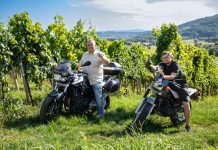
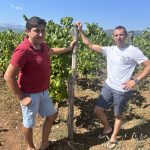
Meanwhile, the vineyard remained the foundation of everything. The Heimanns stopped using herbicides and insecticides early on, and in 2014 began the gradual process of obtaining full organic certification for their vineyards. This followed naturally from their conviction that great wines require a serious commitment to the land.
Over time, that conviction became one of the estate’s defining characteristics: wine is shaped above all in the vineyard, through decisions that may not always be visible on the label but are clearly felt in the glass.
A turning point came in 2009, when the winery reached a stage that allowed Zoltán senior to devote himself to it fully and return permanently to Szekszárd. A long introductory period had ended-a period of laying foundations, expanding, investing, learning and defining what the estate wanted to be.
From those years emerged an established name in Hungarian wine.
Naturally, the question of succession then arose.
Ágnes had always regarded her role as an important but transitional stage, after which their son would take the baton. Once it became clear that he was ready, both parents decided to do something many family wineries postpone for too long: begin handing over responsibility in good time.
Within the family, and throughout the wine community, their son is known simply as Zoli.
With Zoli came a new generation and a new energy: educated, internationally shaped and focused on nuance, precision and local varieties. Yet his arrival mattered because it continued what had already been built.
When Zoli assumed greater responsibility, he entered a story created before him by his grandparents, his parents, his uncle and an entire family history. That foundation allowed him to move forward.
In family wineries, the transition between generations is often the most delicate moment. Waiting too long can hinder development; taking over too early can destabilise it. At Heimann, the transition happened consciously and at the right time.
Zoltán and Ágnes’s son, simply Zoli to family and friends, entered a process with clear foundations and an equally clear need for change.
Unlike his parents, who found their way into wine gradually, Zoli grew up within it-but ventured beyond that world early.

His education and experience took him outside Szekszárd. He worked and learned in different wine environments, from major urban scenes such as New York and Berlin to European wine regions. He spent six years studying in Geisenheim, Montpellier, Bordeaux and Udine, gaining broad international experience that brought an entirely new perspective to the winery. With that perspective came a different relationship with the vineyard and the environment.
The family is increasingly conscious of its impact on the landscape in which it works. In and around the vineyards, they nurture habitats to protect and improve biodiversity. They produce oil from grape seeds and use grapes removed during green harvesting to make verjuice.
Ágnes tends an organic garden, food scraps feed their chickens, and vine prunings are used as biofuel, closing a circle in which nothing goes to waste.
In 2014, they began converting the vineyards to organic cultivation.
One of Zoli’s formative experiences was working with Dirk Niepoort and Mac Forbes, where he encountered an approach built around elegance, freshness and precision.
That change of perspective was decisive. It gave him distance from the family story and allowed him to return to it with fresh eyes.
During this period, his central interest took shape: indigenous varieties. While the previous generation had also built its reputation on international grapes, Zoli increasingly recognised the potential of Kadarka and Blaufränkisch.
He saw this as a strategic choice: for Szekszárd to become relevant on the global wine map, it had to speak its own language.
At one point, that position was almost radical. Early in his career, Zoli seriously considered uprooting all the Merlot and other international varieties and devoting himself entirely to local wines.
His father stopped him with a reminder of economic reality:
– These wines are what we live on.
It was a lesson learned within a family.
Perhaps that is why his approach today is evolutionary: local varieties become the focus while the foundations on which the winery was built remain acknowledged.
That approach also takes practical form in the vineyard. One of the key projects is the clonal selection of Kadarka, a long and patient process the family began earlier, which Zoli is developing towards a more precise understanding of the variety.
The focus shifts from a single, general idea of Kadarka to its differences: individual clones, their aromatic profiles, structure, resilience and behaviour under different conditions. From several dozen variants, they selected those that best expressed the desired style-delicate, fresh and aromatically pure, with less alcohol and greater emphasis on elegance.
In that spirit, Zoli increasingly speaks of Kadarka as a wine approaching what the French call vin de soif: a wine drunk easily, almost effortlessly, yet remembered afterwards.
From this thinking came a new dimension of the winery: Heimann & Fiai.

Established as a platform for wines bearing Zoli’s signature, the project is a laboratory within the existing estate. Here, the style becomes more sharply defined: greater emphasis on fruit, spontaneous fermentation, experiments with whole bunches, older barrels and even amphorae.
The goal is nuance and precision.
In time, Zoli also assumed formal responsibility. At thirty-five, he became the winery’s managing director, but his role extends well beyond management. He oversees viticulture, the cellar, the definition of the wines’ style and-equally important today-the way those wines are presented to the world.
He is the winemaker, the strategist and the winery’s voice.
What makes his position interesting is the gradual but unmistakable shift he brings: from international varieties towards indigenous grapes, from pronounced oak towards transparency, from power towards elegance.
Perhaps his relationship with Kadarka reveals this approach most clearly.
– My grandfather always said that Kadarka makes a great red wine only once every ten years – Zoli recalls.
His answer was simple: stop trying to make it into a great, imposing red.
That style does not suit the variety anyway.
What follows from such thinking is an ongoing process of discovery.
– It would be lovely to sit here like a professor and tell you which vineyard and winemaking methods are best, but we don’t know – says Zoli. – We are searching for the best solution, constantly changing and developing our methods. It isn’t much of a marketing story. We don’t have the answers yet. We face a major challenge: we are trying to make the best Kadarka in the world. That isn’t a question of one or two years; we have to achieve it over ten or twenty years.
His father adds:
– We are the eleventh generation, and we are in no hurry. We also have a responsibility. We must not ruin the future for the generations that follow. It has to be evolution, not revolution. I don’t like revolution-it always brings bloodshed. Revolution means changing values, and I don’t want to change our values. In this part of the world, we have had enough revolutions.
This shift reinterprets what his parents built.
Internationally, the change was quickly recognised. Heimann’s wines are increasingly cited as examples of a different face of Hungarian reds: wines defined by freshness, drinkability and clarity of expression. In this interpretation, Blaufränkisch and Kadarka become a compelling statement of what the region can offer.
Zoli has become one of Kadarka’s most consistent interpreters, earning him the nickname “Kadarka Man” in wine circles.
Yet perhaps the most important thing is what is less immediately visible. Despite his fresh energy, international experience and clear ambition, Zoli remains deeply connected to where it all began: the vineyard, the family and the belief that wine requires long-term thinking.
His arrival deepens the family story. At Heimann, the generations build on one another and continue speaking the same language, each time a little more precisely. Perhaps that is why the whole story begins where one least expects it: with a signature on the wall, one that had already tried to explain all this once before.