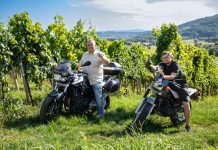
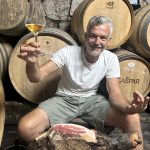
A well-known oenologist once promised to tear up his diploma in public if Laszlo Boni managed to make a serious Shiraz in northern Bačka.
In the end, he kept his diploma intact. Laszlo merely made him admit he had been wrong, then, just to be on the safe side, earned one of his own at the age of 58.
When I first met him, he was a confident newcomer to wine, uncompromisingly forging his own path and stubbornly defending his right to plant a variety in the sandy soils around Subotica despite warnings from people with far more experience. He had tasted excellent Shiraz in Eger, some two hundred kilometres further north, and could not understand why it should succeed there but not near Subotica.
“Perhaps I didn’t know much about wine back then, but I knew how to find information about something that interested me. Let someone explain why Shiraz couldn’t succeed here if it succeeds in Eger! After those first expert assessments, I dug my heels in and vowed I would grow it even if I had to build a greenhouse.”
He did not need a greenhouse. DiShiraz became the DiBonis winery’s signature wine, and Laszlo had the satisfaction of seeing other Serbian winemakers plant Shiraz after his experiment.
“I probably had Serbia’s first Syrah wine in 2006. Perhaps there had been some before, but those vineyards were subsequently grubbed up.”
Years later, winemaker Vladan Nikolić was tasting Cabernet Franc, Merlot and other wines at his cellar. When they reached the Shiraz, he paused and asked:
“What is this?”
“It’s the one you told me wasn’t worth planting.”
That brief exchange captures much of Laszlo’s relationship with authority. He will listen, ask questions and learn whatever he can, then go ahead and do what he intended. Not because he believes he always knows better, but because someone else’s opinion has never marked the end of an experiment for him.
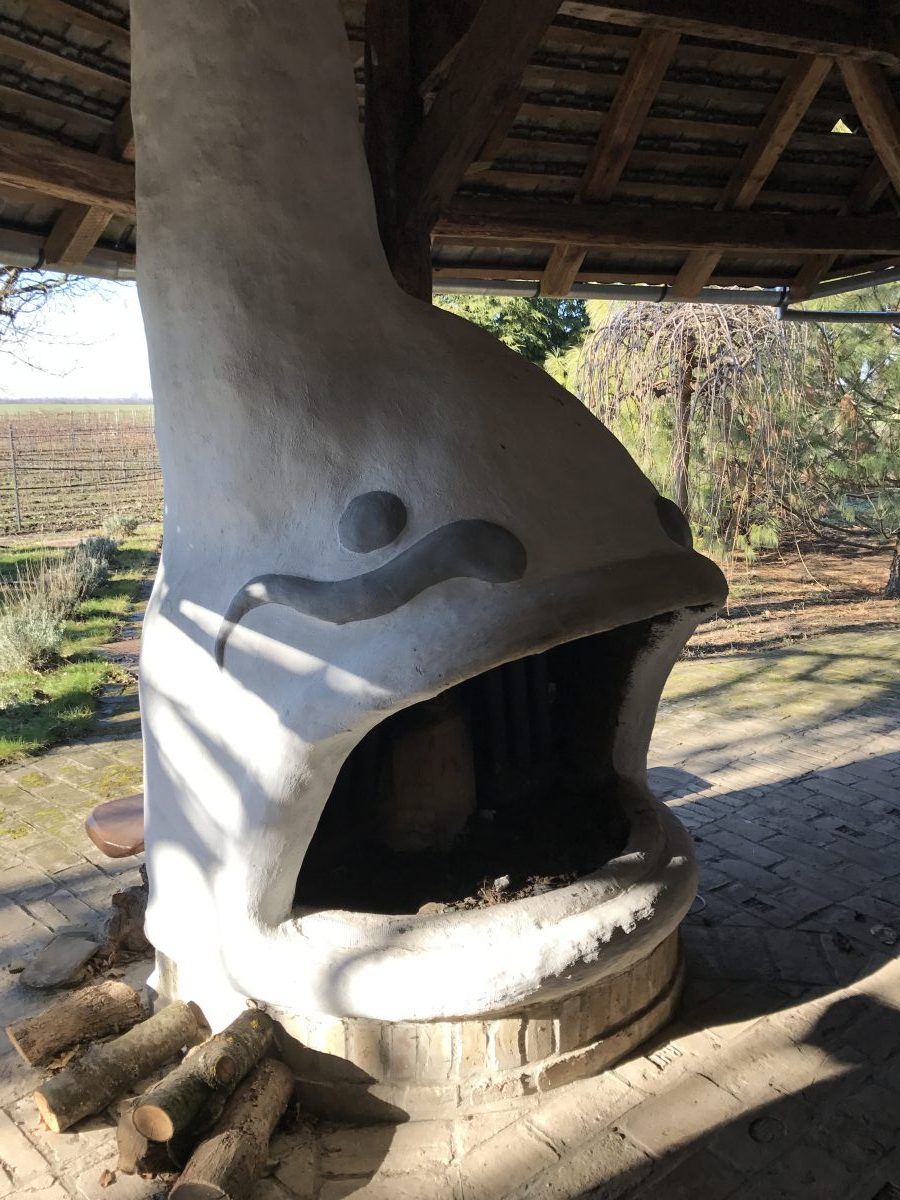
Perhaps he inherited that attitude towards the vineyard long before he made his first wine. Born in Zmajevac, in Baranja, he was the fourth generation of winemakers on both his mother’s and his father’s side. He moved to Subotica in 1969, graduated in electrical engineering and became one of northern Bačka’s first major private entrepreneurs. For a long time, wine remained simply part of the family’s genetic code, pushed into the background by the businesses that provided his livelihood and capital.
It resurfaced in 2003, when he bought a traditional farmstead with a vineyard in the Palić winegrowing district.
“I started messing about with winemaking.”
He devised the winery’s name by combining Dionysus, the Greek god of wine, with his surname: Dionis and Boni became DiBonis. The name sounded as though an elaborate wine philosophy lay behind it. In reality, behind it stood an electrical engineer who had yet to discover how little he knew about the business he had entered.
Today, he regards his late start as an advantage. Had he begun earlier, he used to say, he would not have had the resources his previous business provided, or the freedom to experiment without fearing every failed tank. And failed attempts, misjudgements and unreliable people were still to come.
The first serious blow arrived in the summer of 2008. Harvest was approaching when the winemaker he had intended to put in charge of production announced that he was pulling out.
“He just said, ‘Sorry, I won’t be able to do it after all.’”
The money had already been invested, the tanks installed, and the grapes had no intention of waiting for Laszlo to find someone else. Until then, he had imagined an expert overseeing production while he handled investment, sales and the direction of the business. Suddenly, he had neither an expert nor time to find one.
He began “tinkering” with the wine himself. During harvest, he slept at the winery, monitored the tanks and tried to learn in a few weeks what others spent years studying.
“I told myself: if I survive this, I’ll live to a hundred.”
He survived, and the following summer the winemaker who had abandoned him before harvest returned. Laszlo agreed to work with him again: he would look after the spirits, the winemaker the wine. During the very next harvest, a mistake occurred that led them to part company in December. The next man lasted two weeks. His successor lasted just seven days.
At that point, Laszlo finally realised he was no longer looking for an oenologist he could trust. He had to become the person he could trust himself.
He enrolled at the Teleki Zsigmond secondary school of winemaking in Villány. Returning to the classroom did not trouble him, nor did admitting that, despite everything he had read and tried, he still lacked sufficient knowledge. The school gave him the foundations, but understanding the technology only convinced him that he needed to continue.
“When something interests me, I enrol at university and get a degree.”
He was among the older students on the viticulture and oenology course in Budapest. The diploma, he says, mattered not for the piece of paper, but for the knowledge he no longer wanted to borrow from people who left before harvest, after two weeks or after seven days. He also experimented with alcohol-free wines, completing his degree in 2013 at the age of 58.
A course in spirits production was taught on the same campus. To Laszlo, enrolling on that too seemed only logical. He has yet to complete that part of his education, which is almost reassuring: even in his CV, something remains unfinished.
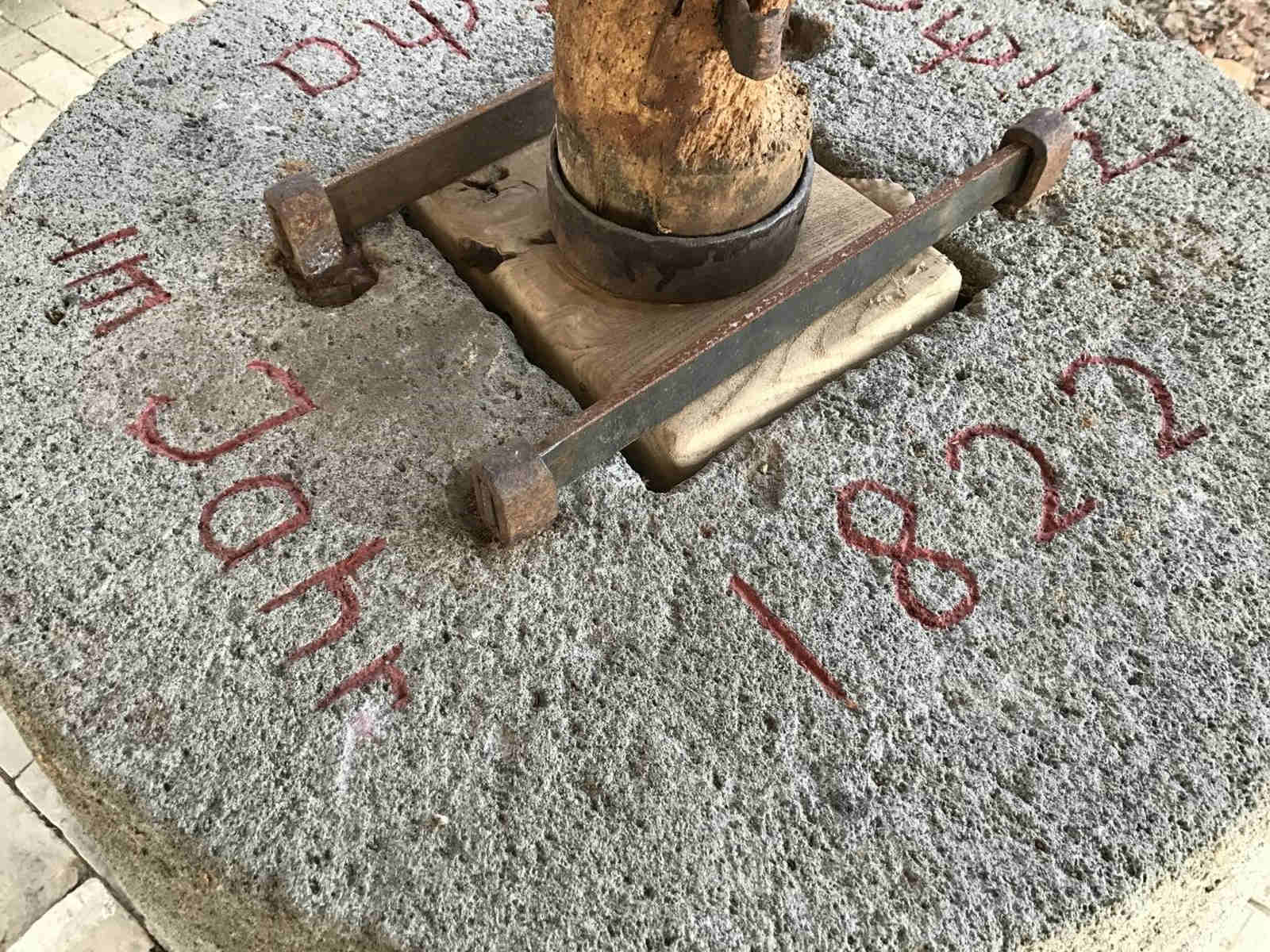
Knowledge did not temper his appetite for experimentation. It simply enabled him to understand why something had succeeded or failed. Before his studies, he admits, wine was often made on a “let’s see how it turns out” basis: if it was good, excellent; if not, move on. After university, he no longer wanted to be a spectator in his own cellar.
“Now the wine has to listen to me, rather than the other way round!”
One of his most unusual successes came in the very year the winemaker left him on his own. It was unplanned and even less likely. In early May 2008, hail destroyed the young grape clusters, leaving little prospect of a Pinot Noir harvest.
Then Laszlo noticed a second crop forming and decided to leave it.
Once again, all it took was:
“I’ll leave it and see what happens.”
During the regular harvest, they picked grapes for rosé, leaving the secondary bunches on the vines. Autumn was fine and warm, and in mid-December the frost needed for an icewine harvest finally arrived.
They picked the frozen grapes and loaded them into a press with a capacity of five and a half tonnes. For two days, it looked as though they were trying to press an iceberg. A little must emerged, slowly, with far more uncertainty than a sensible person would accept for the sake of a few litres of wine.
But they did get wine.
“Icewine is a very risky discipline.”
Afterwards, he left some grapes on the vines every year and waited for sufficiently low temperatures. The conditions did not return: the grapes would spoil before a proper frost arrived. Only many years later did he succeed again, this time with Generosa from the 2020 vintage, a wine with no less than 330 grams of residual sugar per litre. It spent two years in oak before continuing its maturation in acacia.
The 2008 harvest also left him with another long-running experiment. Fifteen years later, he was still keeping some of the Pinot Noir rosé in barrel, chiefly to tease his Hungarian colleagues, among whom the rule that rosé should be drunk within six months, or a year at the latest, was almost sacred.
When they visited the cellar, he would pour them a ruby-coloured wine and ask how old it was. Nobody believed they were tasting a fifteen-year-old rosé. The very idea of keeping rosé in barrel for that long struck them as utterly absurd. For Laszlo, that was precisely what made it an experiment worth waiting for.
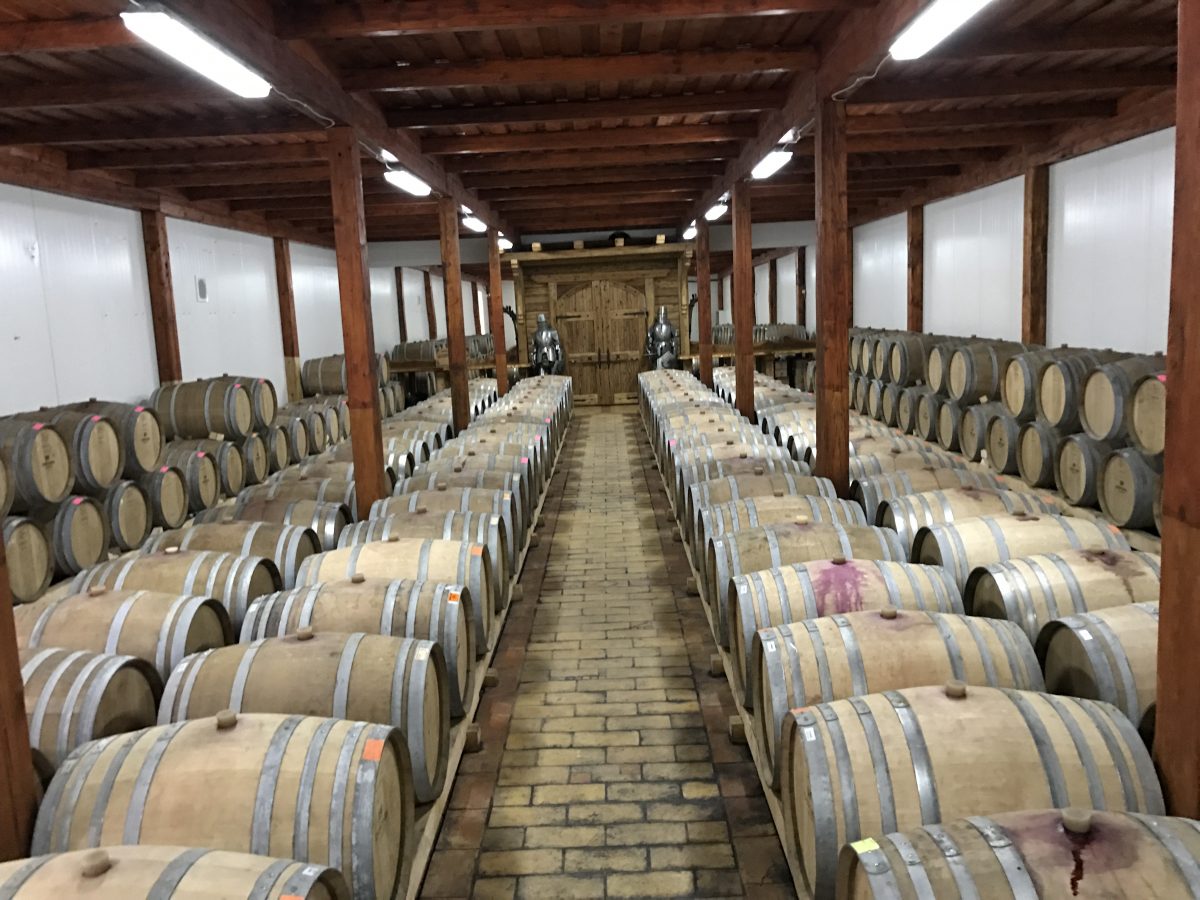
Over time, his cellar of around ninety barrels became an archive of wines that refused to leave wood when, according to conventional wisdom, they should already have been drunk. He keeps vintages dating back to 2008, convinced that wine ages more naturally in wood than in bottle. Gentle micro-oxygenation, he believes, prepares it for exposure to oxygen and gives it a longer life.
This is more than a romantic conviction. For years, Laszlo has been testing how long wine can remain in barrel without losing quality, monitoring colour, acidity and aromatic changes. His 2011 Cabernet Franc retained its acidity even after prolonged ageing, while developing notes of orange peel, redcurrant and bitter herbs reminiscent of amaro.
“A good red wine should spend at least two years in barrel. What interests me is how long it can stay there before it starts to decline.”
Finding time for such experiments was no problem for Laszlo. He liked to compare himself with Robert Mondavi, who started his own wine business at 53 and lived to 94.
“Winemakers live longer than other people.”
If Mondavi could begin at 53, Laszlo reasoned, his own late arrival in wine was hardly too late. His previous business had given him the means to wait fifteen years for a wine, leave grapes hanging for a frost that might never come and survive experiments whose only return was knowing not to repeat them.
Then 2014 showed him that neither patience, knowledge nor a cellar full of barrels would help much if the vineyard could not survive the season.
It was one of the worst winegrowing years he had experienced. Rain, humidity and disease left him unable to make a serious wine from his red varieties.
In the middle of that vineyard, one variety looked as though it were growing in a different year altogether. There was not a single blemish on the berries or leaves of Isabella. Until then, Laszlo had intended to use it for brandy, but the sight of healthy vines surrounded by diseased ones made him reconsider the range of varieties he had spent years establishing.
Initially, he had turned to internationally renowned grapes and the best technology he could buy. He wanted modern, clean, recognisable wines and regarded traditional methods as remnants of a time when winemakers had no better options. The year 2014 showed him that technological progress did not solve every problem, and that a variety unsuited to its climate always exacted a price.
He did not grub up everything he had planted overnight. He kept Merlot, Cabernet Sauvignon, Cabernet Franc, Sauvignon Blanc and, of course, Shiraz. He gave up Blaufränkisch, having concluded that Cabernet Franc performed better on the sand around Subotica. He also removed some Italian table-grape varieties and began testing more resistant grapes on small plots, among them Estera, Pölöskei Muscat, Nero and Generosa.
“I’m always trying something, and I’ll keep going in that direction.”
He chose them not because they were local or indigenous, but because they promised healthier grapes with fewer protective treatments. Once again, he proceeded cautiously, planting small areas and observing how they behaved on sand. The first results were good enough to expand the experiment.
Nero proved particularly rewarding. In Hungary, it was initially registered as a table grape, then also classified as a wine grape once its winemaking potential became apparent. Laszlo uses it for rosé, red wine and late-harvest wines. It ripens early, contains plenty of resveratrol and has skins tough enough to let the grapes remain on the vine, although their delicate fragrance attracts small flies that take a share of his crop every year.
Generosa drew him even further towards sweet wines. Its thick skins allow it to remain on the vine for a long time, it is not readily attacked by botrytis, and its high acidity can maintain balance even when substantial sugar remains in the wine. It gave him Aliz, named Serbia’s best sweet wine for 2022 by Vino.rs, as well as the 2020 icewine that became fresh proof that his 2008 success could be repeated.
The changes in grape varieties were accompanied by changes in the cellar. A man who had begun with the finest selected yeasts and modern oenological products increasingly questioned how much of it he really needed.
He allowed one Chardonnay to ferment in barrel without adding yeast. Fermentation continued until 1 May, far longer than he would once have been comfortable with, but the result delighted him. A similar experiment, this time unplanned, happened with his apricot brandy.
One year, he could not obtain the yeast he normally used. The season had arrived, he had between eight and ten tonnes of apricots in front of him, and there was no time to find a replacement.
“I’ll leave it and see what happens.”
Spontaneous fermentation produced the best apricot brandy he had made up to that point. The following year, he deliberately repeated the process and obtained an equally convincing result.
“How can the same yeast be the best for pears, quinces and apricots? It’s impossible.”
He began looking increasingly critically at shelves full of new oenological preparations that sometimes made winemaking resemble the pharmaceutical industry. He stopped adding products and inactivated yeasts simply to “pump up” a wine’s aroma or structure. Yet this did not mean abandoning science or control. He still uses sulphur, but in moderate quantities, guided by his own laboratory.
The knowledge he acquired at 58 did not lead him towards more intervention. It allowed him to intervene less while knowing precisely how much risk he was accepting.
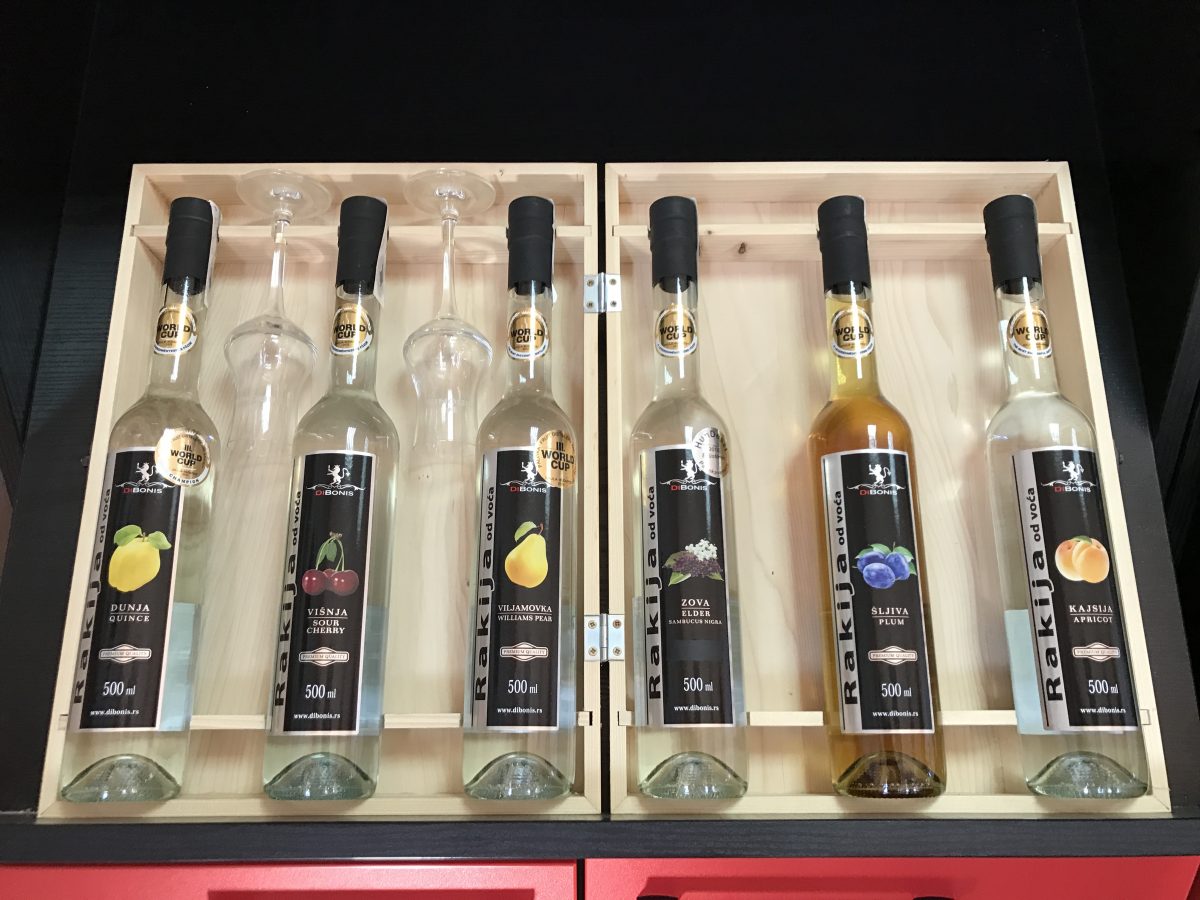
His spirits have long been a world of their own. He produces no fewer than thirty-five kinds, but one remains associated with an agricultural inspection—and the knowledge that he should never have thrown away two barrels.
It was elderberry brandy.
In 2007, he sent around ten of his spirits to a competition in Budapest and won three gold medals and several silvers. Elderberry was among the samples. A journalist reported the results in Blic, and soon afterwards agricultural inspectors arrived at the winery.
They were not interested in the medals. They wanted to know where he had obtained the elderberries.
They explained that elder was a protected plant and asked whether he had a permit to gather it. Laszlo had no permit because he had not gathered it. He had bought the fruit on the Hungarian side of the border near Horgoš, where a two-hectare plantation had been established whose owners did not know who might buy the crop. The inspectors questioned him for an hour and a half, checked the supplier and import documents, and finally concluded that everything was in order.
“I didn’t even know elder was protected or that you needed permission to gather wild fruit. And we can’t even agree whether we mean the fruit or the flower. For brandy, in any case, you use the black berries, not the flowers.”
Elderberry brandy was no simple matter even without inspectors standing beside the still. During the first attempt, the production specialist did not know how the spirit would develop. Immediately after distillation, it had almost no aroma, so he concluded that nothing would come of it. Laszlo listened to him and threw away two barrels.
Three or four months later, the same man stopped in the cellar and asked:
“What smells so good?”
It was the lingering fragrance of what they had thrown away.
It turned out that elderberry aromas needed time to open up, and Laszlo had paid for that expensive lesson with two barrels. Later, they refined the process, began removing the seeds and obtained a more elegant, less bitter spirit. Some people loved it at the first sip; others never returned to it. Almost nobody was indifferent.
The seeds led him towards another product. First, he made elderberry seed oil, then became interested in grapeseed oil. A press and the other equipment were available, but he could not find a machine that would efficiently separate the seeds from the rest of the grape material.
In the end, he called upon his first degree.
“I am an electrical engineer, after all. I invented the machine myself!”
The degree he earned at 58 helped him understand wine. His earlier one enabled him to turn a production by-product into a raw material. After the tanks, barrels and stills, Laszlo now had his own grapeseed-oil production line.
Even that did not keep him in one place for long. For years, he had tasted amphora wines sceptically, mostly encountering examples oxidised to the point of being undrinkable. He concluded that this was another fashion turning an interesting vessel into an excuse for bad wine.
Then, at the VinCE festival in Budapest, he tasted wines from around ten producers from different countries. Their amphora wines were clean, stable and exceptionally good. Instead of defending his previous position, he began asking where he could buy such vessels.
Georgian qvevri did not suit him because they needed to be buried in the ground. He found Hungarian makers of ceramic and clay amphorae, but buying the vessels turned out not to be the end of the problem. During firing, they shrank, cracked at the base and subsequently leaked wine.
Laszlo melted beeswax, poured it into the cracks and sealed them.
The Zsolnay manufactory made his large amphorae. He ordered two, and they produced seven. These gourd-shaped vessels are prone to cracking at the bottom, where pressure is greatest, so they are embedded in sand during firing. This time, all seven survived.
In them, Laszlo once again found what he was looking for: the same Chardonnay, but a different wine. During ageing, it lost some of its initial aromatic intensity, gained body, a delicate bitterness and minerality, and moved towards a different range of fruit flavours.
The man who had dismissed amphorae for years was now explaining how to fire them, seal them with wax and fill them.
Changing his mind did not bother him. What would have bothered him was failing to put it to the test.
None of these changes meant abandoning the wines with which he had begun. Shiraz remained the variety closest to his heart and the winery’s flagship wine, alongside Merlot, Cabernet Sauvignon, Cabernet Franc and Sauvignon Blanc.
If he had initially wanted to prove that an international variety could thrive on Subotica’s sand, later it became more important to show that no rule should go untested. That was how he could keep his Shiraz while planting resistant varieties, ferment without selected yeasts, use sulphur under controlled conditions, keep rosé in barrel for fifteen years and repair amphorae with beeswax.
“My aim is to follow my own path. Simple.”
That path did not always lead to a wine intended for regular sale. Sometimes someone would ask him to make a wine for a single occasion, and Laszlo would turn the commission into another story.
The Senta municipal tourism organisation wanted a wine connected with the Battle of Senta, an event attracting increasing numbers of visitors. They wanted something special, rather than an existing winery label dressed up for a new occasion. Laszlo made a red blend containing 60 per cent Shiraz, with Cabernet Sauvignon, Cabernet Franc and Merlot making up the rest.
When the wine was ready, he asked what they had in mind for the label.
They had no idea.
Laszlo, naturally, did. He suggested a reproduction of Eisenhut’s monumental painting The Battle of Senta, housed in the County Hall in Sombor. It was one of the region’s largest and best-known historical paintings, but obtaining permission to reproduce it on a wine label could be expensive and complicated.
He offered an alternative.
“Use that smaller painting by Sava Stojkov. He made a perfect version of Eisenhut’s painting.”
The people from Senta had no idea what he was talking about. They did not even know such a painting existed.
Laszlo knew because Sava Stojkov was a close friend, and for decades very few people had known the painting’s story.
More than seventy years earlier, as a very young painter, Sava had gone to watch artists who had entered a competition to produce a copy of Eisenhut’s work. He observed them during the week, then, at weekends, when the hall was empty, worked on his own version on a separate canvas.
When the judges saw his work, they unanimously agreed that it was the best.
That same evening, Sava’s painting disappeared. It was unfinished, unsigned, and nobody knew where it had been taken.
Twenty-five years passed before a former porter from the building where the paintings had been made approached Sava in the street.
The porter had known all along what had happened.
He told him that a woman painter from Sombor, whose husband was a senior Communist Party official and a member of the judging panel, had taken it. She carried it to her studio, tried to finish it, daubed paint over part of the canvas and, when she realised she could not continue Sava’s work, put it away in the attic of her house.
Sava went to see her and her husband and demanded its return. They handed it back in tears.
After that, the painting never left his studio. Sava did not try to repair or finish it. He left the sketches of soldiers visible, the empty areas of canvas and the traces of everything that had happened to it. Its unfinished state was no longer merely the consequence of theft, but the artist’s deliberate choice. He wanted the painting to remain a testament to its time.
Laszlo told the story to the people from Senta and suggested that very work for the label. A painting they had never known, although it depicted a scene decisive to their town’s history, emerged for the first time from the privacy of Sava’s studio on a bottle of wine made to commemorate the Battle of Senta.
Not every experiment succeeded. But Laszlo had never sought a path on which he would make no mistakes. He wanted one on which the mistakes would be his own.
An oenologist had once promised to tear up his diploma if Laszlo’s Shiraz succeeded. The diploma remained intact, the Shiraz succeeded, and Laszlo later earned a diploma of his own.
Meanwhile, the label of his wine came to bear an unfinished painting that had waited some seventy years for someone to show it to the public.
Sava Stojkov decided it did not need to be finished. Laszlo Boni decided it should no longer be hidden.