“How did you find the conversation? We didn’t talk too much about water polo, did we?”
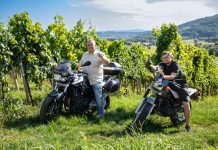
For the first time during our meeting, Mitar Deurić sounds almost concerned. Until then, he has spoken confidently, quickly and with focus, like someone accustomed to leaving no empty space between a question and its answer. Nor has he talked only about water polo. We have covered vineyards, apples, family businesses, wine, children and motorcycles, but he clearly feels he may have stayed in the pool a little too long.
He has not. Without the pool, the story of Mitar Deurić would be difficult to understand.
He was five when he began training. In his second year of primary school, a decision had to be made: stay with swimming or move to water polo. The criterion was simple and not especially gentle.
“The skinnier children stayed in swimming, while those of us who were slight rejects went into water polo.”
The family soon moved to Voždovac, near Banjica, and at Banjica there was no question of which club to choose. Partizan was there, and water polo was what you played. The children were greeted by Mirko Bosanac, a coach from an era when talent was not identified through questionnaires, analyses and conversations with parents. He would throw a boy into the pool, let him swim two lengths and quickly decide whether there was any point in his returning for another session. If not, there was always karate.
Mitar stayed.
He stayed when training ceased to be child’s play. One exercise involved swimming a length using only your legs while holding a chair above your head. Reaching the other end was not enough. The chair had to remain dry.
“That was a serious education. Parents would probably complain today, but back then nobody asked whether it was hard.”
His generation, born in 1987, dominated the junior categories for years. He made his first-team debut for Partizan in 2005 against Red Star at the 25 May pool, later played for Primorac in Kotor and represented Serbia and Montenegro. Today, he describes his career as not particularly successful. The standards of a man who enters every match intending to win are evidently rather unforgiving.
But the most important things he took from the pool were not recorded in statistics.
He took a work ethic, discipline and an understanding of a team. In water polo, no player, however good, can play alone for long. Someone has to swim for him when his strength fails, cover the space he has left and take the blow he has not seen coming. And there are always more blows in the pool than spectators can see.
“In water polo, you learn to take blows, but also to deliver them. Low ones too.”
He says it without bitterness, almost as though explaining a rule of the game. Sport left him with no illusion that results could be achieved without pain, repetition and people he trusted. It also taught him that success is never guaranteed simply because he played the previous match well. Tomorrow brings another training session, another opponent and another chance to prove himself.
That is why, even today, he does not negotiate with himself over whether to exercise. From seven until nine in the morning, he runs or swims. He does not call it a hobby or say he trains when he finds time. Training is a commitment and an investment, a non-negotiable part of the day.
His water polo career ended, but in a sense he never left the pool. Only the playing field, the ball and the score being counted have changed. Instead of a scoreboard, he now faces hectares, tonnes of apples, barrels and bottles, but the approach remains much the same: first training, then the match, then start all over again.
His choice of university was less dramatic. Both parents had studied economics, his mother was finance director at Energoprojekt and his father a private entrepreneur, so Mitar enrolled in economics at Singidunum University. In the family, the language of business was learned almost like a mother tongue, although he was not expected simply to inherit a finished enterprise and continue where others had left off.
The family company, Deus System, dealt in paper and supplies for the printing industry, later expanding into logistics. Today, Deus Port has approximately twenty thousand square metres of warehouse space in Novi Sad, Belgrade, Čačak, Valjevo, Niš and Banja Luka. It was a world of figures, deadlines, suppliers, customers and decisions whose effects could be measured relatively quickly.
Then came the apples.
When they launched Atos Fructum, Mitar admits that his knowledge of apples amounted roughly to knowing they could be red or yellow. His lack of knowledge did not discourage him; it made him determined to acquire it. He travelled to South Tyrol, one of Europe’s most advanced fruit-growing regions, looked at modern orchards and studied a system in which little was left to chance. They returned with an idea, planted their first fifteen hectares and began learning on their own land.
The orchards expanded, new varieties arrived, along with systems for protection, irrigation and storage, and yields reached as much as seventy tonnes per hectare. By 2022, Atos Fructum was producing more than fifteen thousand tonnes of apples for markets stretching from Russia to Scandinavia and the United Kingdom.
This was production Mitar could get to grips with. Apples can be graded by diameter, colour, firmness and sugar content. Yields can be calculated, harvest dates forecast, cold storage organised and sales contracted. Of course, there is no complete certainty in an orchard either: frost, hail, drought and the market can wreck the best spreadsheets. Even so, apples remained a more straightforward business proposition than what would follow.
“Making a pallet of wine makes me far happier than producing all those apples. My heart belongs to the vineyard and wine.”
Wine entered his life without a family barrel in the cellar, a grandfather’s recipe or an inherited obligation to continue what generations of Deurićs had done. He had no winegrowing tradition. Later, he would call that an advantage.
He did not have to defend old habits simply because they were old. Nobody told him wine had always been made a certain way and should not be changed. He could begin by asking what the land could give, which varieties made sense there and what wines he wanted to make. Freedom, however, also meant having nobody behind whom to hide his beginner’s mistakes.
The first vineyard was planted in 2009 on the southern slope of Fruška Gora, in Mala Remeta. It descended towards a gully into which soil had washed for centuries, leaving limestone and marl just ten or fifteen centimetres below the surface. They could not yet know that Chardonnay from this very site—a variety that would receive less attention in the following years than Morava, Probus or Grašac—would one day bring the winery its greatest accolade.
For the moment, it was enough to understand how different grape growing was from everything they had done before. Mitar likes to say that grapes account for 97 per cent of a wine. Some mistakes can be softened in the cellar, but no barrel, yeast or winemaker can invent what the vineyard has failed to provide.
Deurić’s first harvest was in 2014. The vineyards were young, the team younger still, and experience too limited for any serious talk of a style of their own. They therefore entered the business without pretending to know what they still needed to learn. They worked with the renowned French oenologist Dominique Delteil, while Mirko Niškanović grew alongside the winery from the outset.
Water polo had already taught Mitar that a team is not built by having everyone do the same thing. It is built by each person taking responsibility for their own role and being able to rely on the person beside them. He needed that lesson in the cellar as much as he once had in the pool. The difference was that the result of a new match might take several years rather than four quarters.
In the early years, they learned quickly, but sought no shortcut to their own style. They needed to understand every plot, see how individual varieties behaved across different vintages and recognise when a wine needed help and when it simply needed to be left alone. Dominique Delteil brought outside experience, Mirko Niškanović held day-to-day production together, and Mitar asked questions, sought new solutions and refused to settle too soon for the answers.
Their first wines were not immediately followed by a grand announcement that they had found their signature. That took years. They had a broad range of varieties, Fruška Gora’s possibilities remained insufficiently explored, and every harvest brought another lesson. Gradually, however, they identified two grapes around which to build a stronger identity: Morava as the foundation of their whites and Probus of their reds.
Morava was a particularly important choice. Developed at the Institute of Viticulture in Sremski Karlovci, it was, in the Deurić family’s view, being returned to its cradle on Fruška Gora. They did not plant it on one plot and wait for a verdict. They tested different sites and exposures, followed it in the vineyard and cellar, and explored whether it could be more than an aromatic, approachable wine.
The answer came through Aksiom Beli.
The 2019 vintage was based on seventy per cent Morava, fermented spontaneously with indigenous yeasts in stainless steel. The remainder consisted of Chardonnay and Sauvignon Blanc matured in wood. On paper, the blend looks almost simple. In reality, they made twenty-five trial blends before deciding.
This perhaps best reveals the boundary between Mitar the economist and Mitar the winemaker. The former would prefer to build a spreadsheet, compare results and select the optimum ratio. For the latter, even the twenty-fourth blend is not enough if he still senses something better in the glass. Figures can narrow the options, but the final decision belongs to noses, palates and the people gathered around the table.
Aksiom Beli 2019 showed that they had been right not to rush. It won recognition in Serbia and abroad, received 93 points from James Suckling and ranked among the most successful Serbian whites of its time. The awards mattered, but they did not turn the blend into an untouchable formula. In subsequent vintages, Morava ranged from sixty to eighty per cent, with less Sauvignon Blanc and more Chardonnay. They also considered Grašac as a future component.
Mitar likes awards, but views them as an athlete would. A medal confirms that a match was played well; it does not guarantee the same result next time. They therefore gradually reduced the number of competitions they entered, selecting those whose results carried real meaning. He was interested in testing how close they had come to their own ambitions.
“I go into every match intending to win. You have to keep proving yourself, keep moving forward. There’s no going back for us.”
That approach left little room for quietly repeating past achievements. By the time one wine reached the market, they were already testing another in the cellar: spontaneous fermentations, longer macerations, lees ageing, open barrels and varieties rarely associated with such styles. They fermented Probus in open vessels with manual punch-downs, and in one project combined their finest Probus from 2017 with Erdevik winery’s finest Shiraz from the same vintage. The blend, named Proburaz, went back into four barriques before spending another two years in bottle.
They also made Chardonnay using a hyperoxidative approach, looking towards the Jura, and an Amarone-inspired Merlot with almost sixteen per cent alcohol, while striving to retain freshness. Each year, between six hundred and a thousand bottles emerged of something they informally called “specials”. Many were never intended for the market. Their purpose was to reveal what the team still did not know.
The La Rem range gradually grew out of those experiments. It was not conceived as another price tier in the portfolio or a predetermined group of varieties. It could include a white or red from amphora, barrel or stainless steel, made conventionally or using a technique they had only just begun exploring. There was one condition: it had to express Mala Remeta’s terroir faithfully and excite the winery team enough for them to stand behind it without reservation.
When selecting the first wines, they had seven or eight serious candidates. They tasted, debated, returned to them and tasted again. It pained them to reject an excellent Probus, a fantastic Marselan and other wines that might easily have topped the range in different circumstances. Around ten times, they went back to the beginning.
Then, Mitar says, they would close their eyes and find themselves returning to Pinot Noir.
Thus, at the end of 2024, they introduced La Rem Pinot Noir 2017, matured in used Louis Latour barrels, and La Rem Chardonnay 2018, of which 97 per cent had matured in stainless steel and only three per cent in Latour wood. There were approximately seven hundred bottles of the former and eight hundred of the latter. Both sold out within a few months.
The name clearly evoked Mala Remeta, while also offering a nod towards France, particularly Burgundy. The label was more elegant and restrained than anything the winery had previously used. The range’s name took precedence over the producer’s, as though Deurić had briefly stepped aside to make room for the vineyard.
Mitar devised the name, message and label design.
“The Estate labels had a somewhat military approach. We wanted them neat and recognisable on the shelf. But La Rem was my creation from beginning to end.”
The winery also began moving away from the automatic use of barriques. They did not reject wood, but it could no longer be an end in itself. They retained the barrels that worked best with their Chardonnay and Pinot Noir, chiefly Louis Latour, while amphorae and ceramic eggs played an increasing role. Wood could support structure, but must not obscure the fruit and freshness coming from the vineyard.
The 2022 Morava fermented and macerated in amphora, then aged there for another seven months. Chardonnay from 2023, intended for the next chapter of La Rem, was made in a combination of a nine-hundred-litre amphora and ceramic eggs. New vessels were arriving in the cellar, with their total capacity expected to reach thirty thousand litres.
Mitar did not see them as equipment with which to impress visitors.
“It isn’t a question of prestige. These vessels have worked well for us. In winemaking, when you introduce something new, you wait at least a year for an answer.”
At that point, at least fifteen wines in the cellar were potential candidates for a future La Rem bottling. Nobody could guarantee that any would pass the final tasting. That was precisely the range’s value: it was bottled only when a wine emerged that deserved the name.
La Rem was therefore no escape to France. It was a French-inflected reason to listen more closely to Fruška Gora.
As the small La Rem releases took shape, Deurić was no longer a fledgling winery searching for its place in the market. By early 2025, it farmed 35 hectares of its own vineyards, was preparing new land for planting and sold between 160,000 and 170,000 bottles a year. They were growing, but Mitar insists the plan was not dictated by how much the market could absorb.
They used only their own grapes and expanded at a pace that allowed them to oversee quality. Over the next three years, they planned to add another fifteen hectares, partly for a project that had been developing alongside the still wines for a long time.
Sparkling wines were no incidental label for festive occasions. Years earlier, they had set aside ten hectares of Grašac, Chardonnay, Morava and Pinot Noir for them, and also planted a hectare of Tamjanika. They selected sites, varieties and clones, made base wines and learned how time on the lees transformed what they had harvested. The team prepared for nine years.
When The Sparkling Winery began operating in Mala Remeta in March 2025, it was presented as Serbia’s first winery devoted exclusively to sparkling wine.
“We’re entering The Sparkling Winery with experience and all the growing pains behind us. Above all, we’re bringing positive energy and an enormous amount of knowledge from Deurić.”
From the 2023 harvest, they produced approximately thirty thousand bottles of sparkling wine. The first three traditional-method wines released were The Blanc de Noirs, made from Pinot Noir; The Morava, from the Serbian variety; and the flagship, an extra-brut Chardonnay simply named The.
The last bottle explained almost nothing. Its label said only The. Mitar saw this as a sign of complete confidence in the wine: if they were happy with what was inside, there was no need to justify it on the front through a grape variety, production method or lengthy story. More intensive lees work, stirring and just a gentle touch of wood were intended to give it fullness without extinguishing fruit and freshness.
The step taken with Morava was perhaps bolder still. A variety they had already placed at the heart of their still whites now acquired bubbles, but was not to become merely carefree summer entertainment. They wanted a dry, serious, food-friendly wine in which the grape remained clearly recognisable.
“People may expect nothing but fun and bubbles from Morava, then they taste it and discover how serious it is.”
Mitar admits, however, that creating a separate sparkling-wine winery was not an entirely rational decision. The Serbian market was still becoming accustomed to sparkling wines, yet they were already discussing doubling or even tripling production. He says they had no fear of selling it because they had simply fallen in love with sparkling wine.
People in love do indeed make irrational decisions. In this case, however, behind that love stood nine years of preparation, ten hectares of vineyards and a team in which Mirko Niškanović ran the winery, while Milica Ćućuz, head winemaker since August 2023, took an important role in creating new wines. What might have looked from outside like a sudden charge was, from within, a move rehearsed over many years.
“The question is whether you live and breathe sparkling wine or whether it’s just something you do on the side. Once you discover that new dimension, it’s hard to return to good old still wine. A fine sparkling wine almost borders on a work of art.”
After economics, warehouses, orchards and wine, Mitar had thus arrived at art too. Through millions of tiny bubbles that demand precise work, yet must seem in the glass to have appeared of their own accord.
The greatest accolade, however, came neither for sparkling wine nor for Morava and Probus, the varieties around which they had consciously built the winery’s identity. It came from Chardonnay in their first vineyard, planted in 2009.
La Rem Chardonnay 2023 was made in a nine-hundred-litre amphora and ceramic eggs, following the winery’s decisive move towards fermentation in ceramics. The grapes came from the southern slope descending towards the gully, where limestone and marl lie just ten or fifteen centimetres below the surface. Whatever the character of the vintage, Chardonnay consistently produced good grapes there.
Perhaps that was precisely why they had long devoted less attention to it than to their other varieties.
“We knew something would happen. That vineyard always delivered good results, even though we spent the least time on it. There was no need.”
It happened in 2026. La Rem Chardonnay 2023 won Platinum at the Decanter awards, a historic accolade for the winery and a wine from Fruška Gora.
The celebration took place amid the greenery of the winery garden, between apple orchards and vineyards. Fittingly for the new chapter in Deurić’s story, it began with glasses of The sparkling wine. But the star was the Chardonnay, which showed where years of observing the vineyard, experimenting in the cellar and discarding once-safe solutions had led them.
Even then, Mitar did not claim the award for himself.
“This isn’t recognition for the wine alone. It is recognition for Fruška Gora and everyone who has come together around it.”
It also confirmed something that had gradually emerged through the winery’s Pinot Noir and Chardonnay: southern Fruška Gora can reveal an unexpected affinity with Burgundy. Mitar had no wish to declare Mala Remeta a replica of the French region or dress its wines in someone else’s identity. The comparison was about sites, soils and the potential of varieties capable of producing serious, fresh and long-lived wines there.
“We’ll fight to maintain consistent quality and continue that synergy with nature and the land. We must give it more than we take, so something remains for the generations who will make good wine here after us.”
A man who had entered the vineyard without an inherited tradition was now beginning to speak about the legacy he would leave.
Platinum was therefore not the final whistle. For Mitar Deurić, such a match probably does not exist. It was simply confirmation that the team had found the right direction—and a reason to turn up for training again the next morning.
At the end of our conversation, he returned to water polo.
“We didn’t talk too much about water polo, did we?”
We did not. We talked about the Deurić winery. We simply began where it had really taken shape: at Banjica, in a pool a boy had to cross while holding a chair above his head and keeping it dry.
He put the chair down long ago. Today, he is keeping something much larger above water, but he no longer swims alone.