At his peak, Sava Jojić Mačak farmed two thousand hectares around Irig and Pećinci. He had 85 employees, his own machinery workshop and more than twenty tractors. He did not have a vineyard.
A man who had grown up in a winegrowing family, deep-dug the soil instead of going to school and been taught that without a vineyard you were not “a man of substance” had become one of the largest arable farmers in that part of Srem. He owned more land than his ancestors could ever have imagined, yet had no wine of his own.
“My conscience began to trouble me. I realised I had smothered the tradition. I had thousands of hectares, but nothing from my own cellar to pour.”
He had inherited vineyards and grubbed them up. They had been planted with old varieties: Plemenka, Slankamenka, Portugizac, Hamburg and Đenđeš. He intended to plant new ones, but the replanting did not happen straight away. His acreage expanded, the tractors multiplied, arable farming consumed his time, and seven or eight years passed between the intention and the new vineyard.
Then, as he puts it, he had an epiphany.
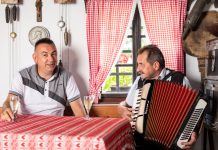
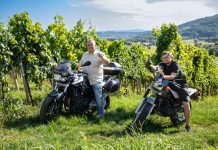
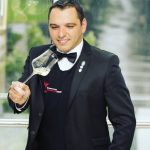
The large agricultural enterprise began evolving into Mačkov Podrum, a winery whose owner would lead a young-wine procession through the streets of Novi Sad. He was hard to miss: a grey ponytail, a bow tie, a dinner jacket or clothes in striking combinations of red and green. He painted the large doors of the hangars where he made and stored his wine in the same colours.
“Red is the colour of passion, excitement and energy. Green is the colour of nature, growth and life. That is how I have always pictured myself.”
There were not many people in Irig who would dress like that. This was precisely what Sava enjoyed.
“I love the ritual of getting dressed. People stop and stare, but that doesn’t bother me.”
He acquired the nickname Mačak-“the Cat”-neither because of his appearance nor his bohemian lifestyle, nor even because of his answer when asked what he would do if he were not making wine: drink it. He inherited it along with the family history.
“We Jojićs arrived in Irig before the amoebas. The amoebas came after us, then the Serbs and everyone else.”
The church records are somewhat more restrained. They trace the family’s winegrowing history back to 1836. To Sava, that may simply be the first date anyone got around to writing down.
The explanation for the nickname leads to Fishermen’s Square in Irig, once an important centre of the fish trade despite there being no river nearby. The Danube is about twenty kilometres away, and the Sava twenty-four. Nevertheless, fishermen brought their catches from both rivers to Irig, and the square where they sold them still bears their name.
“Our family ate a lot of fish, especially fish heads. And since cats love fish heads, the Jojićs became the Mačak family.”

Besides its vineyards and fish trade, Irig was also known for its geese. Fields now covered in wheat and maize were once meadows and pastures roamed by large flocks.
“Aleksandar Petrović could easily have filmed I Even Met Happy Gypsies right here in Irig.”
The geese have almost disappeared, though they are still raised in nearby Šatrinci, a village with a predominantly Hungarian population. There, Sava says, they are neither force-fed nor fattened by stuffing, but raised for their feathers. Goose fat has remained part of the local household tradition.
From fish and geese, Sava moves easily to vineyards, and from vineyards to family history. In his stories, the Jojićs are much more than a succession of names and dates. One ends up in Moldavia, another loses land at cards, a third takes part of the estate as a dowry, while a fourth meets his end because, on the road to Osijek, he recognises the wrong man.
An ancestor named Branko was taking wine to Osijek before Easter. Before setting off, he boasted that he would use the proceeds to buy printed cotton for the girls in the family. On the way, a masked robber stopped him and demanded his money. Branko recognised a neighbour’s voice and addressed him by name.
It cost him his life.
Years later, tormented by his conscience, the killer confessed his crime to a priest. The story remained in the family, along with the vineyards, the nicknames and the names of the sites where the Jojićs grew their grapes.
Sava seldom writes things down, but when he does, he keeps the family chronicle in a language all his own:
“Back in eighteen-hundred-and-something, when our ancestor, Master Mitar Jojić, drank wine from his Seleuš and Grabovac vineyards on Fruška Gora after a hard day’s haymaking, he had no idea he was part of a tradition in the making. Time flowed like clear wine from an old wine jug. Many were the grapes Master Mita harvested, and many the barrels he emptied.”
Every generation, he says, left something behind. Some diligently added to the estate; others took parts of it away as dowries or lost them at cards.
“But the wine gene has been passed down to this day.”
Sava’s grandfather Todor held the third-largest share in the Irig winegrowers’ cooperative. Its cellar was built in 1932 and still stands in its original form.
Sava’s father, also named Sava, remained involved in the cooperative until 1954, when the cellar became state property and the members were stripped of their assets. The Jojićs did not stop making wine, but they had to exchange their family vineyard for one allocated by the cooperative.
Some of their property was returned in 1959. The family replanted about a hectare of vines, and Sava did not spend that autumn at a school desk.
“I spent the whole autumn deep-digging the soil.”
His father worked in the vineyard, but the family’s chief authority on wine was his mother.
“Mum made the wine. It was mostly for our own needs, although we always hoped to have a tavern keeper or two to sell some to.”
There was not much wine, and they did not know how to keep it for very long.
“By Easter, it would all be gone. After that, we stopped drinking wine: either there wasn’t any left, or it had turned sour.”
In the Jojić household, a vineyard served more than the purpose of producing wine. It was a measure of a well-run household and a person’s relationship with the land.
“You could have everything else, but without a vineyard you weren’t a man of substance. If you owned land but had no vineyard, it was a disgrace. You were a second-class citizen.”
At the same time, Sava’s parents wanted their son to become anything-as long as he did not become a farmer. After the war, two contradictory rules prevailed: owning land without a vineyard was shameful, yet escaping the land was a step up in the world.
The Jojićs kept pigs and chickens, and soup on Sundays was a sign that the household was comfortably provided for. Even so, his parents imagined a life for their son that would not depend on the weather, harvests and rubber boots.
Sava found his way out in a newspaper advertisement offering free education at a military school. He passed the medical examinations and was admitted to the signals school in Ljubljana.
He had to report on 28 August, the Feast of the Assumption in the Orthodox calendar and the date of Irig’s biggest annual celebration.
“The day everyone here lives for.”
He left Irig for the first time on the very day he most wanted to stay.
He completed signals school in Ljubljana and remained in the Yugoslav People’s Army until 1980. He rose to the rank of senior sergeant first class and acquired a habit he would later bring to every job:
“The task must be completed without looking for mitigating circumstances.”
Military life offered the security his parents had never found in farming. He had a regular salary, a flat, a car, summer holidays and a housekeeper who saw him and his wife off to work and welcomed them home with lunch.
The children became a problem.
“They started saying ‘ape’, meaning ‘eat’, and ‘potuli se’, meaning ‘bend down’. They picked those expressions up from the woman who looked after them. My wife and I decided things were getting out of hand.”
The children began attending a newly opened nursery, and the Jojićs let the housekeeper go. Sava had no idea then that he would later willingly give up almost everything that had made this comfortable life possible.
While working, he completed a qualification in applied information technology at a college in Belgrade. He expected the additional education to help him advance, but the army was not particularly impressed by his diploma.
Sava decided to leave.
He submitted his request for discharge on 22 December-Army Day.
“They asked me why I had chosen that particular moment.”
A security officer summoned him for an interview. Josip Broz Tito was already gravely ill, and any decision by a serviceman to leave the army aroused additional suspicion.
Sava officially left the Yugoslav People’s Army on 5 May 1980.
Tito had died the day before.
After the army, he tried various occupations, including photography, and worked for a time at Sineoptik in Novi Sad. He describes himself as having been “some sort of minor director” there. He came to work in a suit and bow tie, conspicuous enough to make people stop and look.
When he finally decided to return to the land, he gave up more than a job.
“I left a good job and my bow tie behind, put on rubber boots and came back to work the land.”
As it turned out, he had not abandoned bow ties for good. Later, he simply wore them with wine.
His return hardly looked like the fulfilment of a family dream. His wife found a job in Novi Sad and agreed that the family would live on her salary for a while. Sava began farming three hectares and taking seasonal work.
“The vision was simple: land.”
By renting more plots, he expanded the business year after year. From three hectares, he grew to two thousand, with 85 employees, more than twenty tractors and his own machinery maintenance workshop. He became a major farmer, with extensive holdings and people whose livelihoods depended on his business.
Somewhere along the way, he lost his vineyard.
The inherited vines were old, and the varieties no longer suited the wines he wanted to make, so Sava grubbed them up with the intention of planting new ones. The arable farming business could not wait. Replanting was postponed, and the years without a vineyard passed one after another.

Seven or eight years later came what Sava calls his epiphany.
“My conscience began to trouble me. I had thousands of hectares of land, but no wine of my own. I realised I had smothered the family tradition.”
According to the rule he had heard since childhood, a man with land but no vineyard was incomplete. Sava now had incomparably more land than his ancestors, yet by their standards he would still have been a second-class citizen.
The decision to plant again did not mean returning to the same varieties and the same methods. He had inherited the family’s respect for the vineyard, but did not believe good wine could be made simply by repeating what fathers and grandfathers had done.
He first sought knowledge in Serbia, then concluded that it was insufficient for the winery he had in mind.
“I went looking for new knowledge in Slovenia, Austria and, above all, Italy.”
He knew enough about wine to understand how much he still had to learn. About the land, he already knew one important thing: before thinking about the cellar, he had to decide what to plant.
His first viticultural adviser was Dr Đorđe Paprić, a professor at the Faculty of Agriculture in Novi Sad.
“Sava, why don’t you plant Portugizac?” he suggested.
“That’s good advice, Đorđe,” Sava replied.
Portugizac had long been established on Fruška Gora, but it did not enjoy a reputation as a grape on which to build a serious winery. That was precisely what appealed to Sava. He wanted more than another Chardonnay or Merlot in a bottle; he wanted a wine that would set Mačkov Podrum apart.
He followed the advice about Portugizac without much hesitation. With the other varieties, things did not all go according to plan.
He went to Italy to taste wines and choose Chardonnay clones to plant alongside Portugizac. He returned having bought-Gewürztraminer.
“Gewürz, as they say.”
He planted Chardonnay later, together with Sauvignon Blanc, Riesling, Pinot Noir, Merlot and Cabernet Franc. The vineyards would later also include more than six thousand Arinarnoa vines, a French crossing of Tannat and Cabernet Sauvignon that went into the red blend Camerlot.
Sava had enough land and enthusiasm to keep planting, but he did not want to expand indefinitely.
I stopped to see what would happen on the Serbian wine market. It was as unruly and unsettled as bad wine sloshing around in a glass.”
He bottled the first wine bearing the Mačkov Podrum label in 2007 and released it that same year. He had experience running a large business, machinery, staff and vineyards, but he did not declare himself a winemaker.
Good wine, he believed, required two things: healthy grapes and a skilled professional.
He could grow the grapes. He still had to find the professionals.
By 2011, Mačkov Podrum was producing more than thirty thousand litres of wine. It employed a winemaker and retained an Italian consultant who came to Irig during grape processing, supervised production and later received samples for assessment.
Sava knew what he expected from his experts, but his criteria extended beyond the laboratory. He believed a winemaker also had to understand the people for whom the wine was being made.
“A winemaker doesn’t make wine for himself. He has to know whether you want to listen to poetry, hear bećarac folk songs or watch a play. He has to understand how people live, what they eat and what kind of wine they want to drink.”
He considered technical knowledge insufficient without a broader cultural education. Nor did he accept the division of responsibility that placed one person in charge of the vineyard and another in charge of the cellar. Vineyard managers, he would say, preferred to pick before the rain, while winemakers wanted to wait for full ripeness. If their responsibilities were separate, each could blame the other for a poor wine.
Mačkov Podrum therefore became more than a place where wine was made. It also became a kind of school. Young winemakers passed through it, receiving the opportunity in Irig to take charge of substantial harvests and make decisions.
One of them was Srđan Lukajić, who later became the winemaker at Zvonko Bogdan Winery.
“Mačkov Podrum was one of Serbia’s greatest nurseries of young winemaking talent,” he once told Sava.
When he was leaving, Sava gave him a deadline:
“In five years, I want you to be the leading winemaker in Serbia.”
Sava believes that is exactly what happened.
Tanja Grubišić took over production in 2014, during one of the most difficult harvests. She had to select grapes, judge the right moment to pick and adapt the style of the wines in a year that left little room for error.
Sava later admitted that, until then, he had harboured unjustified doubts about women working in the cellar. Tanja quickly proved him wrong.
“She introduced a great deal of new thinking, and we hadn’t had wines that good for a long time.”
Although he enjoyed talking about bohemian living, poetry and pleasure, Sava never forgot that a winery had to earn money. In 2015, it had around twenty permanent employees and hired as many as a hundred seasonal workers. Its wines were exported to the United States, promotional events were organised, and his wife, children and sons-in-law were all involved in the business.
“I drink a lot of wine, so I decided to share whatever I can’t drink myself with people who can,” he would say. “But joking aside, this is no hobby. We all have to make a living from the winery.”
One wine, meanwhile, became much more than a product. It became a date in the calendar, a procession through the city and Sava’s attempt to give Fruška Gora its own young-wine celebration.
Portugizac was Sava’s answer to France’s Beaujolais Nouveau and Italy’s Novello. If other wine regions could celebrate the release of their young wines, he saw no reason why Fruška Gora should not have a date of its own.
The story of Svatovac also began in 2007. On the third Thursday in November, the young Portugizac was presented in central Novi Sad, where Sava offered passers-by a glass. On the following Saturday, the celebration moved to Irig, and the winery opened its doors to everyone who had been unable to make it to Novi Sad.
By 2013, Young Wine Day was being held for the seventh consecutive year.
Sava did not want the celebration of Svatovac to remain an event belonging solely to Mačkov Podrum. He invited other Fruška Gora winemakers to produce young Portugizac and build a regional custom together.

“Why should we chase after French Beaujolais or Italian Novello? We have everything we need to make young wine from Portugizac on Fruška Gora.”
Portugizac is not an indigenous variety, but it has grown in that part of Pannonia for centuries, and Sava considered it local enough to build an Irig story around it. He did not try to turn it into a wine that needed decades of ageing. The value of Portugizac lay precisely in its youth, its fruitiness and the moment when the first barrel of the new vintage was opened.
A wine like that needed a suitable spectacle. Sava led the procession in his red and green colours, wearing a hat and bow tie, with a glass in his hand. The man who had once submitted his request to leave the army on Army Day now tied his most important annual parade to another, much more cheerful date.
The third Thursday in November became Portugizac’s day. Yet Sava’s most personal story about the grape had nothing to do with a square, a procession or an audience.
It had to do with Đurđica.
The other Portugizac in Sava’s story bears the name Frajla. Unlike Svatovac, which belongs to the town square and the public celebration of young wine, Frajla grew out of the family story of Sava and his wife.
“As a young woman, Đurđica fell for a rakish fellow named Sava Mačak. I wore my hat at an angle and sported a Budapest-style moustache, loved my red wine and was not averse to pulling a pocketknife out of my pocket.”
Đurđica’s parents were not delighted with her choice. She ran away from home to be with Sava, and her family disowned them.
Reconciliation took place where the most important matters in the Jojić family tend to be settled-in the vineyard. Đurđica met her parents there again, and the vines between them achieved what conversations had so far failed to do.
“In honour of that love, we offer a Portugizac from the vineyard where Đurđica and her parents met and reconciled.”
In public, Sava liked to present himself as a bohemian. He said that within him, the family man was constantly encountering the man who would most happily spend his life with wine, song and friends. When asked what he would do if he were not making wine, he replied:
“I’d drink wine.”
And when asked to imagine the perfect setting for a glass of wine, he mentioned neither a sunset, a vineyard nor an old vintage.
“An embrace. A woman’s!”
Behind such answers stood a marriage in which Đurđica had agreed to support the family while Sava traded the director’s chair for three hectares of land. His bohemian life had taken shape alongside a woman who accepted the risk of his return to Irig and the responsibilities that came with it.
That is why Frajla is more than a clever idea for a label. It brings together the Portugizac recommended by Professor Paprić, the vineyard where Đurđica reconciled with her parents and Sava’s conviction that wine without a story remains merely a drink.
In time, poetry acquired an event of its own at Mačkov Podrum. Sava launched an international competition for poems about love and wine, attracting more than a hundred young writers each year. Two books were published from the submissions.
He did not consider himself a poet.
“I jot something down now and then. They’re more essays than poetry, moments when you feel the need to put something on paper. Afterwards, you set it aside, but it’s good to let that poetic and philosophical energy out.”
He had no great illusions about the literary future of his writings.
“They will probably stay with the family, until they forget them or sell off everything we have.”
The man who expected winemakers to understand literature and culture as well as technology gave young poets a reason to write about wine. The winery brought together the things Sava had spent his life trying to hold together: serious work, enjoyment and the story of the land from which the wine came.
The motto of Mačkov Podrum became: “Know how to drink, know how to live.”
For Sava, this meant more than quantities or moderation. Knowing how to drink meant recognising the moment, the company and the wine that belonged with them. Svatovac was drunk in the street, with a procession on the third Thursday in November. Frajla preserved Đurđica’s family story. The wines in the old family chronicles belonged to haymaking, wine jugs and Master Mita, while those from Mačkov Podrum belonged to new winemakers, new cellar knowledge and an audience whose tastes were changing.
Sava never believed that tradition was preserved simply by doing everything as one’s ancestors had done. He grubbed up inherited vineyards and planted different varieties, brought young winemakers into the cellar and made Portugizac-a grape many did not take seriously-the winery’s signature.
In the end, he returned to precisely the things his parents had tried to spare him: the land, the weather, the harvests and rubber boots.
At his peak, he had two thousand hectares, but no wine of his own.
Today, he has wines, two books of poetry, a generation of winemakers and Young Wine Day to his name. Yet he sums up his life’s reckoning in two sentences: “I lost everything when I grubbed up the vineyards. I gained everything when I planted them again.”