I have known Boris Najdanović for years. We met at wine festivals from Belgrade and Osijek to Zagreb and Rovinj, among the stands and bottles, in the company of Milan Perović, Vukašin Kilibarda and other people who never push towards the spotlight yet are difficult to overlook.
Boris always struck me the same way: neatly turned out, composed and unobtrusive, a man who would never raise his voice to attract attention. I knew him as a wine merchant and distributor, one of the people responsible for bringing numerous Croatian labels into Belgrade’s wine shops and restaurants.
At least, I thought I knew him.
Then we spoke about something entirely different, and almost in passing he suggested:
“Come over to Surduk. Milanović and Teodos are nearby, and you could taste my wines too.”
“Your wines?”
“Mine, yes. You’ll hear all about it.”
Until then, I had not even known he had planted a vineyard, let alone that he was already making wine.
“What have you called the winery?”
“For now, its working name is Nera.”
I immediately offered him a better solution:
“How about Najdan’s Circles?”
Boris recoiled as though I had suggested the name of a cult.
“What bloody circles are you talking about, man?”
I explained that Mala Krsna was home to the famous Najdan’s Circles, marked out on the asphalt, where people stood motionless believing they were absorbing healing energy from the ground. I had been there and written about them, so the resemblance to his surname seemed an excellent opportunity.
“Imagine the story: you’ve channelled the energy of Najdan’s Circles into bottles from Najdanović Winery. People already come by the thousand. All you have to do is open a tasting room.”
He did not need long to consider it.
“Oh, give over with that nonsense. See you tomorrow.”
And it was a good thing we met. The following day, I discovered the family story behind the man I had known as a wine merchant. It led from Šibenik and Dubrovnik through Rovinj and Belgrade to Surduk, with parts for Ethiopian emperor Haile Selassie, Josip Broz Tito and Babić planted on a loess bluff above the Danube.
Boris was holding a bottle bearing the future label of a wine called Tradicija.
“With me, nothing is simple to explain,” he said.
This time, it turned out, he was not exaggerating.
His mother comes from Šibenik. Her father, Branko Karađole, was a cardiologist who spent part of his medical career in Ethiopia as Emperor Haile Selassie’s physician. The family owned a vineyard above Šibenik, whose wine was once sold as far away as Trieste. The vineyard has long since passed out of their hands, but it remains in the family’s memory, which Boris is now trying to carry onto his wine labels.
For the Tradicija label, he brought together grandfathers and great-grandfathers from both sides of the family, men from different places and walks of life, seated around the same table. He imagined the wine as a family album in a bottle, linking his Dalmatian lineage with his father’s roots in Srem.
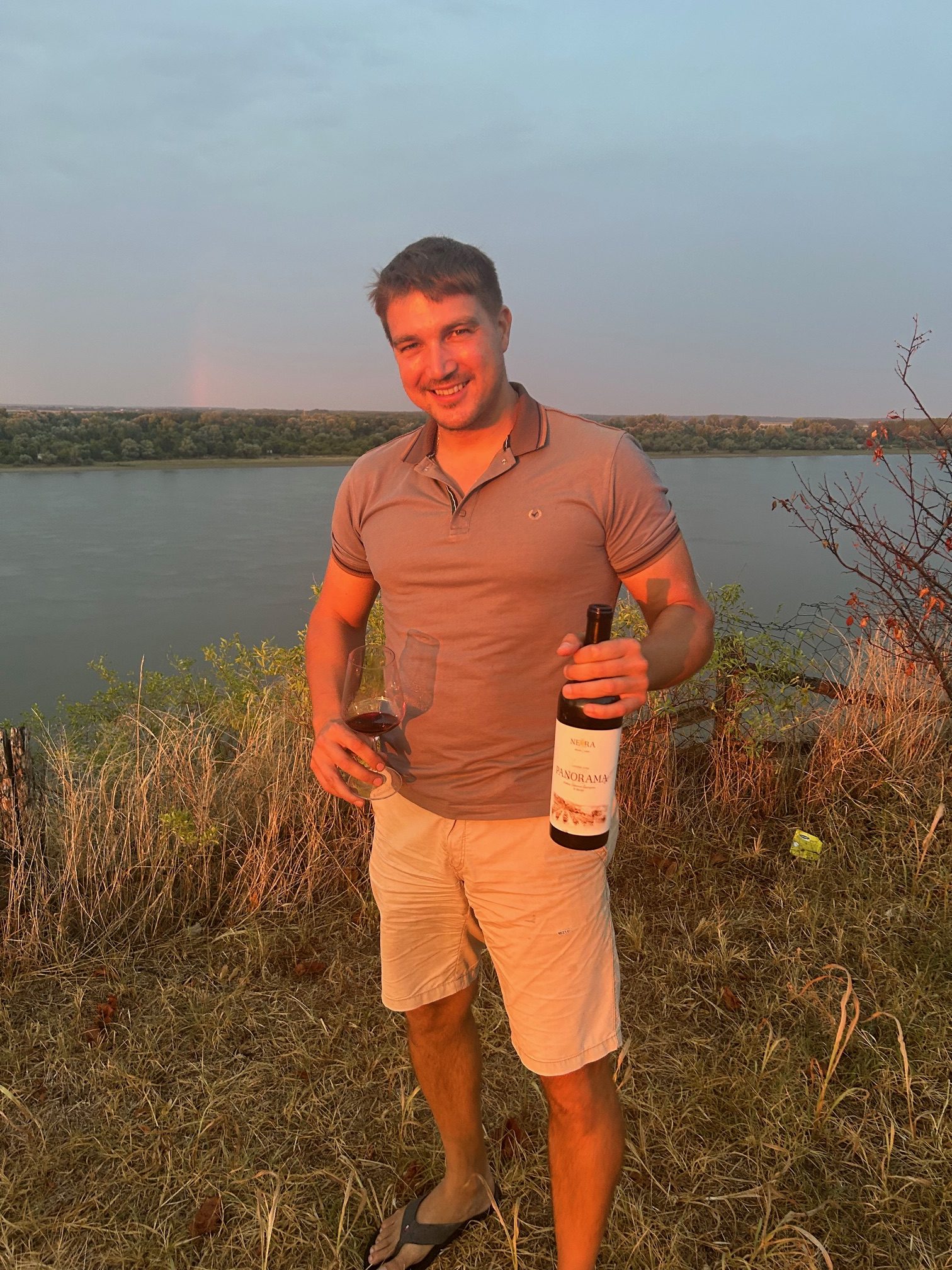
“There’ll be Babić in Tradicija,” he said.
But Babić from Surduk, grown on a loess bluff above the Danube rather than among the stones of Primošten. Filip Bibić had recommended the vines, and for now Boris has no wish to dictate what wine the young plants must produce.
“They’re only in their third year. Let them show what they can do in this soil. I don’t expect the same Dalmatian power. Here we have loess, the Danube and the Košava wind, so Babić will have to find a different expression.”
He wanted to discover how a Dalmatian grape would respond to Srem’s soil and climate. In Surduk, he wanted to connect part of his mother’s family history with the land of his father’s homeland.
“I’ve brought my ancestors together around one table on the label. Let them all have a drink together in this bottle, at least.”
Tradicija will therefore contain more than Babić. It will also include Probus, a newly bred grape that has found its true home in Srem. Babić will represent his mother’s Dalmatian side, and Probus his father’s. One wine, two vines and the two halves of Boris’s heritage.
While Babić still awaits its first substantial harvest, Boris already has Panorama, a blend of Probus, Cabernet Sauvignon and Merlot. The name suits the vineyard, with its view opening across the Danube, but also Boris, who likes to bring different parts of his life together in the same bottle.
His white wine, Lesa, is made from Sila, Grašac and a smaller proportion of Istrian Malvasia. Its very first vintage appeared on the tasting menu at Belgrade’s Salon 1905, served alongside a Shopska salad. For a winery producing only around a thousand bottles of each label, it was an entrance through the grandest of doors.
There is no need to search the family tree for this wine’s name. Lesa is the local name for the bee-eater, a bird that excavates nesting holes in the loess cliffs above the Danube.
“They keep us company while we work in the vineyard. When I was looking for a name that belonged to this place, it was already flying above us.”
The bee-eater on the label is therefore a resident of the vineyard rather than a decoration. Sila and Grašac belong to Srem, while Malvasia points towards Istria, a region that long ago became part of Boris’s life.
Boris was not the first to plant Istrian Malvasia in Serbia. Brindza, Verkat and DiBonis wineries, Ana Naglić and Fruška Gora’s Grumen had done so before him. Each attempt raises the same question: what can Fruška Gora make of a grape so inseparably associated with Istria?
“There are six of us lunatics now,” Boris laughs. “This Malvasia shouldn’t pretend to be Istria. It has to show what it can give here.”
Yet white Malvasia was not enough for him. He also wanted to plant Malvasia Nera, an old red Istrian variety, but encountered an administrative obstacle: the grape was not on Serbia’s list of varieties approved for import and planting.
“I won’t do anything outside the regulations. Once they put it on the register, we’ll obtain the vines properly. Perhaps those wines won’t even reach the market at first, but I want them to exist.”
Malvasia Nera also gave the winery its provisional name: Nera. For Boris, it represents the second half of an Istrian story already begun with white Malvasia, as well as another grape he wants to try on loess.
“If I want my wine to represent me, I have to have Malvasia. It’s like a compass to me.”
When I asked what his connection to Istria actually was, he replied briefly:
“Have you got time?”
Of course I had. I had already realised that with Boris Najdanović, nothing ends where it first appears to begin.
His paternal grandfather, Borislav Najdanović, was Josip Broz Tito’s physician, a university professor and a hospital director. He owned a house in Štikovica, near Dubrovnik, where Boris spent much of his childhood. He thus grew up between two stretches of coast: his mother’s Šibenik and his grandfather’s Štikovica.
After the war, the family sold the Štikovica house for considerably less than it was worth. They considered where to invest the money-even Saint-Tropez was mentioned-and travelled around looking at different houses until Boris saw a photograph of Rovinj.
“I said: ‘This. Only this.’”
They bought a house and, later, an apartment in Valdibora. Rovinj joined Dalmatia as another part of the family’s geography. His connection to Istria began there, long before he started importing Istrian wines or thinking about making his own Malvasia.
“It’s difficult to explain. Once Rovinj takes hold of you, it never lets go.”
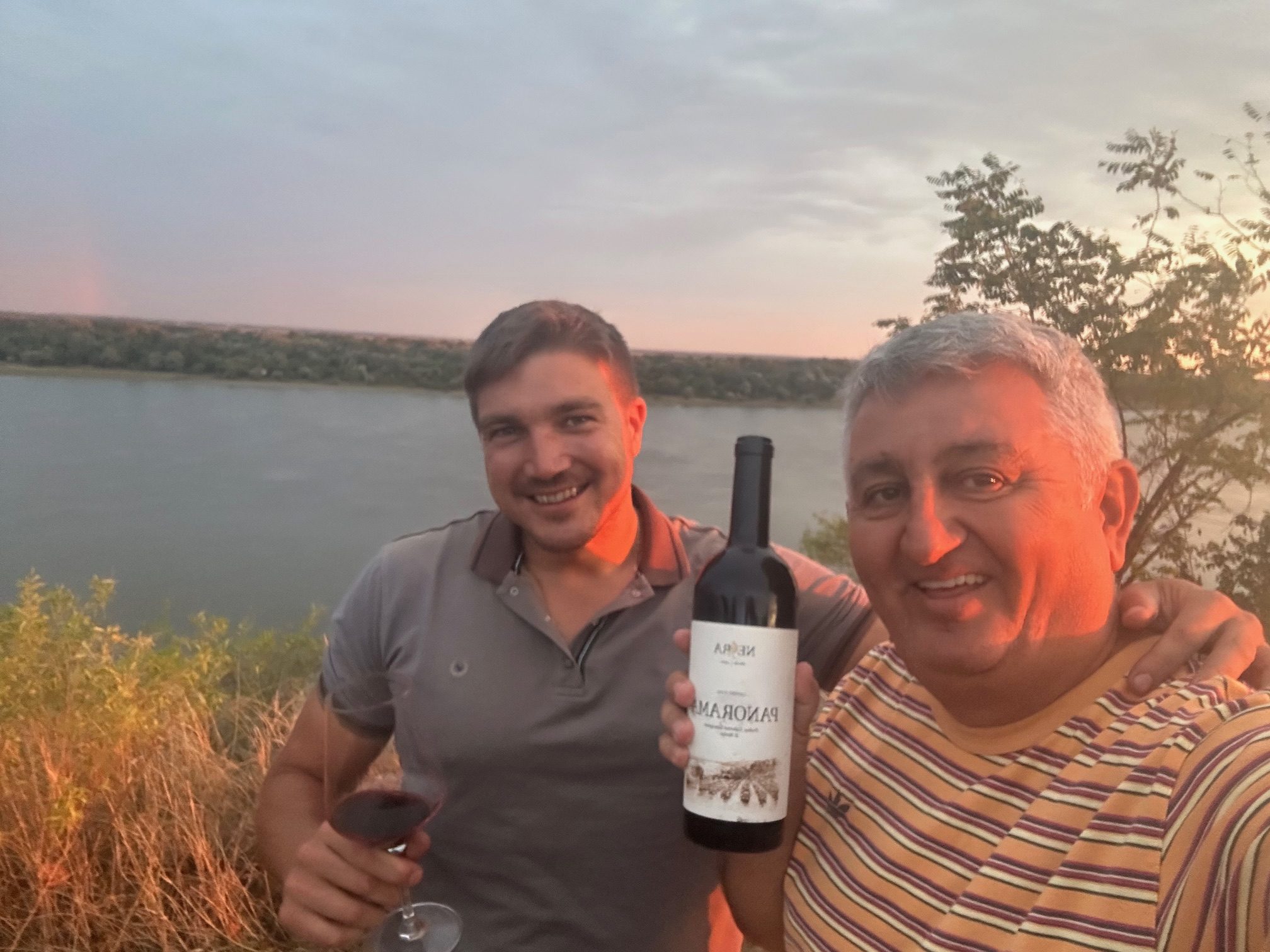
Wine thus ran through the family’s history, but Boris’s childhood had little connection with farming. His mother and sister were architects, while his father was a civil engineering expert, professor and dean, so studying civil engineering seemed the logical choice.
His father opposed it.
“He didn’t want anyone to see me as the son he would carry through university. When professors encouraged me to enrol in civil engineering, he would say: ‘Oh yes, so he can come and embarrass me. Let him build his own life.’”
Boris enrolled at the Faculty of Organisational Sciences instead. He was trying less to escape civil engineering than his father’s shadow and the possibility that every success would automatically be credited to the family name.
His career took him to Delta Real Estate, where he met Igor Becić. When premises became available on Jovana Rajića Street in Belgrade in 2013, he suggested:
“Igor, let’s open a wine shop.”
That was how Vino Bar & Shop began, at a time when Belgrade had only a handful of serious wine shops and the wine culture familiar today was still taking shape. Boris travelled, met winemakers and assembled the range. In Istria, he met Janja Debeljuh and proposed importing her wines into Serbia.
She agreed, and San Tommaso’s Malvasias soon found an audience in Belgrade. When his business partner showed no interest in expanding the importing side, Boris established another company and continued independently.
Over time, he assembled a portfolio of thirteen Croatian wineries. A man whose family connections linked him to Šibenik, Dubrovnik and Rovinj became one of Croatian wine’s most persistent advocates in Belgrade. He was selling wines from places he already considered his own, with a connection that went beyond identifying a gap in the market.
One of his most unusual business decisions was importing products from the Istrian distillery Aura. Trying to sell spirits and liqueurs in Serbia, where almost every family knows someone who distils rakija, initially looked like selling ice to the Inuit.
“It sounded completely mad. Almost nobody here knew Teranino, either its flavour or its style. I began importing it in 2019 and had to fight just to get people to taste it. Today, Aura has four distributors in Serbia.”
By then, he had spent years working with other people’s wines, getting to know producers and observing what customers wanted. The idea of making wine himself had emerged soon after Vino Bar & Shop opened.
He planted his first vines in 2014, by hand, in a season he remembers for almost incessant rain. He began with a little Merlot, Cabernet Sauvignon and Istrian Malvasia, without substantial winegrowing experience or a clear picture of where it might all lead.
“I knew almost nothing. All I knew was that I had to have Malvasia because I’m partly Dalmatian and partly Istrian.”
He did not choose Surduk after a lengthy analysis of sites, aspects and soil composition. It began with a family lunch and a walk during which his mother pointed towards a plot she liked.
“All she said was: ‘What a beautiful piece of land.’”
A local man was tending sheep nearby. He overheard them and called out that the owners of the plot opposite might be selling. He gave them a telephone number, Boris called, and an agreement was quickly reached.
He bought the first plot, then a second, then a third, for which he had to take out a loan. What began with his mother’s passing remark became a vineyard and the building site of a future winery.
He had no family land to restore or cellar awaiting an heir. He created the vineyard from scratch, bringing into it the people and places of his family’s history.
“I don’t expect millions,” he said. “What matters is making honest wines and never having to be ashamed of a single bottle.”
At the beginning, I had teased him about Najdan’s Circles, insisting he could sell bottles filled with energy from the earth. He had dismissed the suggestion without mercy, but after everything he told me, the circles no longer seemed entirely misplaced.
His life had traced several broad circles: from Šibenik and Štikovica to Rovinj and Belgrade, from other people’s wines in his own shop to his own vines on the loess above the Danube. In Surduk, those journeys had finally begun to come full circle.
For years, Boris had sold wines that spoke of other people’s origins. Now, at last, he was creating a wine that would speak of his own.