A few years ago, at a Wine Jam workshop in Belgrade’s Radisson Blu Old Mill hotel, three young winemakers stood before four marketing specialists to explain who they were, what wines they made and how they intended to sell them. Among them was Aleksandar Todorović, then almost unknown outside a small circle of natural-wine enthusiasts. He summed up his greatest marketing problem with a question that made the whole room laugh:
“How can people take me seriously when I tell them I’m from Ražanj?” (The name literally means “roasting spit” in Serbian.) They were not laughing out of malice. In wine, a place of origin often comes with ready-made scenery: mention Bordeaux, Burgundy or Tuscany and, before the bottle is opened, châteaux, stone cellars and hillside vineyards appear in the imagination. Ražanj, a small town between Niš and Kruševac, evoked no such images. Aleksandar knew perfectly well that he would first have to explain where it was, then why anyone there might make wine worth noticing.
A few months later, Bojan Baša opened his car boot in the car park beside Belgrade’s 25 May swimming pool and took out an unlabelled bottle. Written on it in white marker were the words “Todorović-Čarolija 2010-Reserva”, with a small smiley face. The bottle was for me. He was convinced that what had survived inside would be more persuasive than any presentation about Ražanj’s wine potential.
“Listen, if you ignored the year, you’d never guess how old it was. Aleksandar forgot it in some corner of the cellar, and it stayed alive.”
Čarolija-“Magic”-was made from Grašac grown in a vineyard Aleksandar’s father, Slaviša, planted in 1999. A few bottles had remained in a dark underground tunnel with a constant temperature and high humidity, sealed with crown caps because ordinary corks would probably not have lasted long there. Nobody touched them for years, until one was found and opened more out of curiosity than any conviction that it still contained something worth tasting.
The wine had not merely survived: it retained unexpected freshness and vitality. The year written on the bottle said one thing, the glass something entirely different. Without intending to, and without any marketing plan, Aleksandar had found the best possible answer to his Wine Jam question. To be taken seriously when he said he came from Ražanj, he did not need to change his origins or invent a more attractive wine history.
He simply had to open a bottle.
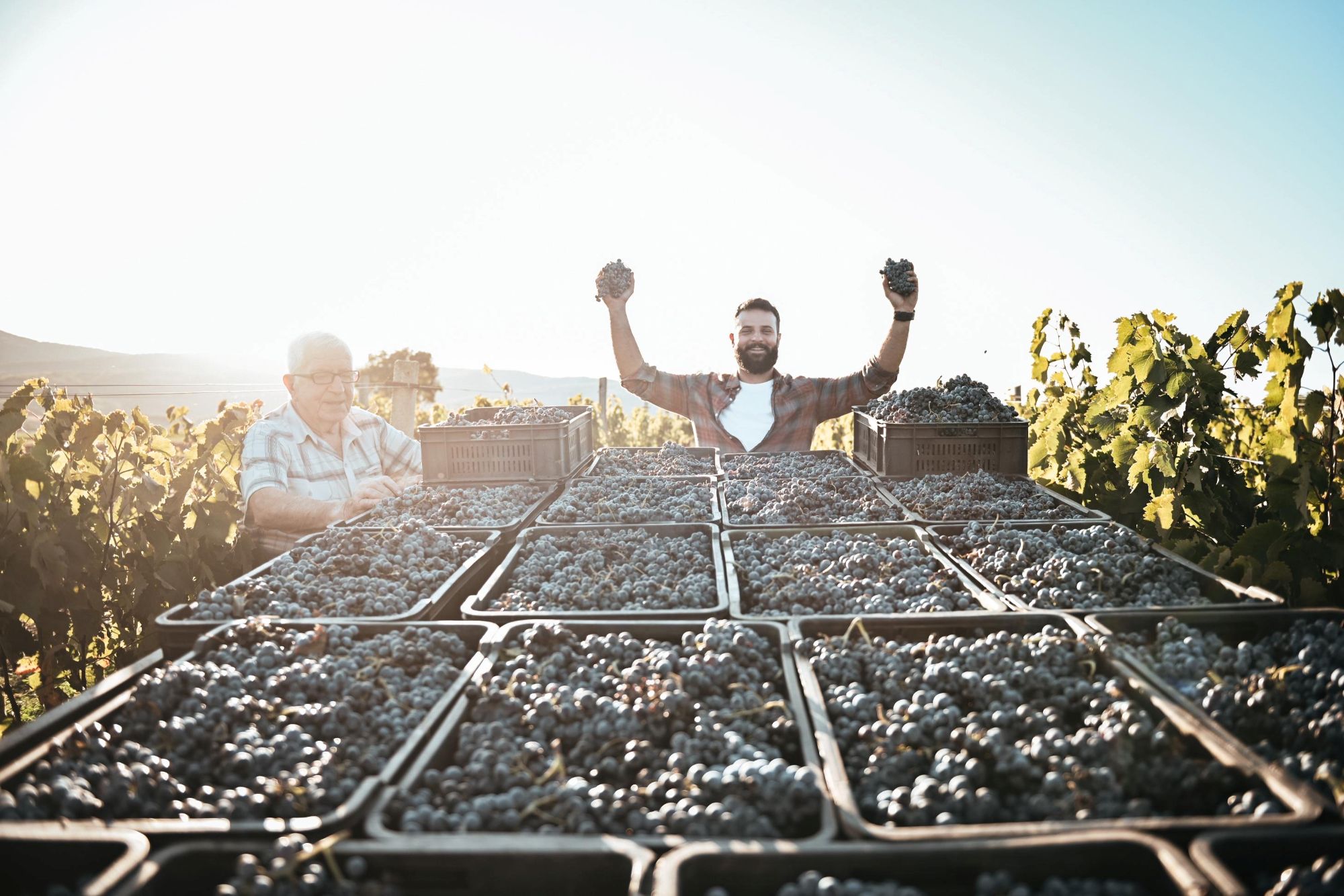
Behind that bottle, however, stood more than a lucky beginner. Aleksandar grew up on the family farm in Lipovac, a village near Ražanj, among vineyards, orchards and jobs that did not ask whether it was a working day, weekend or holiday. His father Slaviša grew grapes and fruit, and the Grašac planted in the late 1990s was only part of a farm that also produced sour cherries, blackberries, apricots and quinces, made juices, preserves and rakija, and cured its own ham.
Aleksandar did not view that life as an idyllic country postcard. He knew how much physical work, uncertainty and time lay behind every product. Yet even while studying viticulture at the Faculty of Agriculture in Zemun, he was certain he would return home. He was looking for a way to create something of his own in the village, rather than an escape from it.
“I’m a country boy, and nature has always interested me. Even while studying, I knew I would return. My father is an extraordinary worker. He put my sister and me through school with his own two hands, and we’ve built everything we have today together.”
He took full responsibility for the vineyards in 2016, when he also completed his first independent harvest. He was barely into his twenties, a few exams short of graduating and confident enough to depart immediately from the methods most people around him used. Rather than the security of controlled fermentation, clarification, filtration and cellar corrections, he wanted wines made with the least possible intervention.
The decision did not arise from a marketing prediction that natural wines would become fashionable. Around a decade earlier, in Slovenia’s Goriška Brda, he had tasted wines by Klinec, Rojc and Simčič and, as he puts it, “caught the bug” for organic and orange wines. Later, tasting Baša’s Jantar 2013 in Serbia completed his picture of the wines he wanted to make.
“Everything I do comes from my own taste. I see people entering organic wine for all sorts of reasons, but for me it began simply with a love of nature. Wine is one of the most honest things there is, something given by God, and should be treated that way rather than as a product to be adjusted to the market. I’m not saying my wines are the best, but they’re the wines I like drinking. If others like them too, so much the better.”
From 2017, he began extending skin maceration for white grapes, particularly Župljanka, a variety many had dismissed as suitable only for simple, short-lived wines. That very underestimation attracted him. He believed the problem lay in nobody having approached it in a way that might reveal its more serious side.
“Župljanka is hugely underrated because nobody has tried making it as I do: as a natural orange wine with complexity and good ageing potential. The grapes come first. Everything afterwards is the least of the problems.”
This was the conviction of a young man unafraid to leave Župljanka on its skins for nine days, allow spontaneous malolactic fermentation and observe developments without constantly steering the wine towards a predetermined result. He would say everything was “under control for now”, aware that with this approach the boundary between a successful experiment and a lost barrel could never entirely disappear.
One of his most interesting wines emerged precisely because he had an empty barrel and insufficient wine from any one grape to fill it. From the 2018 vintage, he took seventy litres each of Sauvignon Blanc, Grašac and Župljanka, each given four days of separate skin maceration, then blended them. During a year’s ageing, he occasionally stirred the lees, timing the work to the phases of the moon. The blend received the simple name 333, although its creation had been anything but calculated in advance.
Aleks Klinec brought him closer to biodynamics. Initially, he admits, he was sceptical about claims that lunar phases could influence wine’s behaviour, so he sought an answer where he usually did-in his own cellar.
“I carried out practical experiments and convinced myself it made sense. The lees rise in the wine in accordance with the phases of the moon, under the influence of its gravity. It isn’t mysticism; it’s a natural process.”
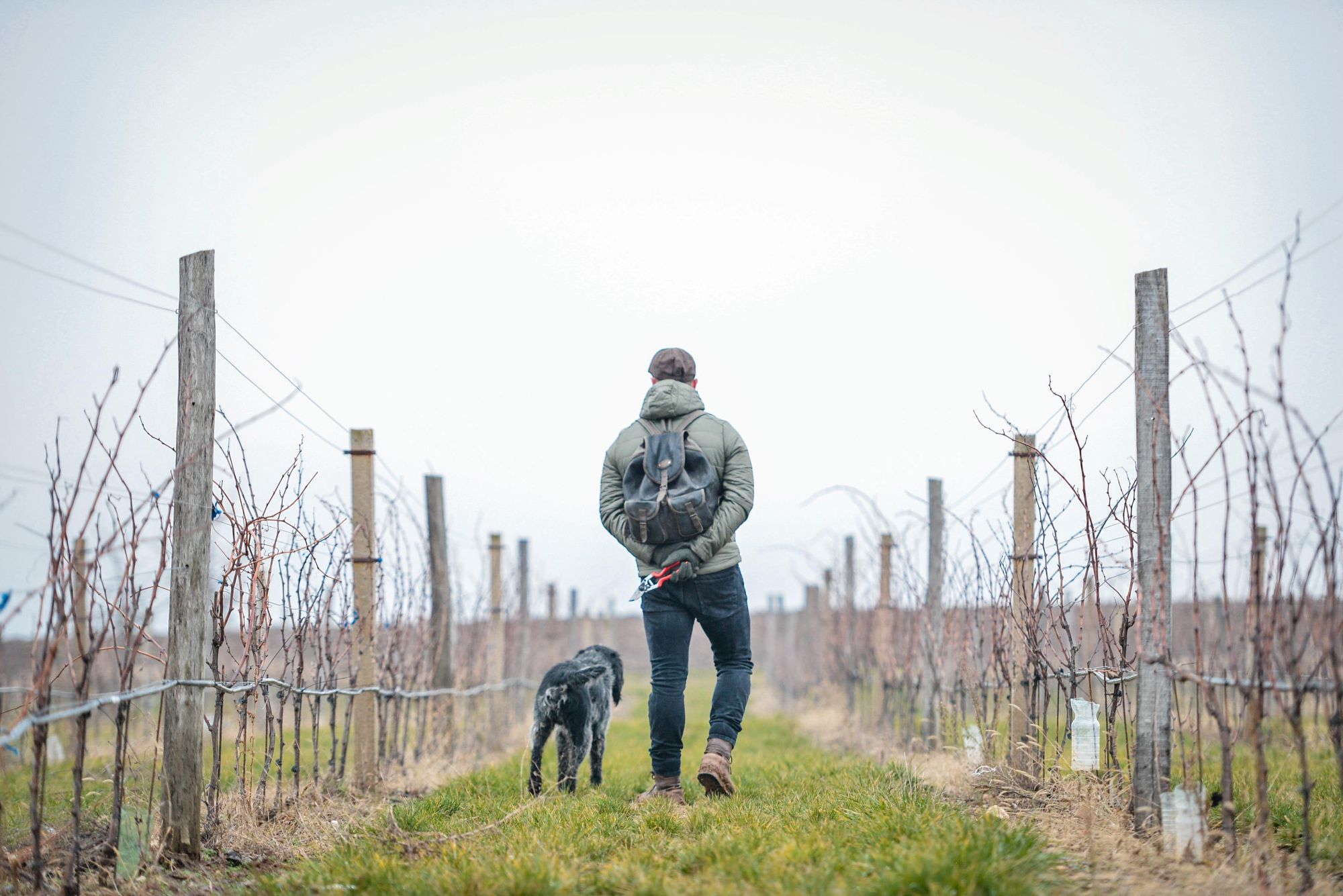
He did not yet have the conditions to apply every biodynamic principle in the vineyard, but his ambition extended beyond eliminating herbicides and pesticides. He wanted a farm in which vines formed part of a wider system of plants and animals, rather than a monoculture fenced off from other life. He needed no certificate to begin, although he started organic certification to obtain official recognition for his vineyard practices.
His vineyards then covered just over three hectares, some not yet in full production. His father had planted international varieties, but Aleksandar intended to devote most new land to domestic grapes: Župljanka, Tamjanika, Smederevka and Prokupac. Merlot was the exception. It had performed so convincingly on their land that he refused to deny it space simply because it was not local.
His Ibis Crveni, a Merlot named after the family dog, showed him the site’s potential vintage after vintage. While experimental white blends allowed him to explore freedom in the cellar, Merlot most clearly revealed qualities he could not attribute to his own technique: the vineyard and the year.
“That wine shows me our vineyard’s potential best. It’s where I most easily recognise terroir and everything authentic that wine can offer.”
Ibis was not the only family pet to reach a label. When he made his first naturally sparkling wine from Grašac, he called it Pet York after his Yorkshire terrier. The next pét-nat, from Župljanka, was to take its name from the Siamese cat. There was no elaborate marketing strategy behind these names. Aleksandar found it more natural to draw on the life around him than invent words designed to look attractive on a wine-shop shelf.
The first 250 bottles of Pet York sold out within weeks. It retained approximately eight grams of residual sugar per litre and was made by gently pressing whole bunches, aiming to leave as little sediment as possible in the bottle. He envisaged the Župljanka pét-nat as completely dry, using a different approach to processing the grapes, and was already considering a rosé version from Prokupac.
“I love experimenting, but I always have a fairly clear idea of the wine I want. I don’t see Prokupac as a big, extracted wine with a powerful body and high alcohol. To me, it should be light, fruity and lively enough to chill slightly and drink in summer.”
He found his audience primarily among people just discovering wine, approaching it without lists of permissible aromas, prescribed varietal character or the conviction that every bottle must resemble the last.
“My wines were bought almost exclusively by younger people, those still discovering wine and open to different styles and alternative flavours.”
His wines asked them to remain open to sediment, maceration, occasional unpredictability and flavours conventional winemaking often tries to smooth away. In return, they received wine that did not conceal the year it came from.
Aleksandar was hardly diplomatic about the distinction between natural and conventional wines. He maintained that naturally stabilised wines handled oxygen better after opening, needed more time in the glass and developed more slowly, while many conventional wines immediately showed everything they had. He was sharper still about cellar adjustments used to achieve almost identical balance and freshness year after year.
“With natural wine, you don’t correct acidity, sugar or alcohol. It is what the grapes you harvested that year allow it to be. Sometimes it lacks freshness, isn’t entirely balanced and something sticks out. But that’s precisely because it reflects what nature did in the vineyard.”
Nor did he avoid the strongest objections: natural wines sometimes vary between bottles, can be unstable or unbalanced, and may show untidy aromas. Todorović openly acknowledged weaknesses others might conceal or attribute to an audience’s lack of understanding.
“Seen that way, what you’ve listed is true and represents natural wine’s main drawback. I still wouldn’t call it a fault, but the expression of a wine with no make-up. It is what you harvested that year.”
For him, wine without make-up included the possibility that a glass might reveal everything the year had done badly. Naturalness removed some of the means of disguising imperfection; it did not guarantee perfection.
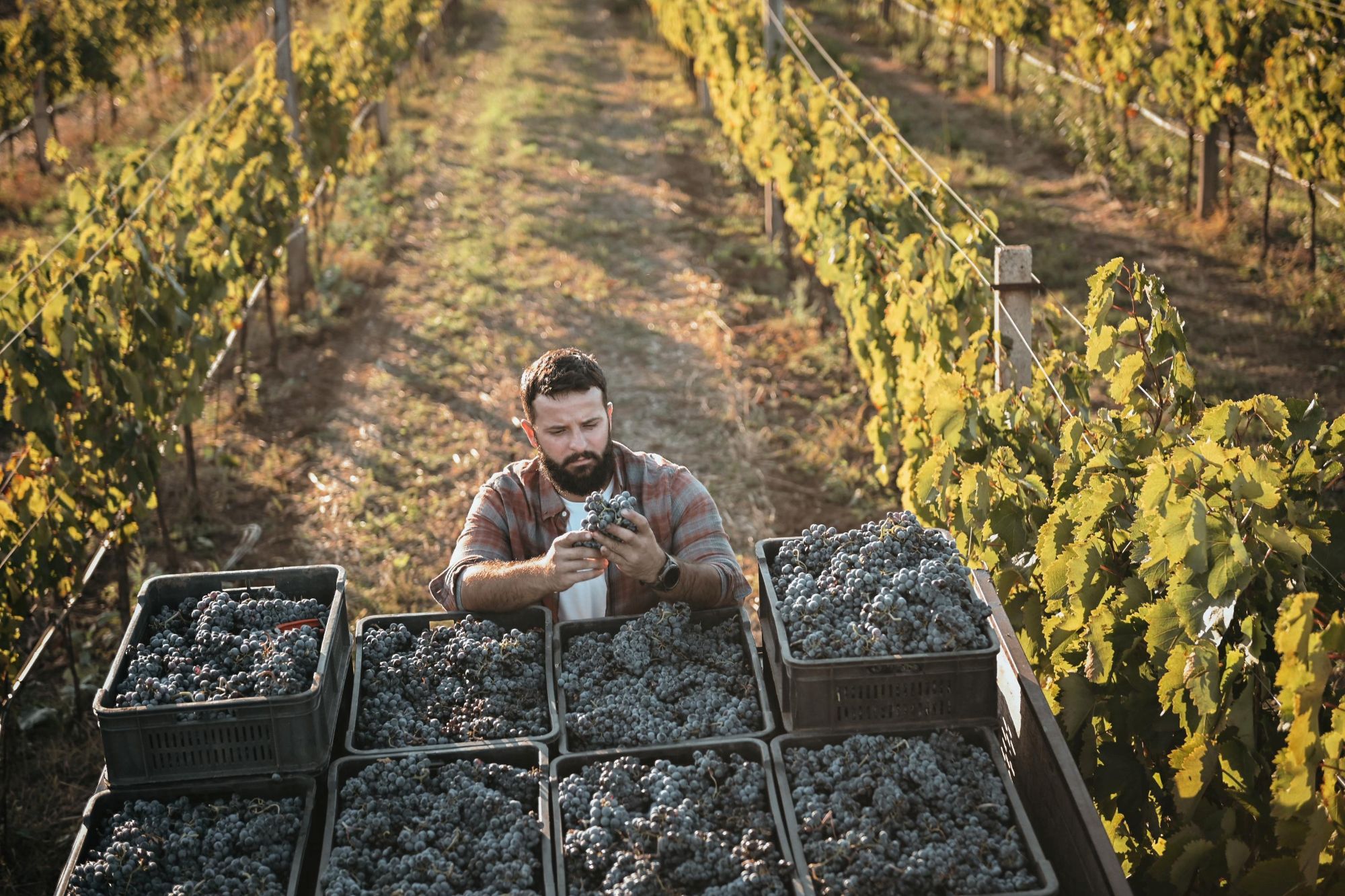
There was youthful absolutism in this too. His division between “honest” natural wines and standardised conventional wines was considerably tidier than the real wine world, where neither certification guarantees quality nor every intervention constitutes deception. Yet the polemic came from a conviction that producers must accept the consequences of their choices, rather than a desire to please an audience rejecting conventional winemaking. If he entrusted more of the work to nature, he could not subsequently erase its handwriting in the cellar simply because he disliked certain letters.
“What matters most is experiencing a wine, and diversity is essential to that. If the winemaker is good and the grapes come from a good vineyard, you feel it all, and eventually it forms a picture of terroir. That’s the central point of any wine story.”
Among his most important experiences remained Slovenia’s biodynamic and natural wines, particularly Miha Batič’s Angel White, a blend of local Vipava Valley varieties he considered perhaps the finest white he had tasted. He also admired Movia and Marjan Simčič, while finding domestic confirmation in Ernő Sagmeister’s wines.
“If I tasted Marjan Simčič and Ernő Sagmeister blind, I wouldn’t dare claim which wine came from Slovenia and which from Serbia. It shows we have the potential for organic wines in the same class as the world’s best.”
Todorović therefore saw himself as part of a generation beginning to explore beyond established boundaries, rather than a solitary figure from somewhere without a wine reputation. Ražanj’s lack of a famous image to protect was an advantage. He could begin building one from grapes rather than legend.
That also meant accepting that the work did not end with bottling. One winter, when Aleksandar’s wines were due in Osijek, snow closed Mečka, the pass on the road towards Paraćin that determines how far anyone can travel that day. Todorović had no distribution network to solve the problem for him. He had wine he had promised to deliver and a habit of finishing the job.
Such a delivery can easily become a romantic tale of a young winemaker personally driving every bottle, but there was little romance in his circumstances. A small family winery required the same person to be grower, cellar worker, merchant, delivery driver and promoter, while the farm’s other work continued. The Todorovićs had orchards and fields, made juices, preserves and quince rakija, cured meat and planned to raise Mangalica pigs. What a tourism brochure might call a return to a self-sufficient farm was simply their everyday rule: use what the land provides.
Aleksandar added CrossFit to that physical workload. The figures he occasionally boasted about-a hundred pull-ups or 531 burpees in an hour-sounded more like the outcome of a wager than sensible recreation. Yet he found the same appeal in training and vineyards: results came from repeating demanding work even when the body wanted to stop.
He jokingly claimed he once met a wolf in the forest that looked away first, as though the animal had concluded that someone capable of more than five hundred burpees was best left alone. Beneath the swagger lay a more serious family picture. Aleksandar could measure his strength through repetitions in a gym, but his lifelong benchmark for work was his father.
Slaviša planted the vineyard that produced the forgotten Čarolija, but allowed his son to lead it towards organic farming, extended maceration and wines he probably would not have made himself. Aleksandar understood that his experiments rested on the land, cellar and experience his father had built long before he decided to return from Belgrade, as well as on his own courage.
His return followed no business plan promising that a few hectares would quickly become a lucrative winery. He realised early that enthusiasm alone could not bridge the gap between a good bottle and a sustainable business. Natural wine brought further uncertainty: lower yields, greater cellar risks, limited quantities and an audience still learning what to expect.
Life as a small producer quickly revealed the arithmetic: money from one harvest was often already needed by the vineyard preparing the next, while each new plot, barrel or experiment returned earnings to the business. The Todorovićs expanded gradually, without trying to match the volumes of wineries with different capital and markets.
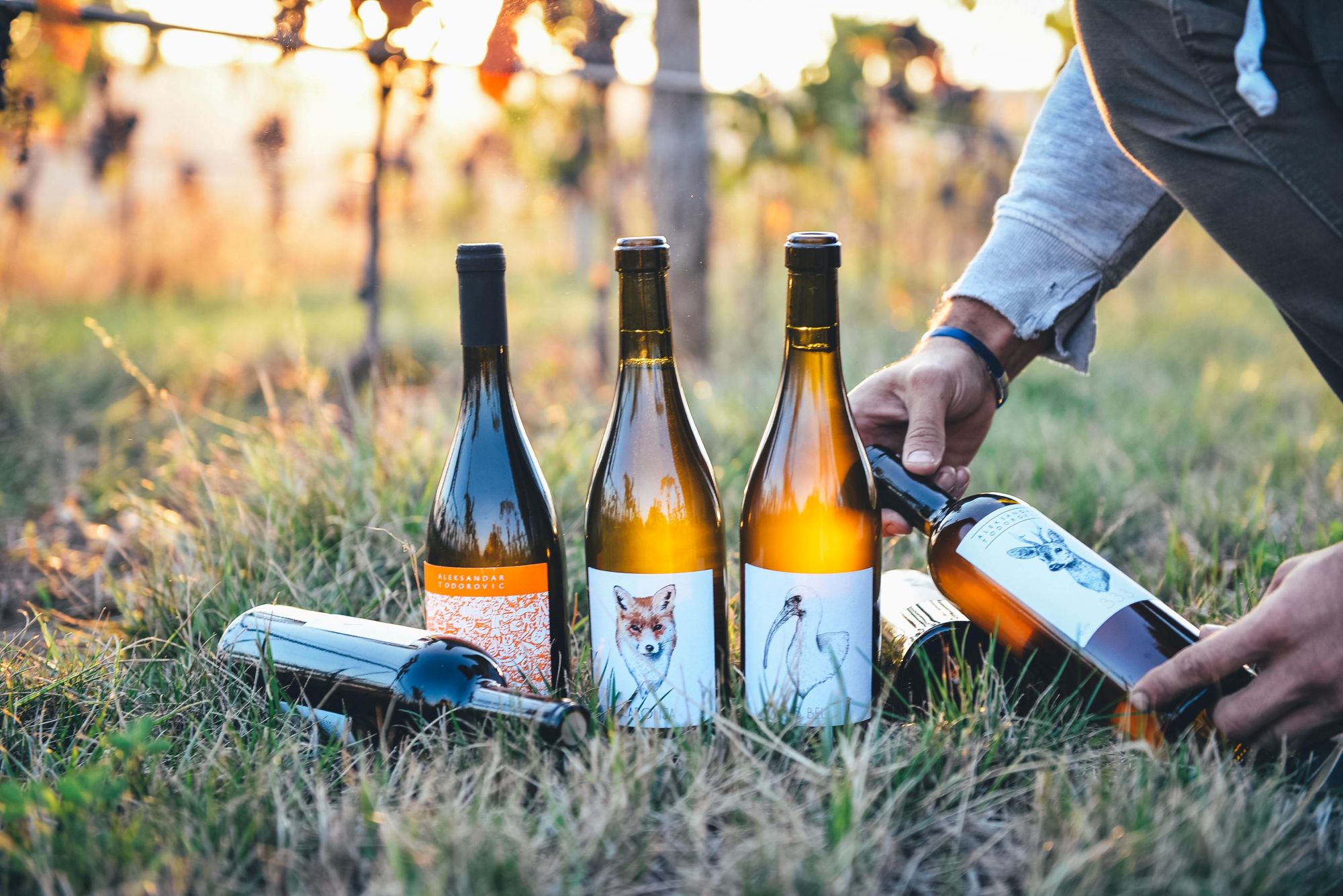
Vino.rs naming it Serbia’s best young winery for 2021 therefore confirmed that a few thousand bottles from Lipovac could attract national attention. The award neither changed his methods nor persuaded him to make the wines more predictable. The range retained Grašac Čarolija, Sauvignon Blanc Ibis Beli, Merlot Ibis Crveni, white blends and small batches of pét-nat and skin-macerated wines. Every new experiment first had to satisfy him.
More importantly, his audience extended beyond Ražanj. The wines reached specialist Belgrade wine shops, attracted attention abroad and found buyers for whom distance from famous regions was an additional reason to taste. The young man wondering how to be taken seriously when naming his hometown began discovering that a place’s name becomes a problem only when the wine lacks an identity of its own.
His wines had plenty.
Yet the most accurate answer to the Wine Jam question came from the unassuming, unlabelled bottle Bojan Baša took from his car boot. Čarolija 2010 had survived because several bottles were forgotten in an underground tunnel, rather than being deliberately cellared to demonstrate the site’s ageing potential. When Aleksandar finally tasted it, even he was unsure what he had found.
The discovery did not turn him into a mystic attributing every successful fermentation to miracles. It prompted him to examine his father’s vineyard, the ageing conditions and the possibility that Grašac from Ražanj could live much longer than anyone had expected. The accidental part was forgetting the bottles. Their survival had concrete foundations.
Todorović’s desire to interfere as little as possible did not imply minimal responsibility. Giving fermentation greater freedom required sufficient knowledge, attention and work. Natural wine could not become an excuse for declaring every shortcoming a sign of character.
He planned more Župljanka, new Tamjanika and Smederevka, a rosé Prokupac pét-nat and further plants and animals on the farm. He wanted a sufficiently complete system in which wine made sense alongside everything else the Todorovićs grew and produced, rather than a large winery.
“I don’t think much about five or ten years from now. Let everything take its course. What matters is making good, sincere, honest wines. Everything else will find its place.”
And Ražanj? It had not become Bordeaux, nor needed to. It remained somewhere to locate on the wine map, but no longer somewhere to apologise for. When Aleksandar says where he comes from today, someone may still smile at the unexpected answer.
Then Čarolija is opened, and the conversation turns serious.