In 1943, Salvador Dalí painted The Ship, a watercolour in which Christ is crucified not on a cross but on billowing sails, with the sun rising above them. Aleksandar Tadić carried that image somewhere deep in his consciousness for more than twenty years, never imagining that an altered version would one day become the emblem of a winery he had not yet conceived.
When it finally appeared on Salaxia’s bottles, Dalí’s Christ no longer bowed his head. Aleksandar raised it, believing the ship he was sending on its wine voyage should begin with hope for calm seas and a favourable wind rather than an image of suffering.
“What you see on our labels is a complete reworking of that painting. In Dalí’s version, Christ’s head is bowed; in my more optimistic interpretation, it’s raised. If I had to offer a free interpretation of our emblem, I’d say Salaxia has calm seas and a fair wind.”
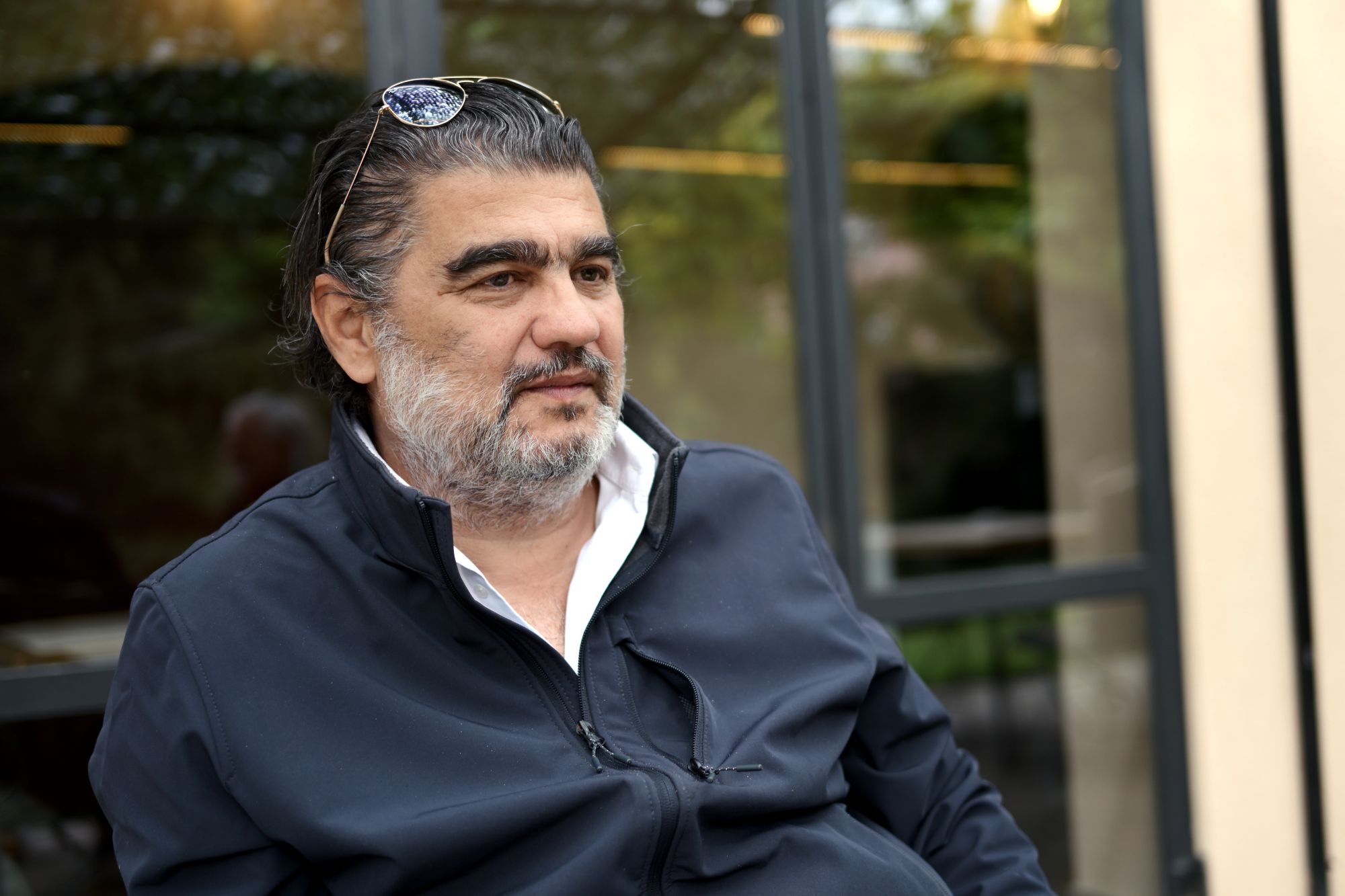
Tadić did not reach his ship by a straight course. For eleven years, he represented the giant Parmalat across the former Yugoslav markets. He was chief executive of Fidelinka, executive director of Agrohem and commercial director of Delta Agrar, building a career in which success was expressed through markets, sales and business results. Yet one detail proved more important than all the positions on his CV: almost every month, he travelled to Tuscany and stayed at a winery whenever he could.
“It remained somewhere in my subconscious. When I decided to start my own business, it could only be a winery. It was inevitable, especially given my family’s connection with Fruška Gora.”
His parents had lived for decades on land in Rakovac, a place then better known for its monastery than its wine. There, Aleksandar began building a winery in 2008 and founded Salaxia the following year. He started from zero: he had business experience, a sense of the wines he wanted to offer and a clear idea of whom he would sell them to. He did not know how to make them, which did little to discourage him.
“When I opened the winery, I knew what kind of wine we needed to make, but not how to make it. The one thing I never doubted for a second was how to sell it. I knew what we could produce, but above all where that wine would find a buyer. And that’s how it turned out.”
Salaxia grew gradually, from an initial eighteen thousand litres to thirty-six thousand, forty-five thousand and seventy-five thousand, without trying to become a major estate overnight. Aleksandar developed the market at the same pace as production, convinced it was far more dangerous to fill a cellar with wine lacking buyers than to remain smaller than his ambitions for a while.
“We went step by step. Within a few years, Salaxia became known in Novi Sad and Belgrade without entering competitions. I don’t make wine to compete and stick medals on bottles. Even a Decanter gold sticker doesn’t interest me. There has to be at least one eccentric in winemaking who doesn’t care about that.”
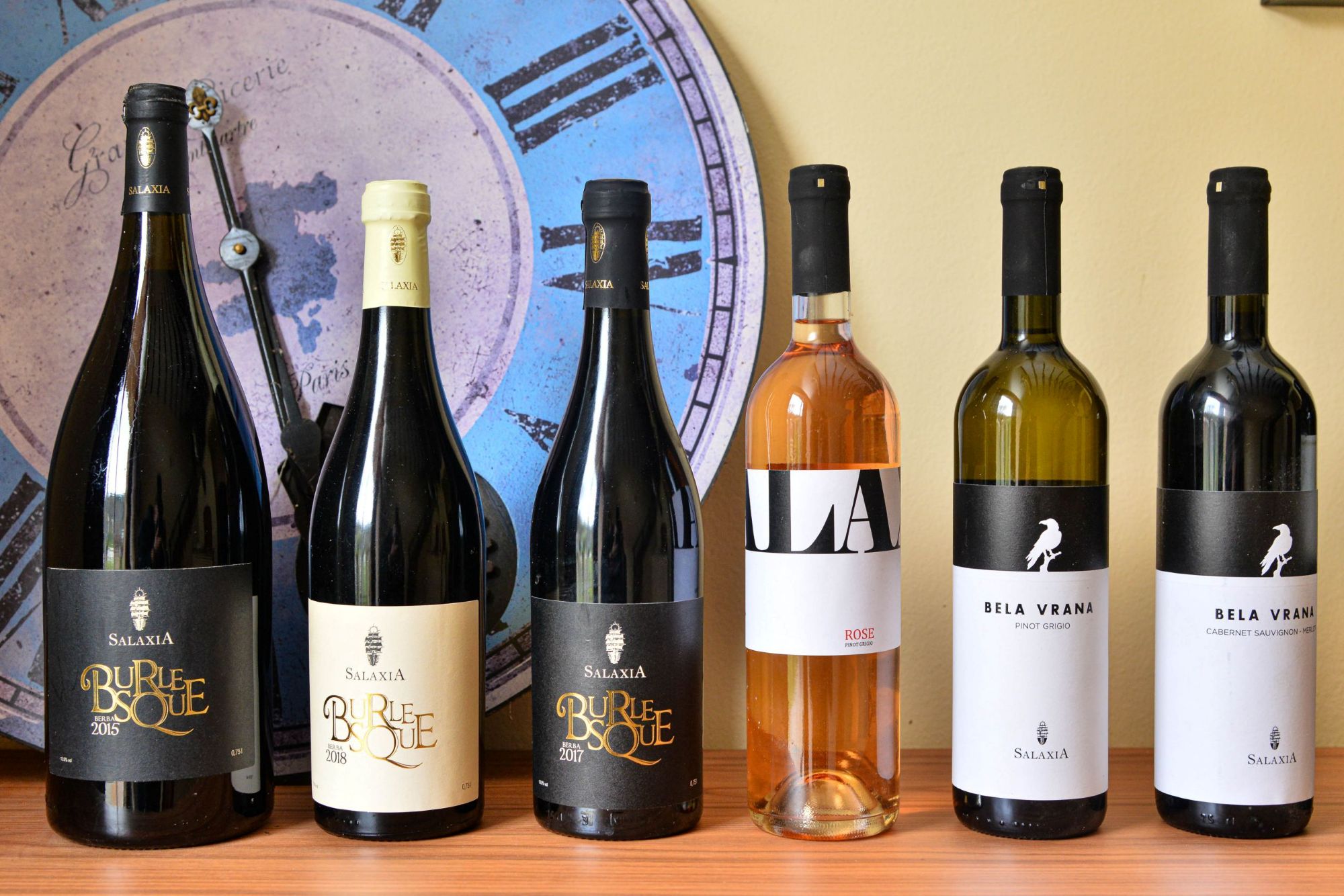
A prominent Novi Sad resident once told him he would never have had such good wines had he not been so unconventional. Aleksandar accepted the compliment without defending himself against the diagnosis. Later, he turned his outsider status into a wine called Bijela Vrana-White Crow.
White Crow was more than a clever label: it was almost an autobiographical summary. He built a winery without vineyards, entered no competitions, avoided festivals and rejected the unwritten rule that a winemaker must appear wherever a bottle is opened. While others built recognition through constant presence, he trusted sufficiently good wine to earn its own place.
“A white crow isn’t a black sheep. A crow is a more intelligent creature than a sheep, after all. And everything happened that way for me: I built a winery without vineyards, I don’t attend festivals or exhibitions, medals don’t interest me… White Crow is practically my autobiographical novel.”
There was no wounded superiority in it, no effort to keep others at a distance to underline his uniqueness. Aleksandar simply believed he did not need to participate in every wine-world ritual to know what he wanted to create. The values a person develops, he maintained, must sooner or later appear in their wines.
At Salaxia, they appeared well before the first sip. Dalí’s ship opened a space in which wine, painting and sculpture ceased to be separate worlds. Aleksandar inherited his love of art from his parents and continued expanding the family collection with works by more contemporary Serbian artists, particularly Duško Stojanović. Salaxia also became a major national sponsor of the Gallery of Matica Srpska: buying art and keeping it behind his own doors was not enough for him.
One of the most important people in that story was sculptor Jovan Soldatović, creator of Novi Sad’s Family monument, the memorial to executed patriots in Žabalj and the Đura Jakšić statue in Skadarlija. Soldatović was both an artist whose work Aleksandar collected and a family friend to whom he intended to dedicate part of his wine story. His drawings and sculptures in the Tadić collection formed a lasting link between person, family and art, independent of any marketing plan.
The wine names were not chosen by drawing words that sounded attractive on foreign markets, either. Burlesque, Salaxia’s best-known red blend, remained in the world of stage, movement and seductive extravagance. It combines Cabernet Sauvignon, Cabernet Franc, Merlot and Vranac, and Aleksandar had no objection to a full-bodied, high-alcohol wine evoking Dita Von Teese or another great burlesque figure.
“Burlesque is art too. And with every new glass, my Burlesque helps us create a slightly different, deliciously distorted picture of the world around us.”
Behind the joke lay a serious idea: wine could change a mood, shift a perspective and briefly disturb everyday order, as well as express a grape and site precisely. Salaxia therefore built its identity around Aleksandar’s taste rather than a single variety or an expected image of Fruška Gora. That taste had room for Dalí, local soil, Pinot Noir, Vranac and a cabaret stage.
Another red blend, Noir Noir, combined two Pinot Noirs from two vintages and two kinds of oak: one from 2011, the other from 2012, one aged in French wood, the other in domestic oak. Behind it lay a much older story about the land where Salaxia emerged.
Rakovac had once contained vineyards and extensive nurseries belonging to Novi Sad businessman Aleksandar Adamović, among the first to import American rootstocks to the area after phylloxera. His holdings stretched from Banoštor to Petrovaradin, and the vineyards around present-day Salaxia included the celebrated Pinot Noir called Crni Biser-Black Pearl.
Aleksandar therefore liked to believe Noir Noir’s success there was no coincidence.
“Adamović’s vineyards and his famous Black Pearl were here, on Salaxia’s land. So it doesn’t surprise me that our Noir Noir is so good. I see it as the heir to that wine and this site’s long Pinot Noir tradition.”
History gave Salaxia roots, Dalí gave it sails, and Aleksandar supplied the direction. All that remained was to explain the ship’s name. That too, he insists, presented itself.
According to a story Aleksandar enjoys telling, Romans arriving from the south reached a place where they could see across Fruška Gora’s ridge to the Danube and the plains of Bačka. The sight so impressed them that they called the area Galaxia. During Maria Theresa’s reign, ornate handwriting and the name’s long journey through the centuries transformed its initial G into an S. Salaxia remained in local usage.
Whether that was truly how the name originated matters less to Aleksandar than its existence there long before his winery.
“I had no doubts about the name. Salaxia suggested itself through our location in Rakovac. It belonged to this place before us, so adopting it was logical.”
Building a winery without vineyards seemed less logical at the time. In a country where owning vines is often treated almost as a moral prerequisite for serious winemaking, Aleksandar took the opposite route. His relationships with growers resembled the old cooperative model more than ordinary grape purchasing: they agreed on varieties, yields and working methods, and Salaxia received fruit grown to suit its wines.
“You don’t have to own vineyards to make good wine. Rothschild’s winery operated without its own vineyards for a hundred and fifty years.”
Aleksandar was admittedly no Rothschild, but he did not have to wait a century and a half for vines of his own. Together with its partner growers, Salaxia had access to eighteen hectares; he then planted Chardonnay and Pinot Gris on 4.8 hectares of his own land. The new vineyard brought more than grapes. It also confirmed that Fruška Gora sometimes changes plans below the surface: a water source was discovered within the planting.
At a depth of approximately two hundred metres, clear water at seven or eight degrees Celsius flowed through the rock. Aleksandar did not yet know how he would use it, but a man who built a winery without vineyards was untroubled by gaining an unrequested water source after acquiring them.
What lay above it mattered more. Three distinct soils alternated across the new site, from marl to pale earth and clay. He planted Chardonnay with the intention of one day blending the same grape grown on three different soils. He imagined it as an opportunity for one variety to speak in three voices from the same hill, rather than a technical demonstration or classroom experiment.
The remaining ten hectares were already opening up another ambition. On part of the site, he intended to plant red grapes for Burlesque: Cabernet Sauvignon, Cabernet Franc and Vranac, a variety many did not expect so far north on Fruška Gora.
“Yes, you heard correctly-Vranac! When people ask what I’d like my wine story to be remembered for, I answer: Vranac. There’s a misconception that it can’t thrive on Fruška Gora, yet I’ve bought grapes from a grower in Neštin for years, with fantastic results.”
He lacked enough Vranac for a varietal wine, so blended it with Cabernet Sauvignon and Cabernet Franc. That share of southern strength gave Burlesque its distinctive signature and Aleksandar a reason to devote at least a hectare of the new vineyard to a grape he had decided to defend against other people’s prejudices.
Nor was he especially afraid of wild animals discovering the grapes before him. Fruška Gora’s problem, he said, was the growing human presence rather than an excess of wilderness. The city expanded towards the slopes, hunting grounds shrank and larger wildlife retreated towards the mountain’s summit. Mostly foxes and badgers reached the vineyards.
“I’d love us to have a problem with wild animals. I visited a hunter friend in Pula, and they have too few hunters and too much game. Here, it’s exactly the opposite.”
Aleksandar began building Salaxia in a landscape visibly changing around him, convinced that wine made little sense if it preserved grape flavour while losing the place it came from. He therefore regarded organic and biodynamic production as an attempt to restore the vineyard’s place within a living system, rather than a new winemaking fashion.
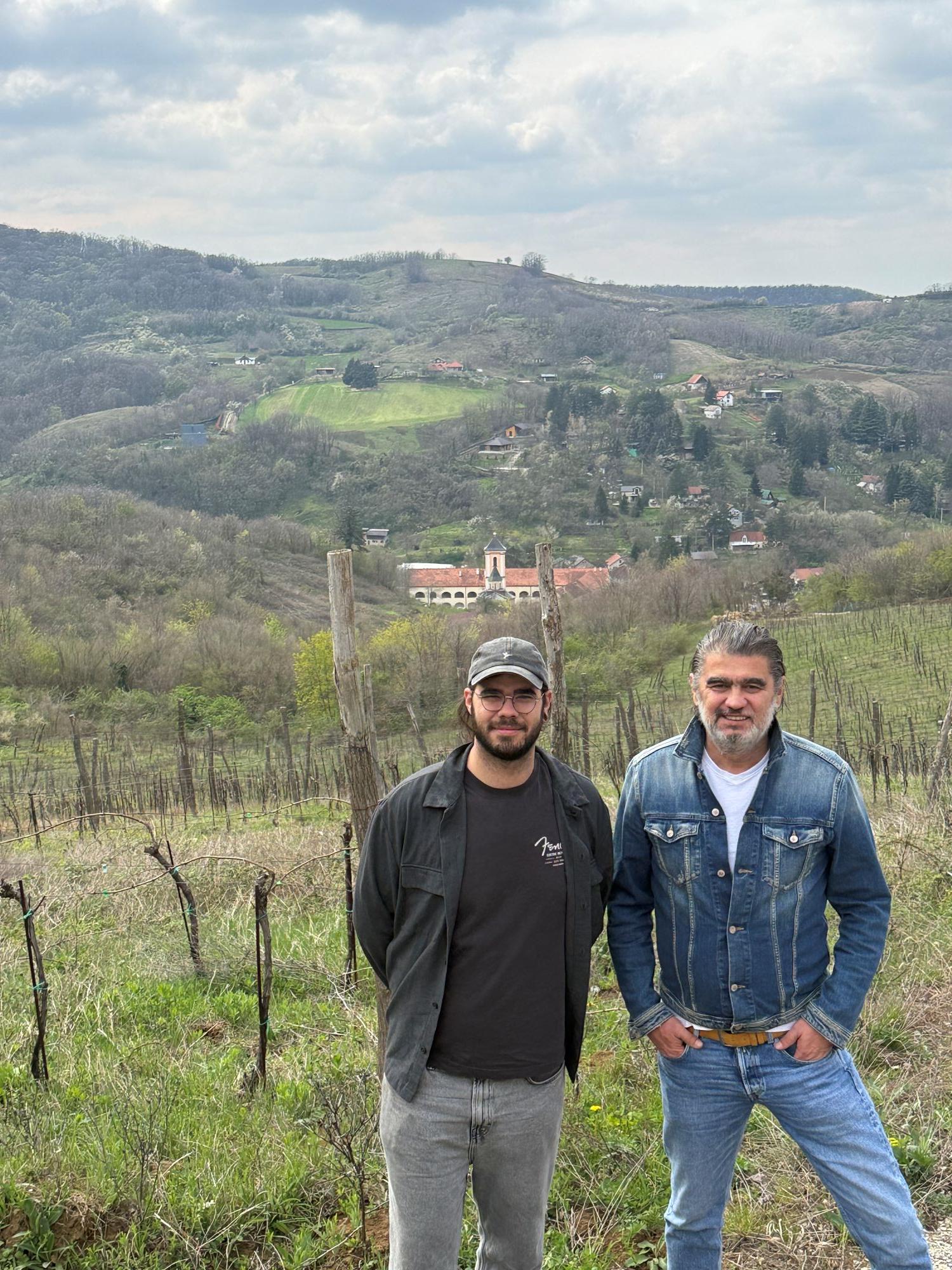
Organic farming meant giving up some of the security offered by conventional treatments. Biodynamics demanded a broader shift: seeing the vineyard as an organism in which soil, plants, animals, microorganisms and people must find balance. Salaxia was among the first in Serbia to take that route, aware that differences might be difficult to see in good years, but that difficult ones would present their bill directly at harvest.
The partnership with Imperator Winery, begun two years after Salaxia’s founding, broadened that approach. Imperator’s main vineyards lie in Erdevik, and the two estates gradually became connected through a shared structure encompassing wine production, vineyard projects, gastronomy and a different way of presenting Fruška Gora.
The two names remained, as did their distinct labels and characters. Salaxia and Imperator began sharing knowledge, people, space and philosophy. Fewer oenological products were used in the cellar, while fermentation was increasingly entrusted to the microorganisms arriving on grapes from the vineyards.
“From the beginning, we chose a different path because we believe it’s the only sound one in the long term. We make extraordinary efforts in the vineyard, so our approach in the cellar has to follow through. We want to use a minimum of oenological products and preserve the microbial life arriving with the grapes,” explained winery director Đurđa Katić.
That can sound like a manifesto until a year such as 2023 arrives and nature demonstrates how little it cares about elegantly written wine philosophies. Yields fell in the organic and biodynamic vineyards, production declined, and every bunch saved required more work than in calmer seasons. Uncompromising quality sounds attractive on a label; in the vineyard, it often means accepting fewer bottles.
Despite the difficult year, they preserved Traminer for a late harvest. Partially dried berries produced a sweet wine with 180 grams of residual sugar per litre and sufficient acidity to keep sweetness from becoming an end in itself. Meanwhile, they prepared their first sparkling wine in a tiny batch to test the audience’s response before committing to a larger range.
Salaxia was also acquiring a new generation. Aleksandar once said his sons had divided his two great inclinations between them: Vanja turned towards the family’s business and wine interests, while Vuk enrolled at the Academy of Fine Arts. Art and wine, the threads their father had woven together throughout his life, continued through a son apiece.
“You could say each took something of mine and chose to pursue it: one art, the other business.”
Vanja’s connection with wine soon outgrew student curiosity. He became Salaxia’s winemaker and began creating wines his father probably could not have imagined when establishing the estate. His orange Malvasia and Sauvignon Blanc underwent spontaneous fermentation, without attempts to accommodate the broadest possible taste, trusting they would reach people able to recognise and appreciate them.
There was something distinctly Aleksandar-like in that. A father who avoided festivals and competitions had a son who likewise sought something beyond the easiest route to consumers, exploring what Malvasia and Sauvignon Blanc could express when fermentation followed no predetermined recipe.
Aleksandar founded the winery knowing what wine he wanted but not how to make it. Around fifteen years later, his son worked in the same cellar: a winemaker who knew how to make wine, but could not know beforehand where spontaneous fermentation would lead.
Wine, however, was not the only thing that needed to find its own path in Rakovac. Aleksandar spent years considering what to serve beside a glass, beyond a token addition to a tasting or a menu copied from any city. He sought the answer within five hundred metres of the winery.
Rakovac had families gathering porcini, growing vegetables, making goat’s cheese and raising livestock. Aleksandar decided to bring the world to Rakovac and show it what grew nearby, rather than bring ingredients from afar to make the kitchen look international.
“We have people gathering porcini, people making goat’s cheese and others growing organic vegetables. There’s an abattoir in the village too. You can always taste fresh, original things here that you won’t find elsewhere. Our steaks with porcini, snails and goat’s cheeses with chives have become widely known.”
Their own dry-cured ham joined that circle. He found inspiration in Istria, although the first quantities were so small that he regarded it as an experiment still “in nappies” rather than a new business. They made fifteen or twenty hams, exclusively for the winery, ensuring something was always available to slice beside the wine.
“The ham turned out phenomenal. We polished off all fifteen or twenty. Purely for the winery, so we’d have something to slice,” Aleksandar boasted.
Behind the cheerful accounting lay the logic guiding Salaxia from the start: do something when there is a chance to make it distinctive and good, rather than because a winery supposedly ought to have it. Average wine did not interest him, so he saw no reason to serve average food alongside it.
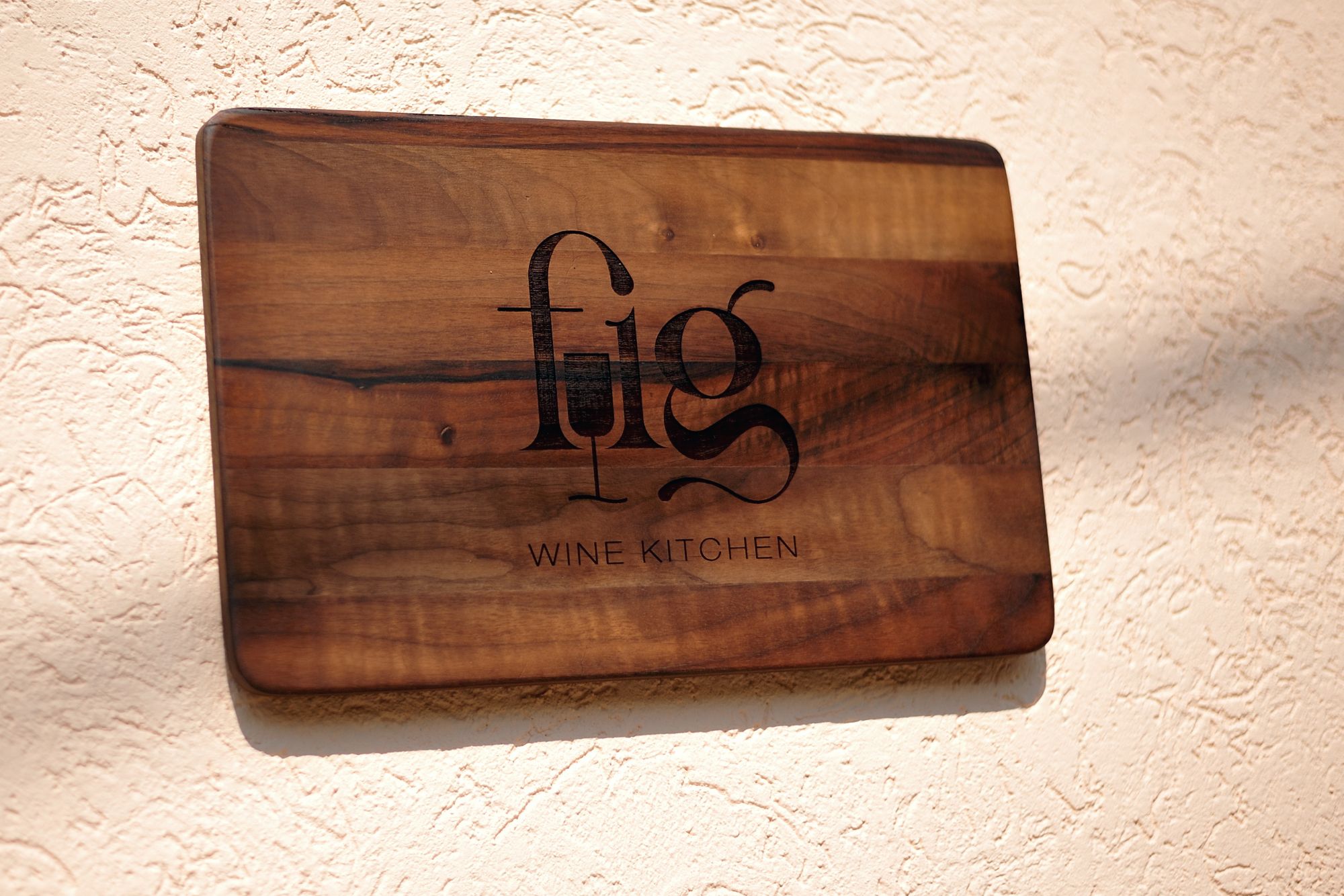
The idea took more substantial form in 2023 with FIG, a restaurant jointly established by Salaxia and Imperator. The initial intention had been simpler. They needed more tasting space after the pandemic, but a larger room gradually became a place where wine and gastronomy stood as equals.
“We don’t do things simply for the sake of doing them. Just as we don’t make average wine, we don’t want to make average food.”
FIG emerged as the winery’s gastronomic continuation. The kitchen used contemporary techniques without abandoning local ingredients: Rakovac porcini, goat’s cheese, nearby vegetables, snails, rabbit and Srem dishes translated into a more modern language. Aleksandar refused to add sea fish simply because diners considered it more sophisticated.
“Everyone in Serbia has the sea on the menu. Only Fruška Gora has the river.”
It sounded like another joke, but precisely defined the kitchen’s boundaries. FIG was to express its landscape, rather than impersonate the Mediterranean. Summer menus were lighter, winter menus more substantial, and seasons determined ingredients more than the expectation of ordering the same thing all year.
Wine and food negotiated rather than submitting to one another. Fresh Sauvignon Blanc might accompany goat’s cheese, Traminer a rabbit pâté, Chardonnay cheese-filled pasta, while sweet wine awaited a white-chocolate and hazelnut dessert. More important than individual courses was the sense that everything on the table continued the landscape outside the window.
A year after opening, FIG had already become a reason for people from Novi Sad and Belgrade to visit Rakovac before even deciding which wine they wanted to buy. The winery that had not chased audiences around festivals had created somewhere audiences came to it.
Meanwhile, growing production had outgrown the existing cellar, and construction began on a new building in the vineyard. Capacity of approximately a hundred thousand litres was not always fully used: in organic and biodynamic production, the vintage dictated quantity rather than the business plan. Expansion was nevertheless necessary if Salaxia and Imperator were to keep developing wines without squeezing new ideas into a space no longer able to serve them.
Aleksandar was building again, this time surrounded by vineyards he had not owned at the beginning. Dalí’s ship had long been launched, his sons had found their places on deck, and the people in cellar and restaurant had turned a personal ambition into a shared undertaking. Calm seas and a fair wind did not mean standing still.
Even after all those years, he measured Salaxia by people knowing its name, asking for its wines and coming to Rakovac, rather than by medals, festival appearances or photographs posing with awarded bottles.
His refusal to compete did not mean refusing other people’s opinions. He made wine for an audience, but a jury’s approval was never its reason for existing. What mattered more was that buyers knew what they had opened and sought another bottle of Salaxia.
His most recognisable signature lay precisely in that combination of artistic ambition and commercial practicality. He could discuss Christ crucified on sails, the historic Black Pearl, three soils or Vranac’s future on Fruška Gora, then explain in the same tone where he would sell the wine and why he refused to produce more than the market could absorb.
Neither the artist who despised commerce nor the merchant using art as decoration was a role he needed to play. Both men lived within him, just as they later found expression in his sons: Vanja entered the cellar, Vuk the visual arts, and their father’s ship continued sailing between them.
The Imperator partnership allowed that personal signature to grow beyond one man. Organic and biodynamic vineyards, spontaneously fermented wines, a new production facility and FIG extended the original Salaxia in directions Aleksandar could not fully foresee in 2008.
Then, he knew what wine he wanted but not how to make it. He knew how he would sell it, but could not know his son would one day create orange Malvasia and Sauvignon Blanc in the same cellar, that a restaurant beside the winery would draw on neighbouring ingredients, or that a water source would appear on his own land beside young Chardonnay.
Salaxia therefore changed whenever land, wine or people provided a reason, rather than remaining frozen in its 2008 business plan. Aleksandar’s need to remain a white crow never disappeared: he still did not chase festivals or stick medals on bottles, but built a place in Rakovac where people came for wine, food and the story connecting them.
Dalí’s ship remained on the labels under full sail, now spacious enough to carry Salaxia and Imperator, Aleksandar and his sons, vineyard and restaurant together. Calm seas and a fair wind meant the conditions to continue, rather than a sign that the voyage was over.