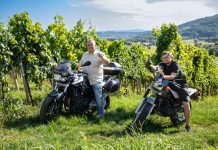
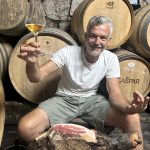
Srđan Lukajić likes to describe himself as an aimless walker. While working at Temet, he walked between Jagodina and Lozovik every day. After moving to Subotica, his route became the road from home to Palić. He does not walk for fitness, count his steps or measure how far he has left to go. He walks to think.
The only potentially misleading word is “aimless”. His walks may have no destination, but in the winery he seeks a purpose behind every decision. His strongest criticisms of Serbian winemaking concern precisely the things he refuses to allow himself: a lack of systematic thinking, organisation and planning, and an insufficiently serious approach to economics and management.
Wine can be a source of pleasure, a meeting of nature, history and people, but above all it must be a business conducted responsibly.
“I wouldn’t describe my first years of work as creating wine. They were years of learning, finding my way and gaining experience.”
For him, creating a wine means more than choosing the harvest date, overseeing fermentation and deciding how many months it will spend in a barrel. Vineyard, cellar, style, grape varieties, economics, market, name, label and an understanding of the person who will eventually buy it must all come together in the same bottle.
“Hard work, dedication in the vineyard and winery, and the pursuit of the highest possible quality go without saying. But creating a wine also demands an economic approach, a clear stylistic direction and an intelligent understanding of consumers, marketing and the demands of today’s market.”
That is why he considers his first true wine to be the first in which he successfully brought all those elements together, rather than the first he ever made: Temet Winery’s white blend, Tri Morave Belo.
The road to it was neither short nor straight. It took him from Ilijaš through Glamoč and Novi Sad to Irig, Lozovik and, finally, Palić. Each stop left its mark, but his professional story began in 2008 at Sava Jojić’s Mačkov Podrum.
Serbia’s wine scene looked very different then. Many of the wineries Lukajić would later work for, or leave an important mark on-Temet, Zvonko Bogdan, Komuna, Stari Hrast, Galot and Bjelica-did not yet exist. Private winemaking was only beginning to shed its small-cellar inferiority complex, teach the market that domestic wine could be ambitious, and make up for decades in which volume and industry had mattered more than vineyard identity.
Srđan was learning alongside the entire wine scene. And he was in no hurry to claim authorship.
Yet the wine that made him proudest did not emerge from such an elaborate plan.
It came about almost by chance, out of a pure fascination with sparkling wine. At Bjelica Winery, they made it by hand, using the traditional method, in a very small batch, with tremendous enthusiasm and almost no experience to draw upon.
They called it Babaroga.
“It brought something new to the market through its quality, design and story. It had a style that was unmistakably Bjelica’s.”
After Temet, he no longer had just one job. Alongside his regular work, he advised five or six wineries, moving from cellar to cellar and getting to know different vineyards, owners and ideas about what wine should be. That pace brought experience, but deprived him of something he considered essential for a substantial step forward: concentration.
“I needed to settle down. To have one focus.”
Zvonko Bogdan Winery offered precisely that. It was large enough for ambitious ideas to be realised, young enough for its own style still to be taking shape, and its proximity to Novi Sad was another advantage. It wanted a Serbian winemaker, someone who would become part of the winery rather than visit as an occasional consultant.
“I couldn’t turn that down.”
When he arrived in Palić in 2016, he was 34 and experienced enough to no longer feel like a beginner. At the same time, he understood where he was coming. The winery was attracting attention with its enormous building in the Pannonian Art Nouveau style, vineyards expanding alongside its ambitions, and the name of one of the greatest singers of the tamburica tradition.
Yet neither the 36-metre tower, the grand rooms nor the fact that the winery was being discussed far beyond Subotica impressed Lukajić most. He was drawn to the knowledge that had accumulated there over the years.
International experts had been involved from the project’s beginnings, including the German winemaker Thomas Seeger and the French consultant Florent Dumeau. Srđan believed that some of their experience had remained after they left, embedded in the wines, the people and everyday working practices. “The winery had really taken off by then. Everyone was talking about it. I was fascinated that so many international experts had worked there, and I believed some of their knowledge had stayed with the people working in the winery.”
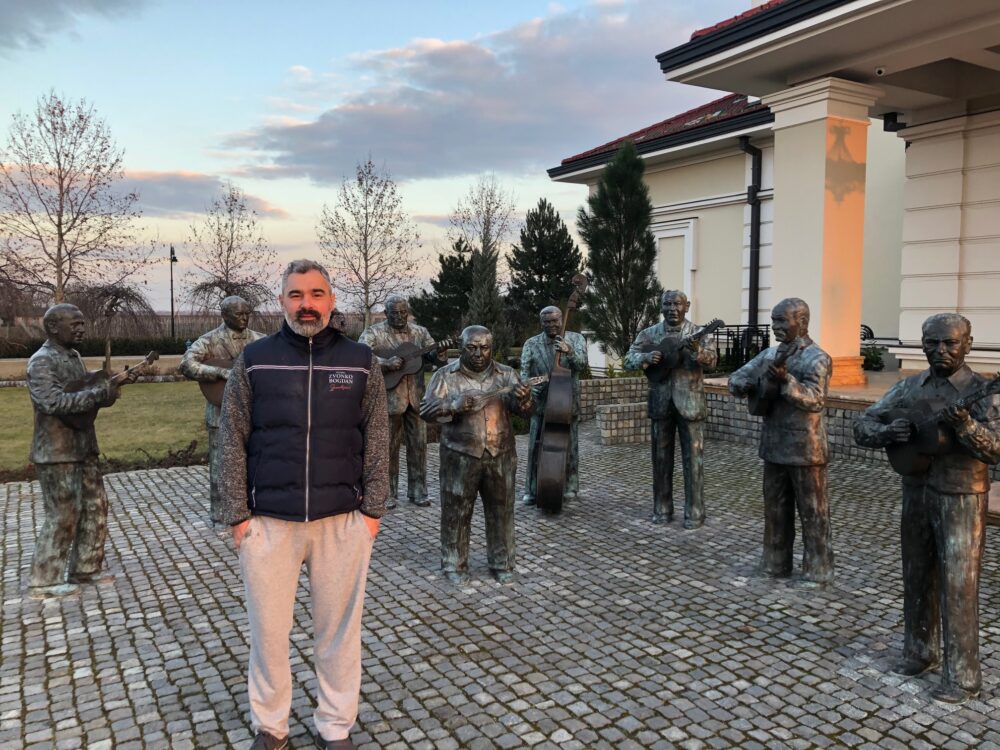
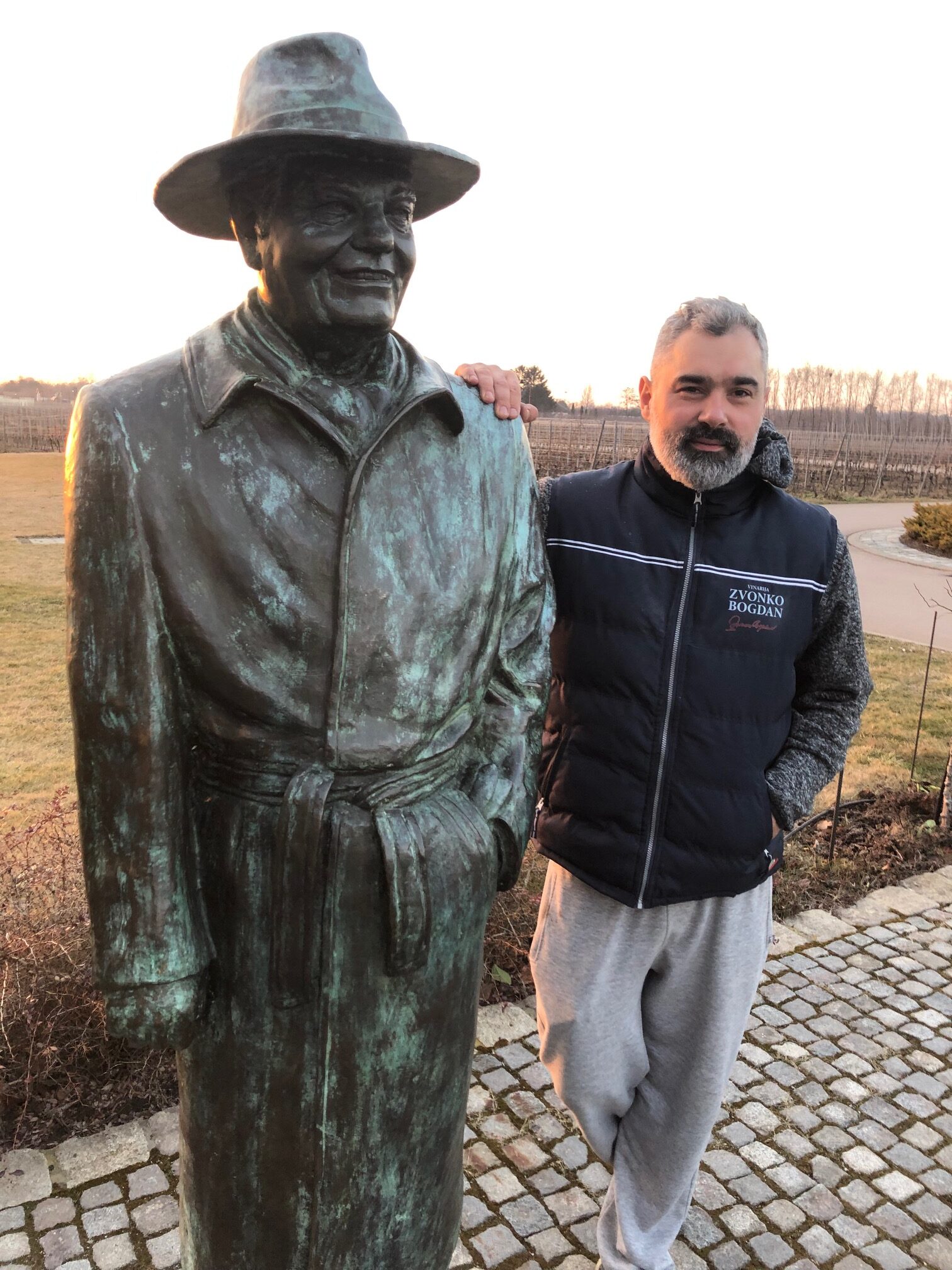
The project he encountered was full of unusual contradictions. The winery bore the name of a man who did not drink wine. Zvonko Bogdan had made his living from his voice for decades, yet at the beginning of the wine venture, as people at the winery joked, he could barely distinguish white from red. Nor could one of the tamburica’s greatest champions play two notes on the instrument.
“I don’t drink wine, I only taste it,” Zvonko would say. “My father drank enough for both of us. Thanks to him, I’m in good spirits even without wine.”
Behind the project stood Lajoš Čakanj, a discreet entrepreneur who gave no interviews but invested in buildings, art and the idea of making the winery a new picture-postcard landmark for Subotica. Zvonko gave it a name, a face and a story; Čakanj provided capital and vision; and the winemakers were tasked with ensuring that the quality in the bottle justified everything already built around it.
Zvonko agreed to the use of his name on one condition: the wine must meet the standard he had reached in music.
Srđan had therefore arrived at a winery that already looked as though it knew what it wanted to become. His job was to help it express that in every bottle.
First, he had to shed several preconceptions that he, like many others, had brought to Palić. Northern Bačka was imagined as a cool, high-acid region, better suited to white wines than great reds. Srđan found something quite different.
“By Hungarian standards, we’re very far south. We have as many sunshine hours as Hvar. The climate is perfect for great red wines.”
The second preconception was more persistent: sand.
The Palić wine region had become so closely associated with sand that many people pictured vines rooted almost in dunes. Lukajić laughed at the idea.
“People think the vines grow in sand, but the soil here is seventy per cent clay!”
Beneath the dark topsoil, clay extended for dozens of metres. Zvonko therefore already had a fallback plan if the whole wine venture failed.
“We’ll start digging clay. We’ll make a nice living from roof tiles and bricks!”
They never needed Plan B. But the clay offered Srđan something much more interesting than bricks: an answer to whether Palić could produce the kind of Merlot he loved. Unpretentious and balanced, yet layered, ageworthy and serious enough to become the backbone of the winery’s finest red.
Merlot had been Srđan’s first choice even before he arrived in Palić. He loved its adaptability, softness and ability to retain balance across different climates while still expressing the character of the soil. It was rewarding to work with in the cellar, a good foundation for rosé and a grape capable of producing serious reds in almost every Serbian wine region.
At Palić, 23 hectares of Merlot awaited him, out of a total of 27 hectares planted with red varieties.
“Merlot is the backbone of Cuvée No. 1. It comes from Ludaš. We believe in it so strongly that we sent one wine to Decanter straight after taking it out of barrique. We drew it off through the tap and sent it.”
The wine did not yet have a label, but scored 93 points at Decanter in 2021. It was a move somewhere between confidence and audacity: submitting a wine for judging straight from the barrel, before it even had a name.
A year later, when Merlot 2019 was already on the market, the wine was still developing and had yet to reach its peak. Srđan was unsurprised. He was looking for a Merlot that would still have something to say after several years, rather than revealing everything in the first five minutes of a tasting.
His attitude towards technology was equally clear. Lukajić unreservedly calls himself a modernist. He rejects the simplistic division in which modern equipment produces technically polished but anonymous wines, while every fault in a traditional cellar becomes proof of authenticity.
“Distinctiveness is already there in the soil, the vine and the climate. Technology and knowledge should preserve it and translate it into wine. A traditional approach doesn’t automatically mean a wine will express its terroir better. Sometimes it produces flawed wines that are then credited with having a special character.”
During his first year at Palić, he worked alongside Florent Dumeau. The changes were significant because they reshaped the style of wines the public already knew, rather than because visitors could see them.
For Pinot Blanc, they eliminated new small barriques, began pressing whole bunches and kept the wine in large stainless-steel tanks and old oak. Chardonnay called for a different approach: fermentation and eleven months’ ageing in 300-litre barrels, with only ten to twenty per cent new oak.
He wanted more than a wine that appealed at the first sniff.
“We weren’t playing around with styles just to offer people banana and pineapple. We wanted to draw a world-class Chardonnay from the grapes, a wine that would also age well in bottle.”
Approximately 20,000 bottles of Chardonnay 2018 were produced. It won a Grand Gold and 96.2 points at the Grand Tasting of Serbian Wines, and scored 90 points at Decanter. The recognition did not surprise Srđan. The winery had been working with that vineyard for around a decade and had finally come to understand its potential sufficiently well.
A more substantial change awaited Cuvée No. 1, the premium red that had been a signature wine even before his arrival. Earlier vintages had combined Merlot with Cabernet Franc and Blaufränkisch, the grape that gave it a local accent. Srđan later removed Blaufränkisch from the blend and introduced Cabernet Sauvignon.
The change offered a different interpretation of what Palić could produce. The proportions varied with the vintage, but the wine had to maintain the same direction: fullness without heaviness, ripeness without overripeness, and a structure in which no individual grape pushed itself ahead of the whole.
Three vintages-2016, 2017 and 2019-won gold at Decanter. When Caroline Gilby MW led a vertical tasting of four vintages of Cuvée No. 1 in Palić in 2023, she emphasised how rare such a sequence was. Only a little over one and a half per cent of wines entered in the Decanter competition win gold.
Perhaps even more important to Srđan was that the same winery could be recognised in every glass. The years differed and the proportions of Cabernet and Merlot changed, but the wines never seemed as though a different person had made them each time.
“I like tasting a winery’s entire range and recognising the same direction in every wine. If freshness and fragrance are its signature, they should run through the whole range. If it’s power and robustness, those should be recognisable throughout. I don’t admire wineries that have one exceptionally good wine and two exceptionally bad ones.”
The same discipline had to work where a wine was expected simply to make people want another glass, rather than win a major medal or age for years.
The rosé that would become one of the winery’s bestsellers had once been called Classic Rosé and contained 18 grams of residual sugar per litre. Its style gradually changed, the wine became drier, and the single horse on the label was replaced by a team of four.
Četiri Konja Debela-“Four Sturdy Horses”-was born.
Together with the red blend Život Teče, “Life Goes On”, and the white wine Osam Tamburaša, “Eight Tamburica Players”, the rosé became part of a range that spoke Zvonko’s language. The titles of his songs, horses, traditional farmsteads and tamburica musicians became the winery’s visual and commercial identity, giving the labels a connection to him that went beyond a famous singer’s name.
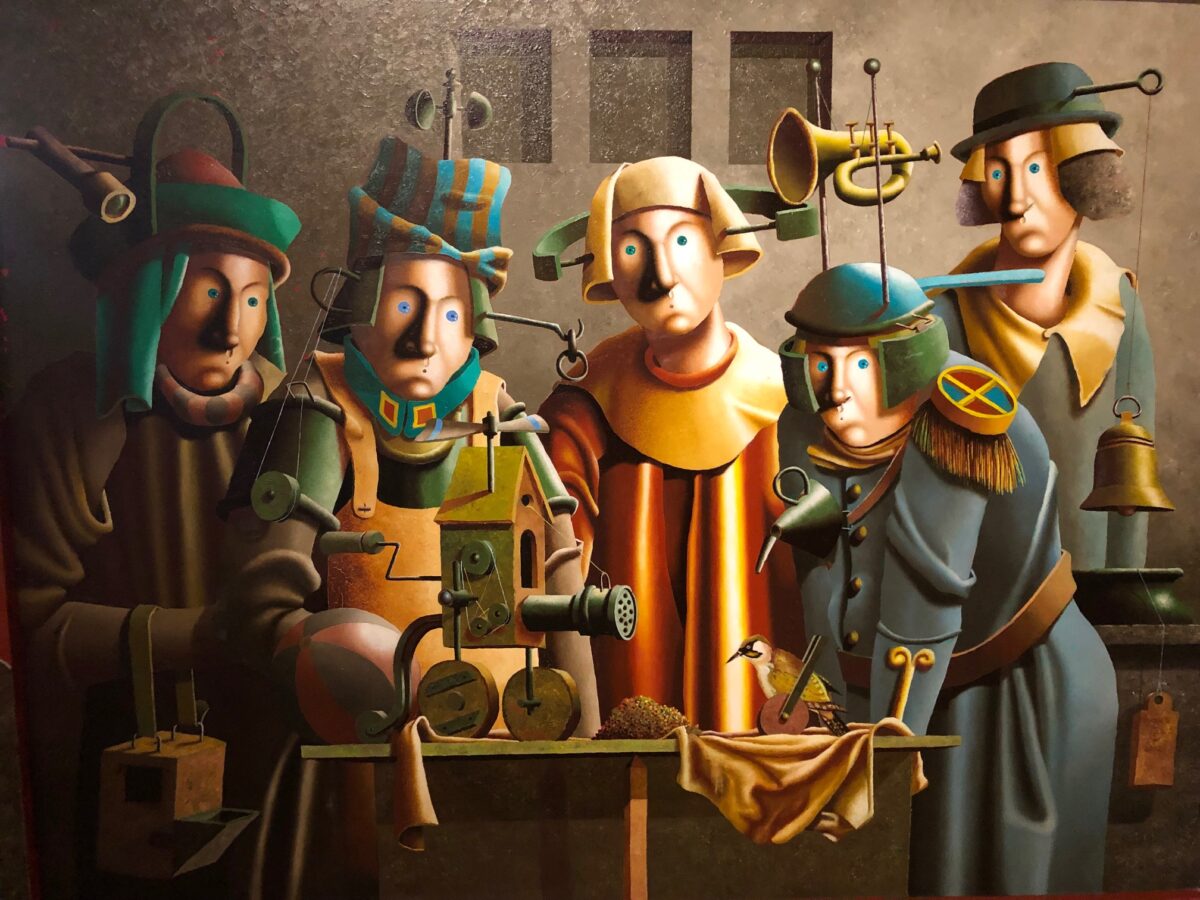
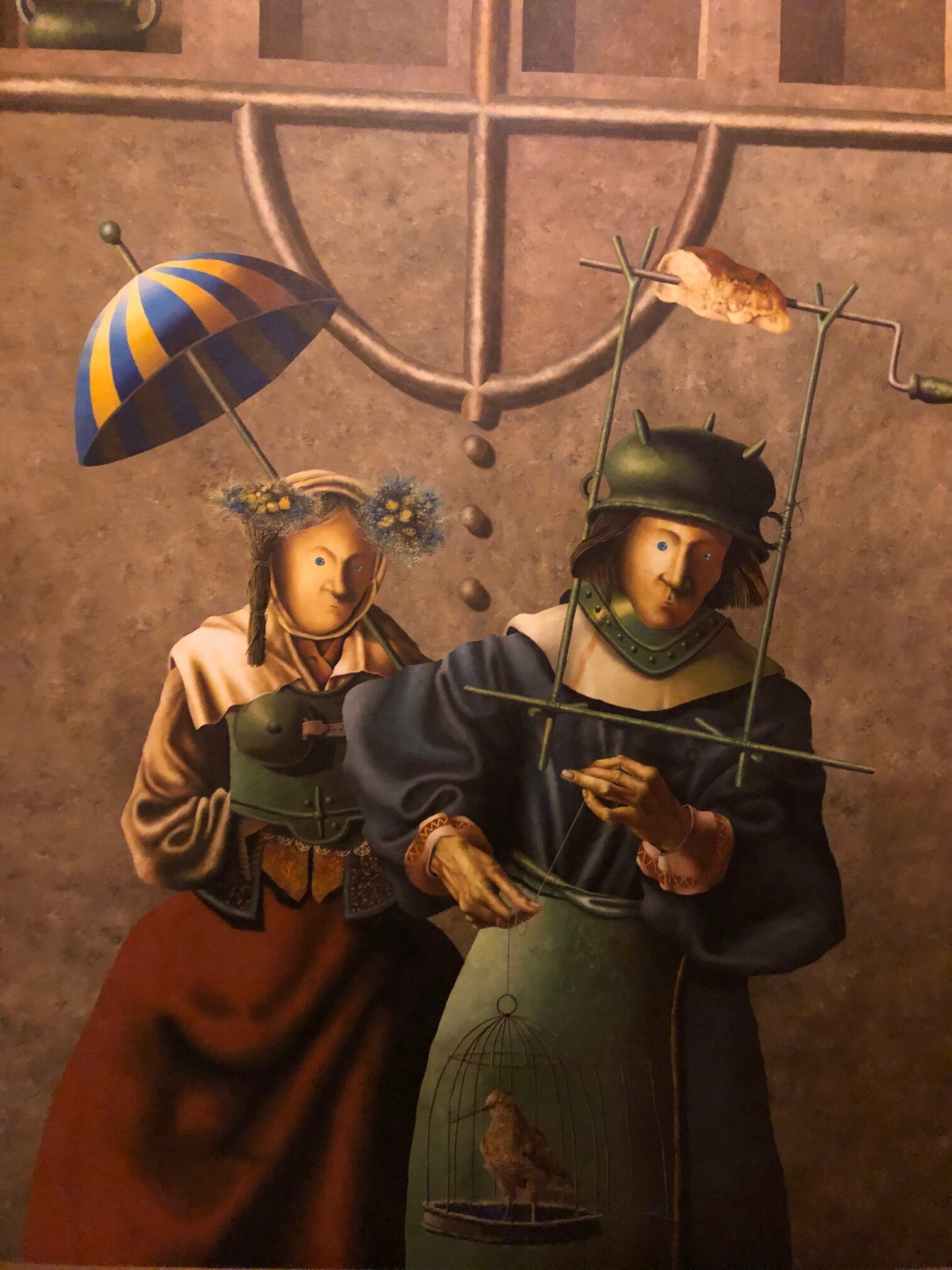
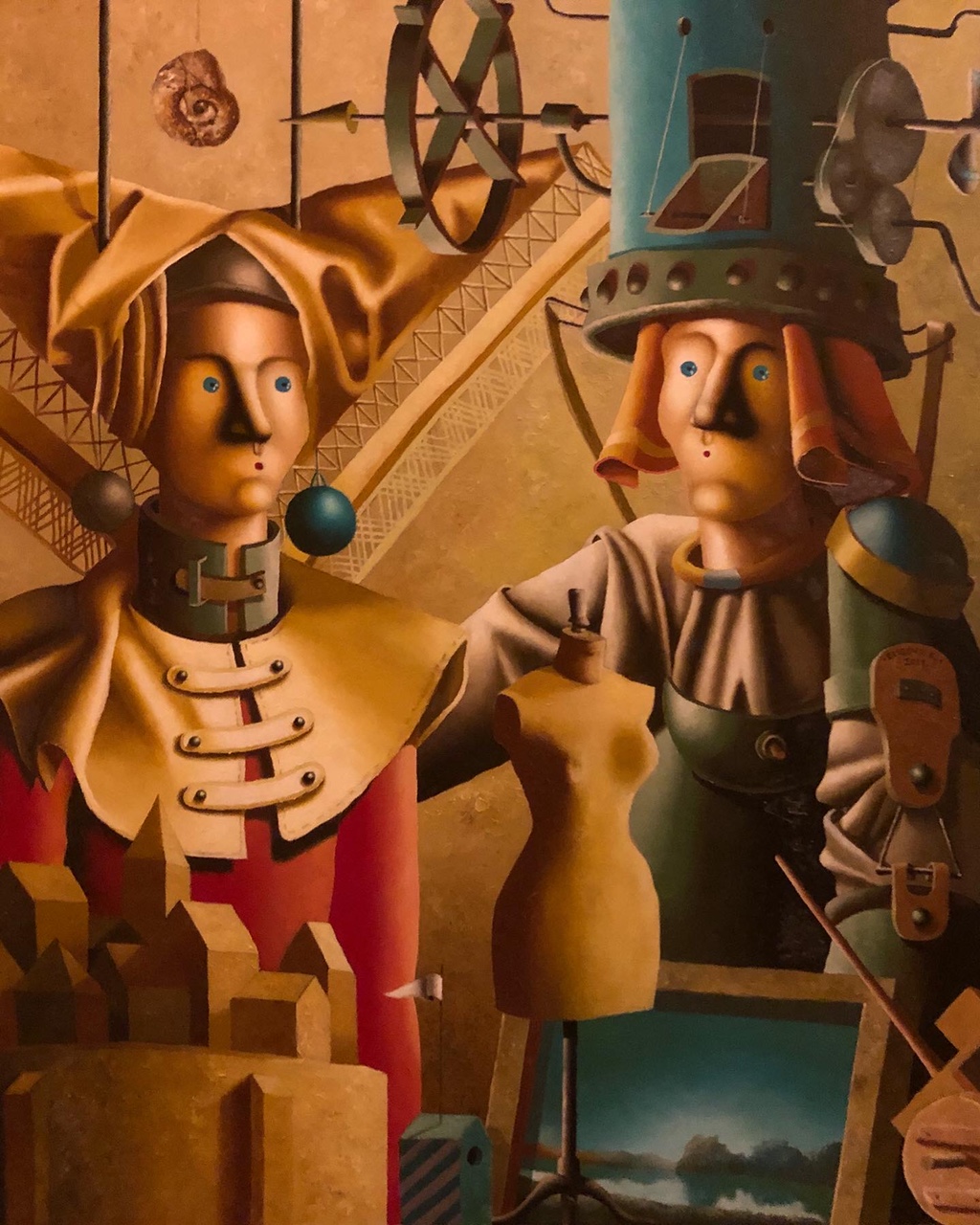
Even before Srđan’s arrival, the winery had understood how important a label could be. When a poll to choose a new design appeared on its website, more than seven thousand people voted within days, almost a third of them from Croatia. The winner was a reproduction of The Winegrower and His Wife by Sombor painter Eugen Kočiš III.
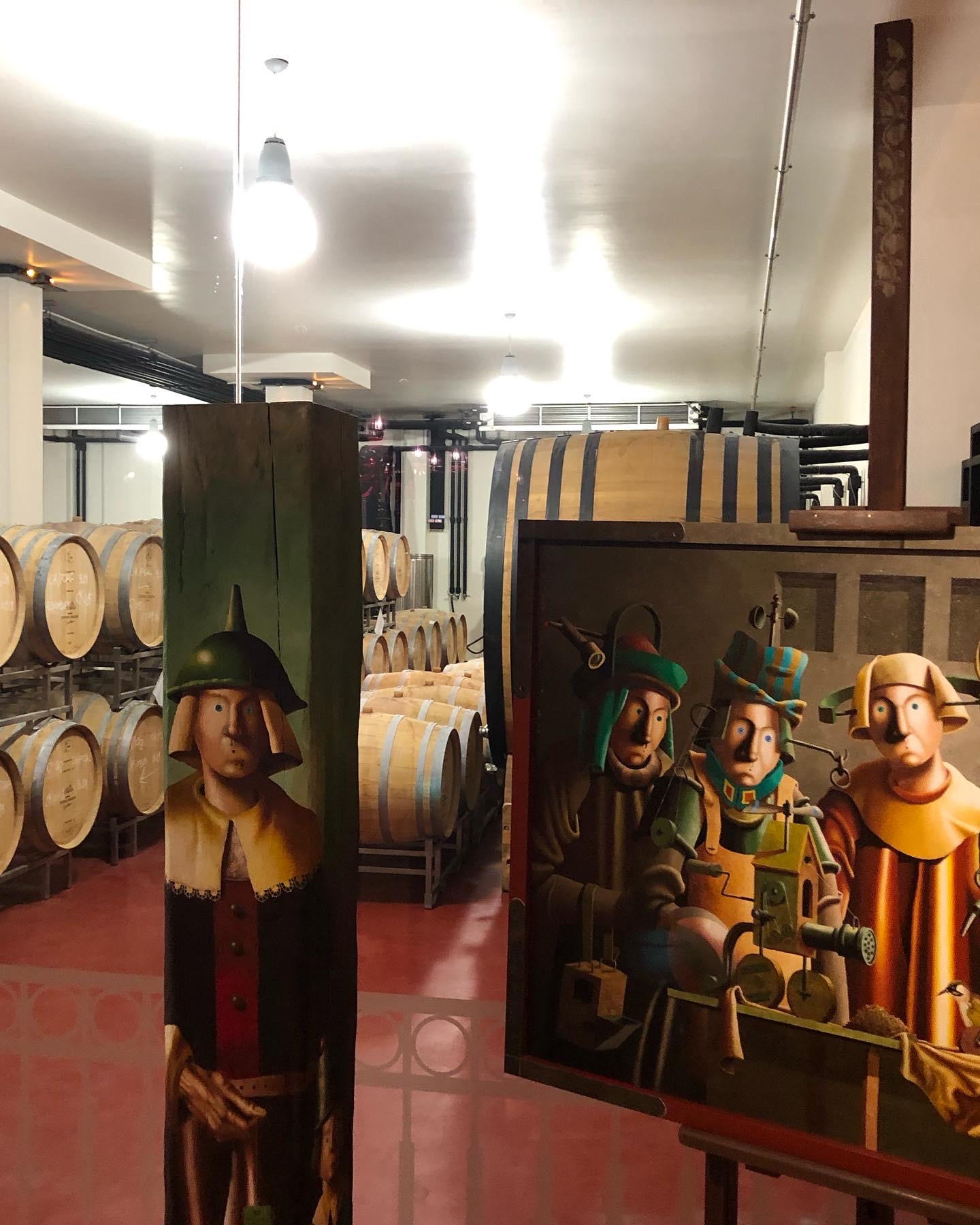
The first 3,864 bottles of Merlot sold out in a matter of days. Kočiš’s wooden-looking, somewhat Pinocchio-like figures continued to appear on the premium labels and became one of the winery’s most recognisable visual signatures.
The story resonated with Srđan because it confirmed what he believed about creating wine. Good grapes and precision in the cellar are insufficient unless a wine has a name, a face, a place in the market and a reason for someone to take it off the shelf. Equally, even the most beautiful label cannot conceal a poor wine for long.
Style has to be built on both sides of the bottle at once.
That was precisely what happened with the rosé. The Merlot grapes for Rosé Sec came from the same vineyards as those for Cuvée No. 1. Some became a serious red intended for ageing; others became a modern rosé that ranked near the top of Serbian wine competitions for years. Different purposes did not mean different standards in the vineyard.
“As we grew, we came to understand our production and vineyards better and better. We knew what we could achieve, so we improved the wine year after year.”
Rosé Sec 2019 scored 92 points and came second among fifty rosés at the Grand Tasting of Serbian Wines. Meanwhile, however, the market had more enthusiastically embraced Četiri Konja Debela, the wine that had undergone perhaps the greatest stylistic transformation in the portfolio.
Lukajić saw no inconsistency in that. To him, consistency meant knowing where the winery was heading and improving every wine until it came closer to that goal, rather than finding a formula once and never changing it.
The same happened with sparkling wines.
Years after the handmade Babaroga, his early fascination found a new chapter at Palić. At Caroline Gilby’s 2023 masterclass, he unveiled two sparkling wines made without dosage.
Pinot Blanc Brut Nature 2019 had spent 32 months on its fine yeast lees. It was fresh, taut and lively. Chardonnay 2018 had only three grams of residual sugar per litre, yet was riper, fuller and stylistically closer to classic Champagne.
The same winery and the same winemaker, yet two different interpretations of sparkling wine.
“The winemaker alone doesn’t create a winery’s style. It’s created by the people who run it, the vineyard workers and everyone who works there. Each person adds a small piece to the mosaic we call wine.”
For someone who openly calls himself a modernist, Lukajić says little about authorship. He does not behave as though every bottle springs from his own solitary genius. He sees wine as the shared achievement of vineyard, cellar, owners, colleagues and market.
His time in South Africa strengthened that attitude towards work. In Stellenbosch, he encountered not only different vineyards and technologies but a culture in which winemaking is inseparable from life.
“There, winemakers literally live at the winery. That’s a winemaker’s life. Family comes afterwards.”
The sentence sounds almost harsh, particularly coming from someone who had stopped working for several wineries in parallel precisely because he needed a more settled life. But for Srđan, focus did not mean less work. It meant being able to direct all that work towards one place.
That systematic approach is precisely what he misses when he looks at Serbia’s wider wine scene.
He does not question its energy. On the contrary, he considered the energy of owners, winegrowers, winemakers, journalists and drinkers its greatest strength. In a short time, vineyards had been planted, wineries built, new brands created and domestic consumers’ attitudes towards Serbian wine transformed. Serious money was being invested in a country where wine promised neither a quick nor a certain return.
Yet enthusiasm cannot replace a system indefinitely.
“We lack organisation, planning, a realistic approach to economics and serious management. Winemaking is a love of flavours, nature, tradition and history, but it is still a business that must be taken seriously.”
That is why he believes in the generation of young winemakers who travel, study and follow developments around the world, while reminding them that neither knowledge nor enthusiasm can replace a plan. There is little use in an ambitious blend if nobody has calculated what the market can afford to pay for it, and little sense in planting a vineyard without knowing what will be made from its grapes.
“It’s good that our wines will keep pace with what’s happening around the world. I only hope we preserve our own distinctive qualities and perhaps discover potential we don’t yet know we have.”
There is no fear of the word “trend” in that. Srđan does not believe wine becomes less authentic by understanding the age in which it is made. Problems begin only when a trend replaces an idea, and technology tries to compensate for something missing from the vineyard.
That is also why Zvonko Bogdan’s name on the winery represents more than a marketing advantage. It sets a standard the wine must meet.
If a man has spent decades building a recognisable musical style, the winery bearing his name cannot afford to have one bottle sing while another misses the key.
Srđan therefore sees Zvonko Bogdan and Lajoš Čakanj as two different forces that have come together in the same project.
“If Zvonko is the man who works tirelessly to promote this region, then Lajoš Čakanj is the architect of modern Subotica. Together, through the winery, they have created a picture-postcard landmark for the city.”
One has spent his whole life before an audience; the other decided he would not utter a word to journalists. One gives the winery its voice; the other works behind the scenes to build a setting in which that voice will endure. Between them stands a winemaker who must ensure that everything that looks impressive from the outside holds together when the bottle is opened.
After a day spent measuring sugars, acids, yields, humidity and temperature, the road from home to Palić remains a place where he need measure nothing. He walks to think.
“I’m an aimless walker.” Perhaps that is why he needs miles without a destination. He has left enough goals in the cellar.