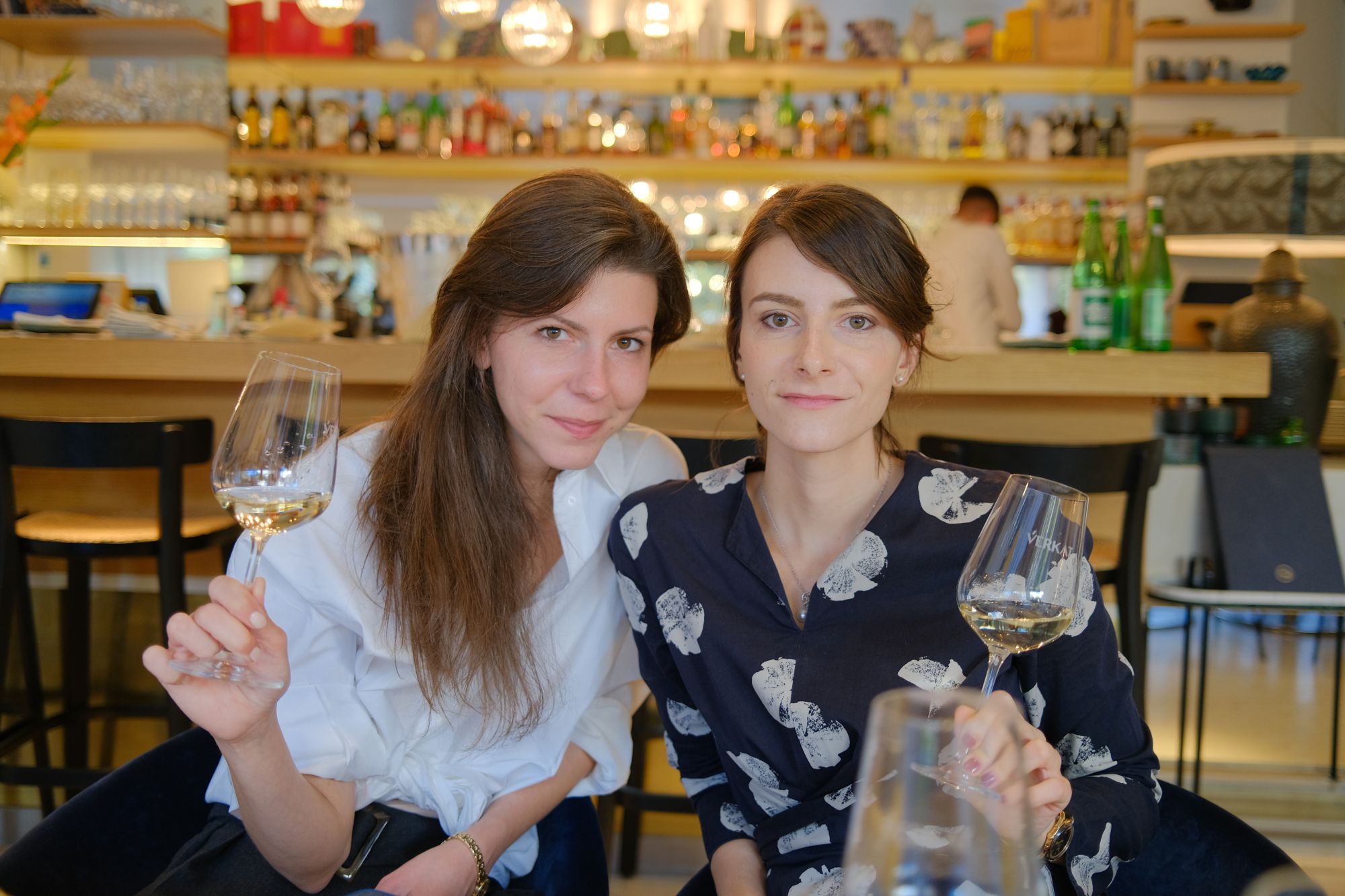
“So you’re the Vrkatić family?”
“That’s right.”
“But the winery is called Verkat. Why not Vrkat?”
Nataša Vrkatić, who holds a master’s degree in law and never planned to become a winemaker, smiles as though she has heard the question a hundred times but has yet to tire of answering it.
“First, Vrkat is difficult to pronounce. And second, there’s a story.”
At Verkat, stories matter almost as much as wine. They live in the names on the labels, old photographs, their father’s hat displayed in the winery, and the name the family discovered while digging into its own past.
“Verkat is the original form of our surname, which is German in origin. We found it in old records from Berkasovo, a village near Šid. Later, it changed to Veketić, then Verkatić, eventually becoming the Slavicised Vrkatić. With the winery’s name, we went back to the beginning.”
In the same records, they found an ancestor who paid his taxes in wine. Perhaps that detail alone is not enough to establish a family winemaking tradition, but it is quite enough for a good story. Especially in a family where a surname is more than a handful of letters: it is a trail of migrations, changes and lives preserved in an archive.
“People often ask whether we’re Hungarian or whether there’s some hidden twist to our surname. That’s why we keep an old photograph of the original signature in the cellar: Verkat. It is our father’s surname, and he is the reason all this came about.”
Their father, Lazar Vrkatić, was a philosopher and professor, a bohemian and a poet at heart. From the age of twenty-seven, he almost invariably wore a hat. He arrived in Novi Sad as the poor son of a single mother, with little beyond ambition, persistence and the surname his daughters would later recover from the family’s history.
“Dad always wore hats. That’s why we keep one of his hats on display in the winery today. It’s a relic of our beginnings.”
Beside it are the lyrics to Balašević’s Ćaletova pesma-“Dad’s Song”-which Lazar particularly loved. The hat beneath which a devil slumbers, the wine, restlessness and bohemian wanderings seem to have found their natural home there. Lazar knew Hegel by heart, but his knowledge of wine came from somewhere other than textbooks. He was neither a winegrower nor a winemaker, at least professionally. He was a man who loved wine and found in it another way to speak about life, friendship and the spirit.
Nataša remembers that he most enjoyed reading Hegel with an ordinary cold wine spritzer. The vineyard would enter his life later, almost by chance, without specialist knowledge or a grand plan. But there was enough love in that decision for Verkat to emerge from it many years afterwards.
In 1999, while others were buying flats, holiday homes or cars, Lazar Vrkatić bought a vineyard he had never seen. Someone told him that an old cooperative plot in Banoštor was for sale, planted with a variety almost nobody wanted any more. For him, the fact that it was a vineyard was enough.
“He wanted soil beneath his fingernails, to feel a bunch of grapes in his hands and have his own rows of vines beneath his feet. When he asked what variety it was, they told him Malvazija. He wasn’t even sure what that meant, but it didn’t matter to him.”
Analysis later confirmed that it was Malvazija Istarska, planted back in 1957. The vineyard was older than many winemakers bottling their own wines today, and it became Lazar Vrkatić’s wine legacy. Every autumn, he and his friend, winegrower Marko Kostić Puca, made wine from its grapes for themselves and their friends.
Nobody can now establish with certainty how Malvazija Istarska ended up on Fruška Gora. What remains is a story passed around Čerević for long enough to have become almost a family truth.
“According to one version, a man from Čerević had a son doing his military service in Rijeka. He needed money to visit him, and the cooperative gave it to him on condition that he didn’t return empty-handed, but brought back grafted vines of some variety from Istria. That’s how Malvazija came to Fruška Gora.”
In another version, one of the cooperative’s managers travelled to collect the vines. Either way, what arrived from Istria was enough planting material for approximately a hectare of vineyard at the Kaluđerica site. Over the years, the old vines were removed, but their plant material was preserved and propagated, so the Malvazija lives on today in Verkat’s rejuvenated vineyard.
In the village, they once called it mamlazija, a teasing play on its name and the word for a fool. It could reach 14.5 per cent alcohol and, according to local wisdom, befuddle a person faster than rakija. Lazar loved it just as it was. He had no intention of turning it into a business and imagined neither labels nor markets nor awards. He made wine for family, friends and long gatherings in which the boundary between philosophy and bohemian living easily disappeared.
“He had a saying: ‘I don’t drink for my own pleasure, but to give him a drink.’ By ‘him’, he meant the spirit,” Nataša recalls.
The Vrkatić harvests consequently bore little resemblance to ordinary vineyard work. In his book Ovoga mi vina, Novi Sad writer and journalist Pero Samardžija described one as a festival of grapes, tamburica players, mud and laughter that ended in the village community hall with a performance by Merima Njegomir exclusively for the harvesters.
The vineyard’s audience consisted of friends, and the wine never left the household. Nobody could have guessed that this unusual Fruška Gora Malvazija would one day become the foundation of a winery and the signature of three sisters who had never intended to make wine.
Malvazija remains rare on Fruška Gora today, and some twenty years ago it sounded almost like a viticultural mistake. When I published my first collection of Wine Stories, one of the few Serbian wineries I included was Brindza Winery in Bačka Topola. It too produced Malvazija Istarska, but had little need for a market: every year, a single customer bought the entire production in advance, while the wine was still in tank, without even asking for labels. It was his private wine secret.
Today, several Serbian wineries make Malvazija, but only one came to it by inheriting a father’s vineyard that, by all the rules of wine geography, should never have existed there.
Lazar Vrkatić died tragically in 2007. His daughters-Nataša, a lawyer; Sonja, an art historian and fine arts graduate; and Ivana, a historian-were left with a vineyard they had not chosen and work about which they knew almost nothing. What had been a place of pleasure and gatherings for their father became, overnight, an inheritance they could not simply walk away from.
For a while, their mother maintained the vineyard as best she could, and they sold the grapes. That continued until 2014, when the sisters had to decide whether to leave their father’s Malvazija to someone else or try to give it a new life.
“We were in our twenties, at the age when you decide whether to leave or stay. That was when we said we wouldn’t abandon Dad’s Malvazija.”
The decision took shape far from Čerević, in a restaurant at Mirišta on Montenegro’s Luštica peninsula. They were drinking Malvazija Istarska and wished that one day their own might appear on the wine list there.
“We said: we want to make a wine like this and one day drink our own Malvazija here. It wasn’t strategic planning. It was sheer determination.”
Sonja imagined a small boutique winery, almost an artisan workshop, where wine would continue the family story and provide room for her artistic sensibility. Alongside her father’s vineyard, Nataša was driven by dissatisfaction with the wines then available.
“It frustrated me that in many Novi Sad restaurants you couldn’t get a decent wine that didn’t come in plastic packaging. We wanted to make something different, although we had no idea what we were getting into.”
Their father’s friend and winegrower Marko Kostić Puca allowed them little room for romantic illusions.
“He told us we knew nothing, but that we would learn.”
Nataša spent the next three years in the vineyard, learning pruning, vine protection, analysis and green harvesting. The lawyer approached viticulture as an entirely new profession, with no privileges conferred by the family story.
“I studied as though I were doing medicine, except here the patient never gets better. It keeps needing you all over again.”
The old vineyard produced too many grapes for wine intended only for friends, but too few for a serious commercial launch. The sisters therefore decided to preserve Malvazija as their father’s legacy and Verkat’s distinguishing feature, while expanding the story with varieties belonging to Fruška Gora. They planted Grašac and Muscat Hamburg, traditionally also used in Srem to make rosé.
From the outset, they reserved Malvazija for the top of their range. When they later returned to Mirišta and opened their own bottle there, they fulfilled the promise they had made themselves several years earlier. A silver medal at Vinistra followed, along with introductions to some of Istria’s best-known winemakers.
“It was a dream come true. But our Malvazija is no longer only Istrian. After so many decades in this soil, it belongs to Fruška Gora.”
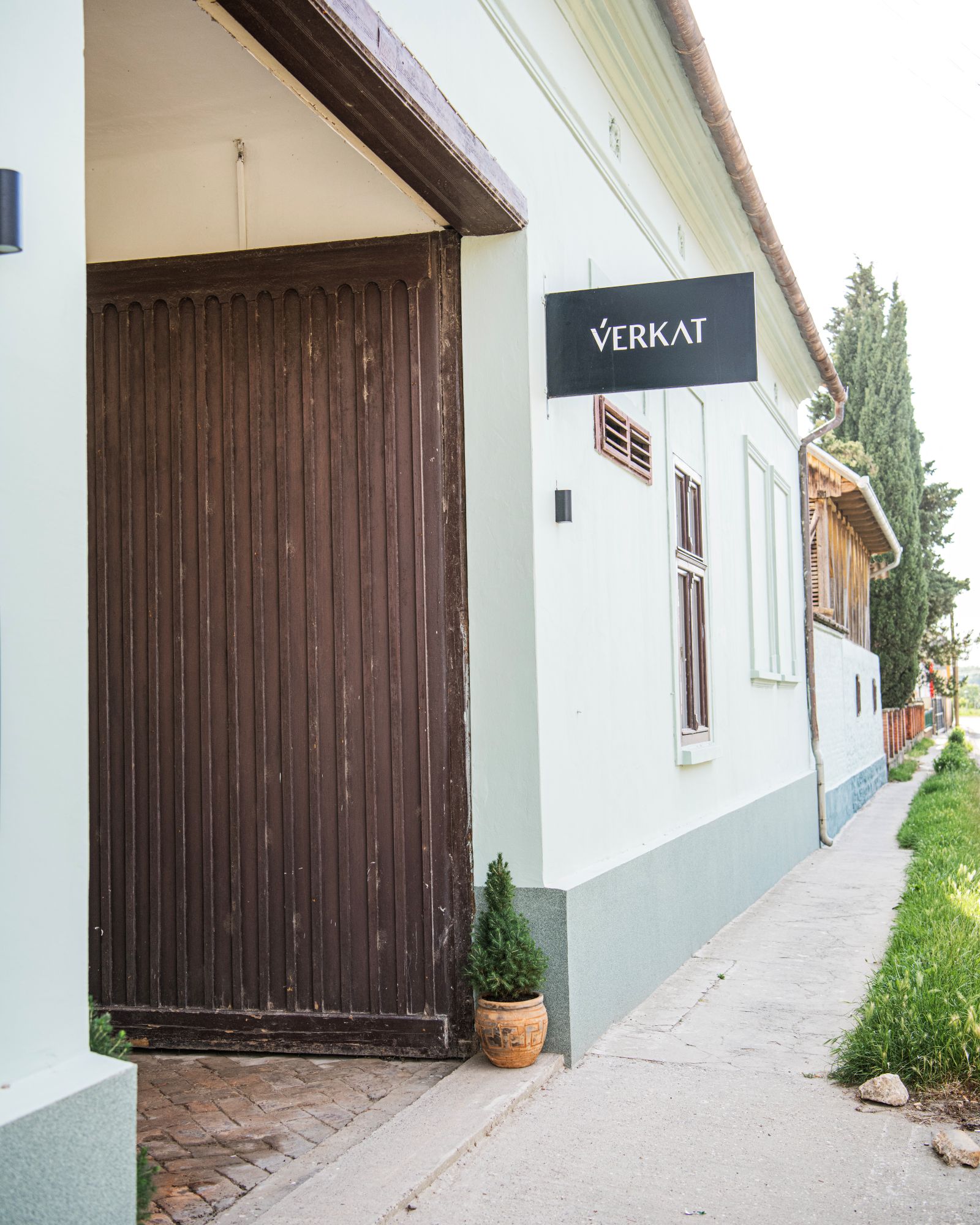
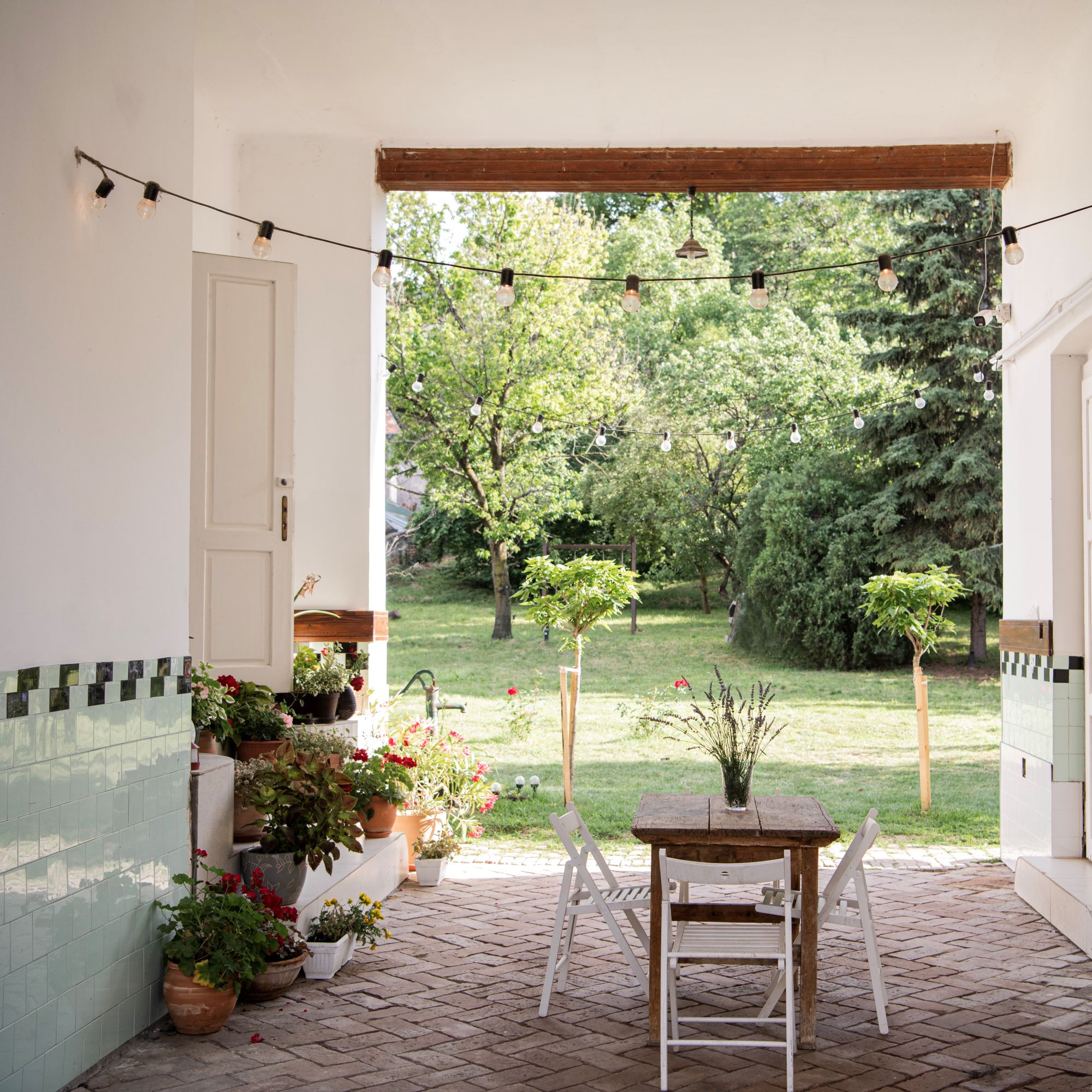
They officially founded Verkat Winery in 2018, and their first labels came from that vintage. The following summer, they opened Verkat Wine House in Čerević, on an old property with a large carriage gateway, a spacious courtyard and an underground cellar that became the tasting room. They wanted a place where someone could arrive without specialist knowledge and stay all day.
“The ideal thing is to come in the morning, accidentally forget your phone and not leave for home until dusk. At Verkat, you don’t notice the day passing. Someone always drops by, something is always happening, there’s work in the vineyard, good food, music and stories that end in laughter.”
That atmosphere also shaped the sisters’ approach to wine tourism. They want to bring wine beyond the circle of connoisseurs and avoid surrounding it with unnecessary rules. At their house, a tasting might accompany an exhibition, a concert, a gathering in the courtyard or a walk through the vineyards. What matters is that every event respects Fruška Gora, Čerević and the people who live there.
“We’re a small local producer, so our relationship with our surroundings matters to us. We’re open to unusual ideas and collaborations, provided they come from a sincere motive and respect for nature and the community.”
Initially, Verkat was primarily Nataša and Sonja’s undertaking, with Ivana gradually becoming more involved. None was an oenologist or agronomist, so they sought expertise from people who could turn their ideas into wine. Jovica Urošević oversaw the first vintage, Tanja Drakulić the next two, and Danijel Sokolović has worked with them since the 2021 harvest. Sonja’s husband, Zoran Mikalački Zuja, also joined them in the cellar: an electrician who had spent twenty years working as a mechanic at Harley-Davidson before his professional path took an unexpected turn towards wine.
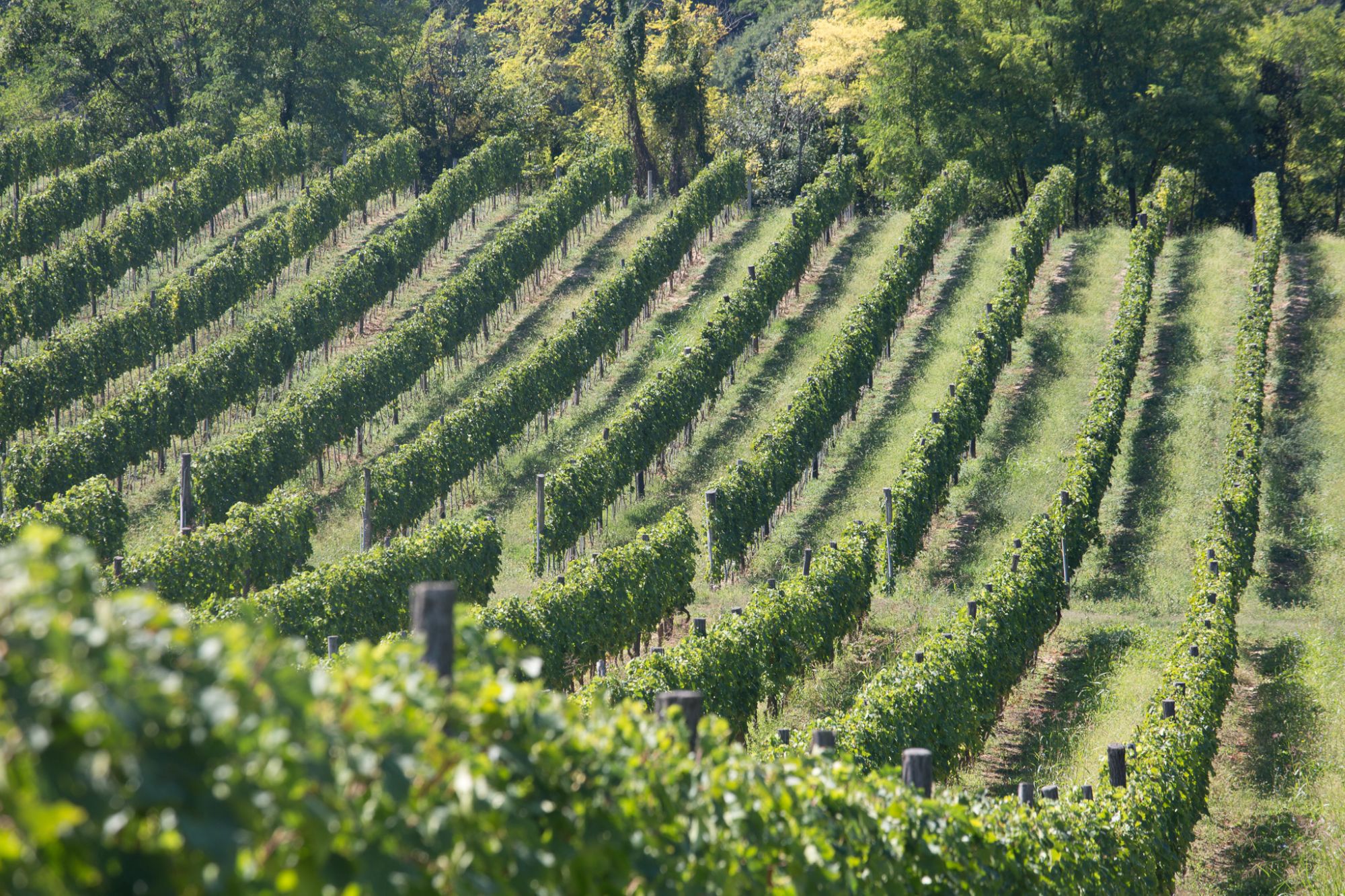
Their vineyards occupy two sites. At Kaluđerica, in a kind of saddle between two slopes above Čerević, grows the Malvazija that preserves the link with Lazar’s old planting. The second vineyard is at Bikonj above Banoštor, on a steep slope overlooking the Danube, planted with Muscat Hamburg and Grašac. The rows are widely spaced so machinery can negotiate the incline, and the river reflects light back towards the vineyard. The sisters therefore like to say that three suns shine on their vines.
The winery has remained small, with production that allows them freedom from the demand for sameness. They need not bottle identical wines every year or turn every idea into a permanent label. They can try, make mistakes and try again.
“For us, this work is a pleasure. We’re small, so we can play. If a good idea comes along and everyone agrees, we jump in.”
Their greatest breakthrough, however, came from the Grašac vineyard on the steep slope above the Danube, in a year when almost everything seemed destined to go wrong. That harvest produced Grašac 4.0. The number looked like the announcement of some technological advance, but concealed a vineyard disaster.
Hail, rain and disease marked the 2021 harvest. So few healthy grapes remained on the nine thousand Grašac vines that the sisters picked almost berry by berry, using nail scissors to remove anything unfit for the cellar. Yields fell to approximately four hundred grams per vine.
“That’s why 4.0. It isn’t a software version; it’s four hundred grams of grapes per vine. It was pure despair. Three weeks of rain, botrytis, hail… All our plans fell apart. At one point, we even considered making a sweet wine, and in the end we said: we’ll take whatever we can get.”
As though the vineyard troubles were not enough, members of the team dropped out one after another with COVID during harvest. Sonja and her husband Zoran, then the future cellar hand, finished the work. His experience as an electrician and twenty years working on Harley-Davidson motorcycles could hardly help him predict what would emerge from the barrel.
What looked like defeat in the vineyard became Verkat’s greatest success in the glass. Grašac bijeli 4.0 from 2021 won platinum and 94 points at the first GROW du Monde international competition for wines made from Grašac, followed by platinum at Wine Vision by Open Balkan. Their other wines won gold medals that year too, but Grašac pushed Verkat into the spotlight almost overnight.
“When the awards arrived, Sonja and I were sitting in the courtyard drinking coffee. We looked at each other and said: perhaps now we really are a winery.”
Little about that wine resembled what people usually associated with Grašac. A variety often described as neutral revealed lavish aromas, concentration and a character even the sisters had not expected.
“Grašac 4.0 did something we thought didn’t happen. From a non-aromatic variety, we obtained an intensely aromatic wine.”
Success did not change how the sisters thought about Verkat. They did not rush to increase production or turn every good vintage into a formula to repeat. Grašac 4.0 remained, above all, a record of a difficult year, drastic selection and the decision to make the most of the few grapes left.
Its name, however, travelled beyond the label. Nataša’s son Vid was born that same year, and family friends began calling him Grašo. At Verkat, it seems, neither wine nor nicknames can be entirely separated from a story.
“Sonja and I can talk about anything over wine. For us, Grašac is that kind of wine, almost a social institution: you open a bottle and the conversation starts by itself.”
Their only red wine so far, FranFrankovka, acquired its name in a similar way. It is a blend of Blaufränkisch-locally called Frankovka-and Cabernet Franc. The latter accounts for only fifteen per cent, but Nataša insisted that its character was sufficiently prominent to deserve a place in the name.
“In the end, our winemaker Danijel Sokolović said we’d call it FranFrankovka. And that was that.”
The name began as a joke, but the wine is taken seriously. That is a familiar Verkat pattern: behind a playful name, unusual label or family quip stands a wine made without shortcuts. Their wines have stories, and those stories explain how the wine reached the bottle.
Art was part of Verkat from the beginning. Sonja, a trained artist and art historian, brought it into the story by shaping the space, the labels and the way each wine would be presented. Exhibitions, concerts and gatherings take place in the courtyard rooms, while the old house itself offers more history than the sisters could invent.
The estate once belonged to the family of Czech Count Rudolf Kotek, a benefactor responsible for building several churches in the area. Judge Nikola Igić also lived in the house, and Paja Jovanović included his likeness in the monumental painting The Migration of the Serbs. A reproduction hangs in Verkat’s cellar, a small connection between the Čerević house and one of the best-known works of Serbian painting.
There is also a legend that Johann Strauss II stayed on the estate and sketched themes for The Blue Danube there. There is insufficient evidence to turn the story into historical fact, but the people of Čerević repeat it with the confidence of those who seem personally to have held Strauss’s paper while he wrote down the notes.
“Fruška Gora loves legends, and this one suits us perfectly. If Strauss really did compose beneath our vineyard, then wine here has always been connected with art,” Nataša laughs.
In such surroundings, a guest is invited to do more than taste. The sisters want visitors to remember the courtyard, cellar, music, conversation and view towards the Danube, because they believe a place changes how we experience wine.
“Aesthetics and surroundings shape our impressions, even our behaviour. Drinking wine in a formal hall, with tamburica players, or on a wooden chair in a little shack after a walk are different experiences. In each place, you experience and remember the same wine differently. Here, everything is relaxed, unassuming, open and, above all, friendly.”
That is why Verkat has always sought to make newcomers feel welcome. Wine events can often seem like a closed world with rules outsiders do not know. The sisters care more about introducing people to the vineyard, landscape and culture from which wine comes. Once someone has walked among the vines, smelled the earth and looked across the slopes above the Danube, the glass placed in their hand afterwards acquires a different flavour.
That openness does not mean Verkat wants to become large. They gradually increased their vineyard area, developed production and began exploring red varieties alongside Malvazija, Grašac and Muscat Hamburg. But figures alone did not determine the limits of growth. Around ten hectares is enough for them to remain a boutique winery, know every vineyard and preserve the freedom that drew them into the venture.
“We don’t know whether we’ll ever be big, and it doesn’t worry us. We want to be ourselves. Our aim is neither to make the same wines every year nor to follow other people’s expectations. We’re small enough to explore and serious enough to keep some experiments out of the bottle.”
Perhaps that is why wine experts quickly recognised the hard work behind their playfulness. Critic Igor Luković described their development as one of the most dramatic improvements in quality from vintage to vintage on the Serbian wine scene. For a winery founded by three outsiders, without an inherited cellar or an education in oenology, it confirmed that knowing little can sometimes be an initial advantage-provided years of learning and work follow.
Nataša, however, dislikes Verkat being explained solely as a “women’s winery”. The fact that three sisters founded it is an important part of its identity, but no reason for different standards. The vineyard makes the same demands of them as of anyone else, and a wine cannot be defended by the gender of whoever made it.
Their distinctiveness lies more in how they share responsibility. Sonja has had the strongest influence on the winery’s visual identity and artistic character; Nataša has taken on much of the organisation, communication and public presentation; and Ivana later became increasingly involved in the shared business. Alongside them stand winegrowers, oenologists, a cellar hand and family members, so the romantic image of three sisters making wine entirely by themselves has never been complete.
“This work is impossible without a team. The three of us can have an idea and a vision, but the vineyard and cellar very quickly show you how many people, how much knowledge and how much discipline it takes to get wine into a bottle.”
The vineyard was quickest to strip away their beginner’s overconfidence. Initially, they did not know everything that was impossible, so they dared to imagine more. At the same time, they had to learn that nature would not adapt to their plans. A single hailstorm, a few weeks of rain or a misjudged harvest date can undo months of work.
“A vineyard teaches you how small you are. You can plan everything, invest money, knowledge and time, and then something happens that you cannot influence. All you can do is accept what the year has given you and try to make the best wine from it.”
Verkat grew from precisely such attempts. Its ten or so hectares accommodate Malvazija that arrived on Fruška Gora almost by chance, Grašac that became a champion out of a vineyard catastrophe, Muscat Hamburg rosé and a red wine whose name began as a joke. They also hold their father’s hat, Balašević’s song, Hegel, the Strauss legend, Paja Jovanović and three sisters who inherited a vineyard and the question of what to do with it.
They did not find the answer all at once. They built it over years, first selling grapes, then learning vineyard work, seeking people to help them in the cellar and, finally, creating wines good enough to give a family memory an independent life.
Lazar Vrkatić probably could not have imagined that a vineyard bought unseen would one day bring international awards. He had not bought it for that. He wanted his own vines, wine for friends and somewhere occasionally to dilute philosophy with a cold spritzer. His daughters preserved that spirit and continued his story in their own handwriting.
When darkness falls in Čerević and the last guests are still sitting in the courtyard, the hat in the cellar begins to look like more than a relic. It recalls the man who started everything, but also the distance his daughters have travelled since. Verkat is now a living winery that owes Lazar Vrkatić its first step.
Perhaps that is the outcome a philosopher with a cold spritzer would most readily understand: a spirit is preserved by allowing it to go on living in a new form.