“What pleasure-seeker is going to come to an industrial estate to enjoy wine?”
Ivan Trivanović asks without bitterness, more like a man who has long understood that a love of wine can arise almost anywhere, but not every place can be sold as a wine-country postcard. For years, the family winery operated in an enormous building in Šid, without signs or directions, surrounded by industrial facilities. Travellers could pass without suspecting that behind the grey walls lay a Grašac that helped restore an old name to one of Fruška Gora’s great grapes, one of Serbia’s most awarded rosés and a Shiraz whose entire vintage went to Australia.
Nobody reached the cellar by accident.
“Everyone uses Google Maps these days. I send a link and they arrive right at the door. So far, I haven’t needed people turning up unannounced, because I haven’t seriously developed wine tourism in Šid.”
The building had never been designed as a winery. The Trivanović family built it for their electrical manufacturing business, and wine moved in only after the premises lost their original purpose. It proved almost ideal: when temperatures outside fell to minus twenty, the interior stayed around two degrees above zero; in summer heat of thirty-eight degrees, it rarely exceeded twenty-seven, even without cooling. A building erected to manufacture light fittings unexpectedly became a cellar where darkness and stable temperatures protected wine.
There was something symbolic in that change of use. Ivan’s father Dragan, known to everyone as Brko-“the Moustache”-had spent his working life dealing with light, then devoted the rest of it to something that matures best in darkness.
Brko worked for years at Elektrovojvodina, on power lines and substations, and former colleagues continued calling for advice after he left. In the 1980s, he began distributing light bulbs through Philips, later manufacturing his own light fittings, equipping commercial premises and building the facility that would eventually hold barrels and tanks. His company installed lighting for a Bauhaus store in Germany without a single complaint, and designed a sensor-operated system for the Vojvodina Chamber of Commerce building that required almost no switches.
When production ceased, the machinery was sold, but the building remained.
“As though it had been waiting for wine all along,” Ivan says.
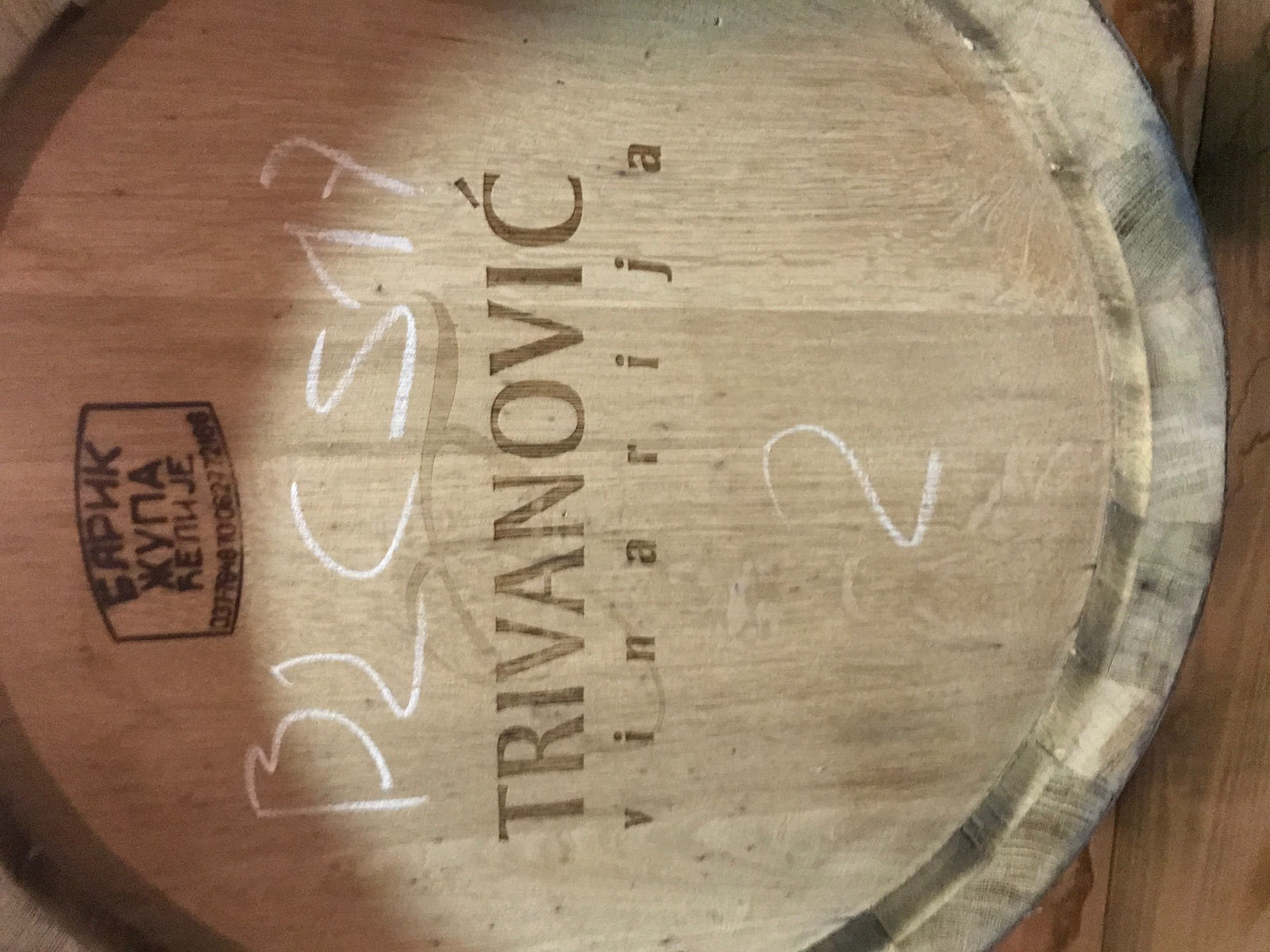
Wine, however, had not waited for the building. It was part of the Trivanović family long before electrical manufacturing, although in quantities and circumstances offering little hint of a serious winery. Ivan’s grandfather planted half a hectare of Grašac in Erdevik in 1959. Its wine was for the family, an everyday drink without commercial ambitions. The vineyard was grubbed up in 1999, but the Trivanovićs continued buying grapes and making wine for themselves.
“Dad always knew good grapes when he saw them. His methods were fairly primitive, but he regularly won significant awards at local competitions.”
Ivan therefore grew up between Šid and Erdevik, with harvests, winter pig slaughters and work that never asked whether it was a weekday, weekend or holiday. Wine belonged to the same rhythm of life in which land was worked, grapes harvested and household produce did not become merchandise until it was time to sell it.
When government subsidies for planting vineyards appeared, Brko took them as a sign that the moment had finally arrived for something he had wanted all his life. He began on a substantial scale. The Trivanovićs first planted eighteen and a half hectares, then took a thirty-year lease on another thirty or so hectares of neglected state-owned vineyard, completed the planting and restored it to good condition. At one point, they had forty-nine hectares around Erdevik, some twenty kilometres from the building in Šid.
“My father had loved wine his whole life. When the subsidies arrived, the message was clear to him: now is the time.”
The subsidies covered only part of the planting material. Everything else depended on Brko’s energy and belief that a vineyard was worth establishing even before a winery existed. The original plan was straightforward: sell grapes to other wineries and receive a few thousand litres of wine in return for family and friends. But one buyer withdrew in the first year, another the next, then a third. The Trivanovićs were left with grapes that needed picking and promises incapable of filling even a glass.
“You don’t have much choice then: either throw the grapes away or make your own wine.”
They made it and discovered that, as Ivan puts it, it turned out ridiculously good. Almost against the original plan, the family’s vineyard investment became a winery.
Ivan had handled sales in the electrical business, so the same division of responsibilities transferred to wine without much discussion.
“Exactly like the light fittings: he makes it, I sell it.”
Wine, however, did not sell like a lighting fixture. It carried the family vineyard, Brko’s ambition, Erdevik and the feeling of offering customers part of one’s identity. Belgrade soon became their largest market, initially through restaurants, wine shops and personal recommendations, without major campaigns or much noise. One bottle led to another, one customer to the next, and within their first five years the Trivanovićs reached sales of approximately fifty thousand litres annually.
“We sell practically everything we make,” Ivan would say, with a pride that never became boasting.
The winery officially entered the market on 1 May 2014, but Ivan did not want its labels to look like another anonymous range from a region still fighting for a place on the wine map. If Šid was the town of painter Sava Šumanović, he reasoned, the wines should carry something of that world. Artist Danijel Babić drew a female figure, Ivan refined the colours, and the labels filled with birches, women harvesting grapes and contemplative figures seemingly passing from vineyard into dream.
The woman was less voluptuous than Šumanović’s women of Šid, but belonged to the same artistic landscape. She appeared in different roles on different wines, and Ivan had no intention of revealing her identity.
“Who is she?”
“Let that remain a secret. Danijel drew, I refined; he supplied the lines, I supplied the colour. We worked with what we knew and could do.”
The bottles thus acquired early on what the industrial surroundings could not provide: a recognisable sense of origin. The labels spoke of Šid, while the wines increasingly spoke of Erdevik’s sites on Fruška Gora. That combination came from Ivan’s need for everything leaving the family winery to bear a personal mark.
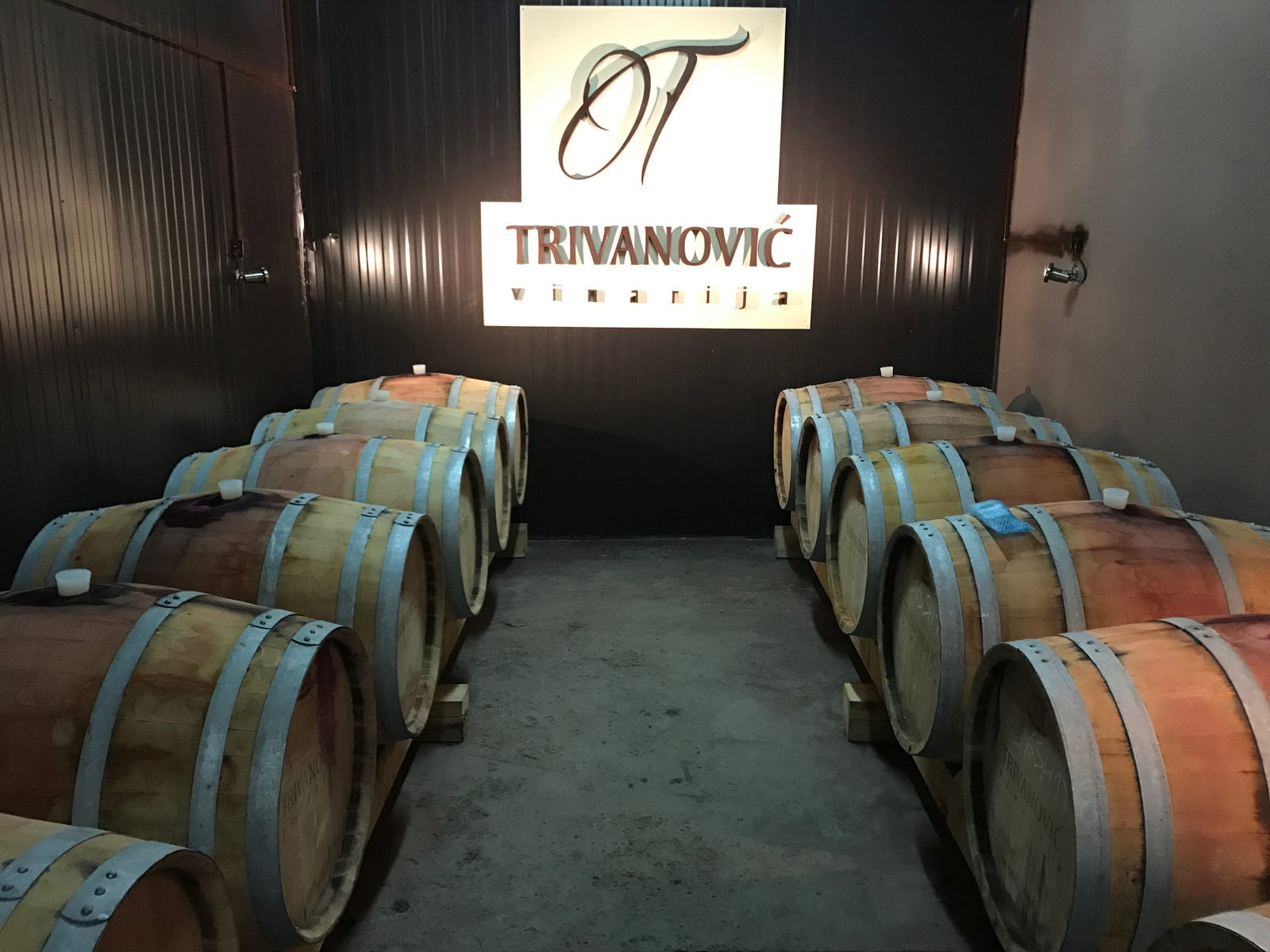
More important changes, however, were happening in the glass. Initially, the family made varietal wines, with Pinot Grigio, Lex rosé, Shiraz Limited and the Grašac named Optimus from the 2018 vintage gradually emerging as key labels. That year, winemaker Tanja Đuričić arrived, beginning a period in which Ivan sought increasingly to draw out what the grapes already possessed, without changing the underlying idea.
“Nothing spectacular happened in the vineyard or cellar, but Tanja brought a different and visibly better way of working. The grape quality had clearly always been there. Now you can taste the maturity of the vines, the fruit’s sweetness and the acidity that still holds every vintage from 2018 onwards together.”
He describes the working relationship plainly.
“Tanja gets us into line as soon as we’re late with something-or even heading that way. She monitors things, we do what needs doing and try to give our best. We established the framework long ago, but there are always small variations and ideas to try something differently and see what happens.”
The clearest result became Optimus, the Grašac that, from 2018, established itself among the wines helping restore the grape’s old name to Serbia’s wine vocabulary. The Trivanovićs had no need to invent a local name: on their side of Fruška Gora, it had always been Grašac. What needed restoring was the seriousness lost when it was treated mainly as material for simple wine and spritzers.
“On this side of the border, people always said Grašac. It’s a grape for every day, but made properly, it can also produce wine you’re proud of.”
Optimus became the winery’s core label, though for Ivan that did not mean wine intended to be quickly drunk and forgotten. Vertical tastings showed Grašac retaining freshness and developing far longer than once acknowledged. Experienced drinkers even began avoiding it in its earliest youth, waiting for the initial fruit to acquire greater depth.
Asked which grape worried him least in unpredictable vintages, Ivan never hesitated.
“We’re calmest about Grašac. It’s resilient and consistent. It may not always yield heavily, but its figures are regularly good.”
That reliability mattered in 2020, when rain, drought and hail alternated through the season, with the pandemic hanging over everything. Some sites yielded a third less, while certain white varieties unexpectedly accumulated sugar within days, forcing the team into an urgent harvest.
“I’m not myself,” Ivan said, summarising his state of mind. “A year always gives somewhere and takes somewhere else. Chardonnay, for example, came back from analysis better than ever.”
Such years revealed his refusal to tie quality to a single prescribed method. He accepted flotation when faster, more precise clarification could improve a white or rosé, yet readily returned to open vats for Shiraz and a process he called almost primitive. What mattered was the resulting wine rather than whether the method looked modern.
Shiraz Limited best illustrated that willingness to let the result determine the process. The first edition, from 2013, fermented and macerated in simple open vats, using methods he later described as almost primitive compared with the winery’s subsequent equipment. That wine won gold at AWC Vienna, the family’s first and, at the time, only gold medal.
In 2018, they combined modern vinification with the traditional approach, then blended the resulting wines. The outcome was convincing enough for Ivan to return entirely to open vats two years later.
“If the French can make good wine that way and get the most from the skins, why shouldn’t we? So we returned to the traditional method.”
Fruška Gora does not regularly produce enormous, high-alcohol, heavily extracted reds, but Ivan saw no shortcoming to conceal. His Shiraz should retain freshness, spice and a moderate body rather than impersonate wine from a warmer region. Despite a sunny year, Shiraz Reserve 2017 remained at 13.5 per cent alcohol and, after fifteen months in Serbian oak, continued developing in bottle for years. The 2018 proved even better, but domestic drinkers never had the opportunity to discover it: the entire production went to Australia.
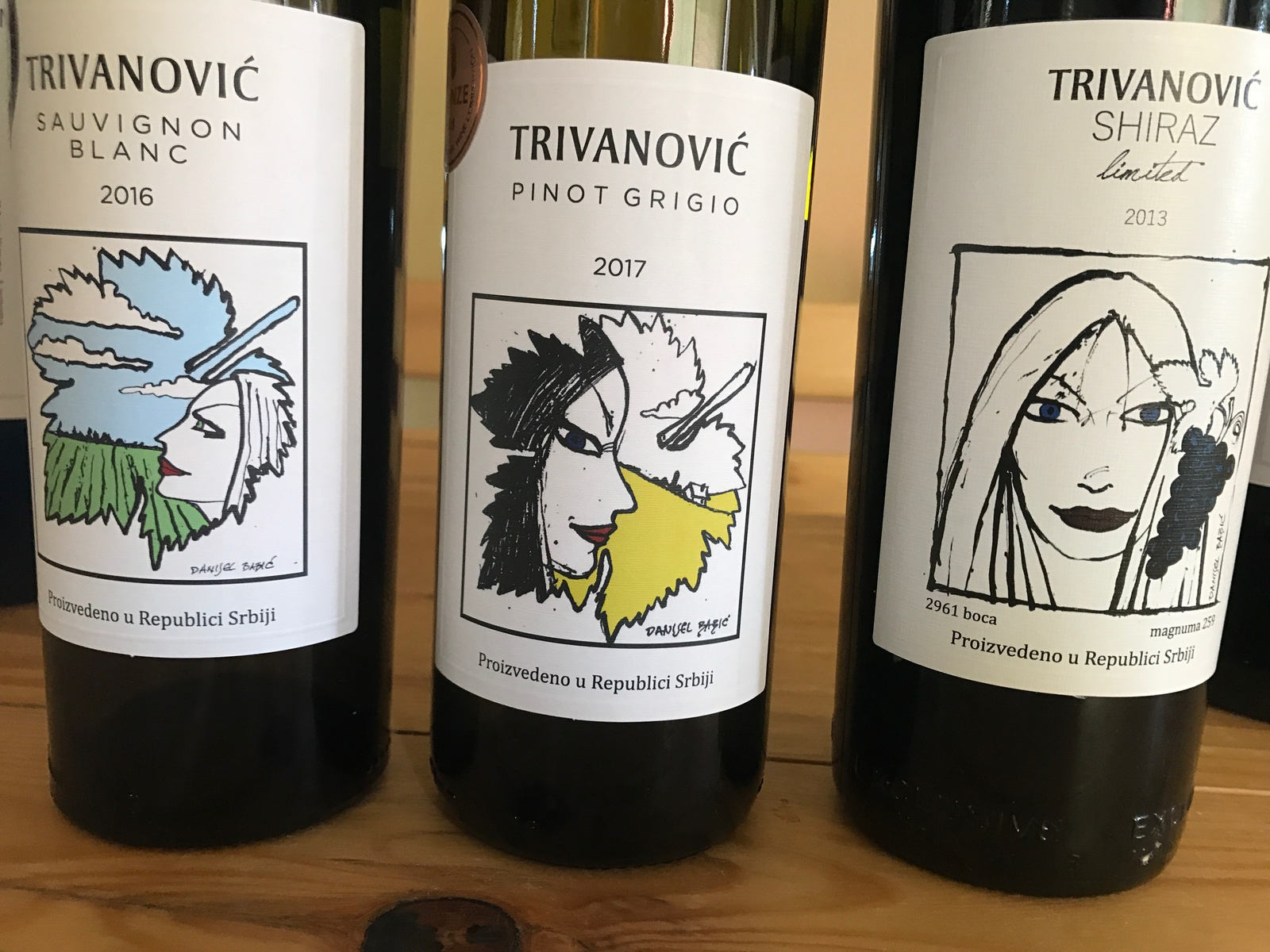
Shiraz from Erdevik thus reached the country that had made the grape one of its wine emblems. Ivan built no legend around the fact, but it is difficult to imagine a more pleasing endorsement than Australians importing Shiraz from Srem.
“Awards simply confirm we’re on the right track. Why haven’t there been more golds? There will be. I’m in no hurry. When an affordably priced wine wins silver, that’s a fantastic result.”
Although Shiraz became the flagship, a pink wine brought the family its widest recognition. Lex appeared in slightly different shades according to the vintage, while retaining fruit, spice and more substantial structure than drinkers often expect of rosé. One vintage was named Serbia’s best rosé, and Lex became a regular favourite among drinkers and restaurateurs.
Ivan nevertheless refused to let individual labels’ success force him to make wines the year could not deliver. The 2022 vintage was difficult enough that they made no reds at all. Rather than force weaker grapes into a product to fill a market gap, they accepted that certain labels would be absent.
That approach to quality also changed the project’s original scale. Brko had entered winegrowing with almost fifty hectares and faith that every good bunch would find a buyer. Ivan later reduced the area, keeping the finest Erdevik plots. He adapted his father’s dream to experience: the objective became wines capable of giving the Trivanović name longevity, rather than the largest possible grape crop.
Ivan therefore readily calls himself a stubborn man of Srem.
“I won’t move from the principle that quality is the only measure. The new winery may eventually reach eighty thousand bottles, but I don’t want more. Endless expansion isn’t my goal.”
Persistence did not mean keeping the original portfolio forever. For years, the winery was known for varietal wines, initially a firm decision of Ivan’s. Grašac should speak as Grašac, Pinot Gris as Pinot Gris, Shiraz as Shiraz. Yet experience across vintages, particularly with abrupt climatic changes, gradually led him to see blending as another means of expressing identity more fully.
“I watched the French for a long time. Blends helped make Bordeaux famous, not just individual varietal wines. When a year doesn’t suit one grape, a blend gives you room to find balance. So the time came for us to do something new too.”
The new range, Trigio, combined the beginning of the family surname with the ending of Pinot Grigio and comprised two wines. Trigio Blanc 2023 blended fifty per cent Grašac, thirty-five per cent Pinot Gris and Tamjanika, intended to add floral and spicy touches rather than dominate. Trigio Rouge 2020 combined ninety per cent Merlot with five per cent each Shiraz and Cabernet Sauvignon.
There were only fourteen hundred bottles of the white. It was scarcely offered beyond five restaurants and a small export to Montenegro, yet soon only around three hundred remained.
“When I tasted it before filtration, I sensed potential, but I didn’t expect it to sell so quickly. Initially, Tamjanika led aromatically; later, Pinot Gris took over completely. I was surprised how much it developed.”
He waited longer still for the red Trigio. The 2020 vintage was good enough to deserve patience, and he released it only in 2025, when fruit, freshness and tannins had come together as he wanted. Both labels depicted the new Erdevik winery rather than the old Šid building, although the new one was not yet finished. The bottles showed a structure only partly built, but also the direction in which the family story was irrevocably moving.
The new winery was unnecessary for making good wine alone. The Šid building was functional, spacious and temperature-stable, and had already produced wines winning awards and finding buyers abroad. It allowed production, but made experiencing wine more difficult. The window overlooked an industrial estate rather than vineyards and a lake, and guests needed an explanation for finding themselves among factories.
“That building is an industrial facility. My father built it for an entirely different business because initially he wanted to grow grapes, not make wine. When we had to start making wine, we simply moved into the space we had. We need the new winery because we want to return wine to where our story began.”
The location could hardly be more symbolic. Early in 2023, the winery began rising above Erdevik’s lake, directly above the plot where Ivan’s grandfather planted the family Grašac vineyard in 1959. Ivan had been thinking about it for almost a decade. The two vineyards he retained lie approximately one and one and a half kilometres from the cellar, so grapes would no longer travel twenty kilometres to Šid. A smaller Grašac vineyard was to be replanted below the building, returning the grape that began the story almost to the same spot.
Covering approximately 670 square metres, the building was designed as a working winery rather than an architectural backdrop concealing production from visitors. Tanks, storage and the barrel cellar occupy the lower level; grape processing takes place on a covered platform. Differences in elevation allow must and wine to move by gravity, reducing pumping and oxygen exposure.
“The most important idea is gravity-flow winemaking: giving the must freedom and avoiding the pump when it isn’t needed. We wanted a cellar where we could work more precisely, as well as a beautiful building.”
Around 150 square metres are devoted to the tasting room and terrace overlooking the treetops. Ivan considered a restaurant, then abandoned the prospect of adding a business requiring its own team, permanent kitchen operation and daily organisation. He chose a more flexible model: tastings by appointment, smaller events and a well-equipped kitchen where visiting chefs could prepare more ambitious food when the wines and company called for it.
“Once, you could put out wine and a few things to nibble, and everyone was happy. Today, you need to be ready for different guests and occasions. Some want a simple tasting; others come to open mature wines and expect a suitable meat dish. That’s why we need a kitchen, but not a conventional restaurant.”
Guest apartments were left for a future stage. Ivan dislikes half measures, but dislikes promising everything an architectural drawing might include even more. Experience taught him that desire, money, space, people and timing rarely align as smoothly as a visualisation suggests.
“Wishes and possibilities don’t always coincide, and money isn’t always decisive. Sometimes there isn’t enough space; sometimes you lack people or the necessary structure. So we’re going step by step. I’m happy simply to have the opportunity to realise something I’ve wanted for ten years.”
In Šid, he had to explain why wine visitors were entering an industrial estate. In Erdevik, they would be surrounded by vineyards, lakes, woodland and wineries that had made the village one of Serbia’s most interesting wine destinations within a few years. Erdevik, Imperator, McCulloch, Vinčić and Trivanović were operating or building within a few kilometres. Ivan’s project formed part of a region gaining the chance to turn its winegrowing tradition into a complete experience.
Moving would not erase the old building from family history. There, grape growers had unexpectedly become winemakers, the first serious bottles had been filled, and Ivan had learned that while a good location helps a story, the wine must first be convincing enough to outlast a location’s shortcomings. The new winery would finally give an existing identity its proper home.
The Trigio labels pointed towards that. The Erdevik building appeared before completion, a promise awaiting fulfilment. Ivan saw no marketing risk in it. He had once entered wine because others abandoned his grapes; a building awaiting finishing work was hardly likely to frighten him.
One person, however, saw the new winery as more than a better cellar, tasting room and lake view. Brko was preparing to return to the family’s old weekend house below it, where the vineyards had begun. After decades between power lines, light fittings, factories, industrial buildings and vines, he would again live beside land into which he had invested far more than any calculation could justify.
“He wanted to create something that would remain,” Ivan says. “Everything he did, he did to last.”
Brko gave his son vineyards, a building that became a cellar and the willingness to enter a major undertaking before knowing how he would emerge from it. Ivan responded by reducing what had grown too large, preserving the finest sites, improving the wines and beginning a winery above his grandfather’s first vineyard. He continued his father’s work by recognising what deserved preservation, rather than leaving everything unchanged.
And Grašac, after travelling through Šid, Belgrade and restaurant wine lists, returned to Erdevik.
To the place where everything began in 1959.