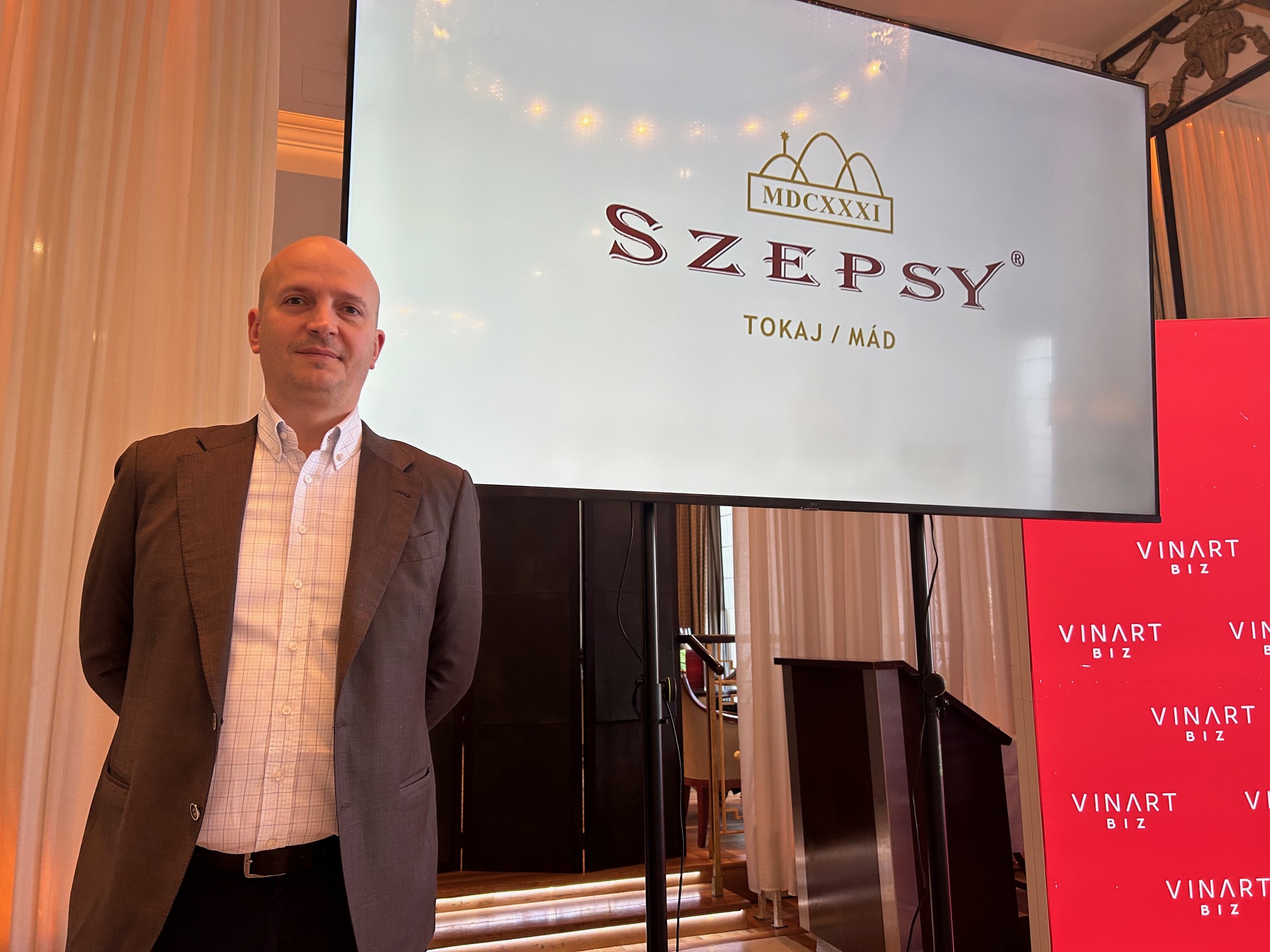
There is neither a house number nor a street name on the Szepsy winery building. Unless you know which house you are looking for, it is hard to be sure you have reached the right address. I mentioned this to István Szepsy Jr. He simply smiled. I thought that this way of selecting his visitors suited him perfectly.
His father spent decades making the Szepsy name known far beyond Mád. His son now has to run the business that grew from that work, sell wines in more than twenty countries and decide what the family will produce ten or twenty years from now. When I asked what it had been like growing up with a man of such standing, whether he had felt a sense of responsibility or an urge to rebel, he first put things in their proper order.
– First and foremost, he is my father, and only then a winemaker.
He admits that he finds it hard to accept things simply because that is how they are. There was some rebellion, too. But the handover of the family business did not happen at a moment of their choosing. Szepsy Sr suffered a stroke in March 2019. His son, daughters and son-in-law had to take on everyday responsibilities sooner than expected.
Today, the younger István makes most of the decisions, his sister is formally the managing director, and his father continues to work on the vineyards and research.
– My father is still the boss.
It is in the vineyard that his father’s authority is least questioned. He has spent most of his life there, cutting yields while others laughed at him, seeking out old vines and differences between bunches, buying parcels he had once never even known he needed. His son describes his father’s work today as a kind of research institute within the winery.

With more free time, another interest has emerged, one that cannot be explained by soil composition or clonal selection: Arsenal.
The family has been making wine for centuries. The Szepsy name is also associated with the preacher Máté Laczkó Szepsy, a collateral ancestor traditionally credited with an important role in recording the Aszú-making process. But family history did not give the elder István a ready-made business or the freedom to make whatever he wanted.
He lost his father when he was very young. After university, he went to Paris and considered staying outside Hungary. According to the biographical portrait compiled by Hedvig Tallián, on his third night he dreamed of nothing but Tokaj. He returned home.
He took a job at the Rákóczi cooperative in Mád. Only after the collapse of the socialist system could he begin building an estate of his own as he envisaged it. Until then, he had to work within a production system whose objectives differed from his.
– A year or two after the fall of communism, I realised that I had to solve the problems I had expected others to solve. I had to start appreciating our potential more and work to standards that reflected my convictions.
He reduced yields far below what was customary at the time. In a region that had long prioritised quantity, voluntarily discarding part of the crop seemed unreasonable to many. Money was needed for vineyards, equipment and the family, while grapes were being left on the ground.
– We had to say that we were running a business, but that this business was not based solely on economic considerations.
Gabriella Mészáros, the Hungarian wine expert, remembered what that work could achieve from a tasting at the Yellow Wine House in the early nineties. There was a large line-up of Aszús. She recalls reaching the twenty-sixth or twenty-seventh wine when something in the glass made her stop.
– There had been many interesting and wonderful wines, but this was something completely different. I said: hold on, something is happening here.
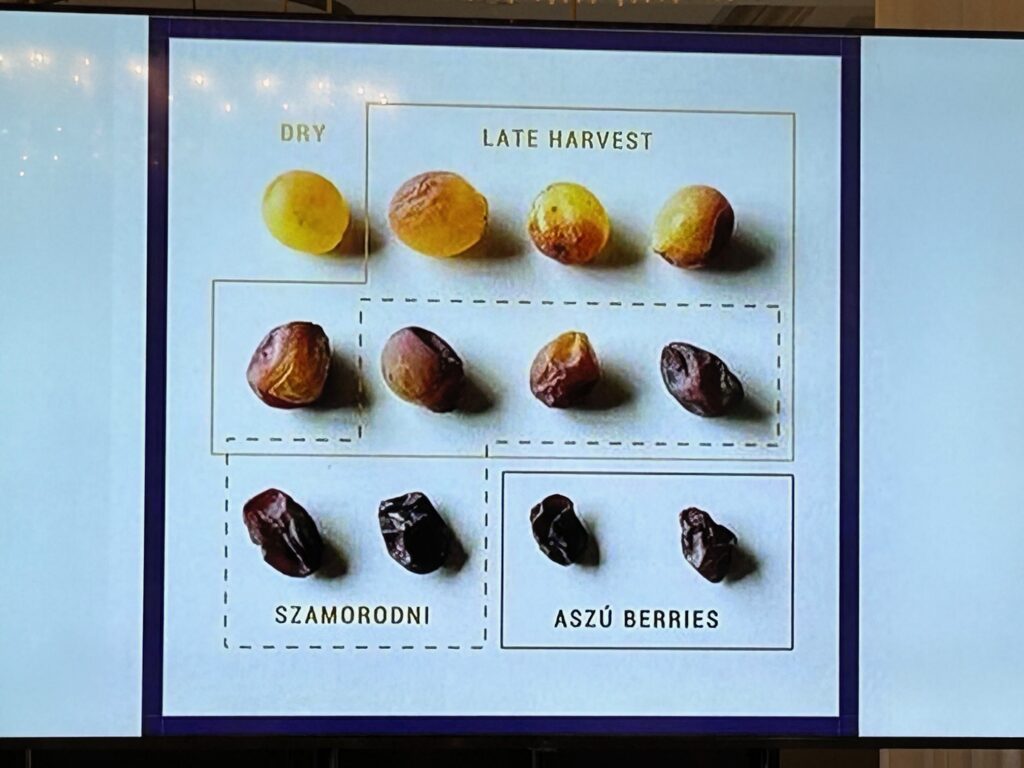
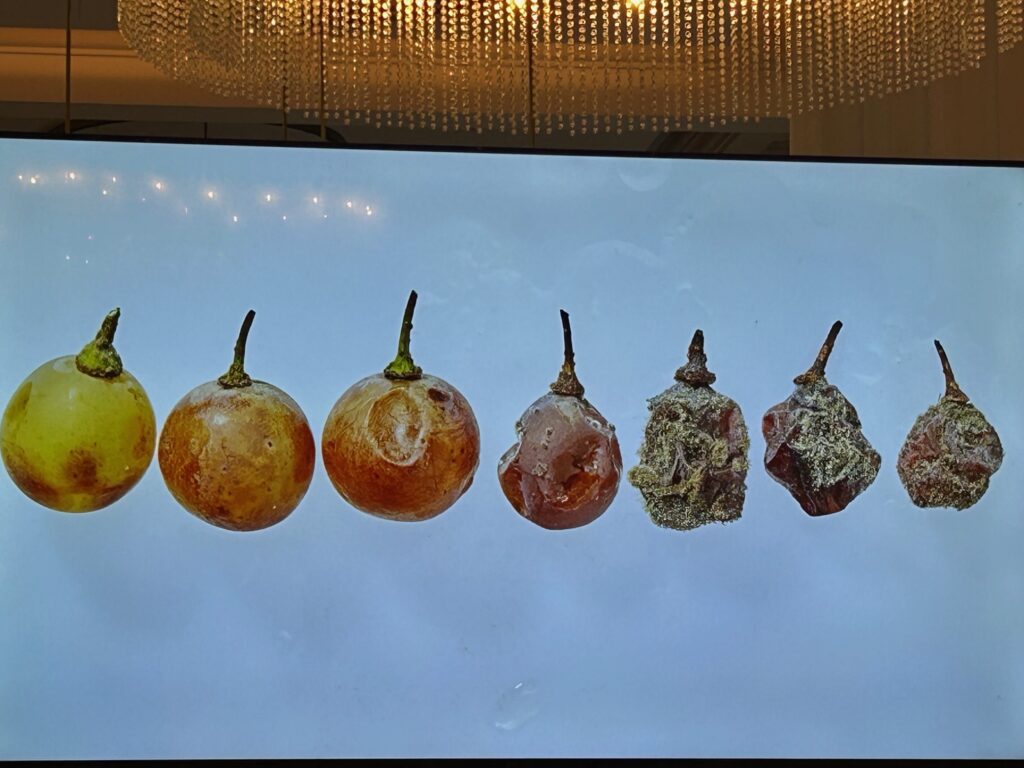
Aszú is made from individually selected, shrivelled berries affected by noble rot. Pickers select them by hand, often passing through the same vineyard several times. The berries are then macerated in must or wine, and the finished wine matures for years before sale. Even the finest vineyard cannot guarantee that every year will produce enough suitable grapes.
Szepsy built his name on this wine just as the market was becoming less receptive to sweet wines. The family could not assume that customers would come simply because Tokaj had once supplied the courts of Europe.
They needed to find people who would taste the wine, understand it and buy it.
London wine merchant Ákos Forczek was among the first to bring leading sommeliers to visit Szepsy.
– Over the years, his wines taught sommeliers what Tokaj was about. We brought people from Michelin-starred restaurants, and they fell in love with what he was doing.
International recognition did not resolve the question of how the family winery would support itself between Aszú harvests and throughout the years of maturation. Dry wines became important as a source of income, too. But for the elder Szepsy, they also brought an unexpected discovery.
– It was only when dry wines came onto my radar that the vineyards began to reveal themselves to me. My perspective changed. I was overwhelmed by new impressions and amazed by the wealth of possibilities. What treasures had been neglected here!
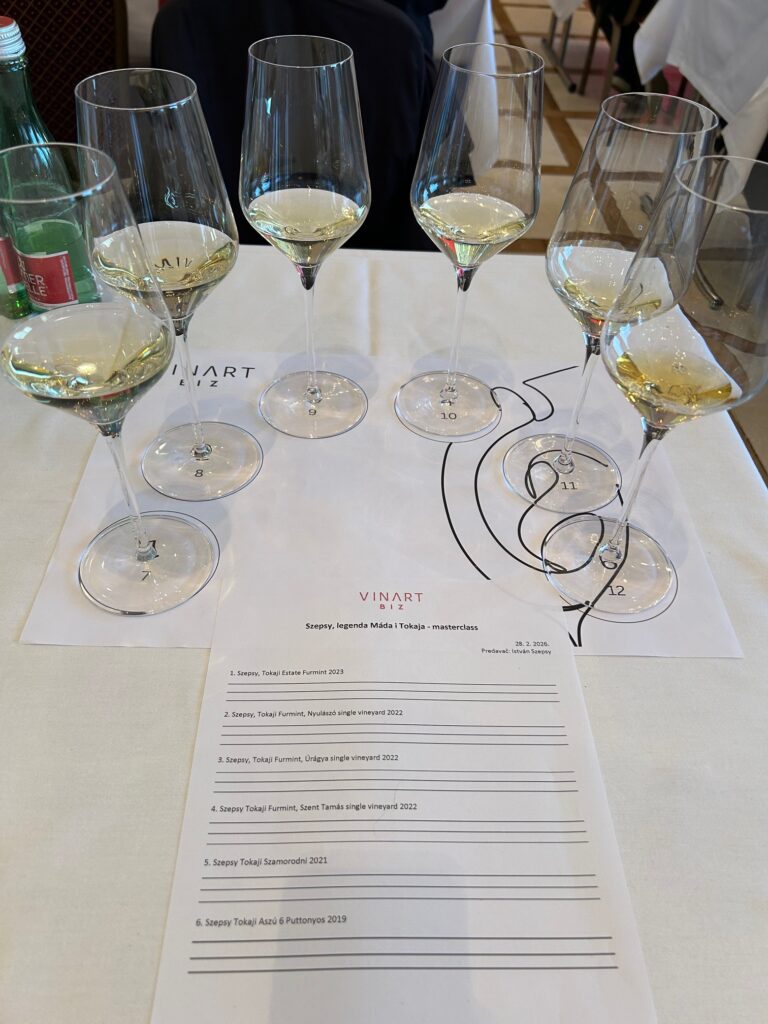
Before that, he had not known he needed part of Szent Tamás, let alone how different its parcels could be. Nor did he yet have the experience of Úrágya that he would later acquire.
– Fifteen years earlier, I hadn’t known I needed part of Szent Tamás, let alone what different parcels it contained. I didn’t know Úrágya either.
When Hedvig Tallián asked how he had discovered it, he replied:
– By chance, just as with Szent Tamás. Although nothing is accidental, you know. Someone came along who opened my eyes to it.
Separate vinification allowed him to examine differences that disappeared in a blend. Furmint from one vineyard did not behave like Furmint from another. It meant following the grapes, fermentation and development in barrel, then opening bottles over many years.
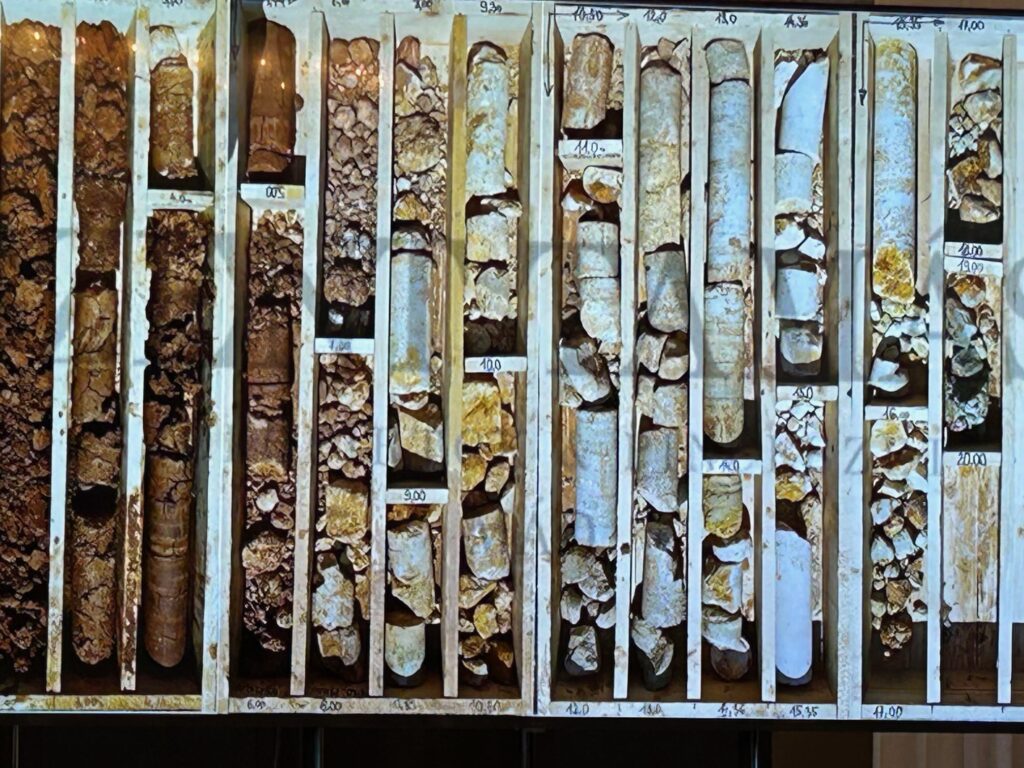
Szent Tamás particularly absorbed him because of its layered rock formations and the different types of zeolite he found there. He spoke differently about Úrágya, drawing on longer experience of working with that vineyard.
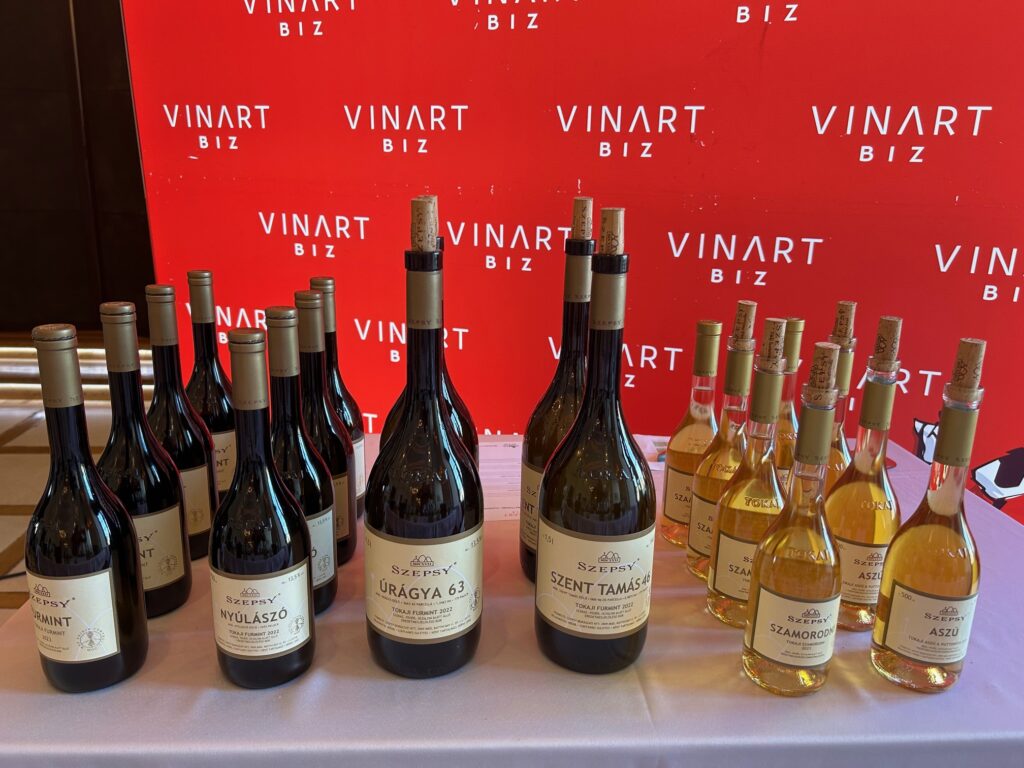
– I think Szent Tamás probably produces the most complex wine. Úrágya has an even more distinctive character and is among the first to become ready to drink. Urbán needs more time. It is our longest-lived dry wine.
It was the 2006 Urbán that the younger István singled out when I asked him about a wine that had changed his life. He mentioned a depth and complexity he had never previously been able to perceive.
In a dry wine, the son had found an experience his father had developed through years of working with individual vineyards. Yet even today, he does not consider all those differences sufficiently explored to establish a definitive hierarchy of Tokaj’s dry wines.
Discussing the region’s historic classification, he cites 418 vineyards, 52 of them in the highest category. He estimates that roughly half the historically recorded units are cultivated today, while fewer than sixty vineyards have been explored through separate vinifications.
– First, we need to gain experience. Check the consistency of quality in individual vineyards and understand which characteristics are truly linked to their origin.
Meanwhile, the conditions in which those vineyards produce grapes are changing. Some sites once prized for their warmth and ability to deliver great concentration are becoming too hot and dry.
– I don’t think that area has a serious future under present conditions. It is already too hot – he said, pointing to a southern part of the region during a conversation with Italian journalist Davide Bortone.
He works with researchers and universities to study how different vines perform. The trials include Kadarka and Kékfrankos.
At first, red varieties in Tokaj may sound like abandoning everything the family has built. István immediately distinguishes the winegrowing territory from the appellation a wine should be allowed to carry.
– Tokaj wine must, by tradition, be white.
In his view, Kadarka produced in the area could be sold under a broader geographical designation, such as Zemplén. The trials are currently limited to a small number of vines and have no immediate commercial purpose. He wants to know whether a variety might offer a solution in places where producing the existing white wines will become increasingly difficult.
He is not particularly attracted to simply following other countries.
– Pinot Noir would have to compete with already highly accomplished wines from around the world. Kadarka and Kékfrankos give us the chance to develop wines with a recognisably Hungarian character.
Furmint remains at the centre of his work. Different bunch types, berry sizes and responses to drought or cooler conditions mean that it cannot be treated as a single, fully explored body of vine material. His father spent years selecting vines and bunches that suited his aims; his son continues that work with more systematic record-keeping and collaboration with researchers.
– I’m a vineyard man. I’m not a producer who thinks purely in business terms.
That does not mean he can ignore sales. The family winery has to finance its work by selling its bottles. The younger Szepsy speaks openly about the difficulty of competing with businesses that can draw on capital earned outside wine and maintain production without genuine profitability.
He does not want to move into the cheapest categories. But family reputation alone is not enough to sell a more expensive wine. The buyer must understand what they are paying for, and the designation of origin must offer some guarantee.
That brings him back to rules. If the same name covers wines of widely differing ambition and quality, it is hard to establish a price that will support more demanding work.
– Every region must find its own style. It needs a core of ten or fifteen wineries that can share a vision of their region while retaining their individual character.
In Mád, the attempt to define origin more strictly took shape through Mád Kör, an association of producers who set requirements above the legal minimum. For wines bearing the name of an individual vineyard, it is particularly important that the grapes and the character of the wine justify the name on the label.
His son is not suggesting that demand for dry wines should displace Aszú from the top of Tokaj’s range.
– I would rather envisage a hierarchy in which the most prestigious category remains reserved for sweet wines. An intermediate level could include both those and dry Furmints, while less traditional production would find a place under a broader geographical designation.
His travels to Italy are important to this thinking. He visits the Langhe regularly, tours wineries and talks to producers. He particularly remembers spending five hours with Angelo Gaja without tasting a single wine.
– We spent the entire time discussing the economic and social transformation of the Langhe. I find it fascinating how vineyards that were once abandoned reached extraordinarily high values. But above all, the way they built a hierarchy in which Barolo, Barbaresco and Langhe coexist, alongside varieties such as Nebbiolo, Barbera, Dolcetto and Freisa.
– I think Barolo and Barbaresco are the best example for Hungarians of how a wine region can develop.
He does not think their wines should be transplanted to Tokaj. What interests him are the decisions through which producers succeeded in making their own origins valuable.
– Taste comes first. Once you have the taste, you can build the rules around it.
He applies the same standard to sparkling wines. He began working with them in 2009, out of personal interest. More and more Tokaj wineries now make them, drawing on Furmint’s natural acidity. But the number of new labels is not, to him, proof that the right direction has been found.
He remembers an Italian friend’s assessment of a local sparkling wine.
– No obvious faults – his friend told him. – But nothing that makes it particularly interesting, either.
István does not confine that judgement to sparkling wines.
– The real challenge is to produce wines with recognisable character, consistent quality and a genuine ability to develop over time. Simply multiplying styles is not enough for the region’s future.
Meanwhile, his father’s work with dry wines had opened up a new question for Aszú. If differences between vineyards could be traced so clearly in dry Furmint, what would happen when the same precision was applied to sweet wine?
The answer also required the right vines: smaller berries, looser bunches, good ripening potential and conditions for noble rot. New plantings could not provide an answer after two or three harvests. Nor did every year allow production, even in a fully established vineyard.
The 2017 Aszús, selected from particular parcels in Szent Tamás and Betsek, demonstrated the direction of that work. The family released them in late 2020.
Such decisions show how closely dry and sweet wines are connected in their cellar. They may be two categories in the market, but in both, the family follows the same vineyards and tries to understand what each parcel can give.
The elder Szepsy has received numerous honours for his work. Jancis Robinson wrote of him as a man for whom the word “genius” might not be excessive. In 2013, at Villa d’Este on Lake Como, he received the Les Seigneurs du Vin award. The distinguished winemakers who supported his selection included Aubert de Villaine, Egon Müller, Angelo Gaja, Alain Vauthier and Pablo Álvarez.
His son, however, also inherited tasks that awards do not resolve: labour costs, selling slow-moving vintages, planting decisions and the question of how far he can go with experiments.
Their cellar therefore also contains wines that customers will never see.
– In most years, we make different experimental wines that we never release for sale – he told me. – They are always for friends and family.
Not every experiment is intended to produce a new label. Some remain among the people who taste and remember them, then try something different at the next harvest.
The elder Szepsy’s thoughts on wine can take him far beyond technical details.
– Everything is resonance. If you dig down to the heart of matter, you will find nothing but waves of resonance. The most important of all is the resonance of human love.
He also speaks of how important it is for people to remain connected to the land and to what they eat and drink.
– People need to consume products created with love.
His son often discusses the same work through vineyards still to be explored, markets where they need a presence and rules yet to be agreed. He allows time for definitive answers.
I asked whether, if he had to start again today, without the weight of his surname, he would make the same wines.
– Yes.
His father, he says, gave him guidance on preparing for real life and big challenges. Some of it he understood only later.
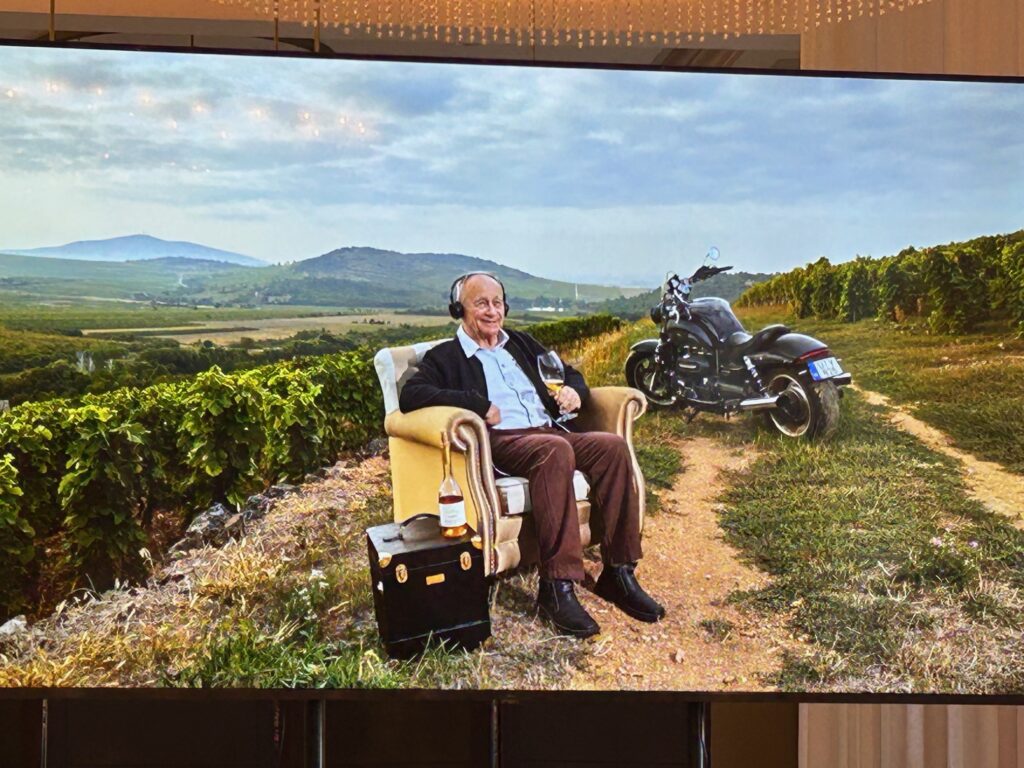
At the end of a presentation in Zagreb, he showed a photograph of his father sitting in an armchair in the middle of a vineyard, a glass in his hand. Behind him, between the vine rows, a motorcycle was parked.
I asked whether he had ever wanted to leave wine behind and do something else.
– Not yet.