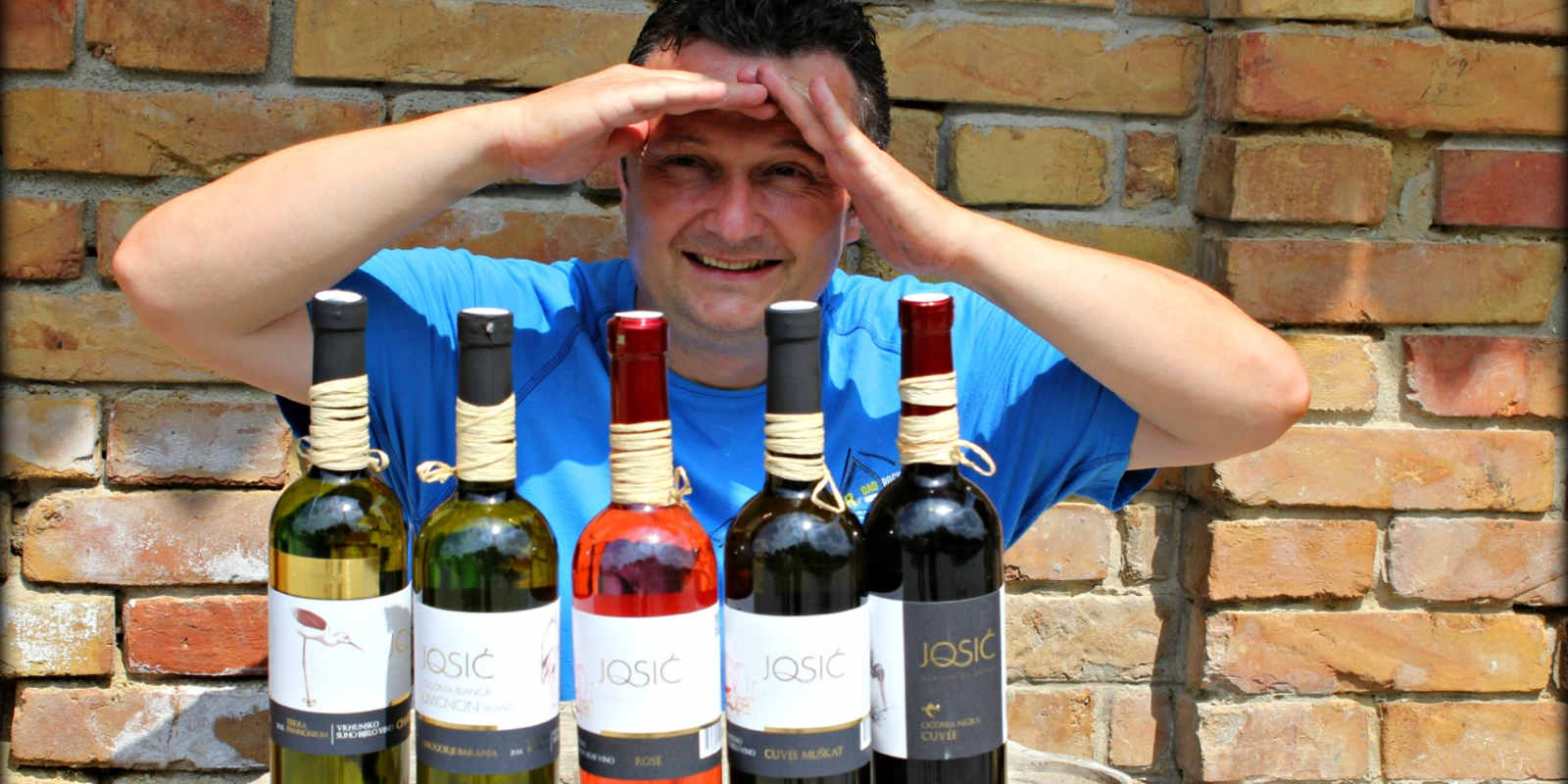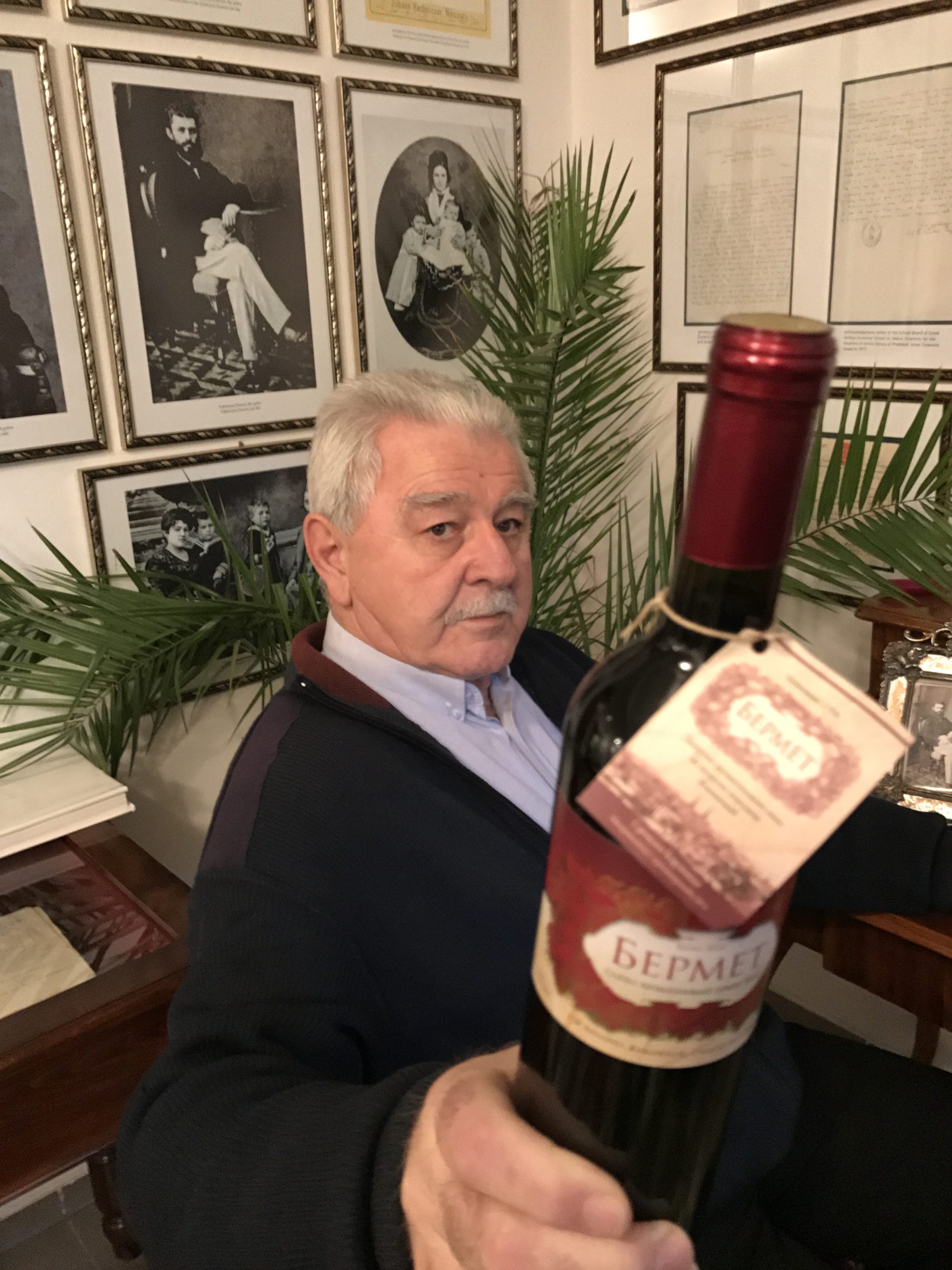
It is nice to hear your family’s name associated with the Titanic-at least as long as you retain enough humour and a healthy distance from legends. Žarko Živanović of Sremski Karlovci knew that truth was worth more than invented glory. Whenever tourists, journalists or curious visitors mentioned the story that his family’s Ausbruch had appeared on the famous ship’s wine list, he would simply wave it away.
“Let’s be serious. Intelligent people come here too. Why should I blush in front of them over something I can’t confirm? Whether our Ausbruch, or wine from someone else in Karlovci, was on that ship is something we’ll probably never know. Frankly, I’m more inclined to believe that, if there was any, it came from Rust in Austria. That’s their region, and they made no secret of it. Fortunately, we have so much real history that the Titanic would add nothing, while it could diminish us if we were shown to be manipulating the story.”
These were the words of a man who, even in his seventies, worked daily with 170 beehives, regarding the work as both production and a final line of defence for the family’s honour. He relied on truth, and his family’s truth runs long, persistent and deep, like the roots of vines that have occupied the soil of Sremski Karlovci for more than three centuries.
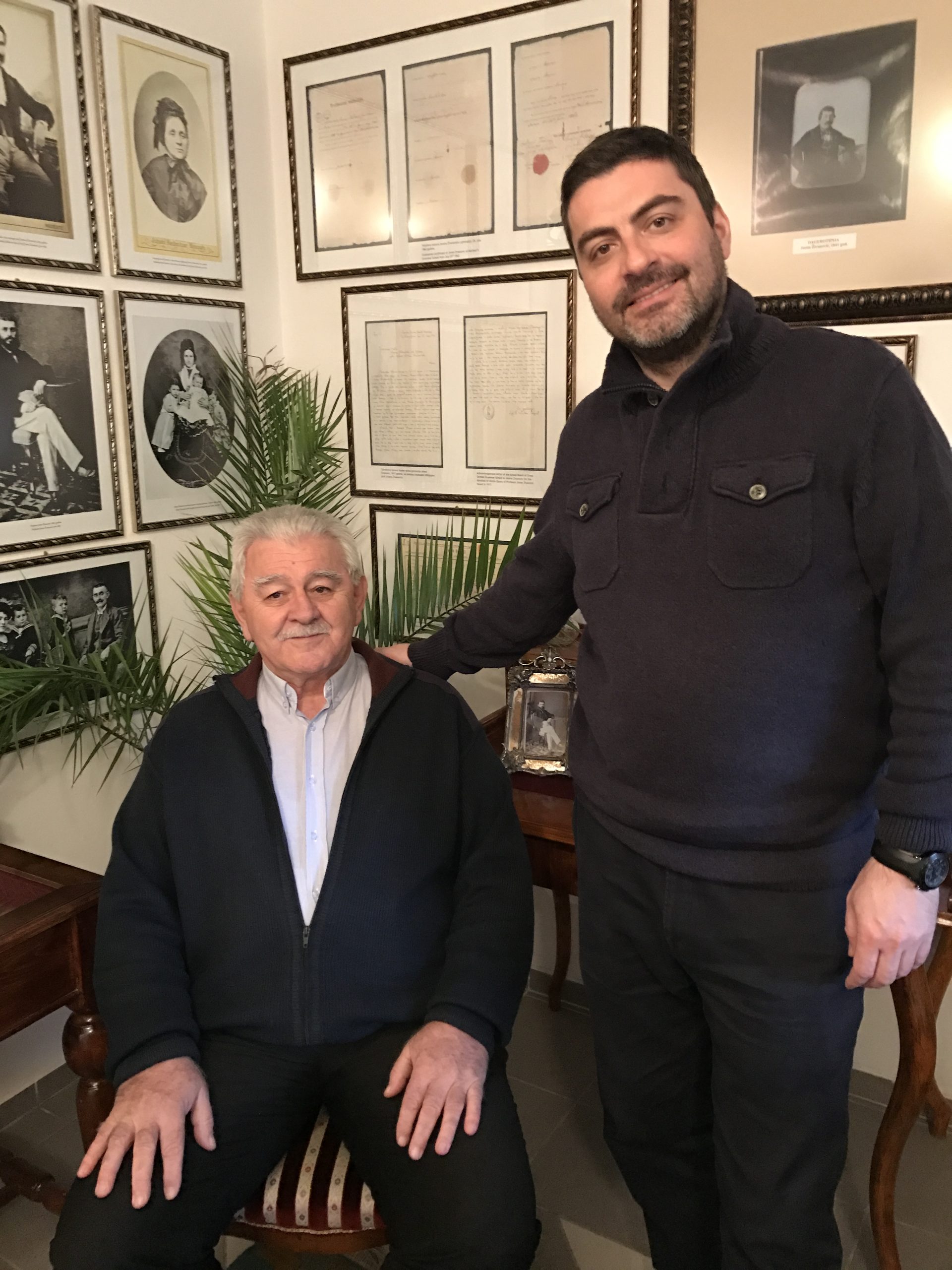
The Živanović house on Metropolitan Stratimirović Street is more than a family home. It opens onto the past, onto an era of civic culture, learning and work in Sremski Karlovci. Generations succeeded one another there, from Teodor, Josim and Professor Jovan, through Žarko and Borivoje, to Žarko and his son Borko. Each left something valuable to the next, allowing Žarko and Borko to guide visitors through the family history for hours, always with the enthusiasm of people telling those stories for the first time.
At the heart of the property stands the Beekeeping Museum, one of Europe’s oldest family museums of its kind. Žarko’s father Borivoje, known as Borko, founded it in 1968 after noticing that objects were gradually disappearing from the house and being scattered in different directions. He understood that the family’s treasures had greater value systematically preserved and shared than dispersed among drawers, attics and other people’s collections.
The museum is therefore a place of learning, family identity and respect for the bee, the tiny worker that brought the Živanović family sustenance, standing and purpose. It preserves old hives, tools, books, photographs, furniture and documents without which the story of beekeeping on Fruška Gora would be incomplete, and the history of modern beekeeping in Serbia almost inconceivable.
“We’re completely devoted to protecting our family’s past. My great-grandfathers, grandfathers and father did it, so I have a duty to do the same. I would be ashamed if I failed to preserve what the people before me managed to maintain.”
Žarko and Borko did this from a sense of responsibility. Preserving the Živanović inheritance was a pledge. Admission to the museum had been free from the first day because Žarko did not believe every form of value had to become revenue. He regarded knowledge as a common good that anyone possessing it had a duty to pass on to those who might benefit.
The family’s relationship with wine rested on the same sense of measure. They made it, tasted it and talked about it extensively, but never admired excess.
“My father was a renowned taster and producer, but he didn’t drink. He certainly didn’t guzzle! He told me how they would sit down in the evening and each drink a whole decilitre of wine. Back then, people chewed wine. In Dalmatia, where I used to take my bees to Hvar every year before the war, I heard the expression: ‘Let’s have a bite of wine.’”
That bite contained Žarko’s entire philosophy. Wine was respected as food, a reward and a ritual. His elders taught him to eat in crumbs, drink in drops and chew every mouthful thoroughly, because the mouth serves to process food as well as take it in. He was consequently appalled by the Srem pride in excess expressed in the saying that “there’s no man of Srem without a metre”-a celebration of a substantial girth-and saw it as evidence of how far people had drifted from a civilised way of living.
Today, Borko handles most of the work in the eighteenth-century underground cellar, but for Žarko it was a second home. Few people remain unmoved after descending into its stone depths. High vaults, cool air and the smell of old wood create the impression that time moves more slowly there. The barrels dating from 1910 attract particular attention. When Žarko revived production in the late 1980s, he intended to remove them, convinced that modern vessels would bring greater order and hygiene.
He called a cooper to take them away. The man examined them and asked in astonishment:
“These barrels? Sir, they’re as good as new!”
He showed Žarko that the wood was sound, that it still breathed and that the grain was perfect, persuading him to leave everything untouched.
“Time stands still in your cellars, Mr Živanović.”
He was right. The initials of Žarko’s grandfather, Ž. Ž., remain on the barrels today, almost impossibly clear, as though they had not been carved more than a century ago. They are just one of the details that make the entire property resemble a family album whose pages consist of stone walls, wooden beams and thousands of objects with stories intact.
Among the museum’s most valuable exhibits is an 1841 daguerreotype of Josim Živanović, an image on a silver-plated copper sheet made by Anastas Jovanović, the Vienna-trained photographic pioneer and court photographer. Josim was then in Vienna, selling wine and buying furniture for the house that would later become one of Sremski Karlovci’s cultural gathering places. Today, the daguerreotype is both an artistic and technological rarity and the oldest surviving photographic image of the Živanović family.
Branko Radičević, Laza Kostić, Sima Matavulj and Jovan Jovanović Zmaj sat and talked with his ancestors in that same courtyard. For Žarko, this added to his obligations. The people before him had left houses, libraries, knowledge and wines; every day, he considered what would remain after him.
However far the family history branched, its centre repeatedly proved to be Žarko’s great-grandfather, Professor Jovan Živanović. A Vienna-educated philologist, teacher at Karlovci Grammar School, author of grammars and readers, researcher and winemaker, he is remembered above all as one of the founders of modern beekeeping in the region.
Illness led him to bees. In 1875, the physician Đorđe Natošević advised him to withdraw to an orchard and restore his failing health through time in the fresh air. Jovan acquired eight woven skep hives, began studying bees and soon devoted an enormous part of his life to them. Their stings and work outdoors helped him regain strength, and bees developed from a means of recovery into his scientific and educational mission.
With the old skeps, bees were often killed using sulphur or gunpowder when the honey was harvested. Jovan, who regarded them as almost sacred creatures, could not accept that practice. He studied the achievements of Europe’s leading experts, corresponded with German beekeepers and brought every proven innovation to Sremski Karlovci. On those foundations, he developed modern, systematic beekeeping and designed a hive with movable combs, known as the amerikanka or živanovićka, which allowed honey to be taken without destroying the colony.
“Jovan’s work is so extensive that we, his descendants, still haven’t managed to assemble it all,” Žarko used to say.
At the beginning of the twentieth century, Jovan’s apiary contained around four hundred such hives. With Ilarion Ruvarac, rector of the Karlovci Theological Seminary, he established beekeeping instruction, one of the first teaching programmes of its kind in Europe, and taught it for twenty-six years. Future priests acquired practical knowledge alongside their theological education, later passing it on to people in the communities where they served.
In the early 2000s, Žarko tried to revive the idea. At the invitation of the then rector, Dušan Petrović, beekeeping became an elective subject at the seminary, and the collaboration lasted eleven years. He believed a priest familiar with beekeeping could teach people useful work, contribute to their health and help them establish an economic basis for their livelihoods. When the rector retired, the conditions needed to continue the programme disappeared. Žarko regarded it as another missed opportunity.
His great-grandfather’s work extended beyond hives and teaching. He founded the journal Srpski pčelar–The Serbian Beekeeper-wrote a beekeeping dictionary and the first textbook intended for students of beekeeping, and researched insect reproduction and parthenogenesis in bees. At the same time, he continued working as a philologist, writing grammars and readers and teaching generations of pupils.
Žarko could support almost every statement about his great-grandfather’s work with an object or document. The museum holds a honey extractor from 1876, a steam wax melter from 1881, old smokers and skep hives, and the celebrated hive shaped like Ravanica Monastery, dating from 1880. Fully functional in its day, it has been restored and preserved as one of the museum’s most striking exhibits.
A portrait of Baron August von Berlepsch, the German beekeeping expert whose books reached Jovan at Karlovci Grammar School, hangs on the wall. The objects around it belong to a living history: the principles behind those early honey extractors, smokers and wax melters remain in use today, with only modest changes in materials and form.
Professor Jovan Živanović expressed his gratitude in words his great-grandson often quoted:
“Thank you, God, for graciously introducing me to the tireless bee, which has sweetened my work and strengthened my frail body, which cheers me in these troubled times of ours and reminds me that our salvation lies only in shared work and harmony.”
Žarko discovered almost by chance how seriously Professor Jovan had approached wine, while reading a book by the Sombor oenologist Dimitrije Petrović. The author noted that he had gained many insights “through the kindness of Professor Živanović”. That brief acknowledgement opened a new side of the family history to his great-grandson. It turned out that Jovan had pursued wine with the same seriousness as beekeeping.
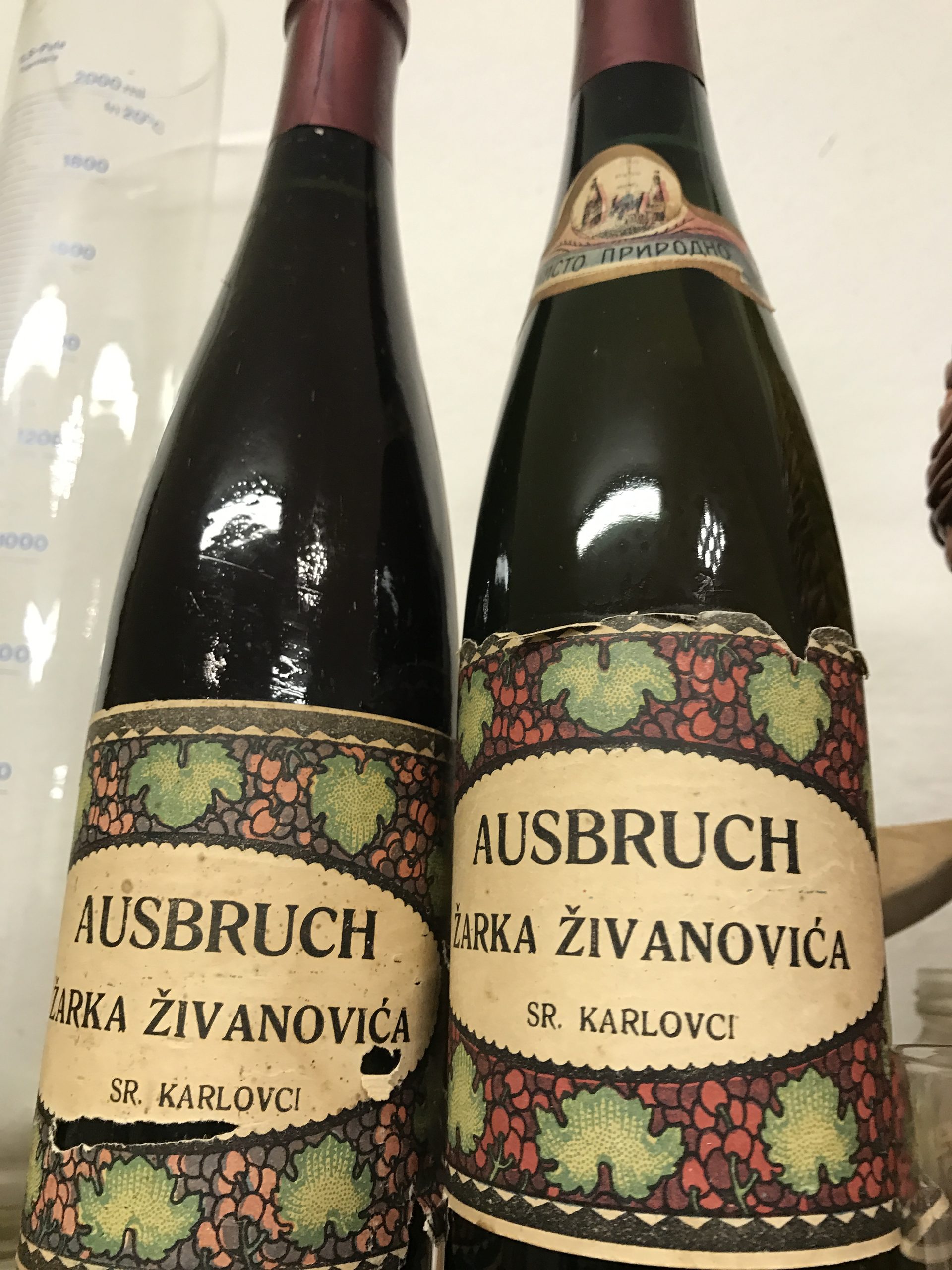
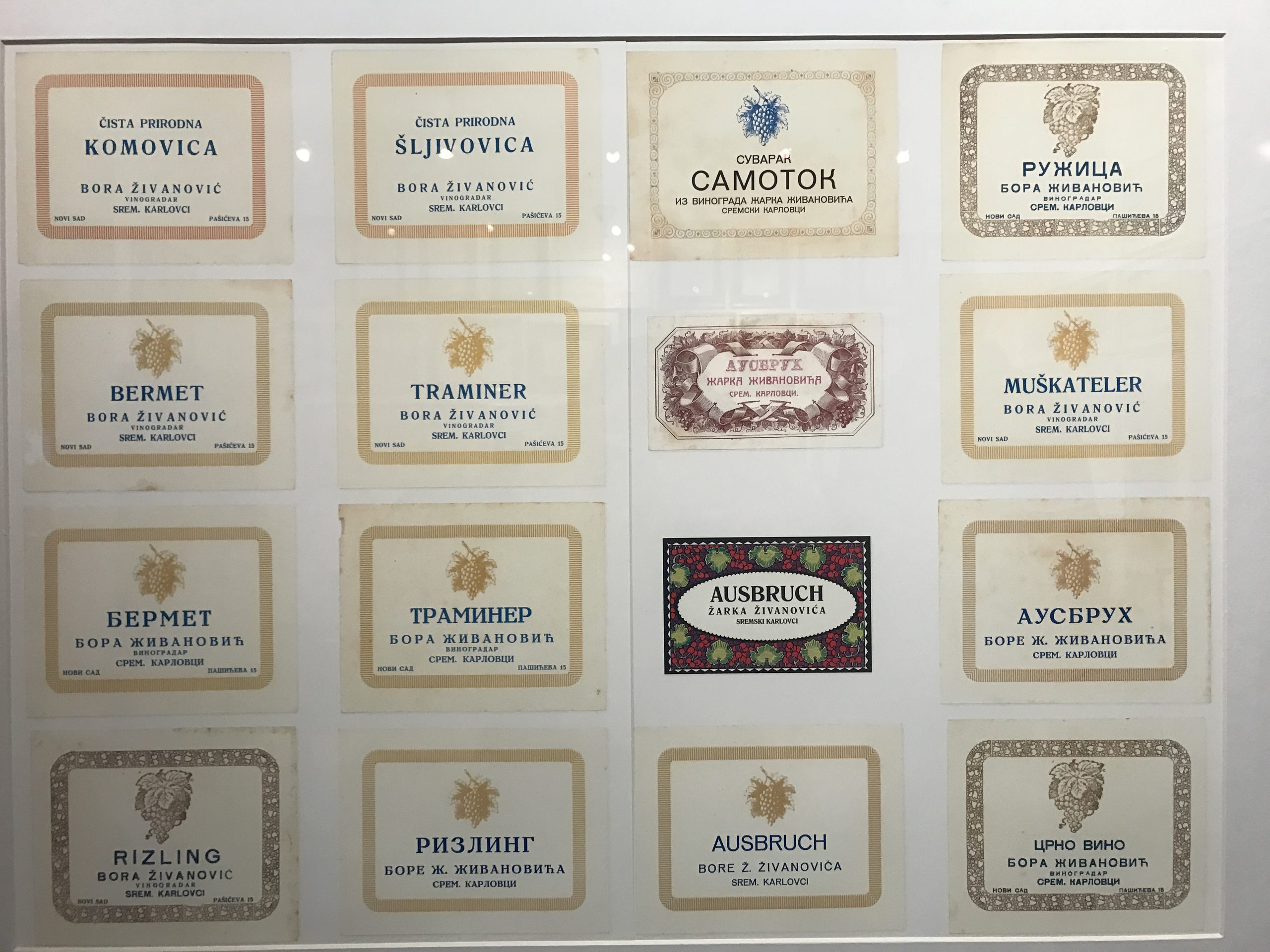
Within the family, Bermet was called pelenaš, after wormwood, while Ausbruch was known as suškovo vino. Žarko long believed the latter name referred to the dried berries used to make it, then connected it with sušica, an old Slavic term for tuberculosis. Ausbruch was made from grapes affected by noble rot, drunk in very small quantities and believed to have medicinal properties, especially for lung ailments. Žarko therefore liked calling it “penicillin wine”, a colourful reminder of an earlier understanding of wine as medicine.
Making it is exceptionally demanding. When he first tried to revive it using his great-grandfather’s recipe, a great deal of work yielded only around fifty litres. Only later, after learning that monks in Fruška Gora’s monasteries had made similar wines for centuries as restoratives and remedies, did he understand how deep the tradition ran.
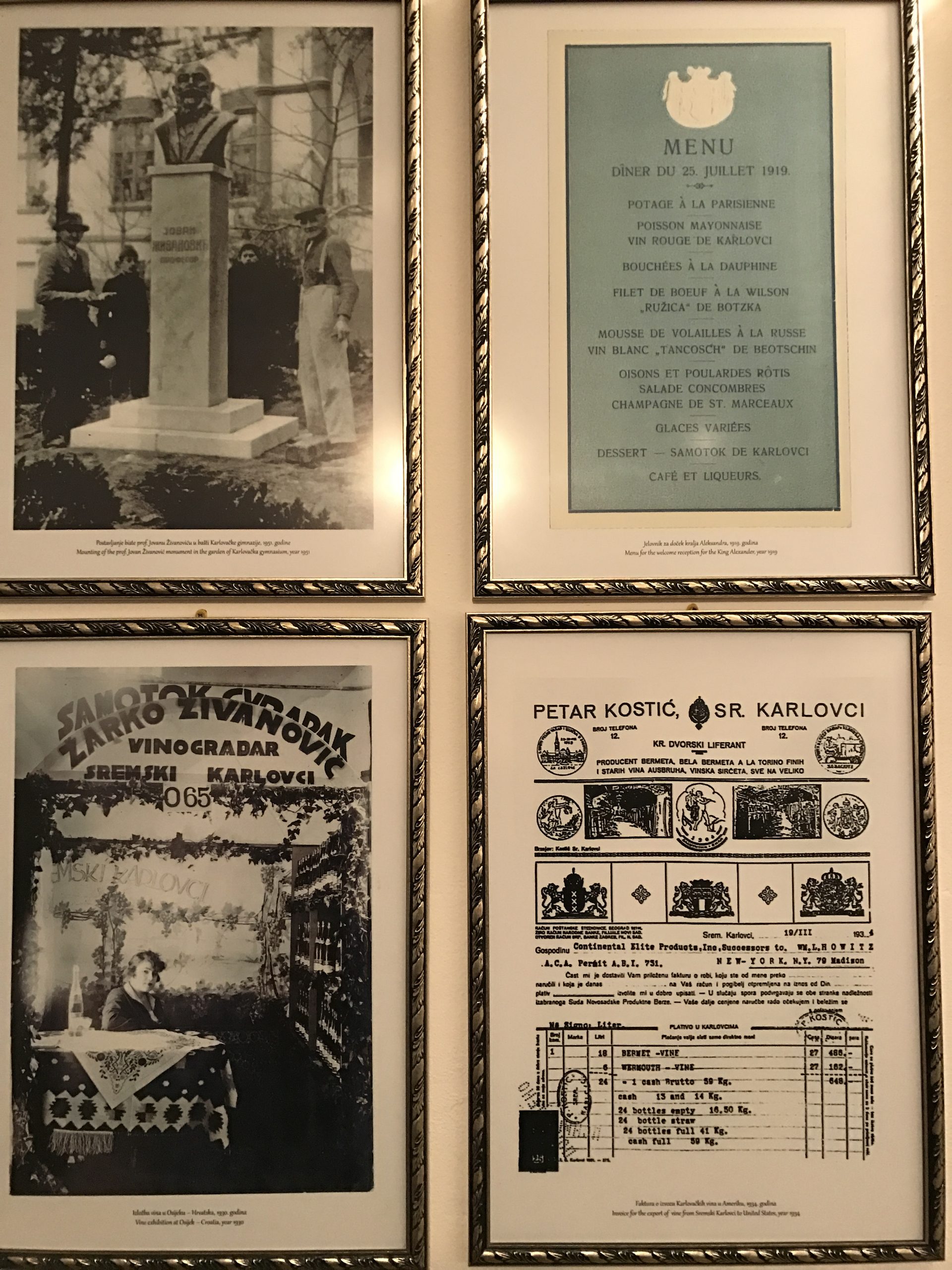
Family documents also show how far the Živanović wines travelled. The museum preserves a customs declaration from Rotterdam, tracing a journey by boat from Sremski Karlovci to Budapest, then by rail to the Dutch port and onwards by ship to New York. A document from an international wine exhibition in 1930 records that Žarko’s grandfather was the only exhibitor of Ausbruch, a wine then fetching ten times the price of other wines.
That genuine history explains why Žarko had no need for the Titanic legend. His family’s wines had demonstrably crossed the Atlantic and reached America. An invented bottle aboard the famous ship could contribute less to the story than a single authentic customs document.
When viticulture on Fruška Gora began to decline, Žarko’s father became the last person still making Ausbruch. After a succession of difficult years, he had to grub up many vineyards, knowing that his son, who worked far from Karlovci, would be unable to maintain such demanding production.
“I worked around the world and couldn’t keep up with a process requiring so much time and presence.”
Only after his father’s death, when his own life allowed him a little more room, did Žarko decide to revive Ausbruch. He found records of his great-grandfather’s method and attempted to make the almost vanished wine again. The return was difficult. He worked at Industrija motornih vozil, the motor vehicle manufacturer in Slovenia, while tending four thousand vines in Karlovci. Vineyards deteriorated, grapes were stolen, and every year in which he managed to fill even one barrel was a small victory for continuity.
“Through our production, we’re simply bringing back the story we grew up in.”
That sentence contained the family philosophy: work, order and deep gratitude for what earlier generations had left. Wine was to restore the taste of a past that already existed.
For the Živanović family, preserving the past never meant mere repetition. The Beekeeping Museum’s walls also record their links with scientists Drago Milosavljević, Petar Cindrić and Vlada Kovač, who developed new grape varieties including Probus, Neoplanta and Petra. Žarko recognised in them a continuation of the same idea: preserving local knowledge by giving it a new life.
“I was the first to plant Probus and release it commercially. I wanted a local variety, something that would tell guests the story of our region in the glass.”
Probus was created by crossing Cabernet Sauvignon and Kadarka, and named after the Roman emperor who, according to tradition, restored vines to the slopes of Fruška Gora. The powerful, dark wine fitted naturally into a family story in which the past was kept alive beyond display cases. Later, they planted Neoplanta and Petra, varieties developed for local conditions but almost lost before they had a chance to show their potential.
The value of that choice became particularly apparent in 2014, when rain, humidity and rot devastated much of the vineyard area. Petra remained almost untouched, as though confirming the purpose of creating and preserving varieties adapted to local conditions.
Žarko sought varieties that had a reason to grow in that particular place, that said something about it and could withstand its challenges. Just as he refused to invent a voyage for the family Ausbruch aboard the Titanic, he would not attribute value to local origins that the wine could not substantiate in the glass. Tradition made sense to him only when it was truthful, useful and alive.
The Beekeeping Museum followed the same principle. He regarded it as an organism continually being enriched. Objects emerged from chests and attics, documents from archives, and each discovery filled a gap in a story extending far beyond one family.
The museum was initially intended for students at the Karlovci Theological Seminary, agriculture students and beekeepers. It soon exceeded every expectation. Thousands of visitors began passing through, from specialists to tourists who knew nothing about bees when they arrived. They could see Jovan’s study and bed, old hives and tools, taste honey and wine, and learn through Žarko’s stories how the family’s two occupations had complemented each other over the centuries.
“Some people will say it doesn’t pay. Financially, it certainly doesn’t, but money was never the most important thing. The feeling that we’re doing something useful for others matters more to me.”
Both beekeeping and wine formed part of his approach to living. Bees taught him work, the division of tasks and cooperation; vines taught patience, moderation and acceptance that nature disregards human deadlines. In both activities, he recognised the same rule: an individual can set much in motion, but nothing worthwhile endures without shared effort.
His son Borko gradually took over the family business. Žarko spoke proudly of how Borko was now in charge and “pulling the cart”, aware that tradition survives through making room for the next generation. Just as his father Borivoje had entrusted him with the museum, apiary, cellar and responsibility for the family name, Žarko had to give his son room to continue in his own way.
Borko managed most of the cellar work, but the handover involved far more than practical tasks. He had to take responsibility for three centuries of family history, a museum that generated no profit, demanding old wine styles, local varieties still seeking a place in the market and a story visitors expected to hear whenever they entered the Živanović courtyard.
Žarko remained involved. As long as he could, he worked in the apiary, welcomed guests, spoke about his great-grandfather Jovan and showed objects whose importance he could explain better than any museum caption. He was a living link between the daguerreotype of 1841, the barrels of 1910, the museum founded in 1968 and the wines currently resting in the cellar.
His storytelling followed no straight chronology. From one hive, he could reach the Karlovci Theological Seminary; from Ausbruch, Rotterdam; from an old barrel, Hvar and a bite of wine; and from a bee, a conclusion about what was wrong with modern humanity. Yet everything was connected by one thought: culture is expressed in how a person eats, drinks, works and decides what to leave behind.
That was why he spoke with particular tenderness about people who had once lived in his neighbourhood. As a boy, he had known Stevan Ćirić, a former education minister and president of the National Assembly of the Kingdom of Yugoslavia, a member of a distinguished Karlovci family who was almost entirely forgotten after the war. It pained Žarko that society so readily discarded people, knowledge and experience that wiser nations would carefully preserve.
He saw the purpose of his museum in the same light. Borivoje founded it because he noticed the objects disappearing. Žarko maintained it because he understood how little it took to break a memory sustained for generations. He handed it to Borko as proof that the past could become a living enterprise.
When Žarko Živanović died, Sremski Karlovci lost more than a beekeeper and winemaker. Part of its civic spirit disappeared: a man who could open a barrel, an old book or a family story for a guest without ever placing himself ahead of what he was showing. His dignity came from precisely that sense of proportion. He knew the worth of what he preserved, without needing to enlarge himself or his family through invented legends.
He left behind the Beekeeping Museum, apiary, underground cellar, old barrels, revived Ausbruch and the Probus, Neoplanta and Petra in the vineyard. Borko remains, now pulling the cart, along with the responsibility to keep the inheritance alive.
Žarko often repeated that the Živanović family’s production merely restored the story they had grown up in. Yet each generation also expanded it: one through a vineyard, another through a movable-comb hive, a third through a museum, a fourth through a rescued wine. The next will have to find its own continuation.
Perhaps another family would long ago have turned all this into a grand legend. Žarko did not. Whenever someone mentioned the Titanic, he returned the conversation to what he could prove: the Rotterdam customs declaration, barrels bearing his grandfather’s initials, his great-grandfather’s books, the hive shaped like Ravanica and the wine he had made again from an old recipe. He had no need of a famous shipwreck to make his story greater.
He knew that three centuries of work were a great enough story in themselves.
And if Professor Jovan Živanović found in the bee a reminder that salvation lay in shared work and harmony, Žarko demonstrated throughout his life something equally important: an inheritance is preserved through the work that gives it a future.