When I asked Violet Grgich about the first big decision she had made on her own at the family winery, she remembered what her father had told her. She couldn’t remember what they’d been talking about.
“Do what you think is best.”
“That doesn’t quite answer your question,” she told me. Then she remembered the bunch of grapes she’d had drawn behind his back.
The original Grgich Hills label showed a bunch of Chardonnay grapes. When it came time to label the Zinfandel, a new design would have been expensive. Miljenko took the color out of the existing drawing, and the same bunch went on the red wines. Later, Violet tracked down the artist who had drawn the original label and asked for a bunch of Cabernet grapes. That one they could print in color.
How often did the two of them disagree? Rarely, Violet says. Then she adds that her father would have said it happened all the time.
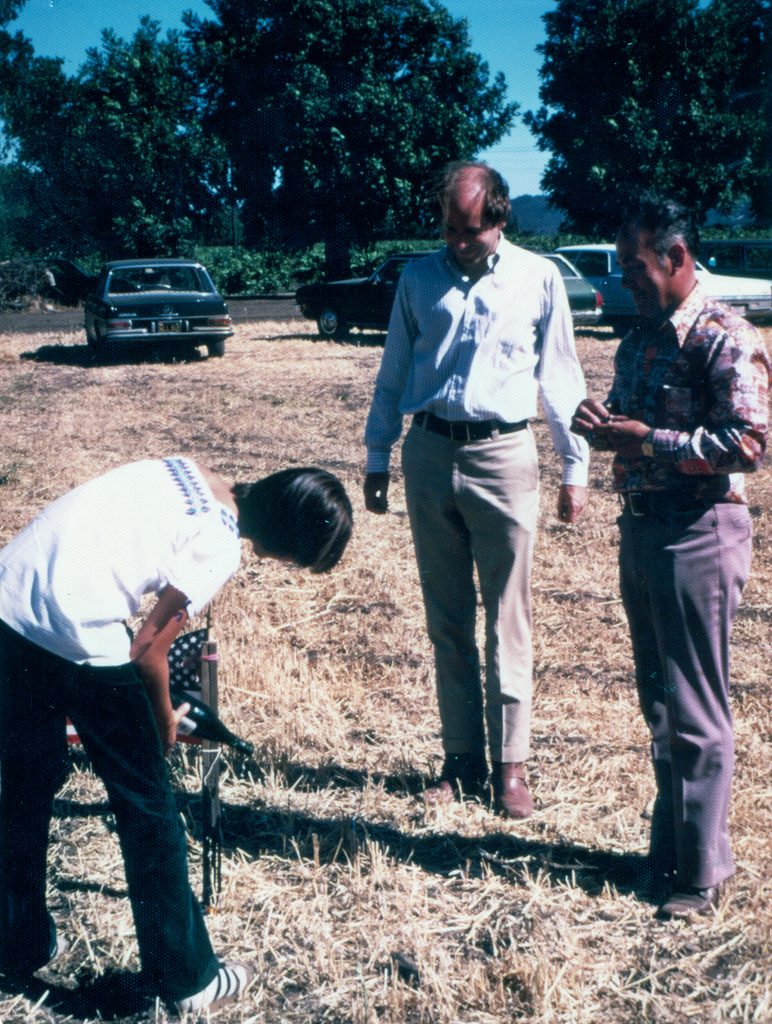
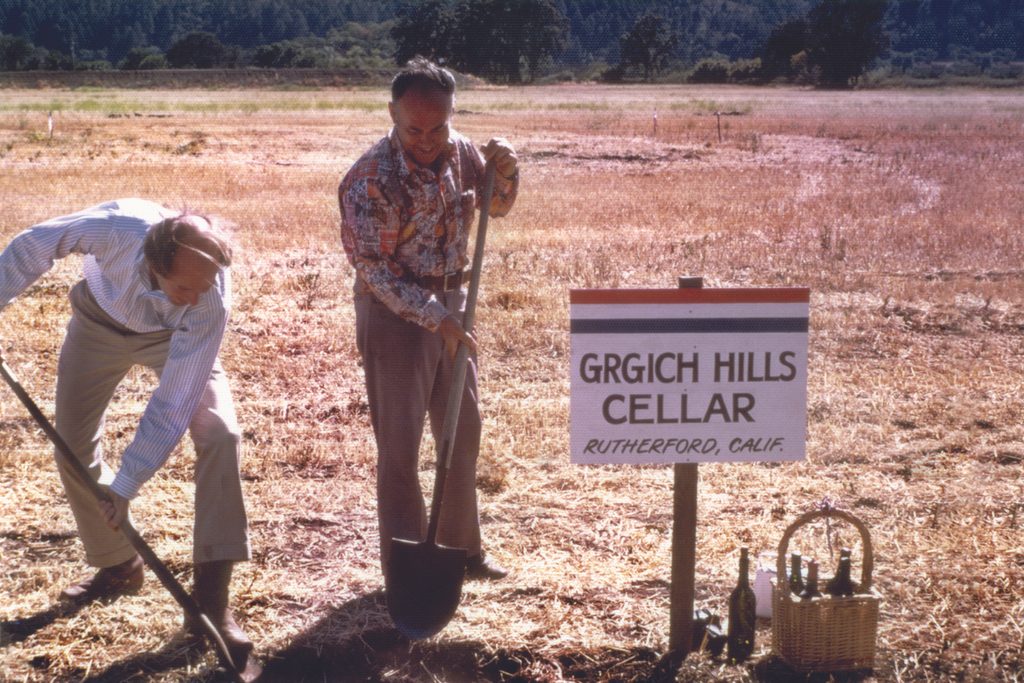
The first Chardonnay to leave its mark on the winery wasn’t even made there. Violet watched them pour it into the foundations. It was July 4, 1977. Miljenko and Austin Hills were breaking ground on a flat piece of land by the road. To a girl who knew her father’s workplace by the lake, little islands, and pavilions of Château Montelena, it was hard to imagine what she’d do on that plot. At Robert Mondavi Winery there had at least been a creaky spiral staircase leading to her father’s office and lab. Tim Mondavi used to make her paper airplanes there.
On the day they broke ground, she watched her father. She could see how happy he was and how much people wanted him to succeed. They poured several historic wines into a corner of the foundations, among them the 1973 Château Montelena Chardonnay. Violet still tells the story with the excitement she felt that day. The Fourth of July. Freedom!
“I have to say that Château Montelena really is a magical place for a little girl. But at the groundbreaking I saw how happy my father was to be starting his own winery and how much people loved and supported him. We poured several historic bottles of wine into a corner of the foundations, where my father and Austin Hills broke ground. One was the 1973 Château Montelena Chardonnay. And on the Fourth of July, too. Freedom!”
A year earlier, that Chardonnay had beaten the French whites at a blind tasting in Paris. For Miljenko, the road to that bottle began in Desne, where children helped with the harvest and trod the grapes. His father was known as a good winemaker. Miljenko himself trained first in business and bookkeeping. After a year on the job, he looked at a cabinet full of files and imagined how many more cabinets like it he might see before retirement. He went to study in Zagreb.
A professor who had spent time in California had told him Napa was paradise. When Miljenko left Yugoslavia in 1954, he was still years away from the valley. He worked on the Frank family’s farm in Germany. He took a chance on Canada, where he might have ended up logging in the Yukon, and wound up washing dishes in Vancouver. He read technical books in his spare time. Once he reached Napa, he learned from Lee Stewart, Brother Timothy, André Tchelistcheff, and Robert Mondavi. In 1972 he moved to Château Montelena.
After Paris, Miljenko could take his pick of partners. He chose Austin Hills, whose family was associated with Hills Bros. Coffee. Austin’s sister, Mary Lee Strobel, joined the venture as well. At a tasting in Chicago in 1980, their Chardonnay from the winery’s first vintage, 1977, placed first among 221 wines of the same variety.
What Violet singles out from those years happened between the groundbreaking and the win in Chicago. Her father explained each step of the construction to her. The following summer they bottled the first wines he had made at Grgich Hills.
“I knew it was mine, too. I didn’t think of it as an asset. It was something that belonged to my family and would carry on for generations. But feeling that you belong somewhere is different from wanting to become a winemaker.”
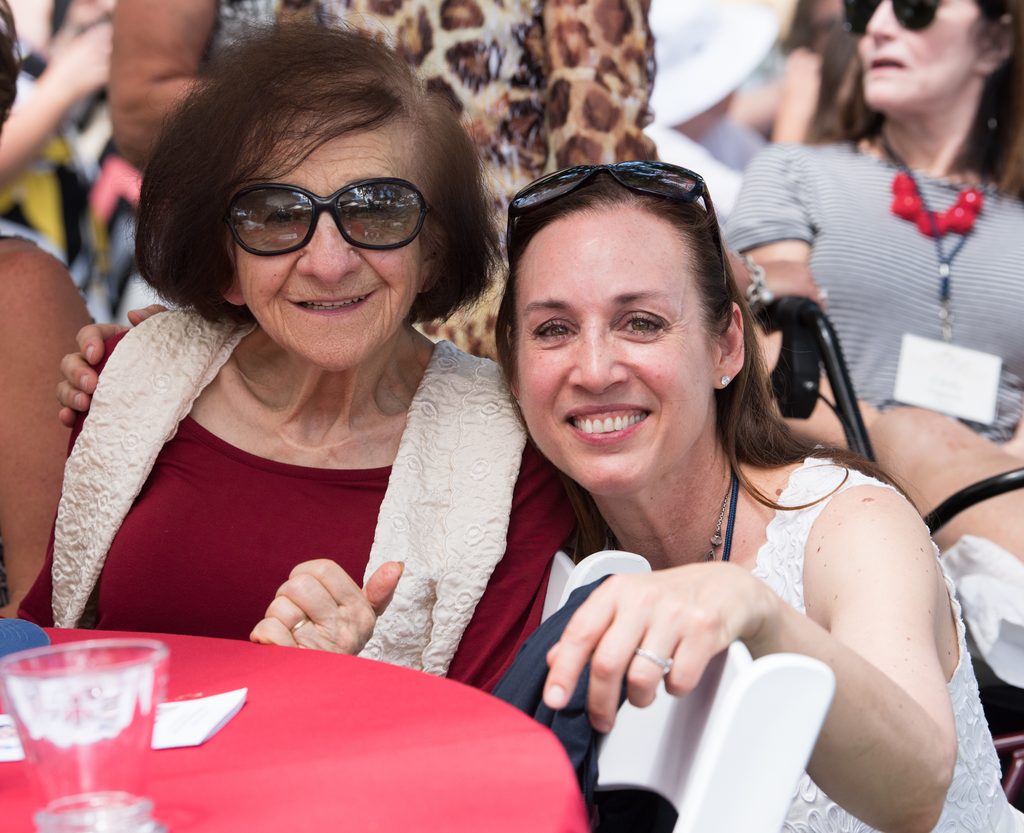
When her father told her she would make wine, Violet would say she was interested in all sorts of things, including music. She pictured herself performing, first on the piano and then on the flute. When it was time to apply to college, Miljenko agreed to sign only the application to the University of California, Davis, known for training viticulturists and winemakers. Violet went to Davis and enrolled in music. She also took biology, chemistry, and enology, and fell in love with the harpsichord and early music.
“As a Croatian of the older generation, he believed children should listen to their parents. So when I was little and he told me I’d become a winemaker, I didn’t say much except that I was interested in studying all sorts of things, including music. When I got older he became more persistent. He started telling me it would give me a secure living and that one day I could become president of the company. But the winery was always home to me, whatever else I was doing, so I naturally gravitated back to it.”
“I pictured myself as a performer, first on the piano and then on the flute. But as an undergraduate I fell in love with the harpsichord and early music, as well as the recorder and the viola da gamba.”
At the winery she worked on the bottling line, in the tasting room, and in the lab. What she liked about the lab was that she didn’t have to talk much. Her father had other plans. One evening, only after they’d arrived at the Wente brothers’ restaurant, he told her she would be speaking about Fumé Blanc. There were about a hundred guests. She was shaking and couldn’t eat. When she went up in front of them, she opened her mouth and couldn’t get a word out.
Eventually she managed to say something about how nice the Fumé Blanc was and ask whether anyone had a question. Someone did. Violet knew the answer.
Afterward she told her father how hard it had been. He said he’d been very shy himself. It had taken years of practice to feel more at ease in front of people. He kept putting her in front of audiences, and she sometimes started dreading an appearance months in advance.
Today, when wine puts her in front of people much of the time, Violet thinks back to the appearances she once dreaded most.
“Eventually I came to feel the same way. I’m enormously grateful to him because today nobody knows how shy I used to be. I could never have done it if he hadn’t insisted that I just do it, however hard it was for me.”
At a seminar for sommeliers in New York, she swirled a glass of Zinfandel and spilled it down her light-colored clothes. She wanted the ground to swallow her. When she saw that the people in front of her weren’t upset, she made a joke and carried on. During her master’s at Indiana University, she performed with her professors, playing from music she had never seen before. A fellow musician told her Franz Liszt was such a star that even his wrong notes were better than other people’s right ones.
“So now I always think, every note is the right note!”
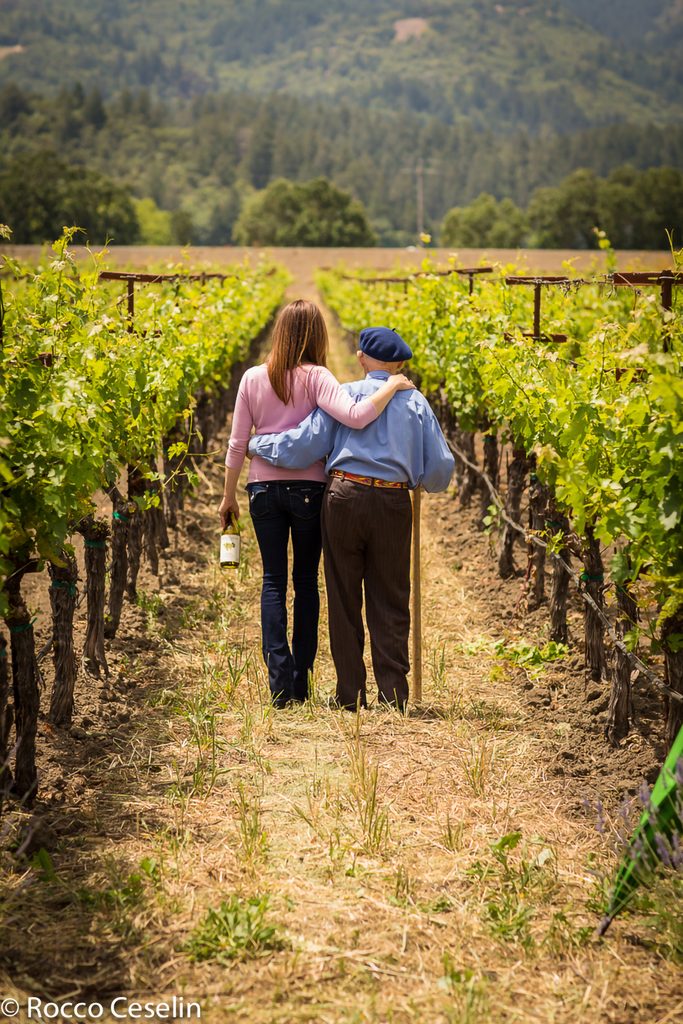
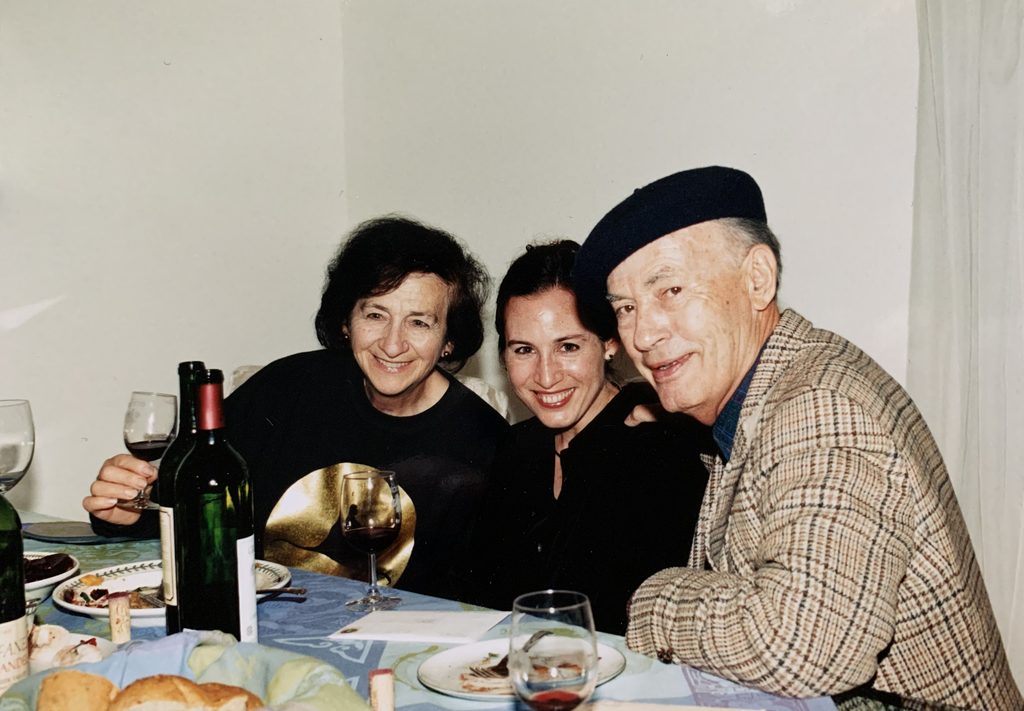
Indiana University was also where she met Colin. He had gone from punk rock to early music and the viola da gamba. She played harpsichord. They married in 2003. These days their son sends them music he thinks they might like. Violet says he gets it right.
There’s one performance she remembers with particular fondness. The first time she met a group of children in Croatia over the internet, she played the accordion for them. WiRED, a health education organization, helped Croatian schoolchildren get access to computers and the internet in one of its early projects. Violet sits on its board. Her mother helped found it.
When I asked what she had inherited from Tatjana, Violet warned me that she was Croatian and didn’t like talking about herself. Then she listed an eye for design, a knack for sewing, a love of music and art, and a need to help others.
“She was as charming as my father, maybe even more so!”
Tatjana founded the Tatjana Grgich Family Foundation. She cared about education, peace, and helping people who lacked basic necessities. At La Roche University in Pittsburgh, she helped start Pacem in Terris. The program brought students from Croatia, Slovenia, Bosnia and Herzegovina, and Serbia to America to learn about peacebuilding and take what they’d learned back home.
“My mother was born a philanthropist and has helped people her entire life. For her to give back to her native country, Croatia, was particularly meaningful. Education is not something that is given once but influences a lifetime. You can give someone fish, but to teach them how to fish will enable them to help themselves for a lifetime.”
Violet says it mattered especially to her mother that she could help the country where she was born. She saw education as a gift that stays with you for life. Violet has continued to help in Croatia herself. She supports Roots of Peace, whose first project cleared mines and replanted land in Dragalić.
“It’s part of who we are! We all have particular areas of focus, but helping Croatians in need is something we all share.”
Miljenko handed her the leadership of the winery at a board meeting. He hadn’t told her anything beforehand.
“I thought it wouldn’t happen until he was on his deathbed,” she told me. It was shortly after the 2017 fires. Apparently, Violet concluded, she had done a decent job of getting them through the crisis.

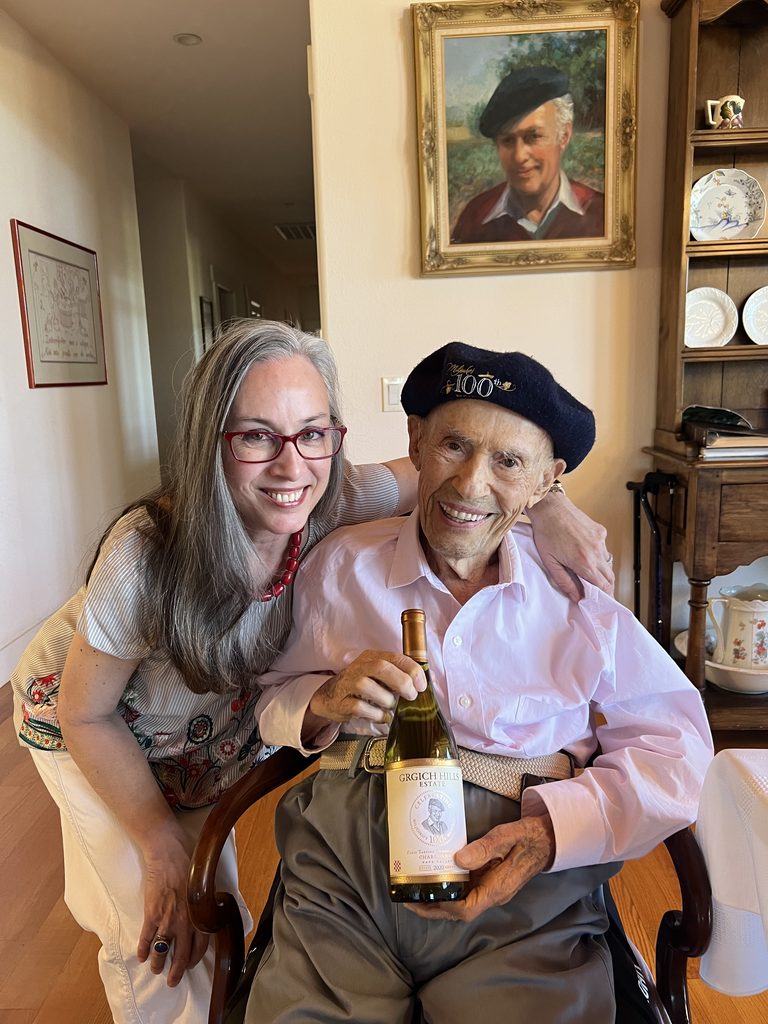

She had worked full time at Grgich Hills since 1988. By the time he made the announcement, she knew the guests and had worked in sales, marketing, and accounting. The winery grew, computers came in, and the work multiplied. Violet used to joke that her father got a fright every time he came in and saw another new computer. She made it her job to spare him the headaches so he could do what he wanted to do. At first she could barely bring herself to let anyone else answer the phone. Eventually her father and her colleagues were telling her to find an assistant.
“I realized that, given my experience and interests, running the business, finding solutions, connecting with people, and managing the company came naturally to me, especially after all those years of experience.”
“I think the main reason I didn’t believe I’d follow in his footsteps was that they were enormous. I couldn’t see how I’d ever make wines at his level and still have time for everything else I was interested in. But I was much younger then, and over time I learned to look at it differently. I’d also been doing the work for a long time, so I feel I’d already earned the employees’ respect, especially among those who’d known me as a little girl on the bottling line. Having a father who’s such a legend and hearing how much I’m like him actually makes things easier for me!”
When Violet talks about the people she works with, she remembers that some of them knew her as a little girl on the bottling line. She also remembers how much it meant to her father to give people jobs that could support their families. When I asked what she’d like people to remember about her years running the winery, she spoke about whether everyone’s voice had been heard, whether she had made friends the way her father did, and whether she had raised the winery’s standing while staying true to what her family believed in. She added that she’d like them to remember how much wine she sold. She put sales second, though.
Alongside her in Napa is Ivo Jeramaz, Miljenko’s great-nephew. He came to America in 1986 with a technical education, learned from Miljenko, and gradually took responsibility for the vineyards and winemaking. He played an important role in developing the winery’s regenerative farming practices. Grgich Hills earned Regenerative Organic Certification in 2022, years after it first turned to organic farming. Violet saw organic and biodynamic methods as a return to the family’s roots. She was willing to make less wine if it meant making better wine.
She first heard about those roots at home. Miljenko talked about Desne and how hard he’d had to fight for an education. Tatjana told her about Zadvarje and Split, the war years in Makarska, and her father, who was sent to the front again and again and somehow, as she remembered it, always came back the sole survivor.
Violet first came to Croatia at sixteen. When she stepped off the plane, she could almost physically feel the ground pulling her toward it. She wanted to kiss it. She was too shy. Among the old stone houses in Desne she felt the same pull. She could see the house where her father was born through the brush. Years later, relatives cleared a path to it. She kept a photograph of Miljenko pointing to the exact place where he was born.
“As an American, I was born in a hospital and have no idea which room I was in.”
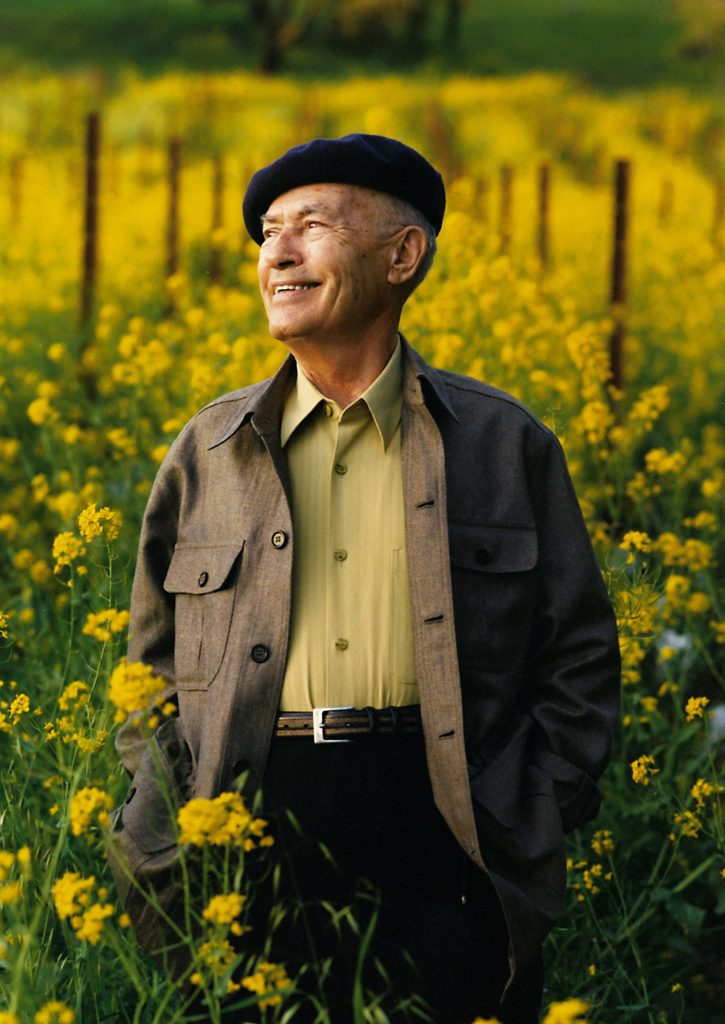
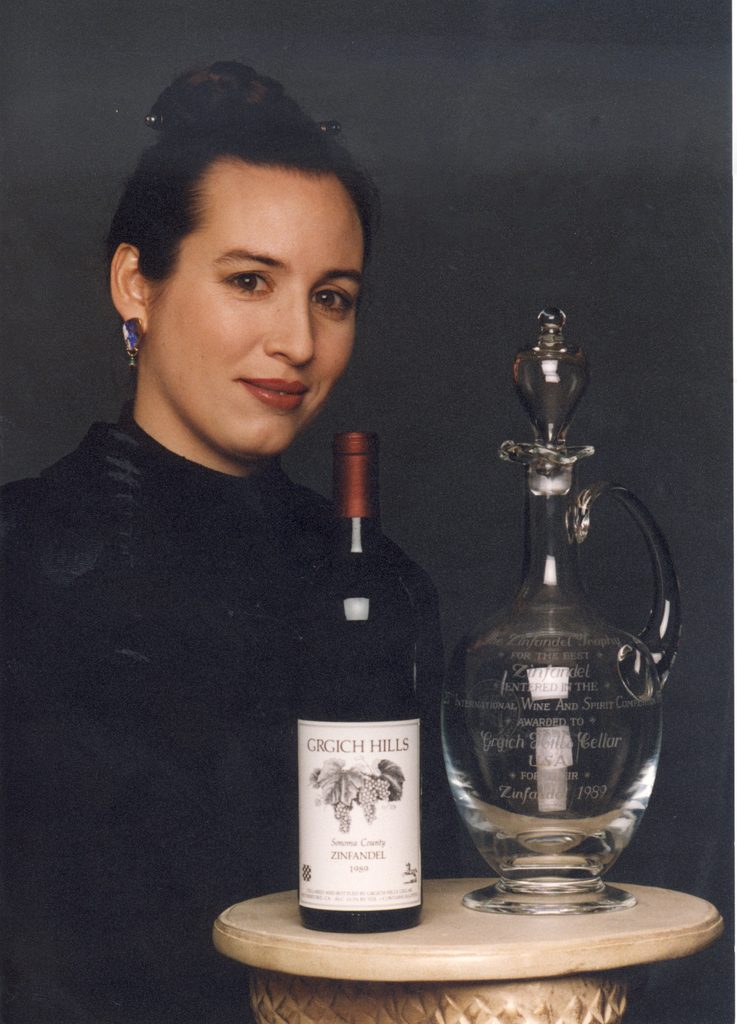
“The brush kept me from getting close to his house, but it was special to see it and think about my father being born by the hearth, growing up there, taking sheep up the mountain to graze, treading grapes with his brothers and sisters, and eventually leaving the village to get an education. I love history and historic places and objects. I’ve often wondered what it was like to grow up and live centuries ago. My father’s early childhood seemed to me like the life villagers led in the nineteenth century.”
“A lot seemed the same, and a lot seemed different. Desne hadn’t changed much, but there were more modern conveniences, like indoor toilets. Today it’s a very different country, with so much tourism and development, especially along the coast, and with Croatian wineries growing and earning recognition around the world.”
In 1996 Miljenko started Grgić Vina in Trstenik with Violet and Ivo. They made Pošip and Plavac Mali. He planned to put up interns in the rooms upstairs and pass on what he’d learned in California. Violet remembers how some of those ideas went down. They told him he might as well throw the wine straight into the Adriatic if he was going to put it in a barrique.
In Trstenik I spoke about Miljenko with Krešimir Vučković, a winemaker who worked alongside him in the Grgić Vina cellar. Krešo remembers how Miljenko would smile the moment anyone mentioned grapes or wine. He also remembers one piece of advice that made the others in the cellar look at one another in surprise. In the winter of 2001, the wine in a tank stopped fermenting. He and a young Leo Gracin were looking for a solution. Miljenko told them to rack the wine. They worried that would separate it from the yeast just when they needed it. When spring came and the wine warmed up, he explained, the yeast would get back to work. As Krešo remembers it, that’s exactly what happened.
“You know, in winemaking, two and two never make four.”
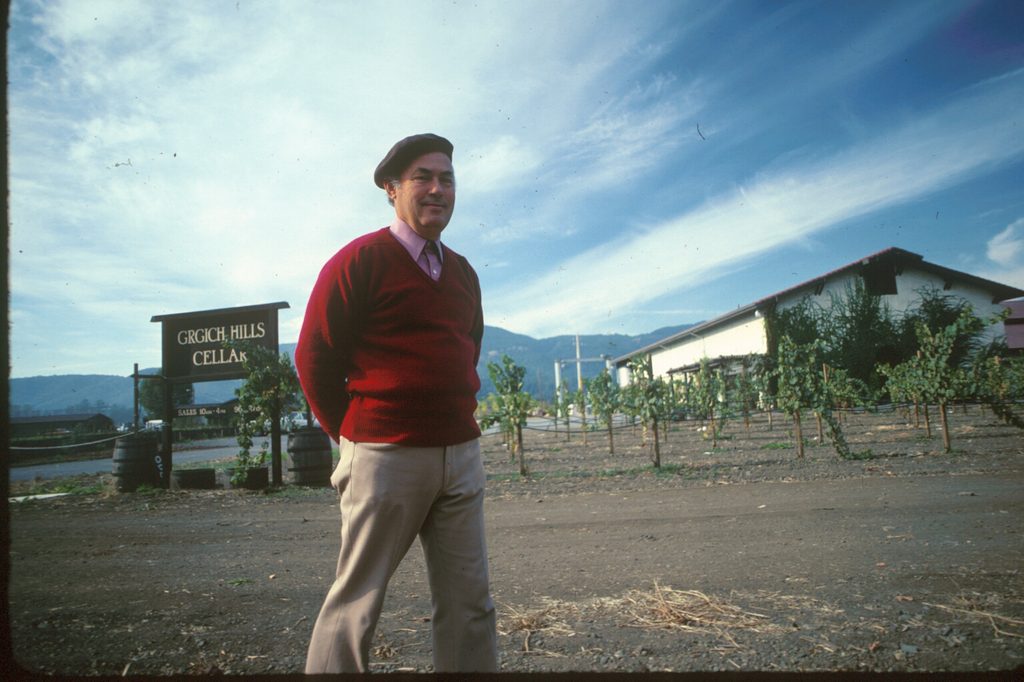
Miljenko put the profits from Trstenik back into the winery. After a fire in 2015 damaged the warehouse and much of the wine, the winery was rebuilt. Krešo and Dražena Vučković now work alongside their son Ivan. Violet would like to finish the terrace and fix up the rooms upstairs so guests can stay overnight after a tasting or hold their weddings there. She wants to keep the winery small. ICON, a Plavac Mali from the 2023 vintage, marks thirty years since the winery was founded. It comes from the year Miljenko turned one hundred.
“Our production is very small and there’s no need to expand the business. Krešo and Dražena Vučković, and now their son Ivan, are doing a wonderful job. I took on the project of finishing the winery terrace and turning the rooms upstairs into a small boutique hotel or guest rooms. But it’s hard to get things done from a distance. These past few years I’ve been focused on Grgich Hills in Napa, especially with the downturn in the wine business. I’d love Grgić Vina to stay small, make wines of the highest quality, welcome people for tastings and overnight stays, and be a place where they can get married.”
When he returned to Croatia, Miljenko also finished his own studies. He graduated from the University of Zagreb’s Faculty of Agriculture in 1997, at seventy-four. He established an endowment through the Croatian Scholarship Fund for students of viticulture and winemaking. Each harvest, the Napa winery takes on three interns from the program. One member of the cellar team traveled to Croatia for one of the students’ weddings.
Violet remembers what Miljenko’s father told him when he left the village. Every day do your best, learn something new, and make a friend.
Violet’s son was seven when he asked her how he was going to pay for his education. He already knew why he wanted to study chemistry.
“Mama, I’m worried about supporting myself once I leave home and paying for college and a master’s in chemistry so I can work at Grgich Hills.”
He’d just turned eight when another message of his was recorded on his grandmother’s phone.
“I think the greatest treasure in the world is knowledge. It’s so important to have knowledge throughout your brain so you can get a good job and get the payment you deserve for it. I think that I’m going to be a scientist when I grow up. Who really knows but I think I will.”
“I don’t think that came from nowhere,” Violet adds.
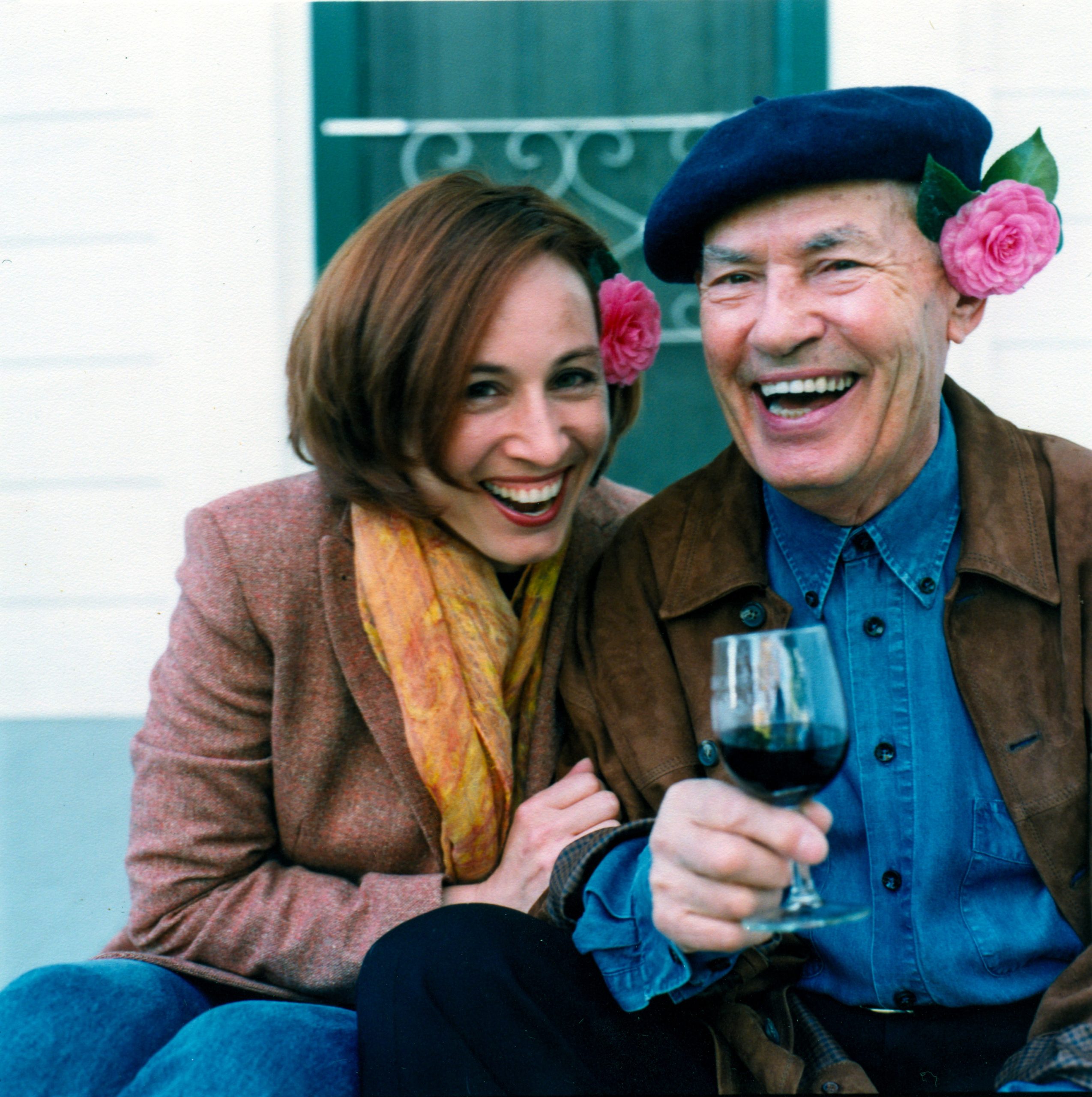
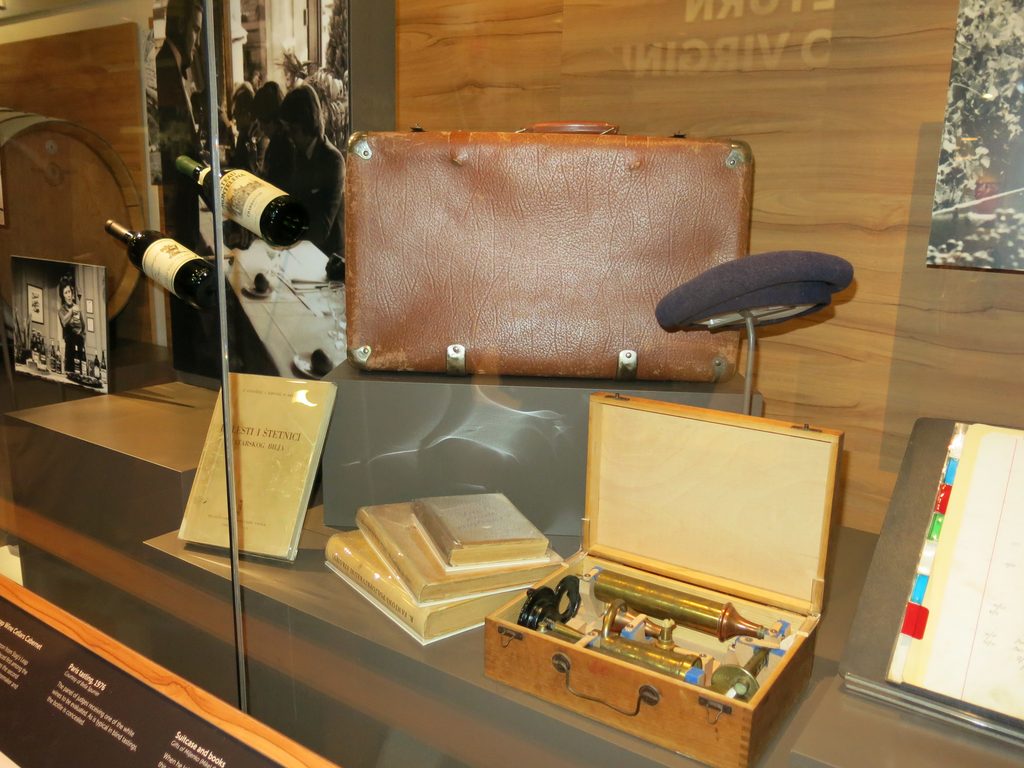
Miljenko died in December 2023. The Smithsonian holds the winning bottle, the books, the beret, and the suitcase in which he brought his technical books and an instrument for measuring alcohol to America. Of all those things, the suitcase is Violet’s favorite.
When I ask what he was like at home, she says he was as strict as Tatjana. Then she remembers Sundays. They would hike Mount St. Helena or go for a picnic in Bodega Bay or Santa Cruz. Once Miljenko climbed onto a rock to see what lived in the pools left by the receding tide. He turned his back to the ocean and a wave swept him away. Luckily he came back up. Violet says he never made that mistake again. She also remembers bouncing around in the back of the pickup as he drove her through the vineyard. He was laughing like crazy.
“The way people felt around him. His million-dollar smile. The way he laughed like crazy driving me through the vineyard while I bounced around in the back of the pickup. His laugh in general! Hearing people tell me how he changed their lives. There’s so much, it’s hard to pick one thing!”
When she became a parent herself, she says, she felt as though she’d turned into a different person overnight. She understood better why it had mattered so much to her father that she stay in the family business. Once she heard him talking to his grandson. He told him to follow what he loved, to keep learning, to work hard and smart, and to hold on to the family’s values.
“I wish I’d recorded it!”