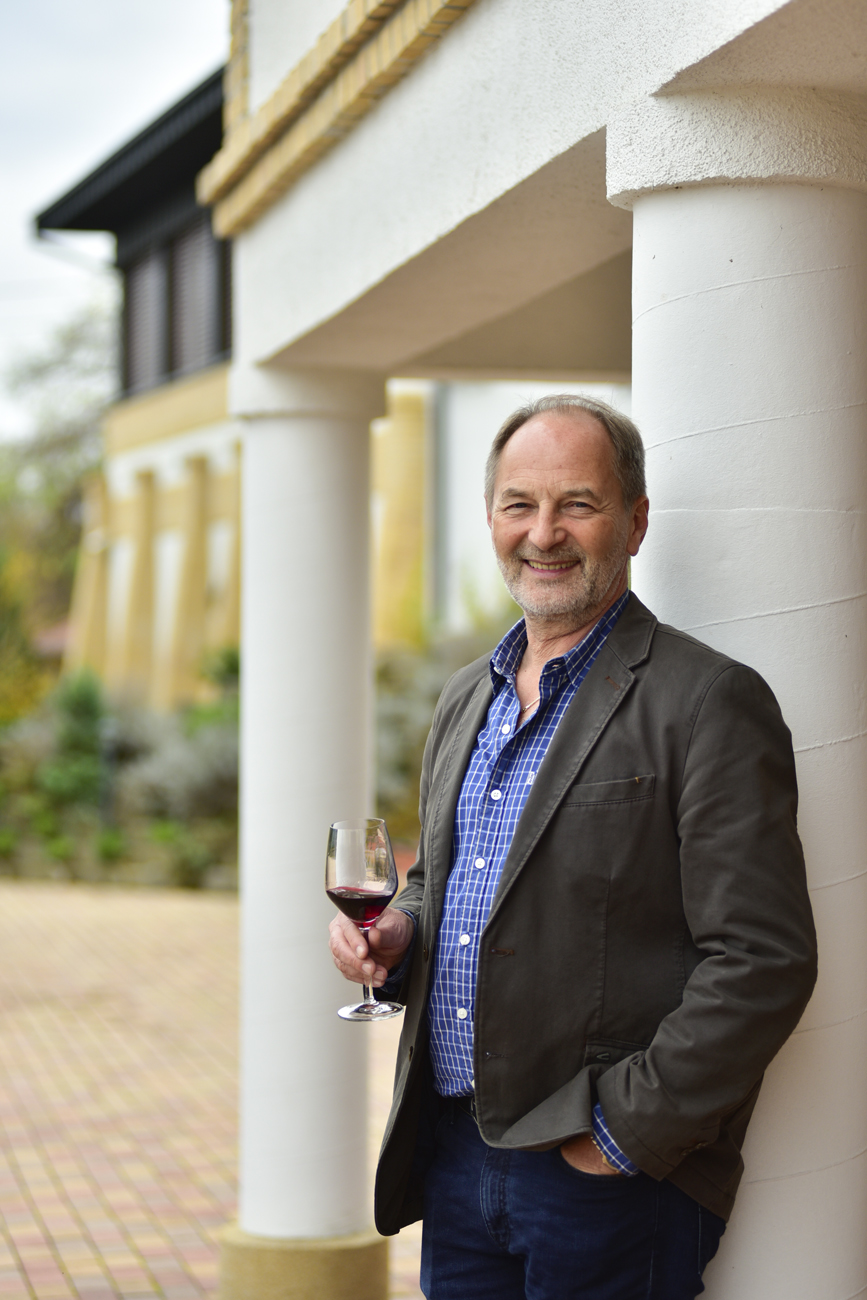
One of János Eszterbauer’s finest Cabernet Sauvignons bears the name of a day labourer he used to mock as a boy.
“Tivald was a teacher who spent many years in prison for his involvement in the 1956 revolution. His family left him during that time, and afterwards, unable to find work, he became an alcoholic,” says the winemaker from Szekszárd.
He worked for János’s grandfather.
“Always unshaven and scruffily dressed, worn down by the scythe, the hoe and the summer heat, he was a day labourer I wrongly looked down on as a child, occasionally disturbing his peace with my pranks.”
Only as an adult did he begin to understand the man’s fate.
“As a child, I understood nothing of his circumstances. Only when I grew older did I begin to see them in a different light.”
He ended the dedication accompanying Tivald with these words:
“May the label of our finest wine now preserve his memory and honour his hard work, as a gesture of amends…” Tivald is not the only person whose name and face we meet here before pouring the wine. Alongside him are grandparents, great-grandmothers, merchants, card players and men who spent much of their lives in vineyard cottages. János traces his family history in the Szekszárd archives back to 1746.
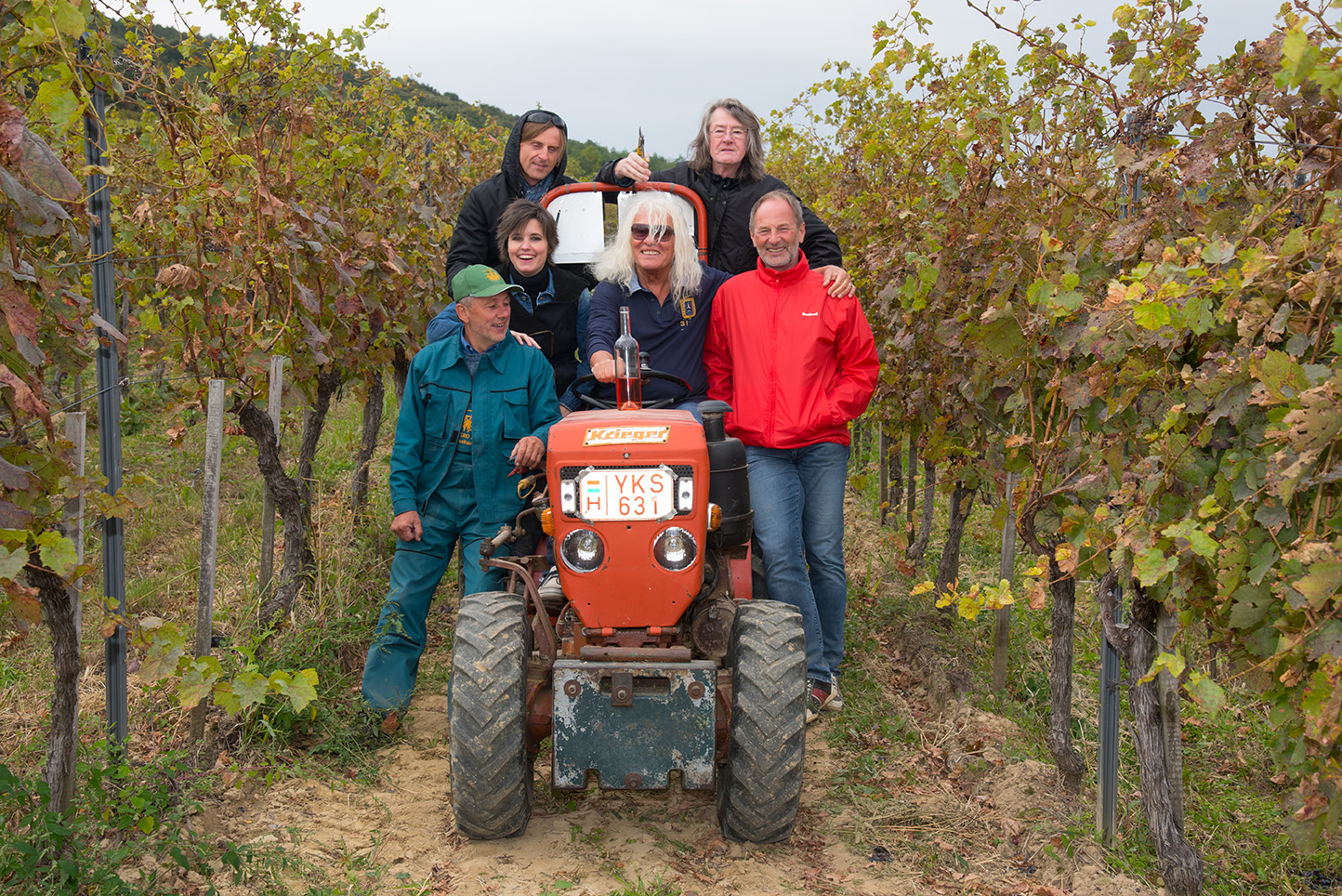
“On my father’s side we are of Bavarian rather than Swabian origin, and according to archival records our ancestors grew grapes and made wine for ten generations. There are Swabians, South Slavs and Hungarians in our family tree too, but don’t ask us where the surname Eszterbauer comes from. There are various theories, but we cannot say anything for certain.”
Other family details are rather more definite. A photograph of the 1935 harvest, for instance, preserves a gentleman who would not join the pickers without his tie. It appears on Sógor Kadarka: Sógor means Brother-in-Law.
“The photograph shows my ancestors on my mother’s side. In the centre stands brother-in-law Aszalai, who rose from our farming family to become a wine merchant and even wore a tie to the harvest. The young man on horseback, with his military cap at an angle, is brother-in-law Szöszke, the grandfather of our winemaker Laci Pálinkás. Their wives are there too, of course, the girls from the Gránicz family, including my grandmother.”
Báró Steiner Bikavér remembers a brother-in-law who earned his title at the card table.
“My grandfather would often tether his good horse Csillag outside brother-in-law Steiner’s vineyard cottage. They drank wine while we children stole apricots from his orchard. Steiner was something of a hedonist. At card games in genteel company he emptied the pockets of his wealthy opponents, so people nicknamed him Baron Steiner. As for us, they called us the ‘Jammy Eszterbauers’, but I’ll tell that story on another label…”
The great-grandfather remembered by Telihold Kékfrankos, Full Moon, had a different opponent.
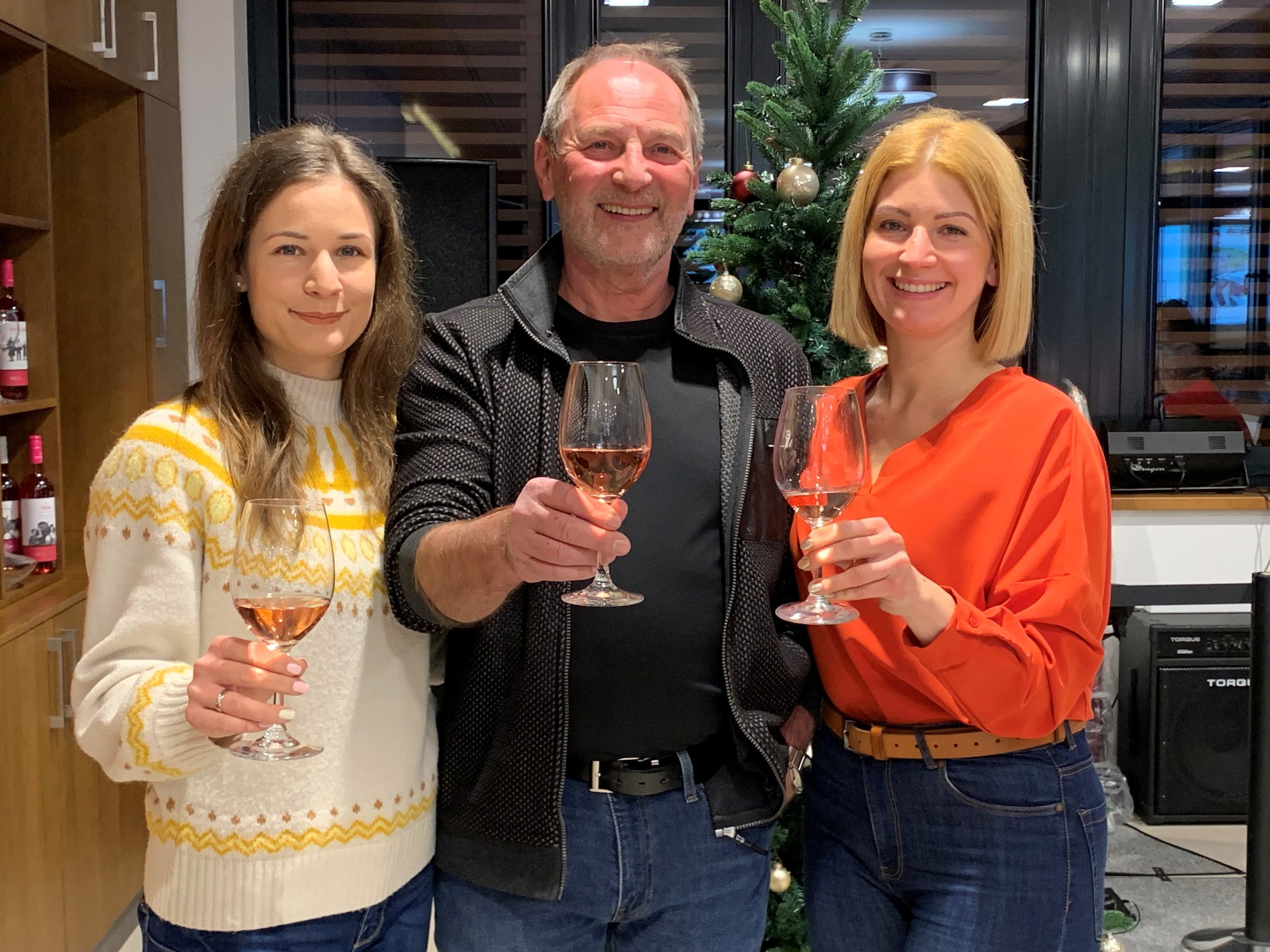
“My great-grandfather had an enormous moustache and was an incredibly stubborn man. He refused to give up his land, so when the Communist cooperative agitators arrived, he fled to the farmstead. He came home only once a week for food and clean clothes, always at dawn, before sunrise. As the family remembers it, one night under a full moon he took a generous swig from his demijohn. He slowly wiped his moustache and said to the Moon: ‘Hey, Moon! What are you compared with me? You’re full only once a month, but I’m full of wine every day!’ He never joined the cooperative; he remained free and independent all his life.”
A female relative passed on the story of the Moon:
“I have a few vague childhood memories of him, but I heard that story from a relative.”
Öröm, Joy, a rosé, shows his grandparents photographed in 1937, the year before his mother was born. The memory accompanying Nagyapám Kadarka, My Grandfather, is more personal still:
“We made this fine Kadarka in memory of my beloved grandfather on the label, once a respected Szekszárd winegrower. I will never forget sitting beside him as a child on the driver’s seat of his horse-drawn cart, jolting along the sunken lanes of Szekszárd between our vineyards…”
His grandparents and the horse Csillag belonged to a world János knew before it disappeared.
“I remember the farm, the vineyards, the press houses, the fields and the livestock. Grandmother usually cooked in the kitchen or tended the vegetable garden, while Grandfather worked in the vineyards and looked after the animals. They were generally cheerful and good-humoured.”
“My grandfather was a cheerful man by nature, despite all the hardships he faced. But he was deeply disheartened when, during the socialist era, the family lost all their land and eventually their home to expropriation, with apartment blocks built in their place.”
His grandmother found the move into a flat particularly difficult:
“Against their will, my grandparents had to move into a two-room flat in a prefabricated apartment block, and for six months my grandmother kept looking for the chicken coop within those walls. It almost destroyed them psychologically; it took at least ten years off their lives.”
What happened to Csillag was beyond anything a child could understand.
“I was only four years old and could not grasp the full significance of what was happening. Later, from family stories, I learned that Grandfather did not want to join the cooperative but was forced to. He was even required to hand over his horse, a beloved family animal. Believing that this pampered creature would face a miserable existence there, he chose to send it to the slaughterhouse instead. Every member of the family cried over his decision. Before the horse was taken away, Grandfather lifted me onto its back.”
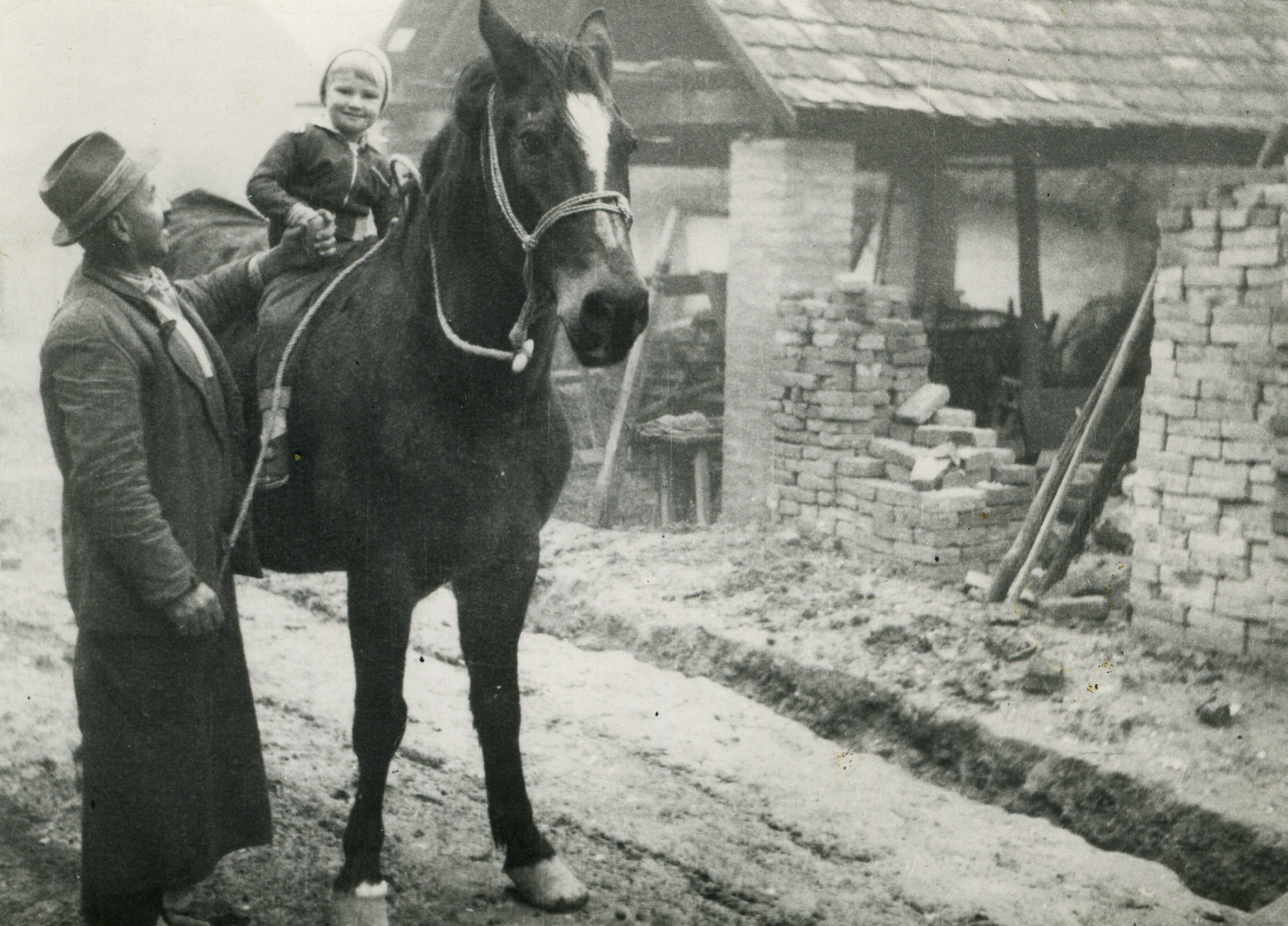
“We often spoke of Csillag long afterwards. His name means Star, and he had been my favourite animal when I was little.”
His grandfather eventually became cellar master at the cooperative winery.
“During the Communist years, their lives were marked by frequent tragedies, forced sacrifices and inevitable compromises. Despite all this, or perhaps because of it, they managed to find beauty and goodness in everything.”
When he offered to help his grandson establish a new vineyard, the money came with a condition. János could not spend it as he pleased.
“He asked me to lease a two-thousand-square-metre plot from the cooperative for fifty years, plant a vineyard and build a small press house of thirty square metres. He offered to contribute part of the cost himself. At the time, winemaking held no appeal for me. I would much rather have spent the money on a flat of my own or a Trabant. But since Grandfather would not fund anything else, and I could also see the possibility of a little extra income, I eventually agreed.”
The first plot was in the Porkoláb valley.
“I built a thirty-square-metre press house there. Growing grapes and making wine began as a hobby, for my own enjoyment. With the whole family pulling together and with my own hands, I built everything from scratch, down to the last brick.”
His first serious business was in industrial automation.
“I was driven far more by an entrepreneurial spirit than by the desire for an engineering career. In 1986, with the winds of a new era already blowing, the small economic partnerships known as GMKs provided a welcome supplement to the salary I earned at a state-owned enterprise. By the late eighties, success was already becoming apparent.”
The wine reached his business partners as a Christmas gift.
“In the early 2000s, the people receiving our wines as gifts regularly got in touch to ask where they could buy them, because they wanted some for themselves. That was the spark.”
“Over time I bought more and more vineyards, and then, with the help of my cousin László Pálinkás, I began making wine. That was how our winemaking career together started.”
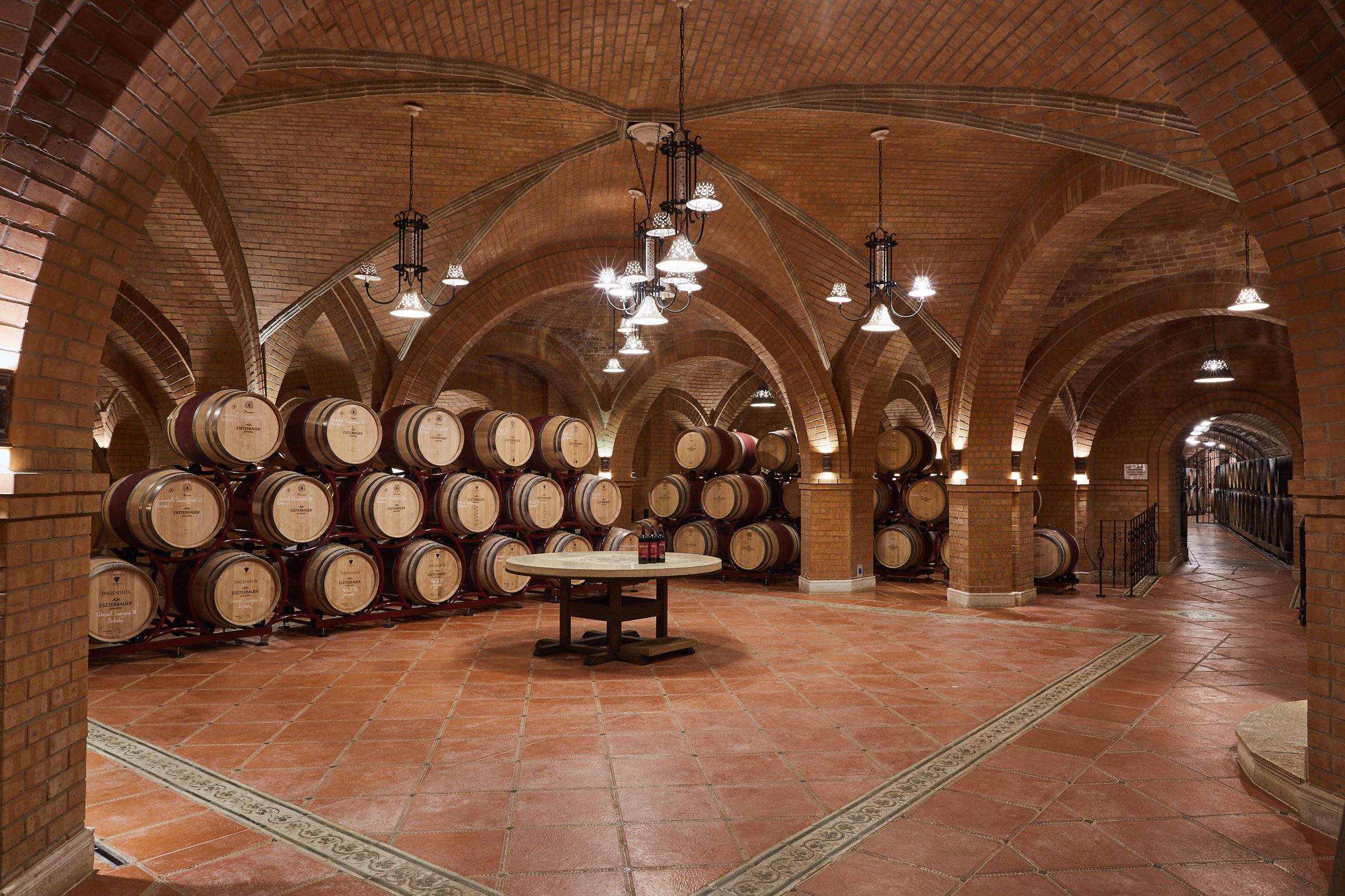
Long before that, he and László had shared music.
“We grew up together from our earliest childhood. Seventies rock music was the foundation of our band. I played bass and he played piano. The foundation is the same in music and winemaking: a lifelong friendship that helps us through every difficulty.”
Pálinkás’s teacher was his grandfather József Vesztergombi, brother-in-law Szöszke from the harvest photograph. Mesterünk, Our Master, is dedicated to him.
“As we remember him, he made excellent wines, and his cellar was always neat and clean. Alongside his own talent and training, our friend Laci owes him the skills with which he created this outstanding wine for our winery.”
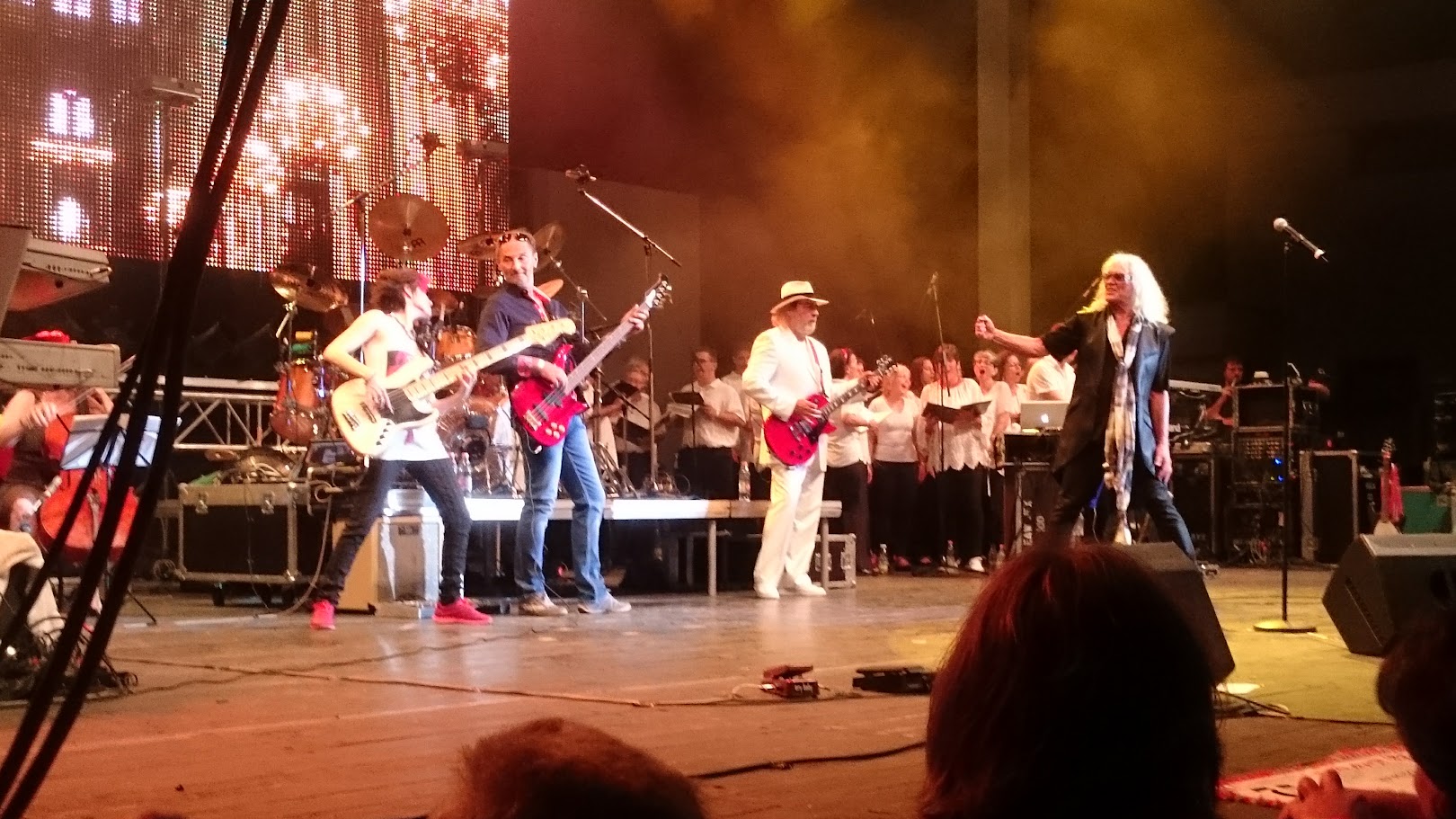
Pálinkás then passed his knowledge on to Miklós Klein, known as Májki, who joined the winery in 2009 and later took responsibility for production. The business needed to be organised differently as it developed.
“We have remained faithful to the old style, but thanks to Májki’s expertise we now follow that path much more deliberately. A great deal used to happen spontaneously, but at our present scale of production we can no longer afford that,” János explains.
Asked what prevails when emotions, engineering instincts and business judgement pull in different directions, his answer is brief:
“Without any doubt, my entrepreneurial spirit makes the final decision every time.”
And when I ask whether costs ever made him seriously consider giving up, he does not accept that description of his journey:
“I have never seriously considered that we should not continue. I do often think we need to change the way we operate to make it more economical. Family tradition is what sustains my enthusiasm above all, along with wine’s ability to connect people. Besides, I simply enjoy the work of winemaking itself.”
Friendships among Szekszárd’s winemakers also produced a shared wine, Etalon.
“It happened that four Szekszárd winemakers began visiting one another’s cellars regularly, at first out of curiosity and later out of friendship. After a succession of pleasant dinners, friendly conversations and tastings of almost every barrel, the idea of a joint wine emerged in the small hours one morning. Careful selection and an equal contribution from each cellar produced Etalon.” The original team behind the 2009 Etalon consisted of János Eszterbauer, Ferenc Takler, Pál Mészáros and Péter Vida. Each contributed a quarter of the wine: Eszterbauer supplied Merlot and Kékfrankos, Takler Merlot and Cabernet Sauvignon, Mészáros Cabernet Sauvignon and Kékfrankos, and Vida Cabernet Franc. The partnership changed in later vintages, with the Bodri winery joining Eszterbauer, Takler and Mészáros.
“Working with Szekszárd’s winemakers has contributed enormously to our professional development. We have learned a great deal from them. Ferenc Takler, for instance, is one of my role models.”
Shared dinners are not the only way János ventures beyond his own cellar. Wine also brought him back to the stage.
“Thanks to wine’s ability to connect people, I had the chance to meet prominent figures in Hungarian arts, academia, elite sport and politics. Some of those encounters became friendships. Mecky from Omega, for example, personally asked whether I would like to play with them.”
“Before stepping onto the stage I was very nervous, wondering whether I could live up to expectations, but it went well. These days I play only occasionally, for relaxation.”
He performed with Omega three times:
“One concert in Siófok, one in Balatonfüred and one in Szekszárd. And I have now played with Apostol too. I play bass, but I also enjoy the drums and can find my way around a keyboard. Still, the greatest experience of my life was Otto von Habsburg’s visit in 2009. He was ninety-six, but he made time to talk to me for a whole hour. It is extraordinary what people wine has brought into my life!”
What did they talk about during that hour?
“We talked about historical events from the days of the Monarchy, our wine labels, of course, and my ancestors’ German roots. I remember him being very humorous.”
He has stories ready for visitors to the winery too.
“Since my son took over my engineering company, I have much more time to organise tastings. I talk about the family and local history, and the wines, of course, but I do not burden guests with unnecessary and uninteresting technical details,” he says.
He is equally clear about what he wants in the glass.
“We want the character of Szekszárd to be clearly recognisable in our wines. We retain our own style, but we are not following a completely different path from the other winemakers here. Fruit, pleasant spice and good acidity matter a great deal to us and should come through in all our wines. So it is no secret that we sometimes quietly slip ten per cent Kadarka into our Cabernet Sauvignon. I am convinced that Kadarka, Kékfrankos and Bikavér represent the true face of our wine region, the trio that defines its identity. But that does not mean we neglect international varieties: Cabernet Sauvignon, Cabernet Franc and Merlot regularly win major awards at wine competitions.”
He also introduces Kadarka through the lives of those who grew it.
“I like to tell people tasting it for the first time that this variety has been inseparably linked to local history for more than five hundred years. For twenty generations before us, it was the main source of a livelihood. Although the socialist era relegated it to the bottom shelf because it was unsuited to mass production, it is now enjoying a renaissance.”
On Palánki hill they also cultivate a small plot of Kadarka planted in 1912. Alongside the wine from those vines, the family preserves the history of its former owners and the question that prompted them to make it:
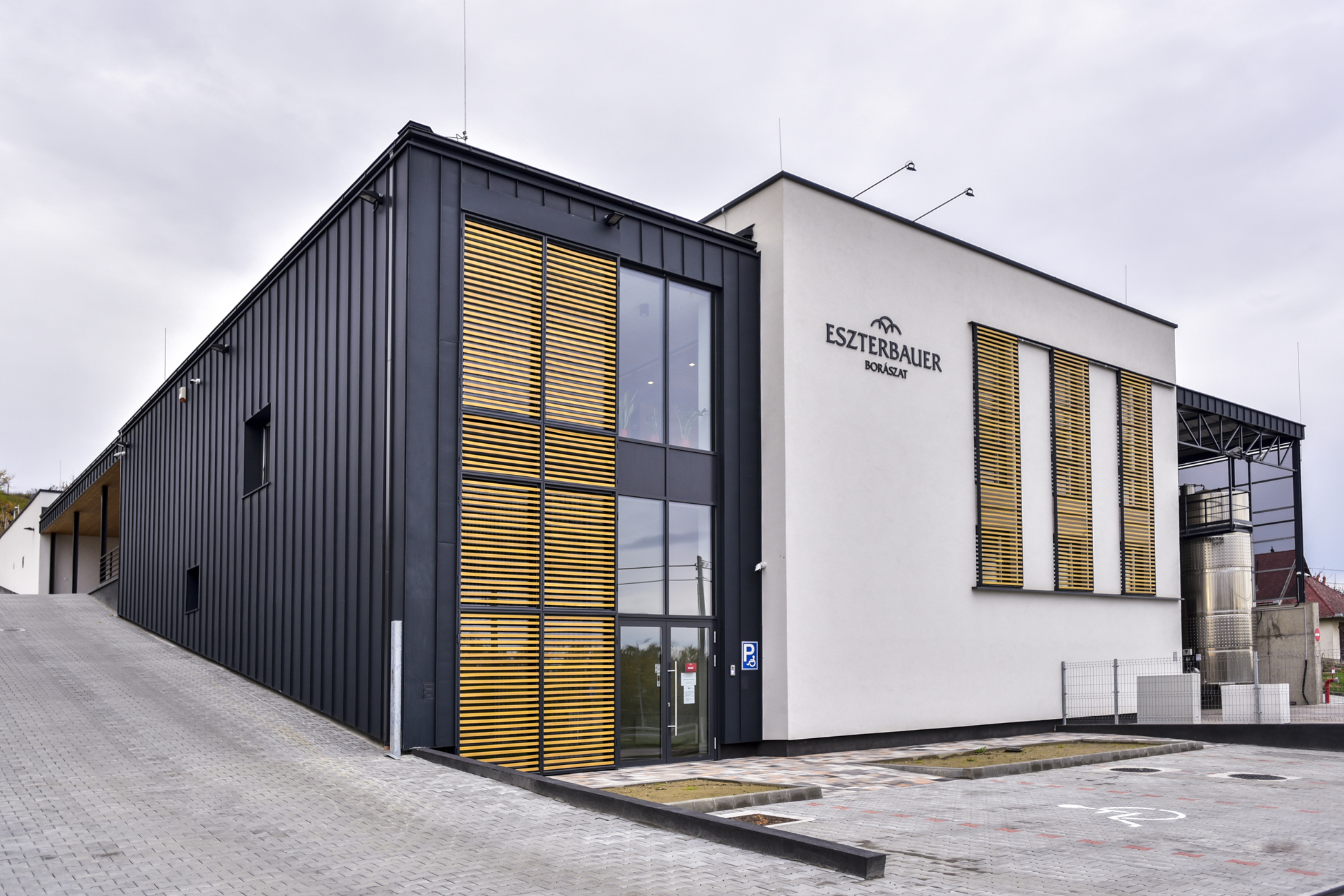
“The small plot where the Schauber family planted Kadarka in 1912 formed part of Baron Augusz’s six-cadastral-hold vineyard on Palánki hill. Baron Augusz was a close friend of Franz Liszt and a prominent figure in nineteenth-century Szekszárd, and the Schaubers were his heirs. The vineyard, now with many gaps where vines have disappeared, lies on the slope above our winery. We bought it a few years ago from the family’s present-day descendants. What might our great-grandfathers’ and great-great-grandfathers’ Kadarka have tasted like? We were looking for the answer when we made this wine.”
Néró took him towards a different flavour. He initially used this Hungarian variety for Napszámos rosé, whose name means Day Labourer and again recalls a man who worked for his grandfather. Then he decided to make a red wine as well.
“Until then we had made only rosé from it, but this time we harvested the grapes fully ripe and obtained a dense, full-bodied red.”
He links the name Néró 7.4 to a figure for the variety’s resveratrol content that he came across.
“It is no coincidence that this number appears in the name on the label designed by Géza Ipacs and his team. The wine is very dark, almost black, and tastes completely different from what we are used to.”
Among the winery’s most ambitious wines is Grand, a blend of Kékfrankos, Cabernet Sauvignon, Cabernet Franc and Merlot.
“The jewel among our top wines is Grand, which we make only in the most exceptional vintages. After 2012 and 2017, we made our flagship for the third time from the 2021 harvest. Alongside the Bordeaux varieties, it contains twenty-five per cent Kékfrankos to retain its Szekszárd character.”
Grand is also a shared project among Szekszárd’s winemakers. The first wines under that name, from the 2012 vintage, appeared in late 2018, produced by Eszterbauer, Heimann, Takler and Sebestyén. That release required a blend of a winery’s finest lots from an exceptional vintage, at least a quarter Kékfrankos and at least five years of ageing. For the next release, from 2017, six of eighteen applicant wineries were selected: Bodri, Németh János, Prantner, Schieber, Takler and Eszterbauer.
Eszterbauer’s Grand 2017 was the highest-scoring red at the 2022 Winelovers Wine Awards. In a VinCE magazine panel tasting, it was one of just three wines awarded five stars among twenty-two wineries’ flagships. János also singled out its success at Mundus Vini, but did not regard recognition from his own region as any less important.
“I must say that medals won at our regional wine competition matter just as much to me. We work closely together, but we also like beating one another, so it is good to be consistently near the top.”
Further recognition came in Pécsi Borozó magazine’s TOP25 selection for 2026: no fewer than two Eszterbauer wines were included among the twenty-five finest wines of the wider Pannon wine region.
János makes no secret of how much the presentation of his wines matters to him.
“The name of every wine is closely connected to the photograph on its label, and together they form the foundation of Eszterbauer’s identity. We had no intention of giving that up, but at my daughter Ildikó’s suggestion we had been considering refreshing the labels for some time. We wanted them to be cleaner and more elegant; you might say we fine-tuned them.”
“A personal approach is extremely important to us because it underpins our credibility. Presenting that past and authenticity is our marketing, but it is also our most important message.”
On newer bottles, the grandchildren add to the family album. Sisters rosé is dedicated to his granddaughters, Brothers Merlot to his grandsons. His daughter Kata devised the motto about good stories beginning with a glass of wine. She also helped put her father’s answers into writing for this story.
“I have four children. They all work in the family businesses, some part-time and some full-time, as does Mónika. Throughout my life I have encouraged them to build their future within our businesses, but I have always left them free to choose a different path.”
He wanted to give his children the means to build something themselves:
“I believe every generation has a duty at least to preserve what it receives from its ancestors, preferably to enhance it, and then to pass it on to the next generation. This need not mean material wealth, but knowledge and many other values. I consider it one of the most important things in life, something that brings true satisfaction. I am proud that through the family business I have given the next generation a net rather than a fish.”
Of all the people on his labels, with whom would he most like to spend one more evening?
“Honestly, I would like to talk to them all. But if I had to choose just one person, it would probably be my grandfather. I would tell him about my journey from the eighties to the present, and I would have a whole heap of questions I forgot to ask him back then.”
His grandfather did not live to see the present-day winery built. If János could invite him to visit now, what would he most like to show him?
“My family.”