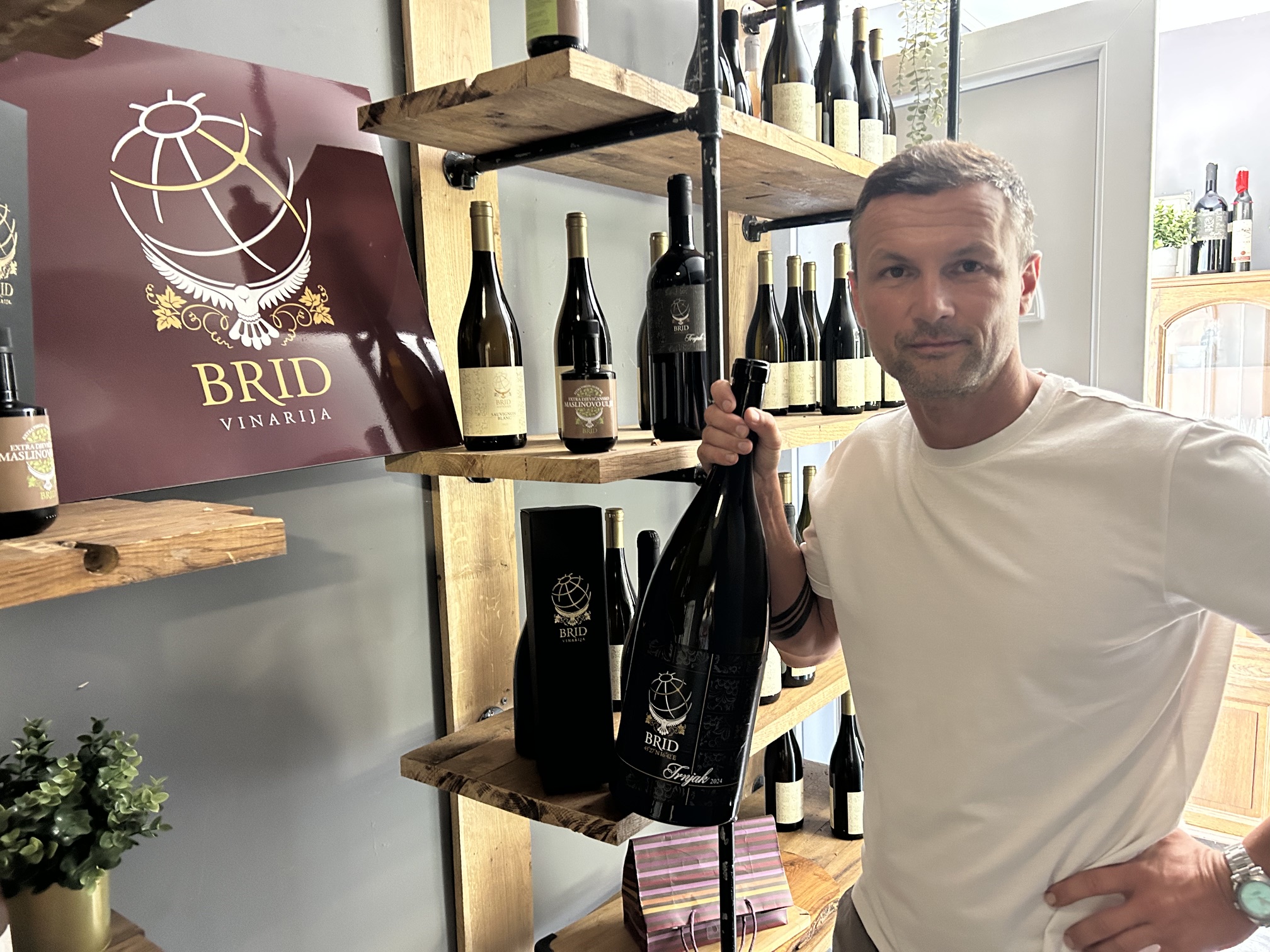
Ivan Kujundžić knows how to take down an opponent, disarm them and get them out of a dangerous situation. He trained with Israeli instructors to become a krav maga instructor, reached Expert Level 2 and completed programmes involving military and police personnel. Yet for three years, he did not know what to do with a Sauvignon Blanc that refused to develop any aroma.
He followed the protocol, changed yeasts, asked questions, tasted, measured and tried again. The wine had body, flavour and good balance, but no aromatics. A Sauvignon Blanc without aroma is rather like a self-defence instructor who cannot raise his guard: he may have other qualities, but people do not seek him out for those.
At a wine fair, he shared his frustration with Professor Željko Andabaka.
– Send me a sample at the Faculty of Agriculture so we can measure the nitrogen, Andabaka told him.
The analysis revealed just forty milligrams of nitrogen per litre, while the yeast he was using needed at least 250. A single fermentation nutrient solved the whole problem.
– That one little component cost me three years of frustration. I tried eight yeasts in four years before finding one that suited me. In the fourth year, I said: if it still doesn’t develop any aroma, that’s it. I’m giving up on Sauvignon Blanc.
That year, it won him a Decanter bronze.
– It’s not a huge medal, but to me it was enormous. The Sauvignon Blanc finally hadn’t been disqualified!
At last, he had the Sauvignon he wanted. More clearly than any other variety, it showed him the difference between confidence and knowledge.
– The more I know, the more I feel I know nothing. Today, I’m more afraid of making a mistake than I was at the beginning.
At the beginning, he was afraid of almost nothing. He was a hospitality professional, a beach-bar owner, a krav maga instructor and a man from Imotski. And people from Imotski, he says, believe they can do everything themselves and wonder why they should work for someone else.
He imagined the winery as a sideline to which he would give some spare time, plenty of love and enough passion. He did not want an oenologist. A few winemaking friends gave him protocols; he would learn the rest as he went along.
He did learn. Only he paid his tuition fees in wine.
There were film yeasts, oxidation, sulphur problems and hydrogen sulphide. Today, he says, he can smell a film-yeast problem before the film appears. Krav maga taught him to recognise danger as it developed and avoid a confrontation before he had to react. Winemaking taught him the same thing, except the opponents had become microscopic and he could not block their blows with his hands.
During the pandemic, he arrived at the winery in the middle of fermentation, unaware that he was infected, and began smelling the wine. Nothing. He called a friend who had just recovered from Covid and had also lost his sense of smell.
– I swear, there’s no aroma here at all!
He gave him the wine to taste. It was completely dull. Once again, the Sauvignon had no aroma, and the sulphur levels were low too. He added sulphur, expecting his eyes to water. Nothing.
– Normally, sulphur brings tears to your eyes straight away, but there I was, completely unaffected. Only then did I realise that perhaps the problem wasn’t the wine after all.
For a winemaker, it is hard to imagine a worse moment to lose the sense of smell. Fermentation needs to be monitored every day, and that year Ivan could identify almost nothing by either smell or taste.
Still, Covid brought him something useful. It forced him to think about a plan B.
He enrolled in hospitality school at fifteen, when schools still filled entire classes with future waiters and cooks. His class had thirty-three pupils. They learnt to flambé dishes, mix cocktails, serve wine and take part in competitions. Today, he says, the same school no longer even has a class training waiters.
He got his first proper job at Bracera, a seaside restaurant in Dugi Rat. There he encountered a generation of waiters distinguished not only by their knowledge, but also by their bearing.
– They were older people with manners. It was a completely different level of hospitality. I don’t think waiters like that exist any more, or that same willingness to work and earn.
After military service, he started work at nineteen. In winter, he earned 4,800 kuna a month, with around a hundred kuna in tips every day and as much as three hundred at weekends. He bought a five-year-old Mazda 323F.
– I was just a kid, living the life of Riley.
Then came zero tolerance for drink-driving, the smoking ban and the recession. At the Le Méridien Lav hotel, employees accepted half pay for six months. Ivan later managed the Passarola restaurant and nightclub on Hvar, completed WSET Level 1, returned to Dugi Rat and opened Pino bar.
For years, he ran restaurants, put together wine lists, travelled and visited wineries. Wine was more than a drink to him; it was a way of life, even though beer, cocktails and spritzers ruled at Pino bar.
– I really missed that world. I kept thinking about how to get back to it, but I could no longer live as I had before. I had my own business and couldn’t go back to travelling, visiting wineries and putting together wine lists for other people.
When Covid brought hospitality to a standstill overnight, wine seemed a safer business.
– Wine is like medicine. Rich and poor alike drink it. They always will.
And so Brid was born in 2021.
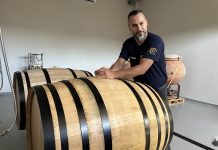
He began with two tanks, a vinification vessel, two wooden barrels and two thousand litres of wine. Five years later, he has around a dozen barrels and produces approximately twelve thousand litres.
He also came close to arranging an export shipment of two thousand bottles to America. The wine was ready when Donald Trump raised tariffs, and the deal collapsed two days before dispatch. Ivan quickly learnt that a garage winemaker can control yeasts, temperature and sulphur levels, but not the American president.
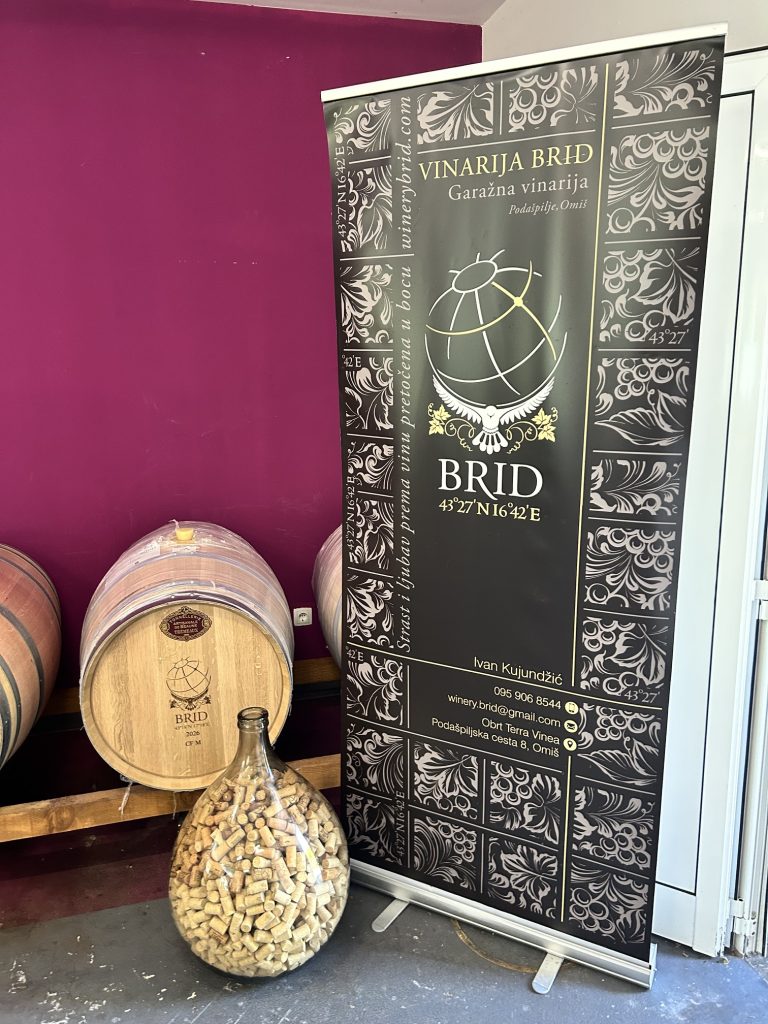
The winery occupies a former municipal warehouse on Podašpiljska cesta, not far from Omiš. Ivan leased it, insulated it and turned it into a small cellar.
He had already tried a similar approach with a training gym in a former municipal shelter. He could not begin with a picture-postcard vineyard, a stone tasting room and a cellar built into a hillside. He had a space nobody needed and enough imagination to see what was not there yet.
– It’s a little out in the middle of nowhere, but the area is beautiful. Finances decided where we would be. This isn’t a winery built as an investment project. It’s a winery driven by passion, where you struggle, try things, make mistakes and learn.
He found the name in mathematics. Brid means an edge, a line joining two points, and for Ivan wine had always been precisely that: a way of connecting people who had never met before. People arrive at a winery in good spirits, so around the table they quickly skip the awkward stages of getting acquainted.
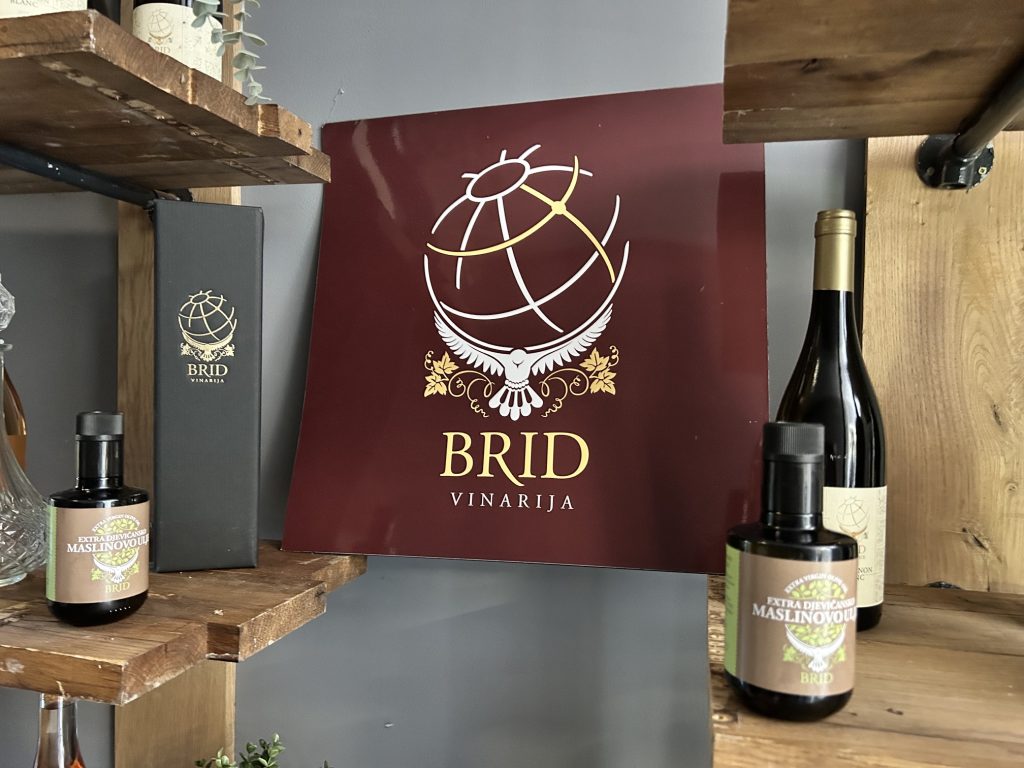
Brid also connects the winery with vineyards Ivan does not own. The front of every label carries the winery’s coordinates; the back carries those of the vineyard that supplied the grapes. His wine comes into being between those two points.
He told the story to a designer, a long-haired rocker who found solutions in his own time zone. Ivan would explain that he wanted a vine arranged according to the Fibonacci sequence on the label, then wait a year. The wine would be ready; the label would not. When it finally arrived, it would take another month or two for him to realise the designer had got it right.
– That was how he worked. His solution doesn’t click with you at first, but later you see how good it is.
On the labels, a white dove holds his entire wine world together. At the family home in Imotski, the Kujundžić family have a vaulted stone structure known as a čemer, with a cistern beneath it carved into the bedrock. Ivan used to go to the vineyard with his grandfather and father, work alongside them and tread grapes. Everyone was dark-haired except his fair-haired father, who was therefore nicknamed Golub – Dove.
His father was a driving instructor, a tiler and a man of stone. For generations, the Kujundžić family had been stonemasons, builders of old stone houses. Ivan’s brother graduated from the Stonemasonry School in Pučišća and continued the tradition. Ivan knows how to work stone too; both brothers grew up partly on building sites alongside their father, but that work never appealed to him.
Stone did, however, leave him with an edge: Brid.
He was born in the Imotski region, and his family moved to Omiš when he was a year old. He considers himself a man of Omiš in every respect, but says it is impossible to free yourself entirely of Imotski.
– We can leave Imotski, but Imotski never leaves us.
His grandparents stayed in Ivanbegovina, a village near Imotski where most residents were Kujundžićs. The surname was so common that every household had another, unofficial family name.
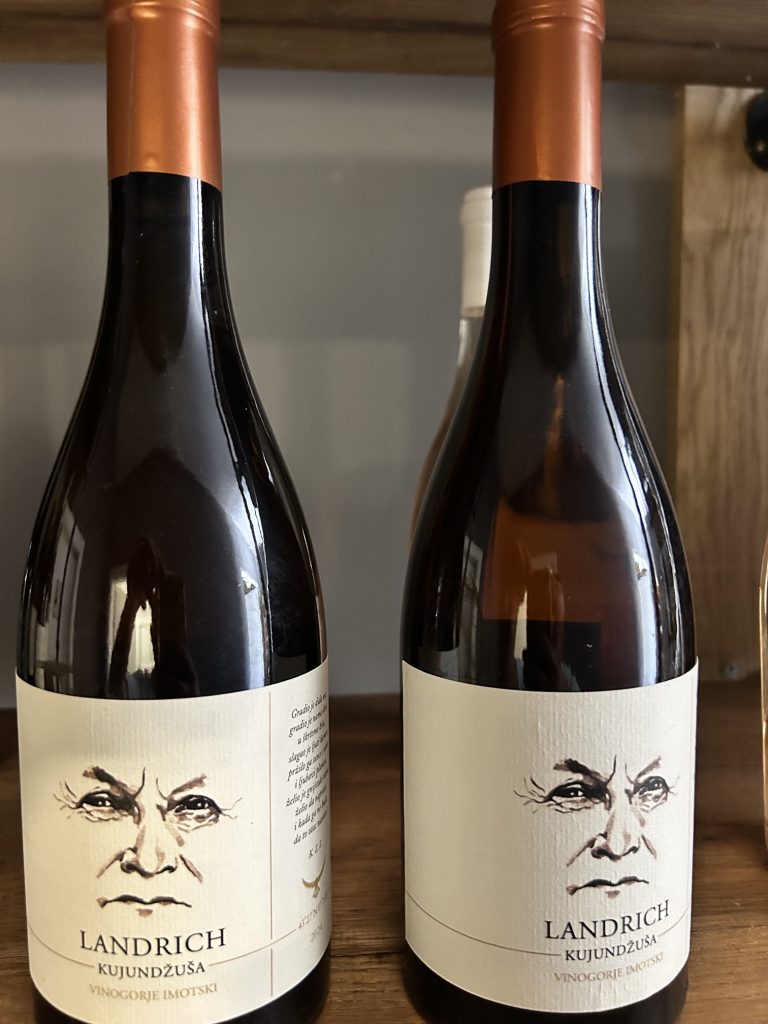
Some were Mutići, others Šošovi, while his family were Landrići.
– There were thirty-eight people in the village called Ante. When the postman received something addressed to Ante Kujundžić, he couldn’t know who it was for. So it would say Ante Kujundžić Landrić or Ante Kujundžić Mutić.
Today, Ivan’s skin-macerated kujundžuša bears the family nickname, and the Landrić label carries a picture of his grandfather.
The family like to believe that the grape variety itself was discovered in their village and named after the Kujundžićs. Another explanation connects it with kujundžija, meaning goldsmith, because of the golden colour of the grapes and wine.
– We prefer our version. But people will obviously always argue about it.
Kujundžuša came to Brid because of his surname, initially as a skin-macerated wine. The fresh version followed two years later.
Skin-macerated Kujundžuša was not his invention. Grabovac made it before him, and Jerković made it later too. In Imotski households, the variety was traditionally left on its skins for a long time, well before such wine acquired an orange identity, an English name and an audience in wine bars.
It remains his father’s favourite style.
– I make fresh, modern wines, but his favourite is the skin-macerated Kujundžuša. Orange wine is difficult to sell, though. People either like it or they don’t. If you have a tasting room, you pour it for them, tell them the story and you’ll sell it.
Alongside Landrić, he also makes Prima Cura from Kujundžuša. The name sounds like a return to a first girlfriend he never forgot. In a sense, it is, though its original meaning has nothing to do with romance.
Patria est prima cura: the homeland is the first concern.
He took two words from the Latin saying. In Croatian, they also suggest a “first girlfriend”. The homeland became his first love, Kujundžuša gained a memorable name, and a man born in the Imotski region and raised in Omiš found a way to bring both his addresses together.
Since 2025, he has been a member of Imotski’s Cvit razgovora winemakers’ association. Mate Jerković invited him; they had known each other long before becoming fellow winemakers.
– I was proud when they invited me. It meant a great deal, and I wanted to be part of that story.
One day, a vineyard might take him back to Imotski. There are areas on the plain where vines once grew, but at some point someone used a green felt-tip pen to turn them into a green belt and, on paper, into meadows. Discussions are now under way about reclassifying the land and leasing it out, because winemakers need more vineyards.
– In the end, we all go back to our first love.
For now, he does not own a single vine. He bought a small vineyard to learn, but quickly discovered that machinery for a thousand vines costs almost as much as machinery for ten thousand, and a vineyard demands a constant presence. He sold it.
Instead, he arranged with partner growers in Vrgorac to plant Sauvignon Blanc and Trnjak exclusively for Brid. During his first five years, he found people with whom he could agree on yields and quality.
– They’re mostly older people for whom quantity has always mattered most. When I say I want a kilogram of grapes per vine, they look at me as though I’m mad. I tell a man to remove half the grapes, and emotionally he just can’t bear it. It doesn’t matter that I’ll pay him for the grapes he discards too. He sees them on the ground and suffers.
He chose Sauvignon Blanc because he likes it, but also because of his experience putting together wine lists. He would find five or six Pošips, just as many Plavacs, and one Sauvignon or none at all. He concluded that a restaurateur would be more willing to add a second Sauvignon than a seventh Pošip.
Kujundžuša is harder to source, while there are already, as he puts it, a million Pošips. Sauvignon may not be typical of Dalmatia, but it is one of the world’s most widespread varieties. He put everything down on paper and decided Brid had to start with it.
He chose Trnjak for the opposite reason: it was not everywhere, it belonged to the region he came from, and it could offer much more than it was given credit for. The grapes are hard to find because Croatia and Bosnia and Herzegovina together have only around forty hectares.
He makes approximately fifteen hundred litres of Trnjak a year. It is the only Brid wine he never gets to know as an adult.
– It sells before I get the chance to see what it will be like after five years. I have only about thirty bottles left from 2021. Today, it’s a perfect wine, something special.
That is why he does not see Brid’s future in large volumes. His premises cannot accommodate industrial production, nor does he want them to. He will make smaller batches, improve quality and gradually raise prices. He sells Trnjak at the winery for €15.50, while comparable wines from other producers generally cost more than twenty euros.
– I’m still an unknown name. Distributors find it easiest to sell the big names. They have large volumes and can offer the biggest discounts. Distributors don’t want to bother with some garage winemaker, opening doors for him and pouring his wines for people to taste.
Five years after starting, he notices a change: people have begun connecting the winery’s name with labels they have tasted.
– Time is on my side. A winery isn’t a project that gets anywhere overnight. Only now do I feel people are beginning to recognise what I do.
Pino bar’s customers were the quickest to recognise him. Wine once lost the battle with beer and cocktails there; today, every spritzer is made with Brid wine.
– We’re gradually changing people’s habits. Moving them from beer towards wine.
His hospitality experience gives him an advantage many small winemakers lack. He knows how a restaurateur constructs a wine list and how hard it is for an unfamiliar label to secure a place among names guests already recognise. He also knows how much people’s attitude to a wine changes when it is presented by the person who made it, rather than a waiter who learnt three sentences from a promotional leaflet that morning.
– It means a lot to people when the winemaker presents the wine and tells them the whole story. They connect quickly. Wine brings people and cultures together, and they arrive at the winery happy and in good spirits. All those awkward stages of getting acquainted are skipped.
For him, a garage winery describes more than the premises. He links the expression to the French garagistes, small producers outside the large established operations who began challenging more prestigious names in blind tastings.
– This isn’t a winery built as an investment project. Here, you genuinely work on quality, struggle, observe and learn. I make wines the way I see them.
Whites and rosé should be light and fresh, with a crisp finish. Reds must have elegance, polished tannins, softness and fruit. Before he knew how to make them, he knew what he wanted to pour for a guest.
Some labels were named after his daughters’ personalities. The rosé Luce is named for Lucija, who struck him as energetic from the moment she was born. Luce means light, and the name suited the child before it ever appeared on a bottle.
He and his wife had planned to call their second daughter Aurora. When she was born, she seemed too small and delicate for such a powerful name.
– She was this tiny. Aurora simply didn’t belong to her. We called her Paula, and only later learnt that the name comes from the Latin paulus and means small. We didn’t know that. It just rolled softly off the tongue.
The smallest daughter gave her name to the winery’s biggest, most powerful wine. Paula is a blend of Trnjak and Plavac Mali.
The Plavac comes from Ponikve and regularly reaches around 15.5 per cent alcohol, with high extract. He also tried sourcing it from Dingač, but it was too dense, powerful and cooked in character. Ponikve gives him freshness, without straying too far towards stewed plums and jam.
His friend Maglais’s plavac pointed him towards Ponikve: dense, yet still lively. Ivan concluded that these were precisely the grapes he needed for his blend.
The Trnjak from Vrgorac is much gentler. It stays between thirteen and thirteen and a half per cent alcohol, but brings extract and a strength that does not need alcohol to prove itself. In the blend, it softens the Plavac’s tannins, while the Plavac provides the backbone.
– On the nose, sometimes even I can no longer tell what’s Plavac and what’s Trnjak. They overlap so beautifully. As the wine matures, Trnjak becomes increasingly dominant aromatically, which is unusual because Plavac can be very loud.
Ivan is convinced that Trnjak has yet to show what it can do. If someone planted it on a serious scale at the best coastal sites, on Dingač, in Ponikve or in Sveta Nedjelja, he would expect, he says, spectacular results.
His daughters are also showing an interest in his work. The older one accompanies him to fairs, tastes wines, takes photographs and runs the winery’s Instagram account. Ivan hopes that one day they will see enough in it for the story to continue beyond him.
– I’d love the girls to take over the winery and raise it to a higher level. But winemaking takes a lot of money, work and everything else. We’ll see what the future brings.
The discipline required for all these jobs did not come from hospitality school. Martial arts were part of his life long before wine, restaurants and the first bottle of Brid.
His godfather, Ivan Budimir, was a European kickboxing champion. Together with Ivan’s late coach Barać, he opened the first karate club in Omiš, and Ivan began training at seven.
Karate, full-contact fighting and kickboxing followed. He became Croatian runner-up in full contact. Then came youth, testosterone and girls, and sport slipped into the background.
After seven or eight years, he realised how much he missed it. He began boxing training with Željko Nešić in Split and found himself drawn back into that world.
– I was still a kid when I told him: when I grow up, the two of us are going to open a boxing club together.
He trained with Israeli instructors to qualify as a krav maga instructor and reached Expert Level 2. He completed programmes covering military and police personnel, VIP protection, close combat and counterterrorism situations. He was, he says, Croatia’s eighth krav maga instructor.
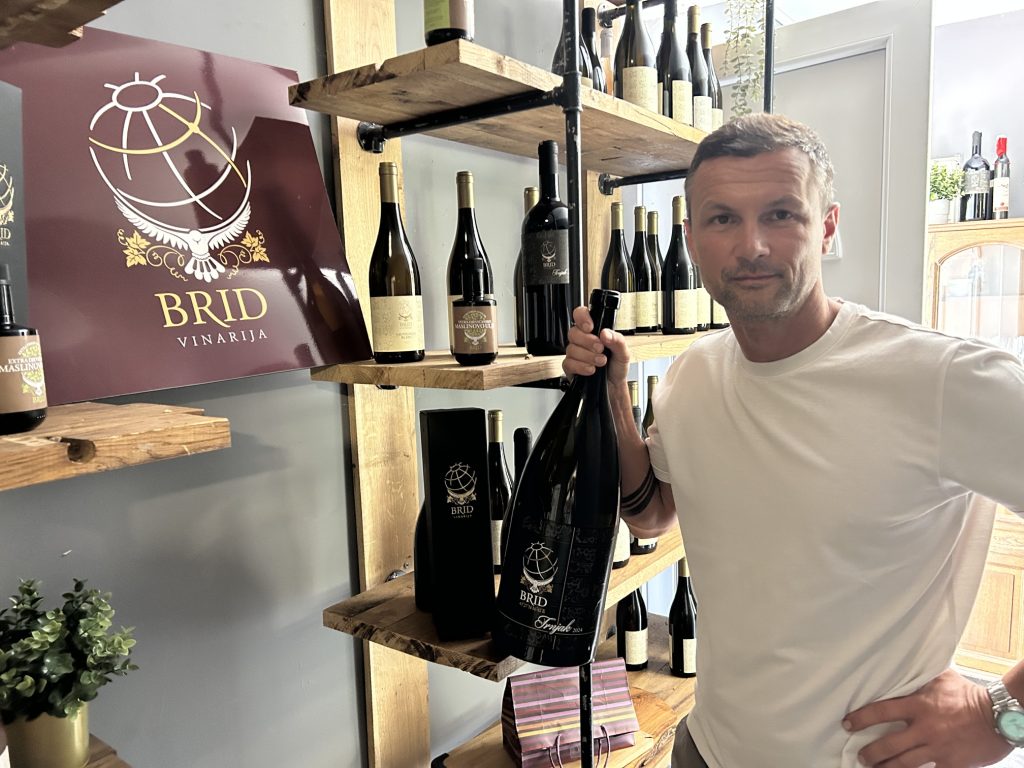
At one point, he had around 180 members across four locations, but the work took up precisely the hours when everyone else was free.
– People train when they finish work. When they’re free, you’re working.
What he valued most in krav maga was not the strikes, but what came before them.
– You have to be aware of your surroundings, recognise a conflict developing and withdraw before you have to defend yourself. We even learnt how to avoid conflict through words. The most important thing is that physical violence never happens in the first place.
He was more interested in people who could not defend themselves than in competition. His classes attracted sixty-year-olds who were being harassed and children subjected to bullying.
One father brought his son because he was being beaten up in the neighbourhood almost every day. The boy lacked coordination and did not know how to defend himself. He trained regularly for two years, then disappeared. A few months later, his father came in.
– Ivan, thank you for everything.
The boy had finally stood up to the bully. Two others joined in and beat him up again, but they no longer saw him as someone who would quietly put up with anything. After that, they left him alone.
Ivan himself does not know where his sensitivity towards victims comes from. He was not an abused child, at least not in today’s sense; children hitting one another was then considered a normal part of growing up. Among the people attending his classes, however, he recognised a need to which krav maga could offer much more than striking techniques.
He produced a booklet on bullying, with UNICEF’s permission to use some of its material, and devised free educational sessions for schools. They taught children that a group must recognise the victim and stand beside them, while explaining to parents and teachers how to spot a problem and help a child speak out.
The City of Split supported the programme. Most schools did not.
– We offered everything free, but the schools showed no interest. For some, accepting the programme would have meant admitting that bullying existed in their school. It was easier to act as though it didn’t.
From sport, he brought the habit of working even when he did not feel like it into the winery.
– Discipline means doing something even when you don’t want to. You have to, and that’s that. When you live that way long enough, even the obligation stops feeling difficult.
Production is too small to support a permanent employee, so he does most of the work himself. That is the greatest burden of garage winemaking.
– You spend a lot of time completely alone.
Between sport and wine, however, one fact remains difficult to reconcile. In one, you train and look after the body; in the other, you produce alcohol.
– Those of us who do sport and make wine are functioning athletes and alcoholics. Or functioning alcoholics and athletes. Whichever you prefer.
A life confined to one role has never suited him. When he no longer saw room to grow in sport, he turned to hospitality. When hospitality no longer offered what he was looking for, he opened a winery. Nor does he claim that Brid will be the final stop in his life.
– I’m someone who likes challenges. I don’t like doing just one job my entire life. Winemaking suits me because it keeps changing. Every year, you make a different wine, whether you want to or not. Even when you try to repeat the same thing, you can’t get exactly the same result.
For three months, the wine is made; then it matures; then the selling begins. The job changes its face often enough for a man who has never been able to stay within the same ropes for long.
In Germany, he bought a 180-litre barrel that had previously held bourbon and filled it with Trnjak from 2023. The result, to put it briefly, was undrinkable.
The bourbon completely overwhelmed the wine. Spirit-like aromas stuck out of the glass, and what came from the barrel refused to come together. Ivan resigned himself to losing all 180 litres.
– To people here, the wine smelled of ethyl acetate. There wasn’t any in it, but that was how the bourbon smelled. Nobody warmed to it.
Then Americans came to the winery. What made local drinkers push their glasses away delighted the Americans.
For almost two years, he did not even taste it. When he returned to the barrel, the wine had come together somewhat. It had not become tame, still less traditional, but it no longer seemed a lost cause.
He called it Misfit: the outsider, the one who does not belong.
The label will feature a court jester.
– Will the jester represent the wine or the man who made it?
– Probably both.
It is not the only experiment in the garage. In Vrgorac, he found approximately a tonne of Grk from which he wants to make a sur lie wine. He acquired a composite barrel, a Hungarian invention that lets oxygen through like wood but imparts no woody aromas. He wants to preserve freshness and fruit, steer the wine towards citrus and develop it on its lees without the flavour of the barrel.
Grk sur lie was one of his earliest ideas, alongside fresh sauvignon blanc, but until now he had been unable to find the grapes. Now he has access to a young vineyard, a composite barrel and another chance to do something for the first time.
– You have to explore. You have to play.
The man who entered winemaking without an oenologist and armed with a few protocols does not play today because he thinks he knows everything, but because he has learnt how much he does not know. The difference between those two kinds of confidence fits into five harvests, eight yeasts and one fermentation nutrient.
In mathematics, an edge is a line joining two points. In Ivan’s case, the points include Omiš and Imotski, Pino bar and the winery, krav maga and sauvignon, his grandfather’s stone vault and a composite barrel, Kujundžuša bearing the family nickname and Grk that has yet to show what it can do.
Somewhere among all those points stands the white Dove, holding his wine world together.
And Ivan, who has spent his whole life learning how to stay on his feet, willingly returns every autumn to a job in which he can make mistakes all over again.