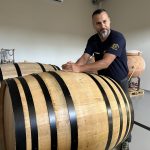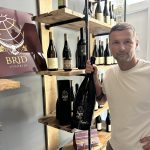
Ivan Jerković came to visit his son in Osijek with a boot full of books for the entrance exam at the Faculty of Agriculture. Mate was finishing secondary school in economics and playing football for NK Osijek’s youth teams, and his father clearly thought it was time to turn from the ball to the one thing nobody in Runović could escape: the vineyard.
He did not know that Mate had already decided to study kinesiology. Nobody in the family knew. When the entrance exam results were published, Mate proudly told him he had been admitted, ranking third on the list.
Ivan was so delighted that he began hugging and kissing his son. Mate had never seen such an outpouring of emotion from him before; in Runović, the love between fathers and sons is taken for granted, while hugs and kisses are reserved for exceptional circumstances.
Then he told him he had enrolled in kinesiology, not agriculture.
Ivan walked out of the house and disappeared for three days. Nobody ever found out where he had gone or how he had spent that time. Mate did not look for him. He knew his father’s stubbornness as well as his own.
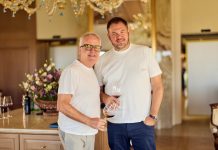
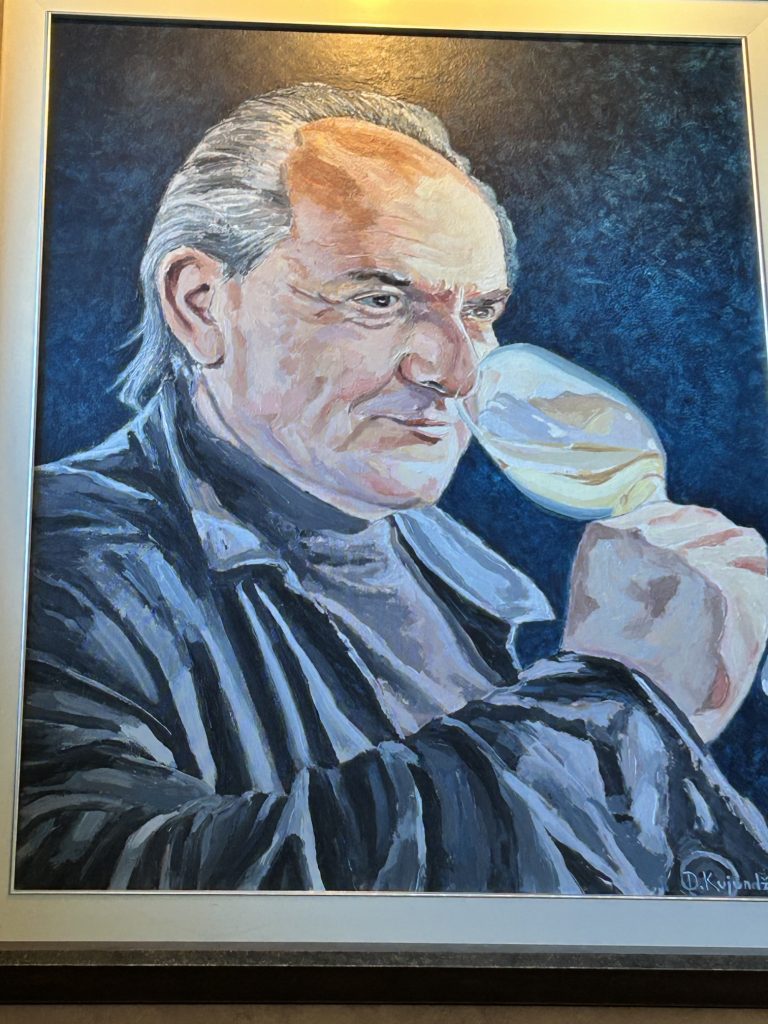
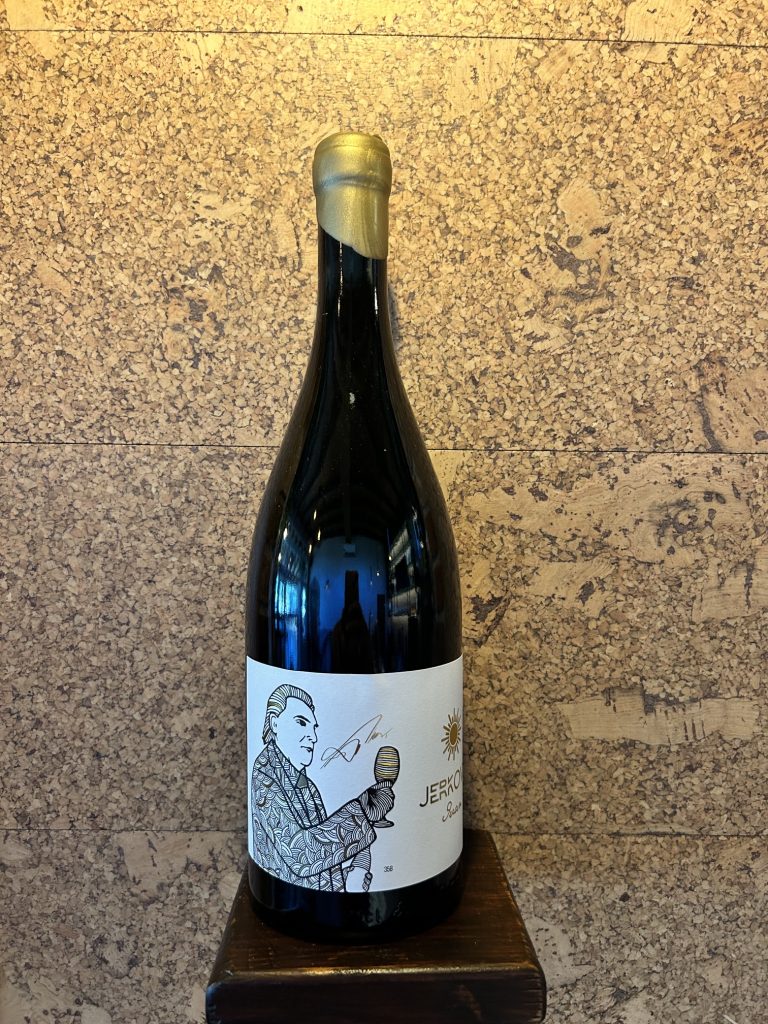
More than two decades later, at the new Jerković winery in Glavina Donja, Mate, a qualified kinesiologist, sits at the same table as his brother Tomislav, twelve years his junior, who holds a degree in agriculture and winemaking. Their father’s photograph has pride of place in the tasting room. Ivan did not live to see the new winery, but his sons made sure he would have a place in it.
The brothers call this new chapter Jerković 2.0. For the first time, they make decisions about the wines as equals, in premises large enough for the scale the family business has reached. They taste the wines, write down their impressions separately, then discuss which direction to take them.
– We don’t have a rule that says I get the final word because I’m older. The final word goes to whoever comes up with the better solution.
Tomislav fulfilled his father’s dream. Ivan did not live to see him graduate, or to witness the largest harvest in the family’s history, in 2025, which his sons handled more easily than any before it, despite producing more wine than ever. Nor did he hear how Mate described the first effect of his brother’s arrival at the winery.
– First, he calmed me down.
– You can’t tie down the wind, Mate explains.
His father had once tried to do precisely that: tether Mate’s restless spirit to the vineyard and send him to study agriculture, unaware that life would prove more persuasive than the books he had brought to Osijek. Mate would graduate in kinesiology, coach footballers and begin a doctorate. Then his parents would fall seriously ill almost simultaneously, his younger brother would still be a child, and someone would have to take responsibility for the family and the winery.
Kujundžuša would find him after all. Not because he had changed his mind, but because he no longer had anywhere else to go.
In Runović, that is hardly an unusual fate. The village is squeezed between the Imotski plain and Mračaj hill, and vineyards are so deeply woven into everyday life that Mate likes to say everyone there is born among the vines, with a ball at their feet. Kujundžuša and football are Runović’s two great subjects, and every resident believes they know more about them than the person they are talking to.
– Around here, if you ask someone about their children, they’ll tell you their kids do best at school. And if you ask about their wine, of course theirs is the best in the world. Those are the two greatest compliments: that your children do well at school and your wine is good. Everything begins and ends there.
This village, now home to fewer than two thousand people, produced Iko Buljan, Ivan Gudelj and Zvonimir Boban, captains of the Yugoslav and Croatian national teams. Branko Tucak and Stanko Mršić also took their first footballing steps here. Like Mate, they all started at Mračaj.
Mate joined NK Osijek as a boy, finished secondary school there and played in one of the finest generations to emerge from the club’s youth academy. He remembers victories over Hajduk and Dinamo, matches against Niko Kranjčar and Eduardo da Silva, and the moment Stanko Poklepović brought him into the first-team squad while he was still a youth player. Professional football seemed within reach, but he gave it up overnight. He had plenty of grievances with the Croatian football system, and apparently the system had some with him.
He went to the Faculty of Kinesiology in Zagreb, played for Lučko and coached children. When he returned home in 2010, he took charge of Imotski’s youth academy and brought in thirteen-year-old Kristijan Jakić from Mračaj, now a Croatian international. Football did not become the career he had imagined, but it never disappeared from his life.
While Mate was seeking his place in football and kinesiology in Osijek and Zagreb, Ivan Jerković devoted himself seriously to Kujundžuša. The family had been making wine for as long as anyone could remember, but in 1998 Ivan turned home production into a winery. He began bottling wine immediately, refusing to accept the belief that Kujundžuša was good for quenching thirst, mixing with sparkling water and serving at everyday meals, but could never make a serious wine.
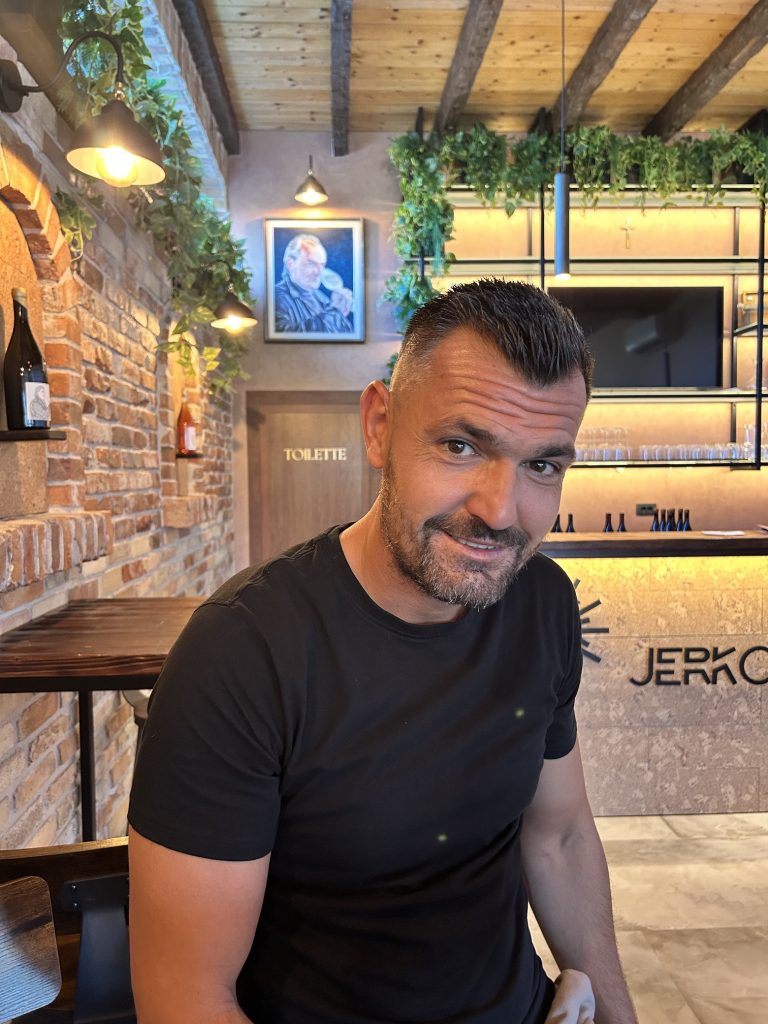
– My father could never understand why the wine world didn’t give Kujundžuša the respect it deserved. He was convinced it could produce a truly outstanding wine.
When he won a local wine competition, he called his son in Osijek and ordered him to buy thirty copies of the newspaper carrying the news of the award. Mate teased him that a gold medal for his wine would make him happier than seeing his son play for Real Madrid.
– It would! Ivan replied without hesitation.
In 2005, Jerković’s Kujundžuša won gold at Sabatina in Dubrovnik. Today, such an award might not seem revolutionary, but back then even suggesting that Kujundžuša could make a serious wine struck many people as pretentious. The prejudices ran so deep that in 2006, 2007 and 2008 the Jerković family left the variety’s name off the label, even though the law allowed them to include it.
– We just wanted people to taste the wine first. When you tell someone you’re offering them Kujundžuša, they look at you as though you’re from another planet. You leave them two bottles, and they take them into the kitchen and use them for cooking.
Ivan kept going. Today, without false modesty, Mate says his father was one of the pioneers who rescued Kujundžuša from the kitchen and restored it to the ranks of wines with their own name, bottle and dignity. While his father fought that battle, his son, watching from Osijek, was convinced the Jerković family made the best Kujundžuša in the world. When he had to make it himself, he became more cautious.
His return was not the romantic decision of a man who had heard the call of his native soil while living in the big city. Mate did not wake up one morning and decide that saving Kujundžuša was his life’s mission. Illness brought him back.
– My parents became seriously ill at more or less the same time. They were both diagnosed with tumours. I have two older sisters: one is married and lives in Imotski, the other is a notary in Zadar. My brother was still a child then. It sounds harsh, but I had to take over the business and help my brother find his feet in life. I had to come back.
He was not starting from scratch. His father left him an established operation, grape growers, bottled wine and a reputation painstakingly built over the years, along with the obligation to maintain the quality he had achieved. You can inherit a winery, a vineyard, barrels and a surname on a label; you inherit your customers’ trust only until your first bad vintage.
They worked together during the final years of his father’s life. They were similar in temperament, impulsive and stubborn, and Mate says he quickly absorbed what he needed from working alongside him. The most important things he learnt from Ivan had nothing to do with fermentation temperatures, yeasts or when to rack a wine.
– At the winery, I learnt more from him about life and mutual respect than about production itself. Those lessons defined our relationship.
He considers 2012 his first real harvest. Ivan was already seriously ill, and they were still sharing their experience, but for the first time Mate ran the entire operation. He was no longer a son helping his father, or a worker carrying out someone else’s decisions.
– The hardest part was taking responsibility. You know that now people come to you for answers, and you have nobody to ask except yourself.
Ivan died in 2013. The very next harvest showed how indifferent wine can be to family tragedy and a person’s determination to succeed. July 2014 brought twenty-three days of rain, and there were barely any grapes capable of producing wine of an acceptable standard. That year, Mate effectively had no harvest and no wine to sell.
He returned to the work he had trained for and began offering individual training sessions to keep the winery afloat. The very profession for which he had rejected his father’s agriculture textbooks helped save what his father had left him.
During those first harvests, he relied on people willing to help. He could call Stipe Đuzel and Mate Matuško at noon or midnight whenever something puzzled him or he felt a wine was heading in the wrong direction. He particularly remembers Ljubica Zaninović, who was on hand during his first fermentations. Their help did not undermine his independence; it allowed him to acquire it without paying for every beginner’s mistake with a barrel of bad wine.
His greatest regret is that he did not do for Rudežuša what his father had done for Kujundžuša. The Jerković family made wine from the variety we now know as Trnjak as early as 2001, but did not build recognition for it. Their Mračaj was originally one hundred per cent Rudežuša. Today it is a blend of Trnjak and Merlot, while their single-variety wine is bottled under the Trnjak label.
– Perhaps we made a mistake there. Actually, there’s no perhaps about it – we made a mistake. We knew it was an excellent variety, but we didn’t build its identity the way we did with Kujundžuša.
Admitting a specific mistake comes more easily to him than general self-criticism. When he talks about wine, Mate does not like to philosophise. He believes that what is in the bottle is what counts. Perhaps that is why, for a long time, he believed experience would be enough and everything important could be learnt during harvest.
Then Tomislav returned from the Faculty of Agriculture. Their father’s dream arrived at the winery twelve years late, in the shape of the wrong son.
Tomislav did not enrol in agriculture to make amends for Mate’s disobedience. He knew how much it meant to his father that one of his sons should carry on the family story, but he chose the course himself. Ivan did not live to see him graduate or return to the winery as a qualified specialist, while Mate had meanwhile matured enough to admit that experience did not answer every question.
– I have knowledge I’ve acquired over years in the cellar, but professional training counts. Tomislav has an excellent foundation, a good nose and is very meticulous. He has already become a serious oenologist.
Meticulousness is the quality that most distinguishes the brothers. Mate makes decisions quickly, relying on experience and instinct, while Tomislav measures, records and checks. They have no formal division of duties. Both do everything, from vineyard work and harvesting to fermentation and putting the finishing touches to the wines.
Tomislav’s return is the biggest change since Mate lost his father and realised he no longer had anyone to ask. Today, once again, he has someone who will disagree with him, warn him and shoulder part of the responsibility. He does not have to know everything himself, and for a man of his temperament, that may have been the hardest lesson of all.
The 2025 harvest was the largest in the winery’s history by volume, yet none had been easier to manage. They divided the work, fermentations passed without serious problems, and one brother’s experience and the other’s precision came fully into their own.
– I’d call it a perfect harvest.
The most personal result of their work together bears their father’s name. Ivan is a Kujundžuša from a thirty-five-year-old vineyard yielding roughly a kilogram of grapes per vine, made in a run of just seven hundred bottles. Unlike their standard Kujundžuša, which is vinified in stainless steel, Ivan undergoes nine days of maceration, then spends two years and three months ageing in wood. It is more than a fuller version of the same wine: it is an attempt to show how far the variety can go.
Mate does not, however, claim that Ivan is the best Kujundžuša. His father might have said so without hesitation, and probably Mate himself would have too, when, as a young man in Osijek, he viewed the family winery from a safe distance.
– Let people judge what’s in the bottle. I’m not going to philosophise about it too much.
When he speaks about whether his father would be proud of the wine dedicated to him, his usual caution disappears.
– He would absolutely be proud. I’m sure he’s proud of both my brother and me. I think he’s up there laughing, singing and enjoying himself.
Ivan’s favourite song was Bepo Matešić’s Neka je ove, neka je. Mate imagines his father still singing it, pleased that one son graduated in agriculture and the other never quite managed to escape wine.
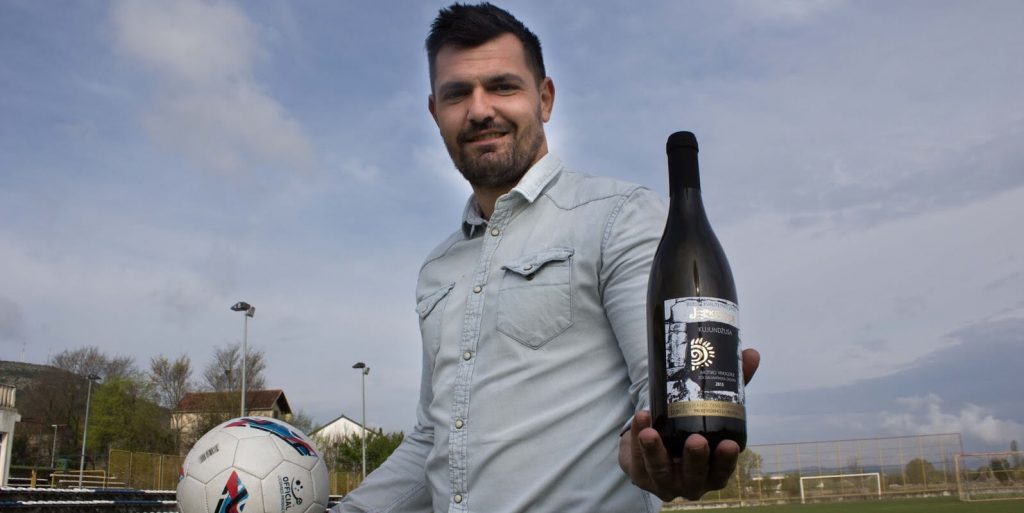
In 2018, Mate was still working in a cramped cellar spread across two stone houses built in 1936, where tobacco had once been dried and grapes crushed in large wooden vats. The winery had long since outgrown the space.
He was announcing plans for a new winery and almost twenty hectares of vines on the rocky karst above the family home on Mračaj. He intended to plant eighty per cent of the land with Kujundžuša and the rest with Rudežuša, raising production to 150,000 bottles. He was convinced the land concession had been settled and that fulfilling his father’s dream was only a matter of time.
The vineyard was never planted. The new winery was built – just not where he had imagined it.
The winery moved to Glavina Donja, on the approach to Imotski, close enough to Runović that it hardly counts as leaving, yet across an invisible boundary that prompts people to tease Mate about taking the village’s only winery away. He replies that the vineyards, the company’s registered office and the growers he has worked with for twenty years are all still in Runović. Only the production facility and the tasting room, where the wine can finally be presented to visitors, have moved to Glavina Donja.
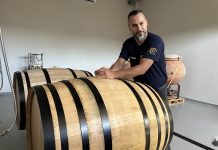
The new winery doubled capacity to roughly 65,000 litres, while the tasting room, opened in 2025, provided something the old cellar had no space for: the chance to sit down with a visitor over a glass of wine and show them where it was made.
The move coincided with tourists discovering the Imotski region. Around ninety-five per cent of tasting-room visitors come from abroad, and the tasting room already accounts for roughly a fifth of total turnover. Mate expects its share could reach forty per cent within a few years.
Those figures show how much the entire region has changed. For years, the biggest problem was selling wine, especially if the label mentioned Kujundžuša. Today, the customers are there, and the more established producers sometimes run out. The biggest problem is no longer the market, but the grapes.
– We’re not competing with one another. Between us, we have too little wine to properly supply even the market from Makarska to Omiš, let alone anything bigger.
On the site of Imota’s former vineyards lie around 120 hectares of state-owned land, most of it neglected. Members of the Imotski Region Winegrowers and Winemakers Association want the land allocated to the association and then divided among interested producers. Mate would take ten hectares. After five or six years of discussions, he believes an agreement is close, although he has already once believed too soon that a concession was settled.
The association is called Cvit razgovora, after the Franciscan friar Filip Grabovac’s book Cvit razgovora naroda i jezika iliričkoga aliti rvackoga, published in Venice in 1747. To the people of Imotski, Grabovac is more than a writer from a school textbook. In his work and his fate, they recognise the stubbornness of a region reluctant to surrender its language, customs and name.
As a military chaplain to Croatian cavalrymen in Venetian service, Grabovac watched his compatriots arrive in Italy, discard their own clothes and customs, and try to pass themselves off as Italians:
They made themselves Italians
and said: We are not of our own people.
He was arrested for writing about the humiliation of the Dalmatian population under Venetian rule, and copies of his book were collected and burnt. He died in captivity in 1749.
It would be excessive to equate the fate of a persecuted writer with that of a grape variety. Nobody banned Kujundžuša; its bottles merely ended up in the kitchen, its name was left off labels, and its vines made way for varieties that were easier to sell. Still, in Grabovac’s rebuke to people who renounce their own heritage, it is hard not to recognise the period when the Imotski region had lost faith in its most widespread grape.
Today’s winemakers are doing the opposite of Grabovac’s would-be Italians. They are restoring names to labels that they were once almost ashamed of. Kujundžuša and Rudežuša no longer disguise themselves as something else.
For Mate, the association’s name has a personal meaning too. He connects it with his grandfather, also called Mate, who would set off on foot for the fields before dawn, carrying seven to ten litres of wine. He returned in the evening, and when there was too much work, he would sleep in the cowshed beside the cow.
He did not carry the wine simply to quench his thirst. It provided a reason to pause, meet and talk with other people who spent their entire day working in the fields.
– For me, cvit razgovora – the flower of conversation – is connected with vines and conversation, and conversation, of course, goes with a glass of wine.
Between Grabovac’s book and his grandfather’s wine jug lies almost the whole story of wine in Imotski: the need to preserve one’s own name, and the understanding that no enterprise can survive for long without people working together. That is why Mate’s plans alone cannot bring 120 neglected hectares back to life. It will take the whole of Cvit razgovora.
Joining forces did not come naturally to Imotski’s winemakers. In a region of proud family names, where every household believes it has the best wine, it is not easy to explain that a neighbour’s success does not diminish your own. But volumes are too small, the market too large and the work too unpredictable for serious winemaking to rest on local rivalries.
– The only way forward is for the entire winegrowing district to progress. We talk all the time, and we all reach the same conclusion: we’re running short of Kujundžuša.
Behind this rise lies more than a new generation of labels. There is also a remarkable concentration of trained specialists. Mate lists oenologists and agriculture graduates from several generations, from Stipe Đuzel, Mislav Mašić, Pero Kusić, Mirela Babić and Viktor Zdilar to the young people returning to their family wineries. The list is long enough that he, the only kinesiologist at the table, explains his own place in wine through the hardship that brought him to it.
Without them, there would be no clonal selection programme for Kujundžuša and Trnjak, a project the winemakers have been pursuing with the Faculty of Agriculture for six years. A variety’s revival does not end when its name is printed on a label. The best vines must be identified, healthy planting material secured and vineyards replanted after decades of disappearance. Enthusiasm can get things started, but only professional expertise can sustain them.
Alongside Kujundžuša, Trnjak has also returned, long known here as Rudežuša. Its natural home is the triangle between Imotski, Vrgorac and Ljubuški, so a national border cannot confine it to a single wine region. Growing numbers of winemakers on both the Croatian and Herzegovinian sides are producing it in different styles.
The Jerković family recognised the variety early, but missed the moment when its name should have been restored. Unlike Kujundžuša, which Ivan stubbornly steered towards bottling and an identity of its own from the outset, Rudežuša remained hidden behind the name of the wine. Today, there is no longer any need to say that Trnjak is making a comeback.
– It isn’t coming back. It’s back.
The success of Kujundžuša is no longer measured only in medals, but also in the growing number of families making a living from it. In cellars producing five or six hundred litres, wine is increasingly something people drink for reasons beyond the fact that it is homemade. Technology is more accessible, knowledge is spreading, and good examples encourage neighbours to take a more critical look at their own barrels.
Mate remembers a childhood when almost every yard held a dozen empty beer crates. There are fewer today, although he still drinks a cold beer after tennis without a trace of guilt. Returning to wine does not mean declaring war on every other drink.
He speaks similarly about the Mercedes, Imotski’s other great symbol. To him, it is more than a sign of showing off. It is the car in which people returned home after years spent on German building sites, living in barracks away from their families. It showed that their years of sacrifice and the money they had sent home had not been in vain.
Mate’s grandfather Mate worked in construction and died in Germany. That is why, in the monument to the Mercedes, he sees both achievement and sacrifice.
In Mate’s family, leaving has never been the opposite of belonging. His grandfather went to Germany so the family could survive at home. Mate went to Osijek and Zagreb, convinced he would build a life beyond the vineyards, and the skills he acquired there were precisely what sustained him when the winery had no wine to sell. The winery moved a few kilometres away from Runović, but the vineyards, growers, family home and the story that gives the Jerković label its meaning remained there.
Today, Mate and Tomislav face the opposite problem to the one that troubled their father. Ivan had grapes and wine, but no market willing to take Kujundžuša seriously. His sons have a market and a new winery, but not enough grapes. Between those two problems lie almost thirty years of winemaking in Imotski.
– However much Kujundžuša you produce, you can sell it all?
– I can. However much I make, I can sell it.
Ivan would probably have enjoyed that sentence more than any medal. Kujundžuša, which customers once had to be begged to taste, has become a wine that cannot be made in sufficient quantities. Bottles that once ended up in kitchens now leave the cellar before the next harvest.
That does not mean the work is finished. The variety’s revival cannot be complete while a region proud of it watches dozens of hectares of good land disappear beneath grass. If the association secures the former Imota land, Mate wants ten hectares: not the nearly twenty he dreamed of in 2018, but an area that fits the winery he actually has today.
Perhaps that is the biggest difference between Mate then and Mate now. Eight years ago, he spoke of 150,000 bottles and a large vineyard as though every part of the plan would fall into place through sheer force of will. Today, he knows you cannot tie down the wind, and that you do not get land simply because you are convinced it should be yours. He has lost none of his energy; he has gained a sense of proportion.
He still speaks quickly, jumping from Kujundžuša to football, from Trnjak to Mercedes, from his grandfather Mate to Kristijan Jakić, before returning to his father, as though every conversation about wine must sooner or later find its way back to Ivan. The vineyard, the ball, Osijek, illness, his brother and the new winery are not neatly arranged chapters, but subjects in a conversation that is still unfolding.
Mate’s image of cvit razgovora is simple. His grandfather sets out for the fields before dawn, carrying wine, and works until dark. At some point during the day, he meets other people, opens his wine container and talks. Wine does not merely adorn the conversation. It makes it possible.
Three generations later, in the new winery’s tasting room, his grandson does the same. He opens a bottle of Kujundžuša and talks about the father who brought him the wrong books in Osijek, the younger brother who eventually read them, the land they are still waiting for and the wine through which they gave Ivan a place in a cellar he never saw.
– I think he’s up there laughing, singing and enjoying himself, says Mate. Perhaps Ivan does have one objection. If he were at the table today, the man who valued a gold medal for Kujundžuša more than the prospect of his son playing for Real Madrid would probably not ask whether the wine was good. He would only want to know why they had made just seven hundred bottles.