Somewhere above Stellenbosch, just before dawn, an owl is singing in the dark.
Not calling out to anything in particular. Not warning. Not announcing its presence. Simply singing, as though its voice belongs to the landscape as naturally as the vineyards, the mountains and the first light that has not yet reached them.
A few months ago Mike Dobrovich sent me a recording of that owl.
There was no explanation attached to the message. Just a few seconds of darkness, the vague outline of trees and a sound that somehow seemed older than the modern world surrounding it.
I wrote back saying that moments like these sometimes reveal more about a person than an entire biography.
His reply arrived much later. He had been busy in the cellar at Audacia.
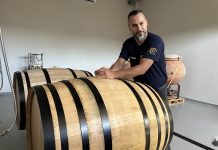
Officially retired, Mike still spends a large part of his time doing what he has done for most of his life: tasting, observing, experimenting, asking questions and occasionally challenging ideas that most people accepted long ago.
If you describe him simply as one of the important South African winemakers of the last few decades, you immediately lose the most interesting part of the story.
It is true that he worked at Simonsig. It is true that he built Mulderbosch from the ground up and helped turn it into one of the best-known names in South African wine. It is also true that he later became involved with Audacia’s unconventional work on sulphur-free wines using rooibos and honeybush extracts.
All of that belongs to his story.
None of it really explains the man.
Because sooner or later every conversation with Mike drifts away from wine.

A discussion about Sauvignon Blanc somehow ends up with Carl Jung. A question about fermentation becomes a conversation about Carlos Castaneda. A casual exchange of emails turns into a discussion about intuition, solitude, mystery, fear and the possibility that the world may be far stranger than we usually allow ourselves to believe.
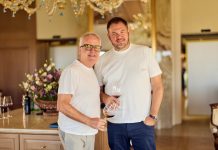
When we finally met at Audacia during harvest, he looked exactly as I had imagined.
Slightly distracted and completely present at the same time.
The sort of person who can move effortlessly from phenolic compounds and extraction techniques to a reflection on Africa, human nature or a book he happened to be reading.
And yes, he was wearing mismatched socks.
I noticed them almost immediately.
Later, after I had left, I sent him a message telling him that his attitude towards socks fascinated me almost as much as his attitude towards wine.
His reply came quickly.
“In a way I am a bit of a rebel.”
A few minutes later another message arrived.
“To rebel is to face your own fear and go into the unknown.”
The sentence stayed with me because it seemed to explain much more than his choice of socks.
Long before wine entered the story, Mike’s life had already been shaped by movement, uncertainty and a refusal to accept easy answers.
He was born in Musina, in the far north of South Africa, close to the Zimbabwean border. His parents worked in the copper mining industry, in a part of Africa where distances were vast and life was often defined by work, travel and constant adaptation.
One of the earliest family stories he remembers is also, in a way, a story about rebellion.
His father lost his job because he built showers for Black mine workers.
When Mike later told me the story, he did not present it as some heroic act. He was still a child at the time and too young to understand all the political realities surrounding it. What he understood was much simpler. His father had seen something he considered wrong and decided he could not ignore it.
The consequences followed.
Soon afterwards the family moved to Zambia.
His mother managed a mine laboratory while his father worked for an American company supplying chemicals to the mining industry throughout the Copperbelt, including what was then Zaire.
The result was a childhood spent in motion.
South Africa.
Zambia.
Croatia.
Lebanon.
Greece.
The Netherlands.
By the time he was grown up he had attended eleven different schools.
When I asked him what effect that had on him, his answer was characteristic.
“It was good for my mind to be exposed to so many cultures. Yet I also saw that people behave remarkably similarly wherever they live.”


Taj osjećaj stalnog kretanja i nepripadanja vjerojatno ga je obilježio mnogo više nego što danas otvoreno govori. Čak i dok priča o Africi, There is probably more wisdom in that observation than in many academic studies of culture.
What struck me while listening to him was that he never spoke about those years with bitterness. Many people who move constantly as children carry a sense of displacement for the rest of their lives. Mike seemed to carry curiosity instead.
Countries changed.
Languages changed.
Schools changed.
Yet the thing he remembers most clearly is not the instability but the people he met along the way.
Of all those schools, only two teachers left a lasting impression. One in South Africa and one in Zadar.
“I learnt from them that life is continual growth in knowledge.”
The sentence could almost serve as a summary of his entire life.
Yet if there was one person who shaped him more than anyone else, it was not a teacher.
It was his grandfather.
Whenever Mike speaks about him, the tone of his voice changes almost imperceptibly. The memories become more vivid, the details sharper.
His grandfather carried a small piece of the Mediterranean wherever he went. He planted grapevines, vegetables and fruit trees whenever the opportunity presented itself, as though creating a garden was not simply a practical task but a way of making a place feel like home.
Mike often accompanied him.
The image returns again and again in his stories: a Vespa, a small piece of land, the African sun and a boy convinced that he is helping.
“My grandfather planted grapes, vegetables and fruit trees wherever he went.”
Then, in another message:
“He gave me a deep love for farming.”
That love never really disappeared.
You can hear it when he talks about vineyards, but also when he talks about vegetables, trees, soil or weather. The subject changes. The fascination remains the same.
At one point during our correspondence he asked me if I could bring him ajvar from Croatia.
Not just any ajvar.
Real homemade ajvar.
The request made me laugh.
Later he explained that he had learned how to make it from another Croatian while studying in Stellenbosch many years earlier.
The detail sounds insignificant.
It is not.
Somehow it captures something essential about Mike. The same person who spent decades making wine at the highest level could become equally enthusiastic while discussing peppers, vegetable gardens or traditional food.
The more we exchanged messages, the more I realised that in his world there was no real boundary between a vineyard, a cellar, a kitchen garden or a farm.
All of them belonged to the same conversation.
All of them involved patience.
All of them involved observation.
And all of them required a willingness to work with nature rather than against it.
Wine would eventually become the central thread of his professional life, but the foundations had been laid much earlier, on the back of a Vespa, beside a grandfather who planted things wherever he went and a family that rarely stayed in one place long enough to mistake permanence for certainty.
And perhaps that is why, decades later, Mike Dobrovich still sounds less like a man who found answers than a man who never stopped asking questions.
Wine entered Mike Dobrovich’s life long before it became his profession, although neither he nor anyone around him could have known that at the time. Looking back, it is tempting to draw a straight line from the boy following his grandfather through vegetable gardens and vineyards to the winemaker he would eventually become, but lives rarely unfold with such clarity. More often they advance through a series of accidents, encounters and decisions whose significance becomes visible only years later.
After studying oenology at Stellenbosch, Mike joined Simonsig, one of the wineries that played a decisive role in the development of modern South African wine. It was an exciting period for a young winemaker. South Africa was emerging from decades of isolation, a new generation was beginning to travel, taste and compare itself with the wider world, and many assumptions that had long been accepted as immutable truths suddenly seemed open to question.
From Simonsig he moved to Delaire, and from there came the opportunity that would shape much of his professional life. Larry Jacobs wanted to build a winery from scratch and was looking not simply for someone to make wine, but for someone who could help create an identity. The project would become Mulderbosch. The vineyards had to be planted, the cellar designed, the style defined. For a man whose curiosity was often stronger than his desire for security, the attraction was obvious.
Seventeen years later, Mulderbosch would be recognised as one of the most important names in South African wine, particularly for Sauvignon Blanc. Yet whenever our conversations touched on those years, I noticed something curious. Mike rarely spoke about success in the way successful people usually do. There were no triumphant stories, no lists of achievements, no desire to revisit old victories. Whenever I asked about milestones, the answers were brief. Whenever I asked about experiments, mistakes or unexpected discoveries, the stories became longer and more animated, as though those were the moments that had truly remained with him.


The cellar he described never sounded like a factory devoted to the efficient production of wine. It sounded more like a laboratory inhabited by someone who remained unconvinced that conventional wisdom always deserved its authority. Many winemakers spend their careers refining a formula that works. Mike seemed far more interested in finding out what might happen if the formula was changed.
Perhaps that is why he once described himself as a rebel.
Not in the theatrical sense of the word, nor in the modern habit of confusing rebellion with simple disagreement, but in a quieter and more demanding sense.
“To rebel is to face your own fear and go into the unknown.”
The sentence explains a great deal about the way he approached wine.
At some point during our correspondence we began talking about problem-solving, and Mike mentioned something that would sound implausible if it came from almost anyone else. Occasionally, when a particular question occupied him intensely enough, the answer would arrive in a dream.
Not as a vague intuition.
Not as a feeling.
As a practical solution.
“I dreamed in my sleep what to do. Those experiments always gave me the greatest results.”
What fascinated me was not the statement itself but the matter-of-fact way in which he presented it. He discussed dreams in exactly the same tone he used when describing fermentation, extraction or vineyard management. For him there appeared to be no sharp dividing line between intuition and analysis. Both belonged to the same process of discovery, and both were useful only if they eventually led to a better understanding of what was happening in the vineyard or the cellar.
Of course, not every experiment ended in success.
One of the stories he told me concerned a new enzyme he had begun using in Cabernet Sauvignon. The intention was straightforward enough. By improving extraction he hoped to increase colour, structure and complexity. The initial results looked promising, and convinced that a slightly higher dosage might produce even better results, he doubled the recommended amount.
What followed was not what he had expected.
The enzyme turned out to possess extremely strong cellulase and hemicellulase activity. Instead of merely helping with extraction, it began breaking down the grape skins to such an extent that they virtually disintegrated. The wine behaved in ways nobody had anticipated. Pressing became difficult. Clarification became difficult. Months later the consequences of that decision were still being felt throughout the cellar.
Most winemakers tell stories like this with visible discomfort because nobody enjoys watching a promising wine become a problem. Mike tells it differently. There is no attempt to minimise the mistake, but neither is there any trace of bitterness. What remains in his memory is not the failure itself but the lesson hidden inside it.
At some point during the story he quoted Lao Tzu.
“Less is more, and more is less.”
The remark sounded less like philosophy than something learned the hard way among tanks, hoses and fermenting grapes.
Later, when I asked whether he regarded failures as important teachers, he replied with a question that could easily serve as a summary of his entire career.
“Was failure ever truly failure, or simply another route toward understanding?”

The longer I knew him, the more I realised that this was not a rhetorical question. He genuinely seemed to view mistakes differently from most people. Success interested him, of course, but mainly because it allowed him to continue exploring. Failure interested him because it forced him to learn.
Many successful people eventually become prisoners of their own achievements. They discover something that works and spend the rest of their lives protecting it. Mike always seemed more interested in discovering what might happen next.
Perhaps that is why retirement never suited him particularly well.
Officially he retired. In practice he simply found another set of questions.
Those questions eventually led him to Audacia, where experiments with rooibos and honeybush extracts were challenging one of the oldest assumptions in modern winemaking. Sulphur had long been regarded as indispensable, not merely useful but essential. The idea that wines could be protected using extracts from indigenous South African plants sounded improbable to many people in the industry and faintly absurd to some.
Mike’s reaction was different.
The first time he visited Audacia he expected an interesting experiment. What surprised him was the quality of the wines.
“First I came to taste the wines and I was incredibly surprised at the quality.”
Curiosity did the rest.
Before long he was once again involved in a project that occupied precisely the territory he had always found most interesting: the uncertain space between accepted knowledge and unexplored possibility.
The results attracted attention. Larger producers came to taste. Questions were asked. Interest grew. Yet enthusiasm did not always translate into action.
One conversation in particular remained in his memory. The chief executive of a large wine company admitted that he found the wines fascinating, but could not see how his customers would react if some wines in the portfolio contained sulphites while others did not.
“The CEO of some bigger farms said how could they explain to their customers that no sulphur was added to some wines while others contained sulphites.”
Mike laughed while telling the story, though not in a mocking way. It seemed to amuse him because it had so little to do with wine and so much to do with human nature.
Then he added a sentence that, although spoken about winemaking, could probably be applied to almost anything.
“A lot of people are just afraid of change.”
By that point I had begun to understand that wine, for Mike Dobrovich, was never simply wine. It was a way of asking questions, testing assumptions and occasionally wandering into territory where certainty became less important than curiosity. The cellar was where many of those journeys began, but it was rarely where they ended.
At some point our conversations began drifting away from wine, although perhaps that is not entirely accurate because wine never really disappeared. It remained present in the background, but increasingly it felt less like a destination and more like a road leading elsewhere. A discussion about Sauvignon Blanc would end with Carl Jung. A question about vineyards would somehow arrive at Carlos Castaneda. Fermentation might lead to Tao Te Ching, and before either of us noticed what had happened, we would be discussing solitude, consciousness or the curious limits of human understanding.
One day Mike wrote something that stayed with me for a long time.
“The western education system does not really teach philosophy, psychology or critical thinking. These we have to learn by ourselves.”
He was not complaining. If anything, the remark sounded more like an observation made after many years of reading and thinking. Throughout our correspondence I gradually realised that Mike belongs to that increasingly rare group of people whose formal education never truly ends. The subjects change, the books change, the questions change, but the process remains the same.
Jung appeared regularly in his messages.
So did Lao Tzu.
So did Castaneda.
One evening, while we were exchanging thoughts about books that had shaped us, he explained why Tao Te Ching and Castaneda had remained important to him for so many years.
“Both talk about the art of not doing. And that has helped me with becoming better at critical thinking. At the same time a realization that I can never know everything.”
The sentence struck me because it moved in a direction opposite to the one most people expect. We usually think of critical thinking as a road toward certainty, yet Mike seemed to see it as a road toward humility. The more he learned, the more aware he became of how much remained unknown.
That attitude surfaced repeatedly during our conversations.
One afternoon I asked him what Europe would never fully understand about Africa. It seemed a simple enough question. His answer arrived some time later.
“What is it about ourselves that we will never fully understand?”
That was all.
For a while.
Then another message followed.
“Perhaps we fear darkness because we refuse to face our own dark shadows.”
It was a very Mike-like exchange. You ask about a continent and receive a question about human nature. Not because he is avoiding the subject, but because he rarely separates places from people or societies from the individuals who create them.
The influence of Jung was obvious, although Mike never discussed psychology in an academic way. What interested him were not theories but observations.
“Many things we repress,” he wrote. “Anger, cruelty, greed… but sometimes we also repress gifts because we were punished for them as children.”
The thought arrived in the middle of a conversation about something entirely different. That happened often. His emails wandered. Digressed. Circled back. Yet somehow they almost always arrived somewhere interesting.
Another time he sent me a passage by St John of the Cross describing a solitary bird. The image remained with me because it seemed strangely appropriate.
A bird that seeks the highest place.
A bird that dislikes company.
A bird that sings softly.
A bird that cannot be captured.
A few days later I asked whether he felt any connection with that image.
His answer came quickly.
“Life is a magnificent paradox. It is often when I am truly alone that I can feel my connection to everyone, nature, and the mystery of being.”
There was nothing melancholy in the statement. If anything, it expressed the opposite of loneliness. Mike has spent much of his life around people, yet some of his deepest reflections seem to emerge from solitude. Reading his messages, I often had the impression that being alone was not a withdrawal from the world for him but another way of entering it.
Later he sent me another thought.
“Someone once said that if you are lonely when you are alone, then you are in bad company.”
I laughed when I read it, but the sentence lingered.
So did another one.
“If I can bring creativity into what I do there is a fundamental satisfaction that somehow means a very deep connection.”
Connection.
The word appeared again and again throughout our correspondence. Connection to nature. Connection to ideas. Connection to people. Connection to mystery. Even when he was talking about wine, he often seemed to be talking about connection.
Perhaps that is also why Africa occupies such a special place in his imagination.
Not Africa as a political concept.
Not Africa as a headline.
Africa as something lived.
One day he wrote a sentence that may be the simplest and most accurate description of the continent I have ever heard.
“Africa still moves to the rhythm of the earth.”
I have thought about that line often since then. Perhaps because it captures something difficult to explain to people who have never spent time there. Life in much of Africa still feels tied to seasons, weather, animals and distances in a way that much of Europe no longer does.
Even Mike’s humour often returns to that reality.
At one point he described his attempts to keep chickens.
The project was not a success.
Some were taken by lynx.
Others by snakes.
A few disappeared into the talons of eagles.
Eventually he summarised the entire experience with characteristic economy.
“Life in Africa is dangerous for chickens.”
It is probably one of the funniest sentences he ever sent me.
Yet even beneath the humour there was something recognisably African in the observation: a quiet acceptance that human plans do not always occupy the highest position in the hierarchy of nature.
The same acceptance appears in many of Mike’s stories, although nowhere more clearly than in the account he sent me after we had been discussing Carlos Castaneda, intuition and Paulo Coelho’s The Valkyries.
What arrived in my inbox that evening was unlike anything he had written before.
It began after he reread the novel and remembered an experience that had taken place years earlier in the forest above Mulderbosch.
As I read it, I realised that it revealed something essential about him. Not because of what happened, but because of the way he told it.
There was no attempt to convince.
No attempt to prove.
No insistence on certainty.
Only a story, followed by questions.
Questions that, years later, he was still asking.
And those questions began with a crow.
The story Mike sent me after our conversation about The Valkyries was too unusual to summarise and too revealing to ignore. More importantly, it seemed to bring together many of the threads that had been running through our correspondence for months: intuition, curiosity, uncertainty, nature, and the willingness to leave certain questions unanswered.
After rereading Paulo Coelho’s novel, he wrote, he had gone to meditate in the forest above the Mulderbosch cellar. What followed began with a simple question.
“Do angels exist?”
The question was directed at no one in particular and everything in general. As he walked home, a crow appeared from the direction of his house and stopped only a few metres away. Then it circled him. Once. Twice. Three times. More crows arrived. They hovered. They moved. They disappeared.
Years later Mike was still unsure what, if anything, the experience meant.
What interested him was not certainty but mystery.
As he wrote the story down, he repeatedly returned to the same point. He was not offering explanations. He was recording events as he remembered them and asking questions that remained unanswered.
The story then moved from the forest to the cellar.
One day, while driving on the farm, a crow flew past him, cawing loudly. The sound immediately gave him the strange and persistent feeling that something was wrong. He headed towards the cellar. On the way his secretary tried to stop him, insisting that he urgently contact his wife, who was overseas at the time. Yet the feeling would not leave him.
When he finally reached the cellar, he found a worker preparing to blend two wines that should never have met.
One tank contained one of the winery’s best white wines.
The other contained red wine.
The pumps had not yet been switched on.
The mistake had not yet happened.
But it was seconds away.
The story ended the way many of Mike’s stories end: not with an answer but with another question.
“Shamans call certain inorganic beings allies. Could these be the angels found in the Judaic tradition?”
Then came the final line.
“I have many questions, but I am convinced that this universe is very mysterious.”
By the time I finished reading the account, I realised that the most revealing part was not the crows, the feather, the coincidence or even the wine that had narrowly escaped disaster. What revealed Mike most clearly was his refusal to force the experience into a conclusion.
Many people become more certain as they grow older.
Mike seems to have become more curious.
That curiosity appears everywhere in his life.
It appears in the young student moving between cultures and countries. It appears in the winemaker who was willing to risk failure in pursuit of a better understanding of wine. It appears in the man who could spend years working with Sauvignon Blanc and still become excited by an experiment involving rooibos and honeybush. It appears in the reader moving effortlessly from Jung to Castaneda, from St John of the Cross to Tao Te Ching, not because he was searching for a doctrine but because he was searching for better questions.
At one point during our correspondence he wrote something that, in retrospect, may be the closest thing to a personal credo.
“We are magical, mystical beings living in a magical, mystical universe.”
Coming from somebody else, the sentence might have sounded grandiose. Coming from Mike, it sounded oddly practical, as though he were describing something he had observed rather than something he wished to believe.
Perhaps that is because he has spent most of his life paying attention.
To vineyards.
To weather.
To books.
To people.
To ideas.
To mistakes.
To those occasional moments that resist easy explanation.
When we first began corresponding, I assumed I was writing a story about a winemaker. After all, the facts seemed straightforward enough. Here was a man who had helped shape one of South Africa’s most respected wineries, who had spent decades working in cellars and vineyards, and who continued to experiment long after most of his contemporaries had settled comfortably into established routines.
Yet somewhere along the way the story became larger than wine.
Not because wine disappeared from it, but because wine turned out to be only one expression of a much deeper curiosity. The same curiosity that led a young boy to follow his grandfather through gardens and vineyards. The same curiosity that carried him across countries and cultures. The same curiosity that allowed him to approach success without becoming trapped by it and failure without becoming defeated by it.
The more I came to know Mike Dobrovich through our conversations, the less interested I became in his achievements and the more interested I became in the way he looked at the world. There was something refreshing about meeting a man who had spent a lifetime acquiring knowledge without losing his sense of wonder, and who seemed increasingly comfortable with the possibility that some of the most important questions may never be fully answered.
Perhaps that is why I keep returning to that recording he sent me at the beginning of our correspondence.
An owl singing somewhere above Stellenbosch.
A few seconds of darkness.
A landscape not yet touched by daylight.
Nothing dramatic.
Nothing spectacular.
Just a small fragment of the world, noticed by somebody who was paying attention.
And perhaps that, more than anything else, is what I will remember about Mike Dobrovich.
Not the wines.
Not the cellars.
Not even the crows.
But the attention.
The quiet, persistent curiosity that has accompanied him from a Vespa in Africa to a vineyard in Stellenbosch, and that still seems to guide him wherever the next question happens to lead.