Dvanaest godina nakon što je izašao iz Iločkih podruma i krenuo ispočetka, u najgoroj vinogradarskoj godini koju pamti, Mladen Papak Twelve years after leaving Iločki Podrumi and starting again, in the worst winegrowing year he can remember, Mladen Papak now makes wines that are changing the way people see Ilok.
In that time, he has built a winery on Radoš, developed his own style and proved that experience gained in a large organisation is worth only as much as your ability to translate it into a personal story. Asked whether he has regretted it, his answer comes without reservation: not for a single second.
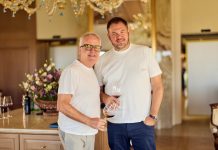
When I first met him in his new role at Principovac in 2014, the waiters were still calling him “director”.
Mladen claimed not to notice, but when a waiter addressed him for the second time with: I will be right with you, director! – he laughed and said simply:
– It seems that once a director, always a director!
It was a good beginning to a conversation with a man who had just left a large organisation behind and entered something incomparably riskier: a venture of his own.
And just then, when he was finally supposed to be working only for himself, nature served up something he could not have wished for even in his worst forebodings.
A year that should have brought everything to a halt.
Even today, twelve years later, Mladen Papak has not forgotten 2014.

As though that particular year wanted to ask him the ultimate question: are you sure you really want this?
The rain would not stop. Rot hung in the air. Every visit to the vineyard brought another wave of unease. In the Traminer, he sensed it before he saw it.
Then he remembered the late Ivan Juroš.
Much earlier, as a young oenologist, he had sought Juroš’s advice in a similarly rainy year, convinced that the Traminer would rot. Juroš listened and calmly told him to spray the vineyard and – wait.
Seeing his worried expression, he simply added a sentence wine people remember all their lives:
– There has always been rain. It has always stopped. This rain will stop too.
That time, it did. They made an excellent Traminer that year, perhaps the first truly great one under the Iločki Podrumi label.
In 2014, however, it did not.
The rain continued, and the unease grew with it.
He had already thinned the leaves to make the grapes riper and healthier. In a normal year, that would have made a difference. In that year, it became an additional problem.
The worst harvest of his career.
And his first.
– A catastrophe, he said at the time. He had never had a worse year in his career, and misfortune had made it his first year working independently.
He had to explain to everyone that the year was bad and that he could do no better, while some took this as an excuse. Others were probably thinking to themselves: he was a director – what does he actually know about making wine?
As though it were easy to erase the fact that before his directorship, before management and strategies, he had been precisely what mattered most – an oenologist.
Had he faltered then, nobody could have blamed him too much. He had accomplished enough to live more quietly. But Papak is not one of those people who start doubting what they know after the first great storm. On the contrary, the bad year made him more defiant rather than shaking his resolve. He wanted to show, and prove through his own wines, that Ilok was among Croatia’s finest wine districts, that it had excellent potential and that the story of its terroir could be taken another step higher. Not through declarations, local patriotism or a glassful of clichés, but through wine.
The first month after leaving, he admitted then, had been the hardest. Almost everywhere in Ilok, he encountered something that had shaped his two decades at Iločki Podrumi, and he had to explain why he was no longer there. He had not expected the parting to leave a bitter taste. It was then that the wisdom of his slow, almost subconscious preparation of an alternative became clear – planting his own vineyards, piece by piece, as though somewhere deep inside, before he was ready to admit it, he had been preparing the ground for the day he would have to set out alone.
Today, twelve years later, asked whether he has regretted leaving the large organisation for even a second, he answers without hesitation, but with a smile that has lost none of its irony:
– Perhaps only because I did not leave earlier.
Then he immediately grows serious:
– I have not regretted it for a second.

Looking back, he sees it as an almost perfectly timed turning point. He left at fifty-one, an age when you still have enough energy, resilience, motivation and physical strength to build something new, while carrying experience that protects you from the costliest mistakes. Between thirty and fifty, he says, you can still put up with a great deal – the organisation, hierarchy, pressures, other people’s decisions and logic. Today, he could no longer do that. Now he works independently, makes his own decisions and bears the consequences himself. If he succeeds, he and his family enjoy the rewards. If he fails, he pays the price. But at least he answers to nobody except reality.
That statement sounds simple, but it may be the most accurate summary of Papak’s second professional life. He did not leave Iločki Podrumi for a quieter, smaller, more comfortable version of the work he already knew. He did not leave to take refuge. He left to test, at his own risk, in his own vineyard and under his own label, everything he had been unable to carry through fully in a large organisation.
From the outset, the label said almost as much as the wine.
When his first range appeared, I was among those who happily noted not only that Mladen Papak had gone independent, but that he had shown something often chronically lacking in Croatian wine – a good sense of humour about himself. His label placed a hoof centre stage: a visual play on his surname, which means “hoof” in Croatian. Not as an awkward burden or a defence mechanism, but as a sign of identity. Indeed, the hoof on the label wore a suit, elegantly alluding to his past as a director. He had had two proposed label designs, he told me then. One featured historic motifs from Ilok; the other was self-deprecating. He did not deliberate for long. Self-deprecation won.
The response was excellent. There was something refreshingly healthy about the decision. In a country and culture where people often expend enormous energy concealing, smoothing over or dressing up anything that might supposedly make them vulnerable, Mladen Papak took his own surname – a word that also has a somewhat mocking meaning in everyday speech – and turned it into a witty, memorable label. Of course, he knew all its connotations, but felt no embarrassment about them. He had inherited the name from his parents, signed it all his life, and it seemed entirely logical, he said, to embrace it as the visual symbol of his winery too. Vanja Cuculić, his packaging designer, clearly sensed that this offered the ideal balance of simplicity, personality and memorability. No kitsch, no affectation, no need to prove anything. Just a man who believed in himself enough to allow himself a joke at his own expense.
Yet if the hoof on the label was a witty, personal detail, the winery’s true, deeply rooted signature was not his surname, but the site: Radoš.
From the beginning, Mladen did everything he could to bring Radoš out of the shadow of Ilok’s much better-known sites, above all Principovac and Vukovo. He wanted intensely for it finally to receive the expression it deserved. He was convinced, on oenological as well as emotional grounds, that Radoš was exceptional and undeservedly overlooked. Over time, his own example began to support a claim that might sound bold to an outsider: that Radoš might even be Ilok’s best site. He expressed this not through marketing, but literally through the names of his finest wines. He called his most ambitious range precisely that – Radoš.
Again, that decision contained something much more important than naming alone. Papak did not want to build a winery solely on the brand of his own name, but on the ground, the site, the place that could carry the weight of identity. That is always a more serious undertaking.
It is therefore no coincidence that he built his winery where the wine itself is born – in the vineyard.
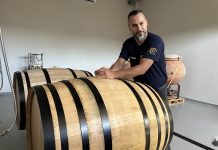
This is one of the most striking and logical decisions of his independent career. While almost all Ilok’s wineries are in the town or immediately beside it, Papak placed his outside it, among the vines. Today, this sounds like the most natural thing in the world, but in Ilok it was a clear departure. His parents had had their house there. He was born there, grew up there, ran over the hillside as a child before vineyards completely filled the landscape, attended the local primary school and unknowingly absorbed the sense of place that would later lead him towards agronomy and wine. He inherited five hectares from his parents, bought another eight and gradually consolidated his vineyard holding. Ten hectares lie in one block, exactly where the winery stands today. When he began thinking seriously about private winemaking, he already envisaged a winery within his plans for the vineyards.
Why in the vineyard? Today, his answer is almost textbook-clear, but comes with the experience of a man who has seen much of the world. Travelling through Europe, South Africa, California and Australia, he concluded that almost all wineries built over the previous fifty years or so were in vineyards. There are three reasons. The first is economic: why transport grapes eight kilometres to the cellar every day during harvest if you can process them where they were picked? The second is technical: after picking, grapes must be processed as quickly as possible, with as little transport, shaking, waiting and damage as possible. The third concerns wine, food and tourism: people love visiting a winery where they can see the vineyard their host is describing, the vineyard whose wine they are drinking. Wine is closely tied to its place of origin. When guests sit on a terrace looking at the vines that supplied the wine in their glasses, the experience becomes deeper, more tangible, more real. With hindsight, Papak is now more convinced than ever that it was exactly the right decision.
Yet none of those intelligent decisions – the labels, the location, the reputation – would have meant much without the wines. Here lies the main reason Mladen Papak’s story is much bigger today than it was in 2014. Back then, there were ambition, knowledge, character and a clear idea of what he wanted. Today, there is concrete evidence too. Twelve years on, we can see what that independence has produced: not merely a sound private winery belonging to a former director, but an estate with a personal vision that has offered a different reading of Ilok’s terroir through several key varieties.
Most interestingly, Papak himself singles out as particular sources of satisfaction the wines that were harder to realise in a large organisation, or required a degree of experimentation and focus he could not have there. In a large operation, he says, you cannot afford to spend four harvests experimenting with something that may or may not succeed. You have to produce, maintain momentum, pay salaries, think about plans, strategies, markets, owners and hierarchy. In a small winery, you can try what you could not before. You can make mistakes. You can learn. You can take a variety everyone considered average and try to make something that changes perceptions.
That is precisely how he speaks about Rhine Riesling.

While most people in Ilok long treated it as a secondary variety, average or perhaps even below average, Papak saw exceptional potential in it. He did not, of course, discover this out of nowhere. His longstanding fascination with Rhine Riesling goes back to his travels through German and French wine regions, tasting wines from the Mosel and Alsace and wondering how Ilok could speak of the variety with so little ambition. The Mosel and Alsace inspired him, but not as models to copy. Quite the opposite. He knew perfectly well that Ilok could never produce the same Riesling as those regions, and should not try. The terroir, climate and style were different. What interested him was whether, with the right approach, Ilok could produce the best possible version of its own Rhine Riesling.
He sought the answer patiently, with almost laboratory precision. He spent four harvests learning how to obtain a wine with acidity, aroma and body. He found the key in combining picking dates. Some grapes are picked earlier, while acidity is higher and aromas fresher. The rest stay longer, to develop ripeness, body, strength, the wine’s muscle. Then he combines them, carefully measures the components and seeks the right proportion. This is no longer routine oenology. It is what Papak is now free and able to do because he is his own master, something he once could not pursue with such concentration in a large organisation.
The result is a Rhine Riesling with around 7.5 grams per litre of acidity, which sounds almost incredible for Ilok. More importantly, it is recognisably his wine, an expression of the estate, proof that a variety underestimated for years can, in the right hands, become one of a winery’s most compelling arguments. Papak is very deliberate in saying that this is no accident. He wanted it to be recognisable. He wanted it to be his.
If Rhine Riesling gives him personal satisfaction because he has drawn from an underestimated variety what he had long suspected was there, Graševina is almost an argument made through wine.
While working at Iločki Podrumi, he constantly heard that Ilok’s Graševinas were heavy, earthy and sluggish. Those old descriptions followed the variety as though inherently true. They had long bothered him. He did not believe the problem lay in either the variety or the terroir. He was convinced it lay in the approach: the working methods, the choice of timing, the way the wine was handled. If you have a Graševina with little acidity, he says, you will not get the fruitiness it needs either. Without fruit, freshness and a lightness that is not trivial, Graševina loses its identity.
In his view, Graševina must meet three basic requirements: it must be fresh, light and fruity. But it must not be banal. That “but” is crucial, because it reveals Papak’s ambition. He does not want a simple wine that charms through easy drinkability alone. He wants a wine that feels effortless at the first sip but has serious structure, body, aromas, creaminess and the sense that you are drinking a wine that knows what it is.
When he speaks of his 2015 Graševina, one almost senses a quiet professional joy. Around six grams per litre of acidity, thirteen per cent alcohol, abundant lovely fruit aromas, a fuller body, creaminess and freshness. Almost perfect, he says. No small word from a man who has spent most of his life among wines.
Yet perhaps his greatest breakthrough came with the wine taken for granted in Ilok, and often undervalued for precisely that reason – Traminer.
Papak speaks of it not as a statue that merely needs maintaining, but as a variety one can play with, provided one knows what one is doing. His Rosamal, a wine that literally swept aside the competition at one judging and revealed a Traminer entirely different from the usual expectations of Ilok, emerged from precisely that playfulness and imagination. Controlled, of course. He did not take it too far towards a Prädikat style, but he did delay picking a little. Fortunately, the year allowed the grapes to retain their acidity despite this. The Traminer finished with six grams per litre of acidity, almost atypical for the variety – five grams is usually the ceiling. Add a little residual sugar, a powerful body and ten years of development in bottle, and you have a wine whose primary aromas have given way to tertiary notes, maturity, complexity and the kind of depth that makes Traminer more than an aromatic charmer: a serious, layered wine.
This may be where Papak’s different approach is most clearly visible. He does not change the variety’s identity, but seeks a different expression within Ilok’s possibilities. He does not demolish tradition; he stretches it to the point where a new interpretation begins.
Then comes Frankovka, perhaps the quietest, but by no means the least important, element of his work.
He does not actually have Frankovka in his own plantings. He makes it from vineyards leased from his kum, a close friend linked to him through a family ceremony, who is also a winemaker and no longer had time to tend those sites himself. The first harvest was in 2018, and something lovely happened immediately. Lower vine yields, a carefully chosen harvest date, slightly later picking and a little dehydration produced a Frankovka that showed what is often forgotten: this wine needs time. Here too, Papak goes against the longstanding habit of treating Frankovka as practically a one-year wine, something to release and drink quickly. His stays in the cellar for four years before bottling. That is an entirely different philosophy. Again, we reach the lesson he constantly emphasises: wine needs time. Great wine does not emerge in a year. If it did, everyone would be a great winemaker.
That statement applies to his whole story.
Neither Papak the winemaker nor his independent winery emerged overnight. He grew up on Radoš among grapes and land his parents, who moved to Ilok in 1960 in search of a livelihood, gradually acquired and turned into vineyards. Vines were new to them, but they quickly learned to grow them and slowly bought land, piece by piece. In such surroundings, it was almost inevitable that Mladen would attend agricultural secondary school in Ilok and then the Faculty of Agriculture in Zagreb. He himself says his education followed pure logic. He went away to study in order to return to Ilok, not knowing whether a job awaited him there, but convinced that, as a young agricultural engineer, he would eventually get an opportunity.
The war brutally interrupted that logic. Displaced from home, he had to put wine and vineyards aside, and life became a matter of survival. He and his wife ran a grocery shop, which, paradoxical as it may sound, later gave him an unplanned but valuable skill – the craft of selling. Returning to Ilok, he found the vineyards in poor condition, with much to rebuild from scratch. At the same time, an opportunity opened at Iločki Podrumi, where he first worked as an oenologist and then rose almost meteorically: after just four years, he was already chief oenologist, and later chairman of the management board.
It is difficult to overstate the importance of that phase of his work to the modern history of Iločki Podrumi. Under his leadership, the winery made substantial progress, began producing a broad range of quality wines, from premium and Prädikat wines to ice wines, and established such a strong market position that its labels took root on shelves almost like an institution. When he says today that he cannot displace them from their shelves, he speaks without bitterness, almost in professional recognition of his own earlier work. Winning over Vinkovci, traditionally a Kutjevo stronghold, was a major achievement at the time, for example.
Yet a large winery, however much scope, experience and prestige it gives you, still has limits. It has an owner. Management. A hierarchy. Plans and strategies that must be respected. Responsibility is enormous, and freedom always partial. Papak now distinguishes those two worlds very clearly. In a large company, the owner makes most of the decisions, while the chairman bears most of the responsibility. It eats away at a person. He can sleep despite problems in his own winery, he says, because he knows he will somehow solve them. Problems in a large winery kept him awake because he never knew whether he could resolve them with the owner. Yet the responsibility always lay with him.
That is why his winery today, though smaller, is actually larger in what matters most: freedom to decide.
That freedom, however, has produced neither disorder, vanity nor arbitrary decisions. It has not made him a winemaker who does whatever comes into his head simply because he can. Quite the opposite. For Papak, freedom has become disciplined experimentation, a constant pursuit of quality and very cautious growth. He began with around 30,000 litres. Today, he is at around 150,000. But that increase was neither sudden nor reckless. The winery was designed to accommodate a maximum of around 250,000 litres, with annual production envisaged at around 200,000. That figure, however, is not an end in itself. Increased quantity is welcome if it comes, but is not imperative. Quality must be assured. Expanding too quickly could undermine it, and that is the last thing he wants.

Here again, he remains true to himself. Whether discussing Rhine Riesling, Graševina, Frankovka or Traminer, he always returns to the same thing: process. Years of work. Patience. Repetition. Learning. No wine results from a single inspiration, but from a succession of attempts, adjustments, seasons, mistakes, waiting and decisions. In that sense, Papak is truly a winemaker who has matured late. Not because he started late – on the contrary, he has practically spent his whole life in wine – but because he gained full creative freedom only at an age when many others are already tired.
Interestingly, he does not seem tired at all.
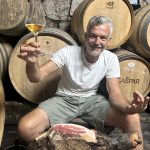
Asked where he gets so much energy, he almost seems surprised by the question itself. He works tirelessly. Last week, he was in both Split and Zagreb, serving on a state commission; he works in the vineyard and cellar, adapting to the day, the weather and what needs doing. As long as a person is healthy, he says, there are no obstacles. He does not merely love this work; he adores it. There is no trace in his words of the overwrought enthusiasm sometimes found in people trying to turn their work into a myth about themselves. Papak sounds convincing precisely because everything is so concrete. He truly lives the work.
Perhaps that is why one of his most mature and important remarks is his admission that, when he left Iločki Podrumi at fifty-one, he thought he knew everything about wine. Today, twelve years later, he says he has learned at least as much again in his own business. That is the statement of a great professional. People of average knowledge grow increasingly certain of their ready-made answers with age. People of real knowledge become increasingly aware of the breadth of what they still do not know.
Alongside all this, Papak has managed to complete almost the entire range that gives a winery seriousness and breadth – from sparkling wine to Prädikat wines and ice wines. For him, sparkling wine is further proof that Ilok too can think outside the standard framework. His combines three varieties, led by Chardonnay with Rhine Riesling and Traminer. The grapes are picked earlier to preserve acidity and produce a base wine with a backbone that will withstand the second fermentation. Sparkling wine, he says, is not cheap, but the culture of drinking it is part of a higher standard of civilised living to which the local market should also aspire.
His Prädikat wines, meanwhile, have long been more than incidental demonstrations of expertise. They are a matter of reputation. He has had two ice harvests of Traminer, in 2016 and 2021, and has now finally achieved something that gave him particular pleasure – an ice harvest of Graševina. After five years of waiting, Graševina was picked on Radoš at minus eight degrees Celsius, to become a rare and expensive Prädikat wine. Anyone who knows Papak knows how much this means to him. He is one of the few Croatian winemakers who, despite the pressures of climate change, have not stopped leaving some grapes on the vines every year in the hope that winter will still provide that brief, sharp opportunity for an ice harvest. It means an enormous sacrifice of yield, an exceptionally difficult logistical task and a fairly unprofitable operation if viewed purely as arithmetic. But this is precisely where one sees the difference between wines made only to sell and wines also made for reputation, for the pinnacle of achievement, to affirm the winemaker and the place he comes from.
For Papak, an ice harvest represents the summit of wine production. It demonstrates the true calibre of the climate, vineyard and expertise of the people behind the wine. Such wines are made not solely for profit, but for prestige too. They win awards, medals and championship titles and strengthen the winery’s brand. When he says this, it sounds not like an advertising slogan, but like a man who knows how much effort, waiting and loss are contained in every sip. Ice-harvest yields are ridiculously small, only five to ten per cent of what September picking would have produced. Birds eat some grapes, the weather destroys others, dehydration takes its share, and then picking and processing must be organised in temperatures well below freezing. Fermentation is difficult to start, lasts for months, and the wine takes a long time to settle and stabilise, reaching the market only after two or three years. This is no work for the impatient.
Perhaps that is precisely why Mladen Papak’s story is, in the end, more than the story of a successful winemaker, or of a former director who made good use of his knowledge and contacts. It is the story of a man who, in the second half of his professional life, managed to unite the experience of a large organisation with the freedom of an independent owner, the discipline of large volumes with the sensitivity of small batches, local terroir with international knowledge, the reputation he had earned with the risk he consciously accepted.
When you taste his wines on Radoš today, you drink more than the result of technically sound production. You drink a vision of Ilok. A conviction that Rhine Riesling here can be much more than a footnote. A Graševina fighting its own stereotypes. A Traminer that has retained its aromatic richness but gained an acidic backbone, depth and seriousness. A Frankovka given the time it was denied for too long. An ambition to restore to Radoš the dignity it deserves. And the defiance of a man who, in the worst possible year, decided to see it through anyway.
Perhaps that is why his joke at Principovac carries a new meaning today, more than it did in 2014.
Once a director, always a director?
Perhaps.
But for Mladen Papak today, that sounds less important than another, more accurate and more beautiful definition: once a winemaker – always a student of his own vineyards. It is precisely his willingness to keep learning and experimenting, to reject shortcuts and work in the second half of life with the same passion as at the beginning, that explains why his independent venture has grown beyond its initial curiosity value into something far more serious.
It has become proof that one can leave a large organisation without corrosive bitterness, turn experience into a personal signature, and that Ilok, read without inertia or ready-made patterns, can still surprise even those who think they have long known it.
That is exactly what Mladen Papak has been doing for twelve years: surprising people. Slowly, persistently, with no more noise than the wine itself can make. And with far more humour at his own expense than one would ever expect from a former director.
He left Iločki Podrumi as a director. On Radoš, he became an author.