In Villány, there is an underground circle where a voice returns softer, deeper and more lingering than one might expect. It was built for wine, but anyone who enters soon realises it was also built for people-for song, ceremony and the silence that follows.
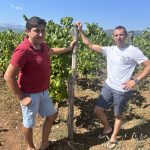
József György Bock was born on 7 May 1948 in Kisjakabfalva, a village beside Villány in southern Hungary, where the soil can be heavy and black, and summer as direct as the wine that emerges from it. The Bock family has grown vines since 1850, but life rarely follows a straight line. In his story, that continuity is never a romantic postcard; it is a quiet obligation, something to carry, take on and defend. That is why the beginning matters: before wine, there was a trade. He trained as a metalworker, completed a mechanical engineering course and spent years at a local factory as a foreman and production planner. In that industrial school of order, discipline and precision, in a world where “every screw has its place”, he developed a way of thinking that would later become his greatest advantage when vines, barrels, harvests and the market entered his life. The turning point came in 1981, after his father’s death. He then devoted himself fully to the vineyard, initially a modest holding of around half a hectare, but with the kind of stubborn ambition that does not announce itself in grand words. He bottled his first wines in 1987. Hungary did not yet have the infrastructure to support a new wave of winemakers: there was a shortage of quality packaging, labels and all the other things that make wine look like a serious product to a customer in Budapest or abroad. Legends grew out of those gaps in the system, including stories of the “first marketing tricks”. Winemakers of the generation that emerged in the 1990s, Bock among them, made do with imported bottles and labels from Austria and Germany so they could finally present their wines in a form worthy of what was inside. Such details reveal the metalworker at heart: if you want to be taken seriously, you have to tighten every joint, smooth every edge and make the parts look and function as a whole.

Then came 1991 and the wine that opened doors for him: Bock Cuvée. A blend of Bordeaux varieties, it was both an ambitious wine and a declaration of intent. Three years later, in 1994, it won the championship title at VinAgora, and suddenly Villány-until then, for many, little more than a point on the map in southern Hungary-was being mentioned in the same breath as Bordeaux and Tuscany. In success stories, such a moment often sounds like fireworks. For Bock, it was more like the click of a switch: proof that it could be done. And after proof came a system. In 1997, the Hungarian Wine Academy named him Winemaker of the Year, an honour with particular weight in Hungary, recognising someone the profession sees as setting standards. In 2007, he was awarded the Knight’s Cross of the Order of the Republic of Hungary for his contribution to Hungarian winemaking. Decades later, in 2024, he received the Academy’s Életmű-díj, its lifetime achievement award-the kind of recognition that says, “You have left your mark.”
Yet Bock’s story has always extended beyond the wine in the bottle. It is also a story about space: how a winery can become a stage, a restaurant, a hotel, a meeting place, a ritual and even a chapel. In Villány, he developed a wine and gastronomy complex that became one of the region’s most recognisable destinations, bringing together a cellar, a restaurant and a hotel with spa and wellness facilities. This expansion was a deliberate construction of an experience. He seemed to understand something many winemakers learn too late: wine is enjoyed through its context as well as its flavour. A glass is different in the quiet of a cellar, in a restaurant alongside game, or in a circular hall where a voice rebounds from brick and returns as proof that the place has a soul.
At the heart of that experience is a space spoken of almost in a whisper, like a secret revealed at the end of a tour: Bock Chapel, the Circular Cellar-a round, chapel-like hall at the end of the estate’s celebrated hundred-metre cellar. This is a deliberate architectural statement: approximately seventeen metres in diameter, covering around two hundred square metres and lying roughly ten metres below ground. Built from some seventy thousand reclaimed bricks, its six-arched vaulted structure opens into radial passageways, as though you were standing inside an underground rosette, a stone flower spreading from its centre towards the edges. Official descriptions mention a capacity of around one hundred to one hundred and twenty people, concerts, weddings and special events. But the hall’s real magic lies in what its walls do to sound.
In terms of verifiable facts, one can confidently repeat what the winery itself emphasises: the unique acoustics make the space exceptional for concerts and ceremonies. Recordings of sound checks and performances without microphones confirm that the dome and brickwork create a lively resonance and carry the voice effectively. There are no publicly available formal measurements of frequency response, no precise figures for wall thickness or the particular frequencies amplified, and no reliable basis for claiming that the space has been used for sound installations in wine therapies or rituals. Nor has it been confirmed how, or under what conditions, the hall can be booked outside organised events. Yet the underlying idea is clear, almost tangible: the geometry of the space-its circular shape, wall materials, ceiling height and construction-creates a reverberant acoustic effect that lends itself to music, singing and ceremony. Perhaps this reveals Bock’s character most clearly: a winemaker who wanted his cellar to sing.

An important thread in this story of space leads to Szekszárd and Ferenc Heimann. Bock’s circular hall is attributed to Heimann, a man known for domed and vaulted cellars, a pince-építő, or cellar builder, whose name is associated with the modern revival of a once almost forgotten craft. In 1996, Heimann built his first such cellar at the family winery in Szekszárd. According to available accounts, that project inspired a wave of similar construction across Hungary’s wine regions. Bodri Pincészet in Szekszárd is often cited as a comparable expression of ambition: an enormous underground complex of around 1,800 square metres, built with approximately half a million large rustic bricks and twelve domes, each around seven metres in span and height. There is no official statement that Bodri served as Bock’s model, but given the designer and the chronology, it is reasonable to suggest that Bock’s circular hall follows Heimann’s earlier “Szekszárd school”. In that school, brick, the surrounding earth and the dome serve atmosphere, temperature and humidity as well as structural stability-and, in this case, sound. That is what makes it so intriguing: Bock’s chapel seems built to reveal how a cellar can become an instrument.

Looking at Bock’s story solely through his labels makes it easy to miss the wider context of Villány in the 1990s. Three names recur in accounts of the region’s transformation: Bock, Gere and Tiffán. Each carried a different part of the revival. Bock became Villány’s face to visitors-the man of infrastructure, hospitality and branding. Attila Gere pushed the region towards a premium reputation, low yields, great red wines and the conviction that Villány could stand alongside Europe’s serious wine regions. Vilmos Tiffán, the senior authority among them, preserved the roots of tradition and acted as a mentor, embodying a school of style in which elegance was inseparable from knowledge. Together, they formed what is sometimes half-jokingly called the “holy trinity of Villány”: Bock, Gere and Tiffán, three different faces of the same renaissance. And sometimes they really did stand shoulder to shoulder.
The finest symbol of that solidarity is Millennium Quartet. It was a concrete project: a one-off wine made jointly by four Villány winemakers-József Bock, Attila Gere, Tamás Gere and Ede Tiffán. A cuvée from the 1997 vintage dedicated to the millennium of Hungarian statehood, it was conceived as a gesture of unity, with each contributing his finest components to a shared bottle. The wine later appeared at themed tastings, with magnums also mentioned, as a rarity, a collector’s piece and a reminder that a region achieves greatness through cooperation as well as competition. Such a project reveals an important and often forgotten truth about wine regions: behind the great names, there is sometimes an agreement to build the story together-to create the stage first, then take their places on it.
Bock’s role on that stage has always been human, approachable and down-to-earth. It is hardly surprising that anecdotes accompany him like fragments of local mythology. One of the warmest and most vivid concerns his family: his wife Valéria, a teacher by profession, left her job to devote herself entirely to the growing winery and their family. It was a demanding decision. Behind success stands someone’s quiet work, organisation, care and presence. Bock’s story therefore carries the unmistakable feeling of a family home, with the children involved in the business and the hope that the grandchildren will follow. Here, too, his frequently quoted conviction returns: nothing is handed to you; everything has to be earned through work. If you want wine, you have to live with the vines.

Another thread of anecdotes concerns discipline. Interviews return to the fact that he still goes into the vineyard himself when pruning begins, and that the strict organisation learned in industry remains a foundation of his work. There is also his principle of going into the cellar every day: without exception, he descends for a personal quality check, as though the cellar were a living room he had to enter to keep the house alive. Then there are the bottles opened to check older vintages. For the past fifteen years or so, they have opened no more than two bottles a year from those vintages, simply to see how the wines are developing. A small, precise intervention, sufficient for its purpose. A metalworker might put it this way: you do not dismantle a machine unnecessarily, but you have to know whether it is working.
A third thread, perhaps the most cinematic, is hunting. There are specific indications of Bock’s connections with the hunting world: a hunters’ ball was held in his cellar, and a hunting magazine recounts how someone embarked on his first African trip, to Namibia, at the encouragement of-and in the company of-his friend József Bock. In the restaurant, that connection takes culinary form, with game dishes and pairings featuring the estate’s mature reds. Then comes the detail that brings it all together: at the winery, guests eat goulash made from game personally shot by the great winemaker. At that point, Villány becomes a landscape in which wine, food, hunting, companionship and stories merge into a single culture.
A scene from a journey captures that culture beautifully, almost like a short film. Winter, heavy snow, a slippery road; my Macedonian friend Goran speaks no English and knows barely enough Hungarian to order a hot pepper, but that does not stop him going where he has decided to go. Lunch at Bock’s begins with a bottle of rosé, a gift from the house, immediately revealing the host’s business intelligence: guests are welcomed generously and thoughtfully, encouraged to relax and form an attachment to the place. Beneath every dish on the menu, the recommended wine appears in bold-a discreet lesson in pairing. Someone chooses game goulash and is served Syrah; another stays with rosé alongside goose pâté; someone orders a steak and receives a classic Bordeaux blend of Cabernet Sauvignon, Cabernet Franc and Merlot, in proportions that sound like a recipe but actually define a style. Then, in the midst of this polished experience, my friend Goran asks the waiter:
– What’s your name?
He thinks he is asking how much everything costs. Everyone laughs, the waiter gives his name, but never returns to our table. A comedy of misunderstanding in a house that otherwise runs like a well-oiled machine-and touching for precisely that reason. It shows that Bock’s world is real, full of people, awkward moments and memories that stay with you. The same story includes a “Portugieser massage”, a wellness detail that sounds like a joke but perfectly captures Bock’s philosophy: wine is also the raw material of an experience, a story, something you will recount when you return home.

And since we are speaking of wines: Bock Cuvée remains his signature, the wine that marked the turning point. Capella is cited as a flagship red, often compared with the finest Bordeaux blends. His young Portugieser, released for St Martin’s Day, represents a tradition Bock helped bring to national prominence. More recent accounts also mention Bock’n’Roll, a blend created by his son-a sign that the estate is a living organism.
When everything is brought together, one simple image remains at the centre of József Bock’s remarkable story: a man who came from a skilled trade and the discipline of industry, carrying that mindset into wine without bringing coldness with it. His engineering logic serves reliability, precision and consistency across years and markets. At the same time, he builds a circular cellar chapel for sound, song and ceremony; takes part in a shared wine as a symbol of solidarity; welcomes guests to a restaurant where red wine accompanies game; and, amid all the medals, repeats the thought that follows him like a refrain: no medal is worth more than a glass of wine shared with a friend in the quiet of the cellar.
Perhaps that quiet is what best connects the different parts of his life. The quiet of the cellar he visits every day. The quiet before a voice begins to sing in the circular hall and rebounds from seventy thousand bricks. The quiet between the two bottles of an old vintage opened simply to follow the passage of time. The quiet after a hunt, when the game becomes goulash and joins the table. A quiet in which the essential things can be heard: Villány became great because people like Bock knew how to be uncompromising about quality and expansive in vision, precise in detail and generous in hospitality, serious in business and human enough to laugh at a misunderstood English question.
If the key to his story must be found in a single sentence, it lies in what one senses in the account of his circular hall. Bock built an underground place that could hold people, sound, ceremony and friendship, where, as wine matures in the darkness, a kind of shared memory matures alongside it. That, ultimately, is his greatest harvest. For the greatest wine leaves its mark on the palate-and in the space that gives you back your voice.