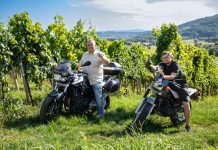
“You drank my wine in Belgrade? Where?”
Oszkár Maurer was not asking out of politeness. At the time, his wines were hardly so widespread in Belgrade that you might stumble across them on any wine list. He genuinely wanted to know where I had found his Gospodsko Vino.
“At Latin Toro Gastro Bar, in Beton Hala.”
“What kind of closure did the bottle have? Was it cork?”
When I confirmed that it had been sealed with a cork, he immediately knew the vintage.
“Two thousand and twelve. You’re lucky to have found it anywhere.”
He also knew why I was calling. The label said almost nothing. Even the wine’s name became barely visible when condensation formed on the bottle, and there was no mention of the grape varieties. All I could tell him was that its contents had been sensationally good and, considering their quality, almost outrageously inexpensive.
Then he began listing the grapes: Sremski Zelenac, Bakator Beli, Medenac Beli, Banatski Rizling, Italian Riesling, Žuta Mađarica and White Kadarka.
“In northern Vojvodina, Kövidinka was traditionally the wine people drank at home. It was the people’s wine. On finer occasions, in hotels and the homes of respected people, they served a blend of the best the vineyard could offer. It was called Gospodsko Vino-the gentlemen’s wine.”
Gospodsko Vino no longer exists. Maurer discontinued the label because he concluded that the people it had been named for had disappeared.
“We live in an age of negative selection. People call themselves gentlemen without having done anything to deserve it. Gospodsko Vino had become a tribute to extinct gentlemen.”
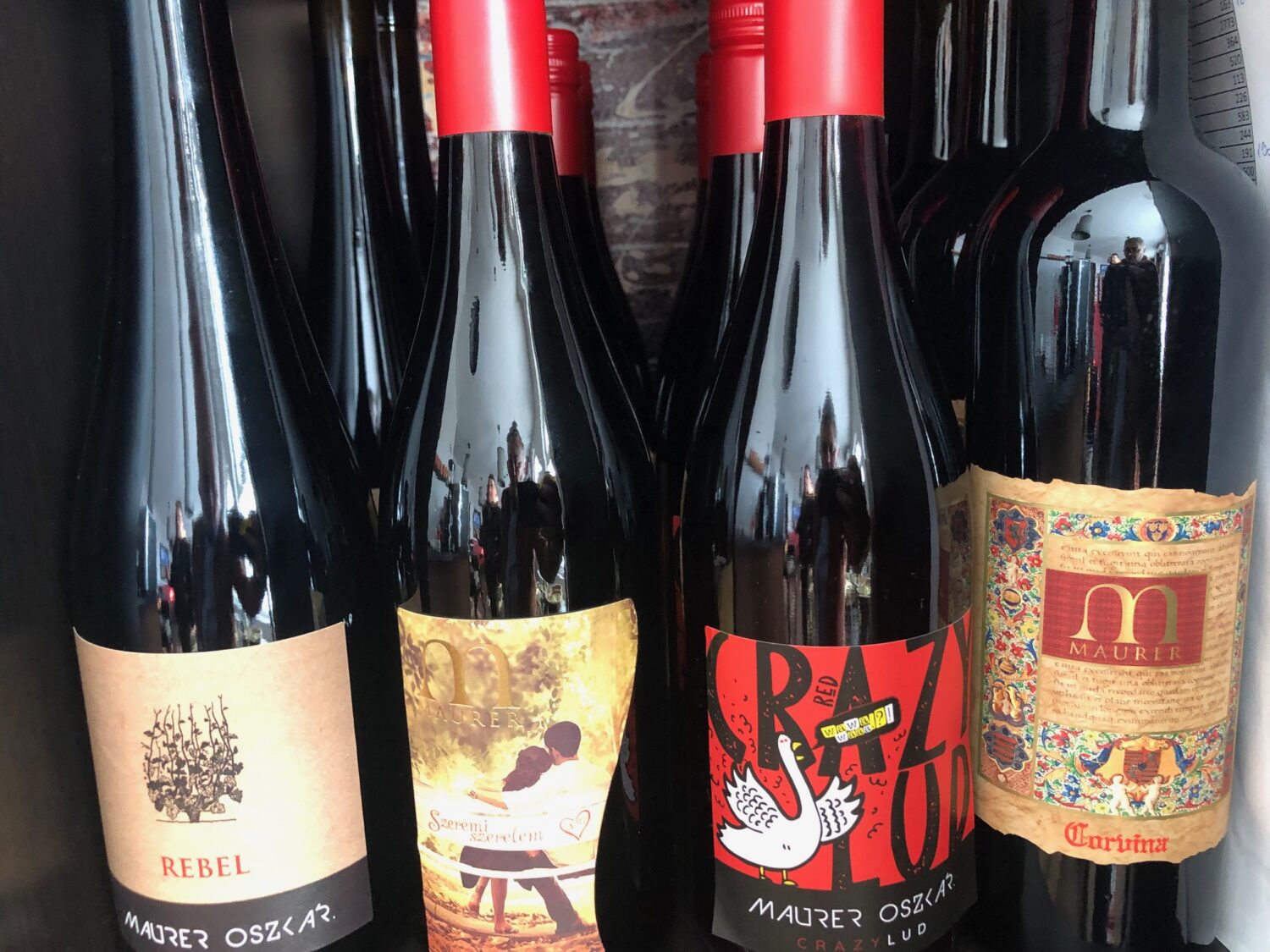
It was succeeded by CrazyLud, a name that, according to Maurer, better describes a world in which nothing is entirely normal any more. For him, changing a label is never simply a marketing decision. Behind it there must be a story, an act of rebellion or at least a question without an easy answer. Maurer is hardly someone who shapes his wines around market expectations. He tried that, and still regrets it.
“I’m a punk. I don’t like compromises. When we began living solely from the winery in 2010, my heart pulled me one way and the need to keep the business alive pulled me another. I started adding a little more sulphur and filtering the wines. Nothing drastic, but enough to make me start hating myself for those compromises.”
That same year, he sold the house he and his wife, Irénke, had built as their family home. The winery had fourteen hectares of vineyards, eighteen workers and expenses he could no longer cover. He could have made grape growing cheaper, adopted industrial solutions and abandoned some of his convictions. Instead, he sold the house, paid his workers and moved with his family into a modest rented flat.
They stayed there for almost ten years.
“It’s a miracle that Irénke accepted all of that. I’m endlessly grateful to her.”
For a man who would later speak of restoring freedom to the vine, remaining faithful to his convictions had then cost him a house. Yet Maurer’s story had begun much more modestly, with Kövidinka, childhood memories and a man who had a decent job but did not like it.
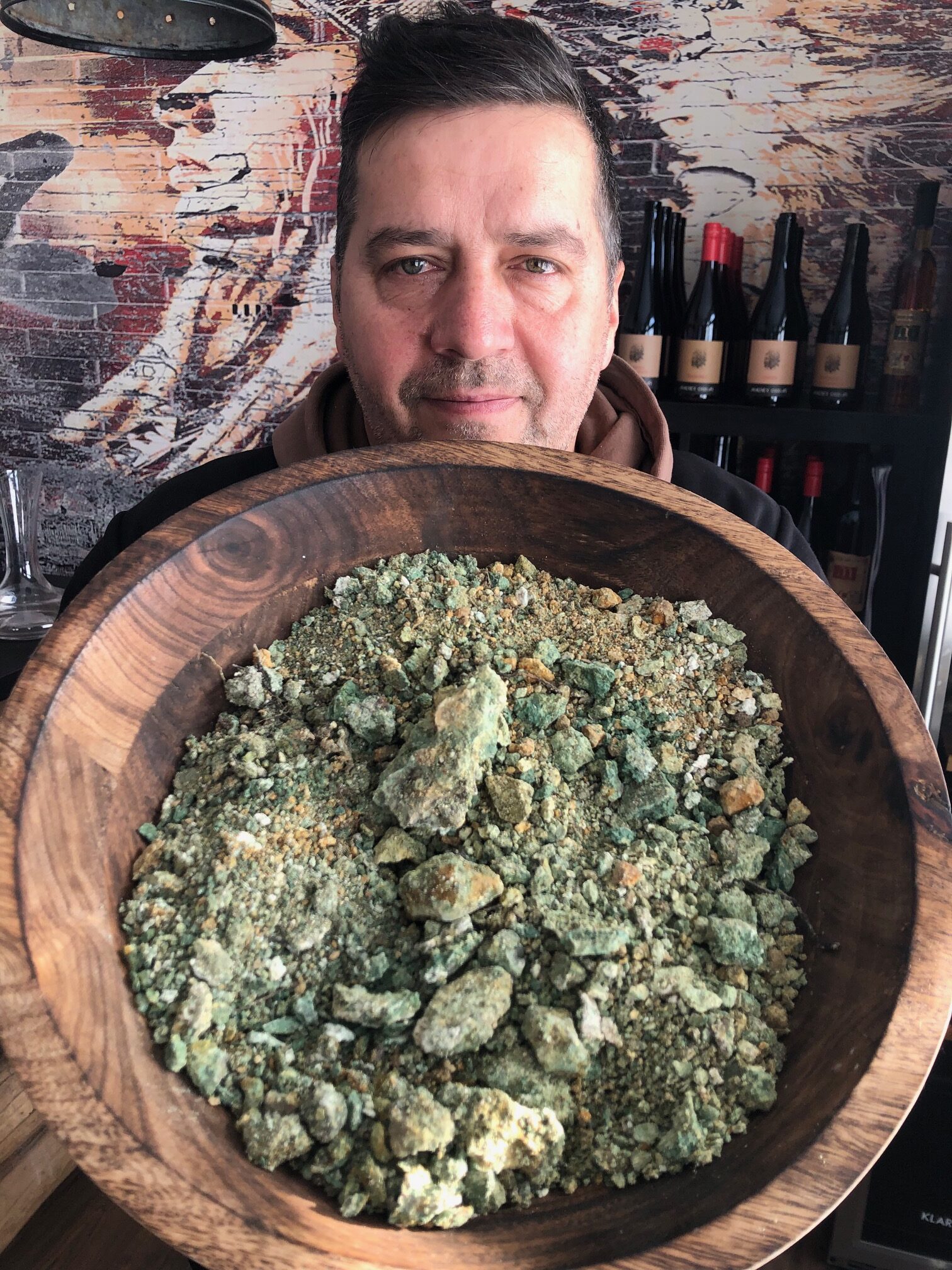
In the mid-1990s, Maurer was manufacturing tipper-truck bodies in Hungary. He could make a good living from it, but found nothing of himself in the work. At first, the vineyard did not need to provide an income. It was somewhere he tried to reconnect with childhood and a family in which wine had never been merely a business.
His great-grandfather Balázs completed his studies in viticulture and winemaking at a college in Kecskemét in 1916 and was among the first to produce sparkling wine in northern Vojvodina. Natural winemaking was not called a movement then, nor did it signal membership of some wine sect. Wine came from grapes, sulphur was used to disinfect barrels, and what is now presented as a return to nature was simply the normal way of making wine.
Of four generations of Maurers, only Oszkár’s father spent part of his working life in conventional winemaking. In the early 1970s, he worked at the state-owned Podrum Palić combine. But the wine drunk at home continued to be made as the family knew how: without additives and with as little intervention as possible.
“I already loved wine at fifteen. Of course, I drank much less than I do today,” Oszkár laughs. “I like it when one or two glasses of fine wine begin to take effect. They slowly quieten the mind and open the tap of the soul. As long as you don’t overdo it, a balance emerges.”
When he planted Kövidinka in 1994, once the most widespread grape in the Subotica wine region, he had no thought of earning his living from wine. His first vineyard could yield barely a thousand litres. Two years later, he planted Riesling, followed by Medenac Beli in 1999. It was with Medenac that he won a local wine competition in Hungary and first seriously considered that what he was doing might become more than a family affair.
He sold his first wines in 2002, built a cellar the following year and began exporting to around ten countries in 2007. Growth, however, did not cure his habit of doing things that made little economic sense. From 1,050 Sremski Zelenac vines, he might produce only 250 bottles; from 4,500 Medenac vines, barely 600 litres. Wines for which he could have charged twenty or thirty euros sold for three and a half or four and a half.
In Serbia, people insisted he was making a mistake.
“How do I explain that my goal isn’t to get rich from wine? Alexander the Great asked to be buried with his hands outside the grave so everyone could see that he was taking nothing into the next world. I want my wines to be accessible to the people around me.”
The problem was that the people around him often did not know what to make of those wines. Maurer planted grapes whose names were unfamiliar even to many winemakers, worked without subsidies and refused to replace them with international varieties for which the state offered financial support. Indigenous grapes were not registered in mother vineyards, lacked the necessary documentation and certificates, and their preservation fitted none of the neatly prepared programmes.
A few days before one of my early visits, Serbia’s then president, Boris Tadić, had visited him. They tasted wine beneath the walnut tree in the courtyard of the old winery on Sarajevska Street in Hajdukovo. Tadić was particularly surprised by Sremski Zelenac.
“He asked how it was possible that we had a grape like that in Serbia, yet it was almost nowhere to be found. I referred him to the Ministry of Agriculture and the research institutes. The state subsidised international varieties, while I received nothing for preserving these.”
At the time, Maurer’s vineyards contained Medenac Beli, Bakator Beli, Sremski Zelenac, White, Yellow and Red Slankamenka, Divlja Crna, Kadarka, Kövidinka, Ezerjó and other varieties slowly disappearing from vineyards and even more rapidly from memory. I called him a window onto a world of forgotten wines. Had you woken him in the middle of the night, he would probably first have complained about being disturbed, then listed all thirteen varieties he was preserving without hesitation.
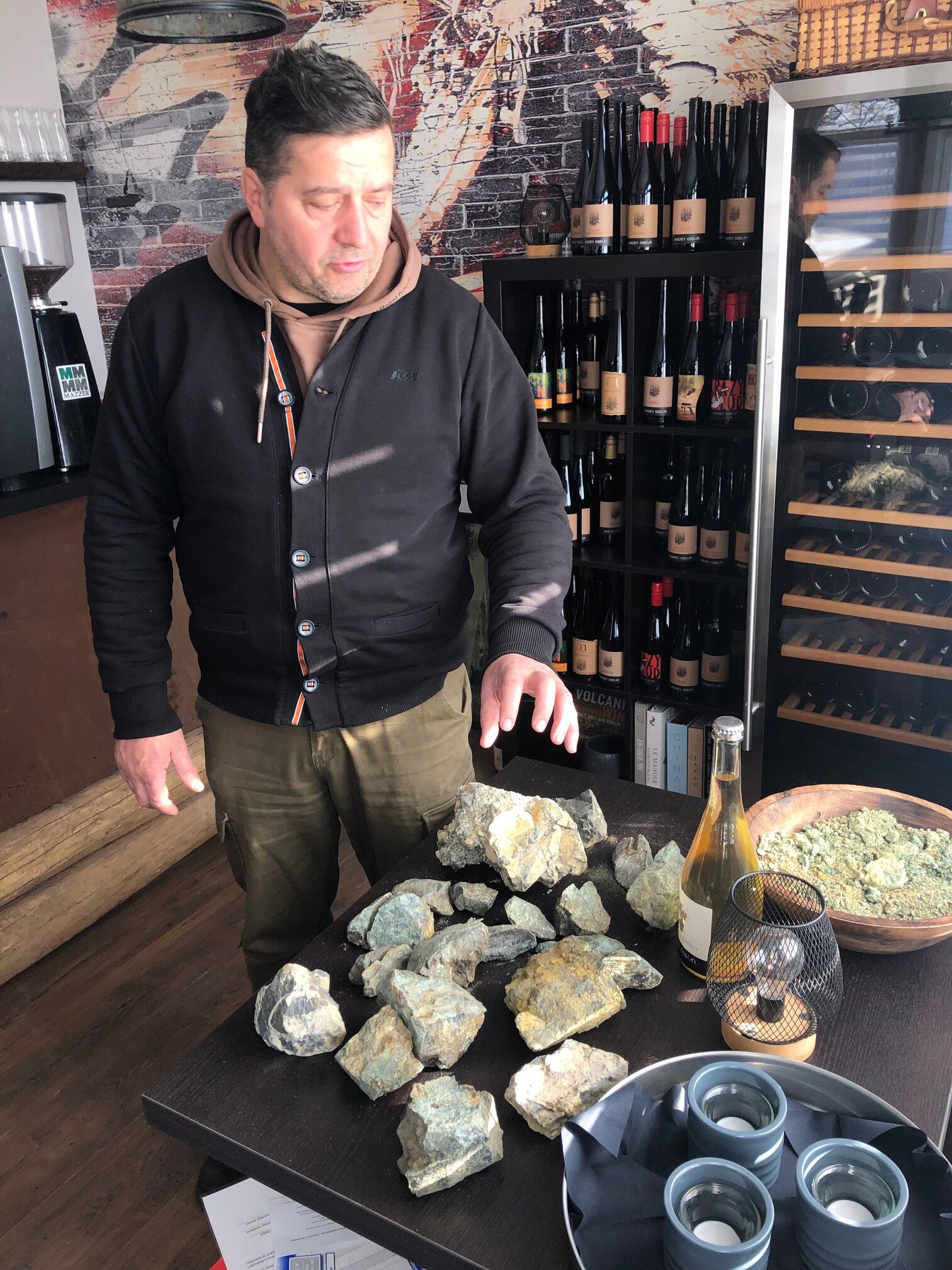
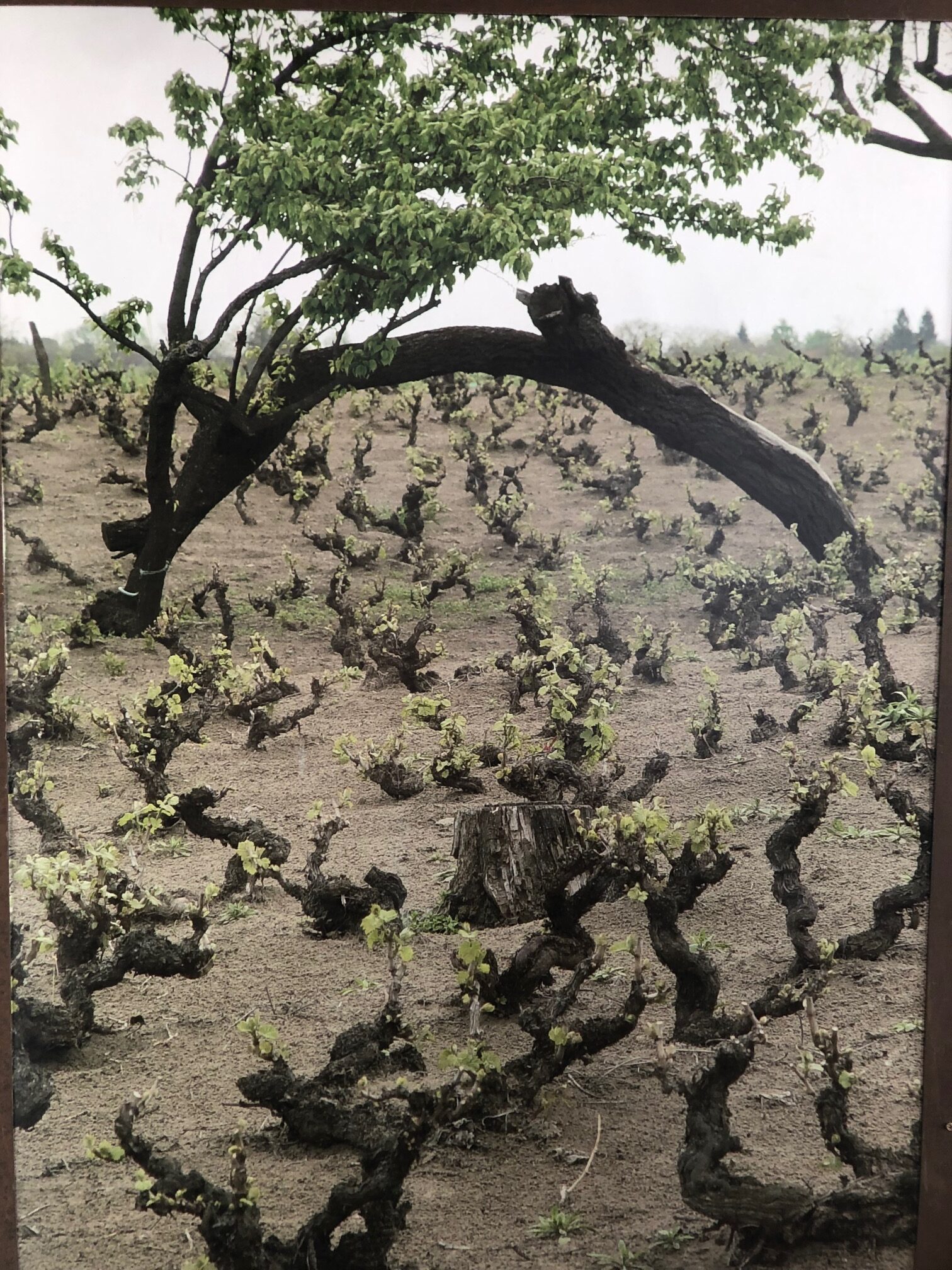
The most precious window onto that world lay twelve kilometres east of Subotica, beside Lake Ludaš. There, on a gentle loess hill covered by a layer of sand, a vineyard planted in 1880 had survived. The sand protected the Kadarka vines from phylloxera, allowing them to remain on their own roots.
Oszkár Maurer found more than age in that vineyard. He discovered a diversity largely absent from modern plantings.
On half a hectare grow around three thousand Kadarka vines and another fifteen hundred vines belonging to nine indigenous varieties. Among the Kadarka, Maurer and his collaborators identified at least eight distinct variants.
Three proved almost useless: some produced no fruit, some only a few tiny berries, and others too many grapes of poor quality. Two were average, performing well only in good years. The remaining three delivered good, very good or exceptional fruit vintage after vintage. They observed drought resistance, susceptibility to disease and botrytis, bunch structure, skin thickness, tannins, aromas, sugars and acidity. They selected the best, propagated them and returned them to the vineyards.
“They’re doing well,” he replied in 2026 when asked how the world’s oldest known Kadarka vines were holding up.
“If we keep looking after them properly, perhaps they’ll live another 145 years.”
He first bottled Kadarka from this vineyard separately in the 2005 vintage. He did not make it every year, because the age of the vines guaranteed neither consistent yields nor consistent quality. A vineyard is no factory in which every machine repeats the same movement, and Maurer never tried to turn it into one.
The 2022 Kadarka 1880, made in a quantity of just one thousand bottles, underwent two weeks of maceration and spent a little over a year in a 500-litre barrel before being bottled without filtration or added sulphur. At first, it seemed almost neutral to him. He did not understand it, but made no attempt to hurry the answer.
“It needed time to show what it could do. When it finally opened up, it gave even more than I had expected. I think it’s on the level of the wonderful 2017.”
Yet he changed the method again in the following vintages. He gave the 2023 and 2024 Kadarkas shorter macerations, then poured the previous vintage’s wine over the new vintage’s grape skins and allowed it to ferment again. For Maurer, even a successful method is insufficient reason to repeat it. Certainty interests him far less than the possibility of discovering something he does not yet know.
Kadarka 1880 was the first to open doors through which many of his wines would later pass. Budapest’s Michelin-starred Onyx restaurant listed it under “Tradition and Evolution”. Contrary to a story often repeated afterwards, Forbes did not declare it one of the world’s ten best wines. In 2018, a group of sommeliers from Michelin-starred restaurants recommended the 2016 vintage for a Forbes holiday selection of ten wines. For a winemaker from Hajdukovo, still unknown even to many colleagues in Serbia, that was extraordinary enough.
Before his name became recognisable on the natural wine scene, Maurer sold most of his production outside Serbia. In Hungary, buyers were not especially concerned about whether a wine was organic. In western Europe, his production methods became his strongest recommendation.
A decisive role was played by Isabelle Legeron, the first French woman to become a Master of Wine and one of natural wine’s most influential advocates. Maurer called her the Crazy Frenchwoman, with the mixture of affection and admiration he reserves for people sufficiently mad to stake their reputation on what they believe.
“She is crazy, but in the best possible sense.”
Through The Collective project, she placed her personal endorsement on the labels of his wines intended for the British market. Four Maurer wines soon appeared on the lists of seventeen Michelin-starred British restaurants.
“She gave me a tremendous boost. Later, I realised I no longer needed her signature and continued on my own. I stopped releasing wines under The Collective labels, but Isabelle and I remained very good friends.”
Her support brought him more than a market. It restored his confidence that he could make wine as he had wanted to before the need to survive drove him towards sulphur, filtration and other concessions.
In 2013, he began working more seriously again with wines made without sulphur or filtration. He added no sulphur to his reds, but was not yet confident enough to abandon that protection entirely in his whites. Such wines were difficult to sell, and Maurer still remembered very clearly the house he had sold to save the winery.
Isabelle Legeron advised him to bottle in February rather than August. He followed her advice and achieved greater freshness. It was a rare moment when he accepted someone else’s counsel without feeling he had betrayed himself: it led him towards greater trust in the wine rather than greater control over it.
A complete reset followed in 2021. He stopped using sulphur, removed the barriques from the cellar and replaced them with larger barrels. He also began considering sealing them with wooden bungs wrapped in maize husks and covered with wax. He had seen the practice in Maradik on Fruška Gora, along with an old method of disinfecting barrels using walnuts soaked in rakija for three days and nights before being placed inside.
For Maurer, returning to tradition is never merely folklore. He will not adopt a method simply because it is old, just as he will not reject one simply because it is new. He is interested in whatever leaves the wine more freedom and takes some power away from the person making it.
“I don’t want to influence what the grapes have brought from the vineyard that year. If you start shaping a wine in a particular direction, you’ll end up with a standardised wine. I’m interested only in what the grapes themselves can offer.”
He has no organic certification today. He once began the certification process, then abandoned it. He did not want, as he puts it, to prove like a criminal that he had done no harm to nature. It also bothers him that organic certification permits practices he himself refuses to use.
“Wine is a matter of trust. If certification required stricter rules than the ones we work by, perhaps I would apply.”
He does not claim that every natural wine is good or that conventional wine must be bad. He has drunk excellent wines shaped by technology, as well as natural wines that left him saying only: “Thank you, I’ll pass on another glass.” The distinction that interests him lies between trying to correct a wine and being willing to accept it as it is, rather than between labels.
“People aren’t perfect, and wine shouldn’t strive to be either. It should be authentic, have substance, possess some magic and mystery. Drinking it should be an adventure, not an exercise in perfection.”
Maurer’s wines may be easiest to understand at his restaurant, 1880 Natural Food & Wine, within the new winery on Kaštelj Street in Hajdukovo. Almost no object there is merely decorative. The entire space functions as a three-dimensional map of his mind, although even that offers no guarantee you will not get lost.
On one wall hangs an enormous photograph of a lion, partly concealed behind a coat rack resembling cage bars.
“People think it’s entertaining to lock up an animal and decide how it will live. Humans behave as though they’re God. I don’t like that. It isn’t right to take away someone’s freedom.”
In the corridor are two parrots: one inside a cage, the other outside it.
“Those are our wines. Free wines. I don’t produce them. They come into being themselves, and I simply keep watch to make sure nothing goes wrong.”
Another wall features Orion, the hunter from Greek mythology whose arrogance brought punishment. To Maurer, Orion represents Medenac Beli, a grape that covered approximately two thousand hectares a century ago before almost disappearing. Only a few hundred vines survived in Erzsébet Sebők’s garden.
“The gods didn’t let it disappear completely. Medenac is our Orion.”
The largest photograph in the main room shows Fruška Gora. Most of Maurer’s vineyards are there today, although his story began in the sands of the Subotica wine region. Fruška Gora, he says, was love at first sight.
“There’s a legend that anyone who drinks spring water from Fruška Gora will always return. That’s exactly what happened to me.”
The ten-course tasting menu therefore also includes water from three Fruška Gora springs. They are served as an equal part of the story of the place from which the wines come, rather than simply to cleanse guests’ palates between glasses. At Maurer’s, even water refuses to be merely water.
The restaurant draws its ingredients from five sources: the forest, the meadow, an organic garden with around forty kinds of vegetables, meat from heritage breeds raised without concentrated feed, and fresh fish from the Tisa. A copy of René Redzepi’s A Work in Progress stands on the refrigerator, but Maurer has no desire to copy Noma or pretend that Hajdukovo is Copenhagen. He feels an affinity with Redzepi’s way of thinking: cooking must begin where the cook lives.
Irénke deserves the credit for this part of the story. While Oszkár was bringing old grape varieties back into the vineyards, she was searching the kitchen for forgotten flavours and new ways to present them.
“It’s wonderful how she has found herself in the kitchen. For her, cooking isn’t work; it’s creating. Irénke cooks, creates and laughs as she does it.”
Oszkár maintains that creating is a way of life, while work is one of humanity’s most unnatural inventions. That theory is somewhat easier to defend when you are not the person who has to cook pörkölt for three and a half hours, but Irénke apparently had no complaints. Her Hortobágy pancake filled with beef pörkölt is just one of the dishes through which the restaurant brings together Bačka and Hungarian cooking with Maurer’s understanding of nature. As though Grandma and Noma had found themselves at the same table.
Today, the winery is far more of a family enterprise than it was when it cost them their house. Their daughter Dominika studied oenology and works in the cellar. Boglárka studied marketing and commerce, and her partner Balázs has also joined the team. Alongside the family, another ten people carry much of the workload.
When Oszkár was asked what he learns from his daughters, he spoke neither of winemaking nor sales nor generational succession.
“They teach me that you shouldn’t live only for work. And that love is an exalted feeling that should never be suppressed, whatever the circumstances.”
It is not necessarily the sentence you would expect from a man who proudly calls himself a punk and speaks more readily about rebellion than tenderness. Yet without it, the sale of the house would also be impossible to understand. Irénke and their daughters were never footnotes to his wine adventure. They bore the cost of his convictions alongside him, then found their own places within the same winery.
On one restaurant wall is a Native American woman, a reminder of people who, in Maurer’s understanding, knew how to live in harmony with nature. On another is a buffalo, an animal that has returned to the surrounding area after an absence of around a century. Music from Tibet and Africa fills the room, while the plates evoke the Tisa, Bačka’s gardens, the forest and the meadow.
Above it all hovers Maurer’s vision of the universe.
“Vines look at the sky all day. They gather information from the universe and turn it into a liquid state-wine. If we want a clear message, there must be nothing in the wine except grapes. No additives. No sulphur.”
It would be easy to dismiss that sentence as another eccentricity of the “crazy Hungarian”, as his friend Nemanja Papić is said to have nicknamed him. But Maurer does not ask you to believe him. He is content for you to taste what those convictions have produced. And some of his wines really do seem to have travelled a much stranger path than ordinary fermentation.
The most direct expression of Maurer’s punk spirit is called Rebel. It is a blend of Kadarka and Merlot with ten per cent Medenac Beli, which plays the rebel’s role within the red wine.
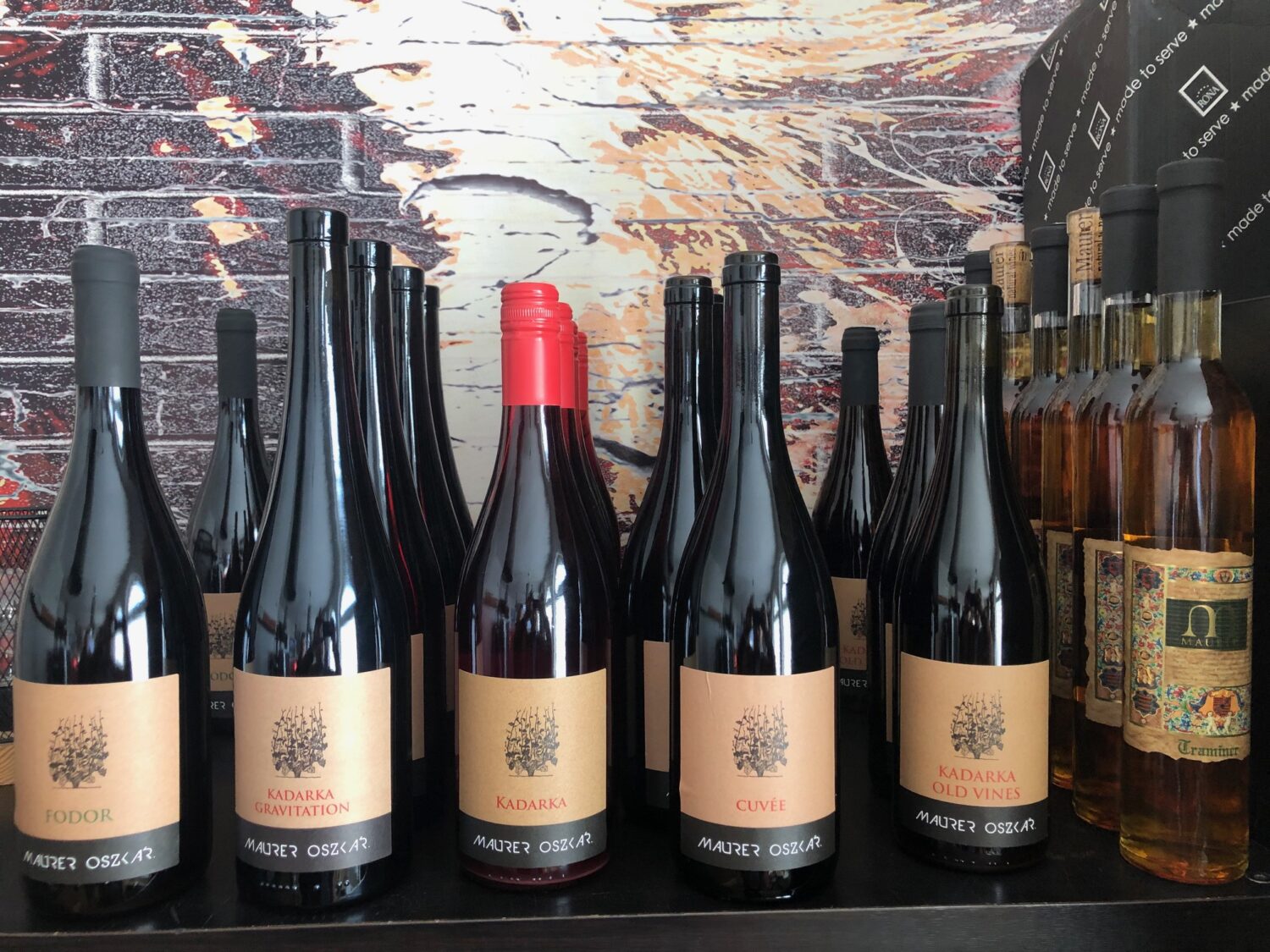
“Mixing red and white grapes isn’t common today, but it existed in our tradition. Why should I pretend it didn’t?”
Maurer’s punk credentials extend well beyond a convenient metaphor for a label. He really does collect records. Once, at Subotica’s flea market, a seller bundled a single by Hašim Kučuk Hoki, Pijem da je zaboravim-“I Drink to Forget Her”-in with records by the Clash and Film.
“I didn’t choose it. He sold it to me with the others. Fate!”
He was in no hurry to get rid of Hoki, though. There is evidently room in Maurer’s world for both punk and folk music, provided they arrive unexpectedly enough.
Stranger still is Babba, a wine born three times over three years. Bakator from 2015 and Riesling from 2016 provided the base. The wine then fermented again in large barrels in three consecutive years. The first time, it macerated with Medenac Beli; the second, with late-harvest Furmint; the third, with Tamjanika. Each maceration lasted approximately three days. After its third birth, the wine spent another year ageing in a large barrel.
Antwerp’s The Jane restaurant, then holder of two Michelin stars, bought the entire production.
“Babba is the Sumerian goddess of fertility. In some parts of our region, people prayed to Marija Baba for their child to be born healthy.”
For most winemakers, renewed fermentation causes anxiety. Maurer turned it into a method, a story and a name associated with a goddess of birth. Perhaps that best explains his claim that he does not produce wine but allows it to be born. Sometimes, apparently, he allows it to be born three times.
Nor does he consider botrytis an enemy. Someone dubbed him the “Kaiser of Botrytis”, although he is unsure who first coined the nickname. Perhaps Marcel de Cocq. The title itself excites him less than the possibilities noble rot offers the grapes.
“If it wants to come, let it come. We see botrytis as an opportunity rather than a threat.”
He is drawn to the spice, dried fruit, herbal notes and concentration the fungus can bring to the berries. On Fruška Gora and in the Subotica wine region, he sees coexistence with botrytis as part of the natural conditions and tradition, rather than a fault to be prevented at any cost.
Caroline Gilby MW singled out Fodor, his orange wine, as a benchmark example of the style done well. Winemakers who came after him also embraced his philosophy. Đorđe Bikicki and Bojan Baša openly described him as a role model, while more and more producers joined the natural wine scene.
Maurer, however, had no wish to present himself as the movement’s father.
“People here have always grown grapes naturally and made wines like these. They simply never left their courtyards, except perhaps for a wedding or to go to friends. Mine were among the first to appear in wine shops and restaurants, but it doesn’t matter whether we were first, third or fiftieth. This isn’t a competition. What matters is how firmly you believe in what you do.”
His wines were recognised abroad before they were recognised in Serbia. According to figures from 2020, the winery produced around 30,000 litres and sold approximately 5,000 bottles in Serbia, around fifteen per cent of total production. The rest went to numerous foreign markets and the wine lists of Michelin-starred restaurants.
Yet even such rare international recognition was not Maurer’s most important measure of success.
“The greatest success is making a wine I look forward to drinking and hearing people say after tasting it: ‘This is really good!’ I want them to be happy and understand what we’ve done. Medals, trophies and restaurants matter less.”
After decades of experiments in the cellar, he moved his most radical experiment into the vineyard. There, he began asking whether human influence could be almost entirely removed, rather than merely reduced.
Around 2022, he stopped pruning the vines and cultivating the soil in the Krstuševina vineyard near Sremski Karlovci. He mows only enough grass to pass between the rows. In other vineyards, he began planting vines beside mulberry trees, exploring whether their symbiosis might bring the grapes something a neatly trained vineyard could not.
For Maurer, it was the logical continuation of everything he had done before. First, he removed additives from the wine. Then he eliminated sulphur, filtration and the small barrels that allowed him to shape flavour more forcefully. Finally, he began questioning a practice considered so fundamental that a vineyard without it is almost unimaginable.
“We look at everything from a human perspective, which gives us a distorted picture of relationships in nature. Through pruning, we’ve arranged for ninety per cent of the grapes to ripen at the same time, because that suits us. If you let the vine decide for itself, you’ll see that the bunches don’t all ripen together.”
He spent years searching for the reason. He found it in the conviction that vines produce grapes to reproduce, rather than to provide humans with wine. The berries are meant to be eaten by animals that disperse the seeds, rather than end up in a press.
“The upper bunches ripen first, feeding migratory birds on their way south. Then come those in the middle, reached by roe deer, and finally the lowest ones, for hares and pheasants. That’s how the vine increases its chances of survival. Then humans intervened and disrupted the cycle.”
At Krstuševina, he therefore decided to restore what he calls the vine’s autonomy. He does not yet know what kind of wine will emerge. Nor does he know whether the experiment will succeed by conventional viticultural standards. But a predictable outcome has never been enough reason for him to do something.
To someone opening his wine for the first time, Oszkár does not recommend studying the grape, vintage, maceration method or number of repeated fermentations. His instructions are much simpler:
“Close your eyes. Don’t think. Just surrender to the feeling. If it was good, do it again.”