The supercell storm that swept down from Fruška Gora in July 2023 knew nothing of the family’s history. It did not know that Milan Šijački had planted the Italian Riesling vineyard in Banoštor, that his children Ivana and Milenko had grown up between its rows, or that this half-hectare plot had been more than a place to grow grapes: it had been their playground, nursery and the setting of their family childhood. The storm simply broke posts, bent rows and flattened forty-year-old vines.
When Ivana Šijački Majoroši and her brother reached the vineyard, they knew it could not be saved.
“It was terribly hard to see it broken like that. It was the first modern vineyard our father planted, where we spent time as children with the whole family. We knew it was the end, but we didn’t want it to go quietly.”
Family, godparents and friends raised the fallen vines onto additional posts, enough to allow one final harvest. That crop became Superćelijski Grašac 2023-Supercell Grašac-a wine that was both their first under the grape’s new name and the last from the vineyard where the Šijački family’s modern story began.
On the label, they wrote:
“Only family and wine can give even more of themselves after a storm. This is our first Grašac harvest, but the final harvest of a forty-year-old vineyard. The storm broke it, but through this wine we will remember it with joy.”
They filled 2,023 bottles, matching the vintage year. Labelled as a single-vineyard wine, it won gold and 92 points at GROW du Monde 2024 in Hungary. The medal confirmed its quality, but to Ivana it was not the most important part of its success.
“Without the friends, godparents and family who helped us lift the vineyard, I don’t think Supercell Grašac would have been the same. It demonstrates the strength of our terroir, the vineyard’s maturity and the grape’s value, but also all the emotions that definitely find their way into wine.”
The expression “first Grašac” contained a small family provocation. While Fruška Gora’s winemakers restored the historic name Grašac to a grape the region had known for decades as Italian Riesling, the Šijački family retained the old name because that label bore Milan’s face.
“My grandfather sold Italian Riesling, my father made it successfully, and it was our first label and first wine-a personal signature across four generations. Changing the name meant altering a label that belonged to our father, far more than following a fashion.”
The storm finally achieved what professional conferences and friendly persuasion had not. They called the last wine from the old vineyard Grašac, but gave it a name that could belong to no other vintage: Supercell.
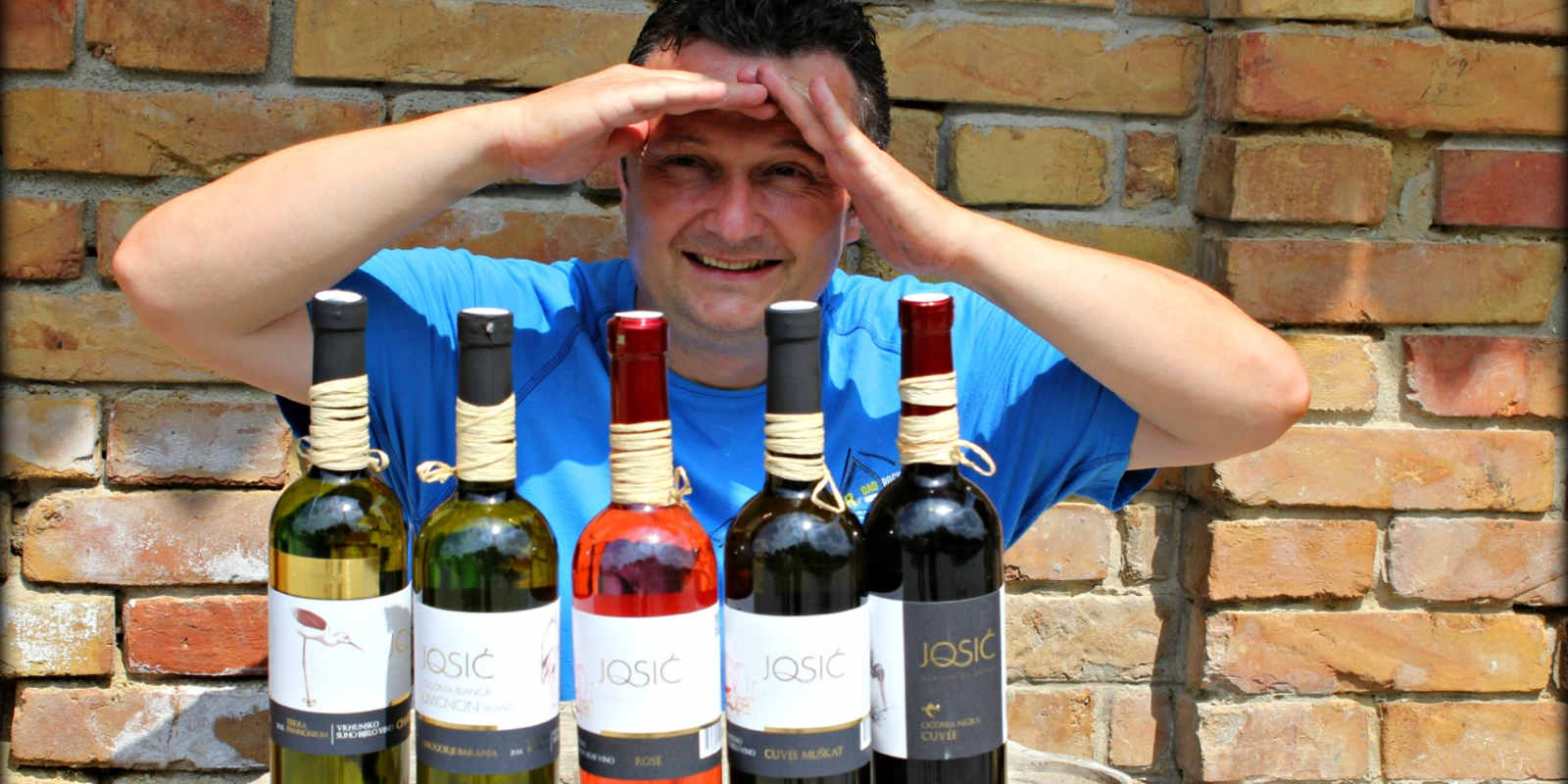
At Šijački, no label exists merely to make a bottle stand out on a shelf. Every wine carries someone’s face and part of the family biography. At tastings, Ivana likes to joke that guests will meet the whole family through the wines, although in person they will have to look only at her.
The rosé bears her face because it was the first wine she conceived and made herself. Chardonnay belongs to Milenko, whose active involvement marked a new wave at the winery. Their mother Ksenija appears on Merlot: for years, she calmed arguments in a family where everyone can do everything and therefore has an opinion about everything. Neoplanta bears the handprints of six children of the next generation-Filip, Stefan, Viktor, Ksenija, Sofija and Milan-while Aldumaš is dedicated to their grandfather Milenko, whom everyone called Bata.
Grandmother Ljubica sits on the Seduša label.
Her face was not chosen simply because it fitted a story about an old grape. Ljubica spoke about Seduša and Slankamenka when almost everyone else had forgotten them. The vines she brought as her dowry and tended from 1969 became the last link to the genetic material of a variety her son Milan would much later rescue from disappearance.
“Seduša grew from Grandma’s hands,” Ivana says. “It took us time to understand how much of this we owed to her.”
Family faces appeared on the labels partly because of a bureaucratic problem. The winery was originally called Bononia, after Banoštor’s Roman name, but new regulations threatened its use. Since wine provided their livelihood and they had no fallback, they decided to put on the labels what nobody could take away: themselves.
An administrative defeat thus became the beginning of one of Serbian wine’s most personal visual stories. For the Šijačkis, wine is the family story itself, translated into aroma, flavour and memory.
That history reaches back to their great-grandfather, to a time when wine had no label, marketing plan or social-media profile, but did have regular customers. Local innkeepers would visit his cellar, taste the wines and select an entire barrel. It would be marked with a seal and kept until its owner collected it. In the 1930s, great-grandfather Jovan was among the founders of an agricultural cooperative overseeing around 150 hectares of vineyards.
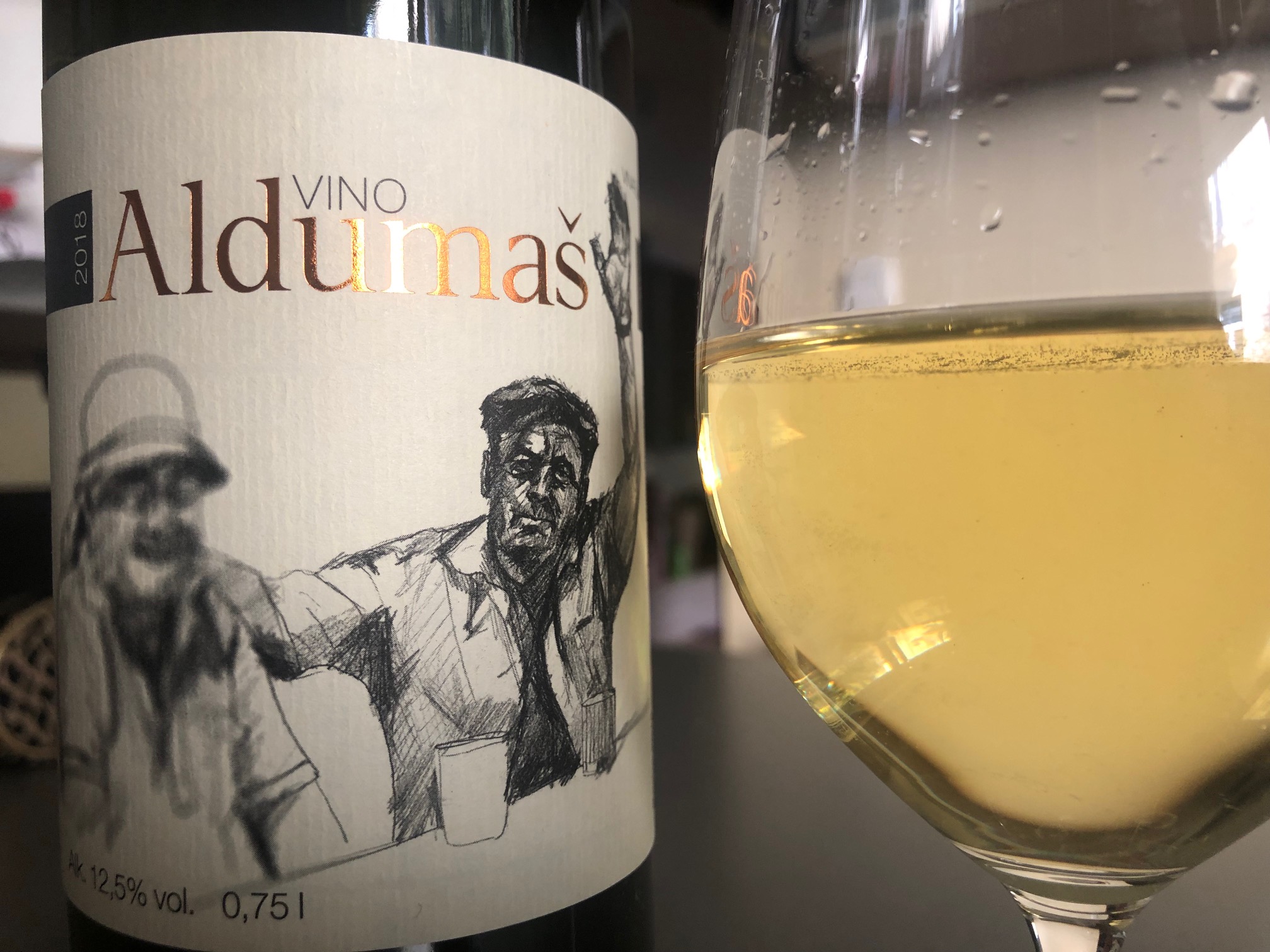
Grandfather Bata continued production, although on smaller holdings. In his world, wine belonged to everyday life, and aldumaš was an invitation to raise a toast whenever something worth celebrating occurred.
“Almost every day gave Grandpa a reason for a glass,” Ivana says. “He’d bought land or a tractor, a cow had calved or a sow had farrowed-there was always an excuse for an aldumaš. The greatest occasion was when the grandchildren came home.”
They named Aldumaš after him, an Italian Riesling made only in good years, in quantities of approximately nine hundred bottles. More important than its technical description is the outlook it preserves: a toast to a man who found celebration in newly bought land, a newborn animal and children coming home.
With Milan, the third generation, family winegrowing gradually expanded beyond household needs and local sales. An electrical and automation technician employed at Albus, he had grown up among the vines and never truly left them. The family used to say that, as a child, his grandmother kept him safe by tying a brick to his leg and putting him in a barrel. Perhaps it was decided even then that he would end up in wine sooner or later.
He planted his first vineyard when his daughter was born. Later, he expanded plot by plot, bringing thirty-seven small pieces of land together into a compact ten hectares. Under socialism, the aim was to sell grapes to large industrial operations rather than produce wine under the family name. Navip determined the varieties, supplied planting material and expert assistance, and reliably bought their Riesling and Župljanka. Some wine stayed at home, enough to uphold the old Banoštor wisdom that household stocks should never fall below two thousand litres.
In the early 1990s, the system collapsed almost overnight. In 1994, Milan arrived at Navip’s receiving bay with several tonnes of grapes and was told frankly that they could accept them but did not know whether they would ever pay.
He returned to Banoštor with a full trailer.
“He managed to sell perhaps a tonne, and we had to process the rest before it spoiled,” Ivana recalls. “Conditions were improvised, but the result was encouraging. We made better wine than Navip had made from our grapes.”
Circumstances had turned a family supplying raw material to a large operation into a winery. They had grapes, vessels and barrels; all they lacked was the option of pretending there was no choice. They built the cellar in 1997, expanded the vineyards every few years and registered the winery in 2009. On paper, that was the beginning. In reality, it was another stage of work that had shaped their lives for decades.
Meanwhile, Milan left the company where, following a troubled privatisation, he felt as though he were reporting for execution every morning. His wife Ksenija and their children supported his decision to devote himself fully to what he had previously done alongside his regular job.
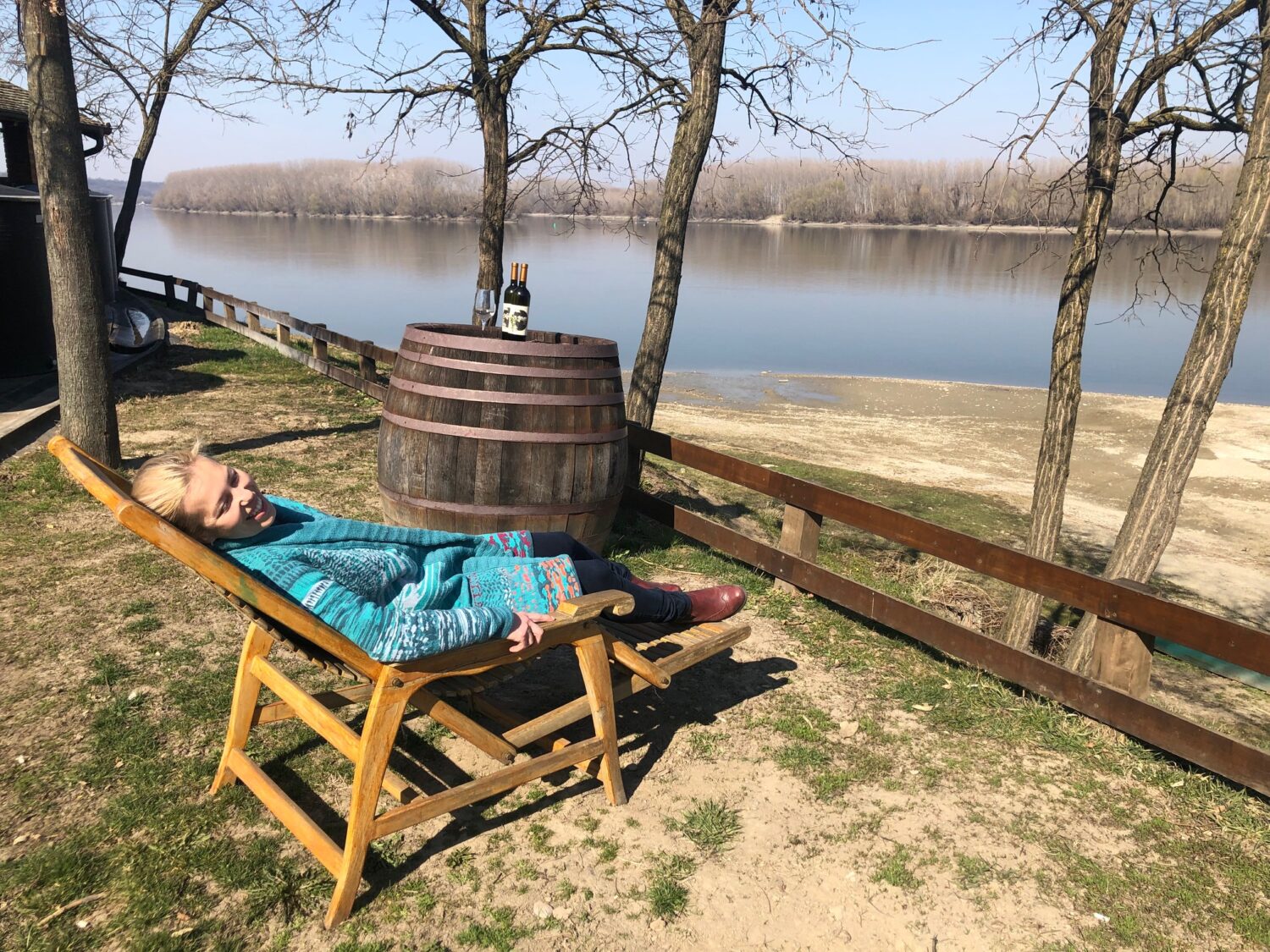
Ivana had just graduated from the Faculty of Technology and immediately took charge of her first independent harvest. Her route to that degree had begun much earlier, with a hoe in her hands.
“I got my first hoe at three. Grandma and Grandpa looked after me, so when they went to the vineyard, I went too. First I learned to hoe, then to draw wine from a barrel, and only much later did I taste it. I’m still learning how to drink it properly.”
Milenko became the principal vineyard manager and cellar master, and Ivana the winemaker, although responsibilities were never rigidly divided. Everyone knew almost everything, leaving their mother Ksenija to reconcile professional opinions and family temperaments.
“We understand each other without words,” Ivana would say, while Milan described their cooperation simply:
“My job is the vineyard, Ivana makes the wine, Milenko brings in the grapes, and every year we understand each other better.”
Their coordination showed at harvest, when they could process fifteen tonnes in a day, and in how they built the winery. In the Danube-side courtyard, they measured, cut, mixed mortar and decided where tanks and guests would go, working alongside the builders. They called the winery an open-air factory, convinced that wine was first created in the vineyard.
Banoštor provided the natural setting for that philosophy. Today, the village of only a few hundred inhabitants has twelve wineries and approximately two hundred hectares of vineyards. If all the grapes were processed and the wine divided among residents, each would receive around 1,100 litres annually. From Čelarevo across the Danube occasionally comes the smell of brewing beer, recalling the slogan “Either you are or you aren’t-a beer person.” Banoštor’s residents adapt it without difficulty.
“Either we are or we aren’t-wine people,” Milan would say.
For the Šijačkis, the Danube was the village’s main street, their backyard and a seaside they did not need to travel to, as well as a vineyard view and tasting-room backdrop. Holiday money generally went into new wire, barrels, vines or building work, but Ivana does not remember a deprived childhood.
“The Danube was our sea. All eleven of us in the family were perfectly happy on its banks. Neighbours helped clear the beach, and fathers went into the water to show us where the whirlpools were and where children could swim. I saw plenty of drownings, but I was never in real danger myself. The closest was when the ferry almost sank because they’d overloaded it with piglets.”
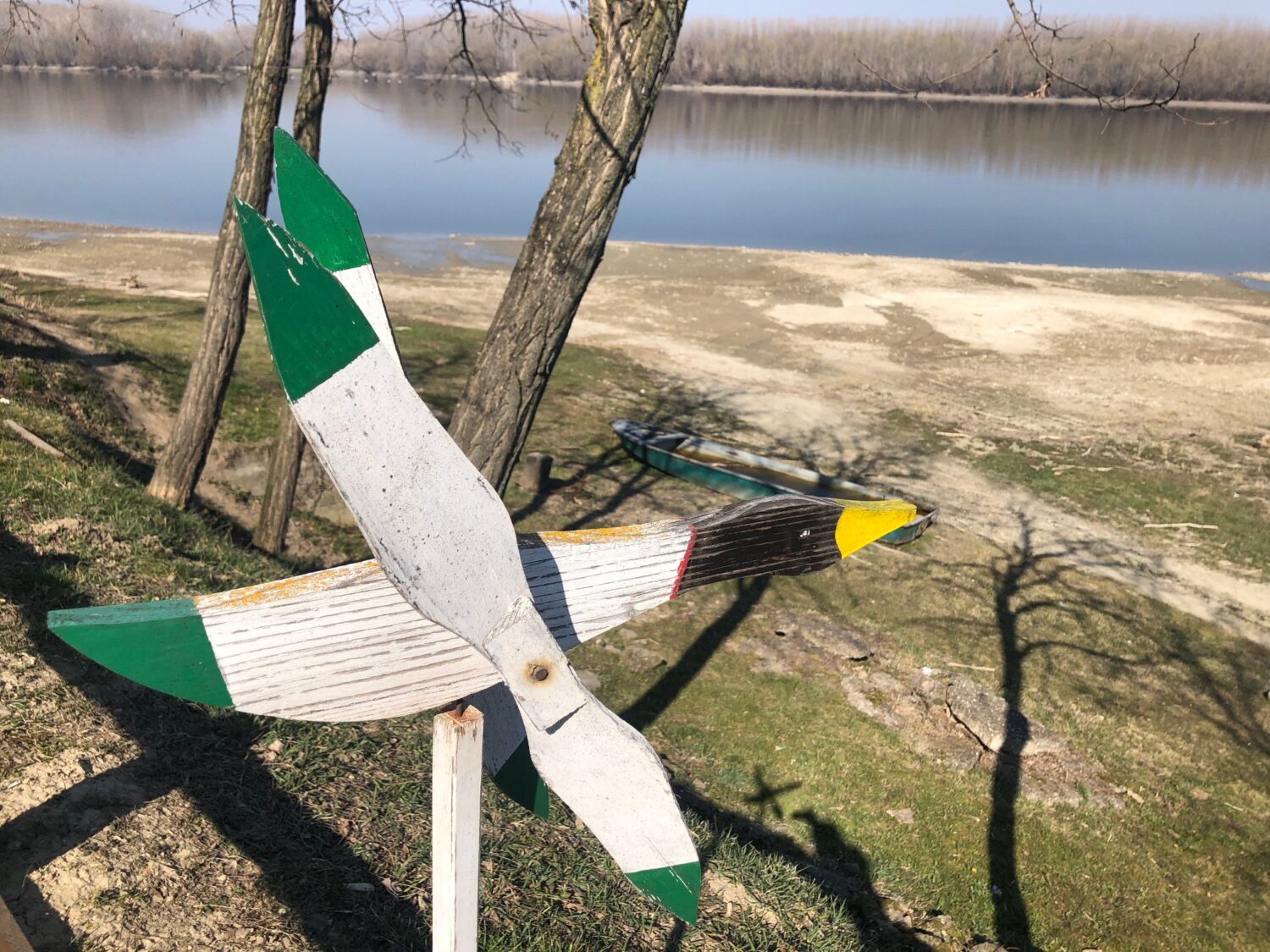
Her grandfather’s swans remained beside the Danube too. Around thirty years earlier, Bata had fed them maize every day until some thirty gathered. They settled along the bank and never left-another family story requiring no label to endure.
Milan loved showing an old map from the Matica Srpska archives. On one side of the Danube stood Roman Bononia; on the other, a large grey area marked with one word: barbarians.
“I particularly enjoy showing it to friends from Begeč,” he laughed. “Just to explain that we were already gentlemen in the third century.”
Banoštor’s residents will, naturally, concede that Begeč has excellent carrots and a riverside tavern rebuilt after every flood. Stubbornness is respected in those parts, whichever bank it appears on.
They took the same approach to the story that Emperor Probus brought vines to Fruška Gora.
“By the time they brought the vines, we’d already finished pruning in Banoštor.”
Milan’s humour was inseparable from his business sense. He liked the story of the celebrated innkeeper Branko Pavin, whose order could once make a winemaker’s entire season. A producer brought him a wine he claimed was drunk only by Tito. Branko replied:
“My dear Mita, Tito will never come to my tavern. Who’s going to drink that wine, then?”
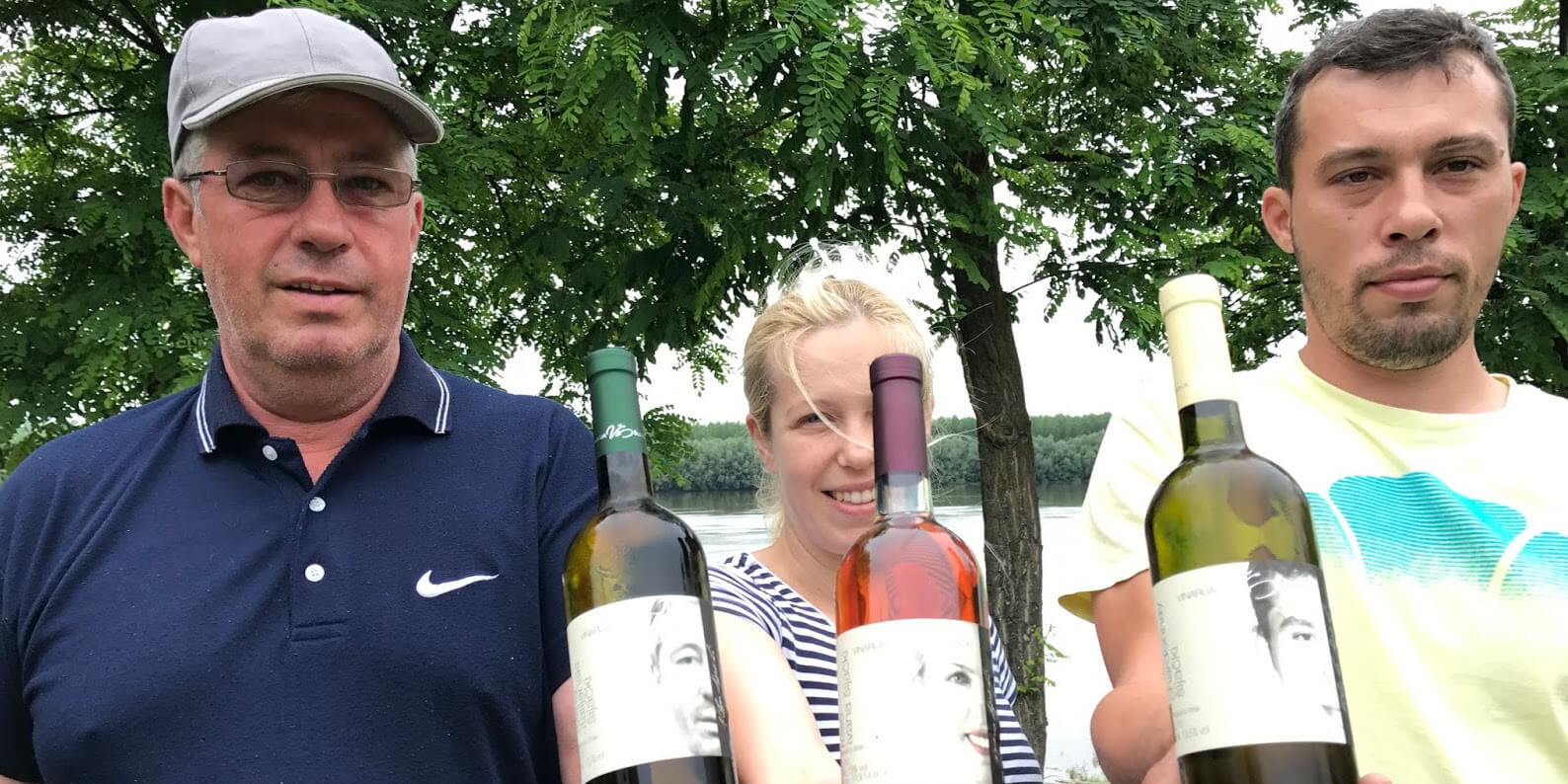
The Šijačkis understood the lesson early. They built a circle of real people who came to Banoštor, filled their car boots and returned every year, rather than imagining a mythical customer. Eventually, those customers’ children began coming, then their grandchildren. At this house, the audience is inherited along with the winemaking.
They never built the business around grand distribution ambitions. Their young, fresh wines often sell out at the cellar door before the next vintage has fully matured. Growth follows a simple rule: stretch your legs only as far as your blanket reaches.
“This is our livelihood. We have no other business to cover our mistakes. We can’t rush into big investments simply because we can sell the wine now.”
Modesty should not be mistaken for uncertainty. When described as “modest but exceptional”, Ivana replies that she is perfectly happy with that, particularly the exceptional part. Then she tells a joke about two men from Srem who, after gossiping about the entire village, conclude that only the two of them are any good.
“Well, leave yourself out of it,” one tells the other.
At fairs, Ivana carries the cases herself, arranges the bottles and talks to visitors for hours. With vineyards, cellar work, sales and three sons, she describes life as constant juggling rather than balance.
“People are surprised to see me, at 158 centimetres and fifty kilos, carrying wine and assembling a stand. But who can present it better than the person who created it?”
Winemaking gives her the rare freedom to shape both a wine’s flavour and its face, from the style in the glass to its label and promotion. A new label emerges only when a grape, vintage or family moment provides a reason. The essential imprint of Banoštor and their own hands must remain recognisable even to someone returning after ten years.
The hardest test of continuity came from the family rather than the vineyards or market. Milan fought illness for a long time. When he entered the Temerin wine fair in January 2019, conversations stopped and the winemakers greeted him with applause for the man rather than any position he held.
He died that May. Ivana and Milenko inherited vineyards, cellar and customers, but also daily work in a place where every row of vines held a memory. His final words became their rule:
“Work together and stand united.”
“We had to show we could manage without him. People told us: ‘Well done, children, you’ve succeeded. He would have been proud.’ Working where everything reminded us of him was difficult, but we couldn’t give in.”
They do not always agree, but apply their father’s message at every harvest. Milenko knows the vineyard, Ivana the wine, their mother calms them, and all can do almost any job. Their greatest strength is their unity.
At Šijački, even grief works. Their father’s death did not stop them, just as they would not let the fallen vineyard disappear before its final harvest. Yet the fullest expression of that devotion is a grape they began saving long before indigenous wines became fashionable.
Seduša, also known as Sremska Zelenika Crna, appeared in eighteenth- and nineteenth-century records and once grew across Fruška Gora and around Ilok. Large-scale vineyard development and the demands of major grape buyers pushed it out, and the Šijačkis too planted Župljanka and Italian Riesling in its place.
Milan nevertheless remembered the deep-blue grapes his parents had spoken about. He wondered whether an almost vanished variety could give Banoštor a wine identity impossible to transplant from elsewhere.
He found its salvation in an isolated old vineyard his grandfather had grafted for a friend. Around fifty vines had survived.
“Father tried to interest specialists, but they were focused on breeding new varieties then. Eventually, he’d had enough and decided to do it himself.”
From the first 250 vines, it took twelve years to establish just over half a hectare of Seduša. His persistence subsequently attracted Bojan Mandić from the Faculty of Agriculture in Novi Sad, who devoted his doctoral research to it. DNA analysis in Italy confirmed it as an indigenous variety. Five clones were registered, and Seduša entered the grapevine collection.
The road to wine included mistakes. The first vintage, in 2016, had earthy notes, but the following year brought clean fruit, freshness and a spicy finish. Professional interest grew, and the forgotten grape gradually became one of Banoštor’s most convincing expressions of identity.
“Grandma Ljubica didn’t drink wine, but she talked constantly about grapes and always said Slankamenka and Seduša were her favourites. Father did everything to bring it back to life, and we’re immensely proud of that.”
Milan did not live to see how far the story would travel. He left Ivana and Milenko a vineyard, an authenticated variety and a style of light, fruity wine making no attempt to imitate powerful international grapes. His mother Ljubica remained on the label, the woman whose memories had set everything in motion.
A special 2021 edition will bear the name Ljubica and a black label, marking the last harvest their grandmother lived to see. At Šijački, such things determine when a new wine appears, rather than a marketing calendar.
Ivana speaks with such emotion that visitors regularly tell her their love of the work is visible in every movement. To her, the observation means more than a compliment. In a family that lost its father, rescued a nearly extinct grape and raised a vineyard after a storm, emotion is a fact of production rather than decoration for a story.
“I talk about wine as I feel it, with plenty of emotion. And when necessary, I defend it like a proper sharp-tongued woman of Srem.”
Yet memories do not fill a cellar or pay bills. The fourth generation had to prove it possessed knowledge, discipline and the ability to adapt the winery to its own time, as well as family loyalty.
Ivana imagines its future at a table from which, at her explicit insistence, the Danube must be visible. The old covered terrace gradually became the family living room, requiring conversion back into a tasting space before every visit.
“The old terrace was perfectly good for us. All that mattered was seeing the Danube. But our whole life took place there, and constantly preparing it for guests began to wear me out.”
The solution arrived as her husband’s tenth-wedding-anniversary gift: a new tasting room with a professional kitchen and around forty seats, subject to one non-negotiable condition-the Danube must be visible from every table and every chair.
Visitors come to meet the people on the labels as well as taste wine. That is why the Šijačkis do not chase exports or extensive distribution: quantities are limited, domestic demand is strong, and their best advertisement is a guest returning for another vintage.
The consistency Ivana describes does not mean resisting change. The family moved from selling grapes to Navip to its own winery, from Bononia to the Šijački surname, from Italian Riesling to its first Grašac and from an old terrace to a modern tasting room. They preserved their identity precisely because they understand what may change and what must remain.
Milan left his children vineyards and the instruction to work together; Ljubica left the memory of Seduša; Grandfather Bata left aldumaš as a reason to raise a glass. Ivana and Milenko are leaving their children six handprints on Neoplanta, a restored grape variety and a winery in which the fifth generation is already emerging.
The 2023 storm merely gave physical form to something they had already experienced: a support they thought would last disappeared again, something fallen had to be raised, and loss had to become something worth remembering.
Supercell Grašac is therefore more than a vineyard’s final harvest. It embodies the family’s entire method: when posts break, call people; when vines fall, lift them; when a vineyard can no longer continue, give it a harvest with which to say goodbye.
Its label says that only family and wine can give even more after a storm. Alongside that sentence stands Milan’s final message: “Work together and stand united.”
In Banoštor, they call it neither a business model nor a market identity.
They call it family.