He was not quite fifteen when he left Veliki Radinci on 28 August 1972. He was wearing rubber peasant shoes and red shorts, he says, and carrying 136,000 dinars in his pocket.
His father did not want him to go. He had bought a tractor and hoped his son would remain on the land where generations of Miloševićs had lived and worked. Milorad, however, had found a scholarship advertisement for a school in Kranj and decided to leave.
“I told him: ‘Dad, let me go, so you won’t regret it tomorrow if I never make anything of my life!’”
Before leaving, he earned three months’ wages. He left two-thirds with his family and took the rest with him. At 7.10 in the morning, he boarded a train to Kranj, checked into a student residence and enrolled at the Iskra vocational school.
He was training to become an electrician.
His father nevertheless kept a thread tying him to the land. The following year, he persuaded him to buy a small plot back home, believing that land was always worth owning. At sixteen, Milorad became the owner of his first parcel, never imagining that, decades later, he would begin assembling a new estate and a new life around that little piece of ground.
Weekdays brought lessons and practical training. Weekends brought a problem his Slovenian classmates did not face. They went home, the residence kitchen closed, and the children who had come from the south were left to fend for themselves.
“We čefuri-as they called us southerners-went around digging trenches to earn a few dinars and have something to eat. When I look back over my life and compare this homeland with that one, I sometimes think my stepmother gave me more than my mother.”
Slovenia gave him nothing without work, but it offered the opportunity he had sought when he begged his father to let him leave. After secondary school, he enrolled first at the Faculty of Political Science and then at the Faculty of Law. At the same time, he worked on youth volunteer projects and organised accommodation for more than 1,500 people. He revealed an organisational talent that would see him spend almost his entire career managing people, hotels and companies.
The Slovenian Executive Council nominated him to manage the Centinera hotel complex in Banjole, near Pula. There he met Bogdan Javor, a man who had helped establish dairies throughout Yugoslavia and whom Milorad remembers as one of his most important teachers.
“He took a liking to me and took me under his wing as though I were his son.”
Javor did not immediately install him in the director’s office. He sent him to the laundry, the restaurant and behind the bar.
“He told me: ‘You’ll work every job in the hotel, and nobody must know you’re the director.’”
Milorad learned the hotel from the ground up, through jobs whose mistakes are quickly noticed and whose workers are easily forgotten. When he introduced rosters naming the employees responsible for cleaning the toilets, his colleagues laughed. Yet the complex prepared four to five thousand meals a day and had an enormous beach, so hygiene was hardly a minor matter.
Before long, a recommendation began circulating among guests:
“Let’s go to the Slovenian’s place. It’s clean there!”
He spent 34 years in management positions in tourism and business. After Centinera, he became director of Planika, the major Slovenian footwear manufacturer with a network of 196 shops across the former Yugoslavia. When the country broke apart, he managed to bring them back under the company’s control. In the late 1990s, Slovenia sent him to Serbia to pave the way for Slovenian businesses before full diplomatic relations had been established.
“They sent me to break the ice.”
After 2000, he began visiting his home region more often, but was not yet seriously considering a return. His family and his life remained in Slovenia, while Veliki Radinci was the village he had left and occasionally revisited, rather than somewhere he might begin again.
An important chapter in his life was the Črni Les hotel near Maribor, which he bought unfinished in 1997. He completed and developed it, bringing it to a standard that allowed it to host Lazio’s footballers before a European match against Maribor.
While running the hotel, he met Stanko Čurin from Kog, one of the pioneers of private winemaking in Slovenia and the former Yugoslavia. Long before Milorad had dreamed of owning a winery, Čurin was making bottled wines that reached as far as the Japanese imperial court.
“I loved sitting with him and listening to him talk about wine. I took my guests to his place for tastings.”
It was Milorad’s first substantial encounter with the world of wine, although wine had yet to become a plan for his own life. Nor did he later become a passionate taster who spent evenings comparing vintages and vineyard sites. He freely admits that he drinks little wine. He is more attracted by people, land, history and the possibility of building something around wine that no individual bottle can carry alone.
Had he known then what he would do in retirement, he says, he would have listened to Čurin much more closely and visited more Slovenian cellars.
His life changed direction in 2006, when doctors diagnosed him with colon cancer. After decades of running hotels and companies, he had to consider seriously, for the first time, the cost of a life in which he almost never slowed down.
“Thirty-four years in management had taken their toll on my health. I realised it was time to settle down and devote more time to my family.”
His father died two years later. Shortly before his death, they had talked about land and farming back home. The father who had tried to keep him there in 1972 by buying a tractor was no longer trying to persuade his son to stay. But that conversation about the land remained in Milorad’s thoughts long enough to draw him back eventually.
In 2010, he invested the proceeds from selling the Črni Les hotel in two hundred hectares of arable land in Srem. He bought new machinery and began growing wheat, maize and sugar beet. After decades in commerce and hospitality, he had returned to what he had escaped as a boy.
He did not last two years.
“I found it monotonous. You sow, you harvest, then you sow again. Farming is always struggling for breath, and I realised I would need far more than two hundred hectares to make it seriously profitable.”
The man who had left at fifteen to avoid a life beside a tractor had returned almost forty years later with two hundred hectares and a whole fleet of agricultural machinery. It might have become a belated fulfilment of his father’s wish.
He met Jelenko Slatinac, a former journalist with Politika, at the recreational airfield in Veliki Radinci. Milorad was investing there in a flying school and an agricultural fair modelled on the one in Komenda, Slovenia. Meeting Jelenko led him to the story of Emperor Probus.
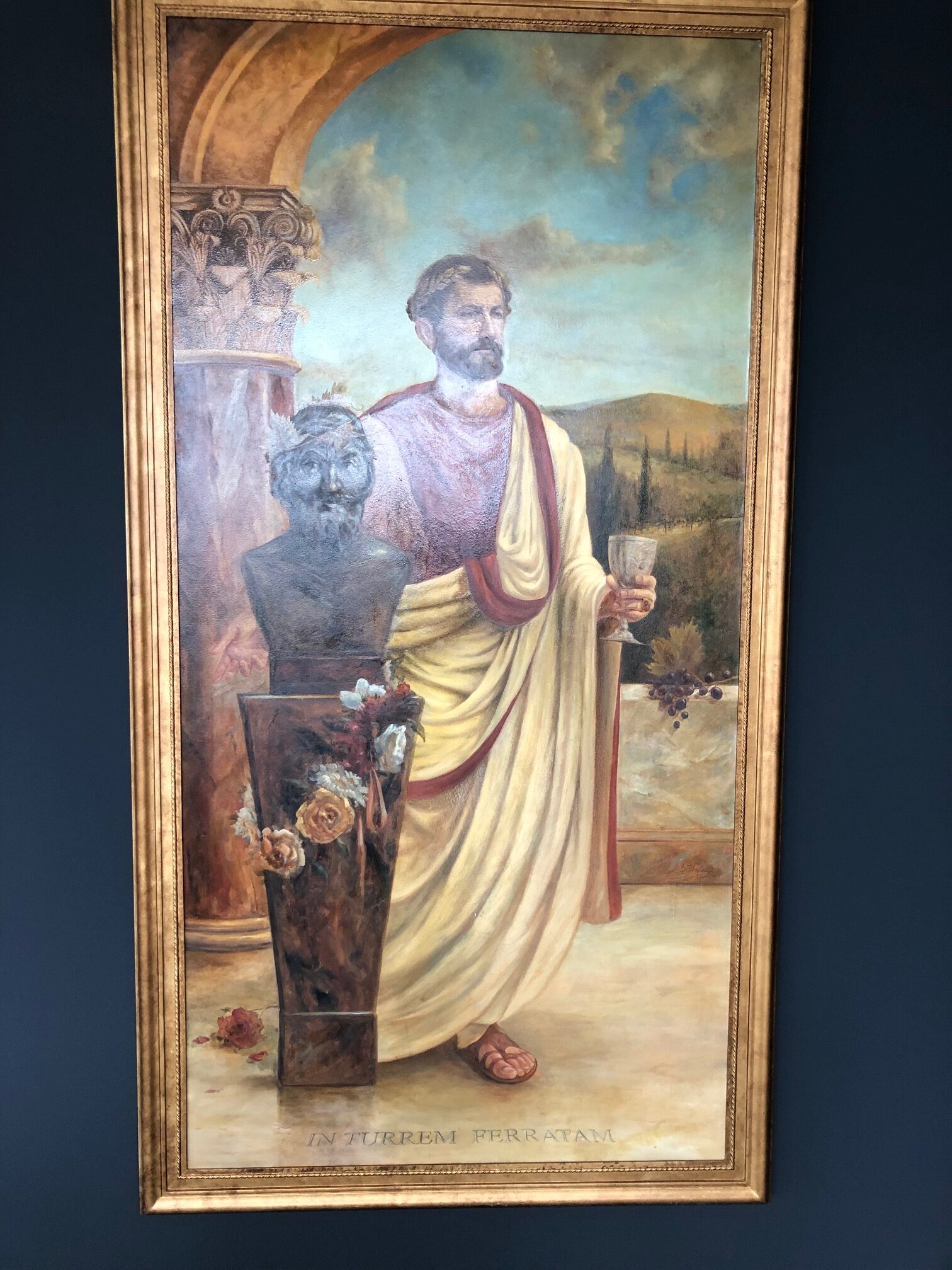
They talked about the history of Fruška Gora, Sirmium and the Roman emperor Marcus Aurelius Probus, born in the third century in the area of present-day Sremska Mitrovica. According to the tradition on which Milorad would later base the entire project, Probus restored viticulture on Fruška Gora after restrictions on planting vines outside Italy were lifted.
Until then, Milorad had known almost nothing about him.
“Jelenko suggested I plant a small vineyard on Šuljamačka Glavica and put up a plaque honouring Emperor Probus. I said: ‘All right, let’s do it.’”
They cleared and ploughed the land and planted the first vines on 19 August 2012. They chose the date believing it to be Probus’s birthday. On the plaque erected in the vineyard, they recorded that the first vine on Fruška Gora had been planted on that very spot in the year 280.
Between four hundred and five hundred people came to the celebration. They cooked goulash, music played, and the vineyard that was supposed to remain a symbolic gesture acquired its first sequel as soon as Milorad bought the neighbouring plot.
Then another.
“I don’t believe in coincidences. I believe in people. Wherever I worked, I made friendships, and new things later grew out of those encounters. That’s how it was with Jelenko.”
One plot became a jigsaw of 127 pieces of land. That was how many owners he had to track down to assemble approximately 35 hectares on Šuljamačka Glavica.
He sold the two hundred hectares of arable land and the new machinery, reducing his entire agricultural operation to around forty hectares.
By spring 2022, sixteen hectares of vineyards were in full production, with another three hectares of young vines coming along. He planted Traminer, Riesling, Sauvignon Blanc, Chardonnay, Merlot and Cabernet Sauvignon, followed by Tamjanika, Prokupac and, naturally, Probus.
The vineyards lie on Šuljamačka Glavica, on sites rising to approximately 296 metres above sea level. When they dug the foundations for the future visitor facility in the middle of the vineyards, seashells emerged from the soil. Milorad’s grandchildren ran about filling bags with them and calling out:
“Grandad, look! It’s just like being at the seaside!”
Coins and other small Roman objects were also found, which he intended to display in a space dedicated to Probus. He envisaged the building as a temple to wine, set into the hillside on two levels, with a façade recalling a Roman palace and a large central hall beneath a dome open to the sky.
In the winery’s official name, Probus Vineyards CCLXXX, the Roman numerals signify the year 280. Milorad was trying to give the whole project a historical reason for existing, extending his ambition beyond establishing another winery.
“Like Probus, I spent a long time living far from home. Then I remembered where I came from and wanted to bring something good and beautiful back while I still could.”
The emperor gave him the story, and Slovenia gave him the approach with which he would try to realise it. But before the modern winery, large tasting rooms and wine temple, there were only young vines, a garage and a woman whom Milorad would later credit with keeping him from abandoning the whole undertaking.
He made his first vintages on a garage scale with Branislava Turčinović, a winemaker and close friend everyone called Brana. Milorad had no background in wine, knew almost nothing about production and still drank much less than one might expect of a future winery owner.
Brana gave him the confidence to continue.
“She deserves the greatest credit for the fact that I’m doing this at all today.”
They made some wines as early as the 2015 vintage, but did not release them. Those remained in the cellar as a record of a time when they were still learning what the vineyards could give them. The 2017 vintage was the first later presented to customers.
Brana did not live to see the opening of the large winery or the recognition that soon followed. She died in 2019, and Milorad reserved a lasting place for her in the winery, the vineyards and the family’s memory.
After the first garage experiments, he brought in Uroš Bolčina from Slovenia as a consultant, an experienced winemaker associated with Vinska Klet Vipava 1894 and Santomas. Once again, Milorad drew on knowledge from the country where he had spent most of his life, but he did not rush the vineyard to justify his substantial investment.
First, he waited for the vines.
“I didn’t build a winery first and plant a vineyard afterwards. You need at least five years for quality grapes. I like to say a vine is like a child: it only brings home its first proper school marks at ten.”
For decades, he had managed organisations whose results were measured in turnover, guest numbers, shops and employees. In the vineyard, he had to accept for the first time that a management decision could not accelerate time. A vine was neither Planika nor a hotel. It did not respond to orders, deadlines or business plans.
“It gives you inspiration. You watch it grow and live alongside it.”
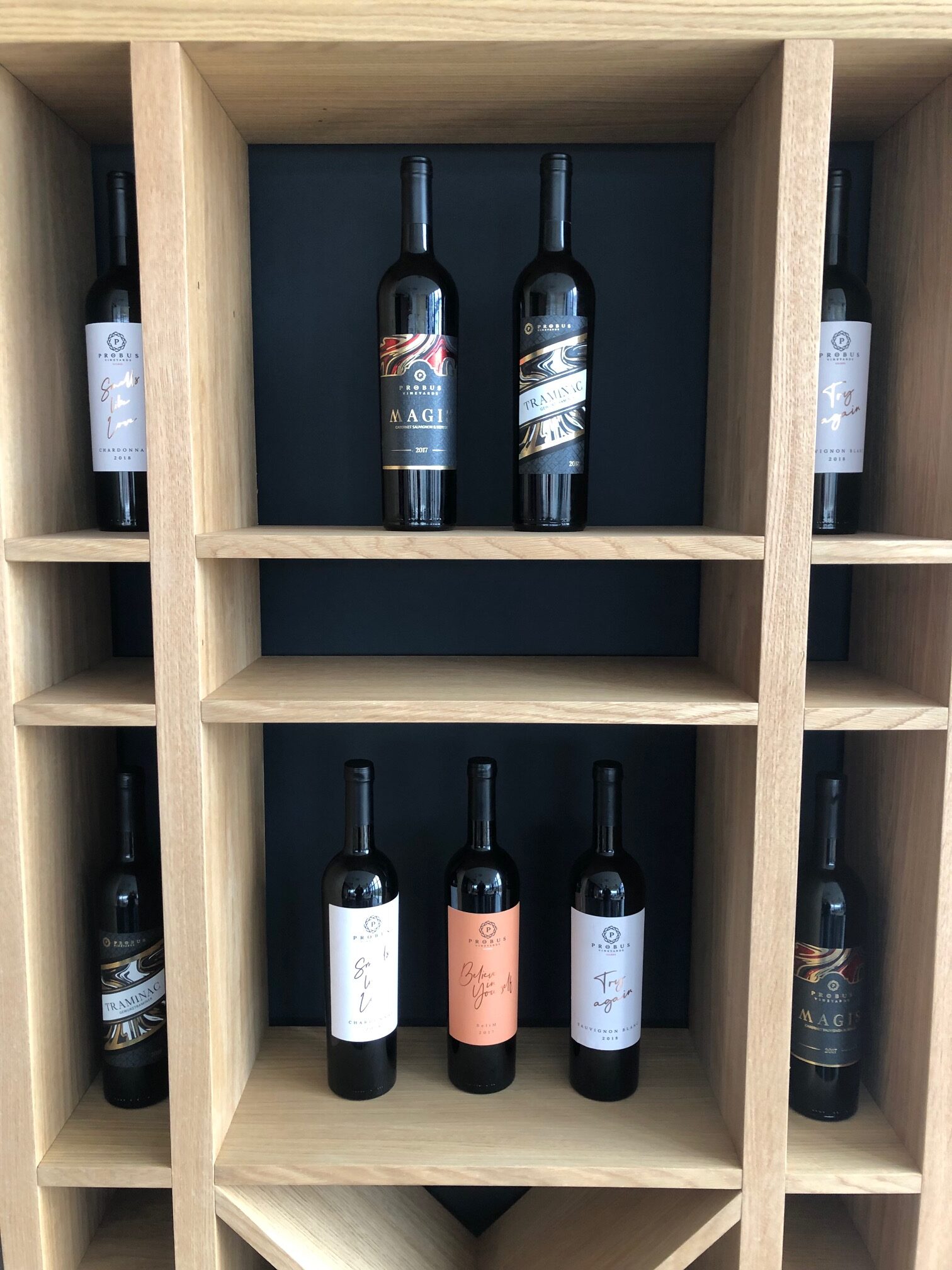
As the vineyards matured, his younger daughter Maja joined the project. She helped shape the winery’s market identity, and messages began appearing on the labels: Try Again, Smells Like Love, Impossible and Believe in Yourself. To Milorad, these meant more than ordinary marketing slogans.
“They’re values I live by. Anything you do with even a little love has to succeed.”
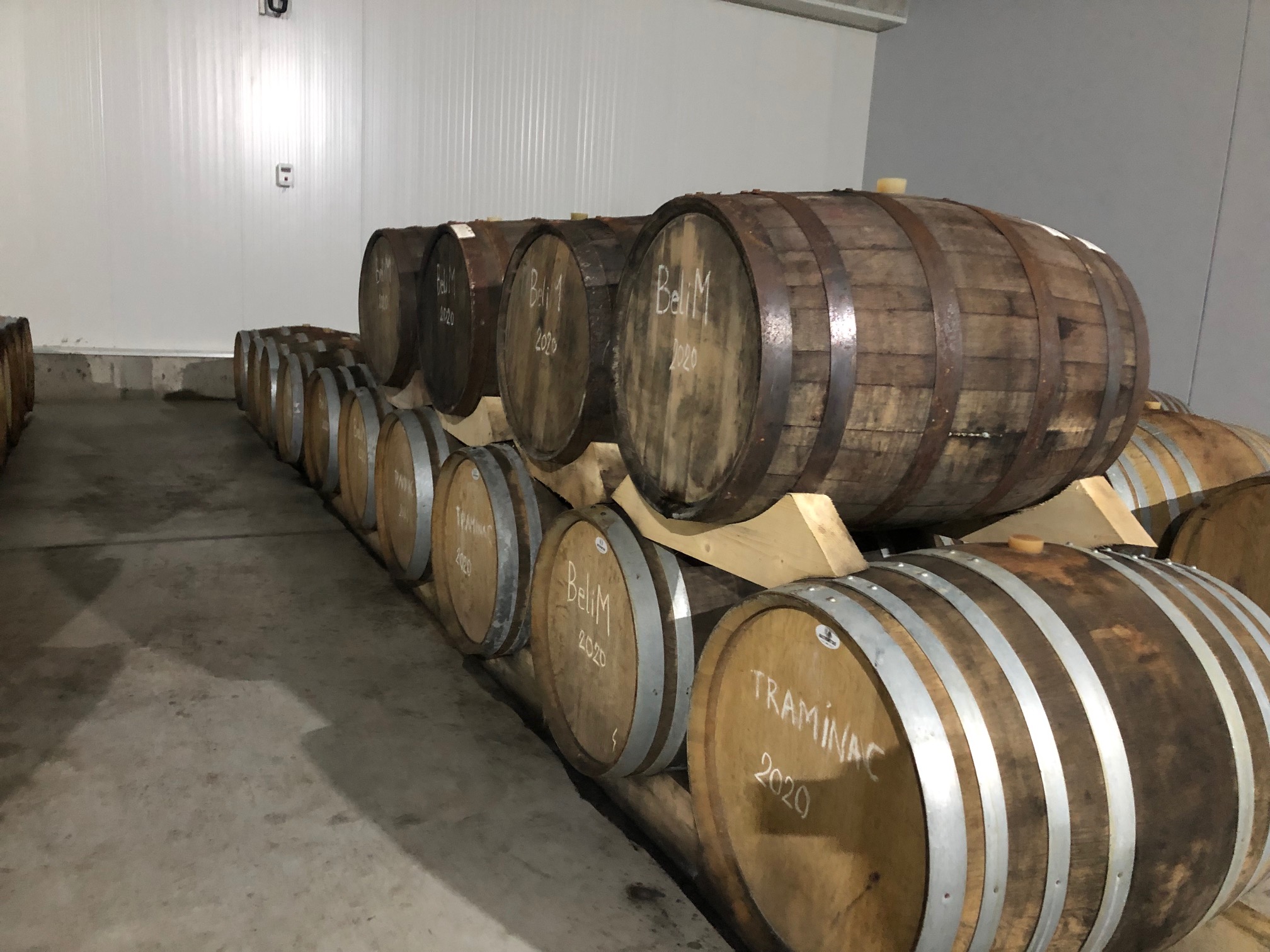
Believe in Yourself appeared on the label of BeliM, a skin-macerated blend of sixty per cent Riesling and forty per cent Traminer. The name came from Veliki Radinci long before Milorad knew he would own a vineyard, rather than from a marketing agency.
“The boy who used to run through these streets was called Beli. And the M stands for Milošević. So BeliM is me-Milorad Beli Milošević.”
The first commercial wines, from the 2017 vintage, were unveiled in 2019 at the Wine Salon in Belgrade’s Hyatt hotel. A more substantial market launch followed in early 2020, just a month before the pandemic closed restaurants, hotels, fairs and almost every channel through which a new winery could introduce itself to customers.
BeliM nevertheless found its way to a professional audience. In 2021, it was named Serbia’s best orange wine, and at a competition in Barcelona it was selected among the world’s fifty best orange wines. Other wines began receiving recognition from Decanter, Asia Wine Trophy, Berlin Wine Trophy and the Balkans International Wine Competition.
Milorad was preparing six pallets of BeliM for California, sending trial samples to India and had arranged the export of sixty thousand bottles to Russia. The war in Ukraine and the inability to receive payment through banks brought that deal to a halt.
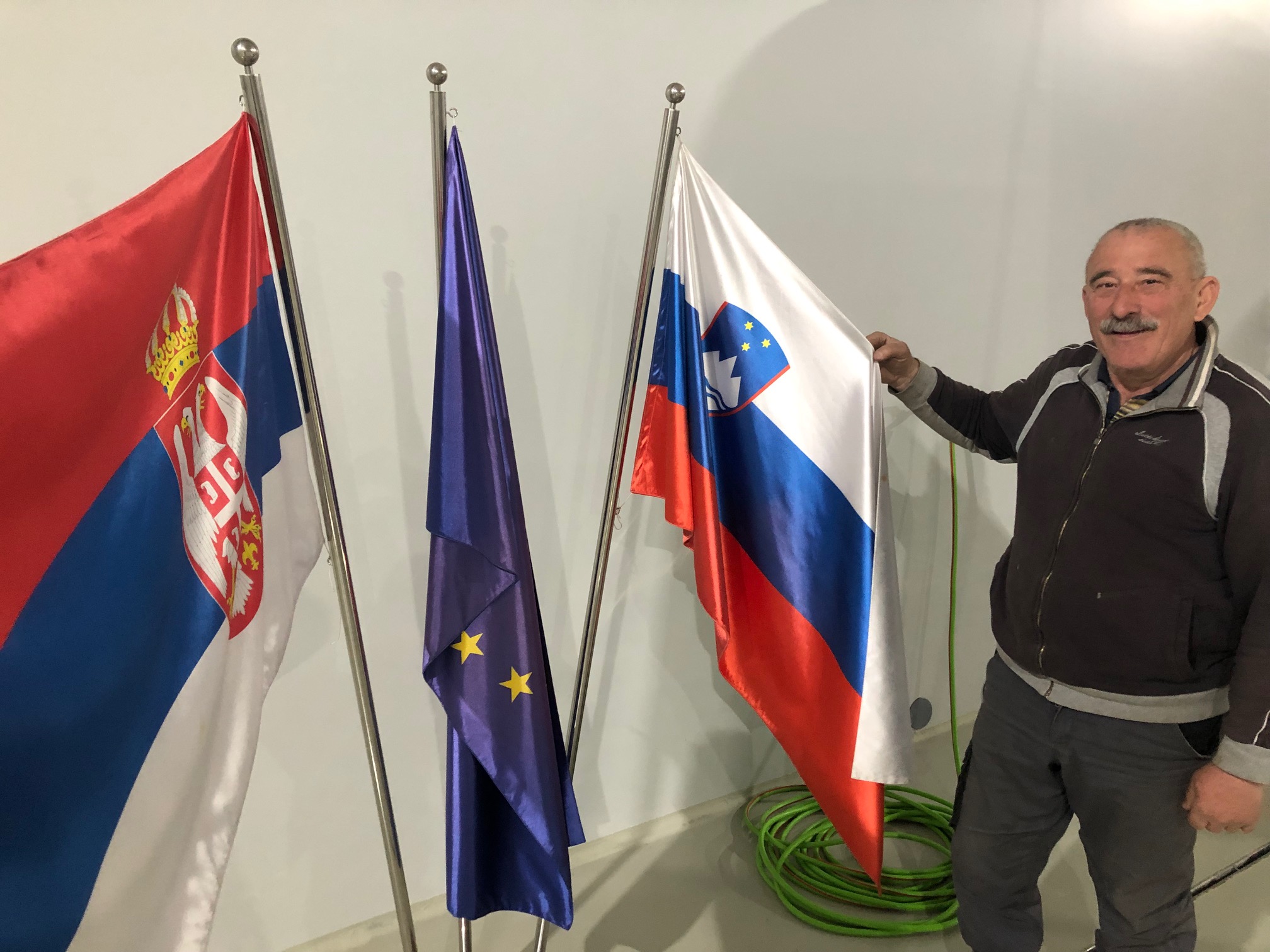
The winery finally opened officially in summer 2021. Slovenian ambassador Damjan Bergant inaugurated it before distinguished guests and the flags of the country where Milorad was born, the country where he became a businessman, and the European Union.
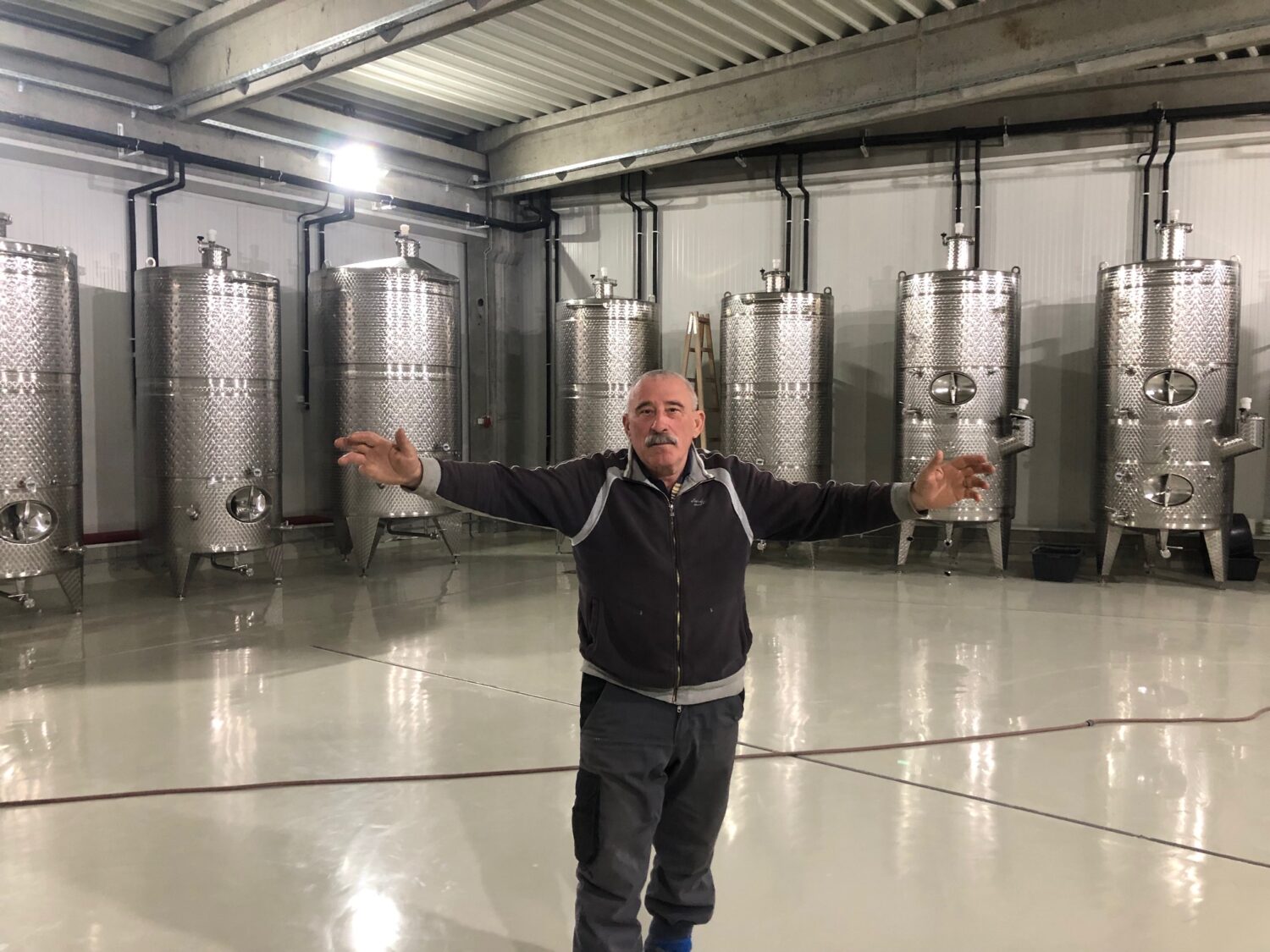
He had brought to Veliki Radinci a modern winery covering approximately 2,100 square metres, designed for a capacity of up to a million litres. Annual production at the time was just over seventy thousand litres. The building was far larger than he then needed, but Milorad had never built only for the following year.
According to him, ambassadors from eleven European Union countries attended the opening.
Nobody came from Sremska Mitrovica.
Milorad did not regard the absence as a mere oversight in protocol. He saw it as confirmation of a feeling that had followed him since his return: in Slovenia he had been an immigrant from the south, in Istria a Serb, and in his native village a man returning after decades with different habits, plans and flags.
“Perhaps I’m more of a foreigner here than I ever was in Slovenia or Istria. Everything I’ve brought to this region was made possible there. Slovenia was where I fulfilled my potential as a person. They gave me a chance-those Slovenians and Istrians of mine.”
His family remained in Slovenia. Maja had become involved in developing the winery, but after starting her own family she could spend less and less time in Serbia. Milorad remained in Veliki Radinci, alone with the vineyard, the winery and projects whose scale he had determined himself.
“Here, you have to cook, do the washing and work all the time. Everything has its price. Nothing ties me to this place except emotion, and every penny I’ve invested has been because of those feelings and a vision of what could be done to make life better for this whole part of Srem.”
Soon after the first wine awards, rumours emerged that he wanted to sell the winery. When asked directly in 2022 whether he was considering a sale, he replied with a quotation that raised more questions than it answered:
“Do you remember Tito’s statement: ‘Let us behave as though there will be peace for a hundred years, but prepare as though there will be war tomorrow.’ Have I answered your question?”
He had not.
He admitted that certain aspects of the wine business had disappointed him, above all the lack of cooperation. He had not expected winegrowers, restaurateurs, food producers and tourism businesses to rally around his winery overnight, but he had brought from Slovenia the understanding that no estate could become a destination entirely on its own.
“Fruška Gora is blessed with everything needed for wine tourism, but nothing will come of it until people connect. We also need producers of kulen, fruit preserves and ajvar, walking trails, riding horses, accommodation and a wine hotel. A guest staying for three days wants plenty to see and taste.”
A group of Slovenian cyclists wanted to spend three days riding around Fruška Gora, eating kulen and drinking local wines. They asked where they could stay.
He had nowhere to send them.
“Milorad Milošević means nothing on his own, and neither does any other local winemaker, however big. Perhaps the largest can make a profit, but that still isn’t wine tourism. The foundation is cooperation.”
That was why he began building a facility of approximately 1,200 square metres in the middle of the vineyards, envisaged as a restaurant, tasting room and temple dedicated to Probus. He did not want wine production there because of the wastewater it would generate. The visitor facilities were intended to offer views, food, history and a reason to stay on Šuljamačka Glavica for longer than a single tasting.
Milorad knew what such a system could look like. He had spent decades working in hospitality and tourism and helping connect Slovenian businesses and destinations. Yet the knowledge that had been an advantage elsewhere once again made him a stranger in his own village.
“The hardest thing is to be a prophet in your own village.”
Still, there was one place where all his disappointments lost their force. Whenever he went among the vines he had first planted and watched grow for years, selling no longer seemed such a simple decision. “I feel real happiness in the vineyard. It’s difficult to describe. I sit there and tell myself: ‘No, I’m not letting anyone have this!’”