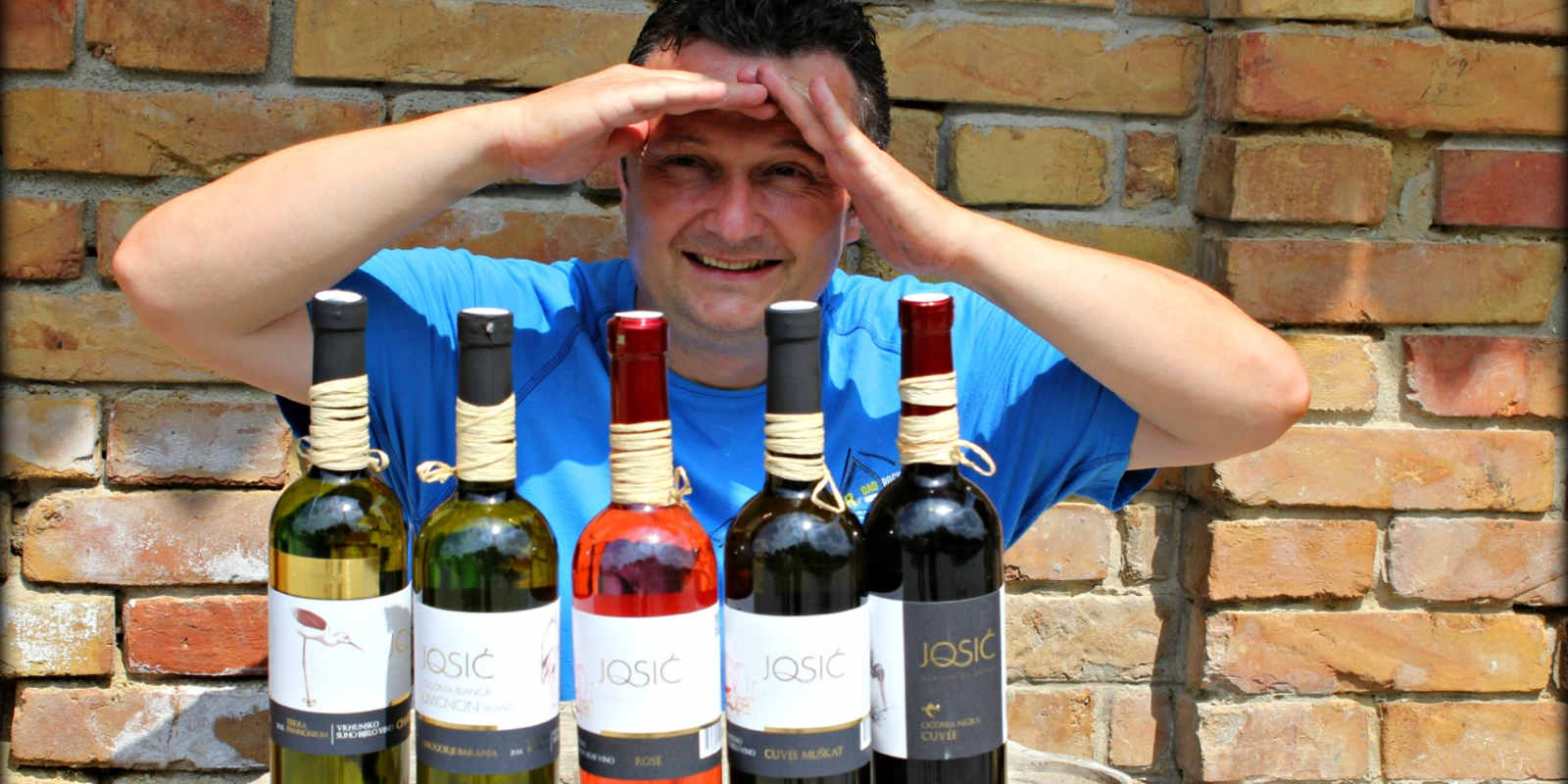
Most winemakers would gladly erase 2014 from their cellar records. Miodrag Mija Radovanović turned it into a label.
The rain fell so relentlessly that boots sank into mud, berries swelled with water and sugar levels slipped day after day. The harvest became a struggle to make any wine at all. After thirty years in vineyards and cellars, Mija knew there was no point waiting for a miracle.
He made a young, fresh wine from Chardonnay and Riesling.
He preserved what the year had nevertheless left him: freshness, acidity and lightness. The wine fermented at very low temperatures and was bottled after two months in stainless steel. It was off-dry, light and easy to drink, with lively acidity and a modest 11.5 per cent alcohol.
“Rainy Wine isn’t a wine of the vineyard. It’s a wine of technology. You need knowledge for that. And nerves.”
All it needed was a name. He did not search for one in solemn explanations of a difficult harvest. He simply called it Kišno Vino–Rainy Wine.
Predrag Koraksić Corax drew the label. In the cartoon, Mija stands with a glass in his hand while grapes fall from the cloud above him instead of raindrops.
“Perhaps the label looks a little narcissistic, but once you see it, everything is clear. Corax told me it had to be provocative and have a little humour. He was right. It’s a wine I would never want to make again, but one I had to make. The year was so bad that it made sense to surrender to emotion, and the cartoon best captured all the misery.”
At the Wine Salon in Belgrade’s Hyatt hotel, the label became something of a hit, while Rainy Wine surprised visitors with its freshness and balance. Mija had made a wine that suited the year, rather than a great wine in defiance of it.
“When you’ve worked with wine for a long time, you know you can make wine every year. The grapes are what they are, and I am what I am.”
In 2014, he had to know when to pick, how to manage fermentation, how quickly to cool the wine and when to abandon what he had originally intended to make.
That decision depended as much on a craft he had begun learning thirty years earlier, at Navip, as it did on equipment.
In 1984, after specialising in wine technology at the Faculty of Agriculture in Zemun, Mija returned to his native Krnjevo and joined the large wine combine. He had a degree, but not yet what he would later call his craft.
“You can read every book and learn everything written about winemaking, but you’ll only learn to make wine through practice. The craft is enormously important.”
Navip’s cellar was no place for a winemaker to linger over a single barrel. Between five and seven million kilograms of grapes were processed annually. During harvest, as much as three hundred thousand kilograms could pass through the facility in a day.
Work was divided for efficiency. Vineyard teams cultivated hundreds of hectares of cooperative vineyards, winemakers received wagonloads of grapes, and the cellar had to operate without interruption. There was little time to follow an individual tank, and the equipment did not allow complete control of the process.
“You could intervene a little, but mostly things followed their natural course. There wasn’t time to give every tank individual attention.”
Into this operation came a Japanese winemaker who had studied in Germany. He arrived in Krnjevo to make Sauvignon Blanc and Riesling for the Mitsubishi corporation, destined for the Japanese market. A separate area was set aside for him, along with around fifty thousand litres of wine and a worker dedicated exclusively to it.
He brought his own yeasts and enzymes and supervised every stage of production. Mija constantly saw him up on the tanks, measuring, checking and following developments.
“I watched how much attention he gave that wine. We were handling up to three hundred thousand kilograms of grapes a day, doing as much as we could, while he was beside his fifty thousand litres the whole time.”
The difference could be tasted. Navip managed to make excellent wines even at those enormous volumes, but could not avoid fluctuations. The Japanese winemaker’s wines maintained a consistently high standard from year to year.
His grapes were no better. He had more time for them.
Mija realised that their grapes could produce serious wine if given sufficient attention. For someone employed by a large organisation, that was an uncomfortable discovery.
“All the best wine we made went for export. There were no wines of exceptional quality on the domestic market. I thought: if there’s no good wine I can buy, why not make some at home for my friends, the way the Japanese fellow did?”
Beside the family house, he had a quarter of a hectare of Riesling. He planted another hectare and a half, expecting to drink some of the wine with friends and offer the surplus to restaurants to cover his costs.
He was not counting on a profit. He still had a secure job at Navip, the investment was modest, and a few thousand litres in Krnjevo hardly seemed difficult to drink.
“A household here would normally get through a thousand litres a year. You gave some away and drank some yourself. We could easily take care of two or three thousand litres in a year.”
In 1990, he registered his own cellar, one of the first private wineries of Serbia’s new wine era. The country was entering political and economic uncertainty, markets were closing, sanctions were approaching, and equipment previously offered at fairs by Slovenian manufacturers was becoming increasingly inaccessible.
Mija was not particularly frightened. The cellar was meant to be a hobby, rather than the family’s livelihood. If he sold nothing, he would have plenty of wine for himself and his friends.
To begin with, he had a manual crusher, an old basket press bought from other producers, two stainless-steel tanks made by local craftsmen, and his grandfather’s barrels and vats.
He had learned to improvise at Navip, but now he no longer had to think about hundreds of thousands of kilograms of grapes at once. He filled two two-thousand-litre tanks with Riesling and could give them the attention the Japanese winemaker had devoted to his separate corner of the cellar.
He bottled his first wines in 1991. They had labels, but his name did not appear on the front. The wine was sold at Belgrade’s Knez and Koliba restaurants, so each label carried the name of the restaurant it was intended for. Only on the back, in small print, did it say that the wine was made by agricultural producer Mija Radovanović.
For its first two years, his cellar existed almost anonymously. Yet the wine had customers, and Mija had confirmation that what he made at home could find an audience.
In 1992, he appeared under his own name for the first time. On the label, he placed the image that would remain on the bottles for decades: a young woman carrying a basket of flowers.
“The idea was to bring together three beautiful things: wine, a woman and flowers. Pleasure, beauty and fragrance.”
The range expanded much more slowly than the cellar. Chardonnay followed Riesling in 1996, and Cabernet Sauvignon arrived two years later. For a long time, those three wines accounted for almost the entire Radovanović range.
At first, Mija had few opportunities to discover great international wines, nor did he try to copy a famous winery. Travel was difficult, imports were limited and bottles reaching him from France were rare. He regularly visited a wine shop on Makedonska Street in Belgrade because it occasionally stocked something unavailable elsewhere.
He knew the wines of the former Yugoslavia well: Dingač and Postup, Herzegovinian Blatina, Žilavka from Mostar, Graševina from Kutjevo and Pošip from Korčula. On the domestic market, the difference between a litre bottle and a standard wine bottle often came down to packaging.
“People believed wine in a 750-millilitre bottle was better than wine in a litre bottle, although it was usually the same wine inside. The smaller bottle had a cork, while the litre bottle had a metal crown cap. The irony was that after a year, the wine in the litre bottle was often better because the corks were poor.”
Wine did not carry today’s social glamour. Newspapers generally wrote about it when the harvest began. Wine was a food product, and a winemaker was the person who made it, rather than a public figure.
Podrum Radovanović grew year after year, without a grand plan or a single decisive turning point.
“I didn’t wake up one morning and announce I was going to build a big winery. We worked from year to year, little by little. We reinvested everything we earned and somehow arrived here almost without noticing.”
It took ten years to reach fifty or sixty thousand bottles. Over the following decade, production tripled, then continued growing. After 2000, foreign visitors began returning to Belgrade, the economy recovered, fairs opened up, promotional events were organised and wine culture developed.
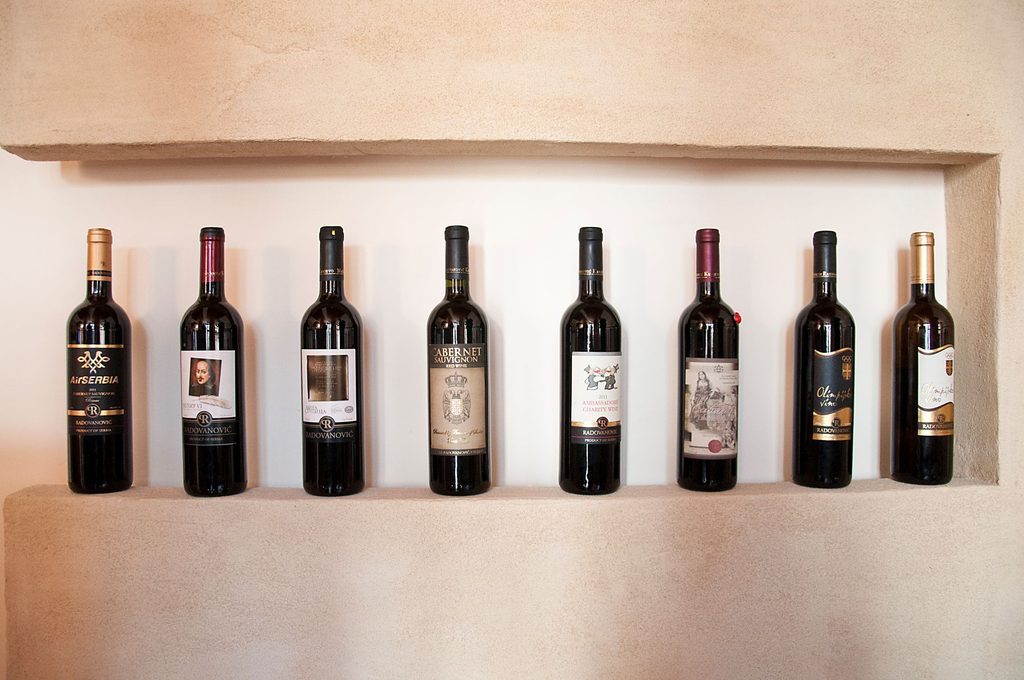
By 2019, the winery had a capacity of approximately 750,000 litres, more than forty employees and almost six hundred barrels. Mija estimated annual production at between four hundred thousand and four hundred and fifty thousand litres.
The cellar had long outgrown the adjective “small”, leaving simply Podrum Radovanović from its former name. Mija defended the old description as not entirely inaccurate: the cellar might no longer be small, but its owner was-at least in stature. He began filling bag-in-box wine in 2010 at Metro’s request. What he envisaged as a sideline soon grew to approximately 150,000 litres a year.
“When you work the way we do, there’s a standard you won’t go below. What isn’t suitable for a premium bottle goes into bag-in-box instead. That allows you to maintain the quality of your best wines.”
In 2014, much of the wine unable to reach the standard of the better labels went into bag-in-box and lower categories, while some Chardonnay and Riesling became Rainy Wine. A poor vintage was never concealed behind a better label.
Mija took a similar approach to Cabernet Sauvignon. In good years, he could make considerably more Reserve than he would immediately sell, building stocks for periods when the grapes failed to reach the required standard. If the harvest was not good enough, there was simply no Reserve release.
“When September is cold, Cabernet won’t reach full ripeness. That’s why you need stocks. In a poor year, you don’t make wine in a particular category simply to fill a gap in the market.”
The vineyard is far less forgiving of poor decisions than the cellar, where technology can still correct certain things. At Navip, Mija had learned how easily the link could be lost between a vineyard and the person who would turn its grapes into wine.
“You can’t be a good winemaker unless you’re also a good winegrower.”
Around forty people worked fifty hectares of vineyards, and Mija visited the plantings at least twice daily. To move through the rows more quickly, he bought three quad bikes. His father, then 93, also toured the vineyard on one.
“In the afternoon, I go through the rows, look around and talk to people. You need to do it this way, you need to do it that way… Ideas combined with experience give young people an opportunity to learn alongside me.”
Serious viticulture, he said, is tested over years. You have to observe how different clones and rootstocks behave on the same site, the sugar levels their grapes achieve, how they respond to weather and what wines they produce. Only after several vintages can you judge whether a decision was right.
When it was not, Mija showed little mercy towards his own work. He grubbed up eight-tenths of a hectare of Prokupac in its fifth year. The planting material proved poor: the vines had oversized leaves and bunches, and the grapes could not accumulate enough sugar.
“What use are grapes like that to me? When you see where you’ve gone wrong, you replace them and take another path.”
He had abandoned a vineyard incapable of producing the wine he wanted, rather than Prokupac itself. He began looking for a better clone, a more suitable rootstock and a new site. He had no interest in joining the crowd simply because a domestic variety had become desirable, or in making a dark, high-alcohol Prokupac to follow fashion.
He was equally stubborn with his Cabernet Sauvignon, to which he added no Merlot.
At the same time, he installed a series of small fermenters in the cellar. Instead of combining grapes from large areas in vessels holding twenty or thirty thousand litres, he could follow individual hectares, sites and rows separately.
The Japanese winemaker at Navip had once had fifty thousand litres to which he could give his full attention. Decades later, Mija had built a cellar in which he could return to the same principle.
In Mija’s experience, a good vineyard emerges through years of observation and comparison, and a willingness to pull out what has gone wrong. He was therefore cautious when terroir was invoked too casually in discussions of Serbian wine. His point was that there were not yet enough old vineyards, experience and comparable vintages to identify it reliably.
“Terroir is a much more complicated story than soil and climate. It includes the land, the vineyard, production methods, the person making the wine and tradition. I can recognise climate and how a wine has been made, but I must admit I don’t know how to recognise terroir in our wines. Nobody here has yet isolated all those parameters and applied them to a particular area. For now, we mostly talk about it.”
“Serbian wines will have to wait a while longer before they acquire a recognisable imprint of terroir.”
Waiting, however, did not mean standing still. For years, Mija separated individual plots, followed them in small fermenters and kept their wines to see how they developed.
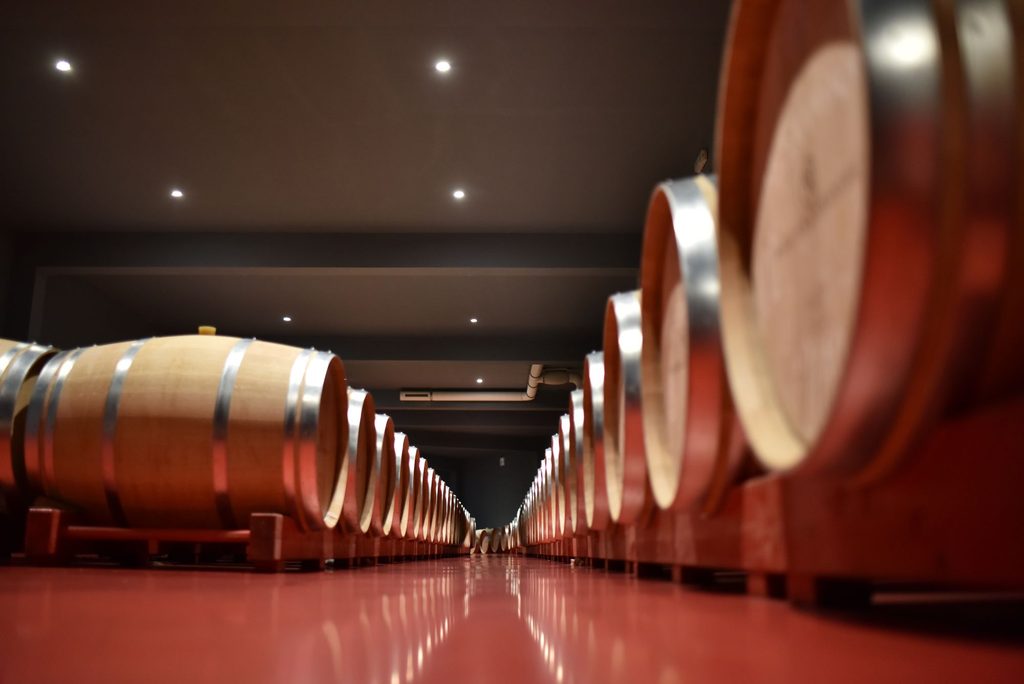
He began building the most ambitious extension of that idea in 2023. On the edge of Krnjevo, beside cellars already extending into the hillside, he laid the foundations for a wine Archive covering approximately four hundred square metres. Storage cages on three levels were intended to hold more than a hundred thousand bottles.
“Our previous collections were small, so they were quickly drunk. Then I had to search for my own wines and pay a lot of money to buy them back. I hope that won’t happen any more.”
The first wines intended for the Archive came from the 2017 vintage, scheduled for release only in 2025. He had already set aside thousands of bottles of Chardonnay, Reserve and Grand Reserve from various vintages. He expected the Archive gradually to fill with seventy to eighty thousand bottles.
It would allow him to revisit and compare his own vintages. One day, they might reveal how the vineyards and winery had developed.
As he called it, a bank of the past for the future.
Alongside that bank of the past, Mija also had his own pension fund.
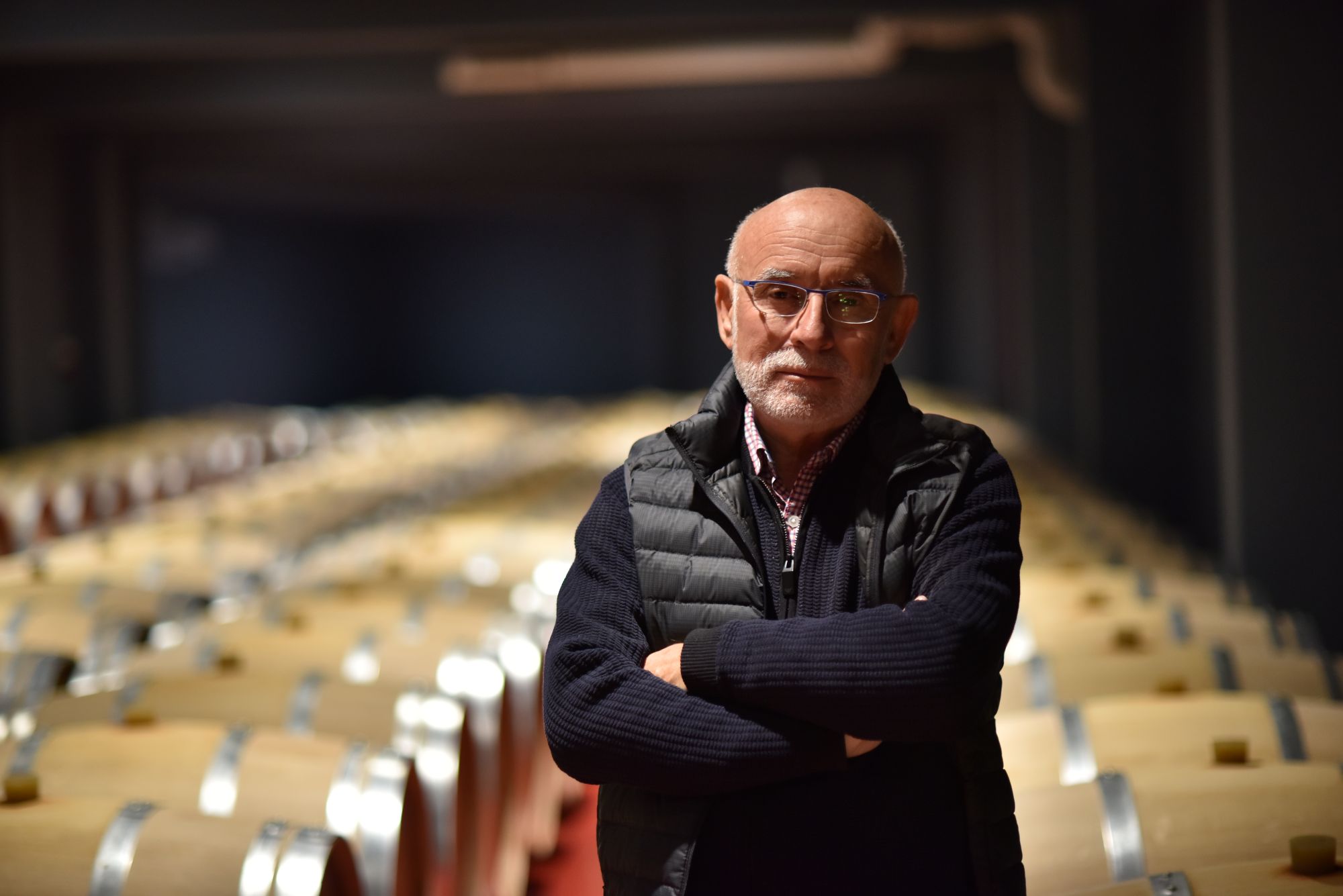
The barrel cellar was filled with wooden vessels of different sizes and long rows of barrels. Mija began experimenting more seriously with oak in 2008, and around a decade later approximately 240,000 litres of wine were ageing in it.
“To me, a barrique is more than wood or a simple container.”
For years, he worked with the family-owned cooperage Nadalie, using its barrels for Selekcija and Reserve. He also tried Serbian oak, which he considered potentially very good, although individual batches were not yet sufficiently consistent. He reserved five specially made barrels for experiments with grapes from one or two selected vineyards.
Oak brought possibilities, but also responsibilities stainless steel did not impose. Barrels needed tending, checking and regular topping up. Six hundred barriques could not be left to themselves.
“Stainless steel lasts a lifetime. A wooden barrel needs maintenance, attention, care and topping up. All six hundred barrels need topping up every week. That’s why we have so many people.”
Thirty-two small fermenters stood in the upper part of the cellar, allowing him to follow the finest sections of the vineyards. It was among those vessels that he imagined himself one day, after stepping back from the rest of the winery.
“One day I’ll go up there and leave everything else to my daughter and the others. There are four winemakers at the winery. More than enough.”
He began building the large barrel cellar at sixty. As soon as he finished it, he wanted to extend it. Space for finished wines was running short, so five years later he found himself facing another building project.
“Every year I work and work, hoping that one day I’ll say: enough, I don’t need anything else. I have a Reserve cellar with around two hundred thousand litres of wine in oak, eight hundred thousand litres of capacity downstairs, and now I’m building the Archive. I really did dream of all this-just not quite so much.”
For a full twenty-five years, he worked with the same architect, a man who drew everything in pencil and never used a computer. The pace suited Mija, who could spend days considering whether a single rivet on a railing sat exactly as it should.
The home cellar that began in 1990 with a manual crusher was no longer either domestic or small. Yet among hundreds of thousands of litres, Mija was still looking for time for one plot, one fermenter and one barrel.
He simply did not yet know when he would stop building.
As the winery grew, Mija did not want the prices of its finest wines to rise for prestige alone.
“Wines should be accessible, and the person who buys them should respect them.”
Cabernet Sauvignon Reserve 2012 won a Grand Gold in Bergamo and was, by Mija’s own admission, outrageously expensive for the Serbian market. Yet he had no intention of making the exception a rule. He believed Serbian wines could not all cost twenty euros simply because their producers wanted the market to value them that highly.
Nor did he chase exports. Around ten per cent of production went abroad, but Mija did not want to spend every year travelling to fairs in search of a buyer who might place one large order and then disappear. Consistent domestic sales mattered more.
He regularly attended ProWein in Düsseldorf as a visitor.
“I have my own crowd, and we go to enjoy ourselves without any pressure. I won’t chase fairs just to sell everything in a single year when an opportunity comes along.”
Although he was not chasing the world, his wines nevertheless reached America, even Alaska. The owners of a restaurant there-an American man and a woman from Jagodina-visited him in Krnjevo, and the entire Radovanović range found its way to their guests.
“When you don’t chase something, it comes on its own.”
Mija eventually connected wine with literature too. In 2014, he established the Podrum Radovanović Award for lifetime achievement and contribution to wine culture.
The prize was neither a cheque nor a sculpture, but a 225-litre barrique: approximately three hundred bottles of wine that the recipient could collect gradually. The first laureate, in 2014, was Ljubomir Simović, followed by Dušan Kovačević, Dragan Velikić, Vida Ognjenović, Radovan Beli Marković, Duško Novaković and Milisav Savić. The eighth recipient, in 2025, was Mihajlo Pantić.
The Archive was intended to keep the finest vintages in Krnjevo. The literary award did the opposite: it opened a barrel and sent the wine into the world.
He knew the winery could no longer depend entirely on his daily rounds through the cellar and vineyards. His daughter was finding her own place in wine, and other winemakers worked alongside him. His experience had to be passed to people who would one day make decisions without him.
Yet he never stopped visiting the vineyards. Esca was killing old vines and, increasingly, young ones too, with no reliable cure. It could be confronted only through prevention, constant observation and the timely removal of affected vines.
When asked whether he would finally retire, Mija replied:
“There’s still a great deal to do. Retirement is out of the question while there’s still something bad that can be turned into something good.”
When the skies opened over Krnjevo, Mija did not pretend the year was better than it was. He made a young, fresh, light wine and put a cloud raining grapes on the label. With Rainy Wine, he signed his name to a vintage others would rather forget.
Mija Radovanović might not have been able to turn every poor year into a great one. But he knew how to make it his own.