His son-in-law incinerated a pork knuckle, and Covid almost did the same to him. Somewhere between the crematorium and the ventilator lies the story of a surgeon who says no patient ever died on his operating table-and a winemaker who insists wine should be allowed to emerge rather than be made.
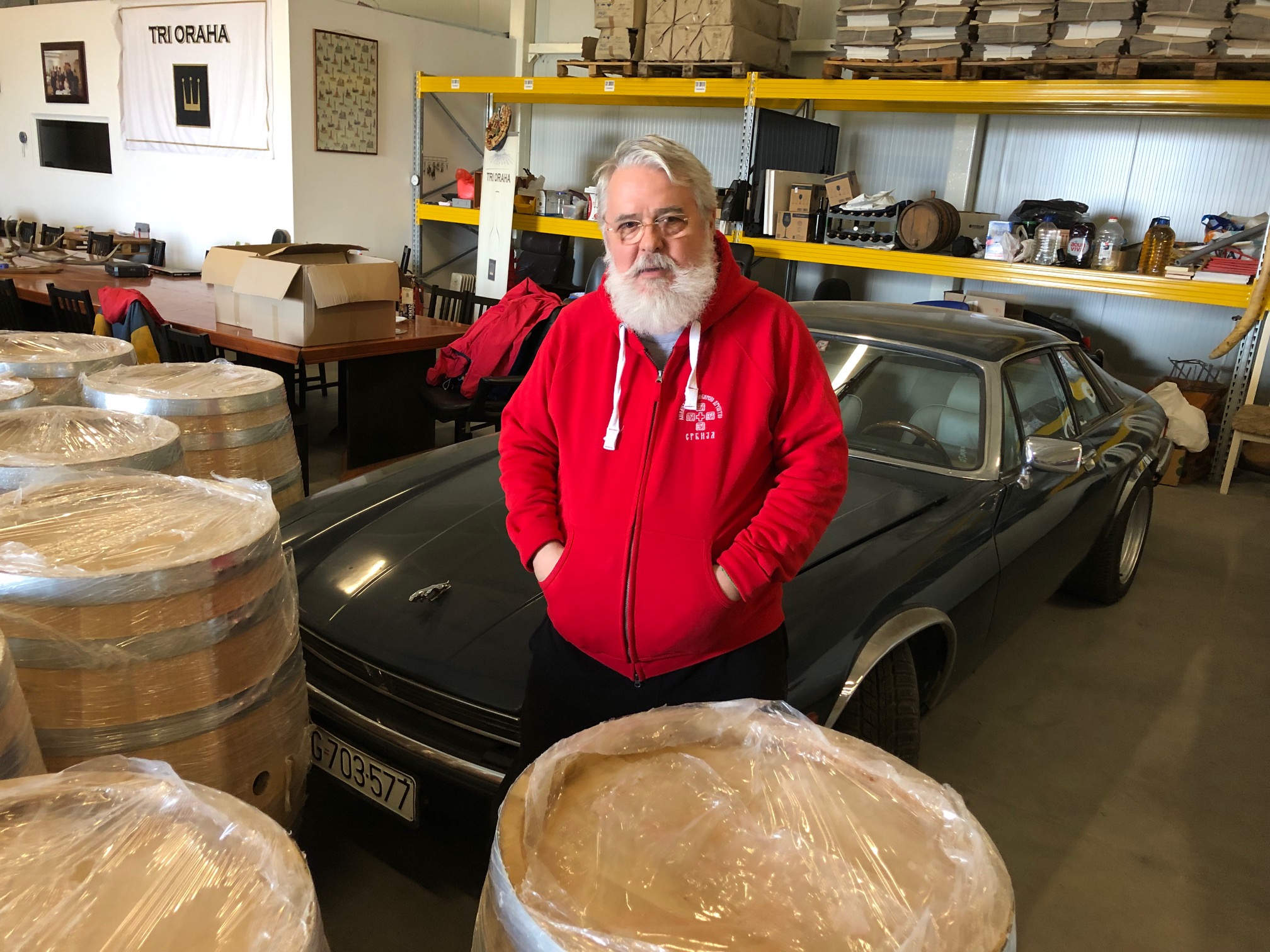
I had to wait for the Doctor-as everyone calls Radisav Šćepanović, and as I have addressed him since our first meeting-at his Tri Oraha winery on the outskirts of Veliko Gradište. While he finished sleeping and drove over in his miniature Opel Agila, his daughter Ana Vraneš settled me beside the fireplace and tried to joke about the family catastrophe that had unfolded beneath the baking bell the previous evening.
Her husband Miroslav had decided to prepare a celebratory dinner, but everything ended up in the rubbish.
“The first attempt is always a disaster… apparently that applies to cooking under a baking bell too,” Ana said, consoling him.
Naturally, the Doctor spotted the culinary failure the moment he arrived. He had not even removed his jacket before the lesson began.
“A crematorium is nothing compared with what they’ve done! That would never happen to me because my work taught me always to think at least one step ahead. You let things take their course, but intervene when it matters. No compromises. If you want the best hot rakija, I’ll make it. That’s Šumadija tea. When I make pizza for the children, do you know what it’s like? The best in the world! But for something to be good, you have to think about it. I always think ahead.”
He glanced towards the garage, as though another carbonised piece of meat might be hiding there, and continued almost solemnly:
“This wouldn’t have burned with me. Not a chance! Pork knuckle and cabbage! Go and look at the crematorium they’ve created. A disgrace. You have to think ahead about the consequences of your actions. If I hadn’t thought that way, do you know how many people would have died? And no patient ever died on my operating table. Not one. Zero.”
His son-in-law Miroslav, a Red Star supporter, gave as good as he got. The Doctor, a passionate Partizan fan, immediately returned fire with an insult drawn from their clubs’ rivalry.
“Oh, ignore him-he’s Red Star through and through! But there you are… even that can creep into your life.”
When Radisav Šćepanović starts talking, subjects collide rather than follow one another. A burned pork knuckle leads to surgery, surgery to God, God to a barrel, and from the barrel you emerge beside a 1975 Jaguar, Cabernet Sauvignon in hand. It all follows an internal logic best left uninterrupted by questions. You need only let the Doctor speak.
“I performed my first operation in 1975, while still a medical student. I hadn’t graduated, and I was already removing an appendix. I’d begun volunteering at the clinic two years earlier, so it seemed completely normal. I was in my third year when Petar was born, already working in surgery, doing shifts and practising aortic transplants on dogs. I did so much operating that major operations later became routine.”
Then came one of the incisions characteristic of both his conversation and his temperament: swift, precise and without excess tissue.
“The craft of surgery teaches you to think ahead because someone’s life depends on it. Surgeons sometimes imagine they’re greater than God, but you’re not the one who decides whether someone lives. You simply do what God has given you to do.”
He paused just long enough to leave the operating theatre and return to the baking bell.
“And they built the fire up too much and shoved it into an insane temperature!”
His great themes all begin with small events. That day, the unpredictability of life began with a ruined dinner, but soon reached the moment when the Doctor’s own life was almost destroyed.
“These things are extraordinary. Covid arrived as something we all underestimated. Little was known, much was assumed, and everything we predicted turned out wrong. Its defining feature was unpredictability. And I caught it too, through my own fault. After four or five days, I tested positive; two or three days later, I was on a ventilator. I’d been in hospital about ten minutes before they connected me. Three weeks on the ventilator, then another forty-five days in hospital. Everything seemed to go wrong: heart, lungs, kidney failure, dialysis, sepsis…”
His voice changed. The man who had been theatrically delivering a funeral oration for a pork knuckle minutes earlier lowered his eyes towards the table.
“But it changed everything. A complete reversal in my head. I discovered that time isn’t linear. That you can travel through time.”
Radisav Šćepanović knows how unusual that sounds. He also knows the person opposite him may think a prolonged medically induced coma is not the most reliable vantage point from which to draw conclusions about the universe. Yet whether anyone believes him matters little. His experience is a personal confirmation received where he could no longer control even his own body, rather than a scientific theory he is trying to prove.
“We assume time moves in one direction, that there’s no going back, that it simply passes. But if time is linear, there must be a beginning, and then you ask what came before it. If there’s an end, you ask what comes afterwards. But time moves within some kind of sphere. That makes sense of travelling through time and being able to get off again at a station you’ve already visited. I felt that on the ventilator. You see that time doesn’t pass; it stands still and lasts like eternity.”
He says he rarely discusses it. Most people, he believes, simply have no interest in eternity.
“We live as though everything must happen quickly, immediately, now. You have to react in a second, so who cares about the curvature of time? I haven’t spoken about it much, only to a few people I thought might understand and be interested. I dwell on it less now, but the feeling remains. It brought me a certain calm about what comes next. Life is only a passing stage of a particular state of consciousness.”
“Had you thought about these things before Covid?”
“Yes, but I never reached a conclusion. Eternal life and the kingdom of heaven can never be entirely clear to us. People believe, but cannot explain. Perhaps it’s better that they can’t.”
“Were you a believer before the ventilator?”
“Yes. But everything acquired another dimension then. More precisely, I received confirmation.”
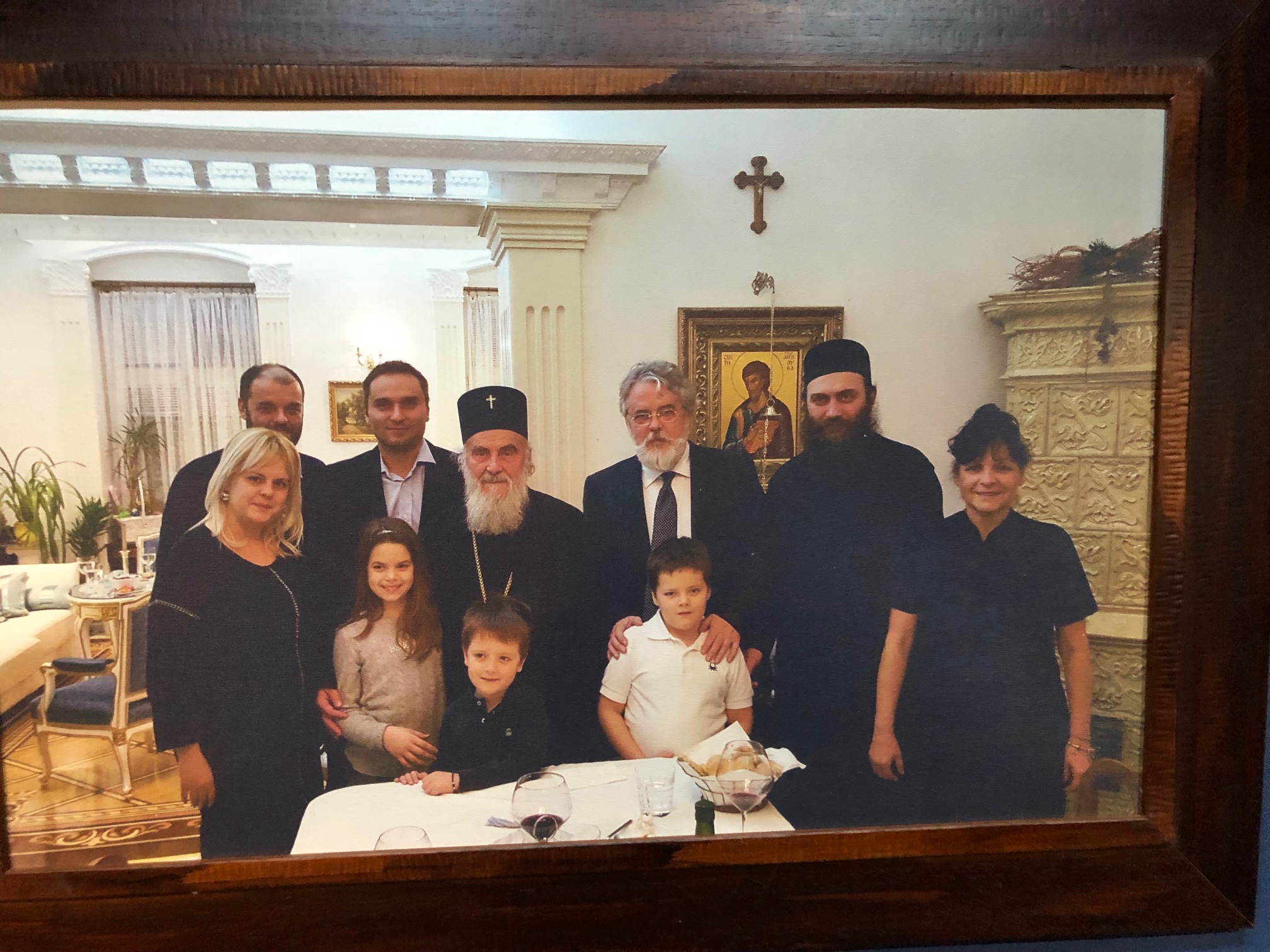
He discussed his experience with Bishop Ignjatije and the late Patriarch Irinej. Abbot Dimitrije of Tumane Monastery put it more simply:
“Professor, while you were resting on the ventilator, things were very difficult for us here. We worried and prayed all day!”
The sentence still makes the Doctor laugh. It unites what he likes in people and wine: depth without melodrama, seriousness with no need to keep proving itself.
His connection with the Serbian Orthodox Church, however, predates the ventilator and extends beyond friendships with senior clergy. It began during pilgrimages to Hilandar, the Mount Athos monastery founded by Stefan Nemanja and his son Rastko, the future Saint Sava.
“Hilandar is a great holy place. People forget that Saint Sava established the first hospital there. Monasteries have a typikon, a rule governing their life. Eight hundred years ago, the Hilandar Typikon already prescribed how the sick should be cared for and how a hospital should be organised. A proper hospital, with beds, attendants and stoves, recognisable to us today-not merely a place to isolate people with leprosy or plague.”
During his stays, he regularly encountered someone needing medical help. The monastery housed workers, pilgrims and visitors as well as monks. At weekends, as many as two hundred people gathered for lunch.
Naturally, the Doctor began thinking one step ahead again.
“Whenever I stayed at Hilandar, some need for medical intervention arose. There are always people there: monks, workers, pilgrims, guests. That gave me the idea of organising a medical service available to everyone at the monastery throughout the year.”
He was convinced doctors would embrace the proposal. A trip to Hilandar, helping monks and pilgrims, a few days somewhere where, as he says, time stands still-what needed explaining? Yet between a good idea and a system functioning every day lies a space someone must fill with organisation, money and responsibility. That is precisely where Šćepanović is most at home.
“My work has always been organisation. First, we needed the abbot’s blessing, and they had to seek approval from the Council of Elders. They weighed everything for several years. The Hilandar name isn’t bestowed lightly.”
The society received its blessing in 2015. It was named the Hilandar Medical Society, and the monastery’s blessing was followed by that of Patriarch Irinej. Since then, doctors from Serbia have served at Hilandar throughout the year.
“We have two doctors on duty practically every day. During Covid, sometimes seven. And none has had to pay a dinar. I organised everything: a car collects them, takes them down and brings them home. We also introduced annual medical examinations for the monks. Pilgrims arrive, people become unwell and need help. Now help is always available.”
When discussing wine, music, cars or glasses, Radisav Šćepanović readily accepts being called a hedonist. When the subject is Hilandar, however, he rejects a word almost automatically applied to anyone wholly devoted to something.
“This isn’t passion. Passion is a sin. What I do requires love.”
“So you do it out of love?”
“Exactly. Passion burns itself out, indulges human weaknesses and passes like fashion. Had this been passion, I’d have discarded it long ago like worn-out trainers. When you love something, you’re dedicated to it. Love is dedication. Passion is temporary.”
That distinction offers a key to understanding his winery too. From a distance, it looks like a project in which someone has allowed a passion for wine to outgrow every reasonable limit: more than a thousand barrels, wines spending a decade or longer in oak, hundreds of Riedel glasses, limited releases of a few hundred bottles and a cellar easier to explore by bicycle than on foot.
Šćepanović would say passion could not last that long: it would demand excitement, change and quick recognition. Tri Oraha was built on the opposite principle: buy fragmented scraps of land nobody wants, assemble a vineyard, plant it, fill a cellar with barrels and then withhold the wine from the market for years. Passion would already have grown bored and found another toy. Love stays.
My first encounter with his wines came around ten years before this conversation, in a modest weekend house and old cellar beside Silver Lake, near the Dinčić restaurant and not far from the celebrated Brka, described as the finest restaurateur east of Belgrade.
There I first tasted his Cabernet Sauvignon, which had spent five years in entirely new barriques at the original cellar in Crnomasnica. Its Serbian price, around forty euros, was a record then, although it was available in very few places. I asked the Doctor to describe it in medical terms.
His moustache lifted, his eyes narrowed, and the answer came immediately:
“My wines combine serious neurosurgery, for the intricate precision, and major abdominal surgery, for the effort required to produce them!”
Then he raised his voice a little further, although there was no need.
“My friends say they’re hooked on this wine. Listen, it’s more dangerous than cocaine and better than Bensedin! I don’t need tranquillisers in the evening.”
The line became part of his ritual. Whenever he described the wines to a new guest, he returned to it with equal pleasure. Yet on the label of his 2009 Cabernet Sauvignon, he dispensed with medicine and jokes alike. After seven years in barrel, the wine received the briefest possible description:
Great Red Wine.
This was neither an agency’s slogan nor empty praise from a man besotted with his own product. Cabernet Sauvignon 2009 is among the finest examples of the grape in the region, encompassing Croatia, Bosnia and Herzegovina, and Serbia. If he one day puts the same words on other wines that, as he says, make themselves in his cellar, buyers are unlikely to feel deceived.
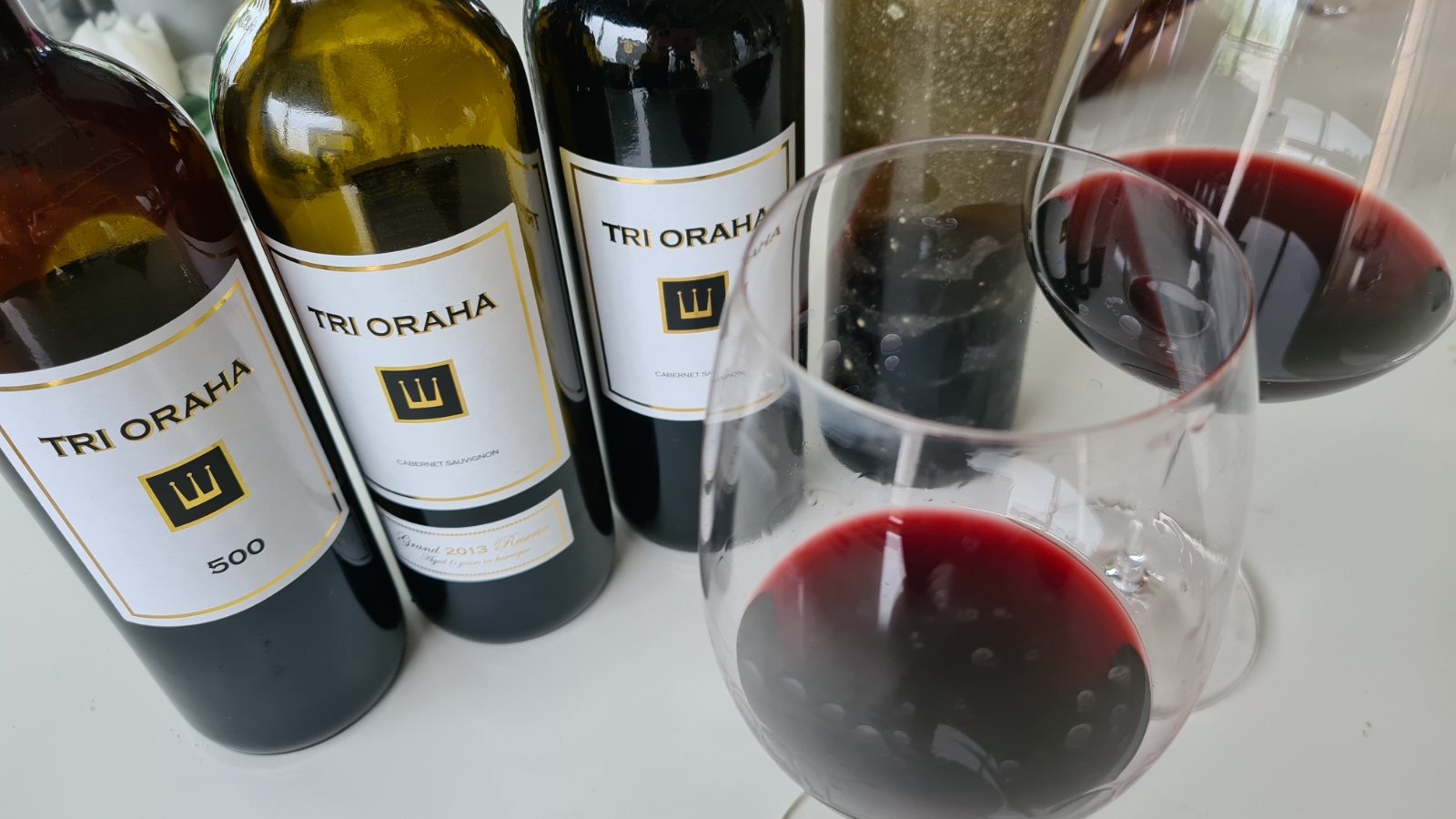
Especially if they are Tri Oraha 500, 750 and 1000, blends named after the number of barrels contributing to them.
The first came about almost accidentally. Šćepanović ordered a sample taken from each of five hundred barrels for individual analysis. He wanted to understand how wines of the same grape and vintage could differ in alcohol by as much as a percentage point between barrels.
The testing was expensive, but cost seldom interested him if he considered the answer worth the question. Much wine remained after sampling, so he simply told his son Petar:
“Blend it all and bottle it.”
That became Tri Oraha 500 Limited Edition, combining Cabernet Sauvignon, Cabernet Franc and Merlot from different years between 2007 and 2016. Each barrel contributed its own nuance, while younger and older vintages brought together maturity, power and unexpected freshness.
The Doctor tasted it and concluded contentedly:
“Imagine what might happen if I knew even a little about wine!”
The question invited itself:
“And what if you really understood it?”
“I’d ruin everything with experiments! When I hear what others do… add this acid, add that aroma, now we’re making this style. Serious deception, all of it. Trends and styles are invented, and then wine has to be made to match. My wine isn’t made. It happens. You crush the grapes, let them ferment, transfer the wine to barrels and leave it. It makes itself, develops and lives its own life. If you set out to manufacture it, you can make whatever you want. You can even make it from powder.”
Naturally, wine at Tri Oraha does not make itself entirely. Behind the Doctor’s demonstrative simplicity lie a carefully chosen site, three Bordeaux varieties, low yields, new barrels for every vintage, years of patience and his son Petar, who manages the technical work in vineyard and cellar. His statement rejects the idea that technology should impose a character foreign to the wine, rather than denying the need for knowledge.
In his world, the task is to provide the conditions for wine to become what it already carries within itself, rather than construct it. Surgery again becomes the most accurate metaphor.
“Surgery taught me I can’t control everything. You can be prepared, think ahead and have hands that won’t fail you. Wine is the same. Force it and you spoil it. Let it be, and the best emerges.”
Before he could allow wine its own life, he needed land where that life could begin. His wine story, he says, started entirely by chance in 2006, when friends convinced him he might find something to his taste in Timočka Krajina.
He travelled towards the Rajačke Pimnice wine cellars, tasting cellar after cellar, wine after wine, but nothing was good enough.
“It was torture from cellar to cellar,” he recalled. “Everyone told me there was wine there I’d like, but I found nothing of the sort. People can tell me whatever they want; I don’t believe it until I see and taste for myself.”
Most people would have concluded that the region had no wine they wanted to buy and gone home. Radisav Šćepanović decided he would have to make it himself.
First, almost by chance, he reached Dragan Radulović in Crnomasnica, a village on Serbia’s far eastern edge beside the Bulgarian border. A single road leads there, crossing a bridge in need of serious surgical treatment. Beyond the village lie several more settlements on the Timok’s right bank, almost cut off from the rest of the country.
The Doctor describes it in language unlikely to be a tourist board’s first choice.
“It’s the back of beyond, brother. Seven or eight villages practically cut off from Serbia, one road and a broken bridge. You need a bloody good reason to go there. And I had one-wine! If you love wine, you follow it.”
He liked Dragan’s wine, but liked the man who made it and the landscape it came from even more. They talked for hours before the Doctor suddenly interrupted:
“Since you already work here, could you manage another fifth or third of a hectare? At least I’d know I was buying wine from someone who works properly.”
Dragan agreed. Initially, the idea was simple: buy a little land, plant some vines and secure wine to suit his taste. With Šćepanović, however, simple ideas quickly grow into substantial projects.
Land in eastern Serbia was almost free then, but price was not the problem. The plots were tiny, scattered and neglected. He would buy six hundred square metres, then eight hundred, then persuade the next owner to sell another thousand. The largest piece he acquired at once measured around a fifth of a hectare.
Patiently, he joined them plot by plot, almost as a surgeon closes a wound stitch by stitch. Eventually, he assembled between twelve and thirteen hectares in one continuous holding.
“It was an enormous job bringing it together. I’d have been happiest if they’d already had the equipment and made wine from their own grapes that I liked. I’d never have interfered. But winegrowing in Negotinska Krajina collapsed when the old country disappeared. The Slovenians used to buy almost all the grapes, pack them and take them to Slovenia. Their wines were made from our grapes! When they left, everything here became overgrown.”
On land that had supported vines for generations, people began planting maize. The problem was that maize refused to grow there.
“Oaks don’t grow in the desert, nor palm trees on Zlatibor. This isn’t land for maize or wheat. But vines grow. Best of all in Crnomasnica.”
When they cleared and prepared the ground, an almost solid bed of stone emerged beneath the neglected surface. Šćepanović, who knew little about viticulture then, could not understand how somewhere barely capable of growing grass could produce such good grapes.
The answer lay in the apparent disadvantage. The soil contained layers of dark, rich earth and limestone of different colours, rich in minerals and trace elements. Vines had to seek water and nutrients deep below the surface, and the position on the Timok’s right bank proved exceptional for international red varieties.
Negotinska Krajina had been compared with Bordeaux for decades. Šćepanović treated the comparison as a working hypothesis to test. If the terroir really suited Cabernet Sauvignon, Merlot and Cabernet Franc, he would plant them and try to make wine that would aspire beyond being merely good for Serbia.
In the dense woodland above the future vineyard, he left only three enormous walnut trees, each more than twenty metres tall. They gave the winery its name-Tri Oraha, Three Walnut Trees-and its family emblem.
“Those three walnuts are also the three of us: me, my son Petar and my daughter Ana. You can see it that way too.”
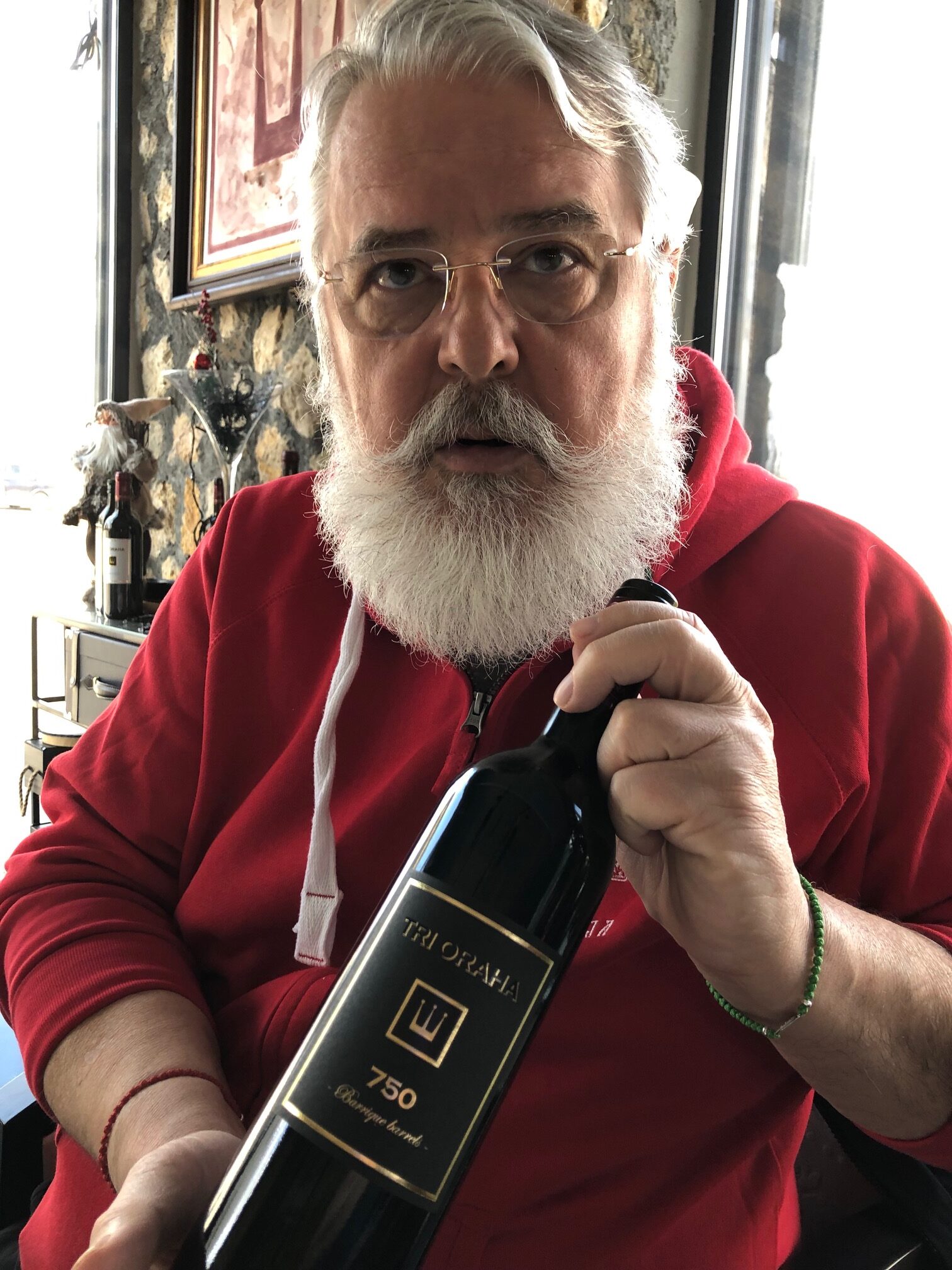
Above Tri Oraha on the label sits a stylised crown that can also be read as the Cyrillic letter “ш”, the opening sound of Šćepanović. Beneath it is the village’s name: Crnomasnica.
“That village was never known for anything. Now everyone knows it because of Tri Oraha.”
The family’s roles gradually became clear. Radisav conceived the project, chose its direction and set a standard below which it would never fall. Petar assumed responsibility for the technical work in vineyard and cellar. Ana Vraneš, a marketing and sales specialist, handled what her father considered less important, yet without which even Serbia’s most expensive wine could not reach people able to understand and afford it.
Profit, Ana said, had never come first. Tri Oraha’s distinctiveness lay in taste and prestige, but also in allowing every vintage to mature without pressure for a quick financial return. A red wine commonly spends several months or a year in barrique. Here, five years is the starting measure of time.
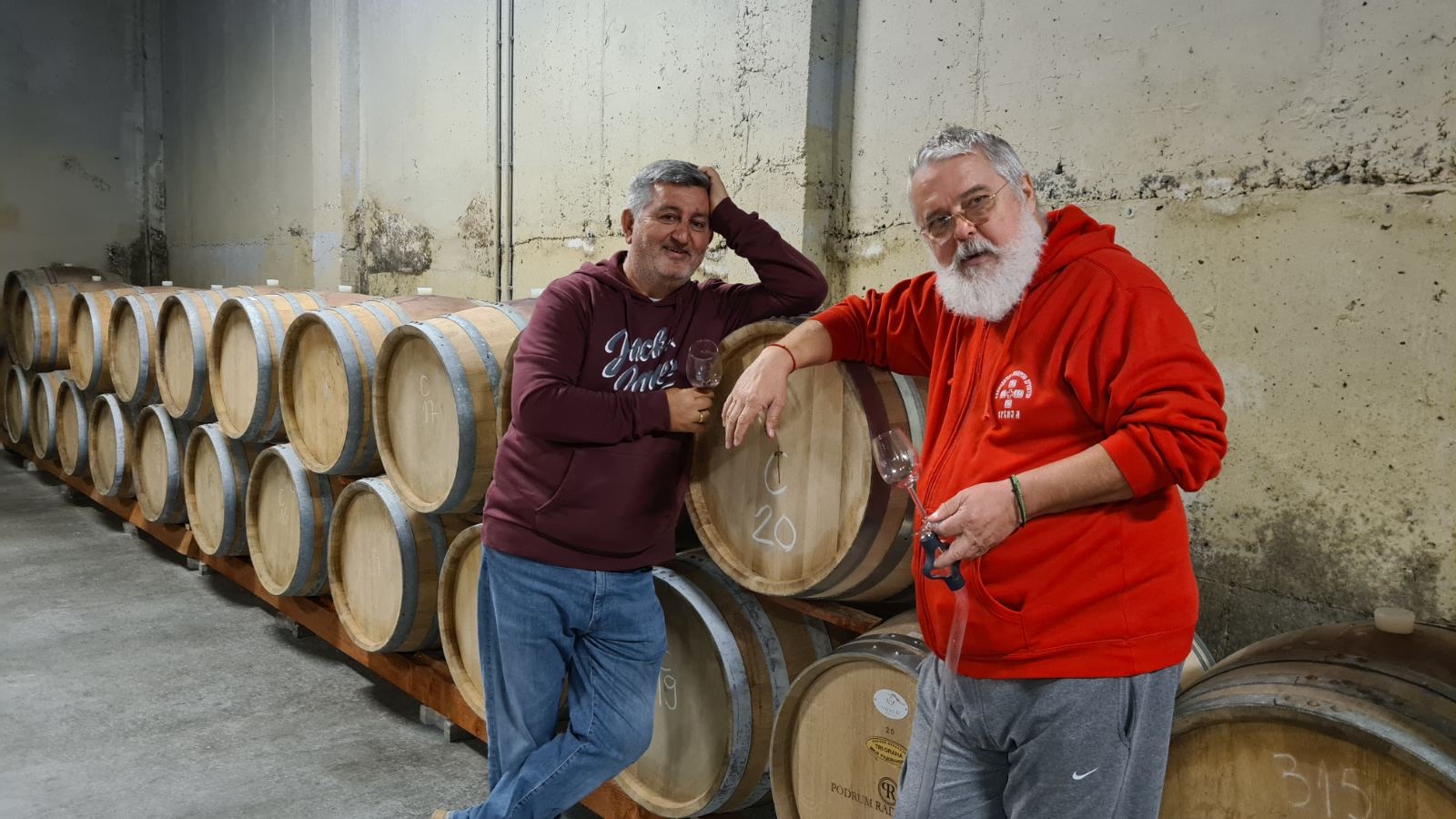
They bought new 225-litre barriques for every vintage. Each barrel served only that vintage and held wine exclusively from their own vineyard. The cellar became a vertical collection of years continuing their lives in oak, rather than merely waiting to be bottled.
“I brought composure and patience from surgery into winemaking,” the Doctor said. “That’s why I could wait at least five years before bottling my first wine. I don’t care what others say or whether they like my approach. I like it this way. This is what I love. End of story.”
For someone uninterested in trends, he had a precise vision of the result.
“I want great wine. I don’t ask what it costs. If you want to make something, you must be free to make it. Nothing great emerges under pressure. If this wine had to sell quickly, it would never be like this. Perhaps it wouldn’t exist.”
Financial independence gave him what is often most expensive in winemaking: the freedom to do nothing prematurely. Barrels filled, years passed, and the wine remained until the Doctor and Petar judged it ready.
That freedom certainly had costs. New barrels in large numbers, years of storage, tied-up capital, evaporation losses and foregoing quick sales made Tri Oraha a project resistant to ordinary business arithmetic.
“Everything I’ve loved in life has been exceptional. Wine is the same. When I decided to have my own, I knew it had to be outstanding. Nothing less. I don’t tolerate mediocrity. What use is something utterly unremarkable?”
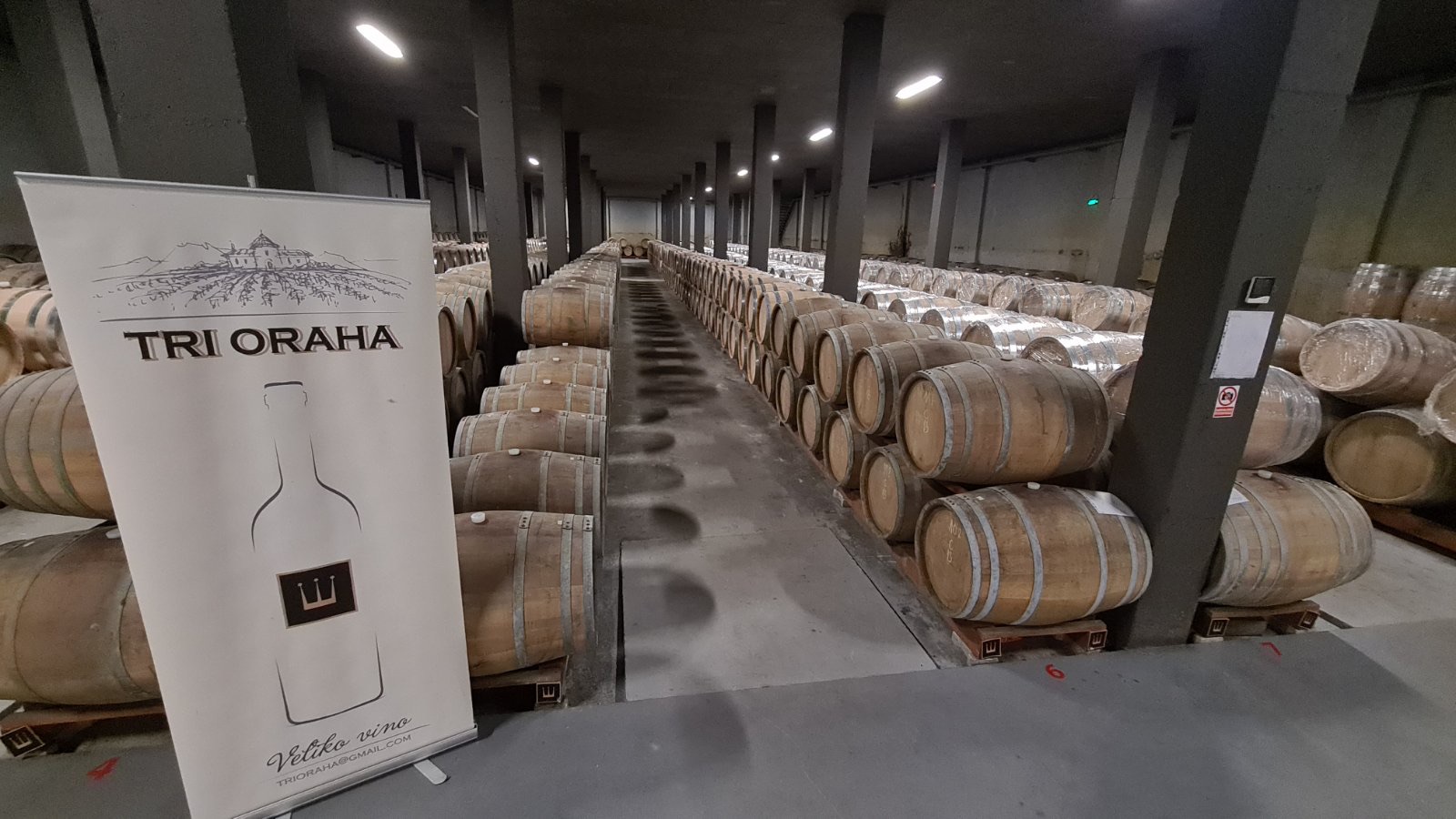
At the new location near Veliko Gradište, they built a winery capable of producing around fifty thousand litres annually, while the vineyards remained in Crnomasnica. The vast cellar gradually filled with barriques, first hundreds, then more than a thousand. Visitors walking its seemingly endless rows said a bicycle would have been easier.
Sommelier Tomo Jakopović, who tasted wines from different barrels and stages of development, said he had seen nothing comparable nearer than Italy or France: so many neatly arranged barriques filled with serious wine. He recognised a classic Bordeaux principle in Šćepanović’s approach: only a large number of barrels allows a sufficiently broad and consistent representation of a vintage.
The Doctor took that principle much further. After the wine from five hundred barrels came Tri Oraha 750, combining wines that had spent between one and twelve years in 750 barriques. Older vintages contributed maturity, complexity and softened tannins; younger ones preserved colour, fruit and energy.
The wines were powerful without heaviness, mature yet fresh. Alongside dark berries, plum, black pepper, coriander, chocolate and fine oak, a stony, saline minerality stood out, which Jakopović identified as the imprint of Negotin’s terroir. The tannins were fully ripe but firm enough to offer resistance between tongue and palate.
These were wines for contemplation, special moments and people in no hurry-like their owner after the ventilator.
Tri Oraha is easy enough to find beside the road from Veliko Gradište towards Golubac. Getting inside is another matter. The Doctor wants no coach parties, packaged tourist visits or tastings beginning with an assessment of how many bottles visitors might buy. To him, the winery is a temple, and the tasting room a wine palace for family, friends and people he has invited himself.
“No entry!”
That is his tourism offer in brief.
One group nevertheless arrived unannounced. They requested a tasting and announced their intention to buy a substantial quantity, evidently believing a profitable sale would open doors politeness had not. The Doctor remained as cool as a scalpel.
“Does this look like somewhere intended for tourists? This is private property. Have a glass of wine, and then we’ll say goodbye.”
The man who made what was probably Serbia’s most expensive wine turned away buyers because they had not been invited. In his world, money could allow wine to remain in barrel for ten years, but could not buy admission to the wine palace.
It may seem elitist, yet Šćepanović does not view prestige as a means of impressing others. Luxury means choosing the company, wine, glass and moment a bottle will be opened, rather than attracting crowds to photograph the cellar. Tri Oraha was made for him to drink with people he loves.
And when the Doctor loves something, he rarely stops at one example. Almost every flat surface serves as a stand for one of his pipes. Among them are Savinelli’s Bacco, dedicated to Bacchus, god of wine; a pipe made from petrified wood by a young Montenegrin craftsman; and others whose histories he could recount as extensively as those of individual vintages.
There are also hundreds of Riedel glasses and decanters. He claims to be Serbia’s greatest Riedel enthusiast and to have made a small fortune betting friends how much wine fits into a Pinot Noir glass. Airy and elegant as it looks, its capacity is large enough for an unsuspecting opponent to lose before realising it holds almost an entire bottle.

The tables hold wines and their corresponding glasses. Classic, blending 2014, 2016 and 2017, was conceived as a more accessible introduction to Tri Oraha. Beside it stand Merlot 2011, Cabernet Sauvignon Grand Reserve 2013, and the 500 and 750 blends.
When someone tasting Merlot 2011 identified a mint-like freshness on the finish, the Doctor immediately objected:
“I’m thinking about wine, not which plants are inside it! Look at the tannins. They’re velvety because the wine spent almost a decade in oak. Instead of drawing more tannin from the barrel and becoming harder, it softened and rounded out over time.”
He would gladly have offered the 2012 as further evidence, but had no bottles left. The 2010 vintage had been bottled only in large formats, jeroboams and double magnums. Somewhere in the cellar, there was always something older, rarer or stranger than the wines on the table. Whether the Doctor would consider the moment important enough to open it was uncertain.
Neither barrels nor bottles, however, dominate the winery’s central space.
Parked there is a perfectly preserved 1975 Jaguar XJ-S V12, from the year Šćepanović performed his first operation as a student. Nearby are photographs from Hilandar, a racket given to him by Björn Borg and guitars associated with the Beatles: a Höfner Violin Bass like Paul McCartney’s, an Epiphone resembling Lennon’s and an acoustic guitar to complete the circle.
Music takes him back to Šibenik, where he lived until finishing secondary school. The son of the head of technical services in the naval district, he grew up beside the sea, played bass in a band called To Get Up and sang Beatles songs. He also learned what he would later call the good life: music, friendship, sport, food and objects that need not be practical to matter.
Towards the end of his time in Šibenik, in his own words, he “snagged a gorgeous woman”-his future wife Sineva-and left for Belgrade.
“I married at twenty. Petar was born when I was in my third year at university, and I never failed an exam. I finished everything on time. None of it felt difficult.”
He also found time for tennis, in an era before glamour, security guards and untouchable stars surrounded the sport. The finest players were easier to meet, and Björn Borg gave him a Donnay racket.
“He won four Wimbledons with that racket. The manufacturer later went under, but the racket remained.”
Born in Novi Sad, he lived in Trebinje, Šibenik and Belgrade and travelled almost the entire world. He therefore likes to say he has no home village. Perhaps that explains why putting Crnomasnica on the label mattered so much. A man without a village of his own created a wine that put an almost forgotten one on the map.
He designed his Silver Lake weekend house himself and clad it in stone from Golubac, the first on that shore. Within just forty-eight square metres, he fitted four bedrooms, a living room and a bathroom.
“Everything fits perfectly. I have a simple surgical mind: everything must function.”
The same mind that fitted a whole house into such a small space left room at the winery for an enormous cellar, tasting room, Jaguar and future swimming pool for his grandchildren.
At Belgrade’s Toro Latin Gastro Bar, while celebrating the birth of his fourth grandchild, they opened different vintages of the celebrated Tuscan wines Ornellaia and Sassicaia. At one point, the Doctor requested his own Cabernet Sauvignon 2009.
He tasted it, puffed out his moustache and announced triumphantly:
“Against these Tuscans-Trioraia!”
It sounded like another provocation, but there was something entirely serious behind it. Šćepanović had not invested years, money and patience to make wine praised as “good for Serbia”. His benchmarks were Bordeaux, Tuscany and the world’s finest reds. Unless Crnomasnica could hold its own in that company, he was not interested.
“I don’t tolerate mediocrity. Everything I’ve loved has been exceptional.”
That was why the first vintage waited five years before bottling. Why he bought new barrels every year. Why he remained untroubled when told prolonged oak ageing would rob the wine of fruit, dry it out or destroy it entirely.
Years passed, and the wines did not die. Tannins softened, while younger vintages in the multi-vintage blends restored fruit, colour and energy. The cellar became a bank of Negotin time, storing value in barriques rather than accounts.
After five hundred and seven hundred and fifty barrels came the number that had seemed the logical culmination from the beginning: one thousand. When the cellar finally reached it, Tri Oraha 1000 emerged, combining Cabernet Sauvignon, Merlot and Cabernet Franc from a thousand different barriques into just a thousand bottles. Each barrel contributed enough wine for one standard bottle to the final blend. Yet although he had dreamed of the moment for years, the Doctor was unsure whether to sell it.
A wine probably unlike anything anyone else produced seemed so rare that the market almost felt the wrong place for it. If only a thousand bottles existed, each backed by a barrel, years of waiting and enormous expense, how could it be priced? What could it be compared with?
The family concluded it would be a shame for such a wine to remain in a private cellar, untasted beyond their circle. Early in 2026, Tri Oraha 1000, wearing a gold label worthy of its own extravagance, finally reached wine shops.
“It was a dream, but this is also a beginning,” the Doctor said while tasting it. “We began dreaming twenty years ago, and only now has this ‘thousand’ opened up a host of new ideas. The cellar gives us enormous scope for creativity. The wine needs a little more ageing, and I admit I’d only tasted it previously while we were assembling the blend. So this is almost a première for me too.”
In conversations with friends and wine professionals, he searched for a comparable example. Spain’s celebrated Vega Sicilia had done something somewhat similar, but there, wines from different vintages had spent part of their time in barrels and part in bottles before being combined again.
The Doctor immediately identified the distinction:
“Four years in bottle and six in barrel isn’t the same as spending an entire decade in oak.”
Tri Oraha 1000 contained a cross-section spanning twenty-one years of Negotin terroir. The oldest components brought tertiary aromas, softness and maturity, while younger wines lifted freshness and colour. The blend thereby avoided becoming a museum piece that impressed through its story but offered little pleasure.
Šćepanović never wanted a collection existing solely to display old bottles. Wine can carry history, but must remain alive.
Petar explained it more precisely than his father:
“Producing a mature wine you can enjoy while preserving freshness requires particular experience. Pricing it is equally difficult because there’s simply nothing to compare it with, either in expression or price. Many people told us the wines wouldn’t survive decades in oak, but after twenty years, experience gives us the confidence to keep planning: the wines are still exceptionally fresh and good.”
While Radisav began by trusting his taste more than professional rules, Petar grew alongside the cellar. The years his father spent waiting became his experience. He knew the development of every vintage, understood differences between barrels and began finding his own answers to what could be done with reserves almost nobody else possessed.
Petar chose the next wine himself: still unnamed, it combined twelve vintages of Cabernet Sauvignon, Merlot and Cabernet Franc from 2009 to 2020, some components having spent fifteen years or longer in barrel.
“People have blended three or four vintages before, perhaps six at most,” Petar said. “But combining twelve is an extremely expensive undertaking that almost certainly makes no commercial sense.”
Naturally, at Tri Oraha, that sounded like a recommendation to make precisely such a wine.
The nose was intensely fruity, the palate unexpectedly fresh. The tannins were fully developed without becoming rigid and dry, retaining suppleness and sufficient strength for many more years of ageing.
It no longer mattered which individual vintage was best, or whether 2009 surpassed 2011 or 2013. The bottle held a conversation between twelve years, inviting the taster to experience their shared result rather than separate them.
“We don’t have one particularly important vintage,” they explained. “The bottle simply contains Tri Oraha wine, and you decide what to do with it. Are there ten vintages inside, or twelve, and which matters most? Just enjoy it and choose.”
The family had effectively bottled part of Negotin terroir’s history: history you could smell, taste and swallow, rather than dates, spreadsheets and weather reports.
A story beginning with the Doctor’s search for wine he liked had reached the point where his son was creating wines previously impossible even to imagine. Tri Oraha remained a family undertaking: Radisav’s idea, Petar’s production and Ana’s attention to the market. But the new blend made their roles less straightforward. Petar was beginning to determine the next chapter, beyond technically fulfilling his father’s vision.
The Doctor appeared entirely comfortable with that. The man who claims to know too little about wine to spoil it through experimentation had built a cellar allowing his son almost unlimited experimentation.
They were already considering new blends: combining wine that had spent fifteen years in barrel with younger vintages, bottling some in large formats and selecting only the finest, most beautiful and powerful components from a new collection of five hundred barriques.
Tri Oraha 1000 thus opens doors rather than closing a chapter-doors the Doctor otherwise keeps firmly shut to tourists.
“This is the beginning,” he repeated. “Only now can we see everything we can do.”
That sentence best connects his two great professional stories. As a young medical student, he did not wait for graduation to volunteer at a clinic, work shifts and learn to operate. As a future winemaker, he did not wait to master oenological terminology before buying neglected plots in Crnomasnica. In both cases, he first defined the result, then organised people and conditions, finally working for years towards a goal others considered excessive.
The difference is that an operating theatre demands an immediate result, while much of a winery’s work consists of knowing how to wait.
Šćepanović says he lives spontaneously and at ease, which does not mean irresponsibly.
“Everything in my life has been spontaneous, but never superficial. When I do something, I do it as well as I know how. When I love something, I respect it.”
That is why he enjoys friends saying they are hooked on his wines.
“Of course they are! My wines aren’t lightweight; they take hold of you. But that’s neither technique nor style. It’s character.”
Character, he believes, cannot be manufactured through a technical process or designed around the market’s current demands. It does not emerge by adding aromas and cannot be ordered with new cellar equipment.
Just as following every rule does not make a person interesting, following a recipe for great wine does not make a wine great.
“Force it and you spoil it. Let it be-and the best emerges.”
Towards evening, with the 1975 Jaguar beside him and wines breathing in more than a thousand barrels behind the cellar walls, Radisav Šćepanović’s life really does resemble a meeting of two disciplines. Surgery taught him to think ahead because every action might determine someone’s survival; wine taught him that sometimes the best action is to touch nothing.
His son-in-law burned the pork knuckle by failing to think ahead. Covid put the Doctor on a ventilator and showed him how little a person can predict. Between that crematorium and hospital eternity lie surgery, Hilandar, family, three walnut trees, twelve hectares of stone, a thousand barrels and wine he allowed to live its own life.
If you manufacture it, says the Doctor, you can make anything; if you let it be, a great wine may emerge. That is the principle by which Radisav Šćepanović lives. Tri Oraha is therefore neither technique, trend nor style, but character in fermentation.