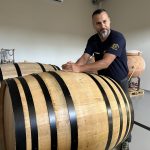
Audere est facere. To dare is to do.
Mate Žužul did not know it was Tottenham Hotspur’s official motto. He is not even a Tottenham supporter, but a Real Madrid fan. He chose the Latin saying because he recognised his own way of thinking in it.
– Whatever you do, you have to dare to do it. You shouldn’t be afraid of anything. Give it your all, and it will turn out well.
And so Mate dared to start a winery. The internet had not yet noticed it existed.
Before going to Grubine, I asked ChatGPT what it knew about Essentia winery and its owner, Mate Žužul. The answer began with an unusually candid admission:
– For now, I know very little about Essentia winery in Podbablje, and after searching, I can say the internet doesn’t know much more either.
It found no owner, wines, vineyards, production figures or competition results. The search mostly led it towards a similarly named sparkling wine with no connection to the Imotski region. It concluded only that Essentia might be a very young, small family venture that had yet to reach wine journalists, guides or more substantial distribution.
It did not know the owner’s name, but got almost everything else right.
At the time of our conversation, Essentia had two vintages, one wine and approximately a hectare of vineyards. It was so new that this was to be its first substantial public introduction, and so small that just two people kept it going: Mate in the cellar and his seventy-year-old father Tino in the vineyard.
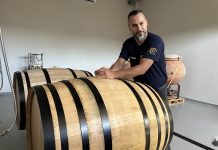
– The division happened naturally: my father, the vineyard; Mate, the cellar.
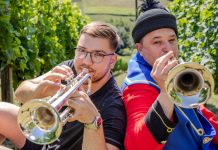
Before the family vineyard became part of Essentia, Tino Žužul divided his time differently. By day he worked, by night he played rock ’n’ roll, and he transported the instruments to his first gigs by tractor.
Daorsi, Tino says, was the area’s first band. They played rock, popular music and anything people could dance to, from Imotski and Mostar to hotels on the coast. They began without a van, a trailer or anything resembling proper musical logistics.
– We carried the instruments on a Tomo Vinković tractor. We’d load them up, drive down, play, stay overnight with someone, then put everything back on the tractor in the morning and head home.
– That’s how we started. It was a love of music. Just like the love of vines today.

The instruments stayed in the family. The Žužul home has enough for an entire band, although Tino no longer plays and his son Marin did not follow in Daorsi’s footsteps. He is nevertheless involved in music in his own way: he has a PA system and provides sound for concerts and other events. The family also has a celebration venue across from the cellar. Music has not died out among the Žužuls; it has simply moved from the stage to behind it.
The family’s vineyard story began with Grandfather Marijan and Grandmother Mara. They established the first vineyards when nobody in Grubine was thinking about labels, brands or a market identity for Kujundžuša. Winegrowing was part of everyday life, grapes were a commodity to sell, and wine was made chiefly for the household.
– People didn’t think about wine the way they do today. The grapes were sold and taken down to the coast, to Baška Voda, Krvavica and Split, Mate explains.
People travelled far from the Žužul home, but someone always had to stay. Branches of the family ended up in Argentina, Australia, California and Germany, yet the land remained together through the generations. Brothers who left generally gave their share to the one who stayed at home.
– That’s unusual around here. One brother would always stay, and the others would transfer their land to him. Mate and his brother Marin are the first generation to divide it, says Tino.
Tino inherited the vineyard as the second generation, although he spent much longer working in entirely different fields. His father went to Germany when Tino was five.
– When he came back, he first bought an Opel. Then he no longer liked it, and everyone switched to Mercedes. People looked at what those with money were driving and thought: if it’s good enough for them, it must be the best.
The Žužuls had Mercedes cars too, of course. Still, Tino built the family’s livelihood with machines that were not meant for showing off.
He worked in construction, bought excavators and lorries, and worked with his brother around the Imotski region. He says that in 1995 he was among the first people in Croatia to buy a new Komatsu excavator. The machines brought in money, but he never entirely abandoned the vineyard. When he left construction, he returned more seriously to the vines.
Today, he knows the family’s vineyard sites and the vines’ behaviour throughout the year better than anyone. He handles pruning, most of the physical work and almost all the daily care of the vines. Mate can live in Zagreb and build a winery precisely because Tino has remained in Grubine.
But between the excavators and his return to the vineyard, something happened that changed how he thought about wine.
In 1989, he went to visit his sister in California and spent a year there. He also visited Miljenko “Mike” Grgich in Napa Valley and described to his daughter, the oenologist Violet Grgich, how wine was made in Grubine at the time.
They would crush the grapes, put them in a wooden vessel and leave them to what generations before them had considered the natural course of winemaking. Violet explained something that today sounds like the first lesson in any cellar: wine must be protected from its greatest enemy, air.
– She asked how we made wine, and when I told her, she explained that it needed protection from air during fermentation. That was when I started working differently.
Tino did not return from California as a trained winemaker, nor did he try to copy Napa Valley in Grubine. He came back with an important insight: tradition is no reason to make wine the same way forever.
Many years later, his son would turn that same thought into Essentia.
Mate has not yet returned to Grubine. At forty-three, he lives in Zagreb, works for Školska knjiga and handles the sale and promotion of educational publications. For now, he is building Essentia between Zagreb and Grubine, relying on his father in the vineyard and coming down whenever cellar work requires his presence.
Nothing in his education suggested he would end up with Kujundžuša. He graduated in hotel management in Opatija, worked as a cook, waiter and receptionist, then realised that hospitality did not fulfil him enough to devote his life to it.
– I worked Saturdays, Sundays and holidays. The job takes all your time and leaves little room for anything else. I couldn’t find the motivation I needed in it.
He got his first substantial job at Školska knjiga and stayed. Sales taught him how to introduce an unfamiliar product to people, while Zagreb gave him access to wines he would have struggled to encounter in Grubine. With friends, he visited wine shops, bought bottles, compared and tasted them, curious enough to want to understand the differences.
– I’ve always liked tasting wine, smelling it, looking at it and thinking about it. I tasted French, New Zealand, Argentinian and other wines. It attracted me all along.
He explored the wine world by travelling through bottles, while returning to the variety he already had at home.
– Nothing without Kujundžuša?
– Nothing without Kujundžuša.
He did not choose it because he had concluded it was the safest commercial option, but because it was waiting for him in the family vineyard. The oldest vines were planted in the 1980s. The Žužuls kept invoices and documents from when Grandfather Marijan planted them, so Mate does not have to reconstruct the vineyard’s history solely from family memories.
For decades, the grapes were delivered to the winery then operating in Imotski, while a smaller portion was kept for homemade wine. Over time, Tino improved production, but the wine was still made for family and friends. Mate was the first to decide to bottle it, give it a label and try to turn Kujundžuša into a serious commercial product.
– I didn’t want to break with tradition, but to take it to a new level and give it new value.
He did not try to present his love of wine as professional expertise. At the Faculty of Agriculture in Zagreb, he enrolled in a lifelong learning programme that took him from vineyard to cellar. He learnt about the relationship between the vine, the grapes and the finished wine, and immediately tried to apply that knowledge at home.
– I didn’t study for a degree in agriculture, he stresses. – It was an adult education programme. It helped me understand the whole process much better.
His first harvest was therefore not the end of his learning, but its practical beginning.

He started with the equipment he could afford, and the first harvest showed him what the cellar still lacked.
– I cut a few corners at first because I couldn’t buy everything straight away. I didn’t even have argon. I reinvest everything I earn: I bought a pump, argon and a few other things. There was already a big difference between the first and second harvests.
For now, growth at Essentia is measured in pieces of equipment rather than hectares, tanks or thousands of bottles. The first harvest showed Mate he could make wine; the second showed him how much better it could be once the cellar had what it needed.
At Cvit razgovora, his first Kujundžuša won a silver medal, and a year later the second won gold. The award meant even more because he received it among his own people, at the Imotski region’s largest collective presentation of its wines.
– When I submitted the second vintage, I thought I might get silver again. If it wasn’t silver, I told myself, perhaps it would be bronze. I didn’t expect gold. I couldn’t believe it when I heard.
Two vintages are nevertheless too few for Mate to believe he has found Kujundžuša’s definitive expression. Indeed, he would be the last person to conclude that.
– I’m really pleased with how it turned out. But the aim is for the next one to be even better.
Selling wine proved to be a different part of his education. In the Imotski region, he did not have to explain how to pronounce Kujundžuša or where it came from. In Zagreb, he first had to sell the variety, then his own label.
Here, his experience at Školska knjiga may have helped more than hotel management. He knew how to knock on doors and present what he offered, aware that doors rarely open by themselves for a newcomer.
A friend at Zags café was the first to open one.
– He was the first to give me a chance.
Later, Golden Caffe Bar and Jarunski dvori also took on his Kujundžuša. With Essentia’s production volumes, a few good customers already constitute a substantial market. He did not have to conquer Zagreb, but find a few places where people would taste Kujundžuša for the first time and want a second glass.
Once the light, fresh, lower-alcohol wine reached the glass, it needed little explanation.
– There’s hardly any Kujundžuša in Zagreb. But when people try it, they’re usually delighted.
In the Imotski region, he also received a compliment reserved for a place where every person already has the best wine in their own cellar.
– Your wine is good. Almost as good as mine.
Mate thinks Ante Grabovac said it. From the man who first showed how far wine from the Imotski region could travel, a newcomer in Grubine could probably have expected no greater recognition.
He freely acknowledges following people who had already shown what could be achieved in the Imotski region with local varieties and family vineyards. Alongside Ante Grabovac, he mentions Nikica Katić and Mate Jerković.
– They took it all to a much higher level. But I wanted to put my own stamp on Kujundžuša. To see what I could make of it.
He could not, however, put that stamp on his own surname.
The Žužuls in Grubine have several family branches, distinguished by old nicknames. People from Imotski generally know which branch each household belongs to and how closely one Žužul is related to another. For everyone else, the surname first brings to mind much better-known figures from politics and publishing.
– The surname carries weight, but it wasn’t a burden to me. Each person speaks for themselves, after all.
The extended family included poets, sculptors, painters and musicians. Among them is the poet Ante Žužul Marinović, while Tino and his Daorsi supplied the rock ’n’ roll branch of the family tree.
Despite all those artists, Tino was not named after any of them. Grandmother Mara, he says, had not even heard of Tin Ujević. Her reason was much more practical.
– There were ten Ivans, ten Antes and ten Marijans in the village. When a letter arrived, they’d argue over whose it was. So Grandmother said she’d give me a name nobody else had.
She simply wanted it to be clear who a letter belonged to when it arrived.
When he had a son, Tino did not follow her example. He gave him one of the region’s most common names.
– I named him after my grandfather Mate.
And so today there are once again two Mates in the family, but only one started Essentia. The surname stayed off the label because a Žužul winery already existed on Pelješac. Its founder came from the Imotski region, moved to Potomje and started a family there. Tino knows him, so there was no conflict or wounded Imotski pride. Mate simply had to find another name.
He found a Latin word that did not limit the winery to one person, variety or place. Essentia could encompass family, land and wine, the past he had inherited and what he still wanted to create.
Behind the serious name lies a small production operation, supported by a group of people who must behave like a much larger winery on harvest day. Mate wants all the grapes picked and processed on the same day. Family and close friends therefore gather, and when there are not enough of them, additional pickers are hired.
– There are sixteen or seventeen of us at harvest. I want everything picked in one day, processed as quickly as possible and brought into the cellar.
Alongside his father Tino and brother Marin, relatives and friends who have been with him since the first harvest lend a hand. Without them, he admits, starting would have been much harder. Essentia may not carry the family surname on its label, but it depends on the family.
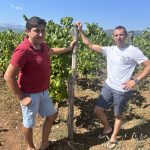
Throughout the year, Tino looks after the vines. Mate comes from Zagreb, organises the harvest, takes charge of the cellar, bottles the wine, finds customers and puts everything he earns back into production. For now, that division works. But Tino is seventy, and the winery cannot depend forever on the father carrying almost the entire vineyard while the son builds the cellar and market between Zagreb and Grubine.
Mate wants to increase Kujundžuša production, but not at any cost. His aim is not to fill the cellar with wine and only afterwards look for customers.
– Smaller quantities, more identity and quality. I want to make the best wine I can.
Kujundžuša should remain at Essentia’s heart. He is convinced it has yet to show its full potential and wants to find it a larger place on Croatia’s wine map.
– I want to make a serious, clean, modern and fresh Kujundžuša, while preserving its local character and recognisable identity.
He is attracted by the same qualities that won over his first Zagreb customers: freshness, drinkability and the ease with which it accompanies food.
He does not have to think long about a second variety.
– Trnjak. There’s no question.
With it, he would continue the idea on which he founded Essentia: building a winery around varieties that belong to the region from which it came.
The question remains when its owner will return to Grubine for good.
For now, Mate does not speak of returning as a decision with a fixed date. Školska knjiga and Zagreb remain his everyday life, while Essentia is a second life he is building alongside the first.
– I’d like to develop it further, then perhaps come back in a few years and devote myself to it completely.
There lies the real challenge of his Latin saying. It is not difficult to print Audere est facere on a label. It is much harder to leave a secure job, move your life from Zagreb to Grubine and believe that one hectare of Kujundžuša can become the beginning of a new livelihood for the family.
He has not taken that step yet. But two years ago, he did not have a bottle on the market, an equipped cellar or a medal from Cvit razgovora either. He had an old family vineyard, his father’s help and a desire to discover what he could make of Kujundžuša.
The first harvest brought him silver, the second gold. The third should show how quickly a beginner can learn when every euro earned goes back into the cellar and every weakness is answered with new equipment or a different decision.
When I asked ChatGPT who Mate Žužul was before coming to Grubine, it could not answer. It could only guess that Essentia might be a very young family winery and an almost entirely unwritten page.
It is no longer entirely unwritten.
Now we know that behind it stand two vintages, an old vineyard, Tino among the vines, Mate in the cellar and a group of people who have to pick all the grapes in one day. We know he sold his first bottles of Kujundžuša at Zags, won gold with his second vintage and is seriously considering Trnjak after Kujundžuša.
For everything he has yet to do, Mate already has an answer on the label.
Audere est facere.
First, you have to dare.