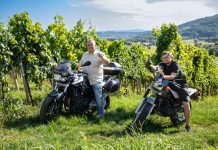
Milorad Jovičić had never tasted Pinot Noir when he decided to plant his entire vineyard with it.
The idea came neither from Burgundy nor from a professional tasting or a winemaker. He was sitting in front of the television, watching the programme Wine Routes. Winemaker Vojin Đorđević was talking about Pinot Noir, its affinity with chocolate and a grape that can elevate and humble you in equal measure.
That was enough for Milorad.
“He spoke so beautifully about Pinot that I literally fell in love with a wine I had never tasted.”
A mechanical engineer by profession, he was accustomed to calculations, plans and systems in which every component had its place. Yet he chose the grape for his future vineyard on the strength of a television programme.
He did not leave the land to chance. At Salaksije, above Rakovac, he found a plot adjoining land belonging to his wife, Biljana. It was neglected, but faced out towards the Danube and Novi Sad, on a site that Archimandrite Prokopije Bolić had ranked among the finest in Srem in his 1816 winegrowing manual, The Perfect Winemaker.
To this day, Milorad does not know how many truckloads of manure he brought onto the plot. He spent several years preparing the soil, then approached Professor Slavica Todić, who was then head of the Department of Viticulture at the Faculty of Agriculture in Belgrade. She came to Salaksije with her assistant, Zoran Bešlić.
She walked around the site, examined the slope and uttered a single word:
“Top!”
Milorad turned to Bešlić.
“What does she mean?”
“It doesn’t get any better than this,” the assistant translated.
Soil analyses confirmed the professor’s assessment. When she asked what he wanted to plant, he answered without hesitation:
“Pinot Noir.”
“A slightly unusual choice for a first wine, but it can work,” she concluded.
The brothers who sold him the plot also told him he had no idea what he had actually found. Only later did he discover that, more than a century earlier, the prominent Novi Sad landowner and wine lover Adamović had grown Pinot Noir on the very same site.
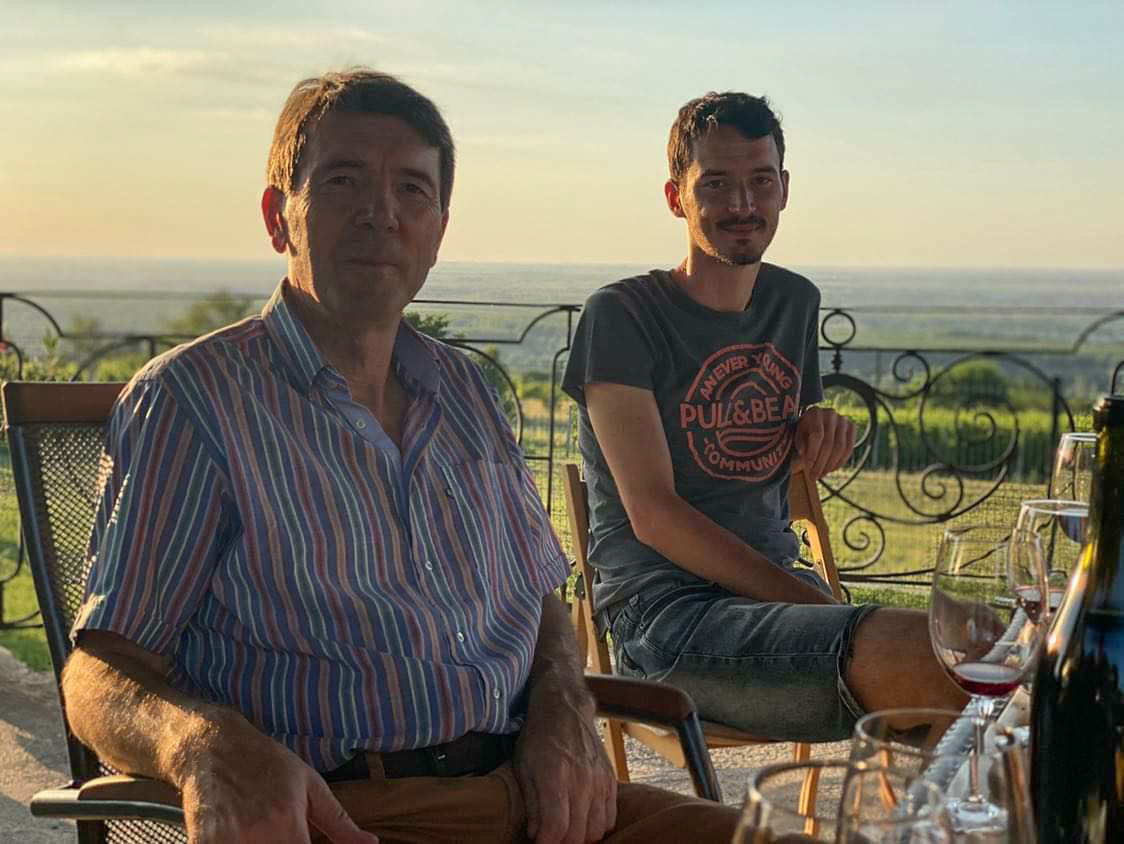
Milorad had chosen the grape because of television, only to discover that it was returning to a place where it already had a history.
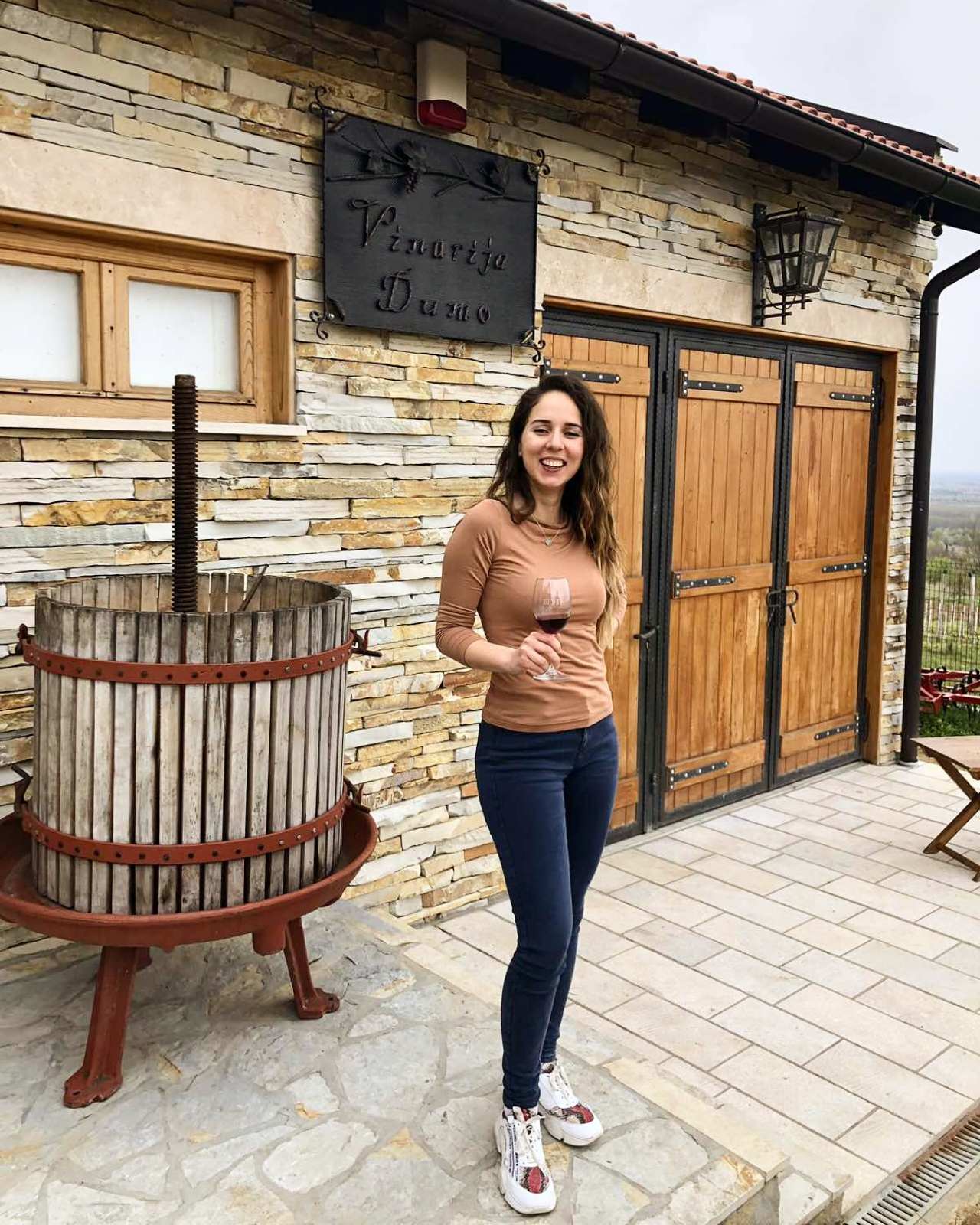
The winery’s name has nothing to do with France or the French winemaking consultant Florent Dumeau, whose surname is transcribed as Dumo in the Serbian media. Long before Milorad planted his first vine at Salaksije, Dumo was his grandfather’s name. His grandfather’s grandfather had borne the same name.
Milorad’s branch of the Jovičić family comes from Brajići, a village between Budva and Cetinje. According to family tradition, the name Dumo is associated with local chieftains who were addressed as lords, or dumas. One of Milorad’s ancestors was the village chieftain when the French captured him in 1808.
The name remained in the family through the generations. Had his wife Biljana been more understanding, Milorad jokes, their son would also have been called Dumo. Instead, they named him Vuko, in memory of Milorad’s brother.
Grandfather Dumo grew up in Brajići, where the family raised livestock. Vines did not thrive there, so they traded dry-cured ham, potatoes and cabbage for oil and wine. He would have his first substantial encounter with a vineyard only after the Second World War.
As a volunteer on the Salonika Front, Milorad’s great-grandfather had been awarded land in Vojvodina after the First World War, but never took possession of it. When the state allocated land to the family again after the Second World War, Grandfather Dumo decided to leave Brajići and take the family to Feketić.
It was 1945.
They received one jutro of land per family member-nine in total, roughly five hectares-along with two small vineyards left behind by expelled German residents. His grandfather later planted another vineyard, mainly with Slankamenka.
“There were some old German varieties in the vineyards we took over, but I can no longer remember their names. We mostly ate the grapes or made rosé from them.”
Dumo thus went from being a Montenegrin livestock farmer to a Vojvodina winegrower. Decades later, the winery was named after him, because it was alongside him that Milorad gained his first experience of grapes and wine.
Milorad’s father, Risto, was born in 1930 and worked as a lathe operator at the agricultural cooperative. Neither he nor Grandfather Dumo contemplated serious wine production. The family’s main occupation was livestock farming, while wine belonged to the household, everyday life and the land they had acquired.
Long-established Hungarian residents of Feketić taught them how to make it. They kept their barrels beneath a covered veranda some thirty metres long, one of the so-called gangs or gonks characteristic of old German houses. The barrels were exposed to heat, cold and every change in the weather.
“When the sun warmed things up, fermentation would really get going. We usually drank all the wine by the winter pig slaughter or New Year. It was light and easy to drink; you could get through a whole jug over lunch without any trouble.”
Milorad’s most deeply rooted memory of wine is tied to his first day at school. It was September, the harvest had begun, and a horse-drawn cart laden with grapes arrived outside the house. Cheerful grape pickers sat on top.
“It seems I stored that picture inside me for good.”
He began making wine while still at secondary school. He completed an electrical engineering secondary school in Subotica, then moved to Novi Sad intending to study electrical engineering. He changed his mind and enrolled in mechanical engineering.
The change brought two lasting consequences: a degree in mechanical engineering and Biljana, his future wife, who also became a mechanical engineer.
They settled in Novi Sad, but Feketić never disappeared from Milorad’s life. He bought grapes in Aleksandrovac, drove them back to his home village and made a small barrel of wine for the family.
“I inherited my methods from Grandfather Dumo.” He still had no vineyard of his own, no proper cellar and no intention of selling wine. All he had were his grandfather’s methods, a memory of grape-laden carts from his first day at school and the habit of making at least one barrel every year.
Not long after graduating, Milorad joined Naftna Industrija Srbije, Serbia’s oil company. As a mechanical engineer, he designed systems for extracting, storing and transporting oil.
When the company launched a synthetic oil production project in Russia, he spent nine months there. He used the money he earned to enlarge the plot at Salaksije that Biljana had received from her parents as a dowry.
From the hillside above Rakovac, the view stretched across the Danube towards Novi Sad. In 2003, Milorad began building a small cellar below his in-laws’ holiday house.
“Both the cellar and the production area were built as something temporary, because I didn’t know where I was heading.”
At first, he continued buying grapes. A young winemaker, Tanja Đuričić, helped with production, beginning a collaboration that would continue for the next two decades. The cellar was completed in 2005, two years before Milorad acquired the first vines for his own vineyard.
The first wine made at Salaksije was a Riesling from grapes bought in Aleksandrovac. Milorad was so pleased with it that he took a sample to a major wine competition held as part of the Novi Sad Fair.
It won a silver medal.
“It was exactly the encouragement I could have wished for.”
Until then, wine had been a serious hobby that had moved from Feketić to Biljana’s family plot. For the first time, the medal showed him that the hobby might become something more.
He bought Pinot Noir vines from the Rauscedo nursery in Italy in 2007, and the following year planted the first 2,400 on a northwest-facing site. The grapes received sunshine from morning until evening, and he later had to protect the vineyard with netting against increasingly fierce summer heat.
The first wine from his own vineyard came from the 2011 vintage.
For a long time, Milorad continued relying on the methods he had learned from Grandfather Dumo. He made wine traditionally, constantly wondering what he lacked in equipment, knowledge and cellar facilities. He asked Tanja Đuričić what was needed to make good wine.
“First, good land, then good grapes, equipment and a cellar. But the most important thing is a love of wine,” she told him.
Milorad laughed.
“For now, love is all I have.”
A more significant step forward came with the 2015 vintage. Milorad entered his Pinot Noir Dumo from that year in the Decanter competition, the winery’s first international appearance. The wine won a silver medal and scored 90 points.
“I was beside myself with happiness.”
His enthusiasm in front of the television no longer looked like the rash decision of a man planting a grape whose wine he had never tasted. He had listened to Vojin Đorđević, had the site assessed by Slavica Todić, spent years preparing the soil and entrusted production to Tanja Đuričić.
“Everything simply fell into place. And I was born on Saint Tryphon’s Day, too.”
For the first time, Pinot had lifted him up.
Tanja, however, taught him not to expect only reassurance after success. When he brought her wine for analysis and tasting, her expression hardly suggested a winemaker proud of her own work.
“She frowns as though nothing is right. I feel as if I’ve given a blood sample and am waiting for the results.”
Her comments were not always comfortable to hear, but he understood that the winery could not progress without them.
“Some people don’t like being told something isn’t good. But if I close my eyes and pretend not to notice, I’m just heading in the wrong direction, when there might still be something we can fix.”
Tanja stayed with Dumo for more than two decades. Her knowledge and Milorad’s persistence did not produce wines that she simply replicated in other cellars. As fellow winemaker Milorad Halavanja later observed, what matters most is that the consultant makes the producer’s wines rather than imposing their own.
At Dumo, the wines remained Milorad’s-even when Tanja told him things he did not want to hear.
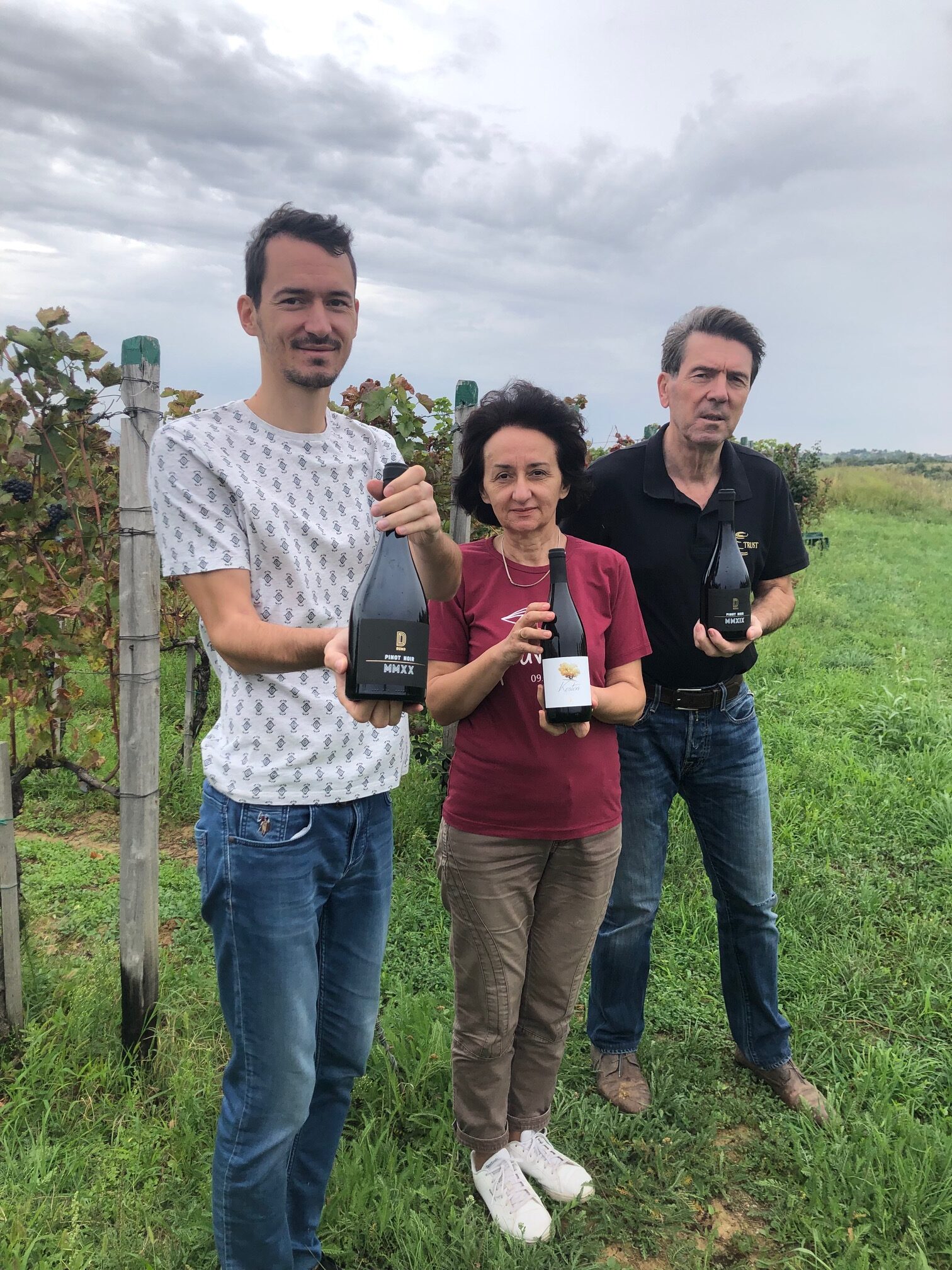
In 2018, Milorad planted approximately another hectare of Pinot Noir further up the hill. He named the new vineyard Kesten, meaning “chestnut”. It had different soil, a different clone and a position where the sun moved more gently across the rows instead of scorching the grapes all day.
The idea was to retain the established style of the main Pinot Noir Dumo and make a second wine from the young vineyard.
The first wine bottled under the Kesten label attracted considerable attention. It showed just how different two Pinots from the same winery could be when they came from different sites.
The following vintage did not deliver the same characteristics.
Two barrels remained in the cellar, and Milorad, Vuko and the winemakers had to decide whether to bottle the wine separately as Kesten again or blend it into the main Pinot Noir.
By then, Vuko had become much more than a son whose professional life involved programming, artificial intelligence and machine learning. He tasted with his father, compared sites and took part in decisions that would determine whether a particular wine received its own label.
Kesten showed him what Vojin Đorđević had meant when he said that Pinot Noir could elevate and humble a person. One vintage had produced a wine worthy of a new label; the very next raised the question of whether it should be bottled separately at all.
Milorad therefore did not try to force every vintage into a predetermined plan at any cost. If Kesten was not sufficiently different or sufficiently good, it did not have to exist simply because the label had already been designed.
Even so, Milorad had no desire to introduce Cabernet Sauvignon, Merlot or some safer, more commercial variety into his vineyards. He decided to remain within the Pinot family.
“We’ll only make Pinots. We have Pinot Noir, Kesten and Pinot Gris. One day we might plant Pinot Blanc, too, and we already make rosé and white wine from Pinot Noir. Quite enough for a small winery.”
The Pinot family at Salaksije has since expanded to include two further small vineyards of Pinot Gris. Milorad has no intention of increasing the total area indefinitely, however. He has set the limit at around five hectares, which he considers manageable for a small family winery.
At Dumo, after all, nobody lives solely from wine.
After leaving Naftna Industrija Srbije, Milorad established his own company preparing engineering designs and technical documentation for the oil and gas industry. Biljana remained in engineering, their daughter Milica works in IT, and Vuko’s professional work involves programming, artificial intelligence and machine learning.
The winery is their shared second occupation, although it often claims more time, conversation and family debate than their primary jobs.
Vuko summed it up more precisely than any financial report:
“In winemaking, it’s easier to find your gift than to make your fortune.”
Dumo has therefore never tried to appear bigger than it is.
There is no large production facility, no sales team and no volume that would oblige Milorad to travel from fair to fair persuading the market that it needs his wine. Dumo has remained a garage winery in the most literal sense: a small cellar built on family land, a few hectares of vineyards and a production whose journey to the customer can be traced almost bottle by bottle.
The wines are available in a handful of restaurants, including Hrastovina in Belgrade and Vuk Vuletić’s Pinot in the West 65 development, as well as in five wine shops. The entire production scarcely requires wider distribution.
Wider distribution would demand more wine, more vineyards, a larger cellar and a different way of organising the whole family’s life. Milorad does not want that kind of growth.
The glasses on the table showed just how much room there was for different wines within such a small winery.
The 2023 Kesten was ruby red, a Pinot from the younger vineyard Milorad had planted higher up the hill, on different soil and with a different clone. Alongside it stood the Pinot Noir from the same vintage, made from the older vineyard in front of the house.
The same grape, the same vintage and the same winery, yet two different wines.
The greatest surprise, however, was white.
Milorad poured a Blanc de Noir, a white wine made from Pinot Noir. After all those years spent trying to understand why the same grape could lift him up one moment and humble him the next, it had now given him a wine that had changed colour completely without losing its identity.
“A perfect white wine by every measure,” he concluded with satisfaction.
Perhaps that glass held the best answer to why he had never wanted to plant something simpler. Pinot Noir had brought him his first significant international recognition, then made him question whether Kesten deserved a separate label, and finally appeared before him as a white wine.
All from a grape whose wine he had never tasted before planting it.